
Age of Absolutism Absolute monarch A ruler with
Age of Absolutism

Absolute monarch A ruler with complete authority over the government and lives of the people.
autocrat Ruler with complete authority
Divine right Belief that a ruler’s authority to rule came directly from god.
Enlightened despot Absolute ruler who uses his or her power to bring about political and social change
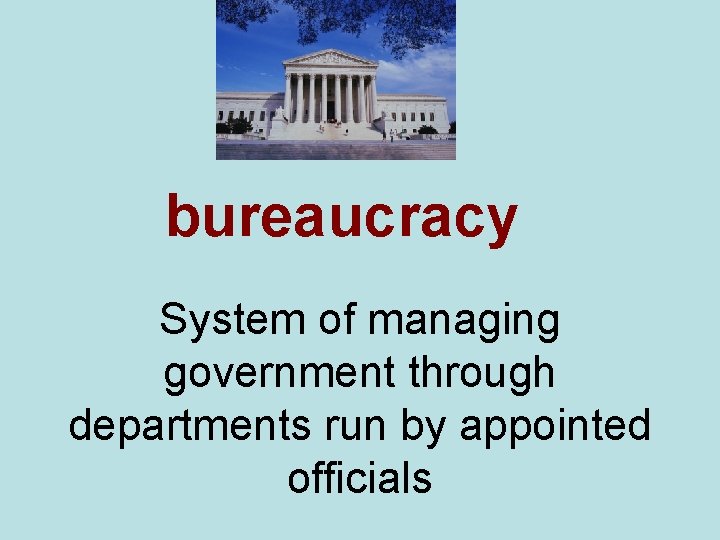
bureaucracy System of managing government through departments run by appointed officials
Constitutional government Government whose power is defined and limited by law. (U. S. )
Democracy Government where power is held by the people
Representative democracy A government in which people vote for representatives to “represent” their best interests.
Theocracy A government run by religious leaders. (no separation of church and state)
oligarchy A government run by a select few.
monarchy A government in which a king or queen exercises central power.
Limited monarchy A government in which a constitution or legislative body limits the monarch’s power
What was the goal of European monarchies during the Age of Absolutism? POWER, POWER!! They wanted to centralize the power, and take control of the government.
What 3 factors led (cause) to the Age of Absolutism? 1) Reformation Church splits – becomes weaker 2)Crusades People leave manors to fight- feudalism becomes weaker 3) Gunpowder Kings had it – they became stronger
How was absolutism different from the middle ages? The power was centralized Nobles were not as powerful as they were during the middle ages. The King (monarch) had all of the power.
Absolutism • The idea that a ruler has total or absolute control

Absolute Rule – Positives? 1) Efficient (things get done) 2) Centralizes power – trade increases
Absolute Rule – Negatives? 1) Abuse of Power – power is in the hands of one person 2)No Human rights – peasants suffer
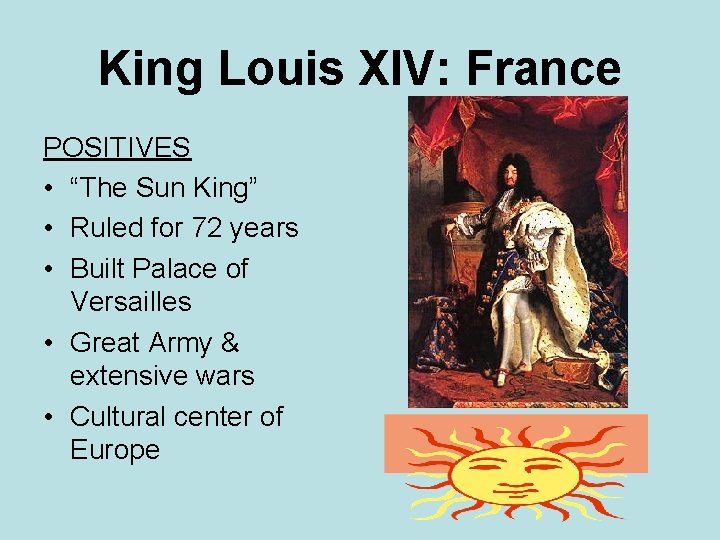
King Louis XIV: France POSITIVES • “The Sun King” • Ruled for 72 years • Built Palace of Versailles • Great Army & extensive wars • Cultural center of Europe
King Louis XIV: France Negatives • No religious tolerance • Destroyed Huguenots (Protestants) & power of nobles Result – Economy declined • Poor had to pay taxes
King Louis XIV (14 th) • http: //www. biography. com/people/louis-xiv 9386885/videos/louis-xiv-mini-biography 126127171698
Religious Tolerance Giving religious groups the freedom to keep and practice their own religions
Divine right • the ruler is God’s representative on earth • Legitimizes the leader’s power • Similar to Mandate of Heaven
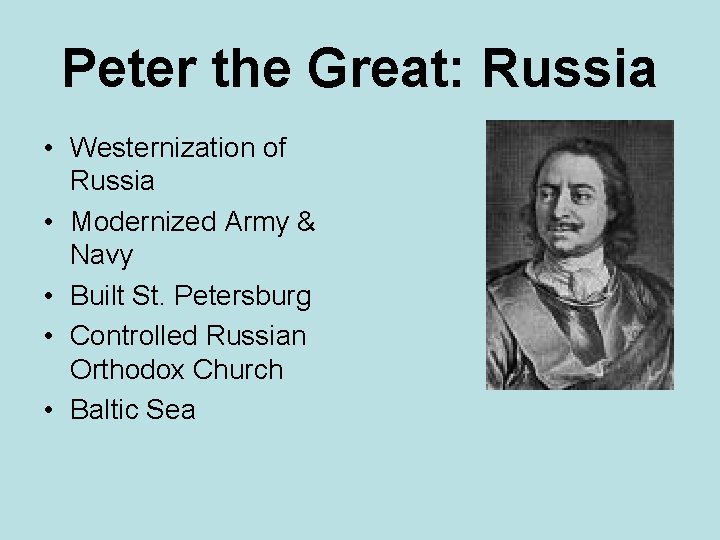
Peter the Great: Russia • Westernization of Russia • Modernized Army & Navy • Built St. Petersburg • Controlled Russian Orthodox Church • Baltic Sea
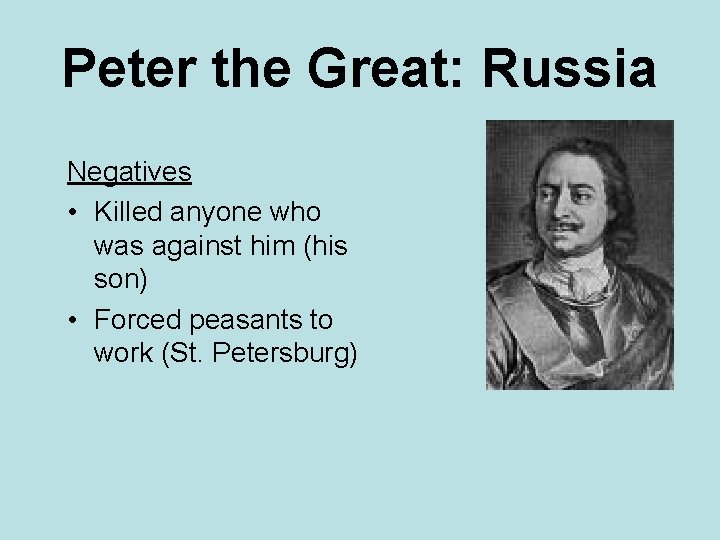
Peter the Great: Russia Negatives • Killed anyone who was against him (his son) • Forced peasants to work (St. Petersburg)
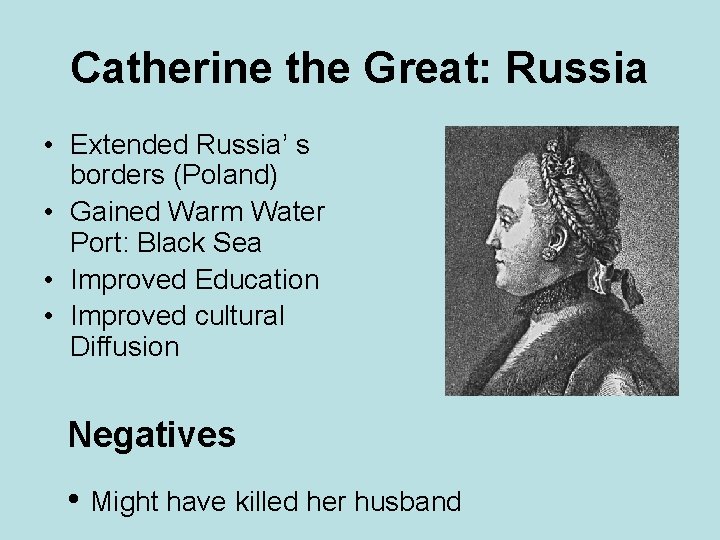
Catherine the Great: Russia • Extended Russia’ s borders (Poland) • Gained Warm Water Port: Black Sea • Improved Education • Improved cultural Diffusion Negatives • Might have killed her husband
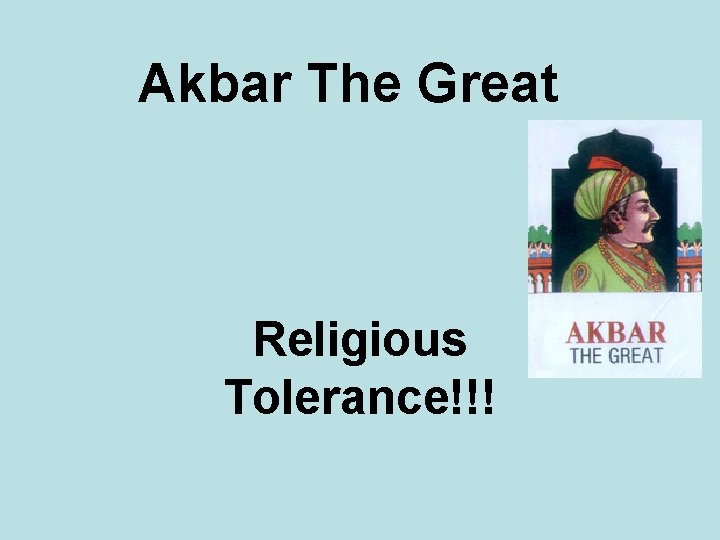
Akbar The Great Religious Tolerance!!!
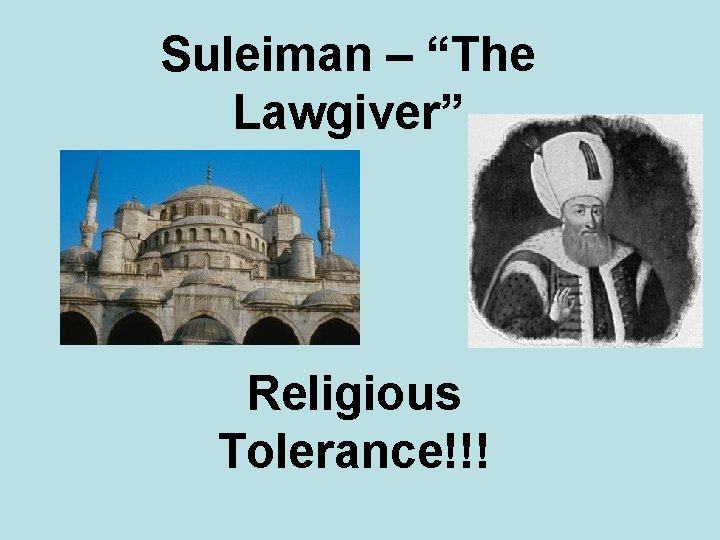
Suleiman – “The Lawgiver” Religious Tolerance!!!
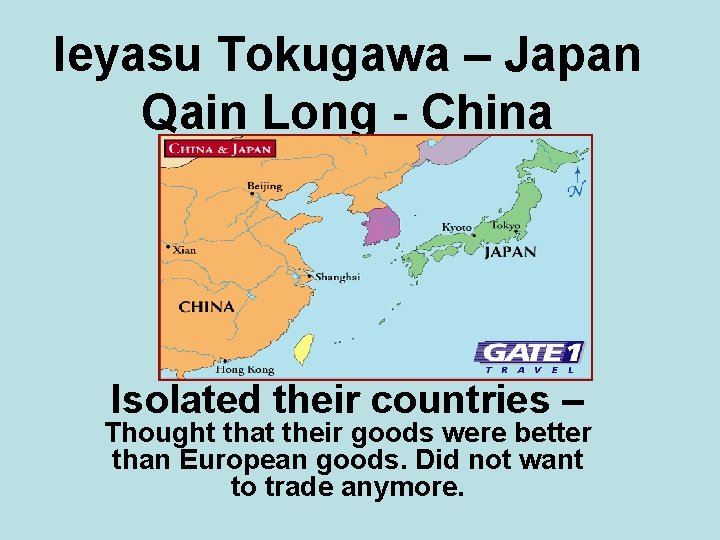
Ieyasu Tokugawa – Japan Qain Long - China Isolated their countries – Thought that their goods were better than European goods. Did not want to trade anymore.
Know the Map of the World and Europe!!!!! • Click the link below to quiz yourself: Europe: http: //www. lizardpoint. com/fun/geoquiz/euroquiz. ht ml World: http: //www. lizardpoint. com/fun/geoquiz/worldquiz. h tml
Also, study the following cities: • Paris, St. Petersburg, Versailles, Istanbul • Moscow, Rome, Warsaw And the bodies of water: Atlantic Ocean, Mediterranean Sea, Black Sea, Aegean Sea
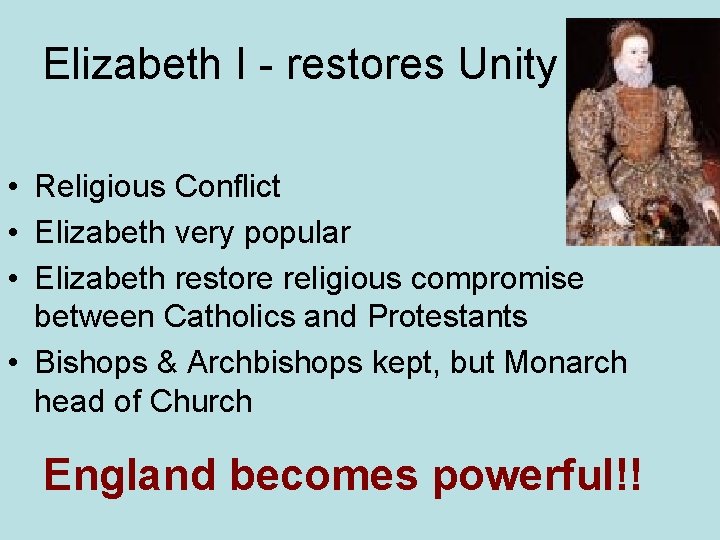
Elizabeth I - restores Unity • Religious Conflict • Elizabeth very popular • Elizabeth restore religious compromise between Catholics and Protestants • Bishops & Archbishops kept, but Monarch head of Church England becomes powerful!!
- Slides: 33