
AFTER THE INITIAL AND SEVERE WITHDRAWAL SYMPTOMS THERE
- Slides: 26
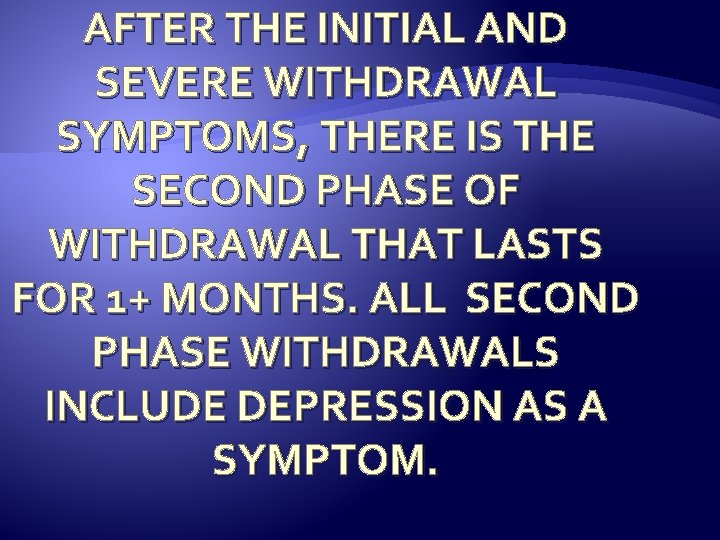
AFTER THE INITIAL AND SEVERE WITHDRAWAL SYMPTOMS, THERE IS THE SECOND PHASE OF WITHDRAWAL THAT LASTS FOR 1+ MONTHS. ALL SECOND PHASE WITHDRAWALS INCLUDE DEPRESSION AS A SYMPTOM.
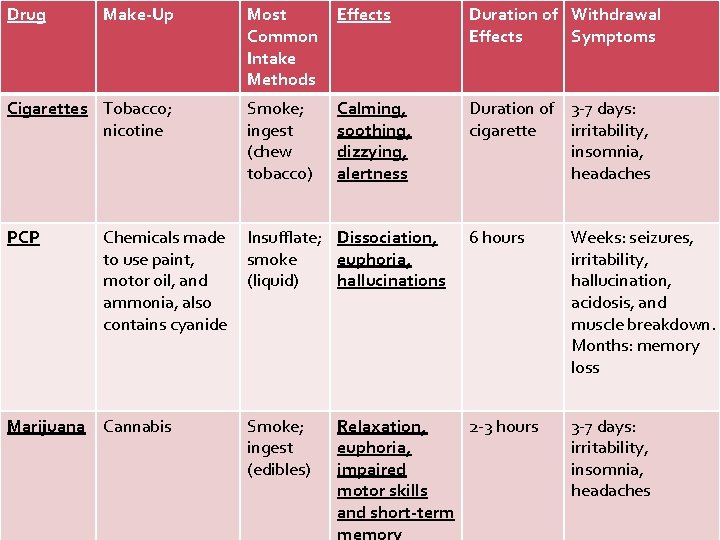
Drug Make-Up Most Common Intake Methods Effects Duration of Withdrawal Effects Symptoms Cigarettes Tobacco; nicotine Smoke; ingest (chew tobacco) Calming, soothing, dizzying, alertness Duration of 3 -7 days: cigarette irritability, insomnia, headaches PCP Chemicals made to use paint, motor oil, and ammonia, also contains cyanide Insufflate; Dissociation, smoke euphoria, (liquid) hallucinations Marijuana Cannabis Smoke; ingest (edibles) 6 hours Relaxation, 2 -3 hours euphoria, impaired motor skills and short-term memory Weeks: seizures, irritability, hallucination, acidosis, and muscle breakdown. Months: memory loss 3 -7 days: irritability, insomnia, headaches
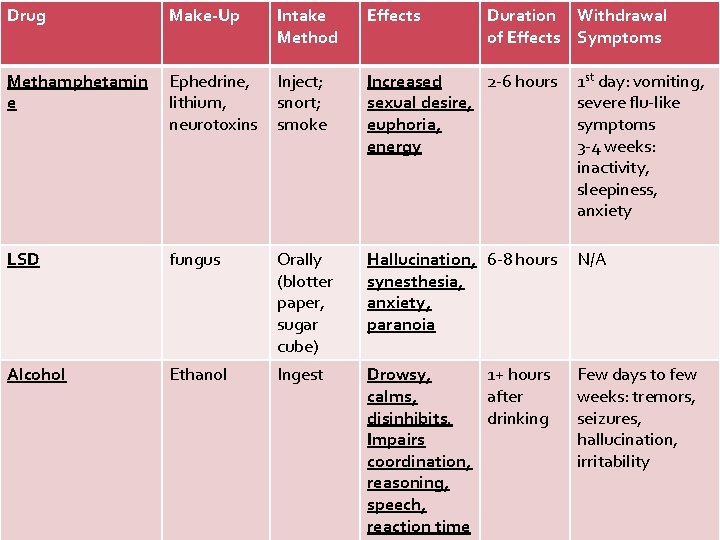
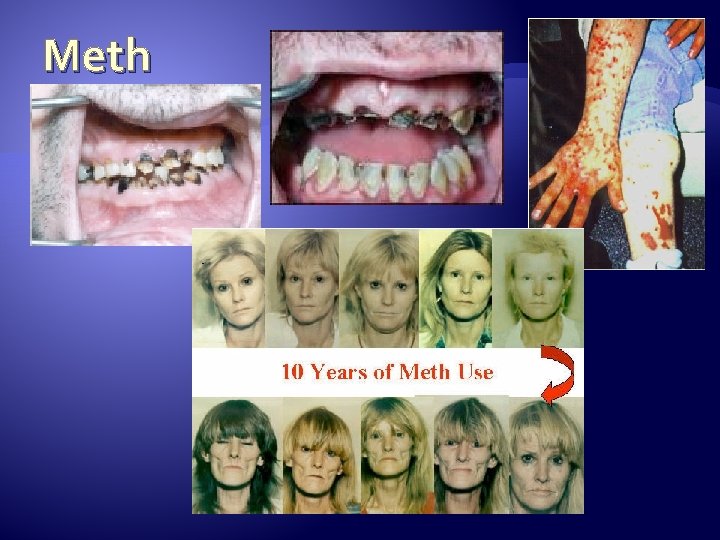
Drug Make-Up Intake Method Effects Duration Withdrawal of Effects Symptoms Methamphetamin e Ephedrine, lithium, neurotoxins Inject; snort; smoke Increased 2 -6 hours sexual desire, euphoria, energy 1 st day: vomiting, severe flu-like symptoms 3 -4 weeks: inactivity, sleepiness, anxiety LSD fungus Orally (blotter paper, sugar cube) Hallucination, 6 -8 hours synesthesia, anxiety, paranoia N/A Alcohol Ethanol Ingest Drowsy, 1+ hours calms, after disinhibits. drinking Impairs coordination, reasoning, speech, reaction time Few days to few weeks: tremors, seizures, hallucination, irritability
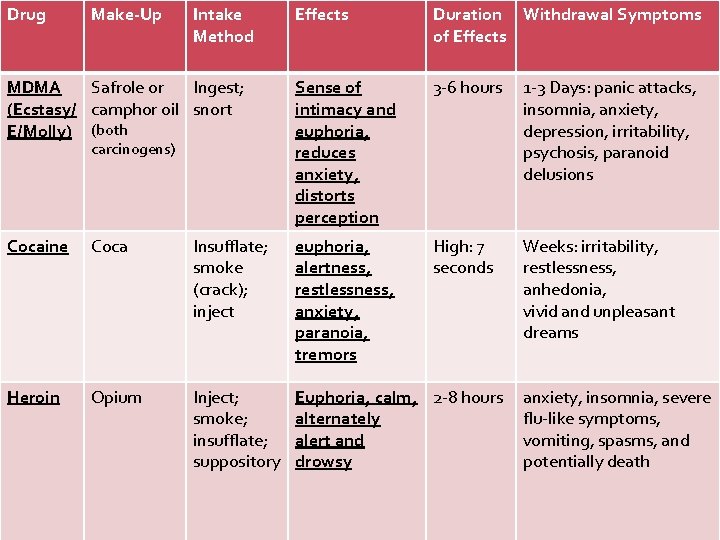
Drug Make-Up Intake Method Effects Duration Withdrawal Symptoms of Effects MDMA Safrole or Ingest; (Ecstasy/ camphor oil snort E/Molly) (both Sense of intimacy and euphoria, reduces anxiety, distorts perception 3 -6 hours 1 -3 Days: panic attacks, insomnia, anxiety, depression, irritability, psychosis, paranoid delusions Cocaine Coca Insufflate; smoke (crack); inject euphoria, alertness, restlessness, anxiety, paranoia, tremors High: 7 seconds Weeks: irritability, restlessness, anhedonia, vivid and unpleasant dreams Heroin Opium Inject; smoke; insufflate; suppository Euphoria, calm, 2 -8 hours alternately alert and drowsy carcinogens) anxiety, insomnia, severe flu-like symptoms, vomiting, spasms, and potentially death
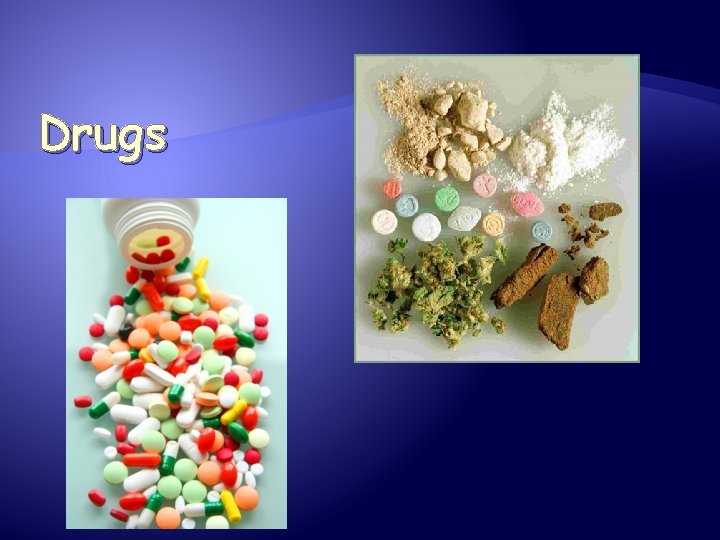
Drugs
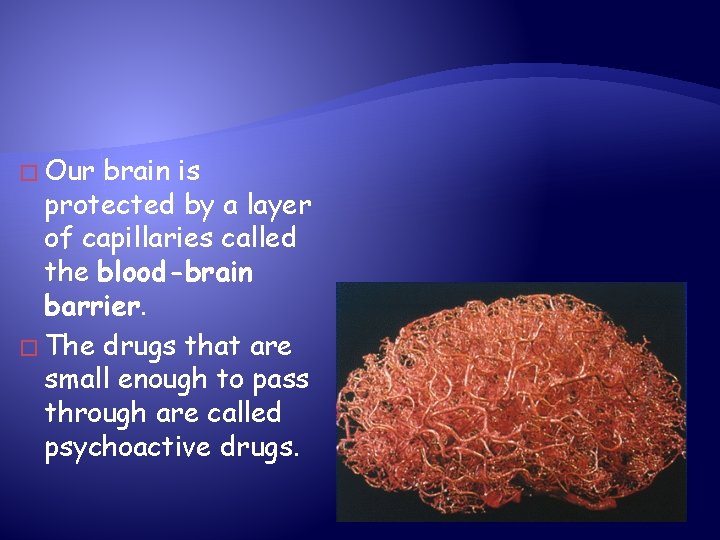
� Our brain is protected by a layer of capillaries called the blood-brain barrier. � The drugs that are small enough to pass through are called psychoactive drugs.
� The faster a drug gets to the brain, the more addicting it is. �Smoking is faster than insufflation, injecting, ingesting, and rectal admin.
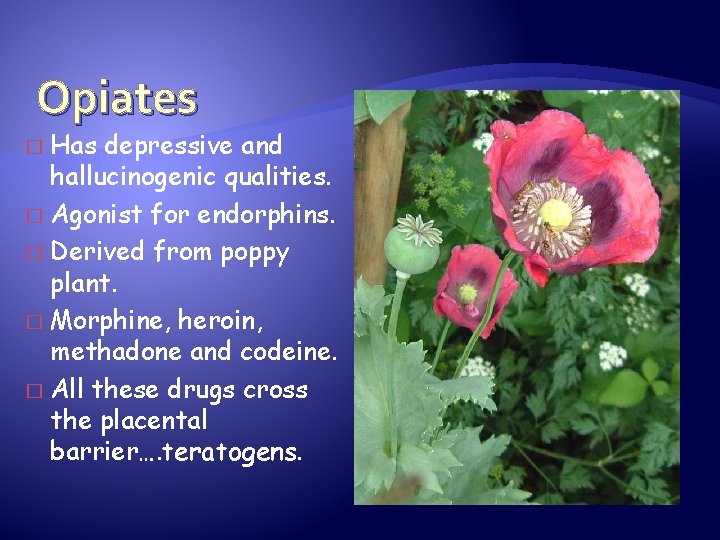
Opiates Has depressive and hallucinogenic qualities. � Agonist for endorphins. � Derived from poppy plant. � Morphine, heroin, methadone and codeine. � All these drugs cross the placental barrier…. teratogens. �
Agonists vs. Antagonists � Agonist-a chemical that fully activates the neuronal receptor that it attaches to to produce a biological response �Cocaine � Antagonist-a chemical that attaches to a receptor but does not activate it and blocks, or reverses, an agonist � Agonist-Antagonist-Does both. Opiates
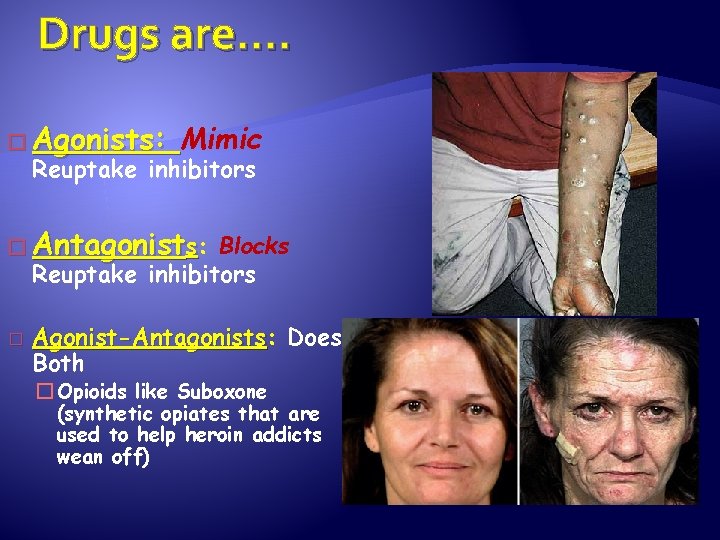
Drugs are…. � Agonists: Mimic Reuptake inhibitors � Antagonists: Blocks Reuptake inhibitors � Agonist-Antagonists: Agonist-Antagonists Does Both � Opioids like Suboxone (synthetic opiates that are used to help heroin addicts wean off)
Agonists � Acetylcholine-Excitatory-Nicotine and black widow venom � Dopamine-Inhibitory-Cocaine and nicotine � Endorphins-Inhibitory-Opiates � GABA-Inhibitory-Valium, barbiturates, and sleeping pills � Glutamate-Antihistamines � Serotonin-Inhibitory-LSD and ecstasy � Norepinephrine-Excitatory-Caffeine, cocaine, and amphetamines
Antagonists Acetylcholine-Pesticides and nerve gas � Dopamine-Haloperidol (used to treat cocaine or meth overdose), Antipsychotics (e. g. , Seroquel), anti-anxiety and antidepressants. � Endorphins-Naloxone (used to treat overdose from opiates) � GABA-Antihistamines and drugs used to treat depressant overdose � Glutamate-Alcohol � Serotonin-SSRIs (e. g. , sertraline, fluoxetine), antipsychotics, anti-anxiety and antidepressants. � Norepinephrine-Lithium and other mood-stabilizers, antidepressants (e. g. , Mirtazapine �
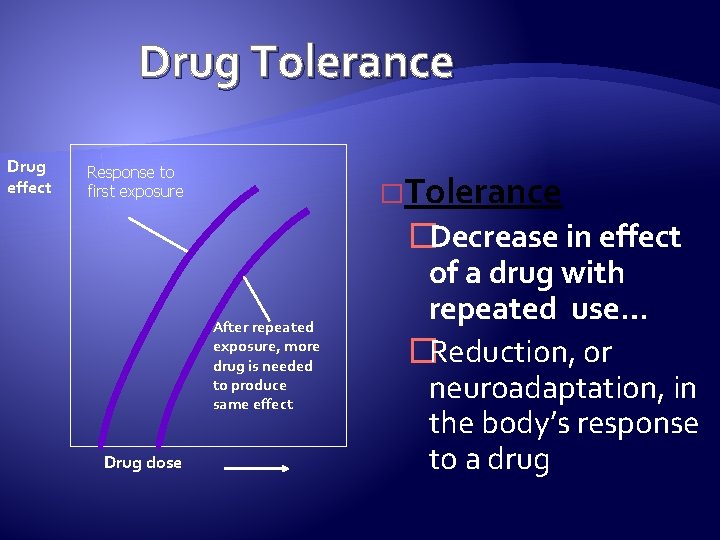
Drug Tolerance Drug effect Response to first exposure �Tolerance After repeated exposure, more drug is needed to produce same effect Drug dose �Decrease in effect of a drug with repeated use… �Reduction, or neuroadaptation, in the body’s response to a drug
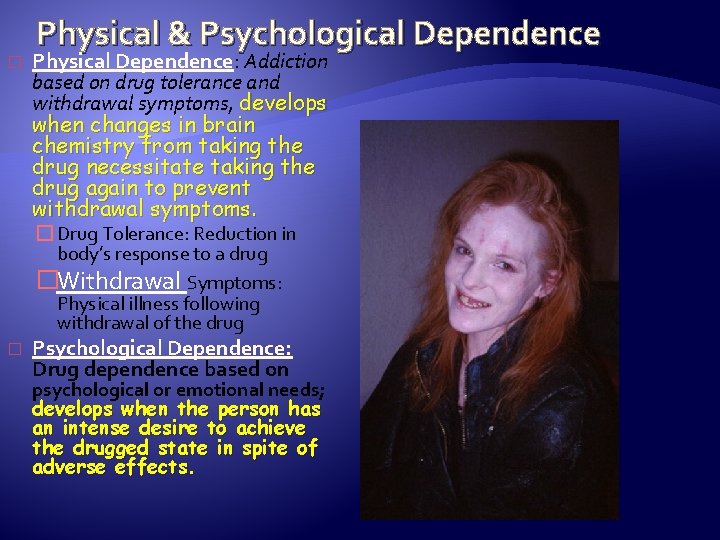
� Physical & Psychological Dependence Physical Dependence: Addiction based on drug tolerance and withdrawal symptoms, develops when changes in brain chemistry from taking the drug necessitate taking the drug again to prevent withdrawal symptoms. � Drug Tolerance: Reduction in body’s response to a drug �Withdrawal Symptoms: Physical illness following withdrawal of the drug � Psychological Dependence: Drug dependence based on psychological or emotional needs; develops when the person has an intense desire to achieve the drugged state in spite of adverse effects.
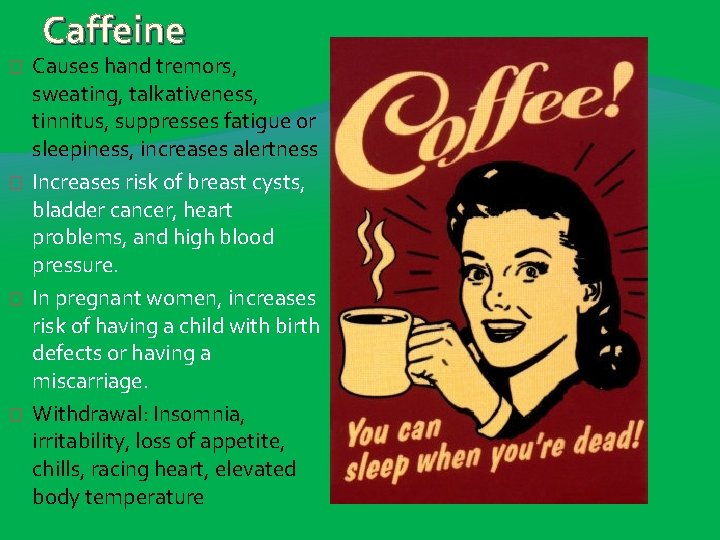
Caffeine � � Causes hand tremors, sweating, talkativeness, tinnitus, suppresses fatigue or sleepiness, increases alertness Increases risk of breast cysts, bladder cancer, heart problems, and high blood pressure. In pregnant women, increases risk of having a child with birth defects or having a miscarriage. Withdrawal: Insomnia, irritability, loss of appetite, chills, racing heart, elevated body temperature
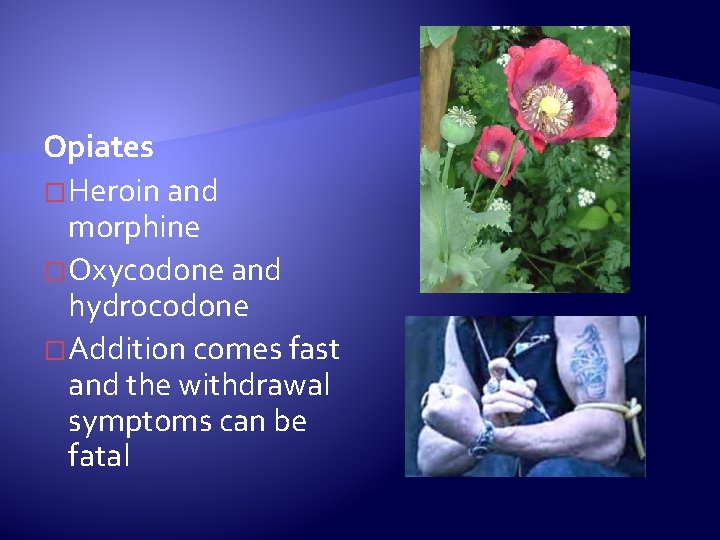
Opiates � Heroin and morphine � Oxycodone and hydrocodone � Addition comes fast and the withdrawal symptoms can be fatal
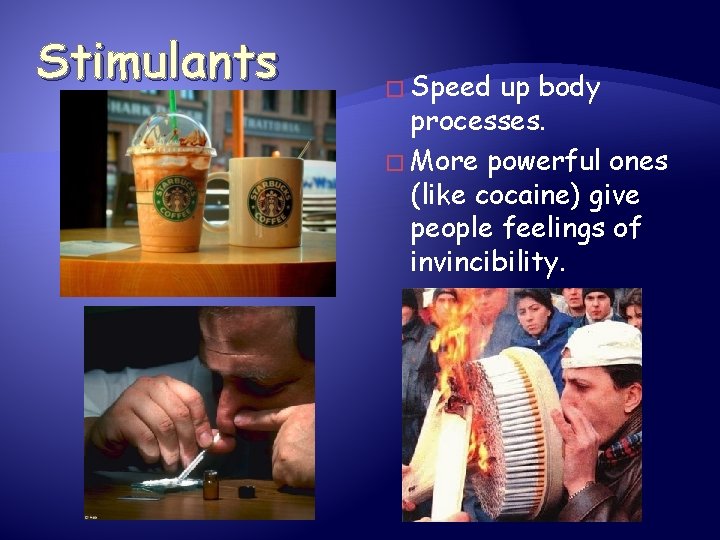
Stimulants � Speed up body processes. � More powerful ones (like cocaine) give people feelings of invincibility.
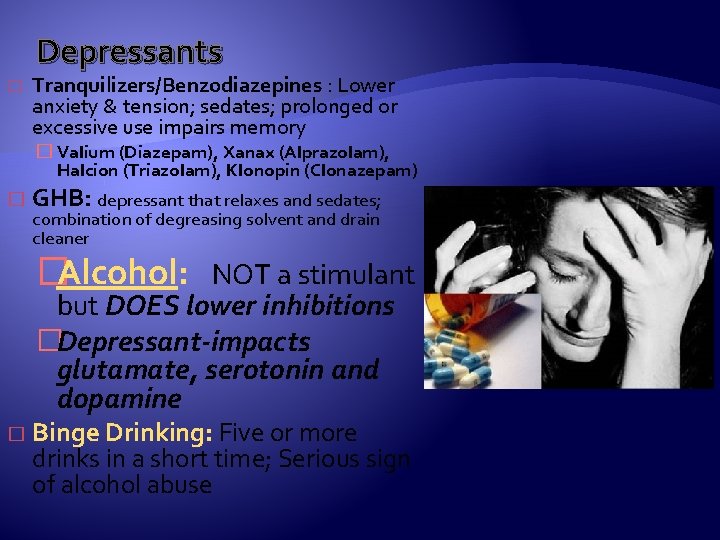
Depressants � Tranquilizers/Benzodiazepines : Lower anxiety & tension; sedates; prolonged or excessive use impairs memory � Valium (Diazepam), Xanax (Alprazolam), Halcion (Triazolam), Klonopin (Clonazepam) � GHB: depressant that relaxes and sedates; combination of degreasing solvent and drain cleaner �Alcohol: NOT a stimulant but DOES lower inhibitions �Depressant-impacts glutamate, serotonin and dopamine � Binge Drinking: Five or more drinks in a short time; Serious sign of alcohol abuse
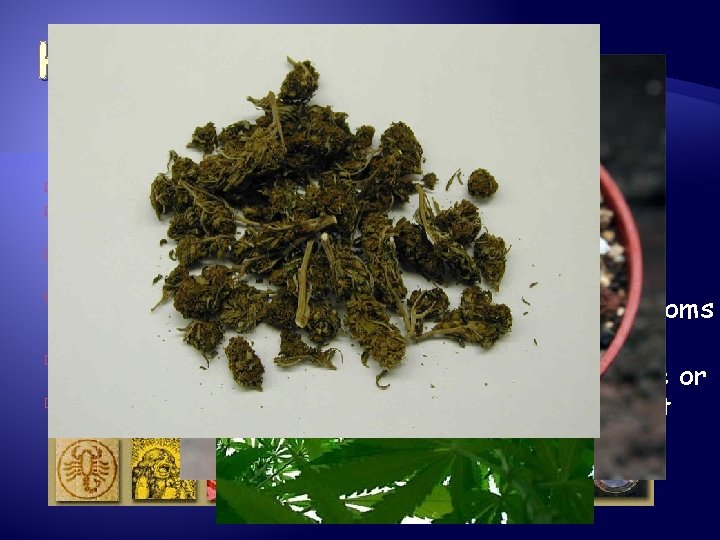
Hallucinogens � Psychedelics � � � Health Risks of Using Marijuana: Causes precancerous changes in lung cells. Suppresses immune system, perhaps increasing risk of disease. Activity levels in the cerebellum are lower than normal in pot users. Can damage some of the brain’s memory centers. Temporarily lowers sperm count � Causes changes in perceptions of reality � LSD, peyote, psilocybin mushrooms and marijuana. � Reverse tolerance or synergistic effect
Hallucinogens � � � � Health Risks of Using Marijuana: Causes precancerous changes in lung cells. Suppresses immune system, perhaps increasing risk of disease. Activity levels in the cerebellum are lower than normal in pot users. Pot may damage some of the brain’s memory centers. Temporarily lowers sperm count � � Psychedelics Causes changes in perceptions of reality LSD, peyote, psilocybin mushrooms and marijuana. Reverse tolerance or synergistic effect
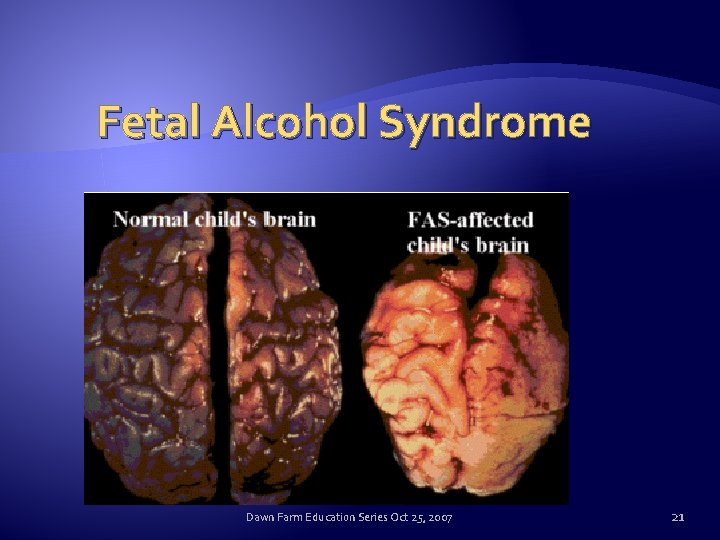
Fetal Alcohol Syndrome Dawn Farm Education Series Oct 25, 2007 21
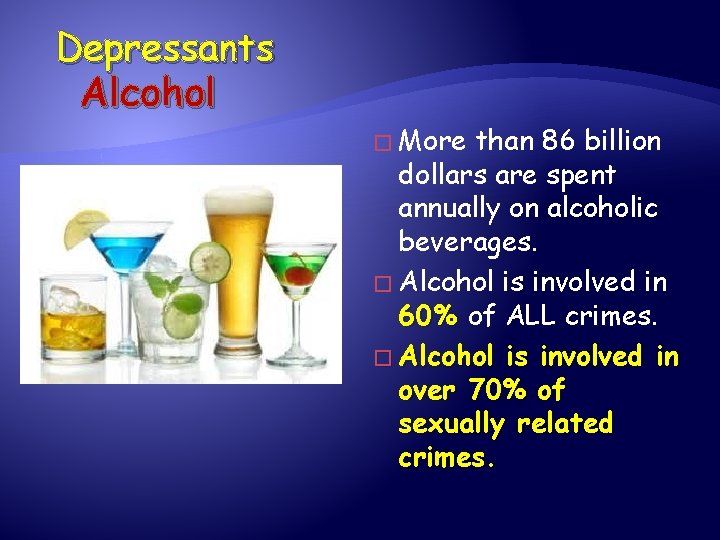
Depressants Alcohol � More than 86 billion dollars are spent annually on alcoholic beverages. � Alcohol is involved in 60% of ALL crimes. � Alcohol is involved in over 70% of sexually related crimes.
Some Health Risks of Using Marijuana � � � Causes precancerous changes in lung cells. Suppresses immune system, perhaps increasing risk of disease. Activity levels in the cerebellum are lower than normal in pot users. � Pot may damage some of the brain’s memory centers. � Temporarily lowers sperm count
Cocaine � Cocaine achieves its effect through the chemical messengers dopamine and noradrenaline. � Processed into crack—less pure “cut” or “stepped on”
Meth
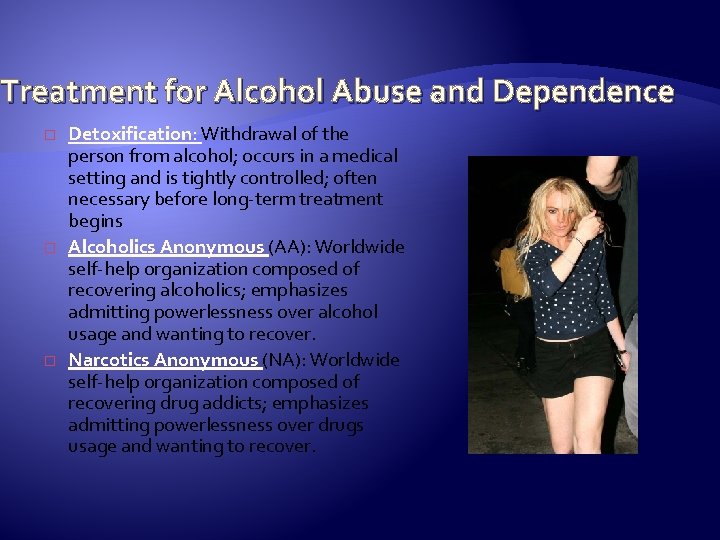
Treatment for Alcohol Abuse and Dependence � � � Detoxification: Withdrawal of the person from alcohol; occurs in a medical setting and is tightly controlled; often necessary before long-term treatment begins Alcoholics Anonymous (AA): Worldwide self-help organization composed of recovering alcoholics; emphasizes admitting powerlessness over alcohol usage and wanting to recover. Narcotics Anonymous (NA): Worldwide self-help organization composed of recovering drug addicts; emphasizes admitting powerlessness over drugs usage and wanting to recover.