
After Charlemagne Kingdom divided local nobles gained power
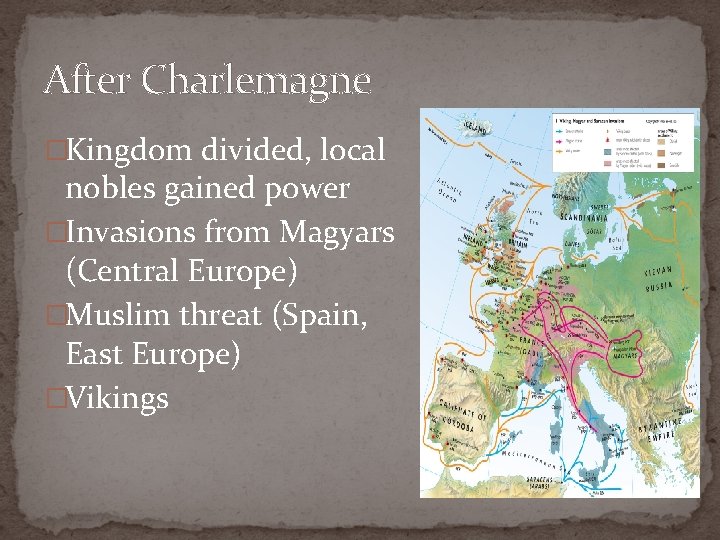
After Charlemagne �Kingdom divided, local nobles gained power �Invasions from Magyars (Central Europe) �Muslim threat (Spain, East Europe) �Vikings
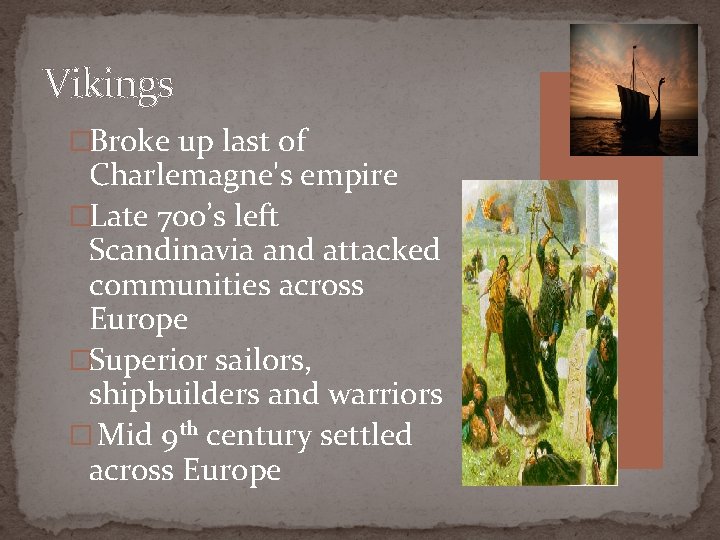
Vikings �Broke up last of Charlemagne's empire �Late 700’s left Scandinavia and attacked communities across Europe �Superior sailors, shipbuilders and warriors � Mid 9 th century settled across Europe
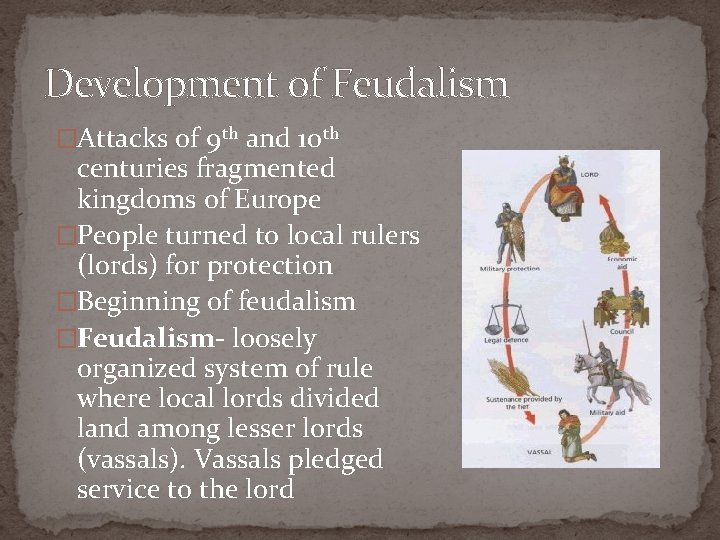
Development of Feudalism �Attacks of 9 th and 10 th centuries fragmented kingdoms of Europe �People turned to local rulers (lords) for protection �Beginning of feudalism �Feudalism- loosely organized system of rule where local lords divided land among lesser lords (vassals). Vassals pledged service to the lord
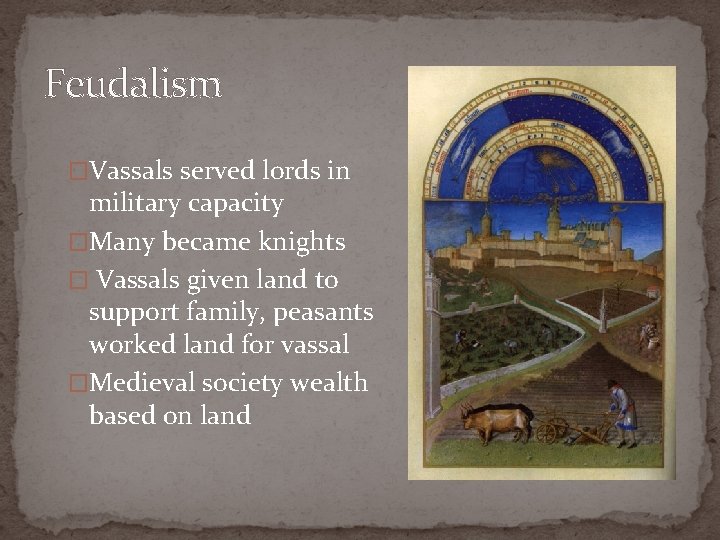
Feudalism �Vassals served lords in military capacity �Many became knights � Vassals given land to support family, peasants worked land for vassal �Medieval society wealth based on land
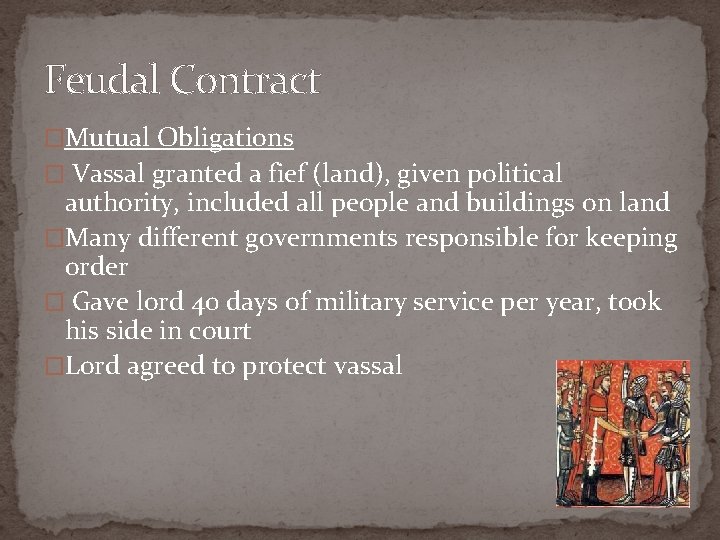
Feudal Contract �Mutual Obligations � Vassal granted a fief (land), given political authority, included all people and buildings on land �Many different governments responsible for keeping order � Gave lord 40 days of military service per year, took his side in court �Lord agreed to protect vassal
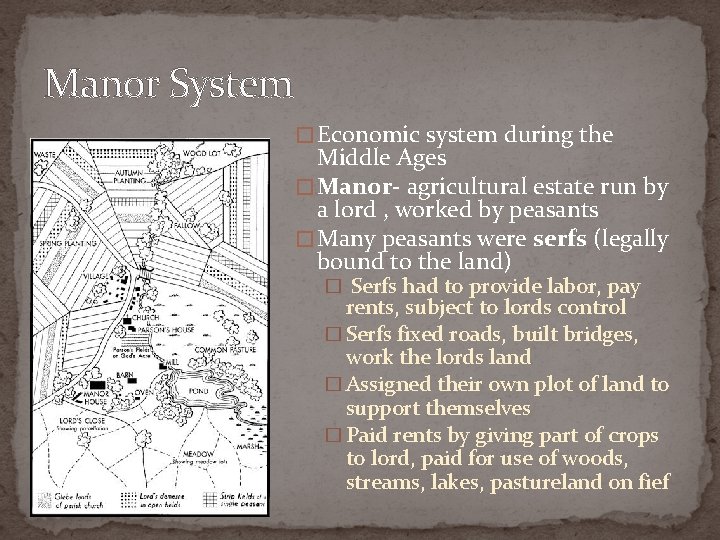
Manor System � Economic system during the Middle Ages � Manor- agricultural estate run by a lord , worked by peasants � Many peasants were serfs (legally bound to the land) � Serfs had to provide labor, pay rents, subject to lords control � Serfs fixed roads, built bridges, work the lords land � Assigned their own plot of land to support themselves � Paid rents by giving part of crops to lord, paid for use of woods, streams, lakes, pastureland on fief
Nobility of the Middle Ages � Dominated by men, chief concern was warfare � Kings, dukes, counts, bishops, archbishops � Had large estates, political, economic social power � Many nobles were knights � Idea of chivalry (code of ethics they were supposed to uphold) � Women remained under control of men � Many women had power as managers of estates
Growth of European Kingdoms England, France, Germany, France, Eastern Europe, Russia
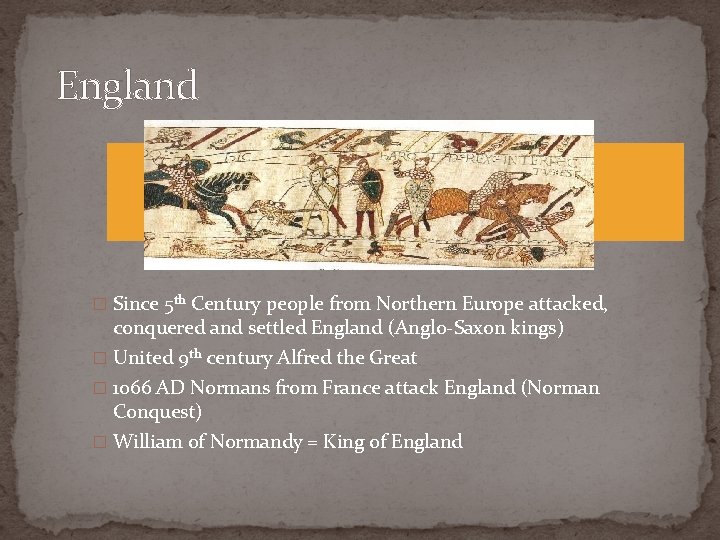
England � Since 5 th Century people from Northern Europe attacked, conquered and settled England (Anglo-Saxon kings) � United 9 th century Alfred the Great � 1066 AD Normans from France attack England (Norman Conquest) � William of Normandy = King of England
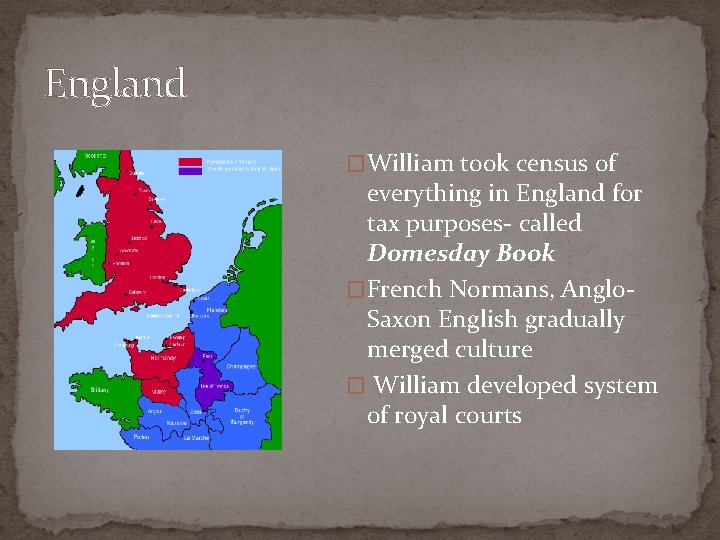
England �William took census of everything in England for tax purposes- called Domesday Book �French Normans, Anglo. Saxon English gradually merged culture � William developed system of royal courts
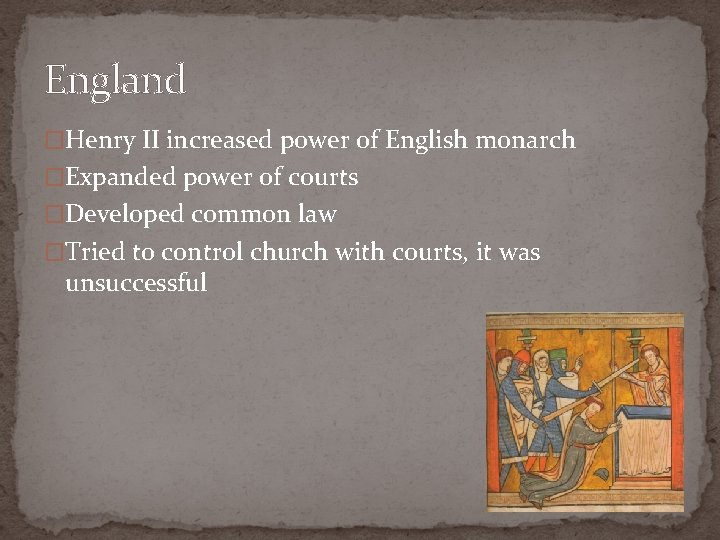
England �Henry II increased power of English monarch �Expanded power of courts �Developed common law �Tried to control church with courts, it was unsuccessful
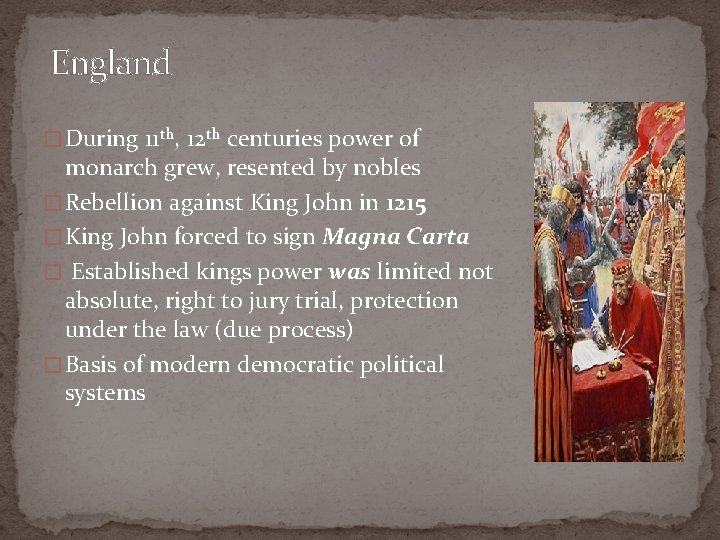
England � During 11 th, 12 th centuries power of monarch grew, resented by nobles � Rebellion against King John in 1215 � King John forced to sign Magna Carta � Established kings power was limited not absolute, right to jury trial, protection under the law (due process) � Basis of modern democratic political systems
England �Under reign of Edward I representative government developed- English Parliament (1296) �Composed of two knights, two people from every county and town (House of Commons) �Nobles, Bishops from all over England (House of Lords) �Passed laws, granted taxes
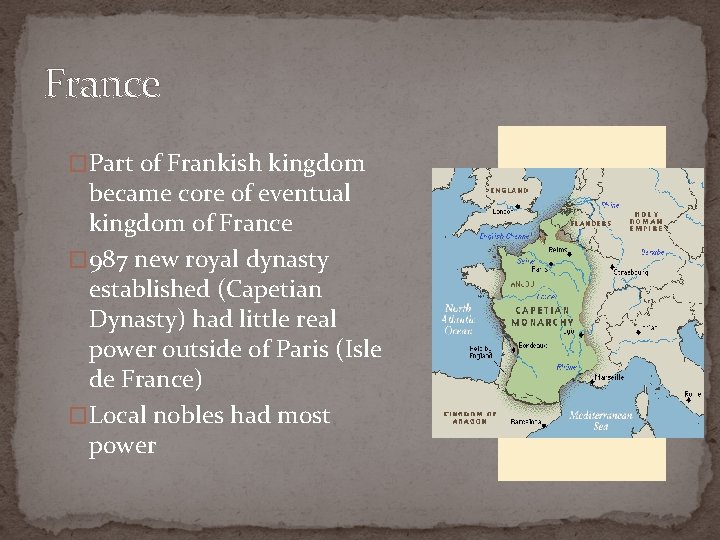
France �Part of Frankish kingdom became core of eventual kingdom of France � 987 new royal dynasty established (Capetian Dynasty) had little real power outside of Paris (Isle de France) �Local nobles had most power
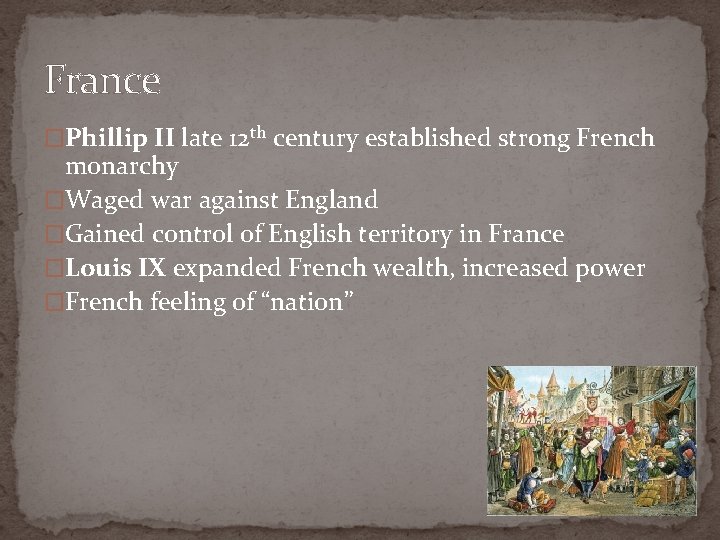
France �Phillip II late 12 th century established strong French monarchy �Waged war against England �Gained control of English territory in France �Louis IX expanded French wealth, increased power �French feeling of “nation”
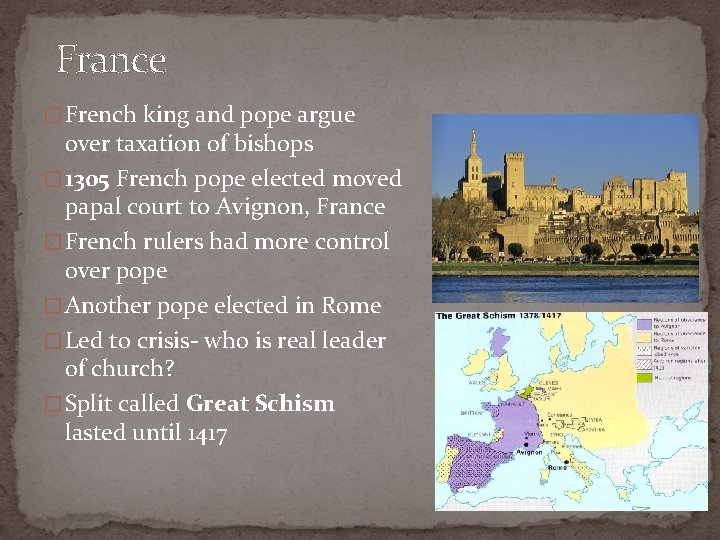
France � French king and pope argue over taxation of bishops � 1305 French pope elected moved papal court to Avignon, France � French rulers had more control over pope � Another pope elected in Rome � Led to crisis- who is real leader of church? � Split called Great Schism lasted until 1417
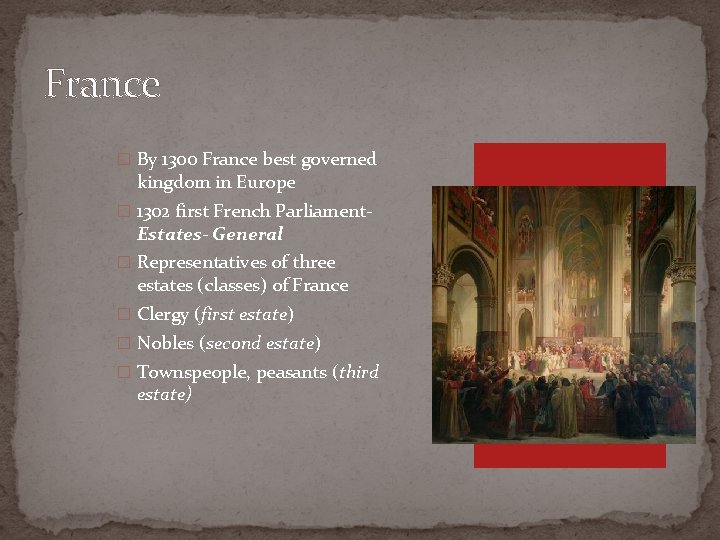
France � By 1300 France best governed kingdom in Europe � 1302 first French Parliament- Estates- General � Representatives of three estates (classes) of France � Clergy (first estate) � Nobles (second estate) � Townspeople, peasants (third estate)
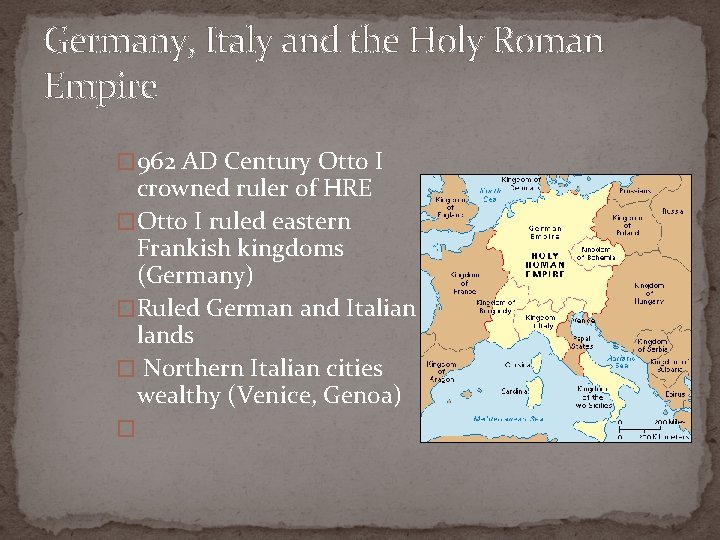
Germany, Italy and the Holy Roman Empire � 962 AD Century Otto I crowned ruler of HRE �Otto I ruled eastern Frankish kingdoms (Germany) �Ruled German and Italian lands � Northern Italian cities wealthy (Venice, Genoa) �
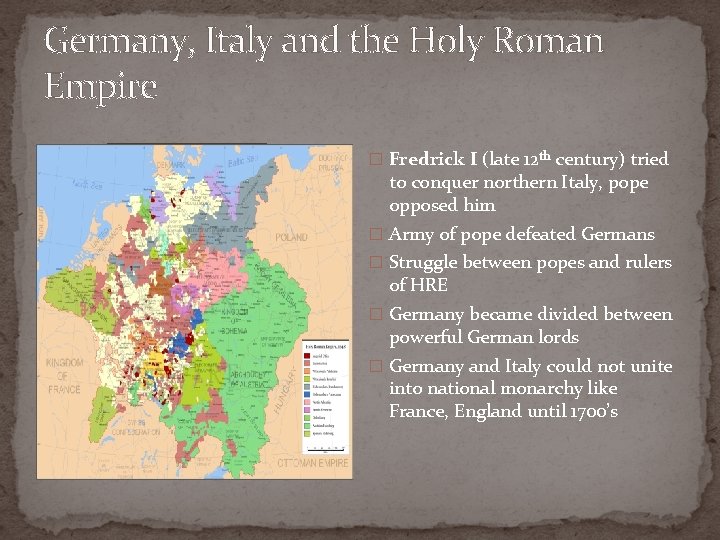
Germany, Italy and the Holy Roman Empire � Fredrick I (late 12 th century) tried to conquer northern Italy, pope opposed him � Army of pope defeated Germans � Struggle between popes and rulers of HRE � Germany became divided between powerful German lords � Germany and Italy could not unite into national monarchy like France, England until 1700’s
Central and Eastern Europe �Slavic people divided into three groups �Western Slavs- Poles, Czechs �Catholic, part of western European culture �Southern and Eastern Slavs- Eastern Orthodox cultural life linked to Byzantine Empire (Bulgarians, Croats, Serbs)

Europe 1000 AD
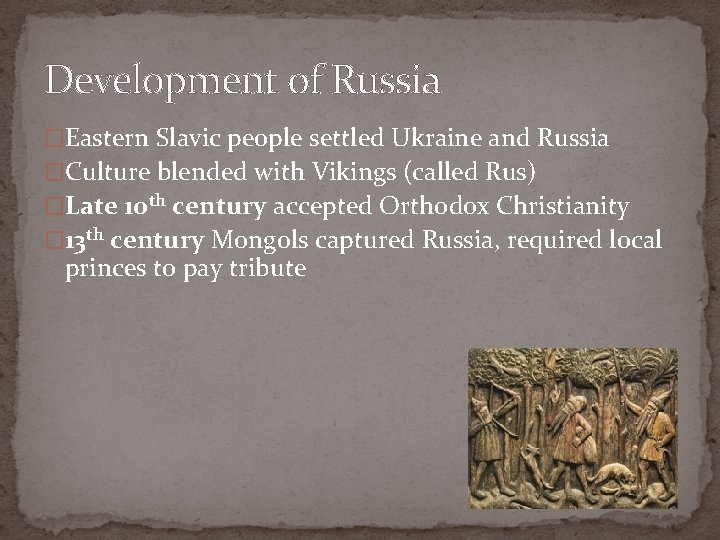
Development of Russia �Eastern Slavic people settled Ukraine and Russia �Culture blended with Vikings (called Rus) �Late 10 th century accepted Orthodox Christianity � 13 th century Mongols captured Russia, required local princes to pay tribute
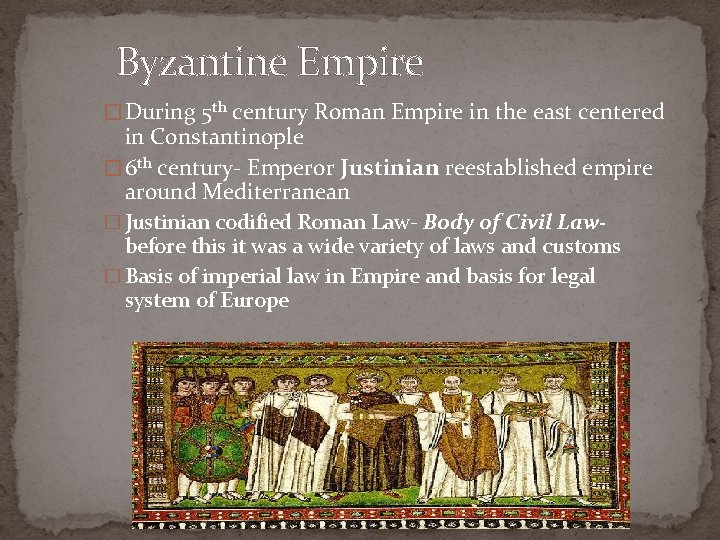
Byzantine Empire � During 5 th century Roman Empire in the east centered in Constantinople � 6 th century- Emperor Justinian reestablished empire around Mediterranean � Justinian codified Roman Law- Body of Civil Lawbefore this it was a wide variety of laws and customs � Basis of imperial law in Empire and basis for legal system of Europe
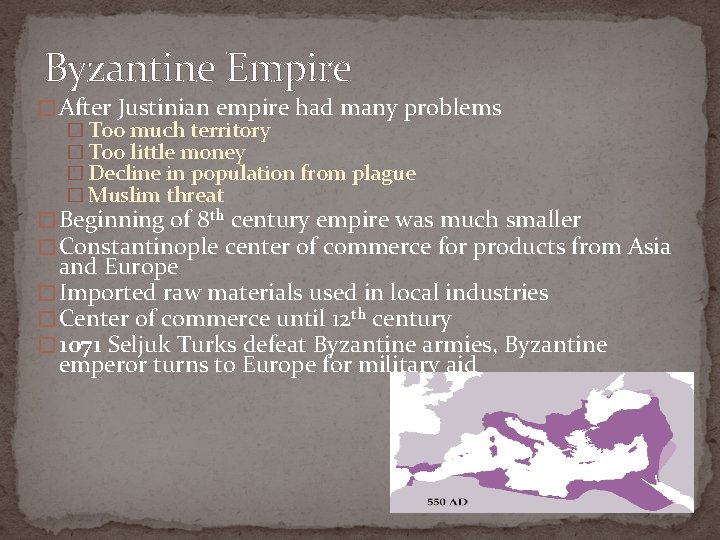
Byzantine Empire � After Justinian empire had many problems � Too much territory � Too little money � Decline in population from plague � Muslim threat � Beginning of 8 th century empire was much smaller � Constantinople center of commerce for products from Asia and Europe � Imported raw materials used in local industries � Center of commerce until 12 th century � 1071 Seljuk Turks defeat Byzantine armies, Byzantine emperor turns to Europe for military aid
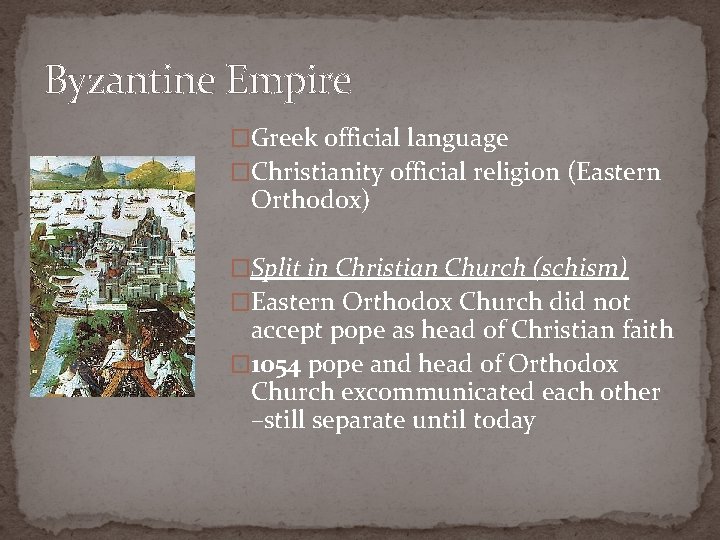
Byzantine Empire �Greek official language �Christianity official religion (Eastern Orthodox) �Split in Christian Church (schism) �Eastern Orthodox Church did not accept pope as head of Christian faith � 1054 pope and head of Orthodox Church excommunicated each other –still separate until today
- Slides: 26