
Africas Major Climate Zones and Geography West Africa
- Slides: 16
Africa’s Major Climate Zones and Geography
West Africa • The vast majority of West Africa is savannah and semiarid sahel • West African droughts are the norm • Expansion of the Sahara, called desertification, has affected people living in West Africa for the past 3000 years. • Access to Atlantic Ocean and navigable rivers like the Niger River encouraged trade
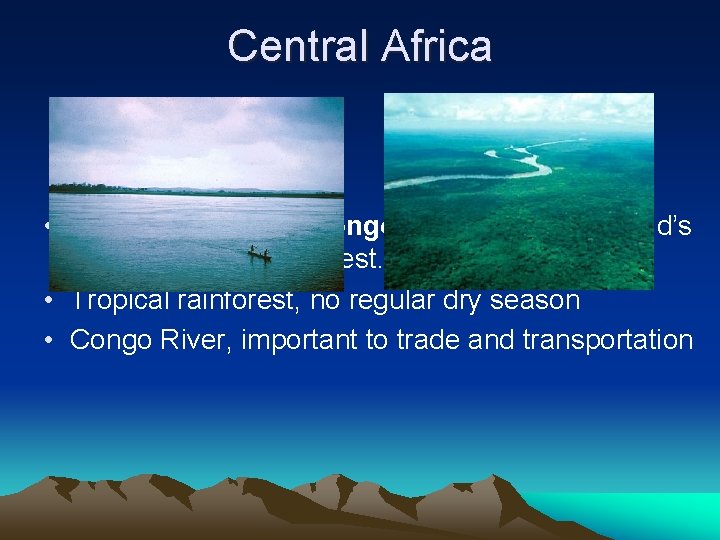
Central Africa • Main feature is the Congo Rainforest, the world’s second largest rainforest. • Tropical rainforest, no regular dry season • Congo River, important to trade and transportation
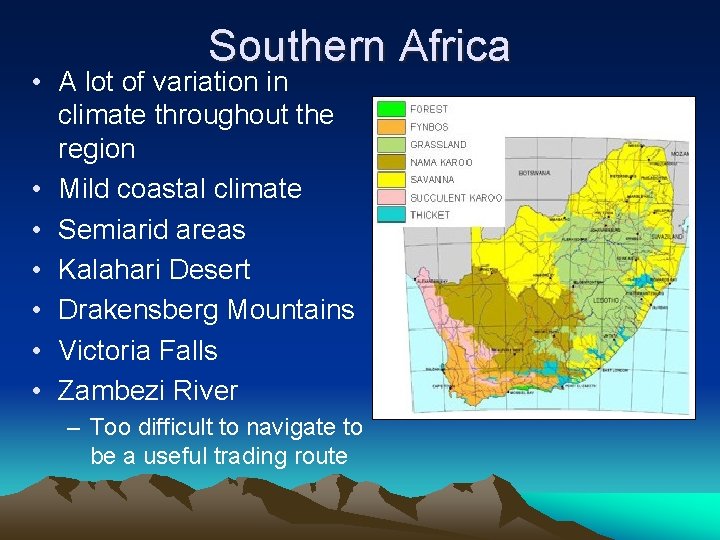
Southern Africa • A lot of variation in climate throughout the region • Mild coastal climate • Semiarid areas • Kalahari Desert • Drakensberg Mountains • Victoria Falls • Zambezi River – Too difficult to navigate to be a useful trading route
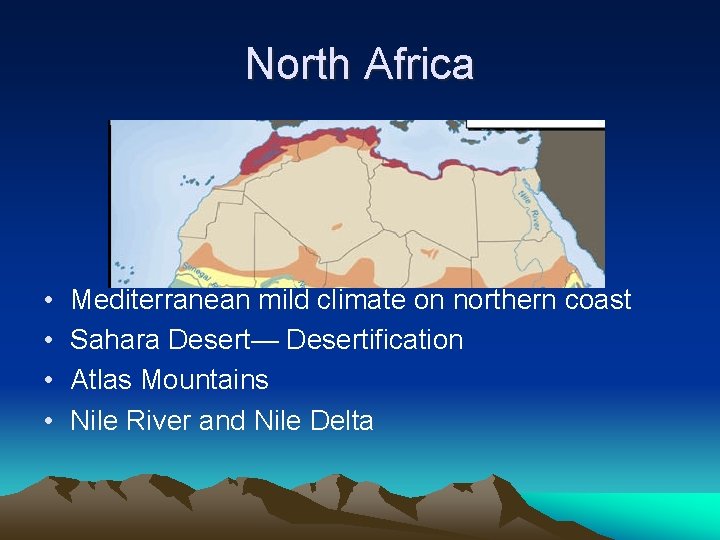
North Africa • • Mediterranean mild climate on northern coast Sahara Desert— Desertification Atlas Mountains Nile River and Nile Delta
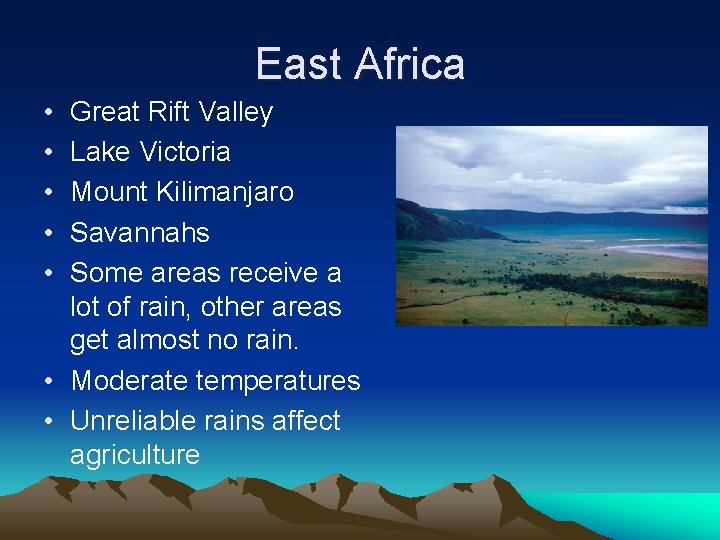
East Africa • • • Great Rift Valley Lake Victoria Mount Kilimanjaro Savannahs Some areas receive a lot of rain, other areas get almost no rain. • Moderate temperatures • Unreliable rains affect agriculture
“Cradle of Humanity” • Archeologists call East Africa the cradle of humanity. • Has the largest number of hominid fossils – Olduvai Gorge – Great Rift Valley
Mitochondrial Eve • Theory claims that all living humans are descended from humans living in Eastern Africa 150, 000 to 200, 000 years ago • Assumes that mitochondrial DNA changes at a predictable rate over time. • Supported by the fact that modern human DNA is very different from Neanderthal and other pre-humans.
Replacement Model • Suggests that our ancestors from Eastern Africa wiped out the rest of the human-like species in the world. • DNA most supports this theory.
Assimilation Model • Suggests that humans from Eastern Africa merged with the other human-like populations around the world • Most supported by archeological evidence (artifacts)
Multi-regionalist Theory • Opposes the Mitochondrial Eve theory entirely. • Wolpoff at the University of Michigan • Supported by the similarity between prehuman and modern humans in different regions. • Not supported by DNA evidence
TAKE A STAND • Which of the human origins theories would you support? • Remember to include 2 facts, 1 piece of data, at least 1 CDV, and the opposing opinion.
Climate and Geography • Group artists • Responsible for showing climate and geography on the map. • Responsible for explaining how climate and geography affected the history of the region.
History and Kingdoms • The group fact checkers • Responsible for creating a timeline of important events. • Responsible for describing the rise and decline of kingdoms
Culture and Religion • Responsible for making sure that a diverse history is represented. • Responsible for describing the regions cultures • Responsible for explaining affect major religions had the region.
Economy and Agriculture • Responsible for getting group materials and putting them back at the end of group time. • Responsible for identifying important resources and how they affected a region. • Responsible for describing the regions’ relationship to agriculture.