
AfricanAmerican Discrimination and Segregation SWBAT The student will
African-American Discrimination and Segregation
SWBAT The student will apply social science skills to understand how the nation grew and changed from the end of Reconstruction through the early twentieth century by d) analyzing the impact of prejudice and discrimination, including “Jim Crow” laws, the responses of Booker T. Washington and W. E. B. Du. Bois
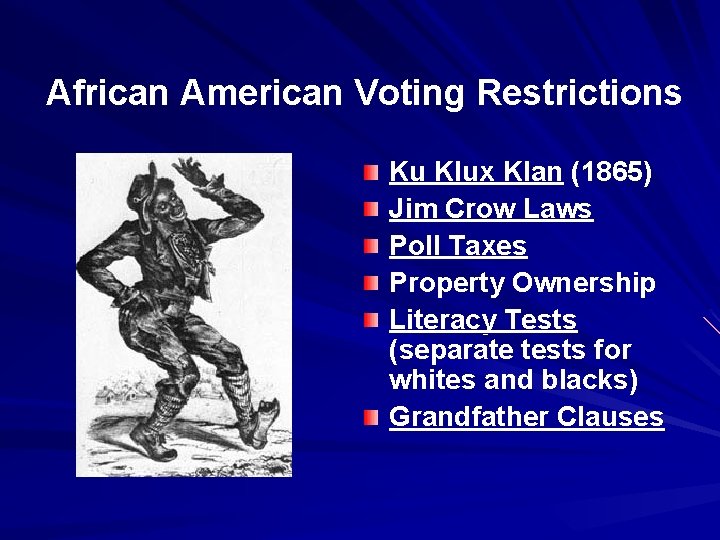
African American Voting Restrictions Ku Klux Klan (1865) Jim Crow Laws Poll Taxes Property Ownership Literacy Tests (separate tests for whites and blacks) Grandfather Clauses
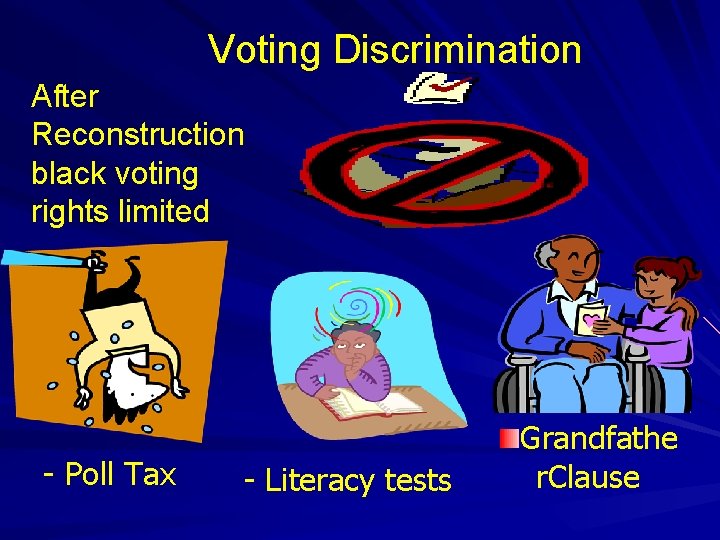
Voting Discrimination After Reconstruction black voting rights limited - Poll Tax - Literacy tests Grandfathe r. Clause
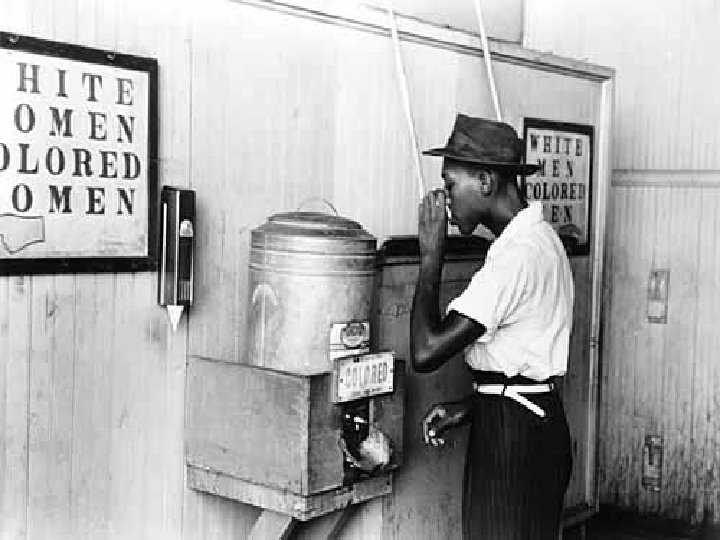
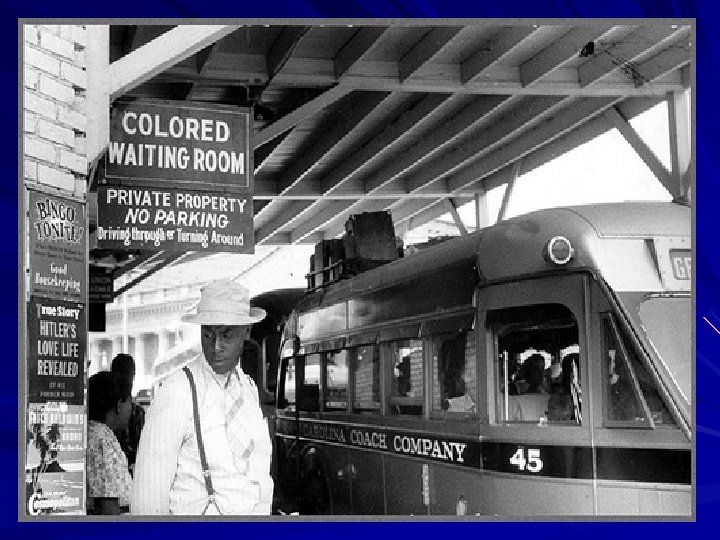
Jim Crow Laws After reconstruction, many Southern state governments passed “Jim Crow” laws forcing separation of the races in public places. Jim Crow laws were named for an antebellum minstrel show character.
Jim Crow Laws: Series of laws passed in the South that forced separation of the races in public places (segregation)
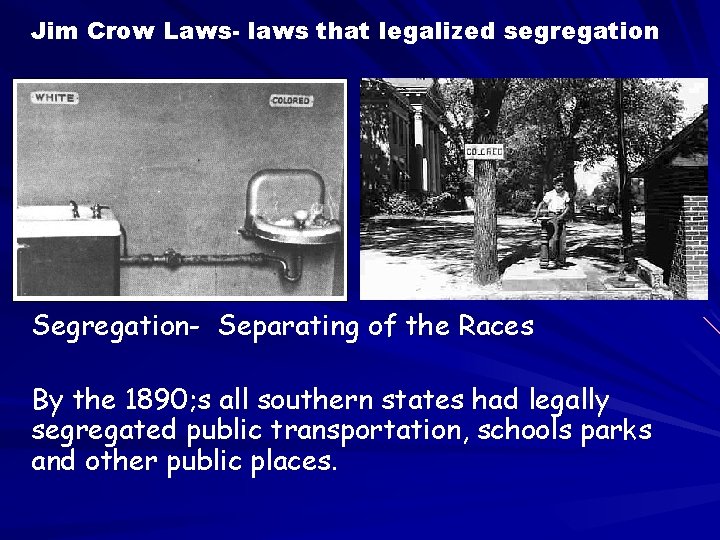
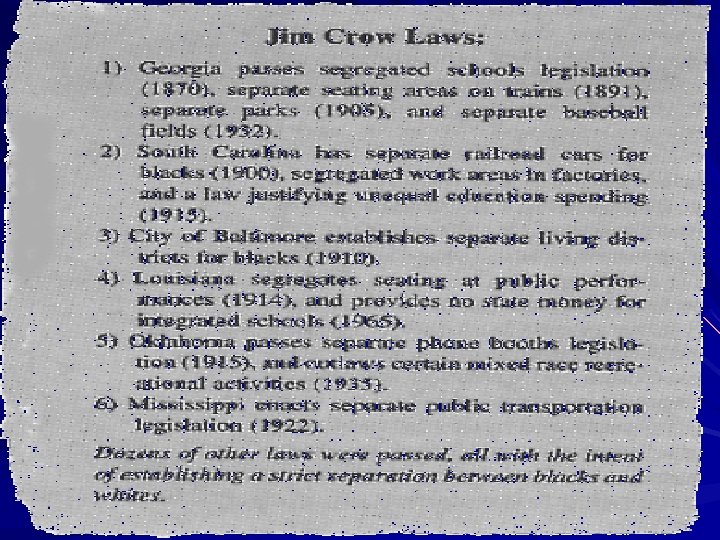
Jim Crow Laws- laws that legalized segregation Segregation- Separating of the Races By the 1890; s all southern states had legally segregated public transportation, schools parks and other public places.
Plessy v. Ferguson African Americans were harassed, intimidated, and sometimes lynched. African Americans looked to the courts to safeguard their rights. The United States Supreme Court ruled on civil rights issues. Their rulings, as in the Plessy v. Ferguson, upheld the “Jim Crow” laws and did not provide relief for African Americans.
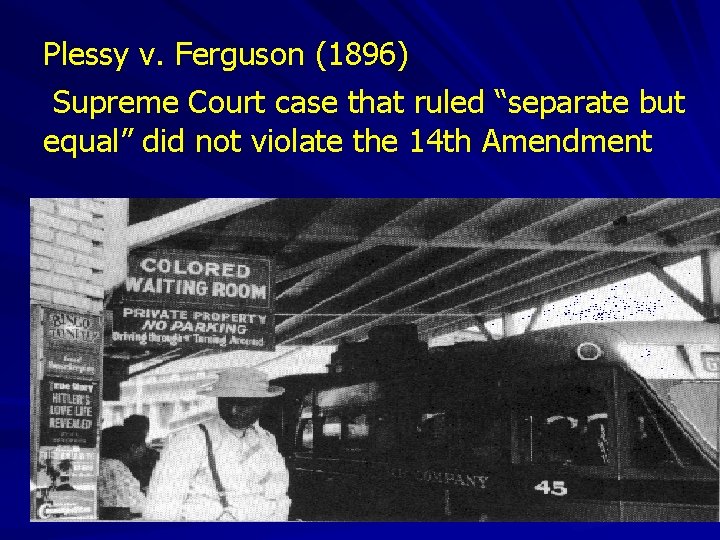
Plessy v. Ferguson (1896) Supreme Court case that ruled “separate but equal” did not violate the 14 th Amendment
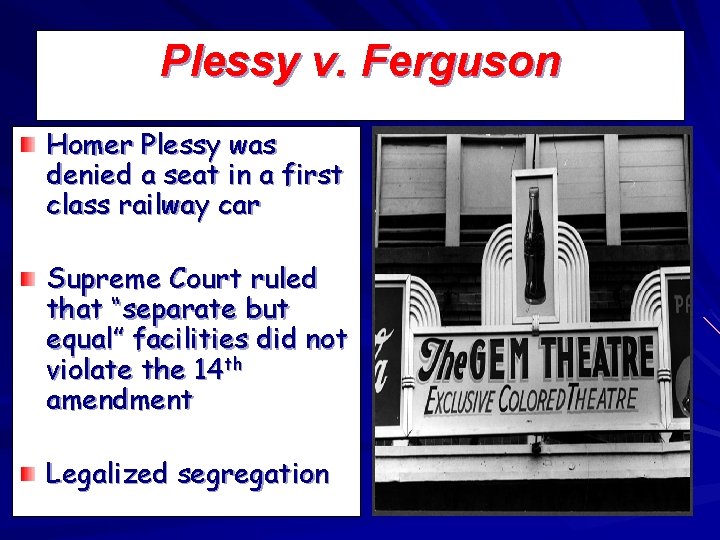
Plessy v. Ferguson Homer Plessy was denied a seat in a first class railway car Supreme Court ruled that “separate but equal” facilities did not violate the 14 th amendment Legalized segregation
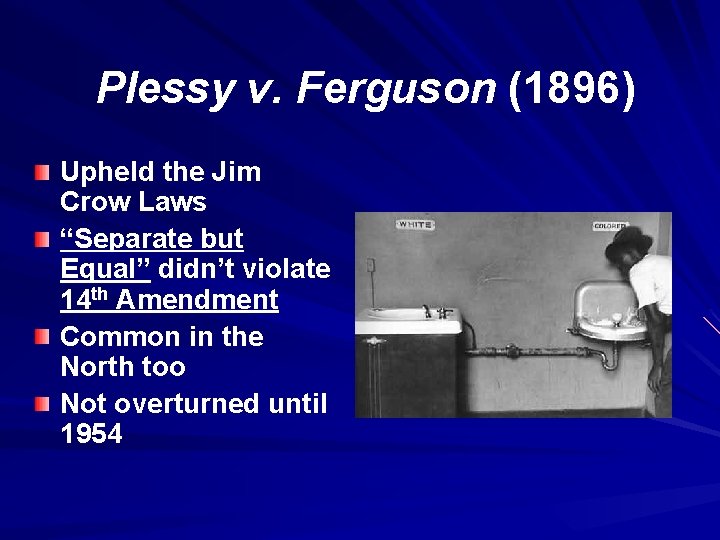
Plessy v. Ferguson (1896) Upheld the Jim Crow Laws “Separate but Equal” didn’t violate 14 th Amendment Common in the North too Not overturned until 1954
Early African American Civil Rights Leaders The various responses of African Americans to discrimination and segregation were exemplified by the following leaders: Booker T. Washington W. E. B. Du. Bois Ida B. Wells
Booker T. Washington Gradual integration is the best way. African Americans should accept some forms of segregation “no race can prosper until it learns there is as much dignity in tilling a field as in writing a poem. " What did Booker T. Washington mean by this statement? Learning practical skills is important.
Booker T. Washington: Former slave, stressed industrial education. Education Economic Success
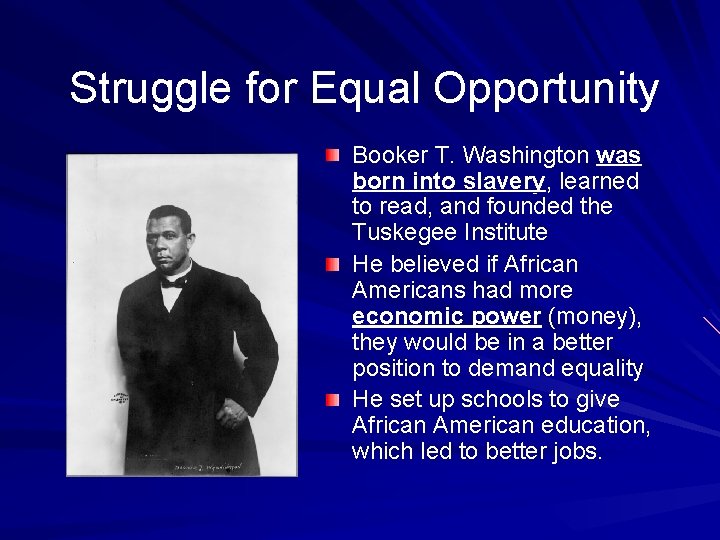
Struggle for Equal Opportunity Booker T. Washington was born into slavery, learned to read, and founded the Tuskegee Institute He believed if African Americans had more economic power (money), they would be in a better position to demand equality He set up schools to give African American education, which led to better jobs.
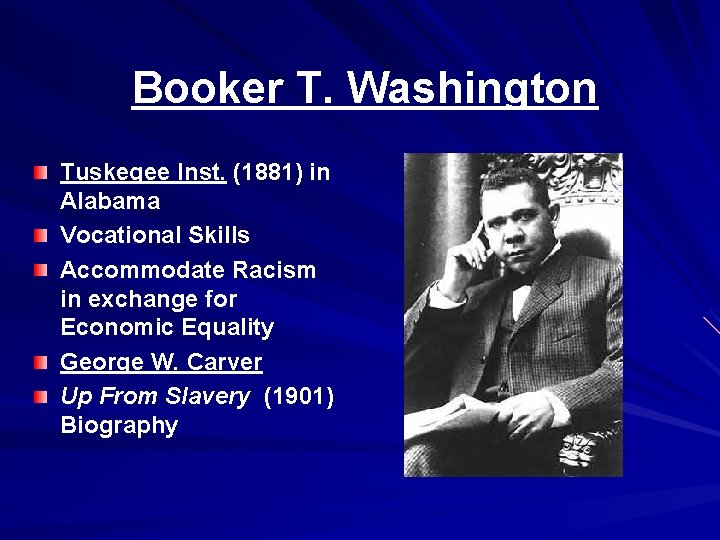
Booker T. Washington Tuskegee Inst. (1881) in Alabama Vocational Skills Accommodate Racism in exchange for Economic Equality George W. Carver Up From Slavery (1901) Biography
Tuskegee Institute Technical College created by Booker T. Washington to train African. Americans in skills needed by white Americans
Booker T. Washington Economic Equality will lead to Acceptance
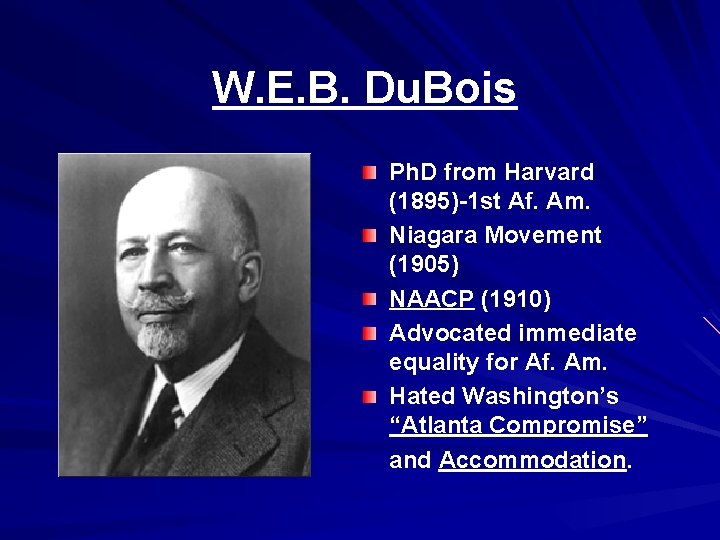
W. E. B. Du. Bois Ph. D from Harvard (1895)-1 st Af. Am. Niagara Movement (1905) NAACP (1910) Advocated immediate equality for Af. Am. Hated Washington’s “Atlanta Compromise” and Accommodation.
W. E. B. Du Bois: Graduated from Harvard University Education without Equality is worthless
W. E. B. Du Bois Niagara Falls Convention Most important: Voting Demanded that the U. S. government enforce the Constitutional rights of A. A. ’s
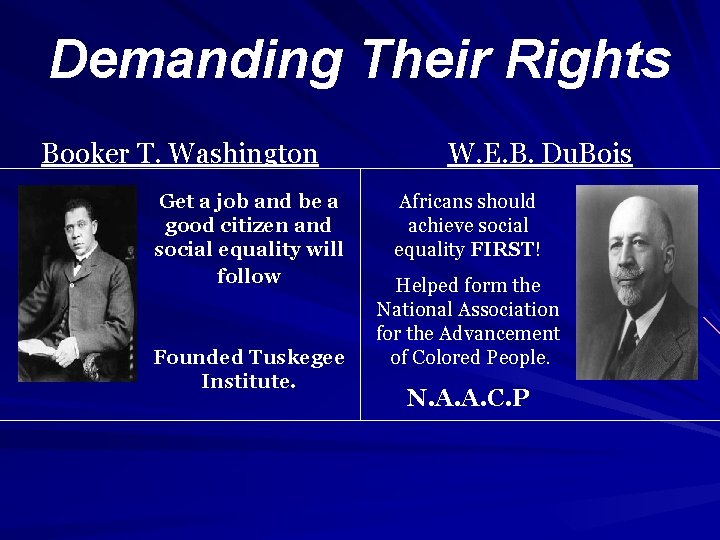
Demanding Their Rights Booker T. Washington Get a job and be a good citizen and social equality will follow Founded Tuskegee Institute. W. E. B. Du. Bois Africans should achieve social equality FIRST! Helped form the National Association for the Advancement of Colored People. N. A. A. C. P
Booker T. Washington preached a philosophy of self-reliance by elevating oneself through education, hard work and entrepreneurship as an agenda for black America’s advancement. Read more: https: //www. americanthinker. com/bl og/2014/07/booker_t_washington_vs_naa cp. html#ixzz 5 Lj 53 gh. A 3
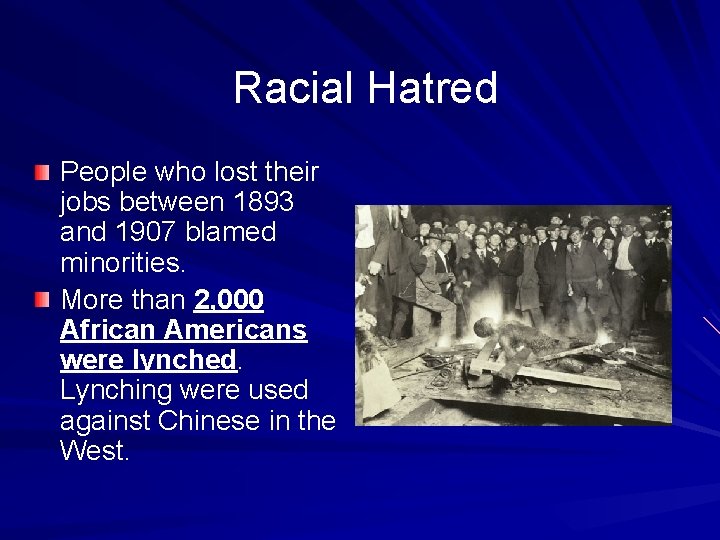
Racial Hatred People who lost their jobs between 1893 and 1907 blamed minorities. More than 2, 000 African Americans were lynched. Lynching were used against Chinese in the West.
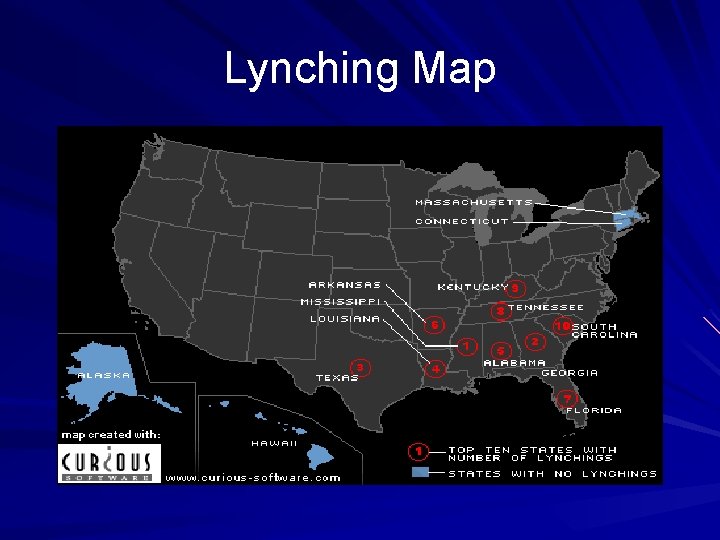
Lynching Map
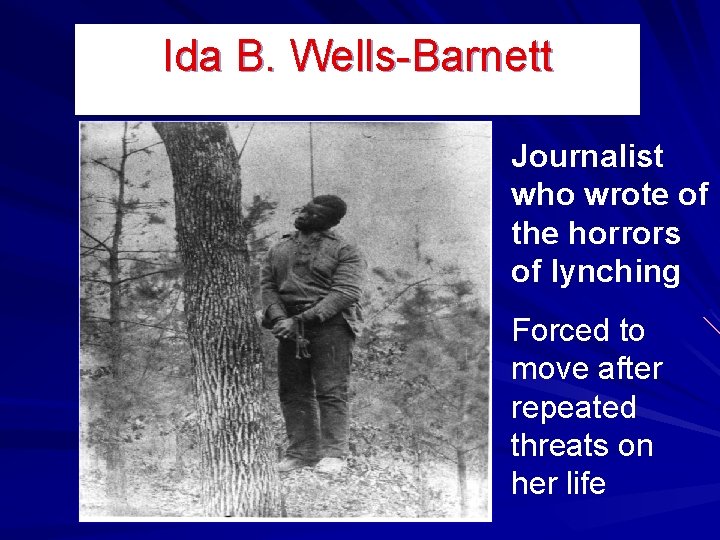
Ida B. Wells-Barnett Journalist who wrote of the horrors of lynching Forced to move after repeated threats on her life
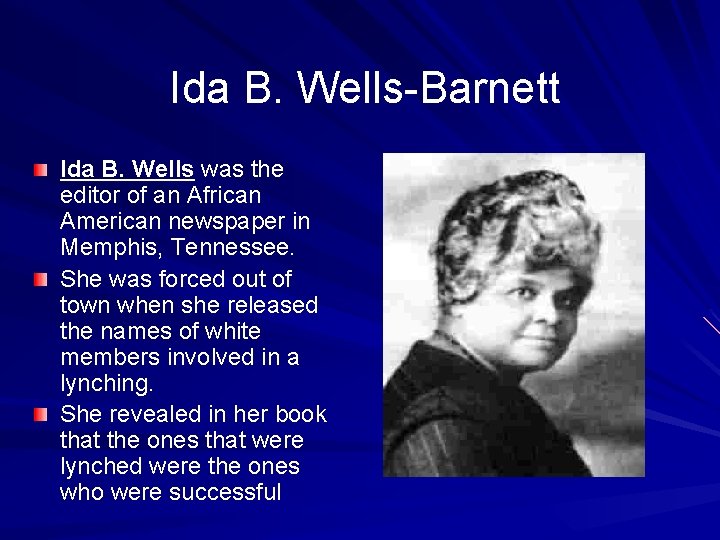
Ida B. Wells-Barnett Ida B. Wells was the editor of an African American newspaper in Memphis, Tennessee. She was forced out of town when she released the names of white members involved in a lynching. She revealed in her book that the ones that were lynched were the ones who were successful
NAACP National Association for the Advancement of Colored People Created by W. E. B. Du. Bois & Ida Wells Fight racism in court
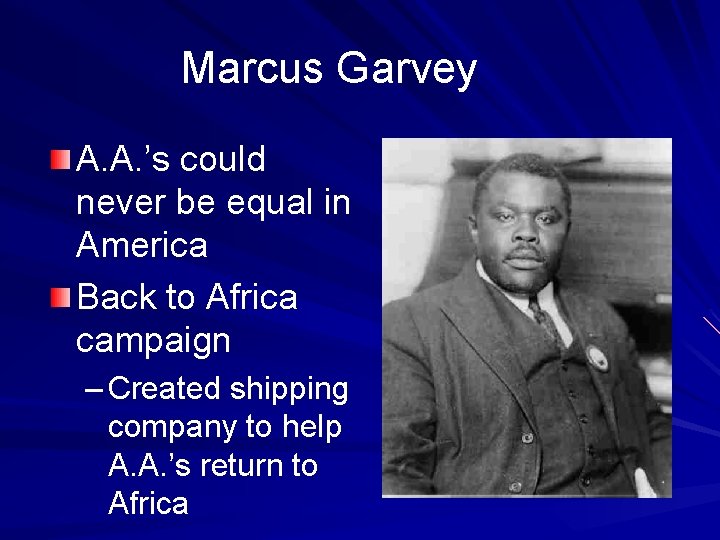
Marcus Garvey A. A. ’s could never be equal in America Back to Africa campaign – Created shipping company to help A. A. ’s return to Africa
Great Migration (1916 -1970) Large scale exodus of A. A. ’s from the rural South to the urban North & farms of the west
Great Migration During the early twentieth century, African Americans began the “Great Migration” to Northern cities in search of jobs and to escape poverty and discrimination in the South. World War I had a great impact on this migration because of the factories that opened to produce war supplies were located in northern cities.
- Slides: 34