
African Trypanosomiasis Presented by Kristen Walter and Maggie
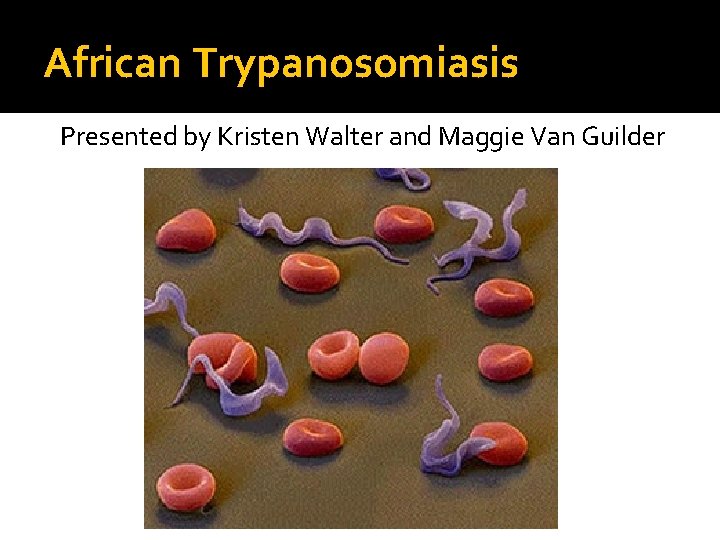
African Trypanosomiasis Presented by Kristen Walter and Maggie Van Guilder
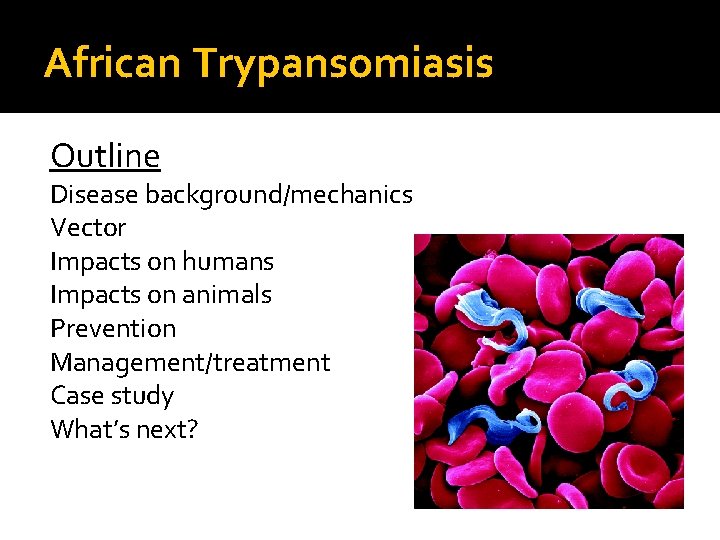
African Trypansomiasis Outline Disease background/mechanics Vector Impacts on humans Impacts on animals Prevention Management/treatment Case study What’s next?
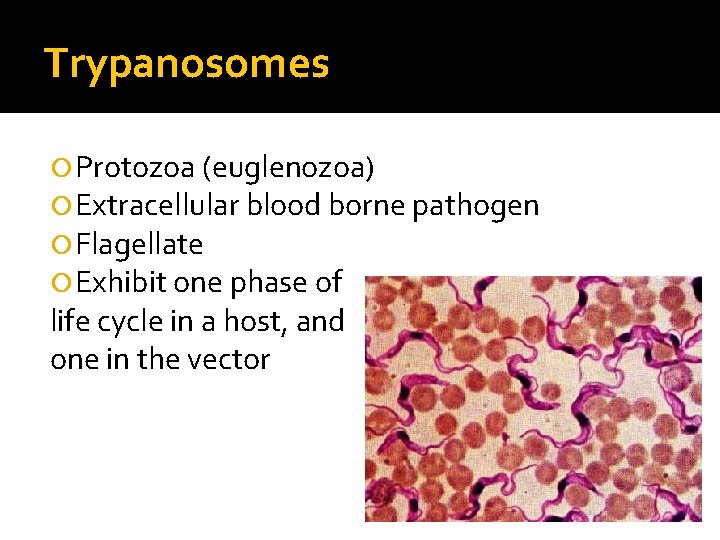
Trypanosomes Protozoa (euglenozoa) Extracellular blood borne pathogen Flagellate Exhibit one phase of life cycle in a host, and one in the vector
Background Other names include � Nagana (in animals) � African Sleeping Sickness (in humans) � Animal African Trypanosomiasis (AAT) � Human African Trypanosomiasis (HAT) ▪ T. rhodesiense (Trypanosoma brucei rhodesiense) ▪ T. gambiense (Trypanosomoa brucei gambiense) � Responsible for 48, 000 human deaths in 2008 � HAT and AAT only present in Africa due to vector Tsetse fly USA cases only from recent Africa visitors contracting disease
Background �David Bruce: 1903 �Nagana: horses and camels Thought to have stopped the spread of Islam into Sub -Saharan Africa �Trypanosomes affect most African mammals Humans, cattle, horses, sheep, donkeys, camels, pigs, dogs, and cats �T. rhodesiense: zoonotic “Western African Sleeping Sickness” More aggressive than eastern strain (T. gambiense)
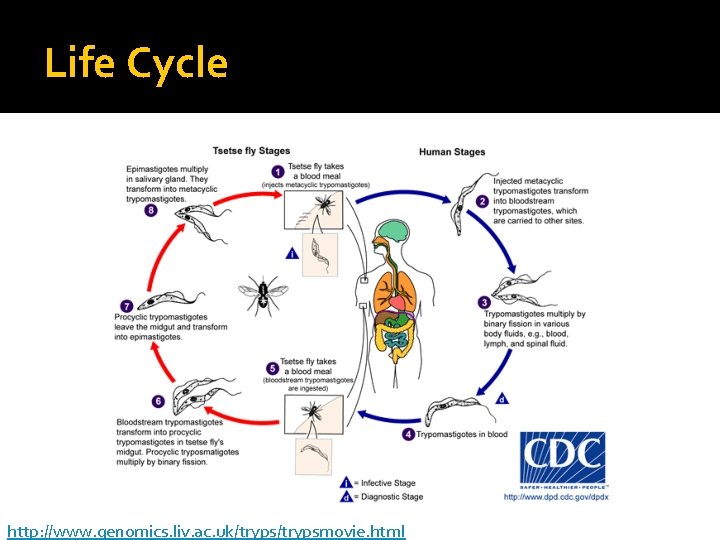
Life Cycle http: //www. genomics. liv. ac. uk/trypsmovie. html
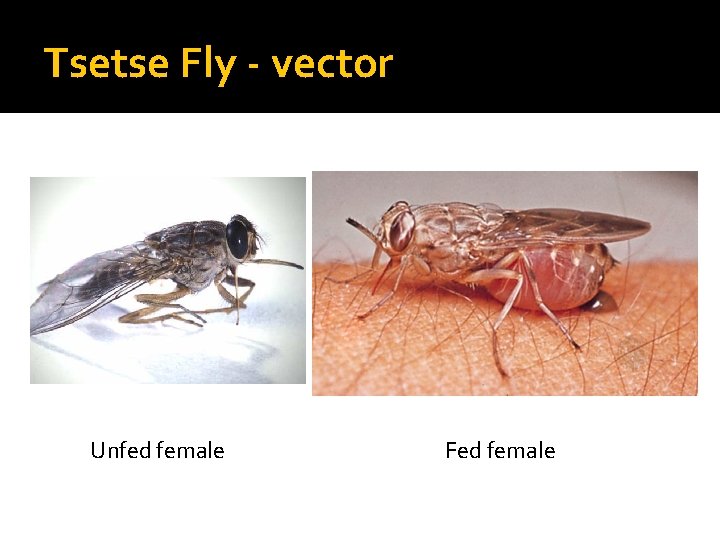
Tsetse Fly - vector Unfed female Fed female
Mechanics of HAT/AAT �Parasite enters the bloodstream white blood cells attack. �Most parasites have the same variable surface glycoprotein (VSG), Structure determines variable antigenic type (VAT). These are destroyed by immune system Remaining parasites with different VAT reproduce �Parasites: physically alter VAT to avoid destruction �Leads to long lasing infection Nearly impossible for immune system to eradicate completely
Mechanics continued During WBC response, proteolytic enzymes and toxins are produced Destroys both protozoa and RBCs anemia and drop in platelets Prolonged anemia puts stress on the heart Can lead to congestive heart failure
Symptoms in humans Generally present 1 -3 weeks after the initial infection. Include: Anxiety Drowsiness during the day Fever Headache Insomnia at night Mood changes Sleepiness (may be uncontrollable) Sweating Swollen lymph nodes all over the body Swollen, red, painful nodes at site of fly bite Weakness
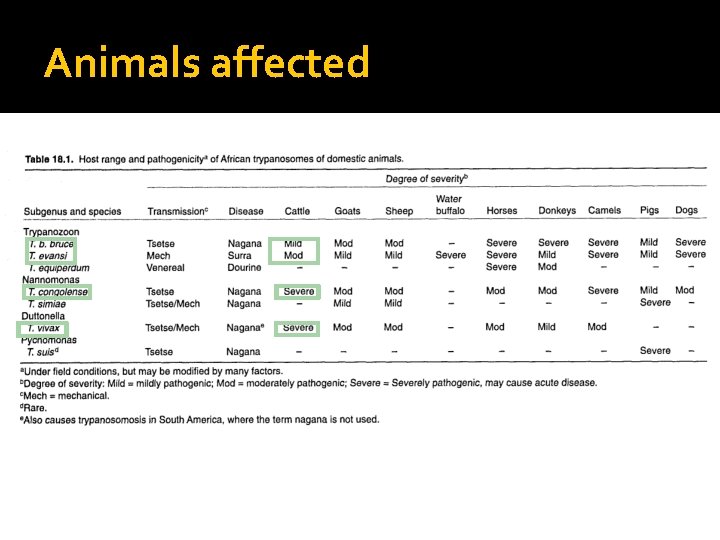
Animals affected
Symptoms in cattle �Weakness �lethargy �loss of condition (weight loss) �abortion �reduced milk production �small or weak calves �anemia �loss of fertility Anemia severity influenced by age breed nutritional status pathogen’s population virulence
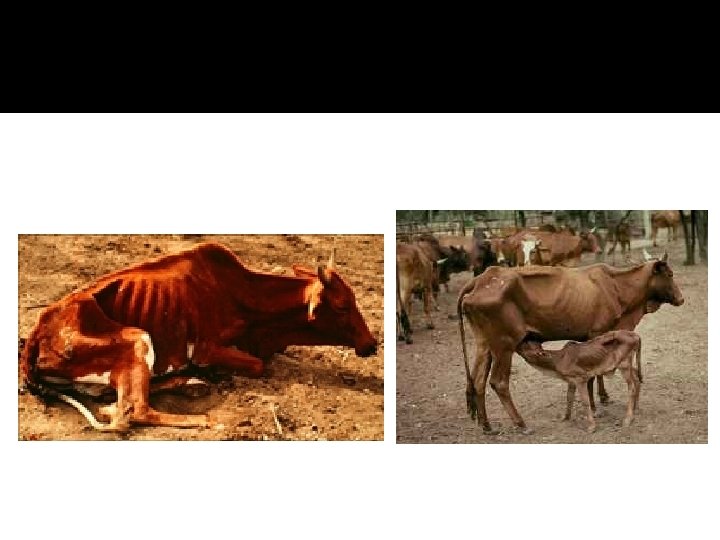
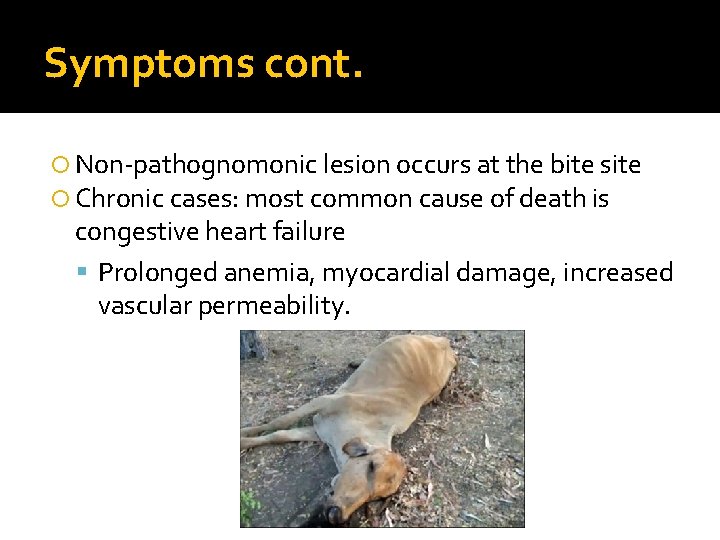
Symptoms cont. Non-pathognomonic lesion occurs at the bite site Chronic cases: most common cause of death is congestive heart failure Prolonged anemia, myocardial damage, increased vascular permeability.
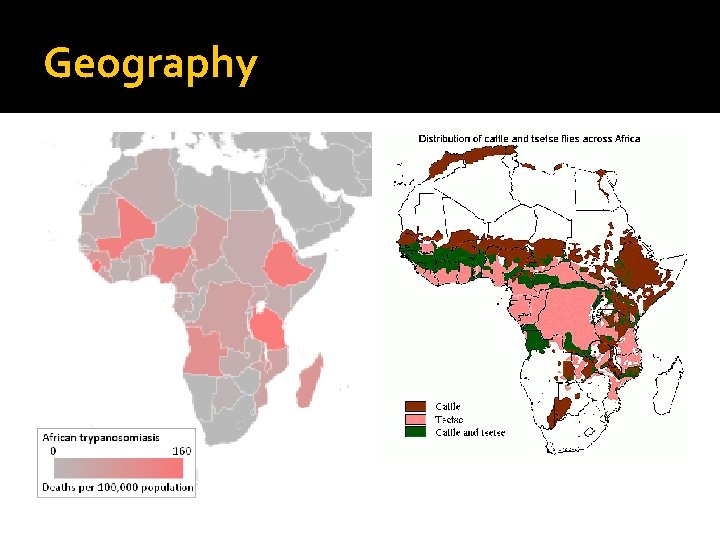
Geography
Socioeconomic Impact Acute: death of cattle Chronic: ↓ milk production, ↓ reproductive success (abortion or small, weak calves), and ↓ meat yield on butchered animals ↑ impact on farmers Rely on cattle for income (milk sales, etc. ) Trypanosomiasis estimated cost: 1 - 4 billion USD/year to African farmers
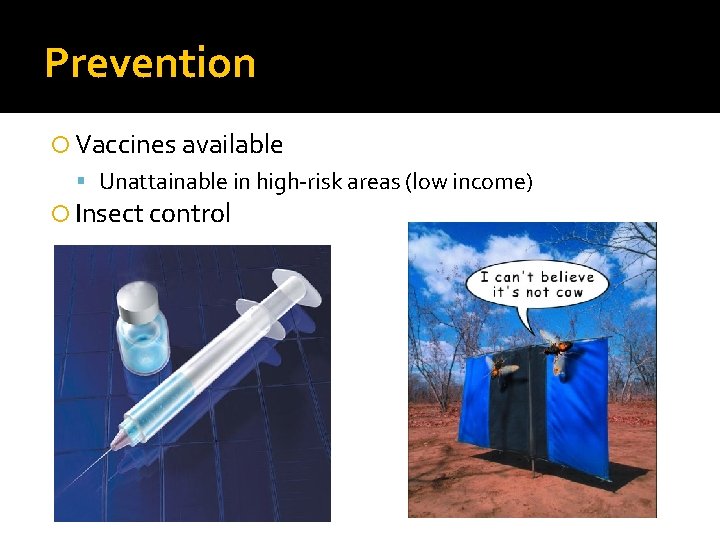
Prevention Vaccines available Unattainable in high-risk areas (low income) Insect control
Management/treatment Eflornithine (T. gambiense only) Melarsoprol Suramin (Antrypol) Combination therapy Pentamidine Treats T. gambiense, but not T. rhodesiense Toxic, so should not be used for prevention
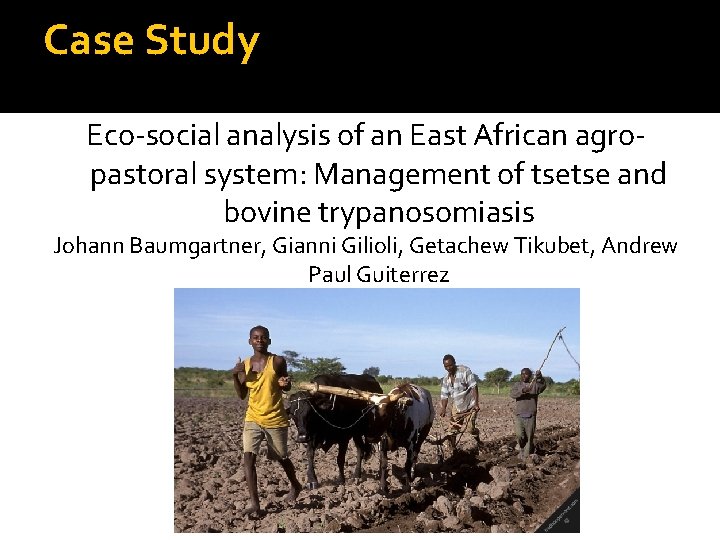
Case Study Eco-social analysis of an East African agropastoral system: Management of tsetse and bovine trypanosomiasis Johann Baumgartner, Gianni Gilioli, Getachew Tikubet, Andrew Paul Guiterrez
Hypotheses ↓ risk from tsetse and disease ↑ cattle populations and their value Interaction of ↓ risk and ↑ productivity ↑ human and cattle populations, Over exploitation of base resources (like pastures) Lower environmental CC and ↓ sustainability New social structures required to cope with consequences of this change
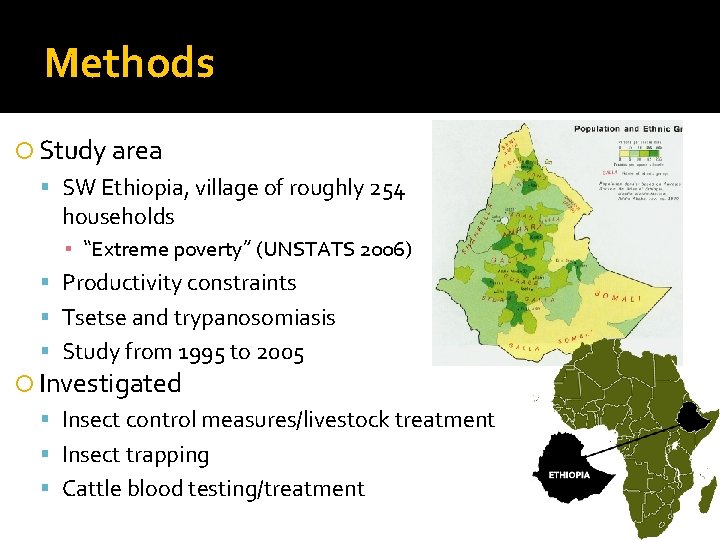
Methods Study area SW Ethiopia, village of roughly 254 households ▪ “Extreme poverty” (UNSTATS 2006) Productivity constraints Tsetse and trypanosomiasis Study from 1995 to 2005 Investigated Insect control measures/livestock treatment Insect trapping Cattle blood testing/treatment
Methods cont. �Complex bio-economic model Combined economic and biologic model ▪ Incorporates: refuge, population demand, resource depletion, cattle and farmer dynamics (biological and economical) Max-profit system (Xc) ▪ Unrestrained demand Optimal long-term societal system (X*) ▪ Sustainable �Determined economic impact and sustainability of control
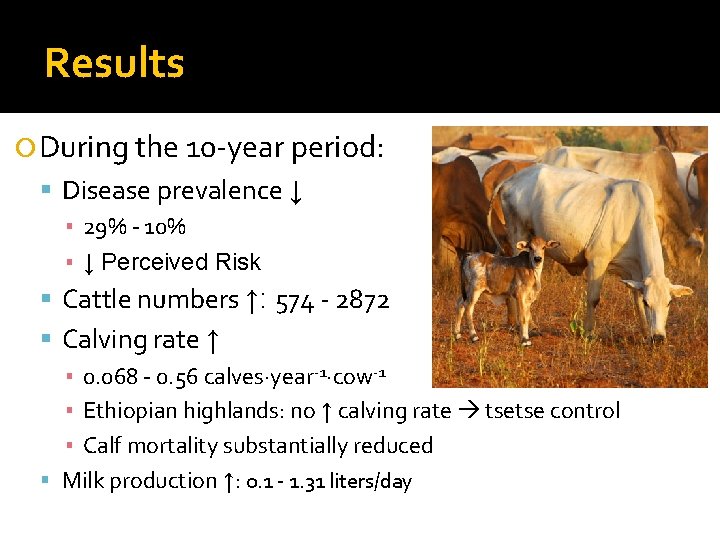
Results During the 10 -year period: Disease prevalence ↓ ▪ 29% - 10% ▪ ↓ Perceived Risk Cattle numbers ↑: 574 - 2872 Calving rate ↑ ▪ 0. 068 - 0. 56 calves·year-1·cow-1 ▪ Ethiopian highlands: no ↑ calving rate tsetse control ▪ Calf mortality substantially reduced Milk production ↑: 0. 1 - 1. 31 liters/day
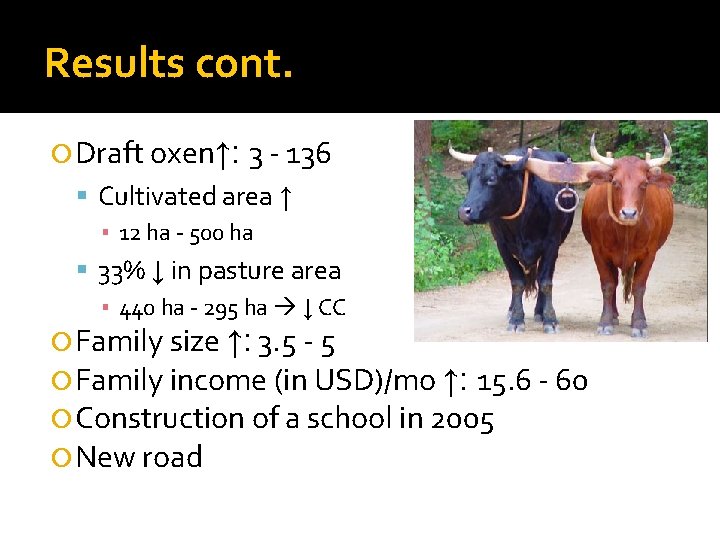
Results cont. Draft oxen↑: 3 - 136 Cultivated area ↑ ▪ 12 ha - 500 ha 33% ↓ in pasture area ▪ 440 ha - 295 ha ↓ CC Family size ↑: 3. 5 - 5 Family income (in USD)/mo ↑: 15. 6 - 60 Construction of a school in 2005 New road
Discussion Neighboring villages experienced ↓ disease rate. No direct control measures taken Spillover? Tsetse population cycle? Oxen productivity ↑ tsetse control Land cultivated/ox ↑: 1 ha - 3. 72 ha Will short-term economic growth last? This requires attention
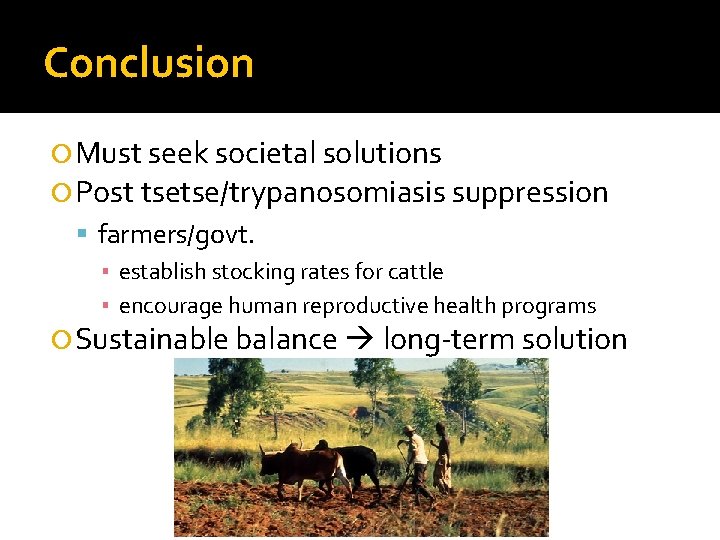
Conclusion Must seek societal solutions Post tsetse/trypanosomiasis suppression farmers/govt. ▪ establish stocking rates for cattle ▪ encourage human reproductive health programs Sustainable balance long-term solution
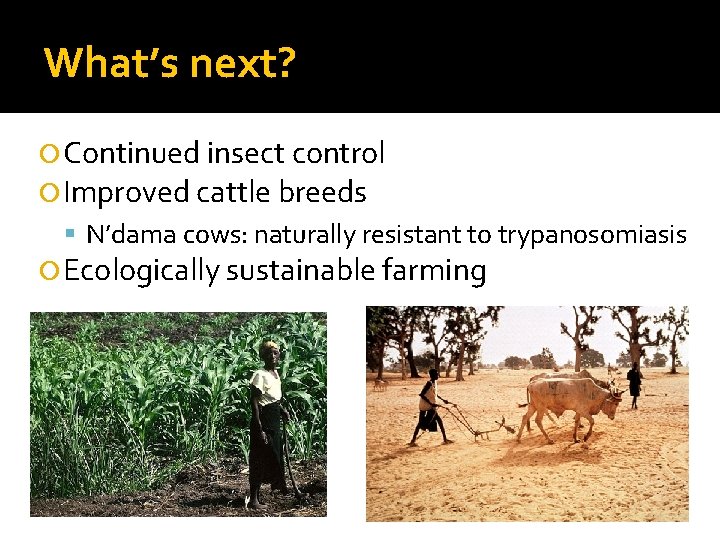
What’s next? Continued insect control Improved cattle breeds N’dama cows: naturally resistant to trypanosomiasis Ecologically sustainable farming
Lit. Cited Baumgartner, J. , G. Gilioli, G. Tikubet, A. P. Guiterrez. 2008. Eco-social analysis of an East African agro-pastoral system: Management of tsetse and bovine trypanosomiasis. Ecological Economics. 65: 125 -135 Connor, R. J. 1994. The impact of Nagana. Journal of Veterinary Research. 61: 379 -383 David C. Dugdale, III, MD, Jatin M. Vyas, MD, Ph. D, David Zieve, MD, MHA, A. D. A. M. 2010. African trypanosomiasis. [online] Available from: http: //www. ncbi. nlm. nih. gov/pubmedhealth/PMH 0002338/. Accessed 3/20/2011. Ferriman, A. Fake cows help to reduce sleeping sickness and use of insecticides. BMJ [Internet]. 2001 [cited 3 -22 -2011]; 29; 323(7315): 711. Available from: https: //www. ncbi. nlm. nih. gov/pmc/articles/PMC 1121279/. Krinski, W. L. 2009. Tsetse Flies (Glossinidae). Medical and Veterinary Entomology (2 nd ed). 289 -299 Snow, W. F. and P. F. L. Boreham. The feeding habits and ecology of the tsetse fly Glossina morsitans submorsitans Newstead in relation to Nagana transmission in The Gambia. Acta Tropica. 36: 47 -51 Taylor, K and E. M. L. Authié. 2005. Pathogenesis of Animal Trypanosomiasis. 331 -353 Wells, E. A. 1972. The importance of mechanical transmission in the epidemiology of Nagana: A review. Trop. Anim. Hlth. Prod. 4: 74 -88
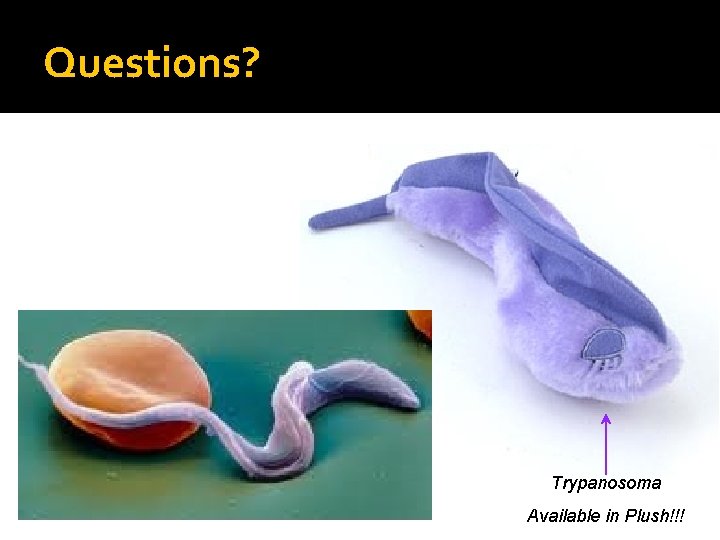
Questions? Trypanosoma Available in Plush!!!
- Slides: 29