
African Trade Routes For much of history Africa
- Slides: 5
African Trade Routes • For much of history, Africa was, to Europe, the “Dark Continent”. • Vast distances and harsh geography limited exchange between Africa and Europe. • The Nile was an important trade route, and from the Roman Empire until the age of exploration the cross. Sahara trade routes thrived. • Stretching north 4, 132 miles the Nile is one of the most ancient trade routes in the world.
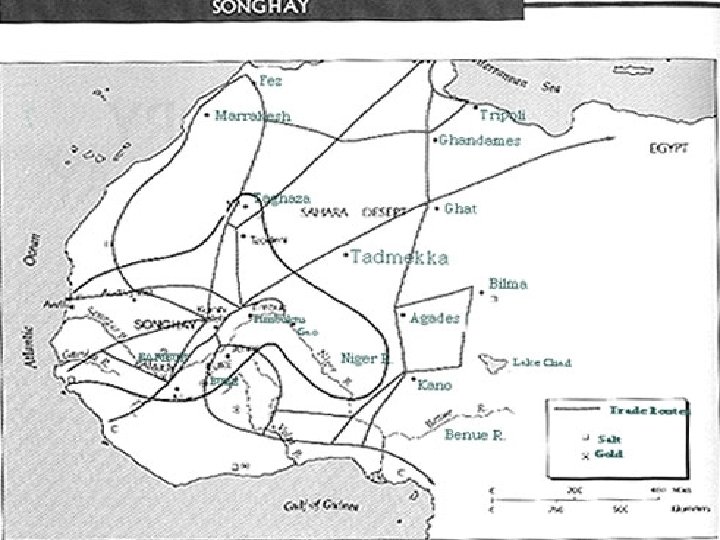
Origins of the Trans-Saharan contacts • The regular commercial and cultural exchange between Western Africa and the Mediterranean world did not start properly until the 8 th century AD. • The trans-Saharan trade was not merely an economic phenomenon, but it connected Western Africa to the Mediterranean world on the intellectual level, too. • The conditions of trans-Saharan trade changed remarkably after Northern Africa became a part of the Islamic world in the late 7 th century AD. • The vast Umayyid caliphate, reaching from the slopes of Pyrenees to the banks of Indus, formed a solid market area the monetary system of which was based on gold. • In Western Africa, the contact zone was limited to the desert edge cities, where North African traders were isolated for their own quarters, lying usually outside the local dwelling. • West African mines were the most important single source of gold both for Northern Africa and Europe; it is estimated that two-thirds of all the gold circulating in the Mediterranean area in the Middle Ages was imported across the Sahara. • However, the position of the powerful states of the West African savannah was not based on the possession of the gold reserves, but on the control over the principal trade routes leading from the desert edge terminals to the gold fields in the south. TRADE ROUTES = POWER & WEALTH
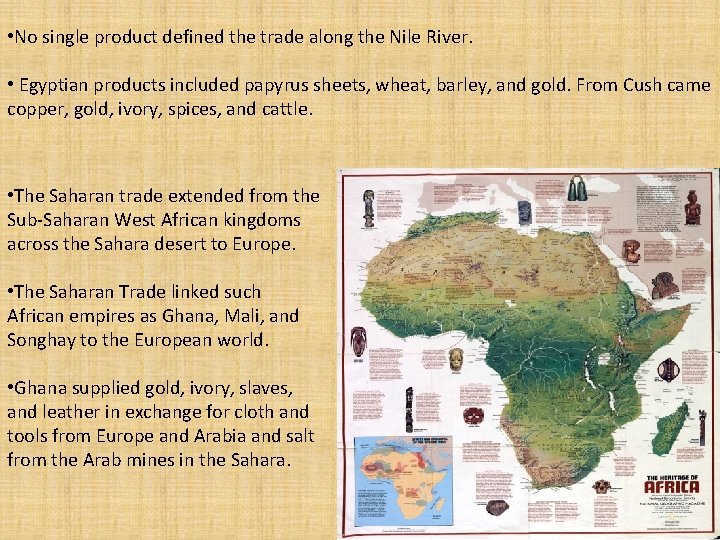
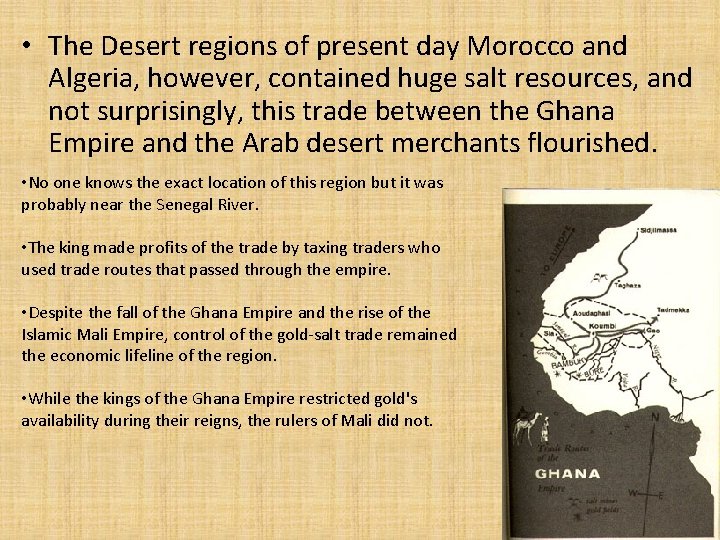
• No single product defined the trade along the Nile River. • Egyptian products included papyrus sheets, wheat, barley, and gold. From Cush came copper, gold, ivory, spices, and cattle. • The Saharan trade extended from the Sub-Saharan West African kingdoms across the Sahara desert to Europe. • The Saharan Trade linked such African empires as Ghana, Mali, and Songhay to the European world. • Ghana supplied gold, ivory, slaves, and leather in exchange for cloth and tools from Europe and Arabia and salt from the Arab mines in the Sahara.
• The Desert regions of present day Morocco and Algeria, however, contained huge salt resources, and not surprisingly, this trade between the Ghana Empire and the Arab desert merchants flourished. • No one knows the exact location of this region but it was probably near the Senegal River. • The king made profits of the trade by taxing traders who used trade routes that passed through the empire. • Despite the fall of the Ghana Empire and the rise of the Islamic Mali Empire, control of the gold-salt trade remained the economic lifeline of the region. • While the kings of the Ghana Empire restricted gold's availability during their reigns, the rulers of Mali did not.