
African Kingdoms Section 1 Dont cry because its

African Kingdoms Section 1 “Don't cry because it's over, smile because it happened. ” ― Dr. Seuss There are more plastic flamingos in the USA than real flamingos.
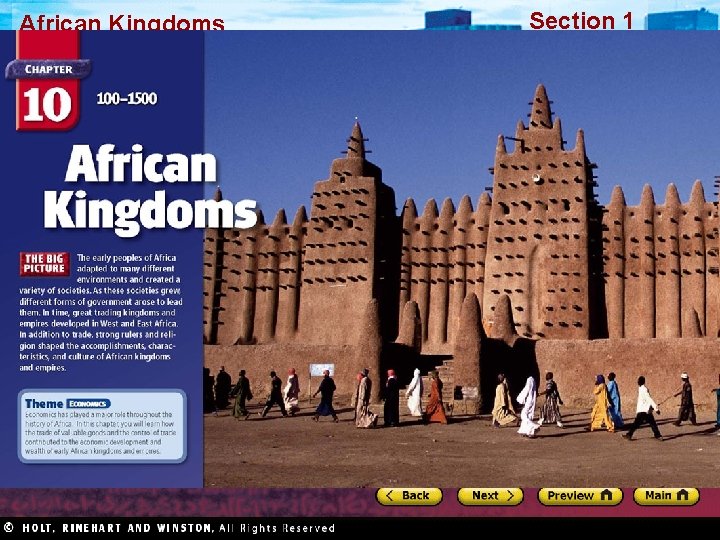
African Kingdoms Section 1
African Kingdoms Section 1
African Kingdoms Section 1 Early Civilizations in Africa Main Idea Africa’s earliest people adapted to a wide range of geographic conditions to establish societies based on family ties, religion, iron technology, and trade.
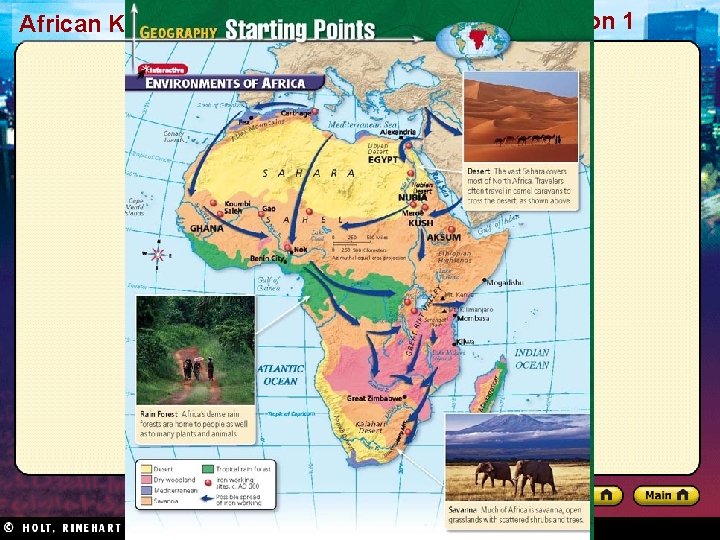
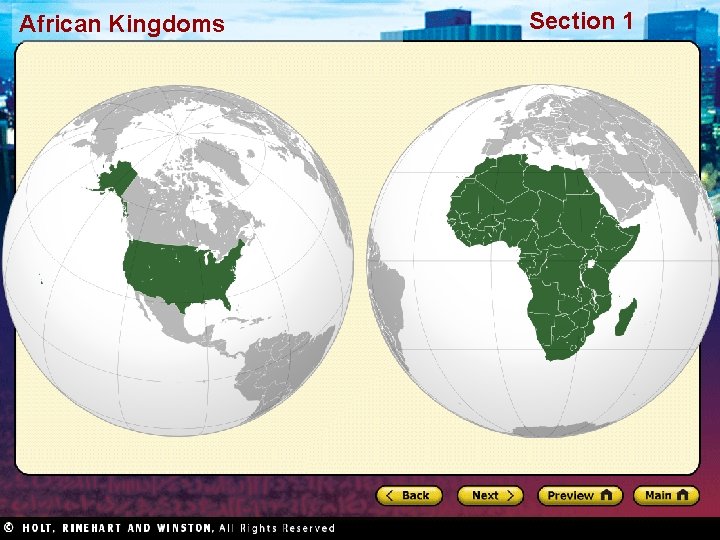
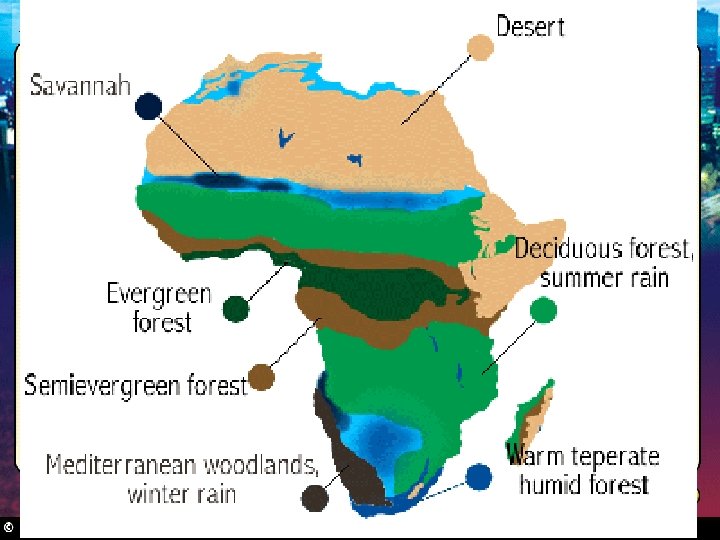
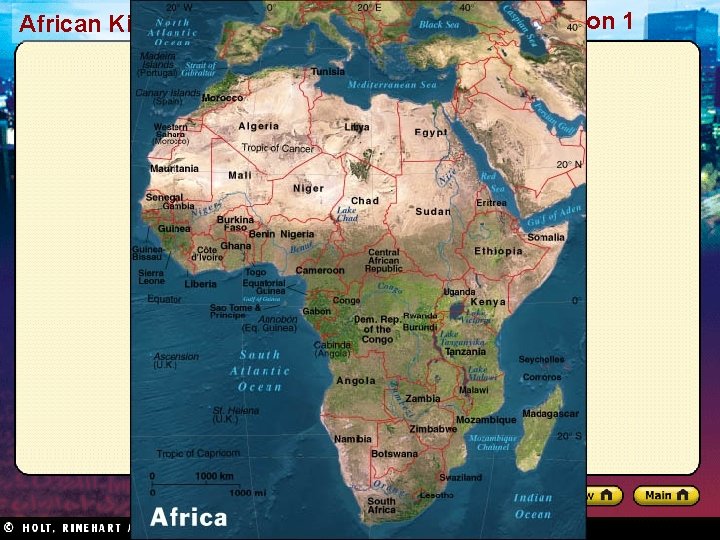
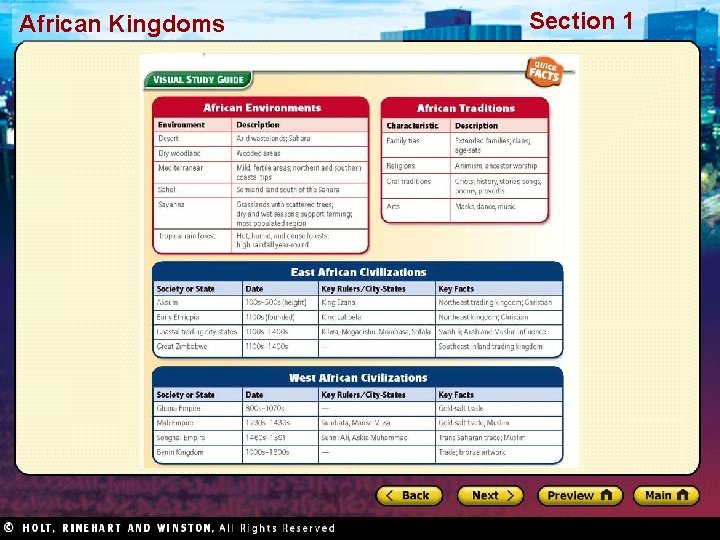
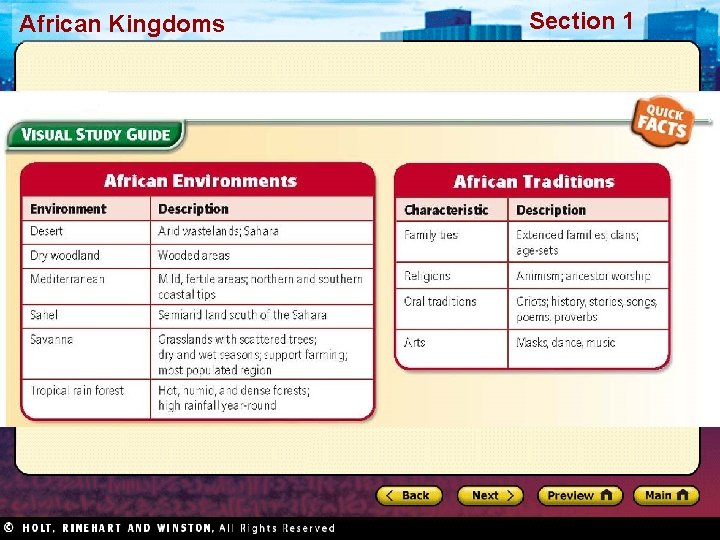
Section 1 African Kingdoms Climate and Vegetation Africa’s large size—more than three times the size of the United States—and its location have led to a wide variety of climates and vegetation. As a result, distinct cultures and ways of life developed. • • • Northern Africa dominated by Sahara, largest desert in world Stretches 3, 000 miles between Atlantic Ocean, Red Sea Barren landscape includes mountains, plateaus, plains, sand dunes Temperatures in desert climb above 120°F, rain rare Number of oases scattered throughout desert, some support villages The Sahel The Savanna • S. of Sahara, mighty rivers flow across plains, including Congo, Zambezi, Niger • Region called the Sahel, strip of land dividing desert, wetter areas • Sahel fairly dry, but has vegetation to support hardy grazing animals • Farther south, band of tropical savanna, open grassland • Extends east from Central Africa, wraps back toward south • Tall grasses, shrubs, trees grow there; variety of herd animals, majority of Africans live there
African Kingdoms Section 1
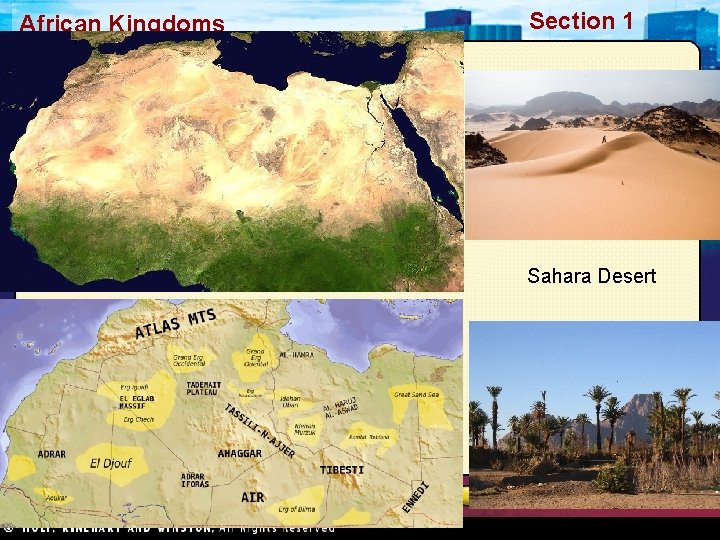
African Kingdoms Section 1 Sahara Desert
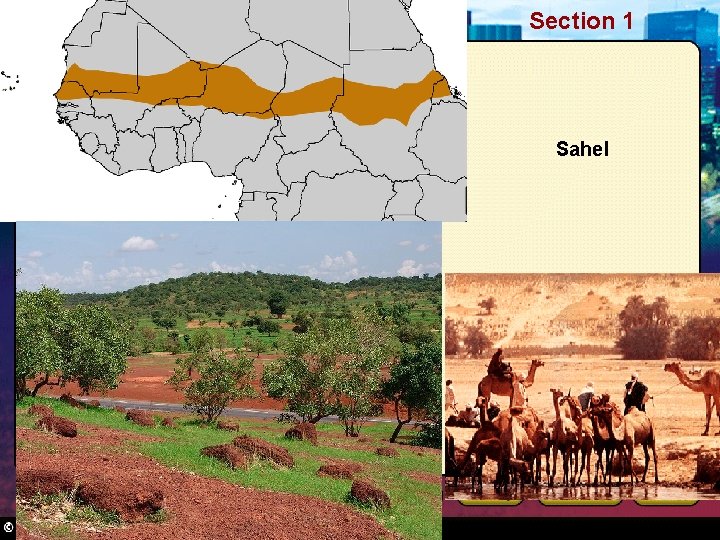
African Kingdoms Section 1 Sahel
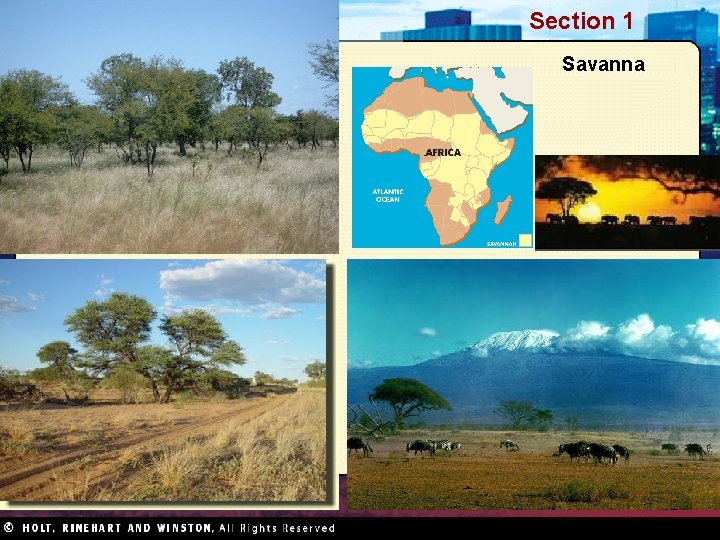
African Kingdoms Section 1 Savanna
African Kingdoms Section 1 The Equator and farther South Tropical Rain Forests Southern Africa • Tropical rain forests found near equator and on Madagascar, island off southeast coast • Southern Africa consists mainly of hilly grasslands, deserts, high coastal strip of land • Hot, humid climate, yearround rainfall of rain forest supports broad range of plant, animal life • Region experiences mild Mediterranean climate, warm temperatures and both summer, winter rains
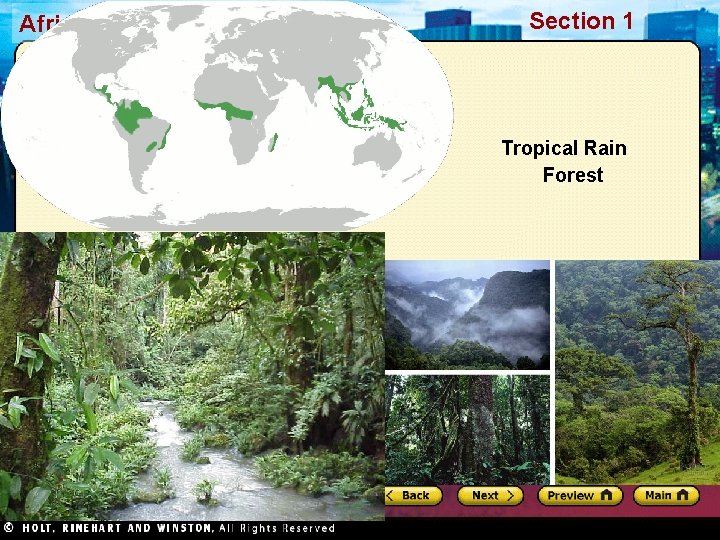
African Kingdoms Section 1 Tropical Rain Forest
African Kingdoms Section 1
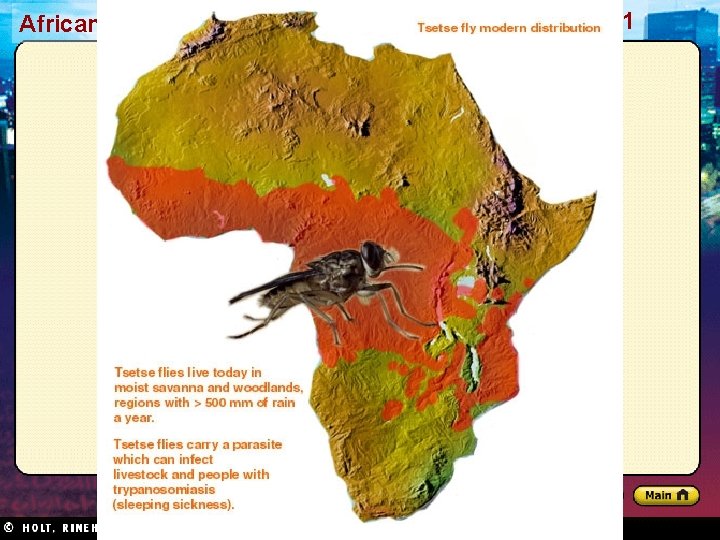
African Kingdoms Section 1 Adapting to Africa’s Environment Varied Climates • First people to live in Africa had to adapt to varied climates, features • Rainfall—too much, too little— poor soil in some places made farming difficult; presents problems that continue today Rains • Heavy rains erode soil, wash away nutrients important for growing crops • Insufficient rainfall leads to drought, poor grazing land • Farmers must decide which crops to grow based on expected rainfall Insects, Parasites • Parasites thrive in tropical areas; transmitted by mosquitoes to humans, animals; can lead to deadly diseases like malaria • Tsetse fly, sub-Saharan Africa, carries parasite than can kill livestock, infect humans with sleeping sickness, potentially fatal illness
African Kingdoms Section 1
Section 1 African Kingdoms Early African Societies Anthropologists think that the first humans lived in East Africa. Over thousands of years, people spread out over the continent, forming distinct cultures and societies. Early Farming Societies Pastoralists in Sahara • During early phase of their history, Africans lived as hunter-gatherers • First farmers likely pastoralists of Sahara—wetter 8, 000 years ago • About 9, 000 years ago, some began to grow native crops • 5, 000 years ago climate changed, Sahara became drier • In some parts, pastoralism, practice of raising herd animals, arose before farming • As land became desert, people migrated to Mediterranean coast, Nile Valley, parts of West Africa By about 2500 BC many people in these regions practiced herding and mixed farming.
African Kingdoms Section 1
Section 1 African Kingdoms Social Structures Common Features • Many societies developed village-based cultures • At heart, extended family living in one household • Families with common ancestors formed clans to which all members loyal Age-Sets • In some areas, people took part in type of group called age-sets • Men who had been born within same two, three years formed special bonds • Men in same age-set had duty to help each other Specific Duties • Loyalty to family, age-sets helped village members work together • Men hunted, farmed; women cared for children, farmed, did domestic chores • Even very old, very young had own tasks; elders often taught traditions to younger generations
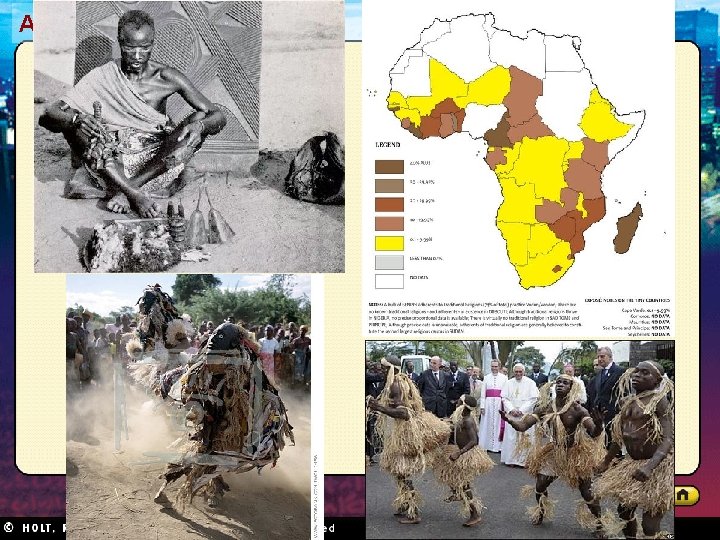
Section 1 African Kingdoms Religion and Culture Many early Africans shared similar religious beliefs and shared common features in the arts as well. Examples of Beliefs Animism • Many believed that unseen spirits of ancestors stayed near • Many Africans also practiced form of religion called animism —belief that bodies of water, animals, trees, other natural objects have spirits • To honor spirits, families marked certain places as sacred places, put specially carved statues there • Families gathered to share news, food with ancestors, hoping spirits would protect them • Animism reflected Africans’ close ties to natural world
African Kingdoms Section 1
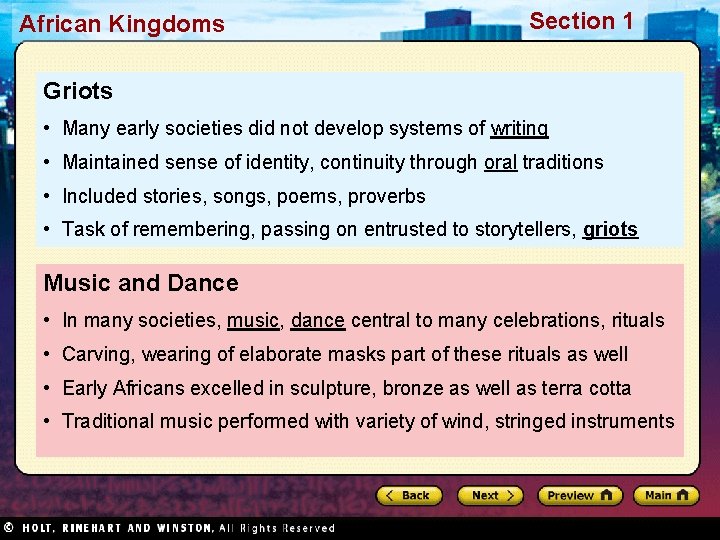
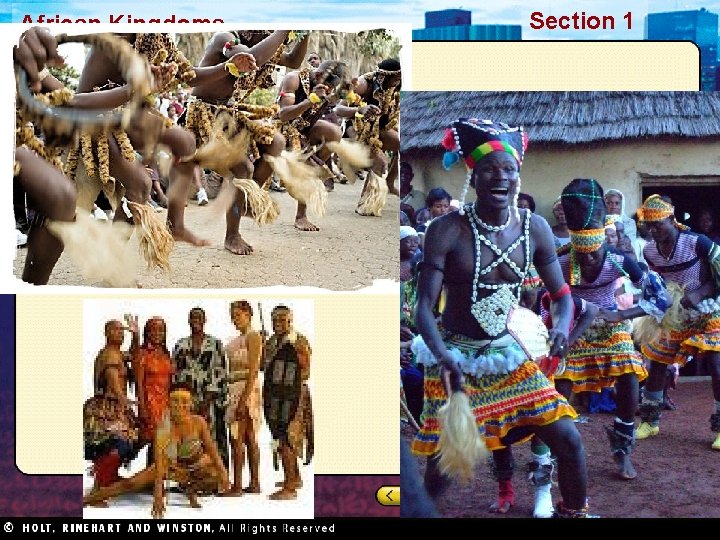
African Kingdoms Section 1 Griots • Many early societies did not develop systems of writing • Maintained sense of identity, continuity through oral traditions • Included stories, songs, poems, proverbs • Task of remembering, passing on entrusted to storytellers, griots Music and Dance • In many societies, music, dance central to many celebrations, rituals • Carving, wearing of elaborate masks part of these rituals as well • Early Africans excelled in sculpture, bronze as well as terra cotta • Traditional music performed with variety of wind, stringed instruments
African Kingdoms Section 1
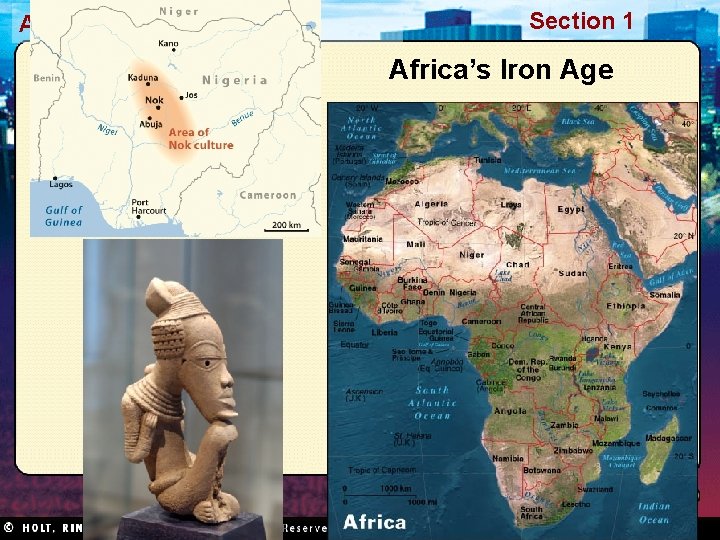
African Kingdoms Section 1 Africa’s Iron Age
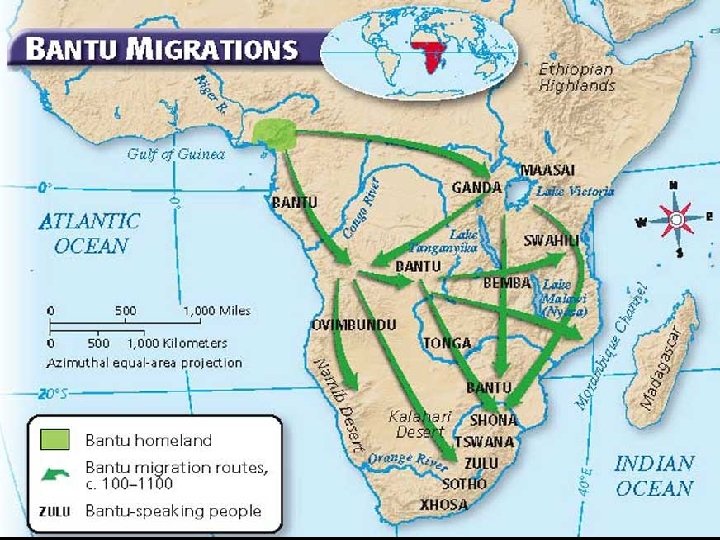
African Kingdoms Section 1
African Kingdoms Section 1 Trading States of East Africa Main Idea The growth of trade led to the development of wealthy kingdoms and city-states in East Africa.
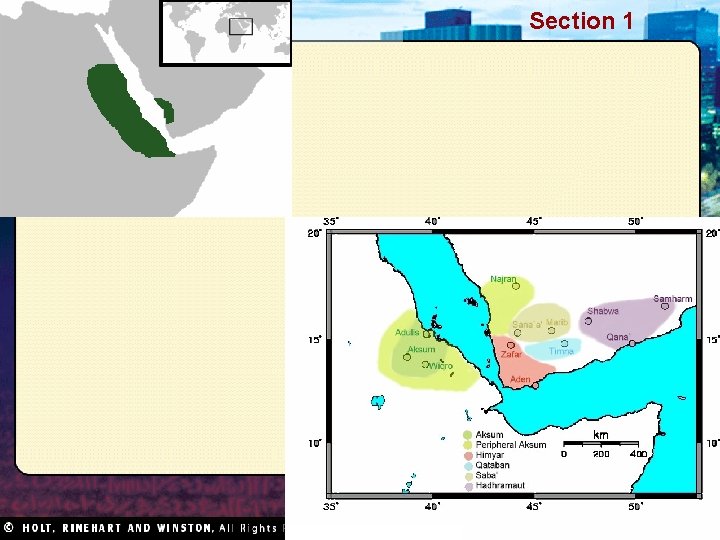
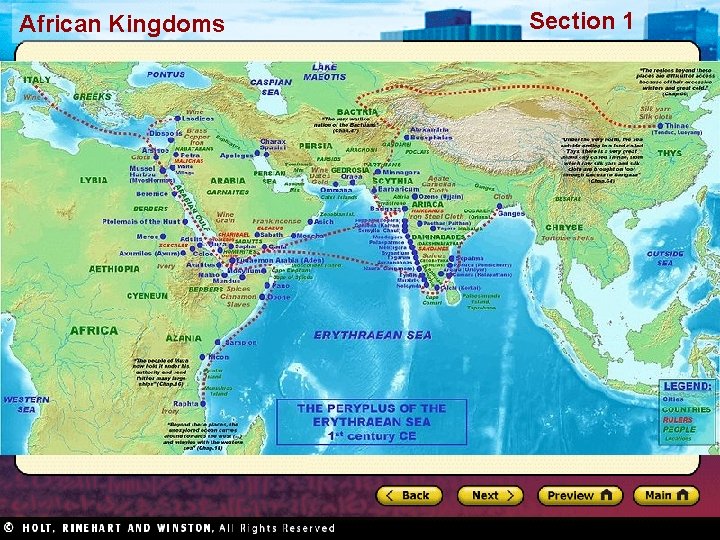
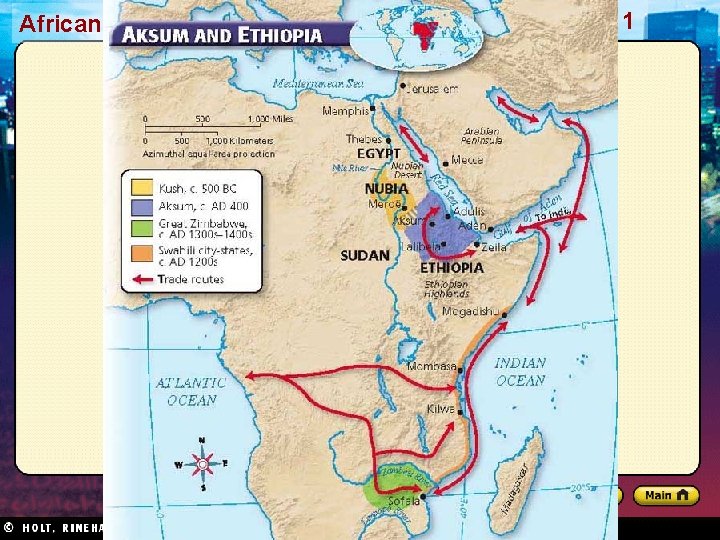
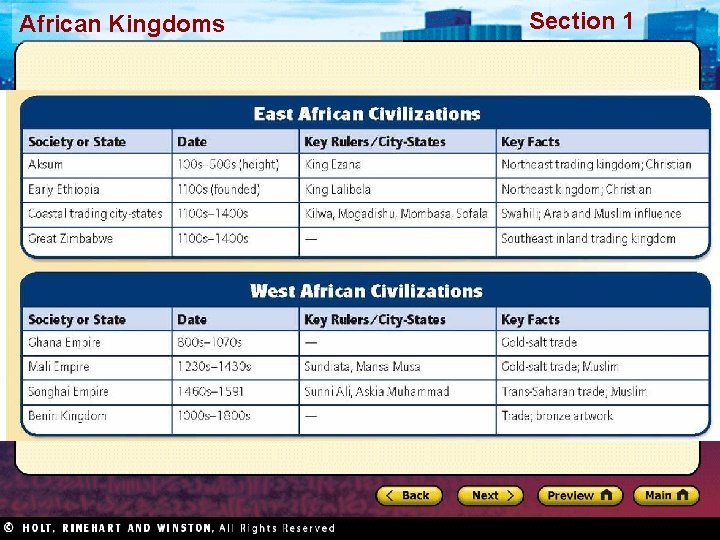
Section 1 African Kingdoms Aksum and Ethiopia In East Africa, the kingdom of Aksum began to grow in power around the first century AD. Aksum lay south of Egypt and Kush and alongside the Red Sea and was ideally situated to control Red Sea trade. At its height Aksum was the most powerful kingdom in East Africa. The Rise of Aksum Geographic Advantages • People of Aksum descended from African farmers, as well as migrants from Middle East • Geographic location provided advantages: well suited for agriculture; Red Sea proximity ideal for trade, access to Indian Ocean • By AD 100, Aksum was wealthy trading kingdom • Two main cities: Aksum, capital; Adulis, thriving Red Sea port • Seaport attracted merchants from African interior, Mediterranean region, Egypt, Arabia, Persia, India At Aksum’s markets, foreign traders exchanged luxury goods for African goods. By about AD 300, Aksum had amassed great wealth from this trade.
African Kingdoms Section 1
African Kingdoms Section 1
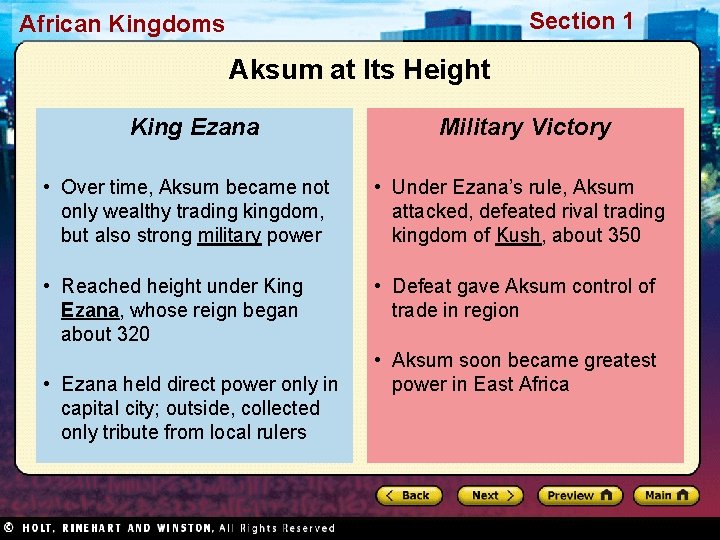
Section 1 African Kingdoms Aksum at Its Height King Ezana Military Victory • Over time, Aksum became not only wealthy trading kingdom, but also strong military power • Under Ezana’s rule, Aksum attacked, defeated rival trading kingdom of Kush, about 350 • Reached height under King Ezana, whose reign began about 320 • Defeat gave Aksum control of trade in region • Ezana held direct power only in capital city; outside, collected only tribute from local rulers • Aksum soon became greatest power in East Africa
African Kingdoms Section 1
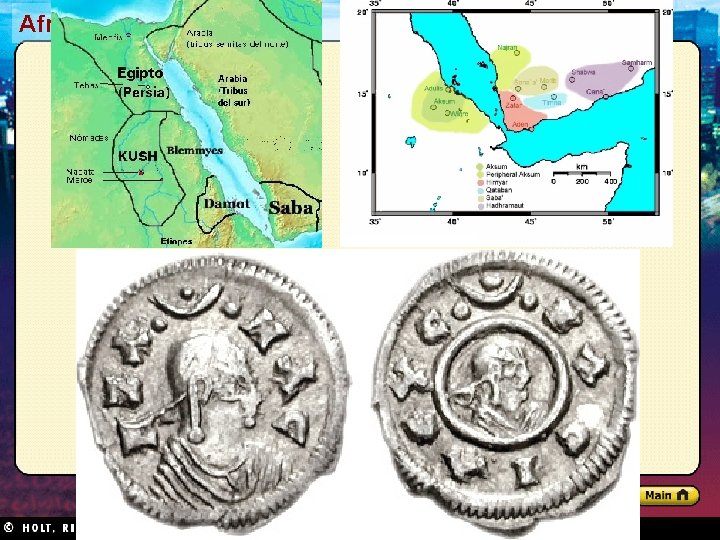
Section 1 African Kingdoms Culture of Aksum • • • African-Arab heritage, trade connections gave Aksum diverse culture Merchants who came to Aksum brought new ideas as well as goods Among new ideas, beliefs in 300 s, Christianity King Ezana converted, made Christianity official religion of Aksum Recorded that he would “rule the people with righteousness and justice…” Language Preserved Coins Minted • Historians know about statement because it was inscribed on stone monument, called a stela • Ge’ez one of first written languages developed in Africa, basis of written language used in Ethiopia today • Stelae often inscribed with records of important events • Aksum also first African kingdom south of Sahara to mint own coins • Inscriptions provide examples of Ge’ez, Aksum’s language • Merchants found it practical to use coins because of thriving trade
African Kingdoms Section 1 The Decline of Aksum Muslim Invaders • 600 s, Aksum began to decline, partly because of arrival of Muslim invaders – 600 s, 700 s invaders conquered parts of East, North Africa – Aksum itself was never conquered • Nearby areas became Muslim; Christian Aksum isolated – Muslims destroyed Aksum’s port city, Adulis, took over Red Sea trade – Cut off from trade, Aksum lost main source of wealth – Aksum people eventually retreated inland, settled in what is now northern Ethiopia
African Kingdoms Section 1
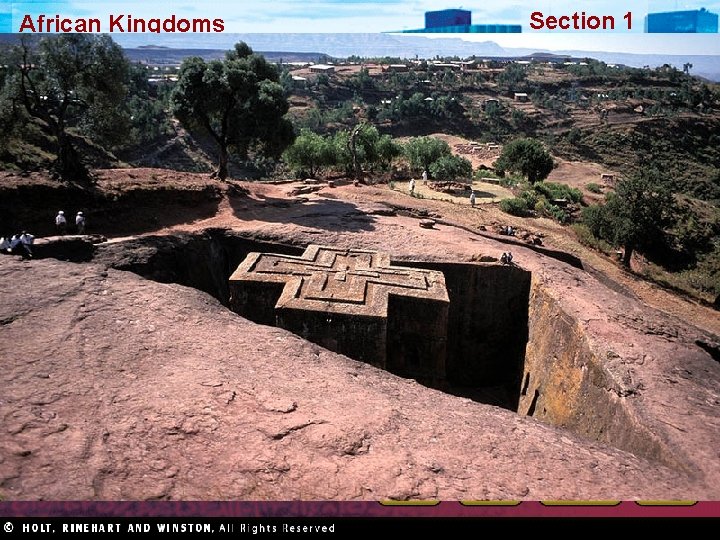
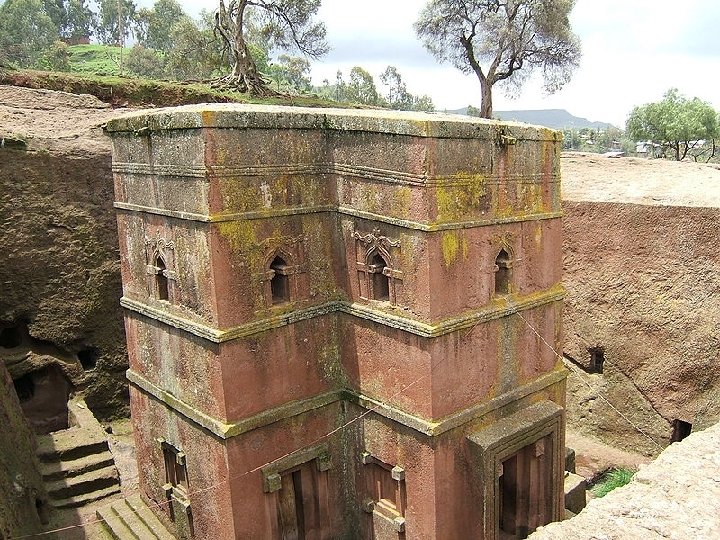
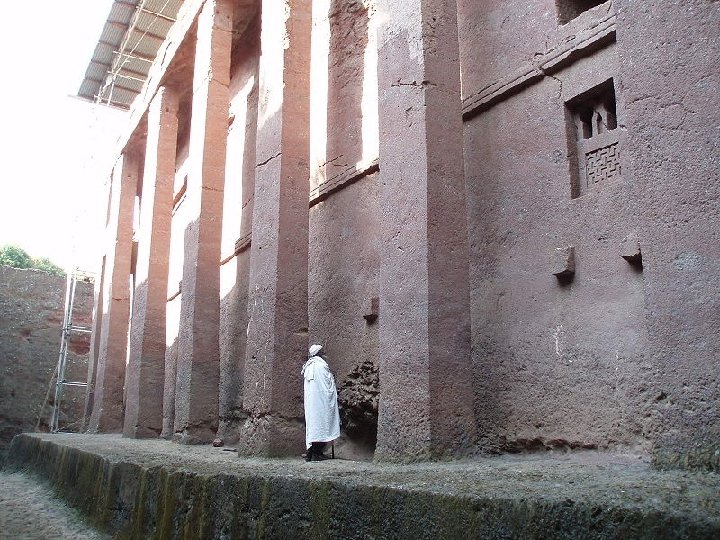
Section 1 African Kingdoms Ethiopia • By 1100 s, descendants of Aksum established new kingdom in Ethiopia • 1150, kingdom grew under Zagwe dynasty • Most famous king, Lalibela: Ruled during 1200 s, known for building 11 stone Christian churches • Lalibela churches showed continued importance of Christianity in Ethiopia • Provided unifying identity for Ethiopian people • Ethiopian Christianity developed own unique characteristics, including elements of local African customs • 1270, second dynasty of Christian kings came to rule Ethiopia • Kings claimed to be descendants of Hebrew King Solomon, Queen of Sheba • Dynasty is also known as Solomonid dynasty; ruled Ethiopia for 700 years • During first centuries of Solomonid rule, kings engaged in religious wars against both Jews and Muslims
African Kingdoms Section 1
African Kingdoms Section 1
African Kingdoms Section 1
African Kingdoms Section 1
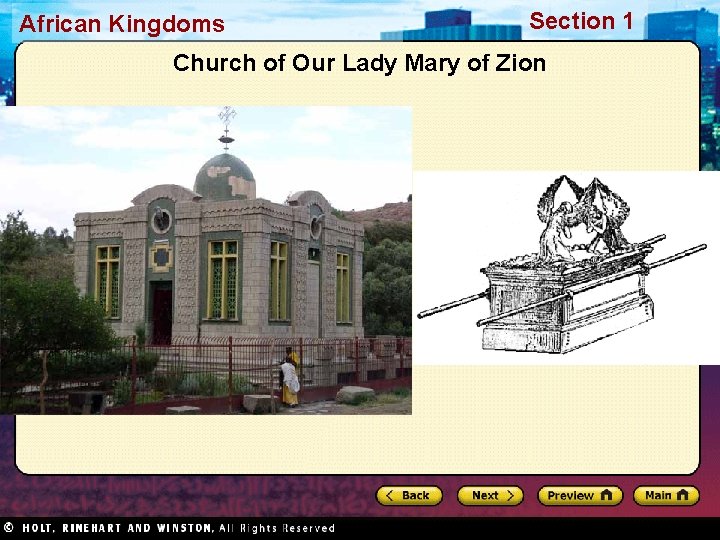
African Kingdoms Section 1 Church of Our Lady Mary of Zion
African Kingdoms Section 1
African Kingdoms Section 1 The Kingdoms of West Africa Main Idea The expansion of trade across the Sahara led to the development of great empires and other states in West Africa.
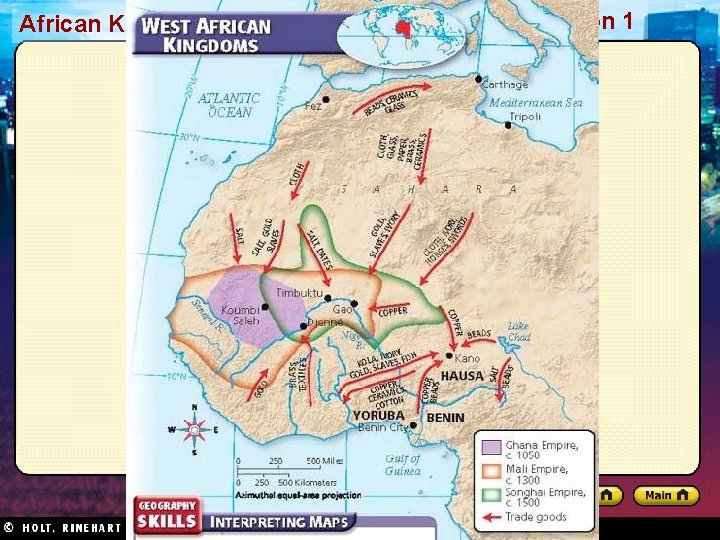
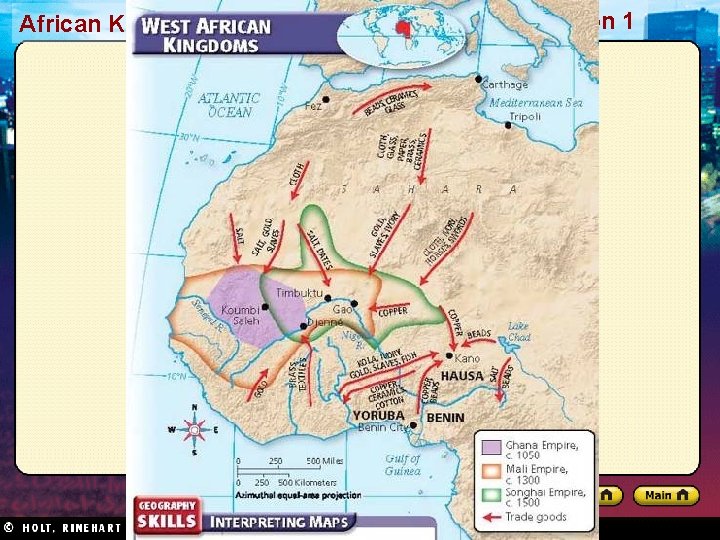
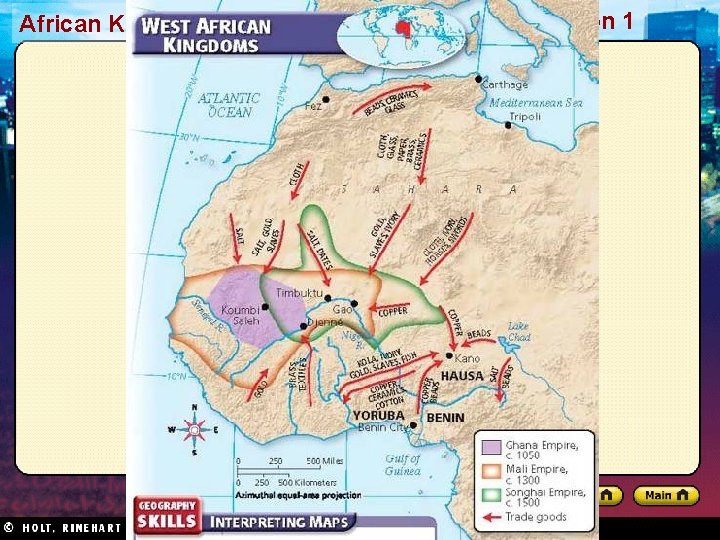
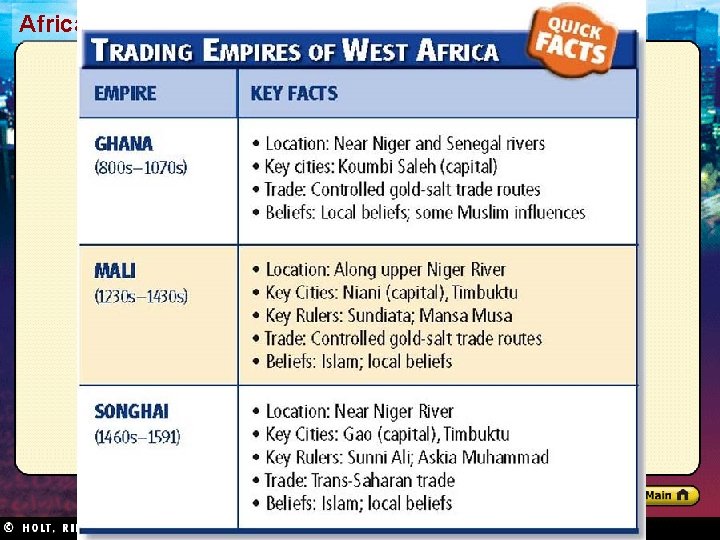
Section 1 African Kingdoms Empire of Ghana Trade was vital to the societies of West Africa. That region produced valuable resources—notably gold—that brought high prices. By the 800 s, rulers of Ghana had used the wealth from these products to create a huge, powerful empire. The Rise of Ghana Desert Travel Goods for Gold • Ghana had many resources, but location delayed development as trading empire • First few centuries AD, North African traders learned how to cross Sahara • Once traders began crossing Sahara, Ghana became key player in African trade • Had no easy access to sea • Traveled in large caravans with camels • Sahara desert blocked overland trade routes • Camels did not need much water, could survive trip across harsh desert • Berber traders traded food, hard goods, copper, salt for gold • Ghana traded salt to people in south, where salt scarce
African Kingdoms Section 1
Section 1 African Kingdoms A Trading Empire Control • 800 AD, Ghana controlled nearly all trade of salt, gold in sub-Saharan Africa • Capital, Koumbi-Saleh, located between Ghana’s gold mines, desert trade routes, was preferred trading place Salt Taxes • Ghana’s kings built great wealth taxing goods brought to empire’s markets • Majority of taxes charged on salt: charged fee for each load of salt brought into Ghana from north, larger fee for each load exported to south Gold Supply Scarce • • Gold not taxed the same; taxes might discourage traders from buying gold To keep gold prices high, kings ruled only they could own large gold nuggets Others could only own gold dust; kept location of gold mines secret This kept supply of gold scarce; kept market from being flooded
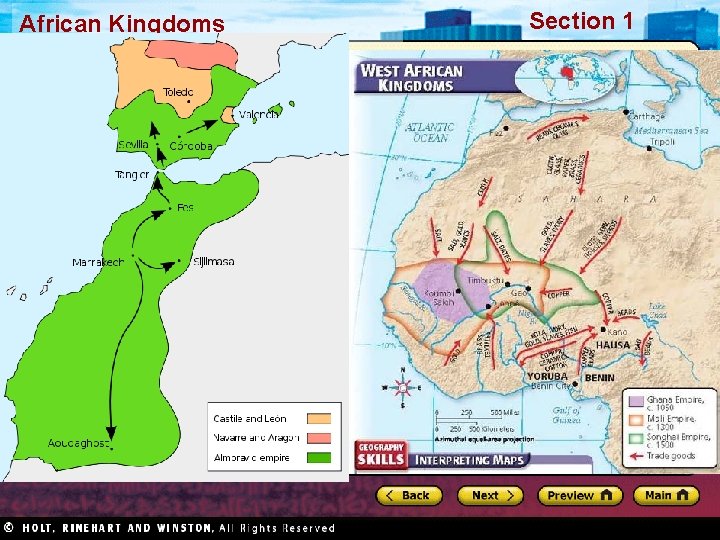
Section 1 African Kingdoms Ghana’s Decline Attempts at Expansion Results of Conflict • Mid-1000 s, Ghana’s empire rich and powerful • Almoravids controlled capital temporarily • King tried to expand to north into lands controlled by Almoravids, a Muslim Berber kingdom • Ghana’s empire was weakened • Attempt led to long war • In 1076, Almoravids captured Koumbi-Saleh, Ghana’s capital • King unable to deal with rebellion in part of empire • Soon Ghana fell into decline; new empire took its place
African Kingdoms Section 1
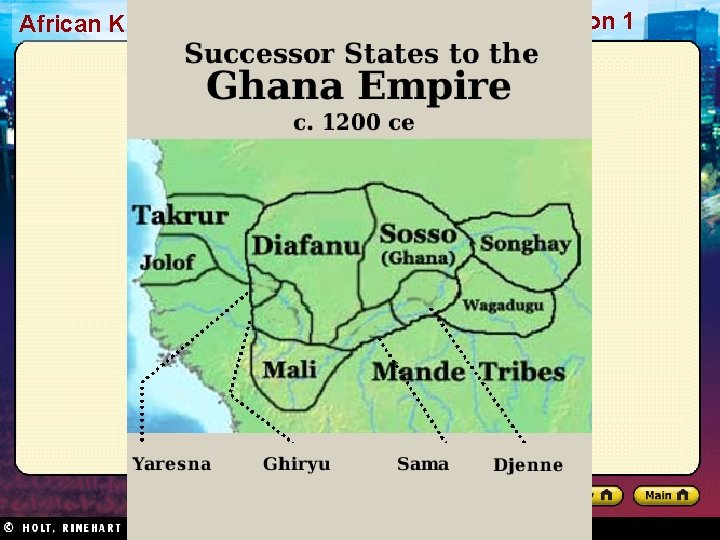
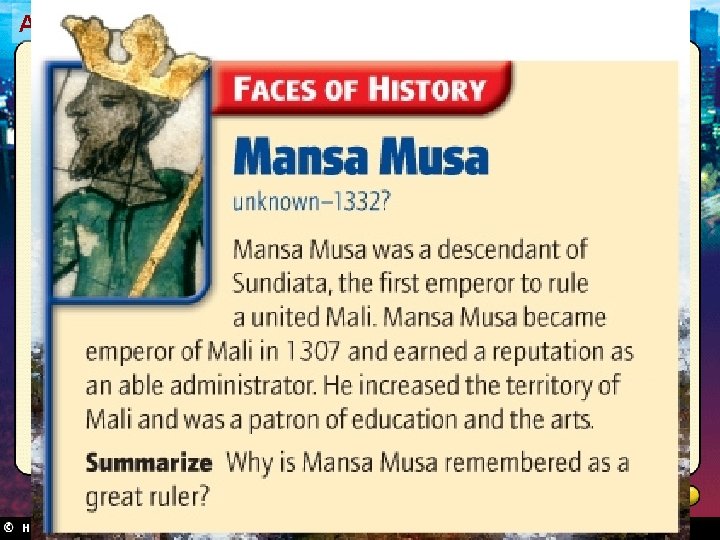
Section 1 African Kingdoms Mali Empire After Ghana’s decline, no one kingdom controlled trans-Saharan trade. In the 1230 s, the empire of Mali rose to power on the same territory. Mali expanded to the Atlantic Ocean and became a wealthy and sophisticated empire. Rise of Mali Sundiata • Founders of Mali, Malinke had been active in Ghana’s gold trade • Leader of Mali’s rise to power, king named Sundiata • 1230, grew frustrated with policies of neighboring peoples, rose up to conquer them; became leading power in West Africa • After conquest, Sundiata ruled 25 years • Story of reign, accomplishments told in epic, also called Sundiata Mali reached its height in the 1300 s under the reign of a mansa, or king, named Musa.
African Kingdoms Section 1
African Kingdoms Section 1
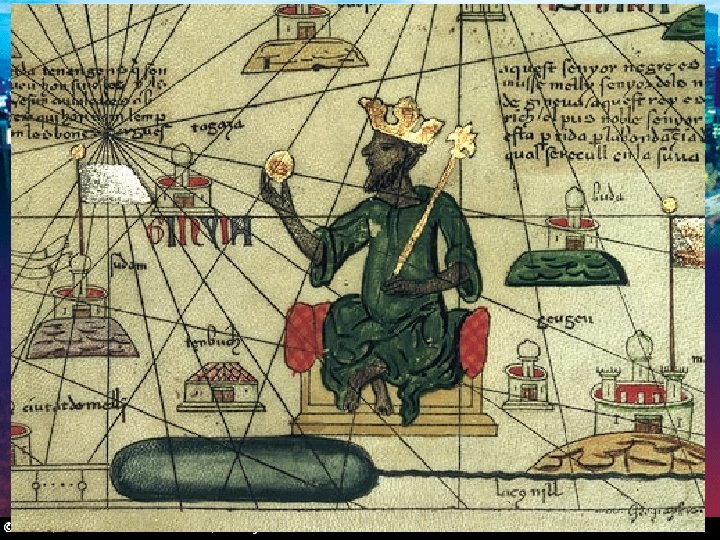
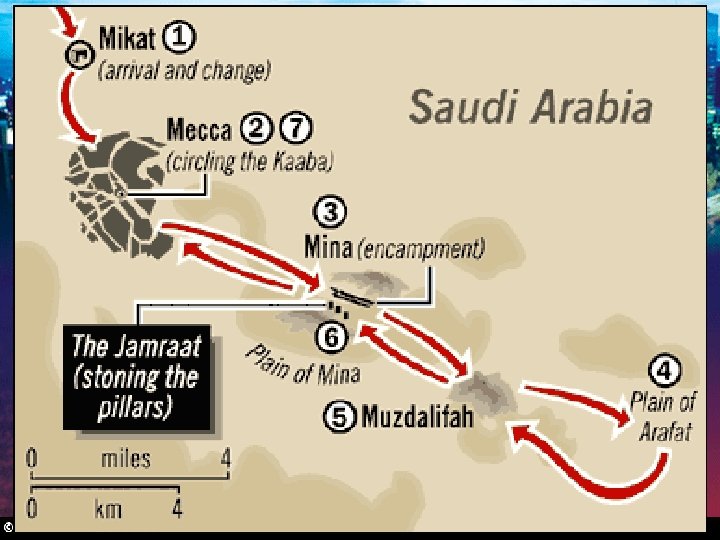
Section 1 African Kingdoms Mansa Musa A relative of Sundiata, Mansa Musa came to power in 1307. During his reign, Mali’s territory expanded and its population grew. Growing Wealth • During Musa’s reign, Mali grew wealthier than ever Islam in Mali • Mansa Musa devout Muslim • Much wealth came from taxation of gold-salt trade • Introduced into West Africa by Muslim traders in Ghana, Islam did not take hold initially • Mali kept order along Saharan trade routes by using large army • In Mali, Islam became powerful influence, especially among ruling class • Army also kept life in Mali relatively peaceful • 1324, Musa set out on hajj, pilgrimage to Mecca
African Kingdoms Section 1
African Kingdoms Section 1
African Kingdoms Section 1
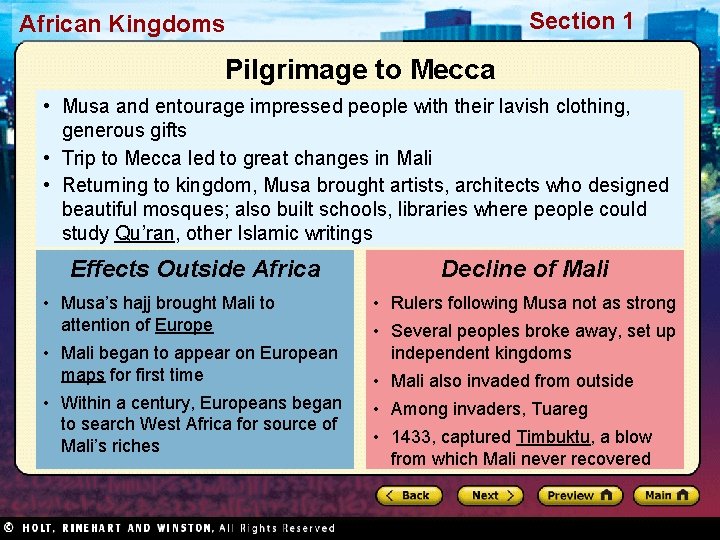
Section 1 African Kingdoms Pilgrimage to Mecca • Musa and entourage impressed people with their lavish clothing, generous gifts • Trip to Mecca led to great changes in Mali • Returning to kingdom, Musa brought artists, architects who designed beautiful mosques; also built schools, libraries where people could study Qu’ran, other Islamic writings Effects Outside Africa • Musa’s hajj brought Mali to attention of Europe • Mali began to appear on European maps for first time • Within a century, Europeans began to search West Africa for source of Mali’s riches Decline of Mali • Rulers following Musa not as strong • Several peoples broke away, set up independent kingdoms • Mali also invaded from outside • Among invaders, Tuareg • 1433, captured Timbuktu, a blow from which Mali never recovered
African Kingdoms Section 1
African Kingdoms Section 1
African Kingdoms Section 1
African Kingdoms Section 1
African Kingdoms Section 1
African Kingdoms Section 1
- Slides: 59