
AFRICAN CULTURAL INFLUENCE ON MODERN CINEMA MICHELLE BORGES

AFRICAN CULTURAL INFLUENCE ON MODERN CINEMA MICHELLE BORGES
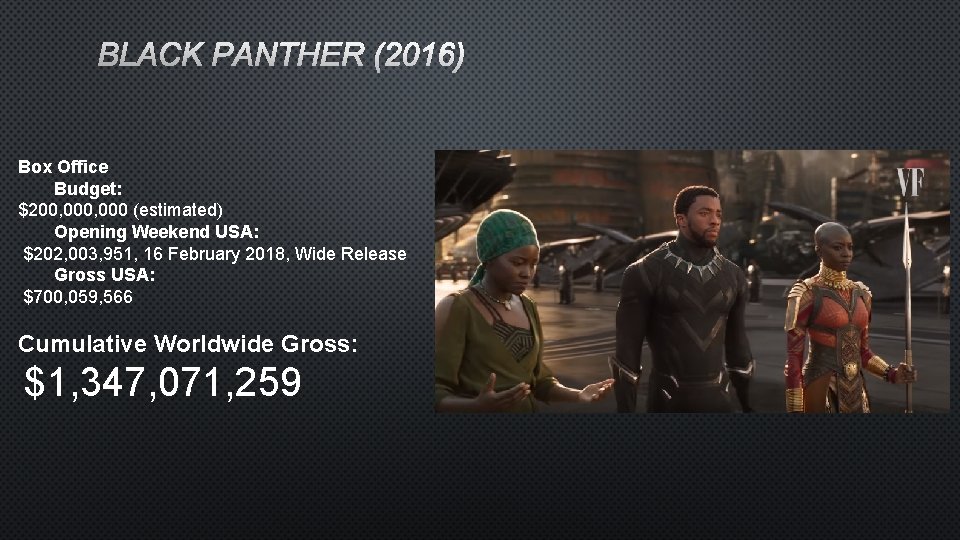
BLACK PANTHER (2016) Box Office Budget: $200, 000 (estimated) Opening Weekend USA: $202, 003, 951, 16 February 2018, Wide Release Gross USA: $700, 059, 566 Cumulative Worldwide Gross: $1, 347, 071, 259
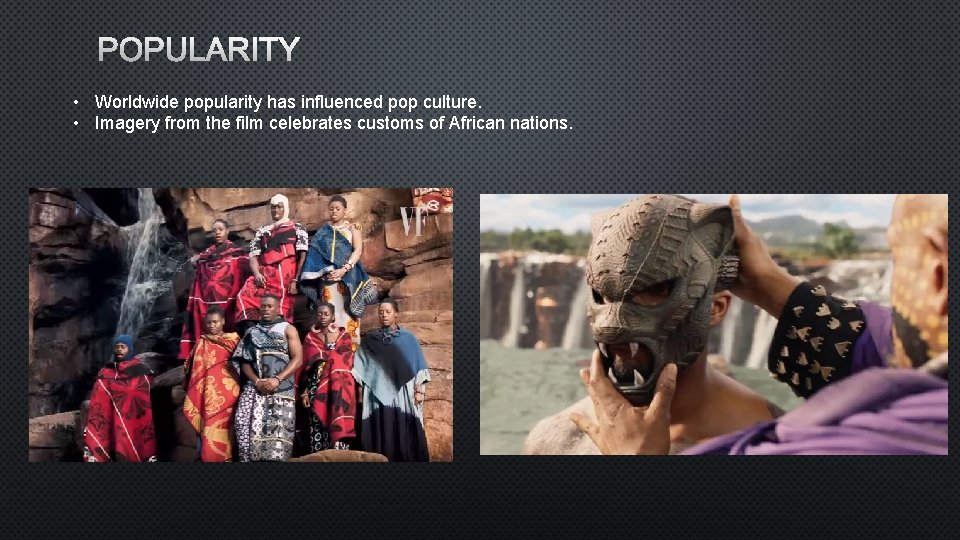
POPULARITY • Worldwide popularity has influenced pop culture. • Imagery from the film celebrates customs of African nations.
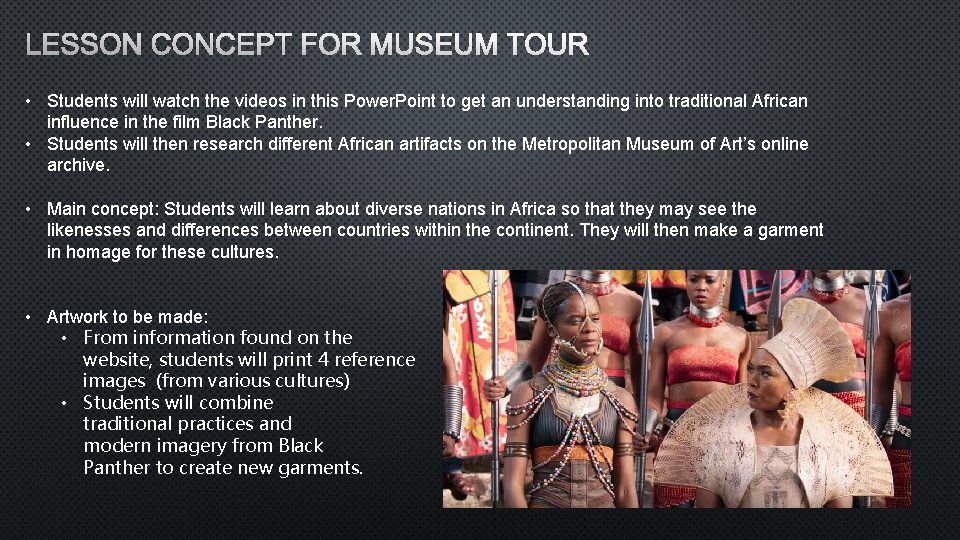
LESSON CONCEPT FOR MUSEUM TOUR • Students will watch the videos in this Power. Point to get an understanding into traditional African influence in the film Black Panther. • Students will then research different African artifacts on the Metropolitan Museum of Art’s online archive. • Main concept: Students will learn about diverse nations in Africa so that they may see the likenesses and differences between countries within the continent. They will then make a garment in homage for these cultures. • Artwork to be made: • From information found on the website, students will print 4 reference images (from various cultures) • Students will combine traditional practices and modern imagery from Black Panther to create new garments.
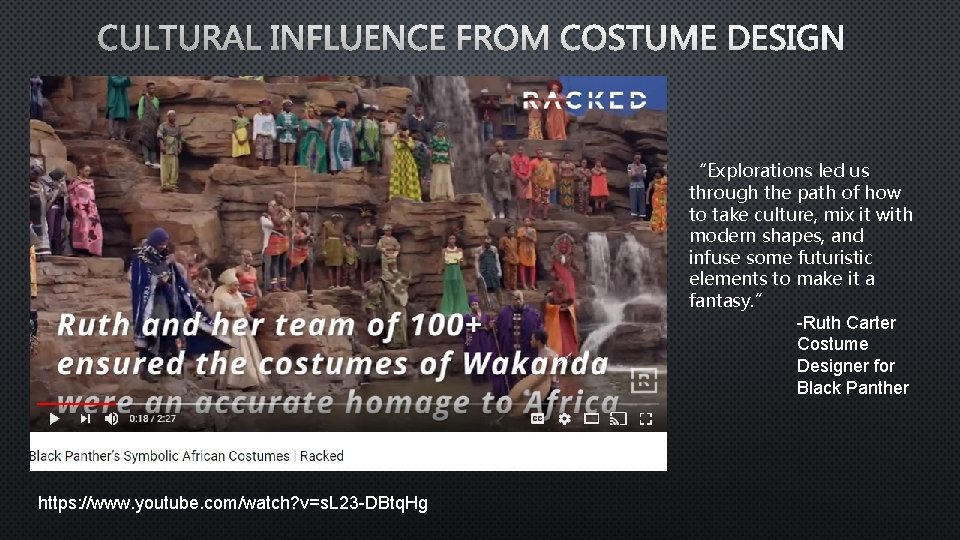
CULTURAL INFLUENCE FROM COSTUME DESIGN “Explorations led us through the path of how to take culture, mix it with modern shapes, and infuse some futuristic elements to make it a fantasy. ” -Ruth Carter Costume Designer for Black Panther https: //www. youtube. com/watch? v=s. L 23 -DBtq. Hg
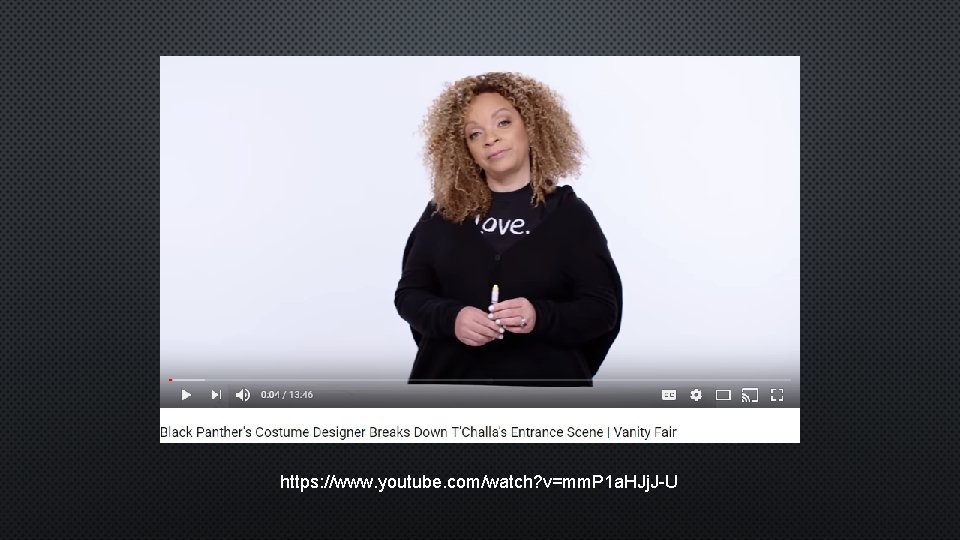
https: //www. youtube. com/watch? v=mm. P 1 a. HJj. J-U
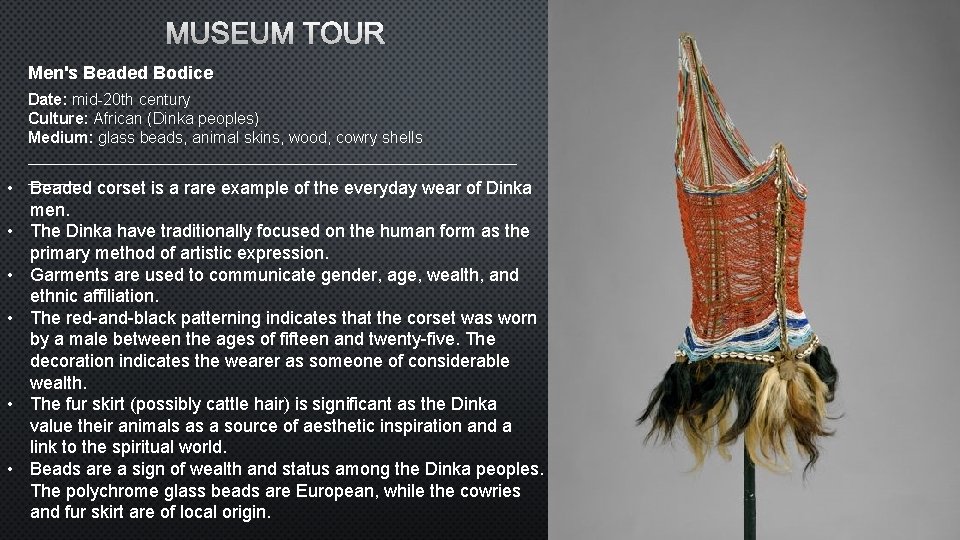
MUSEUM TOUR Men's Beaded Bodice Date: mid-20 th century Culture: African (Dinka peoples) Medium: glass beads, animal skins, wood, cowry shells ____________________________ • Beaded corset is a rare example of the everyday wear of Dinka men. • The Dinka have traditionally focused on the human form as the primary method of artistic expression. • Garments are used to communicate gender, age, wealth, and ethnic affiliation. • The red-and-black patterning indicates that the corset was worn by a male between the ages of fifteen and twenty-five. The decoration indicates the wearer as someone of considerable wealth. • The fur skirt (possibly cattle hair) is significant as the Dinka value their animals as a source of aesthetic inspiration and a link to the spiritual world. • Beads are a sign of wealth and status among the Dinka peoples. The polychrome glass beads are European, while the cowries and fur skirt are of local origin.
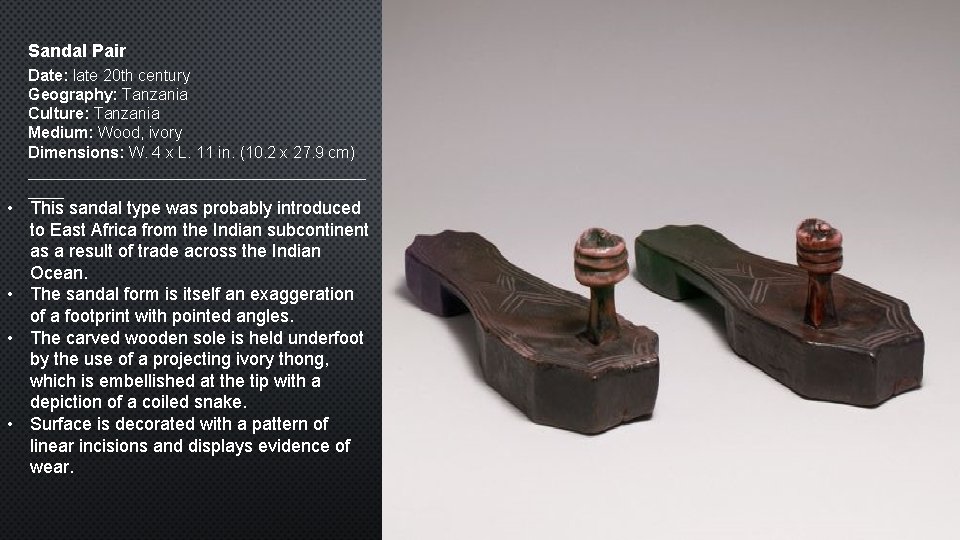
Sandal Pair Date: late 20 th century Geography: Tanzania Culture: Tanzania Medium: Wood, ivory Dimensions: W. 4 x L. 11 in. (10. 2 x 27. 9 cm) ___________________ • This sandal type was probably introduced to East Africa from the Indian subcontinent as a result of trade across the Indian Ocean. • The sandal form is itself an exaggeration of a footprint with pointed angles. • The carved wooden sole is held underfoot by the use of a projecting ivory thong, which is embellished at the tip with a depiction of a coiled snake. • Surface is decorated with a pattern of linear incisions and displays evidence of wear.
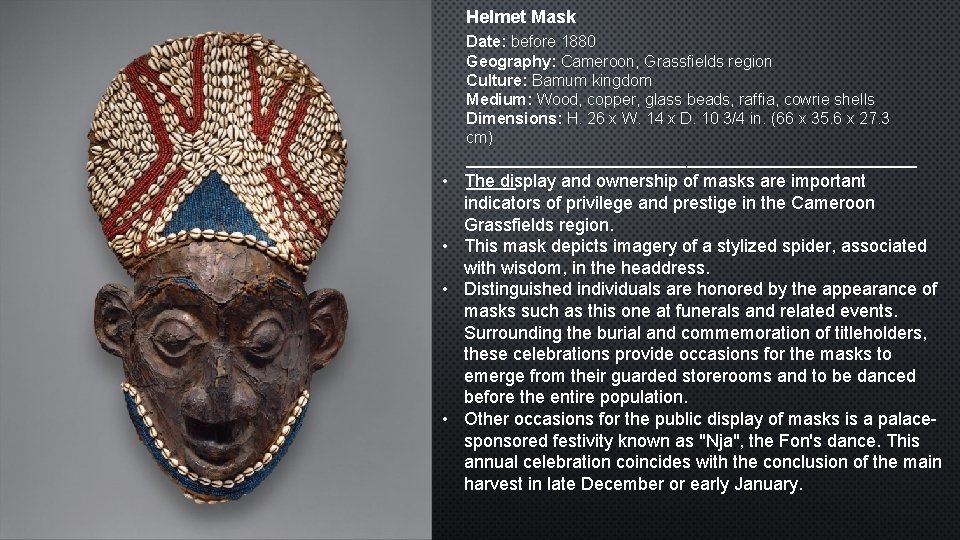
Helmet Mask Date: before 1880 Geography: Cameroon, Grassfields region Culture: Bamum kingdom Medium: Wood, copper, glass beads, raffia, cowrie shells Dimensions: H. 26 x W. 14 x D. 10 3/4 in. (66 x 35. 6 x 27. 3 cm) • • _______________________ The display and ownership of masks are important indicators of privilege and prestige in the Cameroon Grassfields region. This mask depicts imagery of a stylized spider, associated with wisdom, in the headdress. Distinguished individuals are honored by the appearance of masks such as this one at funerals and related events. Surrounding the burial and commemoration of titleholders, these celebrations provide occasions for the masks to emerge from their guarded storerooms and to be danced before the entire population. Other occasions for the public display of masks is a palacesponsored festivity known as "Nja", the Fon's dance. This annual celebration coincides with the conclusion of the main harvest in late December or early January.
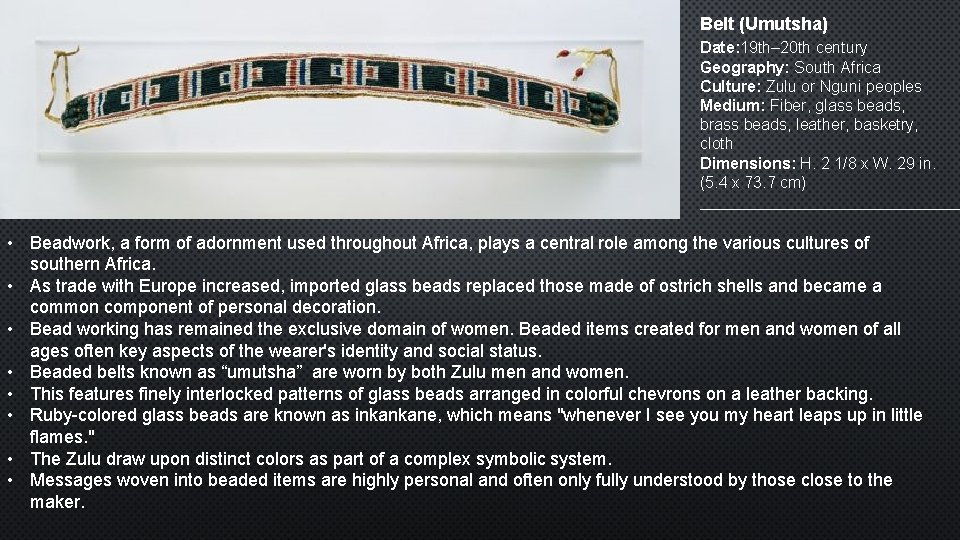
Belt (Umutsha) Date: 19 th– 20 th century Geography: South Africa Culture: Zulu or Nguni peoples Medium: Fiber, glass beads, brass beads, leather, basketry, cloth Dimensions: H. 2 1/8 x W. 29 in. (5. 4 x 73. 7 cm) _______________ • Beadwork, a form of adornment used throughout Africa, plays a central role among the various cultures of southern Africa. • As trade with Europe increased, imported glass beads replaced those made of ostrich shells and became a common component of personal decoration. • Bead working has remained the exclusive domain of women. Beaded items created for men and women of all ages often key aspects of the wearer's identity and social status. • Beaded belts known as “umutsha” are worn by both Zulu men and women. • This features finely interlocked patterns of glass beads arranged in colorful chevrons on a leather backing. • Ruby-colored glass beads are known as inkankane, which means "whenever I see you my heart leaps up in little flames. " • The Zulu draw upon distinct colors as part of a complex symbolic system. • Messages woven into beaded items are highly personal and often only fully understood by those close to the maker.
![REFERENCES • [Racked]. (2018, November 16). Black Panther’s Symbolic African Costumes | Racked [Videofile].](http://slidetodoc.com/presentation_image_h2/2ab1fb859f268074525ddd63a95fafbf/image-11.jpg "REFERENCES • [Racked]. (2018, November 16). Black Panther’s Symbolic African Costumes | Racked [Videofile].")
REFERENCES • [Racked]. (2018, November 16). Black Panther’s Symbolic African Costumes | Racked [Videofile]. Retrieved from https: //www. youtube. com/watch? v=s. L 23 -DBtq. Hg • [Vanity Fair]. (2018, November 16). Black Panther's Costume Designer Breaks Down T'Challa’s Entrance Scene | Vanity Fair [Video file]. Retrieved from https: //www. youtube. com/watch? v=mm. P 1 a. HJj. J-U • https: //www. imdb. com/title/tt 1825683/? ref_=ttrel_tt • Images used other than screenshots from aforementioned references: • https: //www. metmuseum. org/art/collection
- Slides: 11