
African Ceramics Historical Examples Contemporary Approaches Nok Art


- Slides: 51
African Ceramics Historical Examples Contemporary Approaches
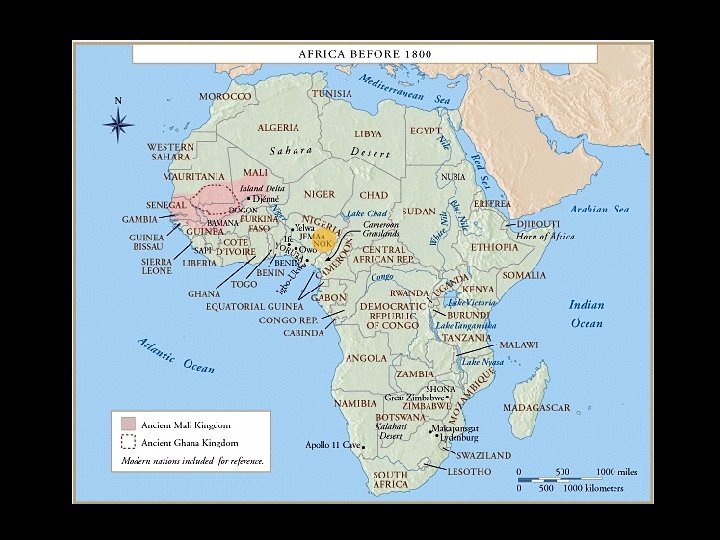
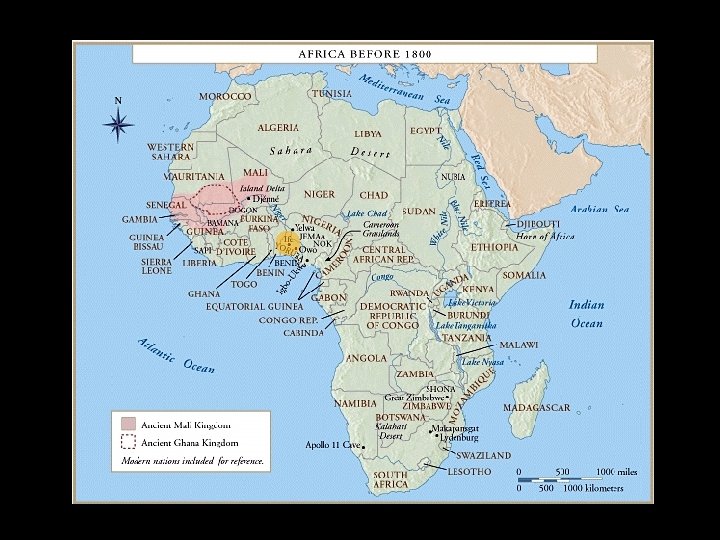
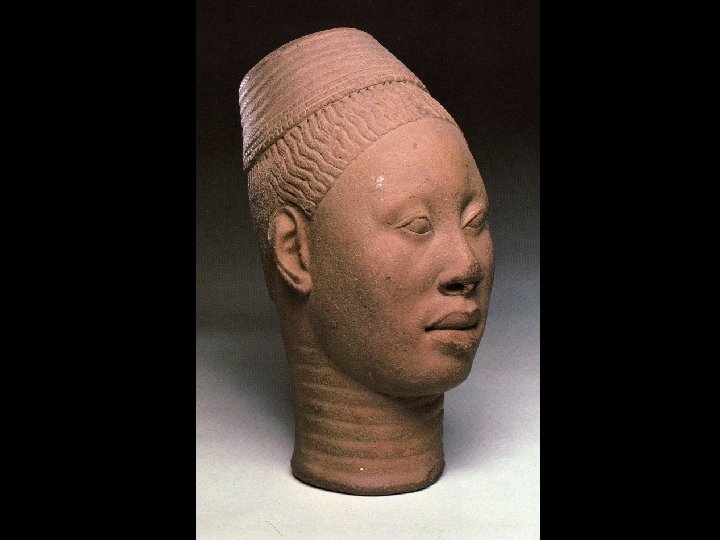
Nok Art In 1943, tin mining in the vicinity of the village of Nok near the Jos Plateau region of Nigeria brought to light a terracotta head, evidence of the oldest known figurative sculpture south of the Sahara. Although stylistically related heads, figures, animals, and pottery shards have been found in a number of Nigerian sites since that time, such works are identified by the name of the small village where the first terracotta head was discovered. Artifacts continue to be unearthed without documentation of the context in which they were buried, a lack of extensive archaeological study that has severely limited our understanding of Nok terracottas. One of the earliest African centers of ironworking and terracotta figure production, the Nok culture remains an enigma. Many Nok pieces have been illegally exhumed and expropriated. Nok terra cottas are now on the list of threatened world heritage objects.
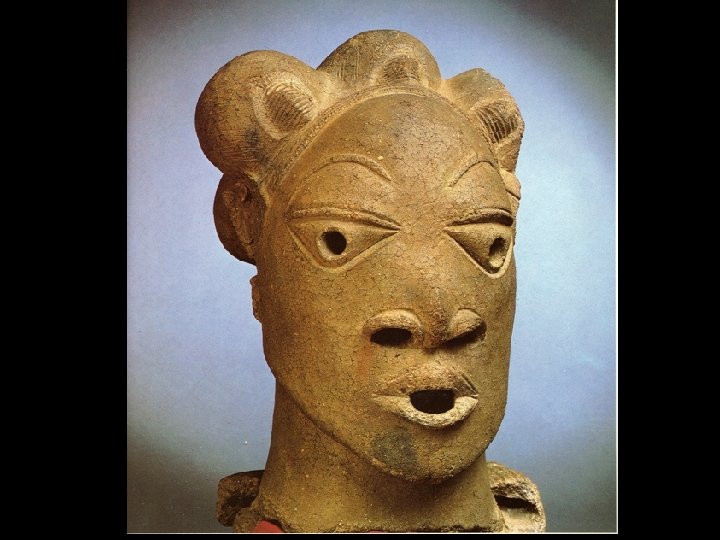
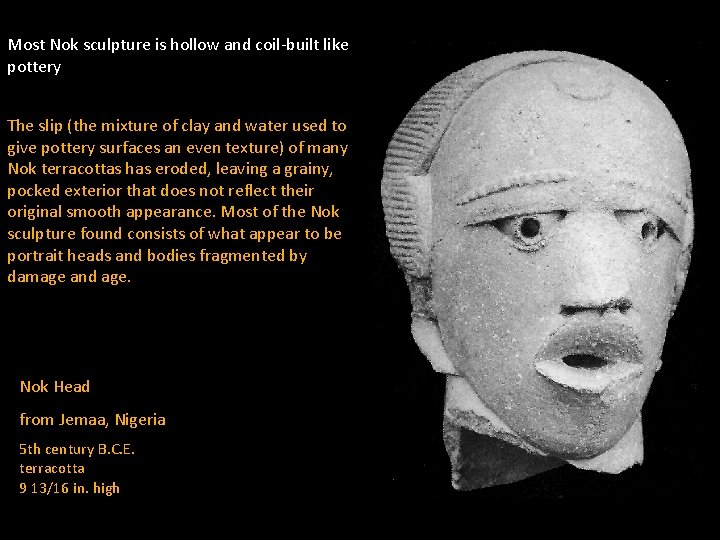
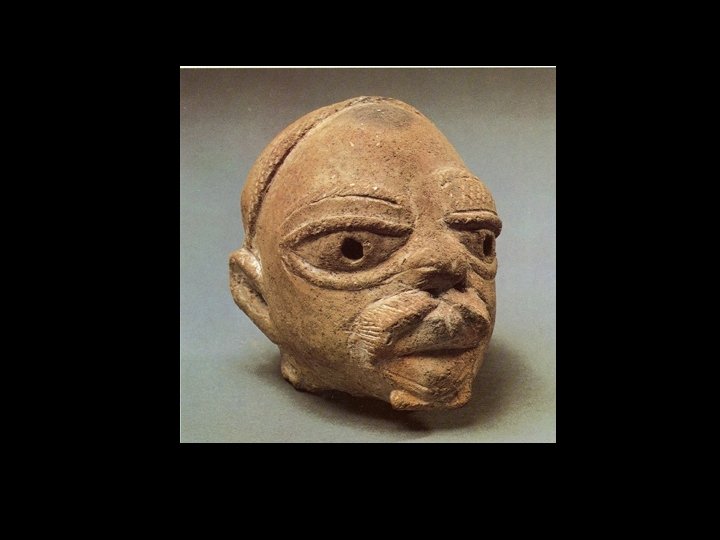
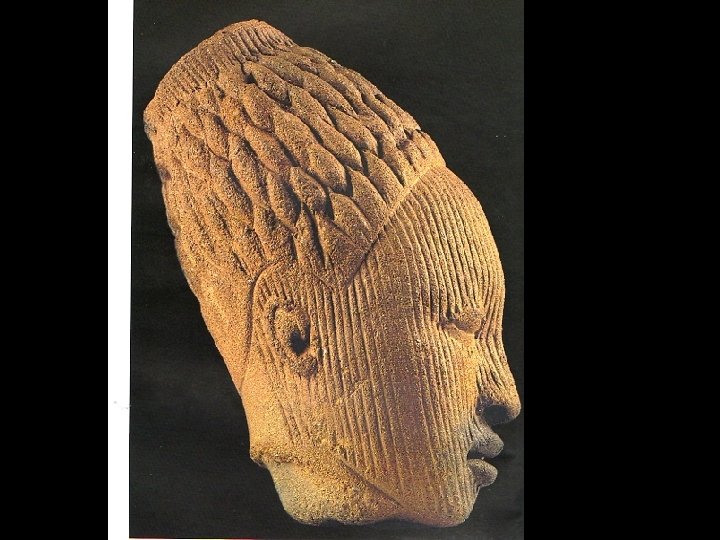
Most Nok sculpture is hollow and coil-built like pottery The slip (the mixture of clay and water used to give pottery surfaces an even texture) of many Nok terracottas has eroded, leaving a grainy, pocked exterior that does not reflect their original smooth appearance. Most of the Nok sculpture found consists of what appear to be portrait heads and bodies fragmented by damage and age. Nok Head from Jemaa, Nigeria 5 th century B. C. E. terracotta 9 13/16 in. high
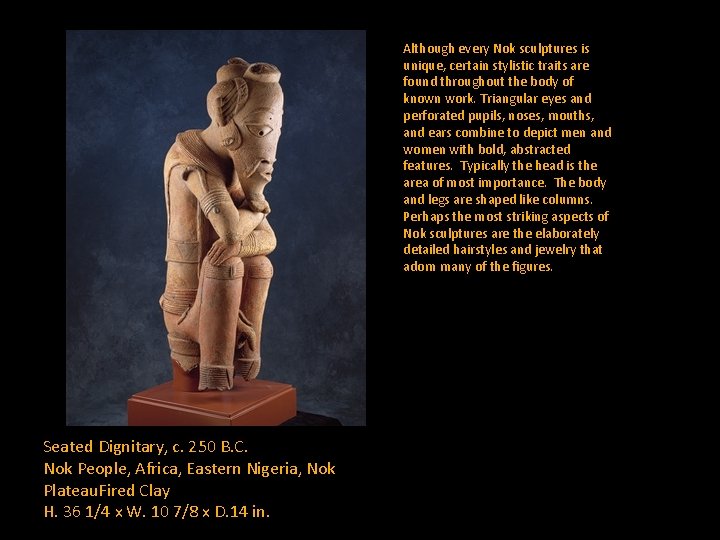
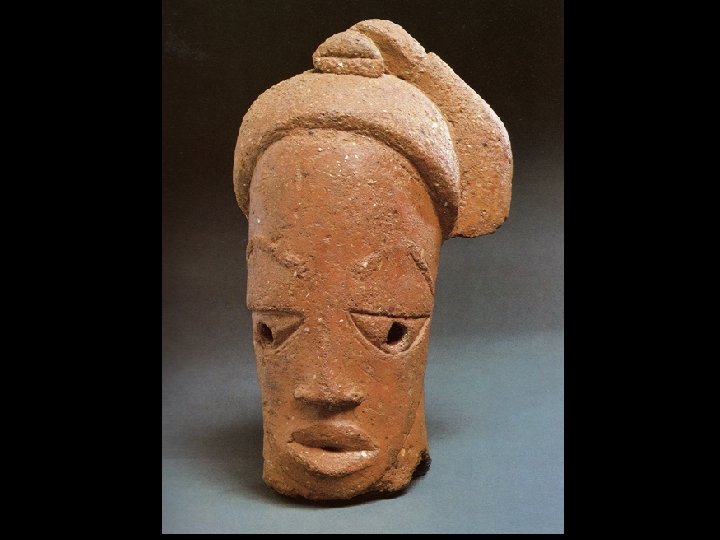
Although every Nok sculptures is unique, certain stylistic traits are found throughout the body of known work. Triangular eyes and perforated pupils, noses, mouths, and ears combine to depict men and women with bold, abstracted features. Typically the head is the area of most importance. The body and legs are shaped like columns. Perhaps the most striking aspects of Nok sculptures are the elaborately detailed hairstyles and jewelry that adorn many of the figures. Seated Dignitary, c. 250 B. C. Nok People, Africa, Eastern Nigeria, Nok Plateau. Fired Clay H. 36 1/4 x W. 10 7/8 x D. 14 in.
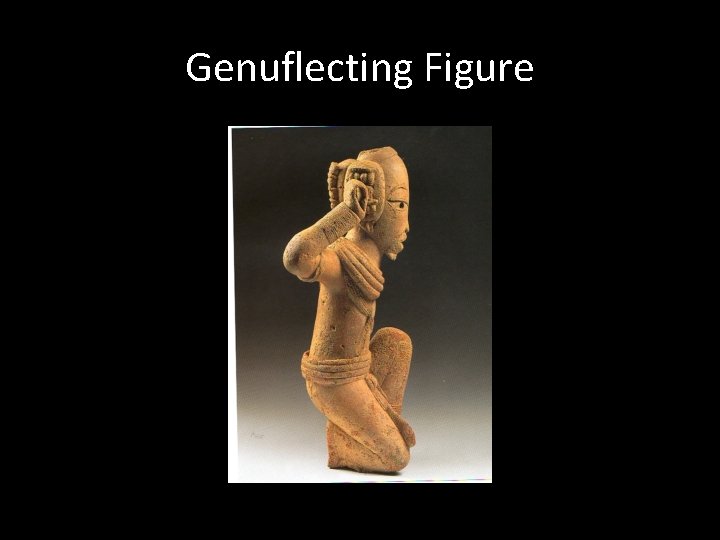
Genuflecting Figure
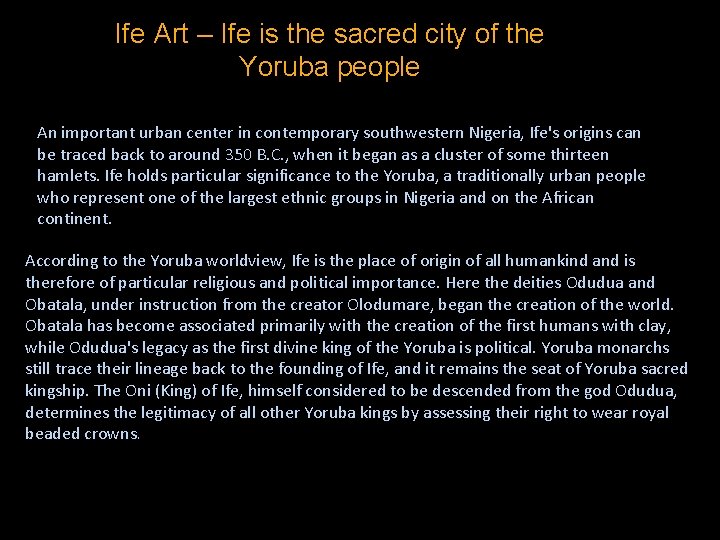
Ife Art – Ife is the sacred city of the Yoruba people An important urban center in contemporary southwestern Nigeria, Ife's origins can be traced back to around 350 B. C. , when it began as a cluster of some thirteen hamlets. Ife holds particular significance to the Yoruba, a traditionally urban people who represent one of the largest ethnic groups in Nigeria and on the African continent. According to the Yoruba worldview, Ife is the place of origin of all humankind and is therefore of particular religious and political importance. Here the deities Odudua and Obatala, under instruction from the creator Olodumare, began the creation of the world. Obatala has become associated primarily with the creation of the first humans with clay, while Odudua's legacy as the first divine king of the Yoruba is political. Yoruba monarchs still trace their lineage back to the founding of Ife, and it remains the seat of Yoruba sacred kingship. The Oni (King) of Ife, himself considered to be descended from the god Odudua, determines the legitimacy of all other Yoruba kings by assessing their right to wear royal beaded crowns.
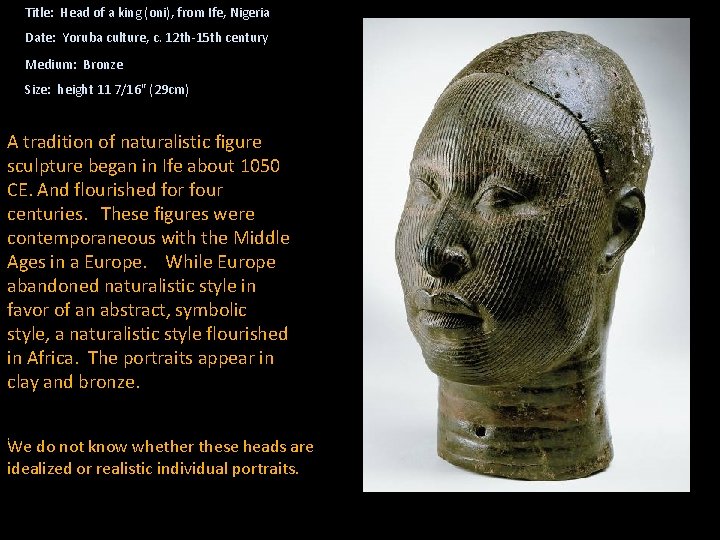
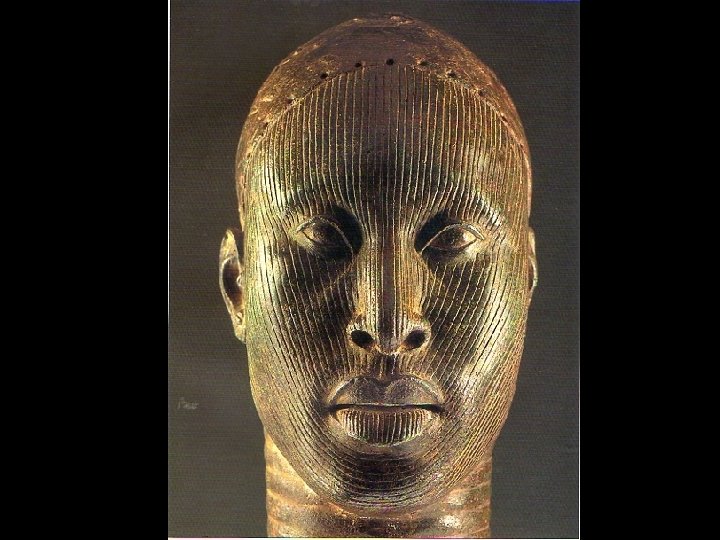
Title: Head of a king (oni), from Ife, Nigeria Date: Yoruba culture, c. 12 th-15 th century Medium: Bronze Size: height 11 7/16" (29 cm) A tradition of naturalistic figure sculpture began in Ife about 1050 CE. And flourished for four centuries. These figures were contemporaneous with the Middle Ages in a Europe. While Europe abandoned naturalistic style in favor of an abstract, symbolic style, a naturalistic style flourished in Africa. The portraits appear in clay and bronze. . We do not know whether these heads are idealized or realistic individual portraits.
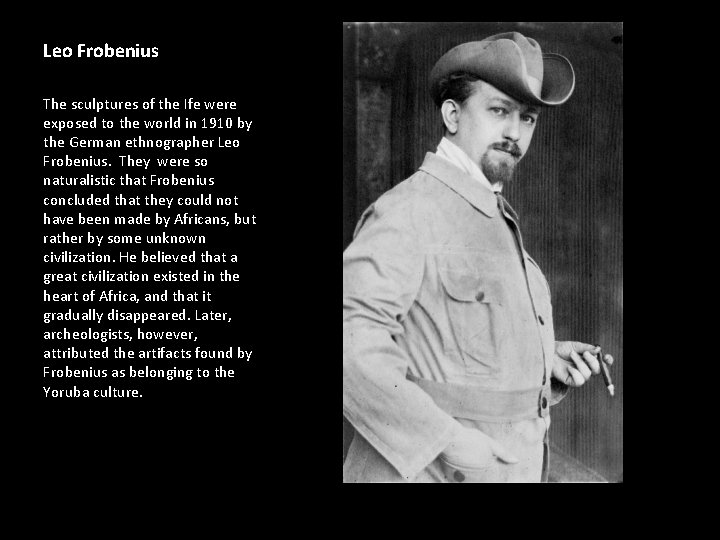
Leo Frobenius The sculptures of the Ife were exposed to the world in 1910 by the German ethnographer Leo Frobenius. They were so naturalistic that Frobenius concluded that they could not have been made by Africans, but rather by some unknown civilization. He believed that a great civilization existed in the heart of Africa, and that it gradually disappeared. Later, archeologists, however, attributed the artifacts found by Frobenius as belonging to the Yoruba culture.
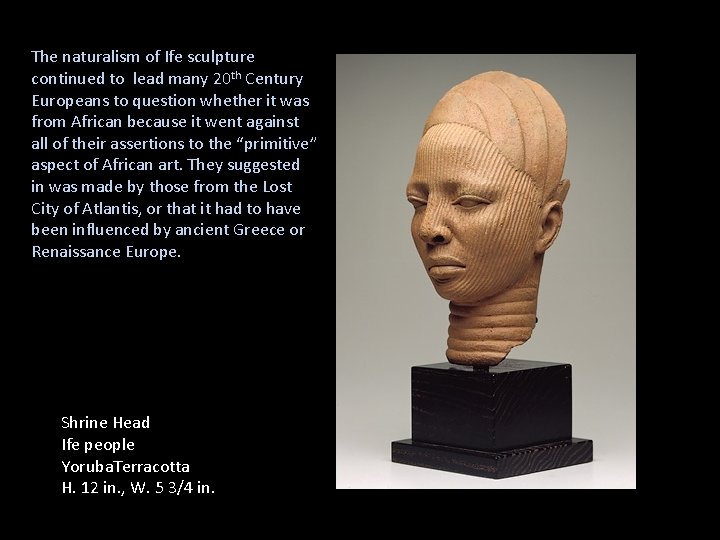
The naturalism of Ife sculpture continued to lead many 20 th Century Europeans to question whether it was from African because it went against all of their assertions to the “primitive” aspect of African art. They suggested in was made by those from the Lost City of Atlantis, or that it had to have been influenced by ancient Greece or Renaissance Europe. Shrine Head Ife people Yoruba. Terracotta H. 12 in. , W. 5 3/4 in.
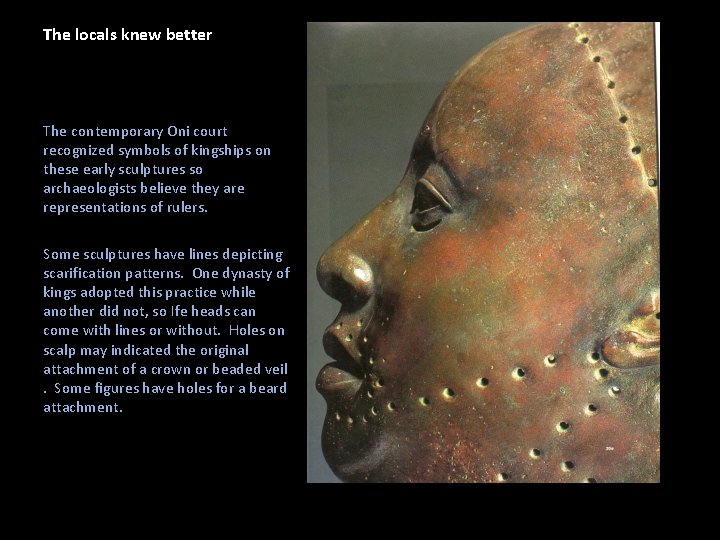
The locals knew better The contemporary Oni court recognized symbols of kingships on these early sculptures so archaeologists believe they are representations of rulers. Some sculptures have lines depicting scarification patterns. One dynasty of kings adopted this practice while another did not, so Ife heads can come with lines or without. Holes on scalp may indicated the original attachment of a crown or beaded veil. Some figures have holes for a beard attachment.
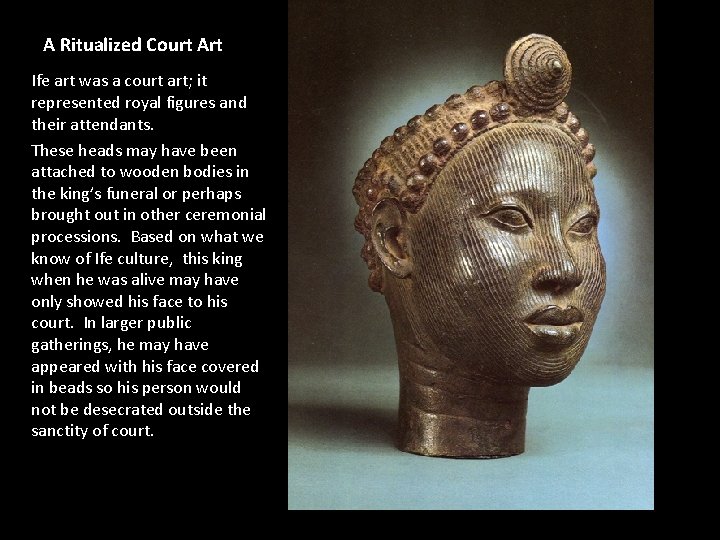
A Ritualized Court Art Ife art was a court art; it represented royal figures and their attendants. These heads may have been attached to wooden bodies in the king’s funeral or perhaps brought out in other ceremonial processions. Based on what we know of Ife culture, this king when he was alive may have only showed his face to his court. In larger public gatherings, he may have appeared with his face covered in beads so his person would not be desecrated outside the sanctity of court.
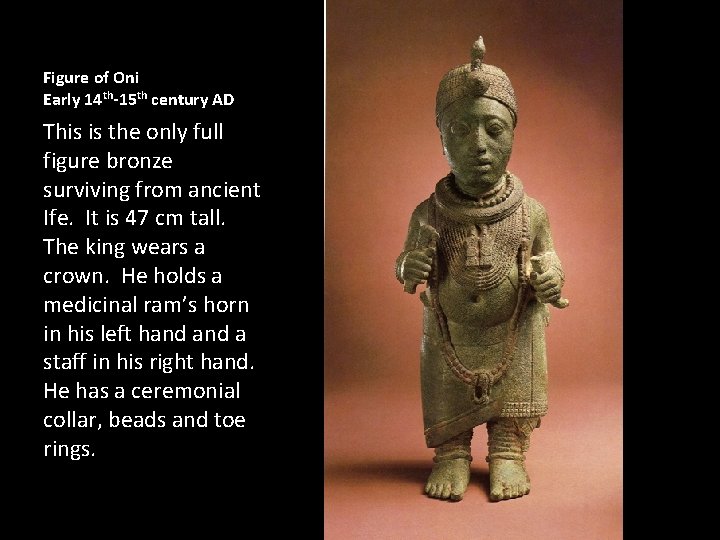
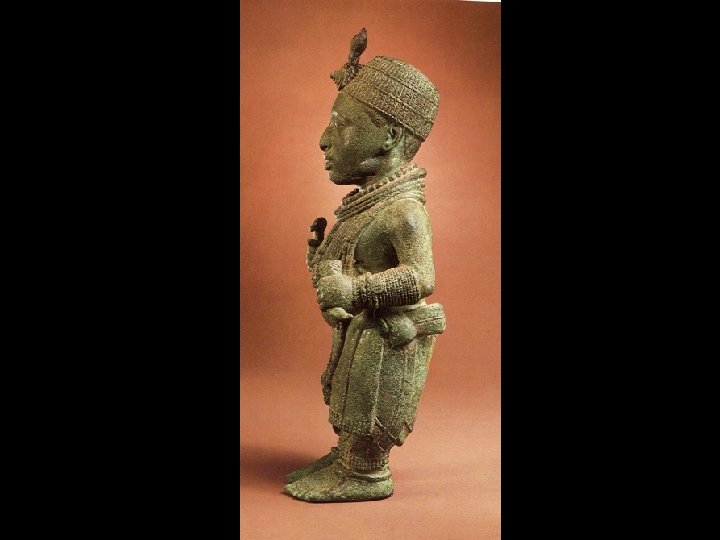
Figure of Oni Early 14 th-15 th century AD This is the only full figure bronze surviving from ancient Ife. It is 47 cm tall. The king wears a crown. He holds a medicinal ram’s horn in his left hand a staff in his right hand. He has a ceremonial collar, beads and toe rings.
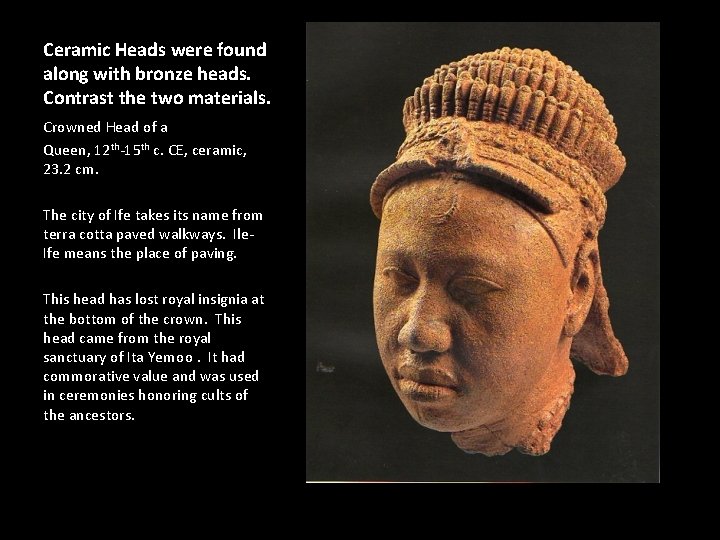
Ceramic Heads were found along with bronze heads. Contrast the two materials. Crowned Head of a Queen, 12 th-15 th c. CE, ceramic, 23. 2 cm. The city of Ife takes its name from terra cotta paved walkways. Ile. Ife means the place of paving. This head has lost royal insignia at the bottom of the crown. This head came from the royal sanctuary of Ita Yemoo. It had commorative value and was used in ceremonies honoring cults of the ancestors.
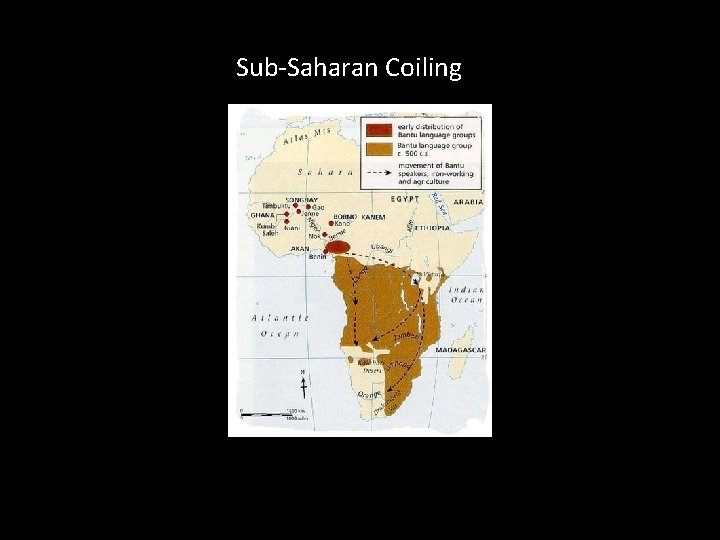
Sub-Saharan Coiling
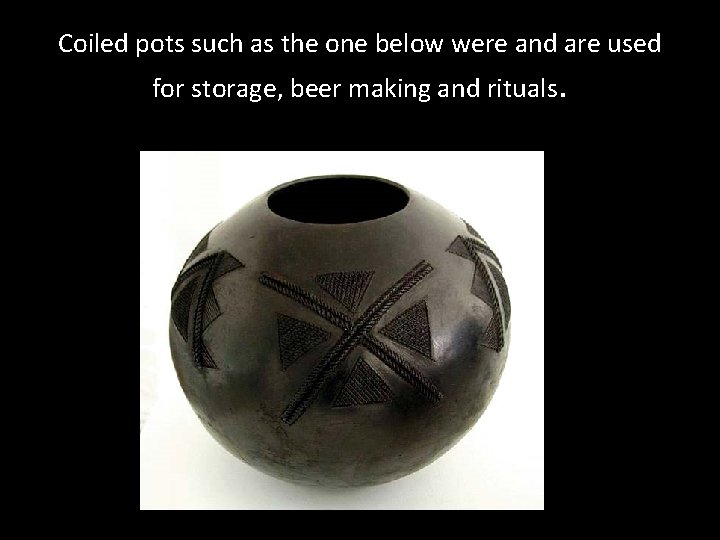
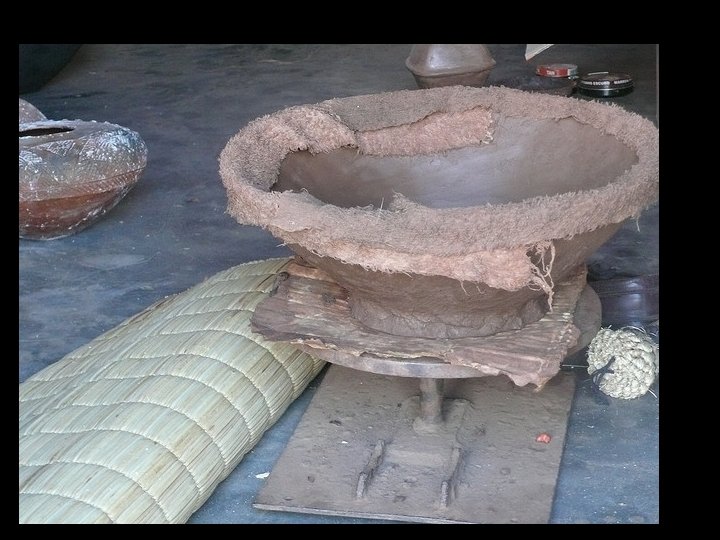
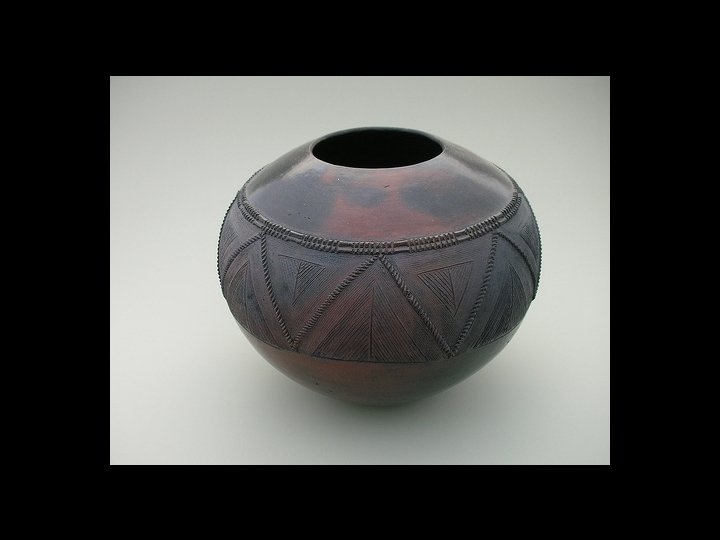
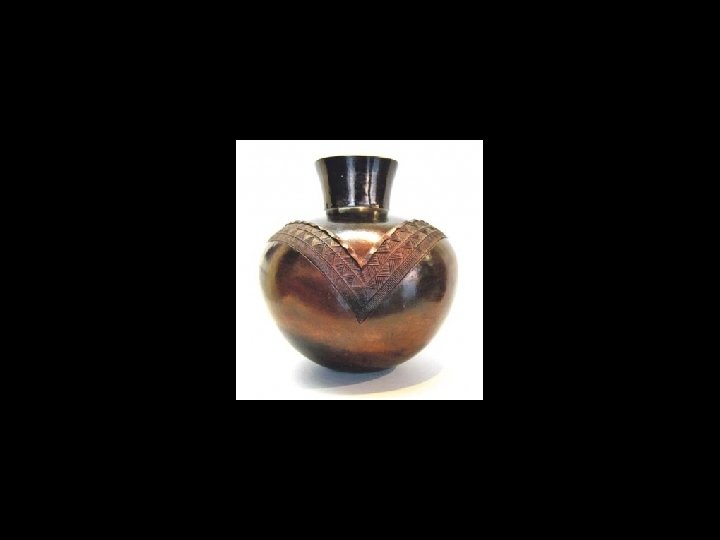
Coiled pots such as the one below were and are used for storage, beer making and rituals.
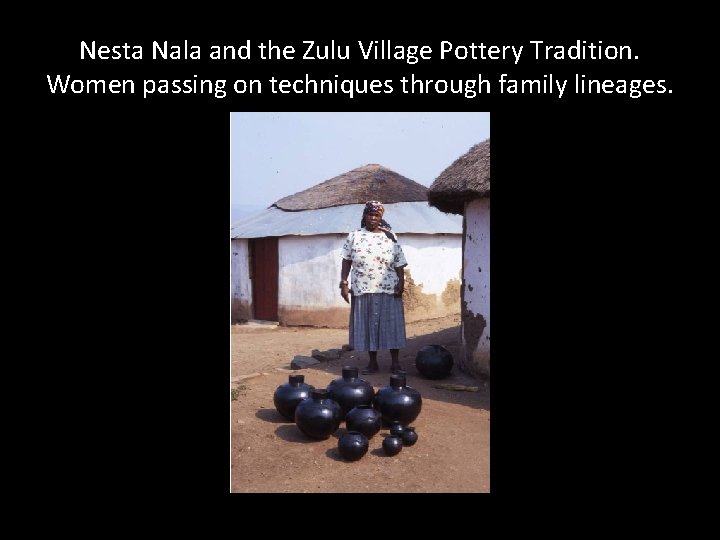
Nesta Nala and the Zulu Village Pottery Tradition. Women passing on techniques through family lineages.
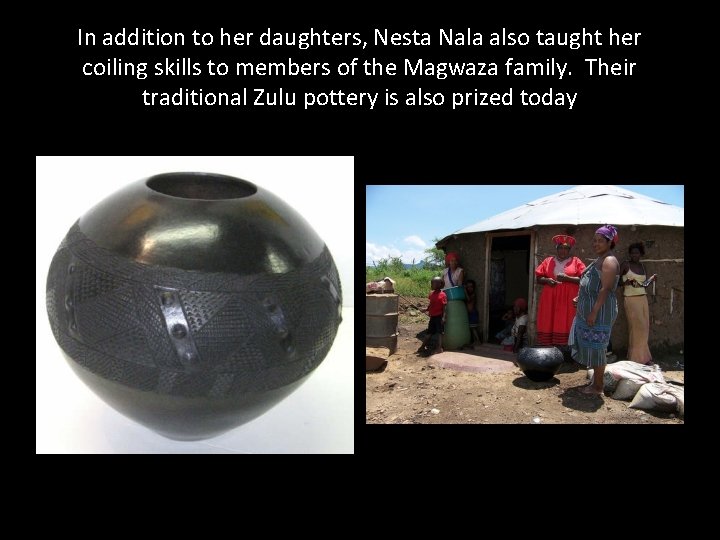
(1940 -2005) Nesta Nala is today recognized as the finest exponent of her craft - which she learned from her mother Siphiwe, who in turn inherited this skill from her mother. Nala passed it on to her daughters. Crafting a pot is an arduous process that begins with digging brown and red clay from two separate sites far apart. Fine grinding and delicate mixing are done with traditional implements. Not using a wheel, Nala put vertically rolled coils of clay onto a flat base to build up the vessel. Decorating involves removing a V-shaped bit of hard clay, filling it with soft clay which is then decorated in the Umasumpa style. After burnishing with river stones, the firing is done with dry grass and aloe leaves in a shallow pit. The reddish brown is then smoked over and blackened. Final finishing involves animal fat and polishing.
In addition to her daughters, Nesta Nala also taught her coiling skills to members of the Magwaza family. Their traditional Zulu pottery is also prized today
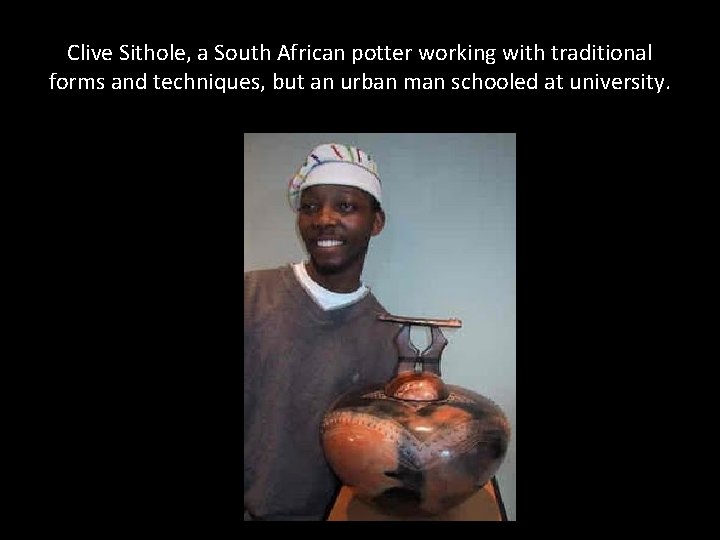
Clive Sithole, a South African potter working with traditional forms and techniques, but an urban man schooled at university.
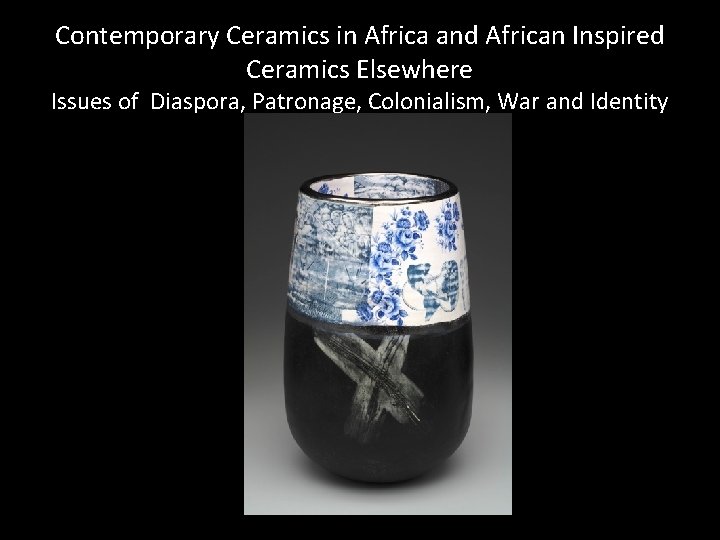
Contemporary Ceramics in Africa and African Inspired Ceramics Elsewhere Issues of Diaspora, Patronage, Colonialism, War and Identity
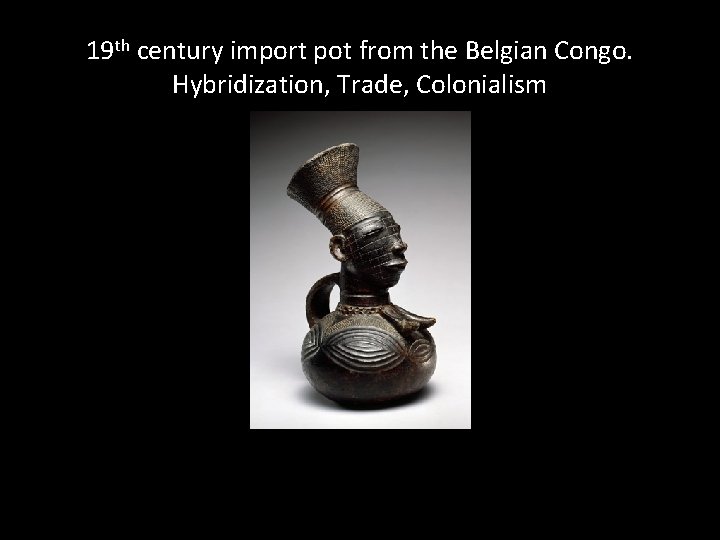
19 th century import pot from the Belgian Congo. Hybridization, Trade, Colonialism
Europeans and European-Africans First Story: Michael Cardew • IN 1950 the English studio potter Michael Cardew was recruited by the Nigerian colonial Government as Pottery Officer. Looked at from a contemporary vantage point, for the colonial government to “improve” the pottery techniques of Nigeria was odd, considering that Nigerian pots, made according to the traditional method practiced for centuries, were magnificent. However Michael Cardew was one of the best publicist ever for West Africa`s traditional potters even as he worked to create a new network of rural Potteries using techniques foreign to the region.
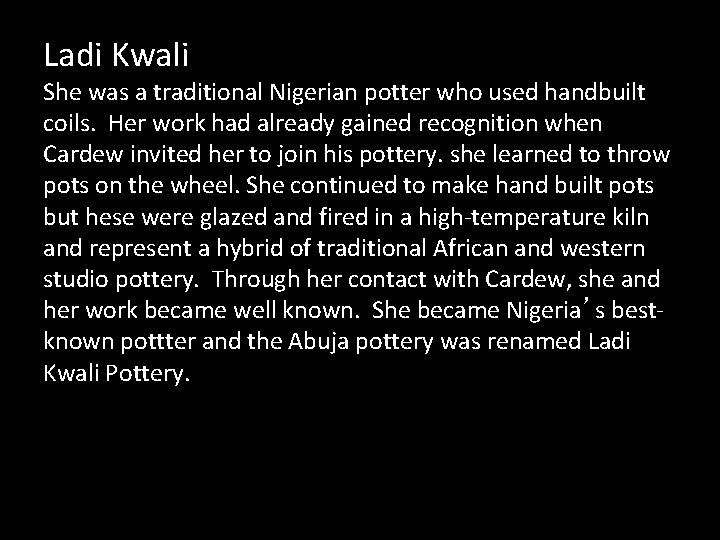
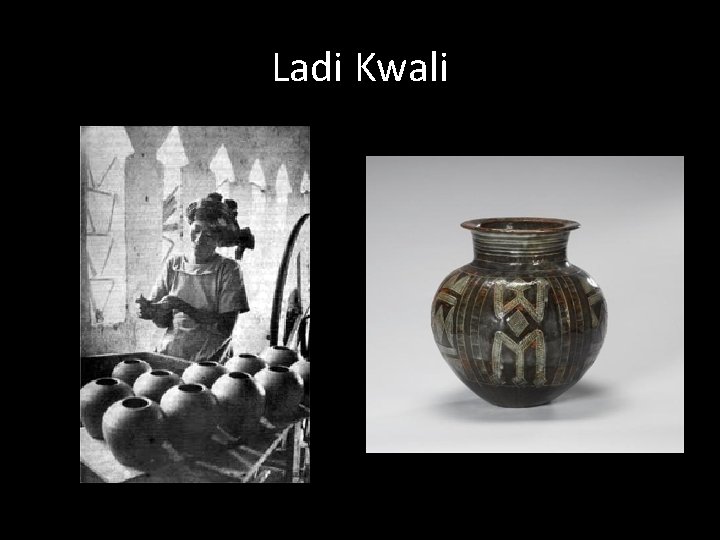
Ladi Kwali She was a traditional Nigerian potter who used handbuilt coils. Her work had already gained recognition when Cardew invited her to join his pottery. she learned to throw pots on the wheel. She continued to make hand built pots but hese were glazed and fired in a high-temperature kiln and represent a hybrid of traditional African and western studio pottery. Through her contact with Cardew, she and her work became well known. She became Nigeria’s bestknown pottter and the Abuja pottery was renamed Ladi Kwali Pottery.
Ladi Kwali
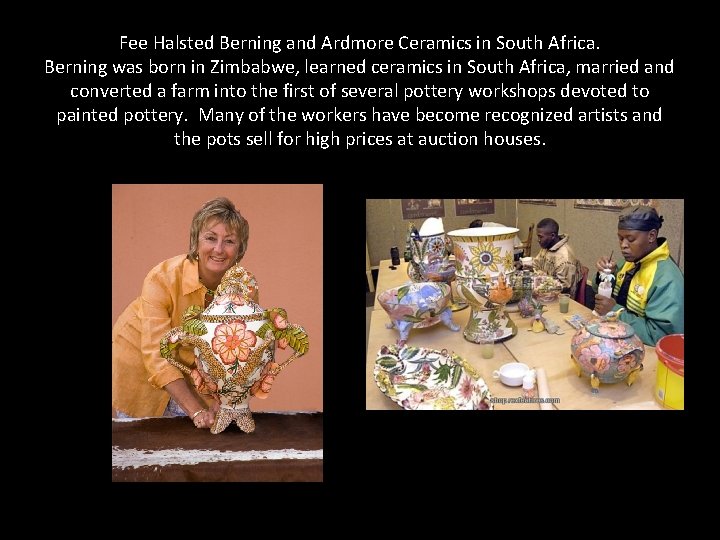
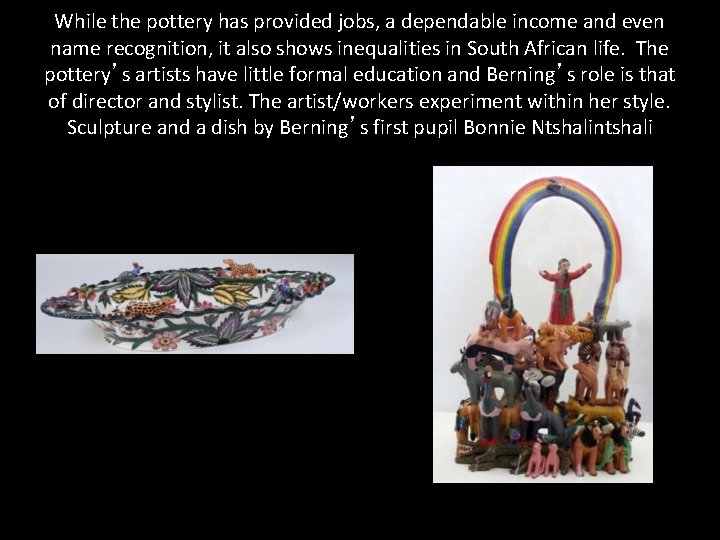
Fee Halsted Berning and Ardmore Ceramics in South Africa. Berning was born in Zimbabwe, learned ceramics in South Africa, married and converted a farm into the first of several pottery workshops devoted to painted pottery. Many of the workers have become recognized artists and the pots sell for high prices at auction houses.
While the pottery has provided jobs, a dependable income and even name recognition, it also shows inequalities in South African life. The pottery’s artists have little formal education and Berning’s role is that of director and stylist. The artist/workers experiment within her style. Sculpture and a dish by Berning’s first pupil Bonnie Ntshalintshali
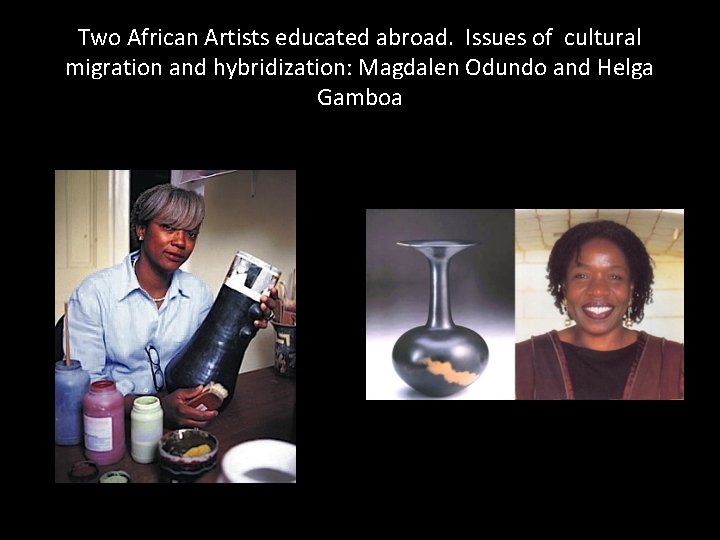
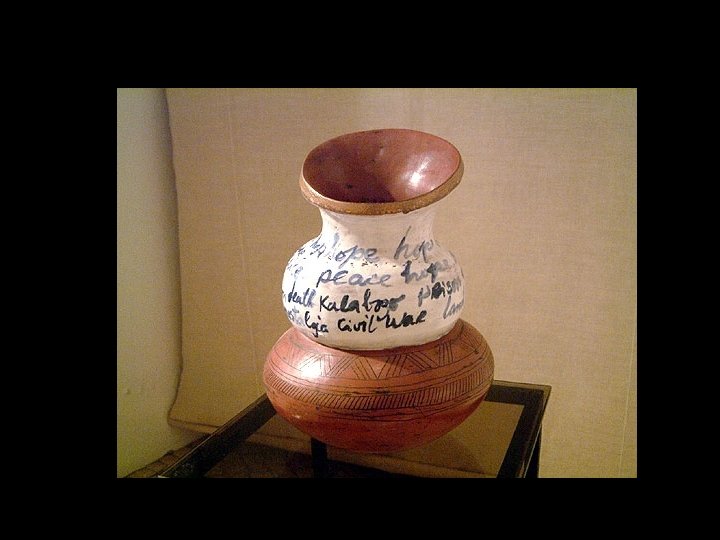
Two African Artists educated abroad. Issues of cultural migration and hybridization: Magdalen Odundo and Helga Gamboa
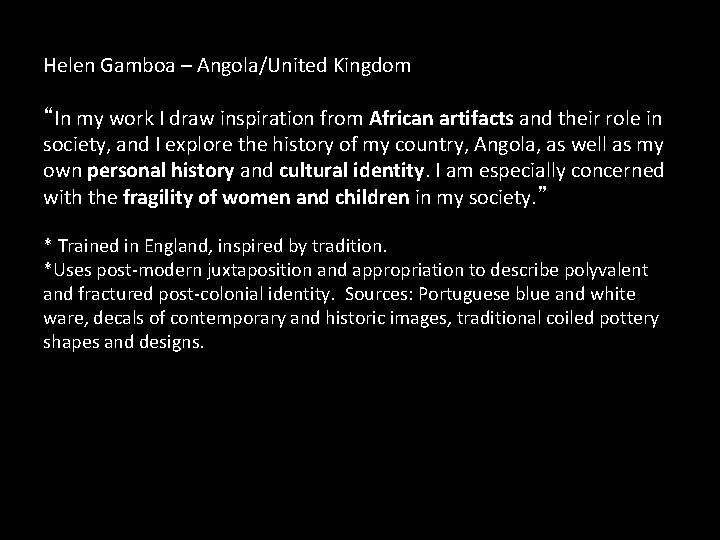
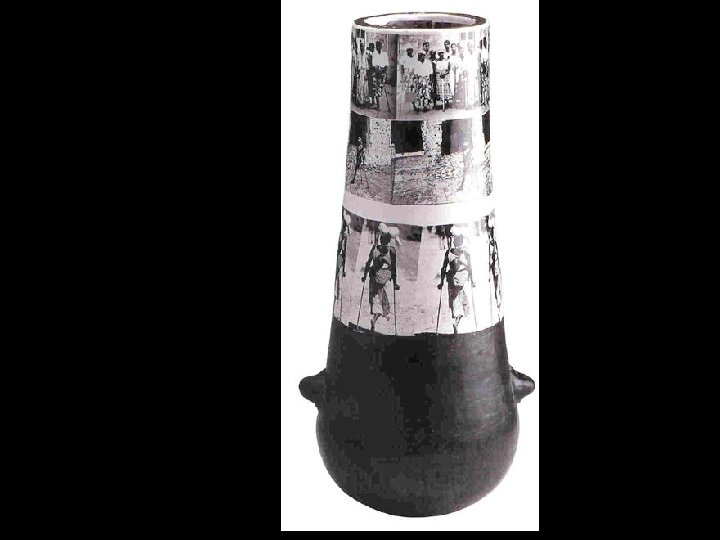
Helen Gamboa – Angola/United Kingdom “In my work I draw inspiration from African artifacts and their role in society, and I explore the history of my country, Angola, as well as my own personal history and cultural identity. I am especially concerned with the fragility of women and children in my society. ” * Trained in England, inspired by tradition. *Uses post-modern juxtaposition and appropriation to describe polyvalent and fractured post-colonial identity. Sources: Portuguese blue and white ware, decals of contemporary and historic images, traditional coiled pottery shapes and designs.
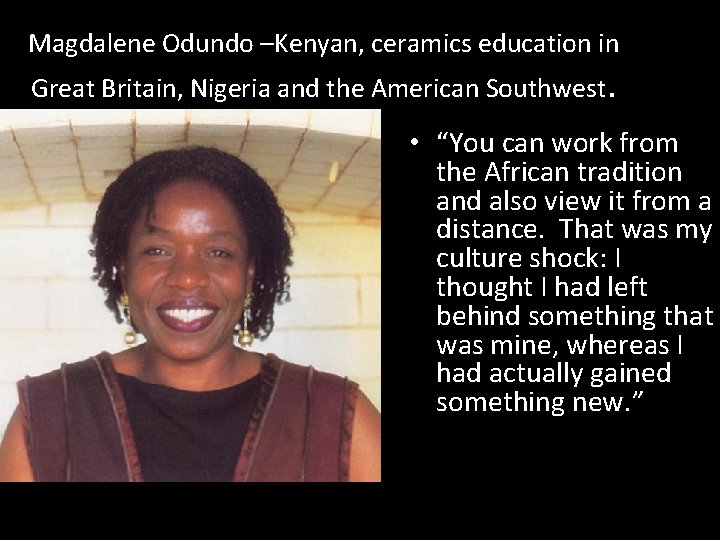
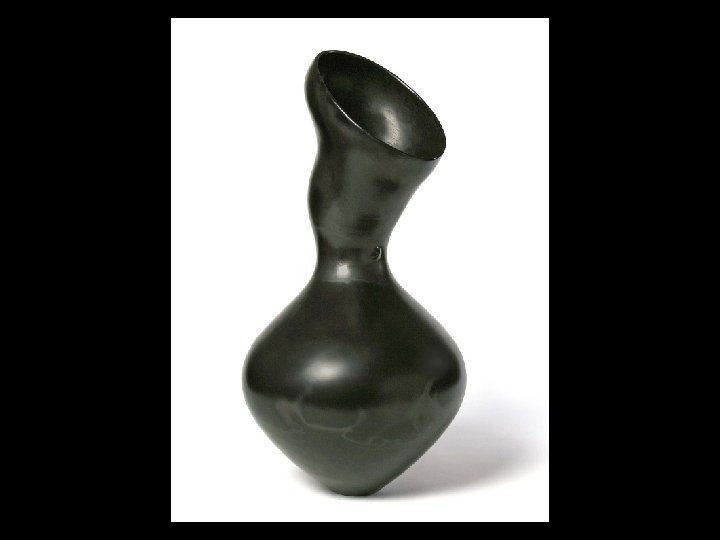
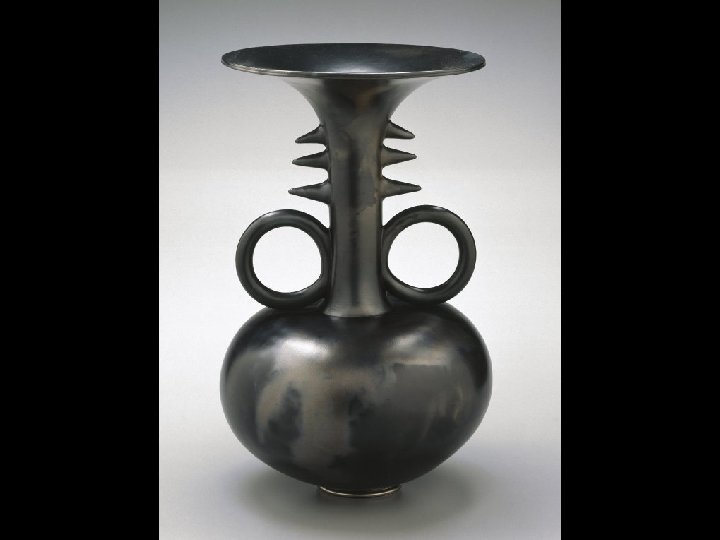
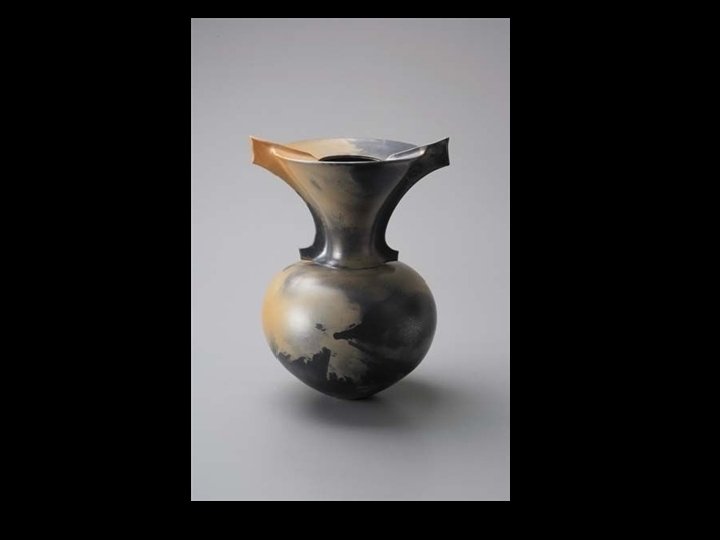
Magdalene Odundo –Kenyan, ceramics education in Great Britain, Nigeria and the American Southwest. • “You can work from the African tradition and also view it from a distance. That was my culture shock: I thought I had left behind something that was mine, whereas I had actually gained something new. ”
Magdalene Odundo • Influences: Michael Cardew, Hans Coper (English), Maria Martinez and Pueblo potters, Nigerian and Kenyan potters, basket makers.
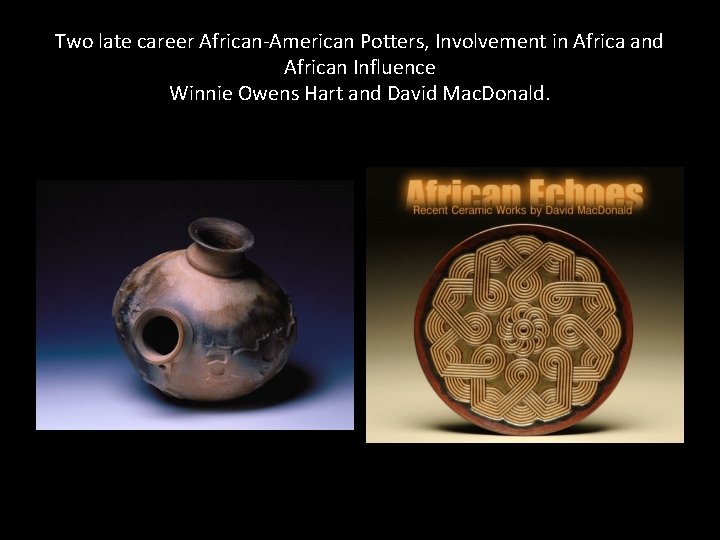
Two late career African-American Potters, Involvement in Africa and African Influence Winnie Owens Hart and David Mac. Donald.
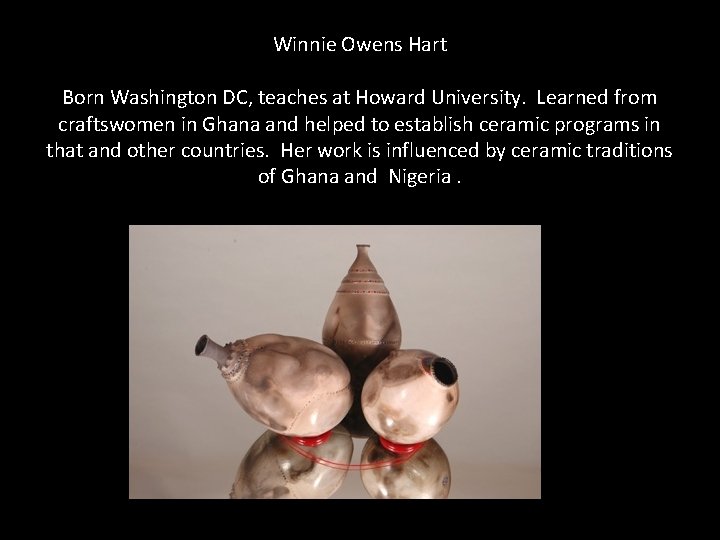
Winnie Owens Hart Born Washington DC, teaches at Howard University. Learned from craftswomen in Ghana and helped to establish ceramic programs in that and other countries. Her work is influenced by ceramic traditions of Ghana and Nigeria.
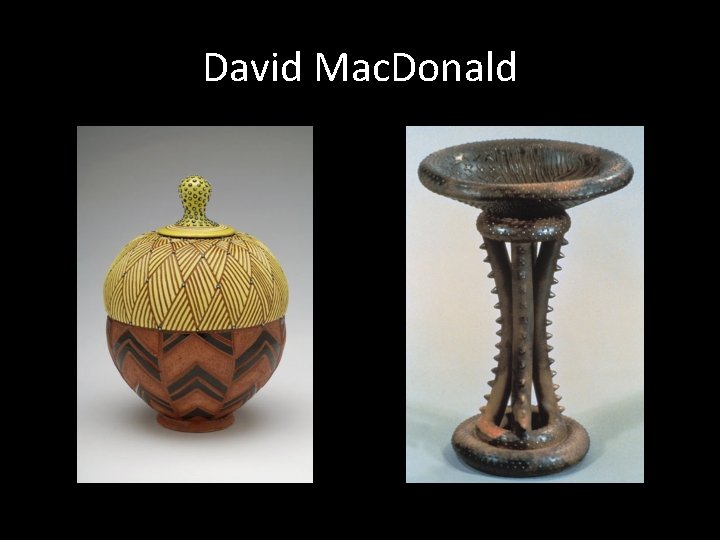
David Mac. Donald During the late 1970 s and early 1980 s, Mac. Donald's work received most of its creative inspiration from his investigation of his African heritage. Looking at a variety of design sources in the vast creative tradition of the African continent, Mac. Donald draws much of his inspiration from the myriad examples of surface decoration that manifests itself in the many ethnic groups of sub-Saharan Africa (such as pottery decoration, textiles, body decoration, and architectural decoration).
David Mac. Donald