
African AmericanBlack Student Success Plan Advisory Group Meeting
African American/Black Student Success Plan Advisory Group Meeting Oregon Department of Education June 2, 2017 | 9: 00 a. m. – 2: 00 p. m.
New Business • • • Review/approve 2/3, 3/3, 4/7 & 5/5 meeting minutes The REAP Expansion Project Presentation Recommendations from the Student Success Plan Review/discuss Project Charter Discuss services for African Immigrant English Learners
The REAP Expansion Project Mark Jackson
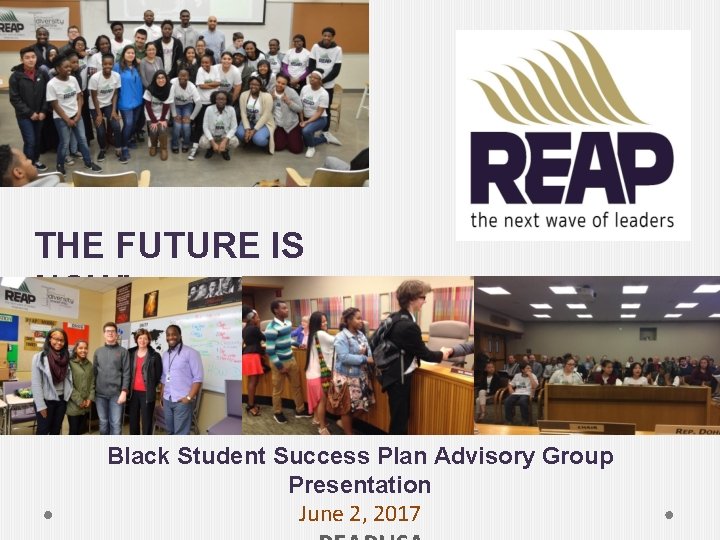
THE FUTURE IS NOW! Black Student Success Plan Advisory Group Presentation June 2, 2017
REAP MISSION REAP is a year-round multi-cultural youth leadership program committed to empowering the next wave of leaders. To proactively ignite, elevate, and engage the next wave of leaders for the future now.
REAP Expansion Project The REAP Expansion Project currently serves Black/African American students at the following schools: ✓ Centennial High School ✓ Oliver Elementary ✓ Parklane Elementary ✓ Aloha High School ✓ David Douglas High School ✓ Ron Russell Middle School ✓ Donald E. Long School Program
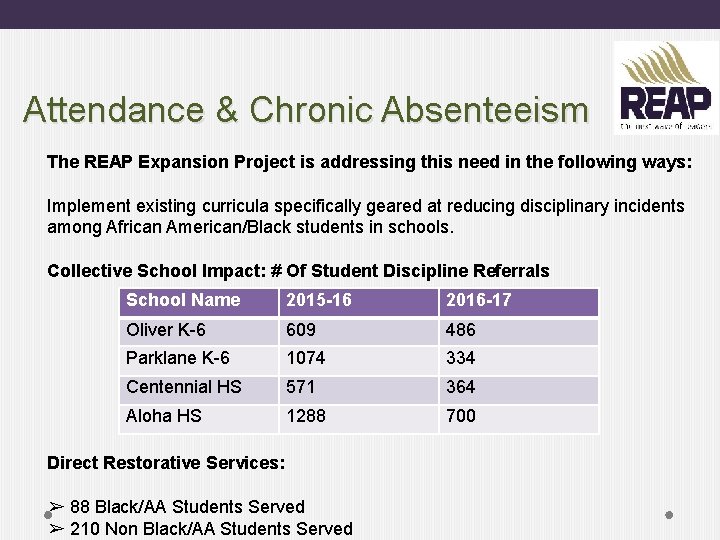
Attendance & Chronic Absenteeism The REAP Expansion Project is addressing this need in the following ways: Implement existing curricula specifically geared at reducing disciplinary incidents among African American/Black students in schools. Collective School Impact: # Of Student Discipline Referrals School Name 2015 -16 2016 -17 Oliver K-6 609 486 Parklane K-6 1074 334 Centennial HS 571 364 Aloha HS 1288 700 Direct Restorative Services: ➢ 88 Black/AA Students Served ➢ 210 Non Black/AA Students Served
Attendance & Chronic Absenteeism The REAP Expansion Project is addressing this need in the following ways: Collaborate with R. A. A. P. Counseling & Consulting to train educators on trauma informed care and culturally responsive discipline practices and methods to build student confidence, identity, and voice and reduce exclusionary discipline policies and practices. ▪ Participating Schools: Parklane, Oliver & Aloha High School ▪ 13 Professional Development Trainings ▪ 77 Educator Participants
Parent & Community Engagement • The REAP Expansion Project is addressing this need in the following ways: ➢ Family Night Events ➢ Engaging parent’s voice in school climate assessment work ➢ Interface activities with black adult professionals in our during & after school programs as guest speakers, college/career advisors and leadership coaches ➢ Leadership Conferences & Forums
Transitions The REAP Expansion Project is addressing this need in the following ways: 1) Provide structured time for students to engage in dialogues, leadership curriculum, community building, and leadership opportunities during and after school. REAP staff offer a visible presence during school hours, work with administration, teachers and counselors to support student’s academic/social needs. 2) Coordinate leadership opportunities for students to interface with business leaders and elected officials to elevate student voice.
Project Outcomes • The anticipated goals of the project include: • 1. Serve [224] students in REAP school-based programs • [Outcome: Black/AA = 320 … Non-Black/AA = 405] • 1. Serve [1, 000] students in REAP major leadership conferences • [Outcome: Black/AA = 652…Non-Black/AA =134] 1. Facilitate [4] School-wide culturally responsive coaching/training on restorative practices • related to discipline and trauma informed care [Outcome: 13] 2. Administer [10] Student-led, researched based plan to improve the school climate of schools through a racial equity lens [Outcome: 5]
Closing Remarks The REAP Expansion Project offers the following unique element: 1. What is one thing that would not have occurred without the grant funding, that you know directly impacts student achievement, student growth and graduation rates? 6 of the 7 schools benefiting from our services would NOT have services DEDICATED to support Black/AA Students 2. If you could double the dollar amount, what does the next leg of it look like and what would you address? Increase the number of schools/students served with the programs we currently offer. We already have schools on the waiting list 3. Who do you think works with African American/Black students? What is contributing to the results you are seeing? Schools and White-led organizations are working with AA/Black students? I believe HB 2016 addresses what the results are: significant achievement & resource gaps when it comes to AA/Black students. This is due to a lack of educator training, resource allocation to support partnerships with black community-based organizations
VIDEO PRESENTATION
African American/Black Student Success Plan Presentation Co-chairs Joyce Harris and Charles Mc. Gee
Early Childhood to Kindergarten Recommendations
Kindergarten to Grade 3 Recommendations
Grade 4 to Grade 8 Recommendations
Grade 9 to Grade 12 Recommendations
Higher Education Recommendations

Networking Lunch
African American/Black Student Success Plan Project Charter
Public Testimony
Wrap-up and Next Steps
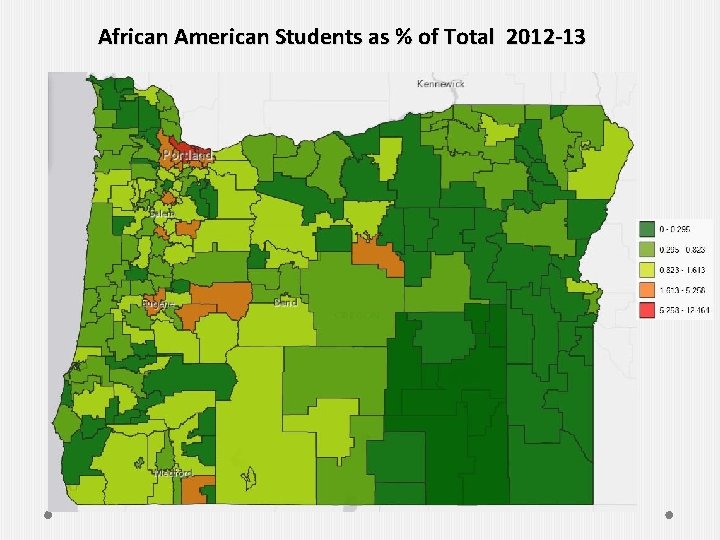
African American Students as % of Total 2012 -13

Thank you.
- Slides: 25