
African American Caribbean History Culture and Education John
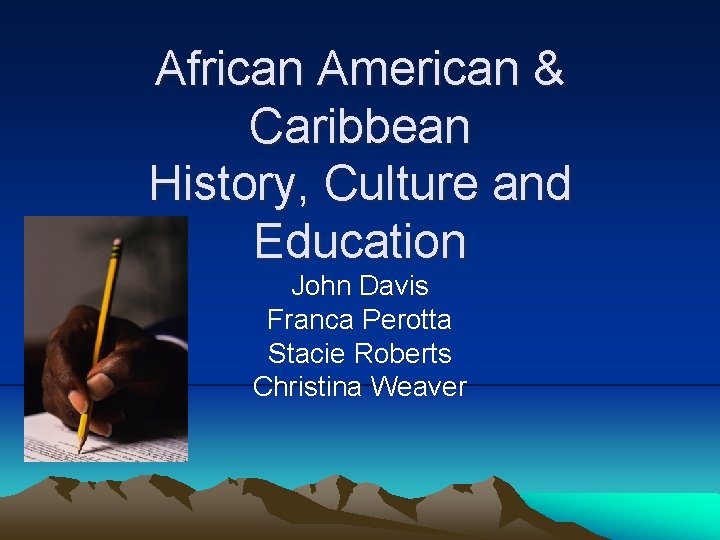
African American & Caribbean History, Culture and Education John Davis Franca Perotta Stacie Roberts Christina Weaver
Colonial - Slavery ► Education purposes was encouraged for religious § Saw conversion of slaves as a spiritual obligation § Ability to read scriptures seen as important § While reading was encouraged, writing was often prohibited Writing was seen as a mark of status § Seen as a unnecessary for many members of society, especially slaves
► South Carolina passed first laws prohibiting slave education § Illegal to teach slaves to write § Plantation owners feared the spread of abolitionist material § Wanted to restrict communication between slaves § Throughout colonial period, reading was not specifically prohibited § Reading instruction was tied to the spread of Christianity
► Fear of slave insurrection and the spread of abolitionist materials and ideology led to radical restrictions on gatherings, travel, and literacy § Reading and reflection were to be prevented at any cost § slave owners did not want slaves to question their status § Mississippi passed a law in 1831 that made all free African Americans leave the state so they would not be able to educate the slaves § Many laws were passed to restrict the assembly of African Americans § By 1835 the education of all African Americans was strictly prohibited § many white and black activist conducted illegal schools in many cities
Post Slavery ► Emancipation Proclamation § 13 th Amendment § 14 th Amendment § 15 th Amendment § End of Reconstruction ► Separate but equal § Plessy V. Ferguson 1896 § Jim Crow laws
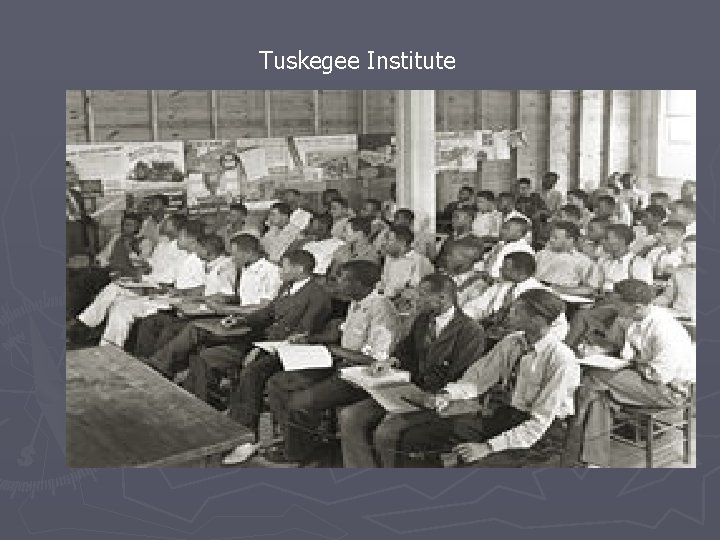
Tuskegee Institute
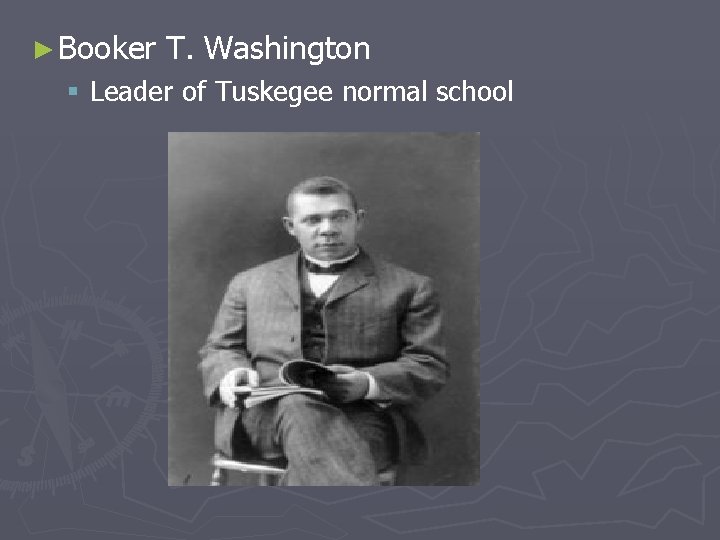
► Booker T. Washington § Leader of Tuskegee normal school
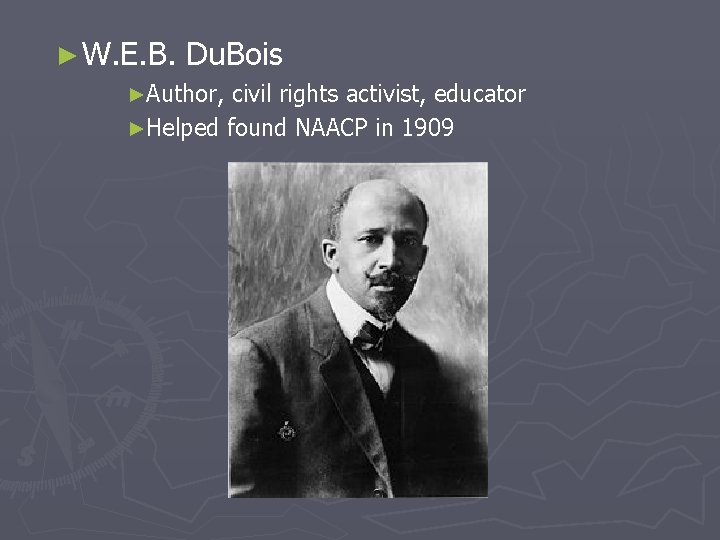
► W. E. B. Du. Bois ►Author, civil rights activist, educator ►Helped found NAACP in 1909
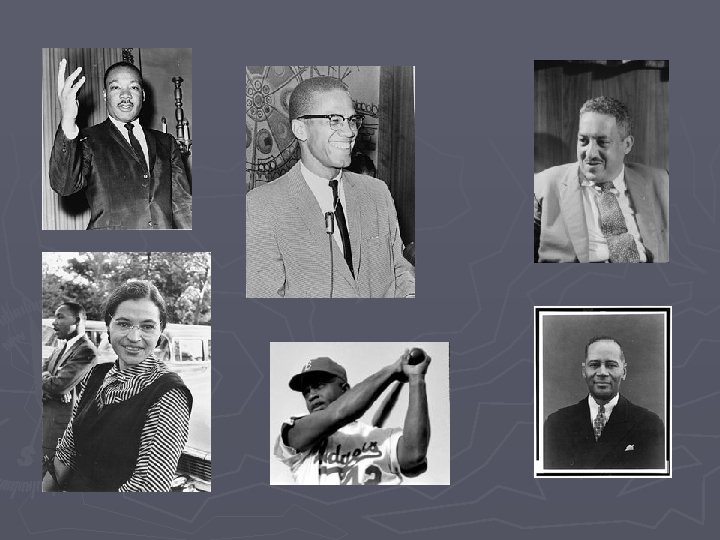
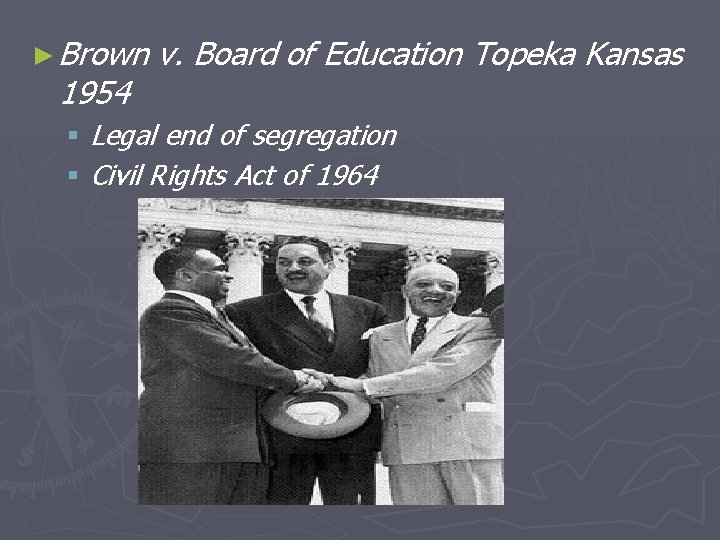
► Brown 1954 v. Board of Education Topeka Kansas § Legal end of segregation § Civil Rights Act of 1964
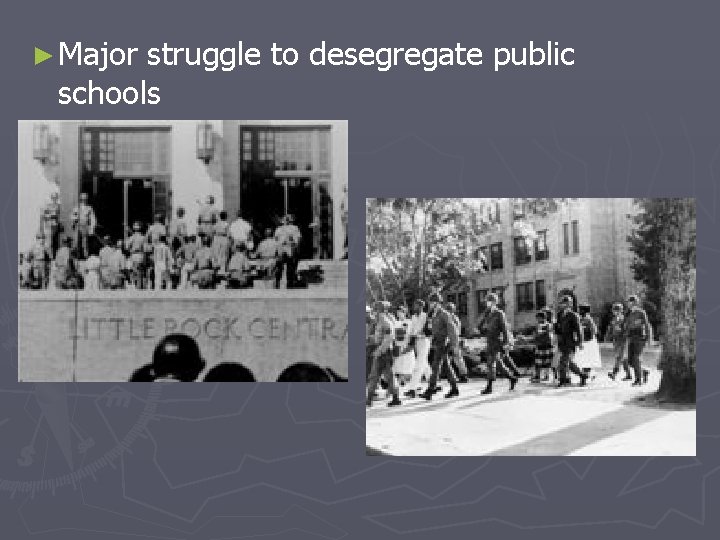
► Major struggle to desegregate public schools
African American Language • Slave owners often mixed people who spoke different African languages to discourage communication in any language other than English • The result of this combined with prohibitions against education led to the development of pidgins • Pidgins-simplified mixtures of 2 or more languages that speakers of different languages could use to communicate • Some pidgins became fully developed languages such as Creole & Gullah
Continued • Gullah language is a Creole blend of Elizabethan English & African languages • Gullah developed in the slave communities of the southern plantations • Gullah became a culture • In 1862, Penn School, which is located in S. C. , started to educate slaves who were freed at the beginning of the civil war—these slaves were the Gullah people • A Gullah festival is held every year to celebrate the Gullah culture • Penn Center Heritage Days Celebration (Hilton Head, S. C. )
Music • Music was an important part of the civil rights movement • Music gave African Americans hope, enabled them to resist bondage, and eased the burdens of labor • “The black man sang all kinds of songs at all times. He sang psalms along with the white settlers & turned to hymns in the 18 th century along with everyone else. He sang the old African songs as long as he could remember them-especially on the occasions of special slave festivals…In the taverns & on the streets he sang the white man’s ballads and ribald songs” • ---this quote was taken from Eileen Southern of Howard University • Many slaves had ties to West Africa-a region which had diverse religions, languages, traditions, & musical practices • Despite these differences, music was embraced in ceremonial and daily life. It was a communal activity.
Continue Music • Music evolved out of an assimilated mixture of black & white folk music & pop styles, with roots in both Europe & West Africa • Jazz developed out of field hollers, work songs on the railroad, hymns & spirituals, the banjo tradition, blues & ragtime
Literature • African-American literature has its roots in the oral traditions of African slaves in America • Slaves used stories and fables in the same ways they used music • Slave narratives influenced the earliest African American writers & poets in the 18 th century • Early 20 th century- Harlem Renaissance writers dealt with how to respond to discrimination in America • -Langson Hughes, W. E. B. Dubois & Booker T. Washington
Continued • During the civil rights era, African Americans wrote about racial segregation & oppression • Richard Wright, James Baldwin, Gwendolyn Brooks • Today in American literature we see this tradition continuing through works such as Roots: The Saga of an American Family by Alex Haley, and The Color Purple by Alice Walker
Religion • During the Great Awakening (1720 -1740), some African Americans joined the Evangelical churches-Methodist, Baptist & Presbyterian • The Second Awakening (1790 -1815), attracted many slaves & free African Americans to evangelical Protestantism • The Methodists were the leaders in the development of religious instruction among slaves • The Southern Baptist Convention also initiated missionary work among slaves • The Baptist ritual of baptism by immersion resembled initiation rights associated with West African cults
Continued • Slaves worshipped with whites, with free blacks, exclusively by themselves, and in private • House slaves often went to white churches with slave masters but had to sit in separate places • White ministers sometimes held services for slaves in praise houses or deep in the woods, swamps & caverns
Continued • Early northern Baptist churches seemed to emerge as protests to discrimination in racially mixed congregations • 1 st African Baptist Church started in Savannah, GA in 1777 • -oldest in North America • Black Baptist congregations in the Midwest formed the first separate regional associations in the 1850 s • Black Methodists also formed independent organizations in the late 1700 s primarily in the north • Today, African Americans belong to various religious groups
Kwanzaa • Non-religious African American holiday which celebrates family, community, and culture • Dec. 26 -Jan. 1 • Created in 1966 by Dr. Maulena Karengaprofessor of black studies at California State University • Combined aspects of several different harvest celebrations • 7 principles & 7 symbols
Education n n Twenty years ago, this country was rocked by a national education report called A Nation at Risk, describing the inadequate preparation our public schools were providing for our children. Two decades after the report's bleak assessment, we have seen little improvement—a lack that is especially glaring in the minority and underserved schools in big cities. A Nation at Risk assumed that raising expectations would benefit all students. But this did not hold true for children who started school with a skills deficit or who attended schools that could not meet the easier standards in place before A Nation at Risk was issued.
Facts n n African Americans score lower on standardized tests African Americans have a higher retention and dropout rate than white students. African American 4 th, 8 th and 12 th graders score lower than white students on math, geography and history tests. Although great strides have been made in the integration of public schools, recent research shows that segregation is in many cases rising.
African American children face additional challenges n n They are less likely than white or Hispanic children to live in a married, two-parent family and are more likely than white children to live in poverty. African American students also are more likely to be victims of crime – both violent and property – than their white or Hispanic counterparts.
Discussion n Does anyone have an idea(s) as to why these learning gaps exist?
The Gap Starts Early n Nancy Kober, author of the Center on Education Policy’s report, It Takes More Than Testing: Closing the Achievement Gap, notes that the achievement gap starts early on in school. Surveys of children in preschool and kindergarten have revealed that white and Asian children typically perform better than black and Hispanic children in areas such as vocabulary, numbers skills, and general knowledge.
The Explanation Is More than Socioeconomic n Kober says that there is no question that family income and parent education help explain the achievement gap. But one study found that these factors only account for about one-third of the explanation
School Factors n n n Black and Hispanic students tend to take less-rigorous courses. Though there are more black and Hispanic students taking academically rigorous courses now than in the past, whites and Asians still tend to be overrepresented in such courses. In part this situation results from the lack of advanced courses at high-minority schools. In particular, researchers have found that schools in high-minority or high-poverty areas often offer a less-rigorous curriculum to begin with. There is a lack of experienced teachers. Kober points out that black students are more likely to be taught by less-experienced teachers than white students. Researchers have cited this factor as one of the most critical variables for explaining the achievement gap: there is a correlation between higher teacher certification scores and higher student achievement scores. Teachers in districts where there are high percentages of black or Hispanic students tend to have lower scores on their certification tests. Teachers set their expectations low. Studies have suggested that teachers sometimes have lower academic expectations for black and Hispanic children than they do for whites or Asians.
Continue School Factors n n n The school’s disciplinary atmosphere also plays a role. Minority students are less likely than white students to attend schools with good facilities and a well-controlled disciplinary atmosphere. In turn, high-minority schools often have special safety issues that worry the students’ parents. Low-minority schools tend to be much better funded and have allaround stronger resources than do high-minority schools. The same relationship holds true for schools in low-poverty versus highpoverty areas. Low-income and minority students tend to be concentrated in certain schools. Kober notes that if a school has high levels of poverty, that can depress achievement for all the children in that school, even if they are from higher income families. This fact hits black and Hispanic children the hardest, since they are more likely to attend higher poverty schools than are whites or Asians.
Community and Home Factors n n Poverty affects achievement. Kober admits that differences in family income are not a sufficient explanation for the achievement gap. But there is unquestionably a relationship here. Kober says that there are many factors associated with poverty that can depress achievement: health problems poor nutrition low birth weight substandard housing high violence n substance abuse Discrimination leaves a legacy. The harmful effects of segregated schooling and similar forms of discrimination will continue to persist for several decades, studies show.
Continued n n Home and community learning opportunities are critical. In general, minority children are less likely than white children to have parents with high levels of educational attainment. This factor, together with others such as lower family income and parents’ work schedules, may limit the extent to which parents can foster positive opportunities for learning at home, Kober claims. Hence, opportunities such as having access to books and computers—or even being read to before bedtime—may be more limited for minority children. Also, it is an established fact that high-minority and high-poverty communities tend to enjoy less access to such resources as libraries and museums that can benefit children. Good parenting practices need to be encouraged. Parental approaches to learning at home differ, and cultural variations undoubtedly play a role in children’s learning and achievement.
Discussion n n Watch “Girl Like Me” video from you tube How does this affect education and as future teachers what can we do about it?
Advocacy Groups and Current Advocacy Issues Congress of Racial Equality National Association for the Advancement of Colored People National Urban League
Congress of Racial Equality (CORE) About the Organization. CORE seeks to establish, in practice, the inalienable right for all people to determine their own destiny--to decide for themselves what social and political organizations can operate in their best interest and to do so without gratuitous and inhibiting influence from those whose interest is diametrically opposed to theirs. CORE feels that the most important fundamental freedom for all people is the right to govern themselves. Once this simple ideal is realized, other necessary freedoms will automatically follow. In essence, CORE's aim is to bring about equality for all people regardless of race, creed, sex, age, disability, sexual orientation, religion or ethnic background. In pursuing its aim, CORE seeks to identify and expose acts of discrimination in the public and private sectors of society. When such an act is uncovered, CORE, with its many multi-service departments, goes into action. (What is CORE? , 2007)
The problem Welfare recipients do not have enough programs available to them to help them get back on their feet. Without job and life training, they will continue to use the system and likely never gain economic independence.
The Solution For Project Independence, CORE provides training for "young single mothers who are currently receiving public assistance. " CORE feels that women in this group are motivated to improve their situation and, by going through the program, will learn responsibility, self-reliance, a strong work-ethic, and gain a desire to succeed. It is hoped that the children of these mothers will inherit these acquired traits.
How it’s Done Project Independence offers “real-life” experiences and hands on training rather than classroom learning, which is generally unbeneficial toward a permanent solution. Job fairs and follow-ups ensure that the working mother is steadily succeeding towards her goal for independence. With an 80% success rate, this program has proven its value.
Equal Opportunity Affairs The Problem Equal Opportunity Affairs is the backbone of the Congress of Racial Equality’s campaign against job discrimination and the other by-products of racism and prejudice in labor, housing, education, and the criminal justice system. Although discrimination is against the law, Black and other minority workers are aware that without strict enforcement, laws alone will have little effect and racist policies will remain unchanged. ?
The Help If someone feels they have been discriminated against, CORE offers a “complaint hotline” where victims can talk to a representative. CORE caseworkers will document your complaint and take appropriate and tailored action to remedy the situation.
National Association for the Advancement of Colored People (NAACP) The National Association for the Advancement of Colored People (NAACP) was founded February 12, 1909 by a group of multicultural activists. (Timeline, 2007)
NAACP Mission Statement “The mission of the National Association for the Advancement of Colored People is to ensure the political, educational, social, and economic equality of rights of all persons and to eliminate racial hatred and racial discrimination. ” (Our Mission, 2007)
NAACP Vision Statement “Vision Statement. The vision of the National Association for the Advancement of Colored People is to ensure a society in which all individuals have equal rights and there is no racial hatred or racial discrimination. ” (Our Mission, 2007)
NAACP Objectives"To ensure the political, educational, social, and economic equality of all citizens To achieve equality of rights and eliminate race prejudice among the citizens of the United States To remove all barriers of racial discrimination through democratic processes To seek enactment and enforcement of federal, state, and local laws securing civil rights To inform the public of the adverse effects of racial discrimination and to seek its elimination To educate persons as to their constitutional rights and to take all lawful action to secure the exercise thereof, and to take any other lawful action in furtherance of these objectives, consistent with the NAACP's Articles of Incorporation and this Constitution. ” (Our Mission, 2007)
NAACP Current Advocacy Issues The "It Stops with Me" online pledge initiative is an internet-based drive that lets people show their support in educating and raising the awareness of the Black community to the HIV/AIDS crisis. Going along with the with this initiative, the National Black HIV/AIDS Awareness Day informs African Americans about the statistics and what they can do to stay safe and to contribute to the cause. According the NAACP? s official website, Blacks “account for 54% of new annual HIV infections” and they are “ 7 times more likely to die from the disease than whites”. (It Stops With Me, 2007)
National Urban League (NUL) Founded in 1910, the NUL is a community-based organization seeking to improve the situation of African Americans, and to help them be successful in mainstream society (Mission Statement, 2007). The League was organized in response to the discrimination African Americans faced following the Plessy v. Ferguson decision of 1896. After thousands migrated to the North, they were faced with their inexperience in the urban world, making it difficult to adapt. Though discrimination was still prevalent in the North, the advent of the League brought training, education, and employment opportunities for newly settled Blacks. (History of the National Urban League, 2007
Our Mission “The mission of the Urban League movement is to enable African Americans to secure economic selfreliance, parity, power and civil rights. ” (Mission Statement, 2007)
Our Strategy The Urban League employs a five point strategy, tailored to local needs, in order to implement the mission of our movement. Education and Youth Empowerment: Ensuring that all of our children are well educated and prepared for economic self-reliance in the 21 st century through college scholarships, early childhood literacy, Head Start and after care programs. Economic Empowerment: Empowering all people in attaining economic self-sufficiency through job training, good jobs, homeownership, entrepreneurship and wealth accumulation.
Strategies Continued Health and Quality of Life Empowerment: Working to build healthy and safe communities to eliminate health disparities through prevention, healthy eating, fitness, as well as ensuring access and complete access to affordable healthcare for all people. Civic Engagement and Leadership Empowerment: Empowering all people to take an active role in determining the direction, quality of life, public policy and leadership in their communities by full participation as citizens and voters, as well as through active community service and leadership development. Civil Rights and Racial Justice Empowerment: Promoting and ensuring our civil rights by actively working to eradicate all barriers to equal participation in the all aspects of American society, whether political, economic, social, educational or cultural. (Mission Statement, 2007)
Current Advocacy Issues Mutual Advocacy Issues: A swarm of violent incidents led to the declaration of a “State of Emergency” within the NAACP. Recently, black youth have been subjected to violent assaults at an increasing rate. Another observation many Civil Rights organizations, including the NAACP, have observed is that not only are Blacks being incarcerated more readily of the same crime a white would commit, but they are also being dealt harsher punishments. (NAACP declares, 2007). Possibly the most controversial of these many incidents is with what happened in Jena, Louisiana. In retaliation to noose hangings, verbal and physical assaults, 6 African American students attacked a White student. Though he was sent to the hospital, he was released the same day with minor injuries. The 6 boys were charged with attempted second-degree murder. (NUL Press Release, 2007) Both the NAACP and the NUL have led public marches in protest of this miscarriage of justice
Mutual Advocacy Continued “There's no doubt that the Jena Six should be punished for retaliating against a white classmate for allegedly taunting them. Inflicting violence upon others is by no means an acceptable way to resolve a conflict. But do the Jena Six deserve to serve decades in jail for what sounds like a schoolyard confrontation blown out of proportion? Absolutely not. They should receive the same punishment given to whites under similar circumstances. No more and no less. "
References • National Center for Education Statistics, Status and Trends in the Education of Blacks, September 2003 • Library of Congress • History of Modern Art • History. com • Archiving Early America • Encyclopedia of Religion & Society • Penncenter. com

Continued • Colonial Williamsburg journal • Encyclopedia Brittanica • Wikipedia Free Encyclopedia • www. blackinventor. com • http: //www. learningpt. org/gaplibrary/text/whatc ontributes. php • Hoover. org
References • Hoobler, T. , & Hoobler, D. (1995). The African American Family Album. New York: Oxford University press. • Spring, J. (2007). Deculturalization and the Struggle for Equality (5 th ed. ). New York: Mc. Graw-Hill. • Wikipedia • Equal Opportunity Affairs (n. d. ). Retrieved on November 12, 2007, from http: //www. core-online. org/ • Project Independence (n. d. ). Retrieved on November 12, 2007, from • http: //www. core-online. org/ Morial, M. H. (2007, September 17). National Urban League Urges Fair • Treatment of Jena Six. Retrieved October 24, 2007, from http: //www. nul. org/
Continued • It Stops with Me (2007, February 7). Retrieved October 20, 2007, from http: //www. naacp. org/ • Mission Statement (n. d. ). Retrieved October 23, 2007, from http: //www. nul. org/ • NAACP declares ? State of Emeregency? (2007, October 23). Retrieved October 30, 2007, from http: //www. naacp. org/ • NUL Press Release (2007, September 17). Retrieved October 30, 2007, from http: //www. nul. org/ • Our Mission (n. d. ). Retrieved October 19, 2007, from http: //www. naacp. org/ Timeline (n. d. ). Retrieved October 19, 2007, from http: //www. naacp. org/ • What is CORE? (n. d. ). Retrieved November 3, 2007, from http: //www. core-online. org/
- Slides: 54