
Africa Second Largest continent Geography 4 600 miles
- Slides: 57
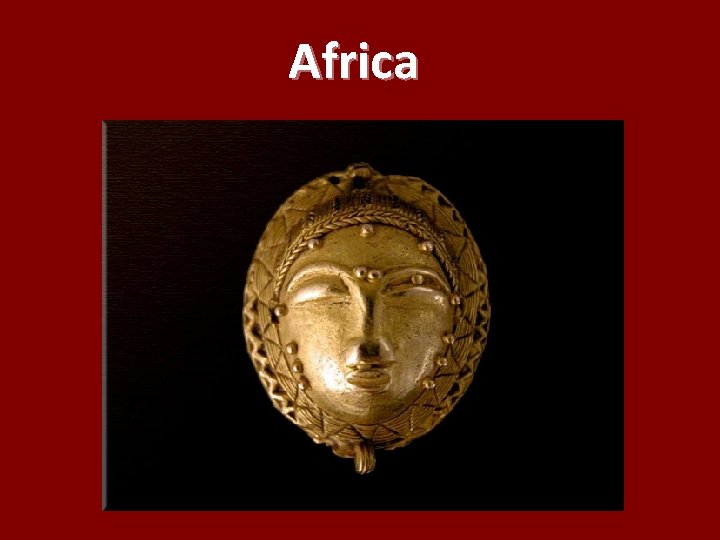
Africa
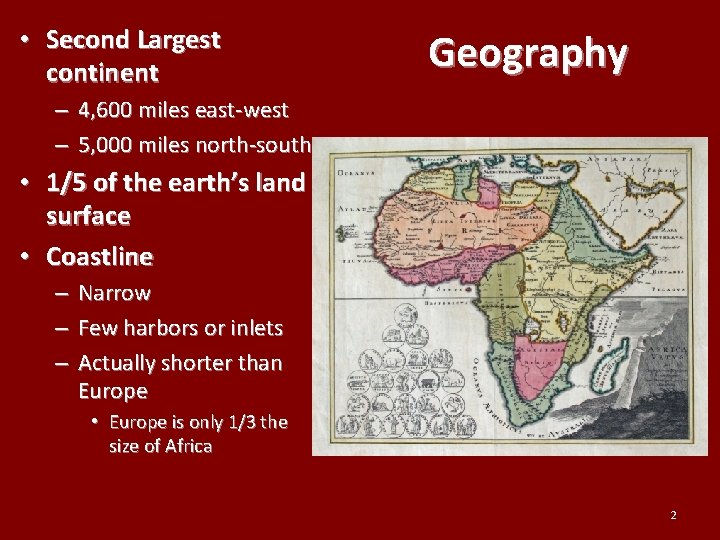
• Second Largest continent Geography – 4, 600 miles east-west – 5, 000 miles north-south • 1/5 of the earth’s land surface • Coastline – Narrow – Few harbors or inlets – Actually shorter than Europe • Europe is only 1/3 the size of Africa 2
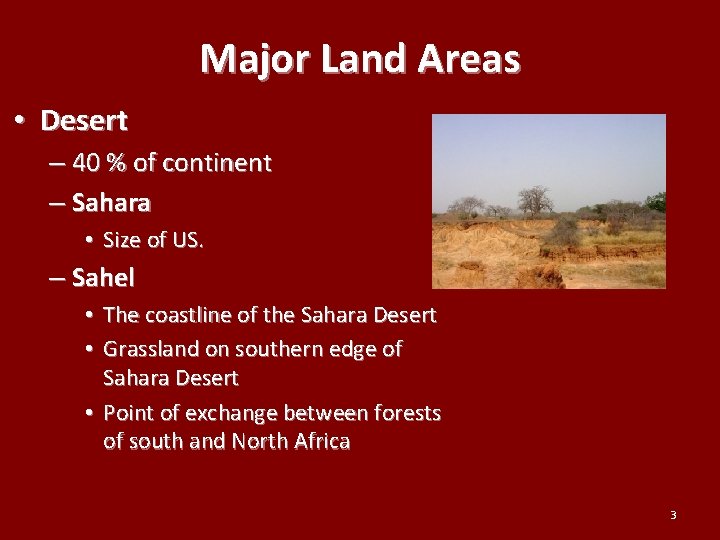
Major Land Areas • Desert – 40 % of continent – Sahara • Size of US. – Sahel • The coastline of the Sahara Desert • Grassland on southern edge of Sahara Desert • Point of exchange between forests of south and North Africa 3
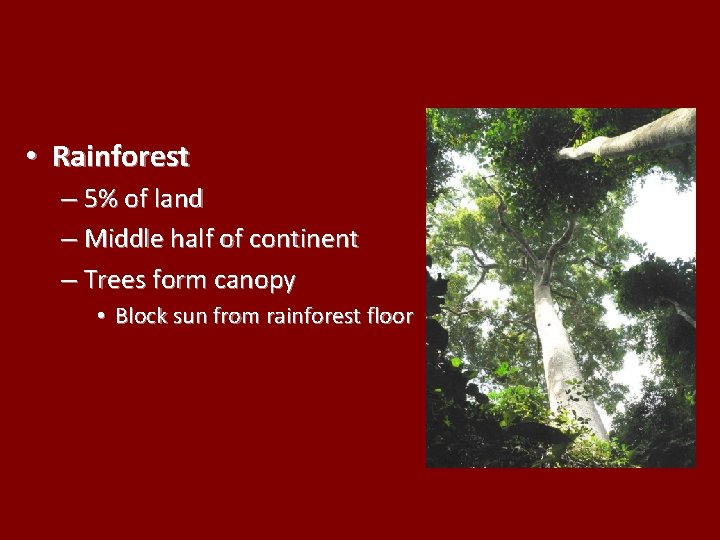
• Rainforest – 5% of land – Middle half of continent – Trees form canopy • Block sun from rainforest floor
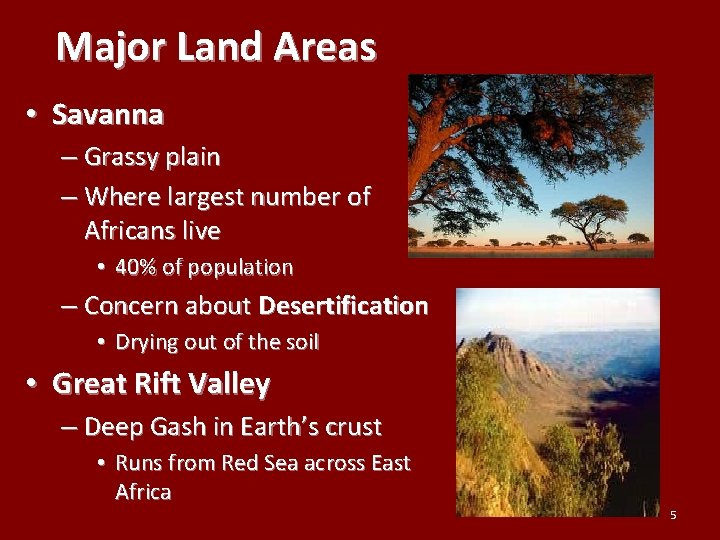
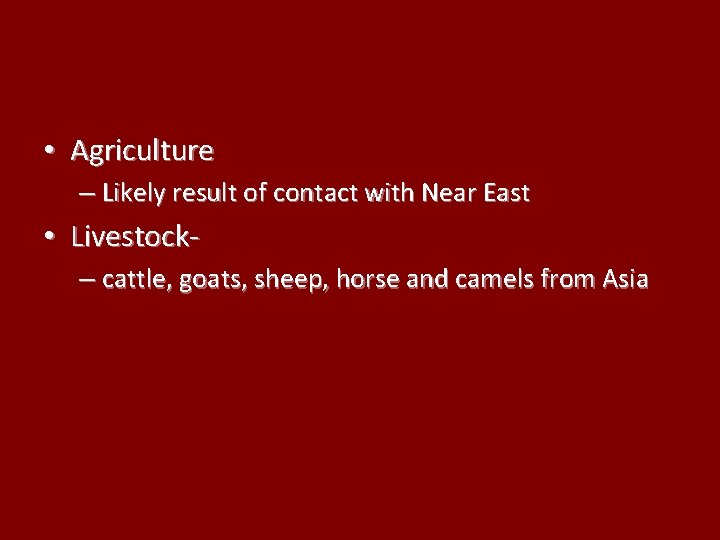
Major Land Areas • Savanna – Grassy plain – Where largest number of Africans live • 40% of population – Concern about Desertification • Drying out of the soil • Great Rift Valley – Deep Gash in Earth’s crust • Runs from Red Sea across East Africa 5
• Agriculture – Likely result of contact with Near East • Livestock– cattle, goats, sheep, horse and camels from Asia
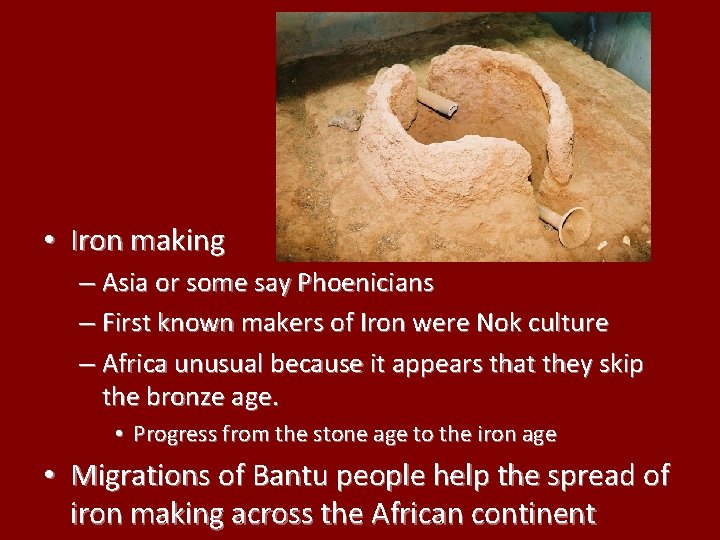
• Iron making – Asia or some say Phoenicians – First known makers of Iron were Nok culture – Africa unusual because it appears that they skip the bronze age. • Progress from the stone age to the iron age • Migrations of Bantu people help the spread of iron making across the African continent
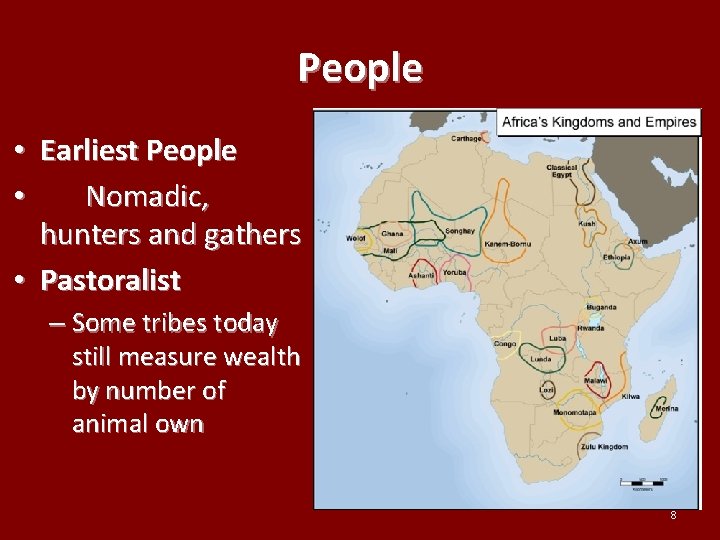
People • Earliest People • Nomadic, hunters and gathers • Pastoralist – Some tribes today still measure wealth by number of animal own 8
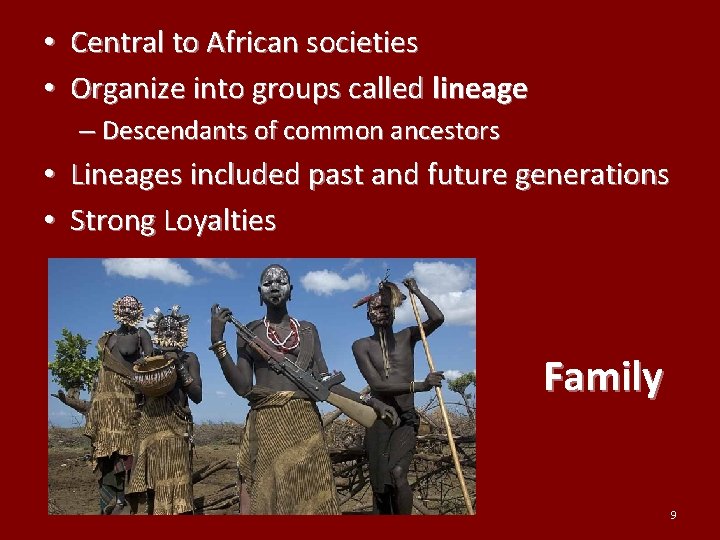
• Central to African societies • Organize into groups called lineage – Descendants of common ancestors • Lineages included past and future generations • Strong Loyalties Family 9
Tracing Family Descent • Way the society traces lineage decides – Inheritances rights and what group individual belongs to • Patrilineal – Trace ancestors through father – Inheritance passes from father to sun – Sons remain with father extended family • Matrilineal – Trace ancestors through mother – Young men inherit land wealth from mother’s family – Men usually hold the position of authority even though group membership and inheritance comes from mother 10
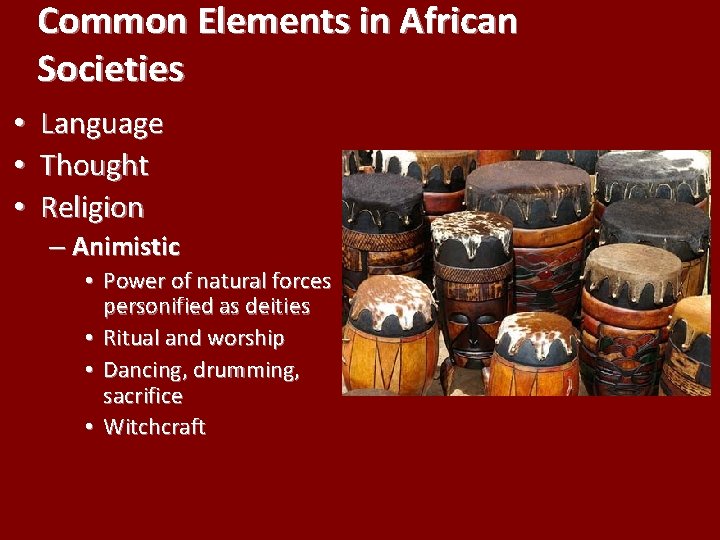
Common Elements in African Societies • • • Language Thought Religion – Animistic • Power of natural forces personified as deities • Ritual and worship • Dancing, drumming, sacrifice • Witchcraft
Bantu • Bantu – Lived south of Sahara- Nigeria – Spoke over 800 Languages • Important in History of Africa because – Introduced the smelting of iron & use of iron tools – Spread of agriculture
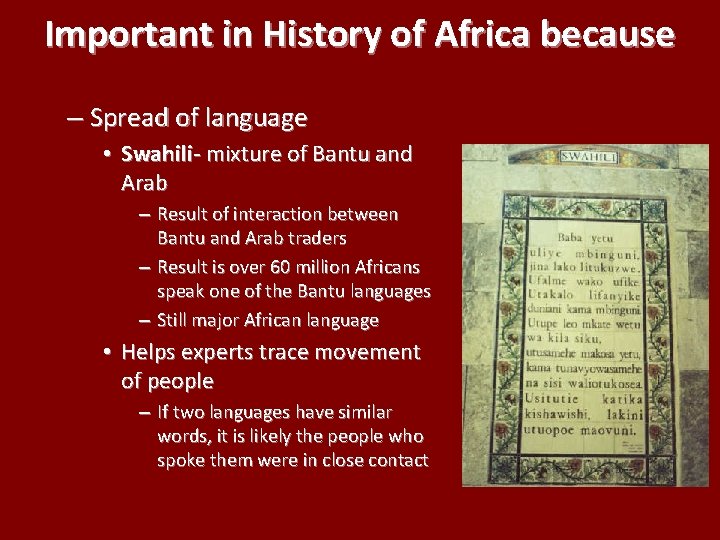
Important in History of Africa because – Spread of language • Swahili- mixture of Bantu and Arab – Result of interaction between Bantu and Arab traders – Result is over 60 million Africans speak one of the Bantu languages – Still major African language • Helps experts trace movement of people – If two languages have similar words, it is likely the people who spoke them were in close contact
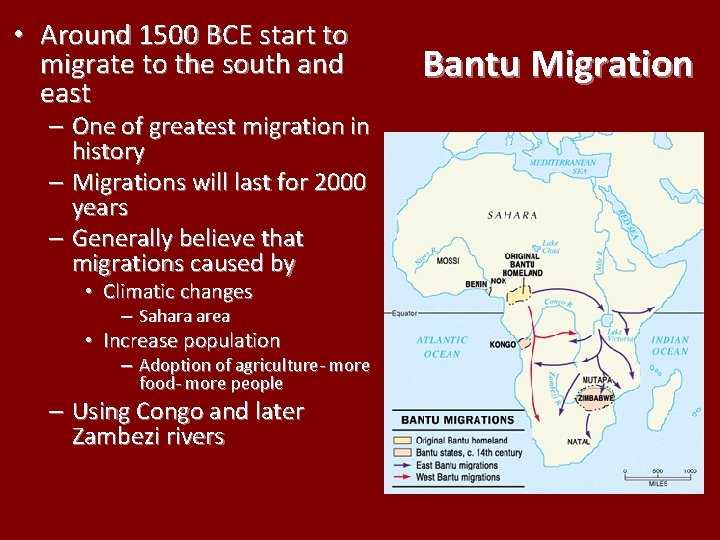
• Around 1500 BCE start to migrate to the south and east – One of greatest migration in history – Migrations will last for 2000 years – Generally believe that migrations caused by • Climatic changes – Sahara area • Increase population – Adoption of agriculture- more food- more people – Using Congo and later Zambezi rivers Bantu Migration
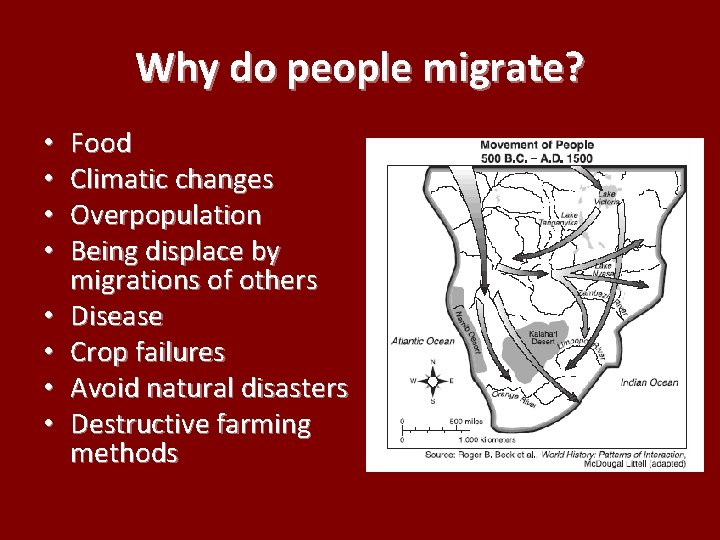
Why do people migrate? • • Food Climatic changes Overpopulation Being displace by migrations of others Disease Crop failures Avoid natural disasters Destructive farming methods
Bantu • Stateless societies – Organized around kinship groups or other forms of obligation – Control by lineages and age set – Lack the concentration of political power and authority • Delayed ability to respond to outside pressures, mobilize for war, undertake large building projects or create stability for longdistance trade • Age Set – Center of Bantu society – Cohort group that included tribal members of the same age who share life experiences and responsibilities
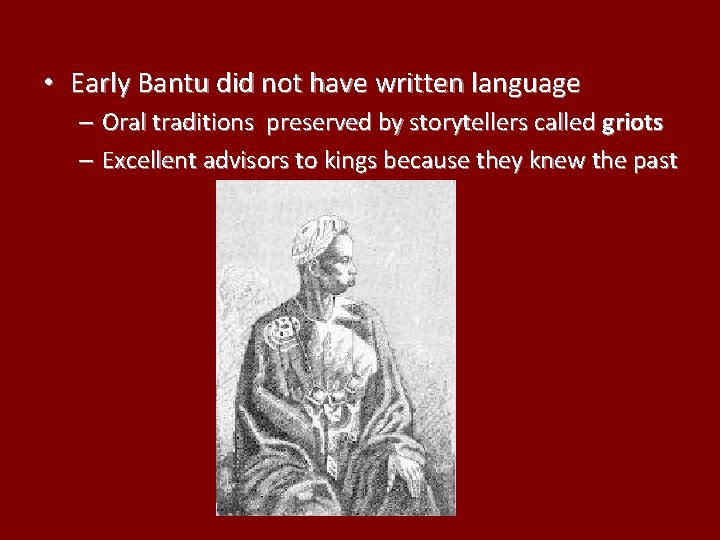
• Early Bantu did not have written language – Oral traditions preserved by storytellers called griots – Excellent advisors to kings because they knew the past
African Economies • African economies were extremely diversified • North Africa will be fully involved with the economic worlds of Arab and Mediterranean • Sub-Saharan regions had varying • International trade increase in regions near the Islamic world
Drawbacks to African Trade • Trade will be handed by professional merchants – Kinship groups • Africa will exchange raw materials for manufactured products • Will fail to develop the industrial technology to use their own raw materials to make manufactured products
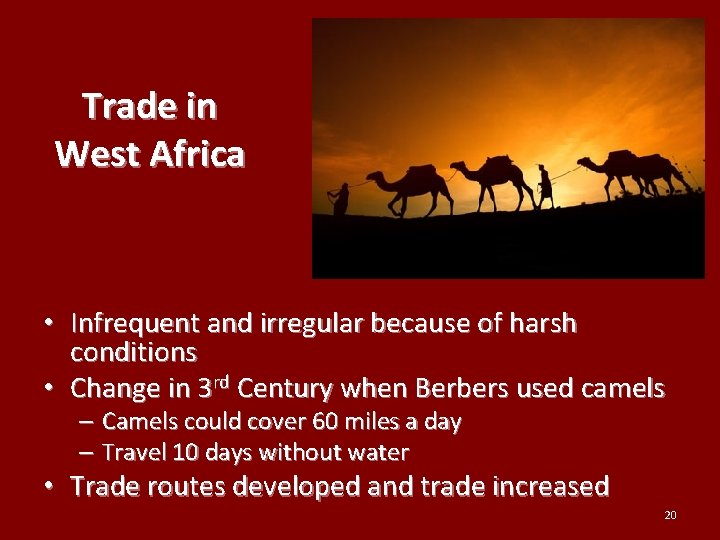
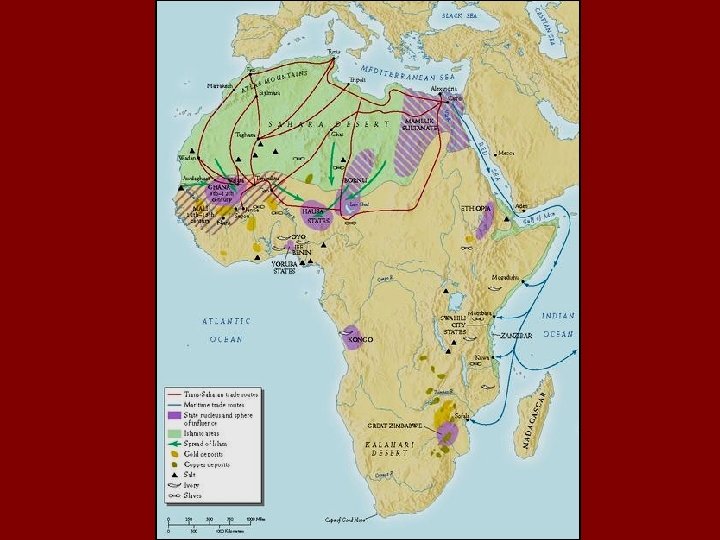
Trade in West Africa • Infrequent and irregular because of harsh conditions • Change in 3 rd Century when Berbers used camels – Camels could cover 60 miles a day – Travel 10 days without water • Trade routes developed and trade increased 20
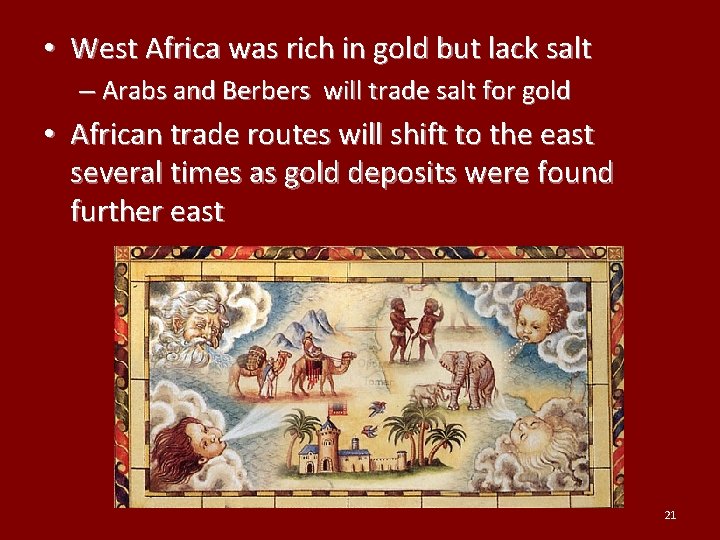
• West Africa was rich in gold but lack salt – Arabs and Berbers will trade salt for gold • African trade routes will shift to the east several times as gold deposits were found further east 21
Islamic Influence • Between 800 -15000 Islam will have significant impact on the political history of Africa • Muslims first came to North Africa after the death of Muhammad • Convert many African rulers – Like the Muslim concept of a ruler who united religious and civil authority • Reinforced traditional ideas of kingship – Rulers will base government on Islamic law • Believed God’s law is a higher authority than human law • Rulers will rely on religious scholars as government advisors 23
Islamic Law • Law of obligation – Does not separate personal life from religious life – Regulates almost all areas of human life – Provides a set of values that shaped a common identify • Will help to unify Muslim world, despite ethnic or culturally differences 24
African Slave Trade • Muslim view of slavery – Saw it as a stage in the process of conversion of pagans to slavery – African slave trade • developed rapidly • widely diffused
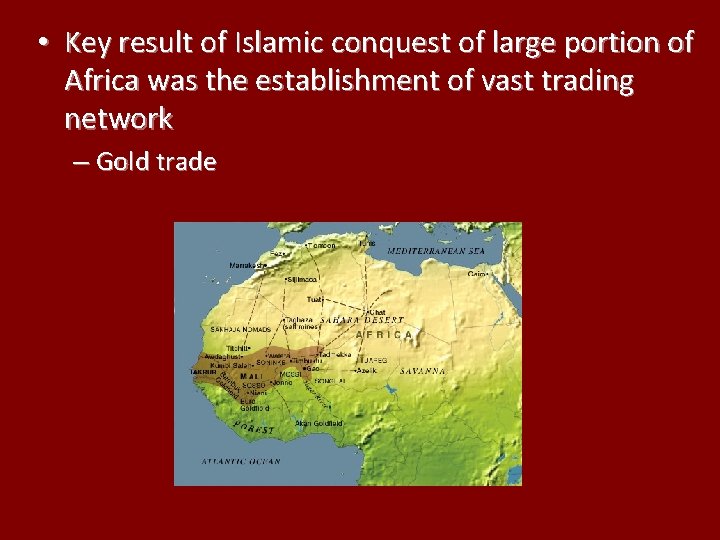
• Key result of Islamic conquest of large portion of Africa was the establishment of vast trading network – Gold trade
• Introduction of written Arabic language, laws – Allowed local rulers to improve their administration
Berbers • Convert to Islam – Will maintain their Berber identities and loyalties • Conversion will be rapidly – At first be unifying but later will divide North Africa into competing Muslim states • Two major groups – Almoravid and Almohads 28
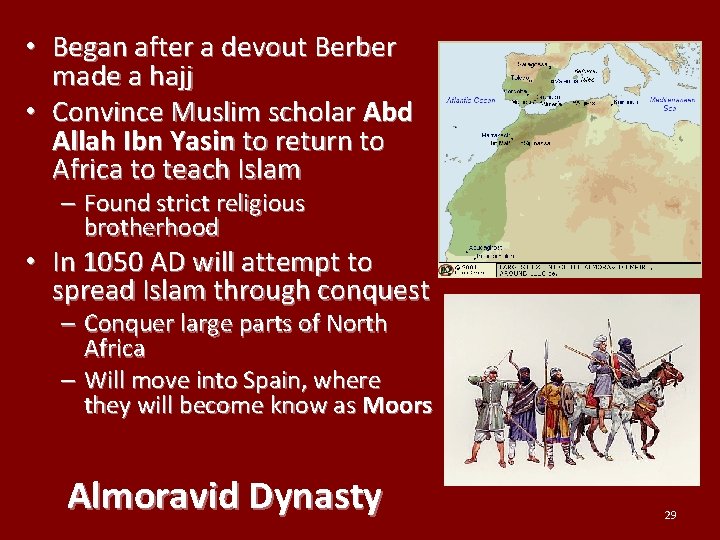
• Began after a devout Berber made a hajj • Convince Muslim scholar Abd Allah Ibn Yasin to return to Africa to teach Islam – Found strict religious brotherhood • In 1050 AD will attempt to spread Islam through conquest – Conquer large parts of North Africa – Will move into Spain, where they will become know as Moors Almoravid Dynasty 29
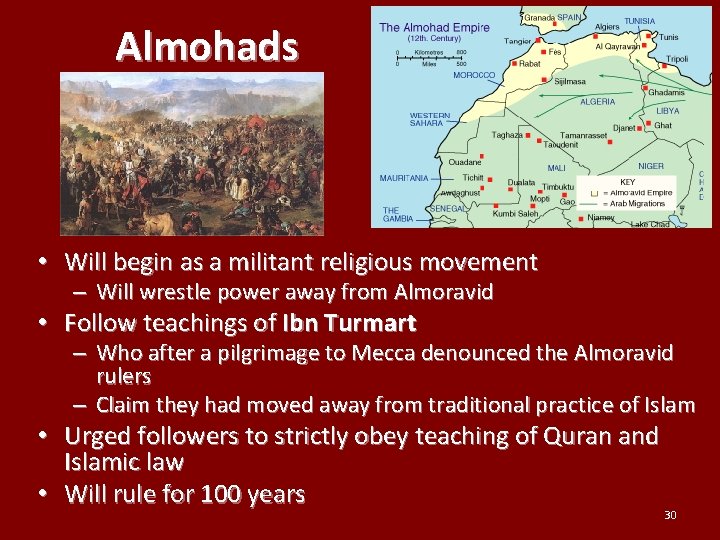
Almohads • Will begin as a militant religious movement – Will wrestle power away from Almoravid • Follow teachings of Ibn Turmart – Who after a pilgrimage to Mecca denounced the Almoravid rulers – Claim they had moved away from traditional practice of Islam • Urged followers to strictly obey teaching of Quran and Islamic law • Will rule for 100 years 30
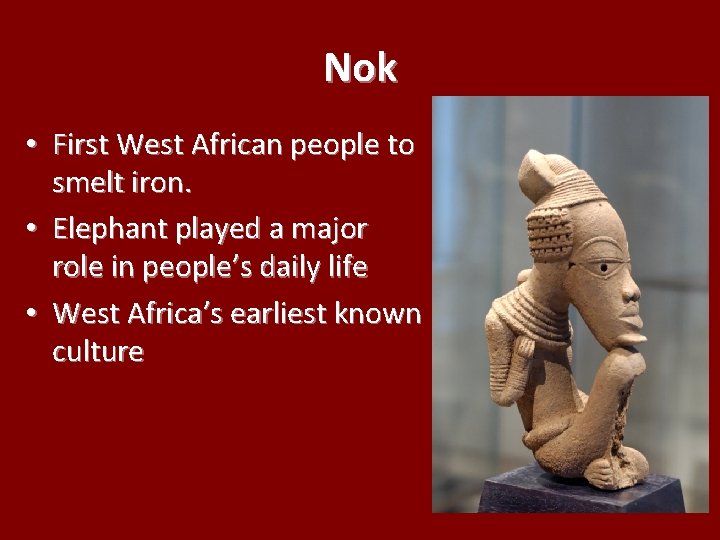
Nok • First West African people to smelt iron. • Elephant played a major role in people’s daily life • West Africa’s earliest known culture
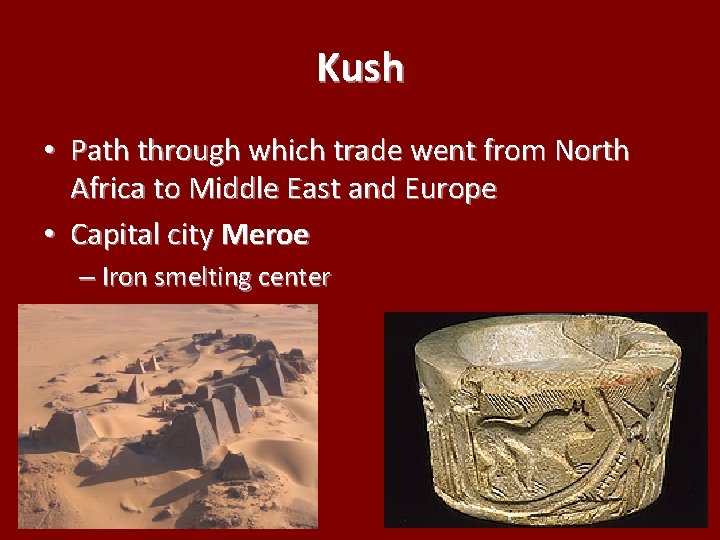
Kush • Path through which trade went from North Africa to Middle East and Europe • Capital city Meroe – Iron smelting center
Axum • Known today as Ethiopia • Main port was Adulis – Major center of trade in Mediterranean and for trade with east – Slaves, ivory and salt ship via Indian Ocean routes – Will trade with Egypt, Romans, Byzantine & India • Muslims will settle in Adulis after fleeing persecution in the Mecca
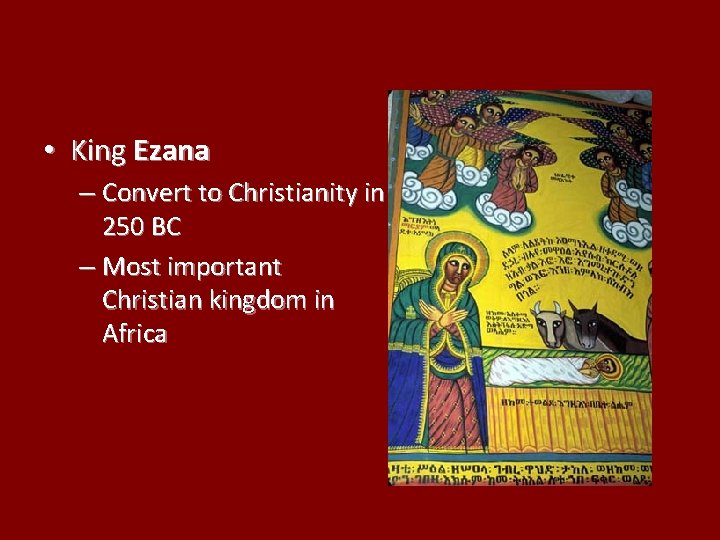
• King Ezana – Convert to Christianity in 250 BC – Most important Christian kingdom in Africa
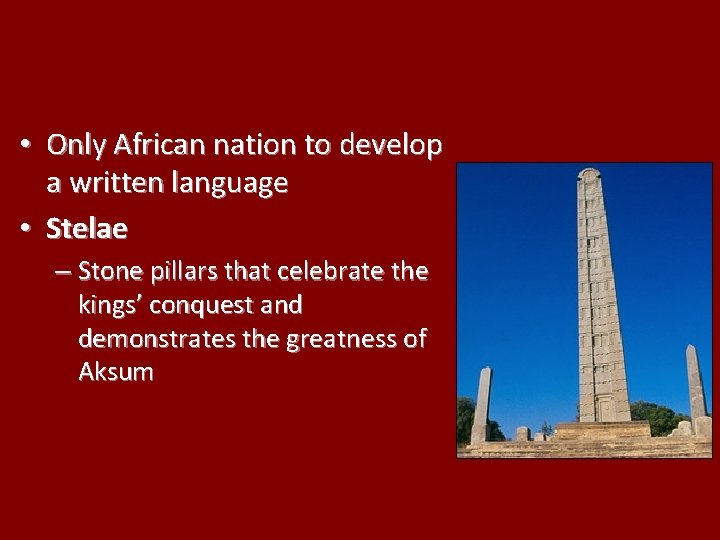
• Only African nation to develop a written language • Stelae – Stone pillars that celebrate the kings’ conquest and demonstrates the greatness of Aksum
• Created new method of agriculture- terrace farming • Axum will remain one of the few non-Muslims states in northern and eastern Africa – Axum had provide refuge for Muslims during their early history – Out of respect the Muslims never attempt to conquer Axum
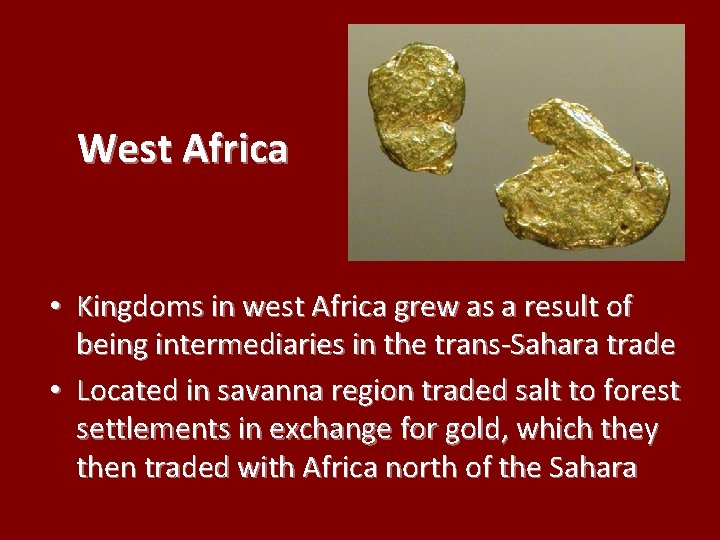
West Africa • Kingdoms in west Africa grew as a result of being intermediaries in the trans-Sahara trade • Located in savanna region traded salt to forest settlements in exchange for gold, which they then traded with Africa north of the Sahara
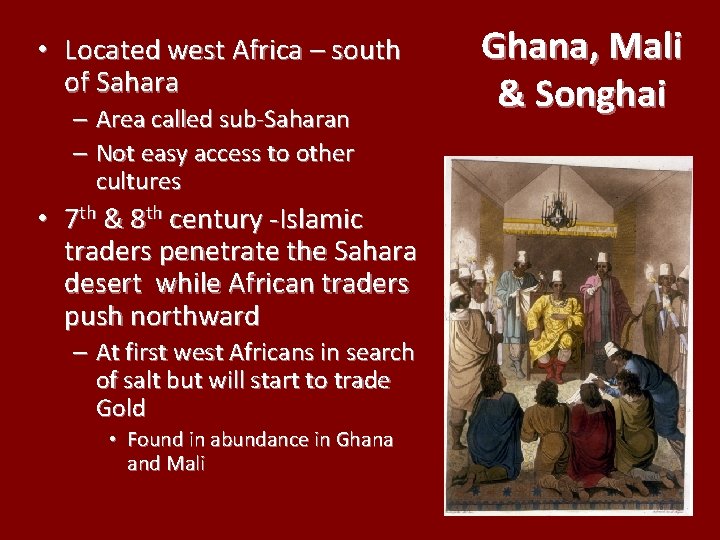
• Located west Africa – south of Sahara – Area called sub-Saharan – Not easy access to other cultures • 7 th & 8 th century -Islamic traders penetrate the Sahara desert while African traders push northward – At first west Africans in search of salt but will start to trade Gold • Found in abundance in Ghana and Mali Ghana, Mali & Songhai
Ghana • Rulers grew rich from taxing goods that traders carried through their territory • To keep the price of gold from falling, the king will limited the supply of gold • The constant trade also brought Islam to the area • For Ghana the results was devastating – Subject to a holy war led by an Islamic group intent on converting (or killing) them – Ghana was able to defeat Islamic forces but empire fell into decline • Its decline in 1076 will make way for new political organizations in West Africa
Mali • Malinke people create Mali out of Ghana • Sundiata – Monarch given credit for the unified state of Mali Lion Prince • Mali will become a model for Islamic Sudan kingdoms
• Urbanization within Mali Empire – Port cities along Niger river • Commercial and cultural centers • Trade – Dependent upon access to gold producing areas – Juula • African traders– partnerships • Agricultural economy – Barely able to provide basic foods • • • Poor soil Periodic droughts Limitations of technology
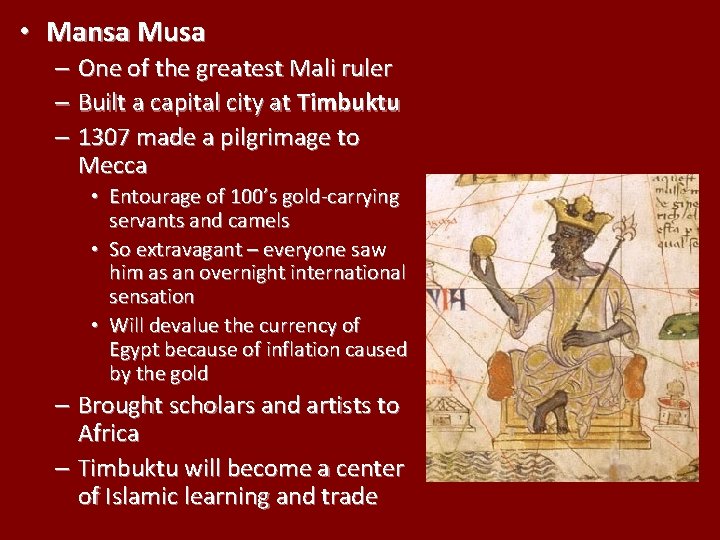
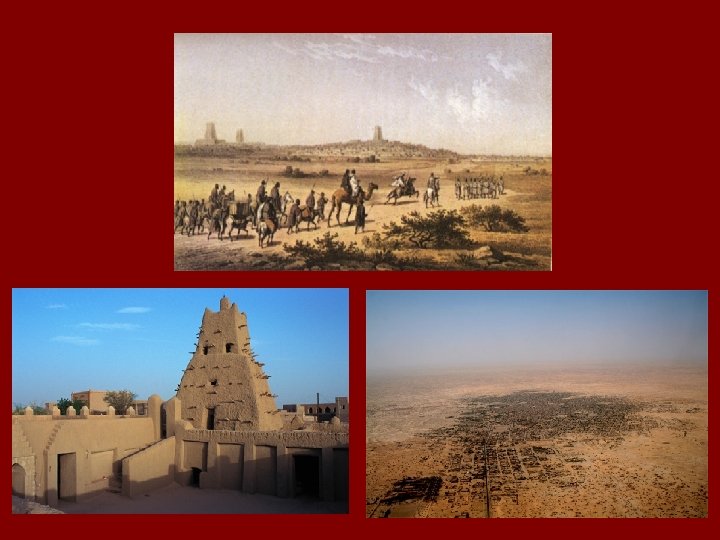
• Mansa Musa – One of the greatest Mali ruler – Built a capital city at Timbuktu – 1307 made a pilgrimage to Mecca • Entourage of 100’s gold-carrying servants and camels • So extravagant – everyone saw him as an overnight international sensation • Will devalue the currency of Egypt because of inflation caused by the gold – Brought scholars and artists to Africa – Timbuktu will become a center of Islamic learning and trade
• Timbuktu will become a major cultural center – University that attracted scholars around Islamic world • Lacked modern weapons despite wealth and high level of learning – Will cause downfall when invaded by Moroccan Muslims who had firearms
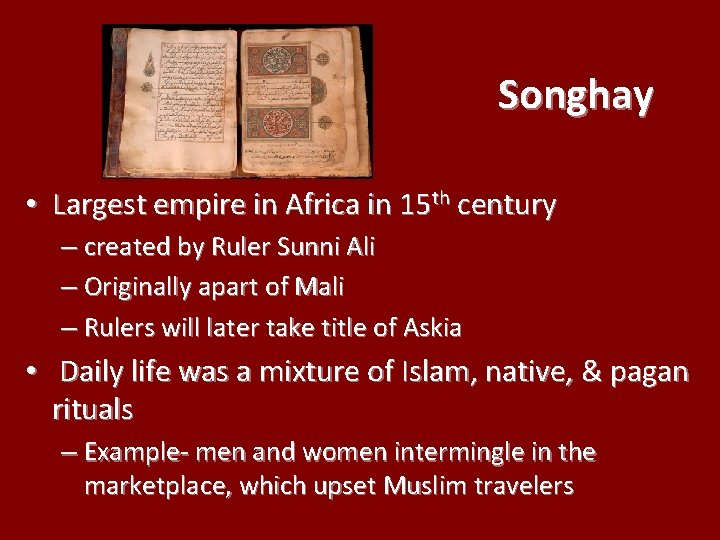
Songhay • Largest empire in Africa in 15 th century – created by Ruler Sunni Ali – Originally apart of Mali – Rulers will later take title of Askia • Daily life was a mixture of Islam, native, & pagan rituals – Example- men and women intermingle in the marketplace, which upset Muslim travelers
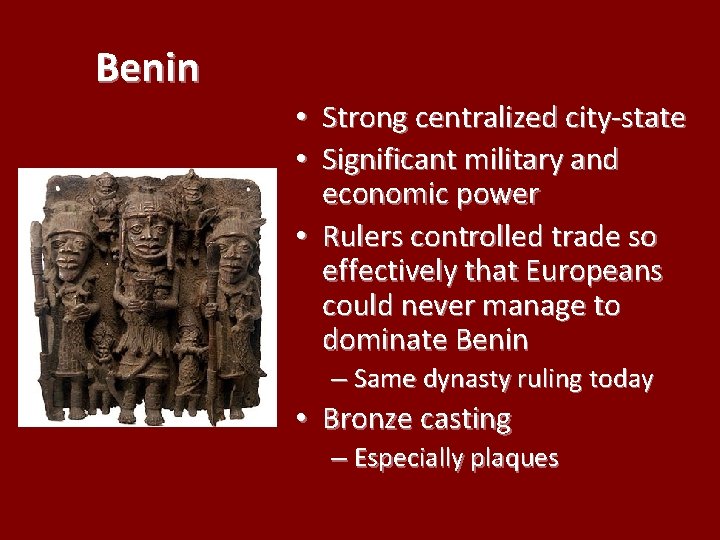
Benin • Strong centralized city-state • Significant military and economic power • Rulers controlled trade so effectively that Europeans could never manage to dominate Benin – Same dynasty ruling today • Bronze casting – Especially plaques
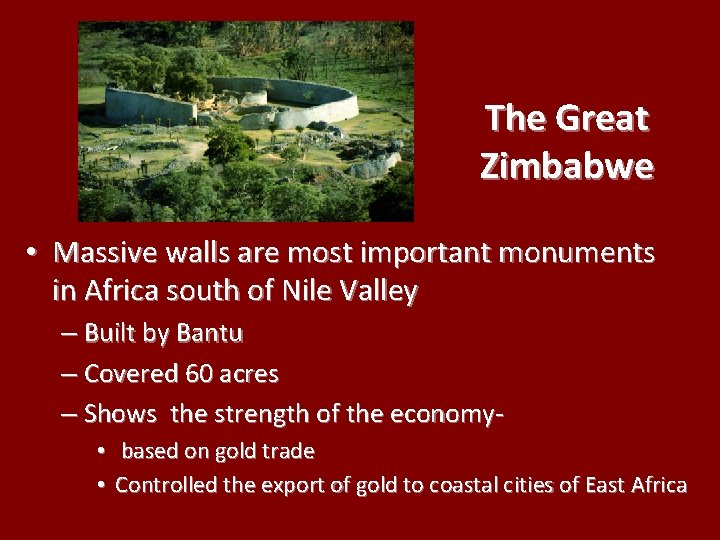
The Great Zimbabwe • Massive walls are most important monuments in Africa south of Nile Valley – Built by Bantu – Covered 60 acres – Shows the strength of the economy • based on gold trade • Controlled the export of gold to coastal cities of East Africa
• Zimbabwe – Actually refers to stone building • Great Zimbabwe – Capital and religious center • Centralized state by the 15 th century • Sofala was entry port for Zimbabwean goods • Mwene Mutapa – Title given to the ruler of Great Zimbabwe
– Later abandon when gold trade decline • No one is sure why city of abandon. – Historian believe that the area was worn out and could not support a large population – Falling world prices of gold
• Islam did not experience much success in finding converts in the interior of Africa • East Africa and in West Africa rulers convert first follow by masses – More difficult in the East Africa because women had more freedom than Muslim counterparts and were resistant to the new faith
East Africa • Zanj – Arabic term for East African coast • Active trade in towns – from Persian Gulf to Egypt – but little beyond those areas • Urbanized trading ports had the common cultural trait of – Bantu-based and Swahili langugage
• Expansion of Islam will help create international trade on the East African coastline – Provides a religious bond or trust between East Africa and India & Southeast Asia – Converts Rulers of East Africa
• Islam did not successfully spread into the interior portions of East Africa. • Even areas near trading towns remained unaffected
• Portuguese will attempt to gain control of trade of northern Swahili coast – but will never be able to control the trade
Impact of Islam • Although Africa had never been isolated from Mediterranean, the spread of Islam will bring large areas of African within the global community • Sudanic states and Swahili coast will be most affected by Islam – Importance of Indian Ocean trade routes and commercial routes that connected the Sahel and Mediterranean
• Islam will not impose a form of government but will provide strength for – Royal authority – Legal codes – Connect Africa to the Muslim trade world
• Demography – Study of population • Demographic Transition – Associated with a change in society • In the area of industrialization