
AFPC Policy Protect its personnel contractors 3 rd

- Slides: 21
AFPC Policy • Protect its personnel, contractors, 3 rd parties and the environment against the hazards of exposure to ionizing radiation due to AFPC activities. • Avoid uncontrolled releases of radioactive contaminated substances and to minimize the effects of past deposits • apply the principles of ICRP 60 for radiation protection ( justification of a practice, optimization of protection and dose & risk limitation) • avoid the need for classified radiological workers wherever reasonably practicable 6/15/2021 1
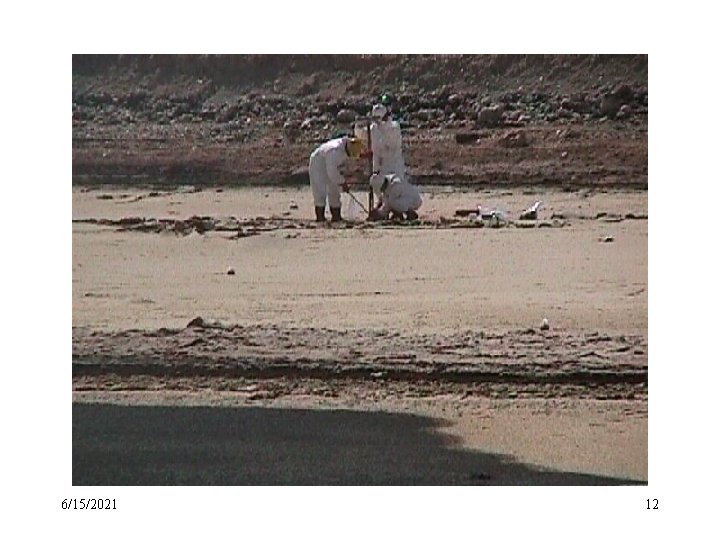
Clean up of NORM contaminated areas • Radiological surveys have identified AFPC areas which have become contaminated with NORM. • AFPC procedure is applicable to all AFPC activities to decontaminate NORM affected areas. • define standards and ensure availability of resources for decontamination. 6/15/2021 2
Clean up of NORM contamination areas Typical clean up activities shall be controlled by a defined work methodology: • A detailed execution plan • Proposed clean up criteria • Special measures 6/15/2021 3
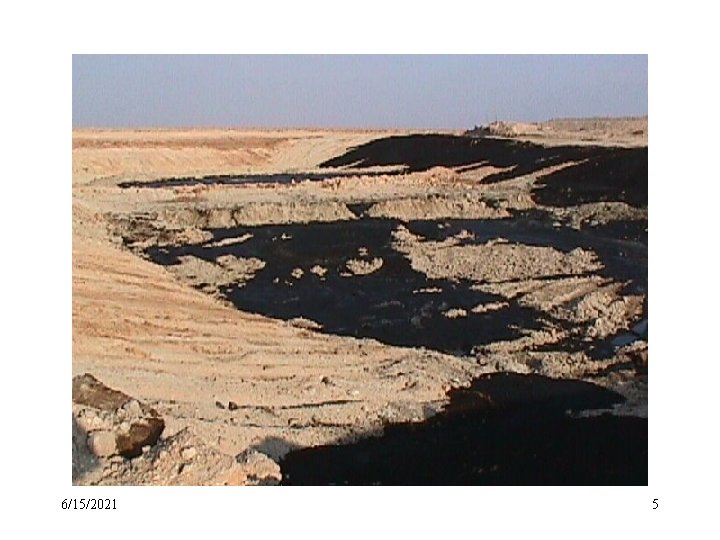
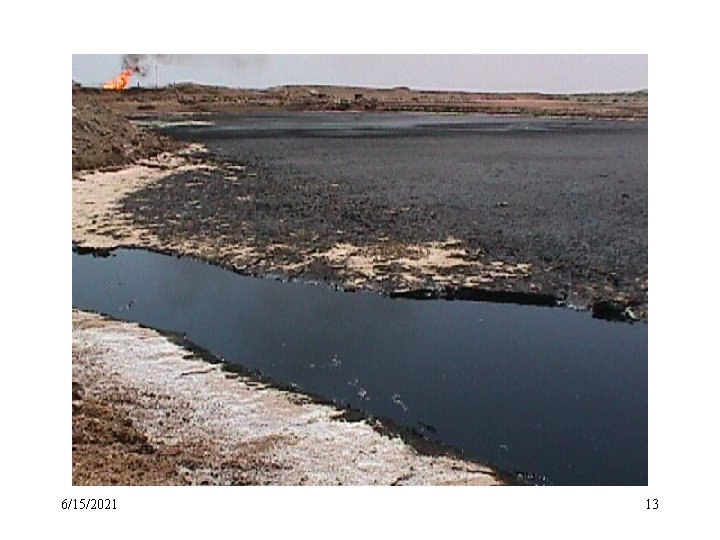
NORM in Oil and Gas Industry • Releases of radioactivity with produced water • Radioactive surface contamination on production equipment • Radioactive sludges • Radioactive scales • Radioactive surface contamination on disused equipment 6/15/2021 4
6/15/2021 5
NORM Remediation Programme • All NORM contaminated areas have been extensively investigated by SAEC. • As the Syrian regulatory body, SAEC stated the preferred options for the permanent management of NORM contaminated waste • The final option has been supported by the external consultants AEA technology. 6/15/2021 6
Main Concept • to have all NORM Remediation projects integrated into a larger Programme of environmental remediation. • The AFPC Programme is designed to meet regulatory requirements and International Standards to acceptable levels at reasonable cost. 6/15/2021 7
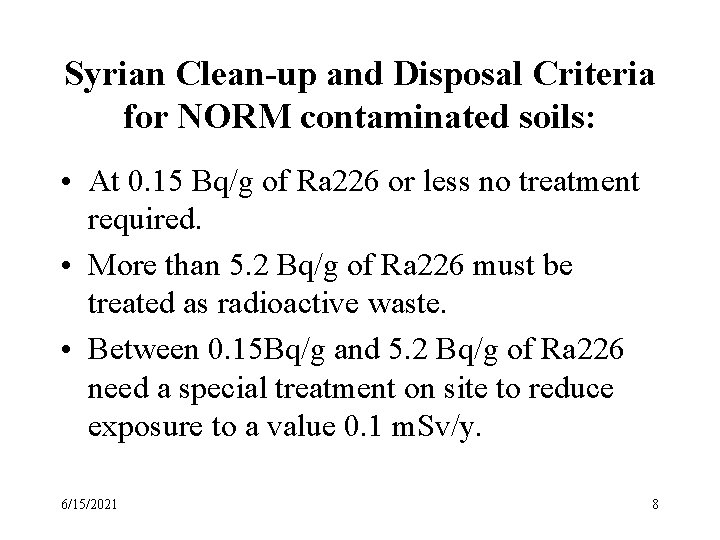
Syrian Clean-up and Disposal Criteria for NORM contaminated soils: • At 0. 15 Bq/g of Ra 226 or less no treatment required. • More than 5. 2 Bq/g of Ra 226 must be treated as radioactive waste. • Between 0. 15 Bq/g and 5. 2 Bq/g of Ra 226 need a special treatment on site to reduce exposure to a value 0. 1 m. Sv/y. 6/15/2021 8
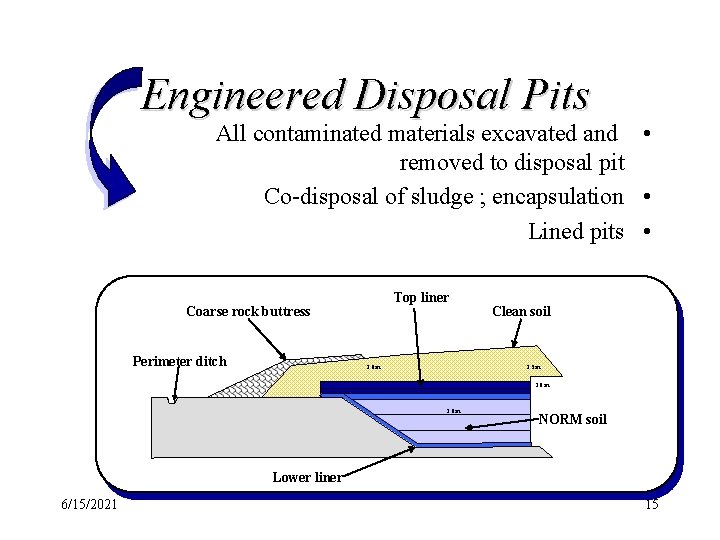
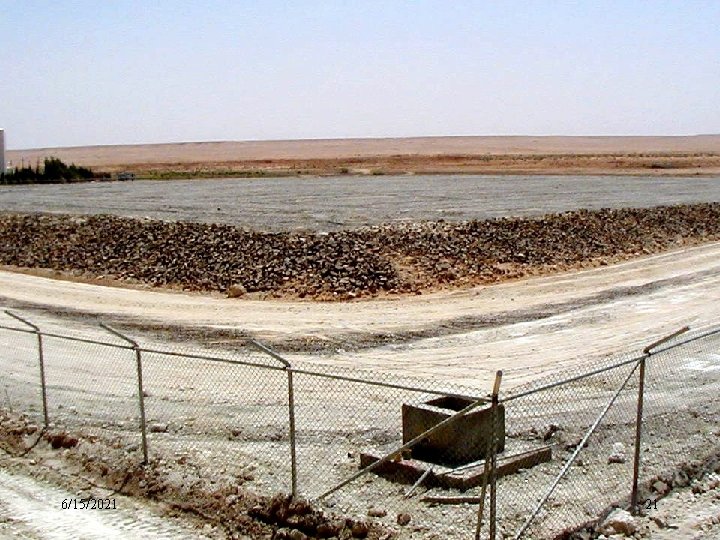
The final option following recommendations by SAEC and AEA Technology, AFPC preferred route for three NORM contaminated areas is engineered disposal mounds, while disposal the fourth is by stabilization in a landfill. 6/15/2021 9
Requirements for engineered mound disposal facilities • Provide isolation of the waste from the surrounding environment • Inhibit surface water infiltration into the waste • Inhibit erosion of the cover the waste • Maintain a separation between the waste and the ground water • Promote the drainage of water that infiltrates the wast out of the waste 6/15/2021 10
Requirements for engineered mound disposal facilities • inhibit human and animal intrusion through the cover into the waste • Maintain stability under foreseen subsurface and geologic condition • the site for a dedicated facility should above flood - plain levels 6/15/2021 11
6/15/2021 12
6/15/2021 13
Requirements for engineered mound disposal facilities • The facility should be able to cope with major events(flood, earthquake, and fire) on a time-scale of > 200 years. • Performance requirements during construction use of reasonably available materials and machinery • Optimization of waste movement and keeping radiation dose to workers ALARA 6/15/2021 14
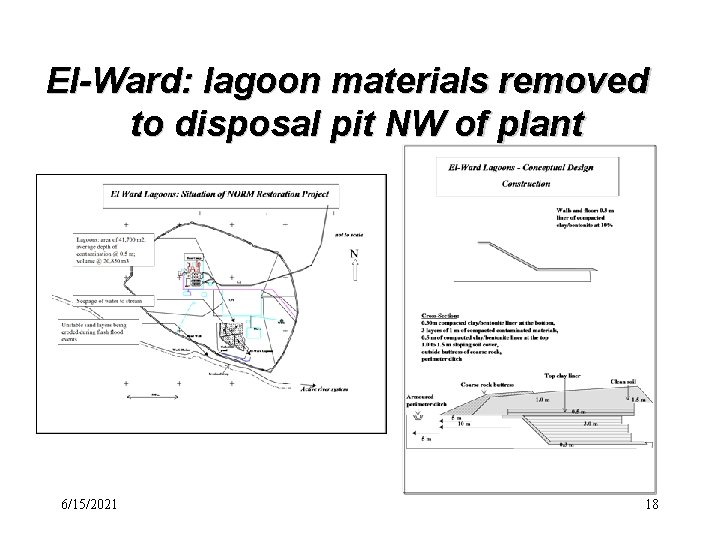
Engineered Disposal Pits All contaminated materials excavated and • removed to disposal pit Co-disposal of sludge ; encapsulation • Lined pits • Top liner Coarse rock buttress Perimeter ditch 1. 0 m Clean soil 1. 5 m 1. 0 m 5 m 10 m 3. 0 m NORM soil 5 m Lower liner 6/15/2021 15
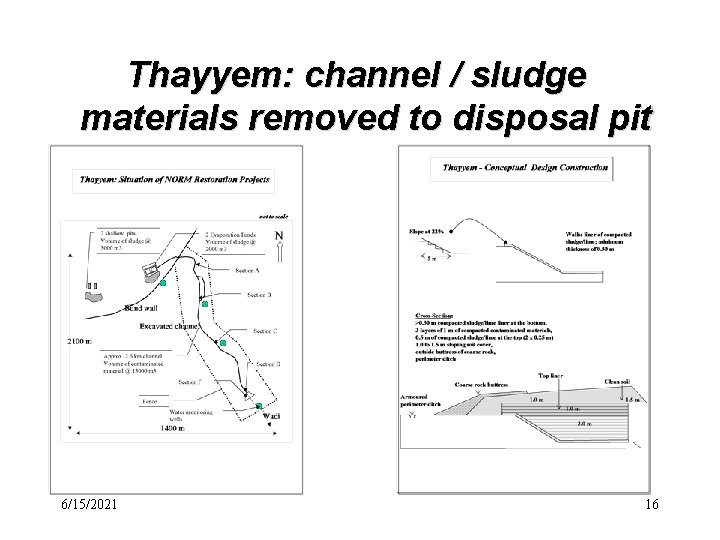
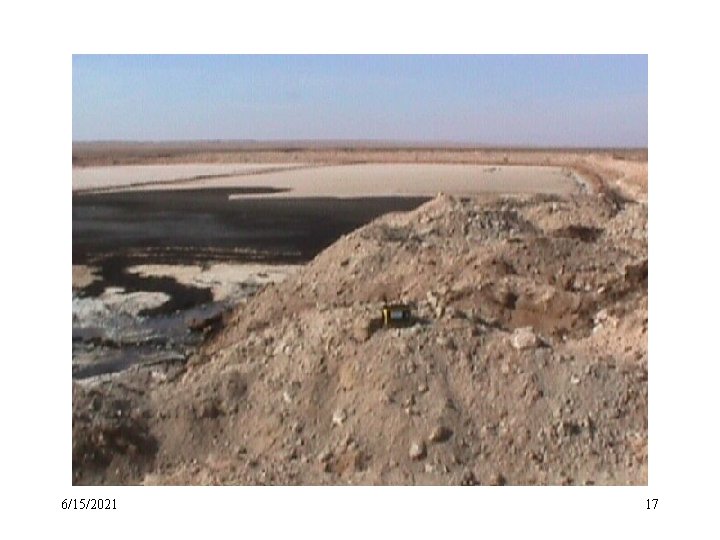
Thayyem: channel / sludge materials removed to disposal pit 6/15/2021 16
6/15/2021 17
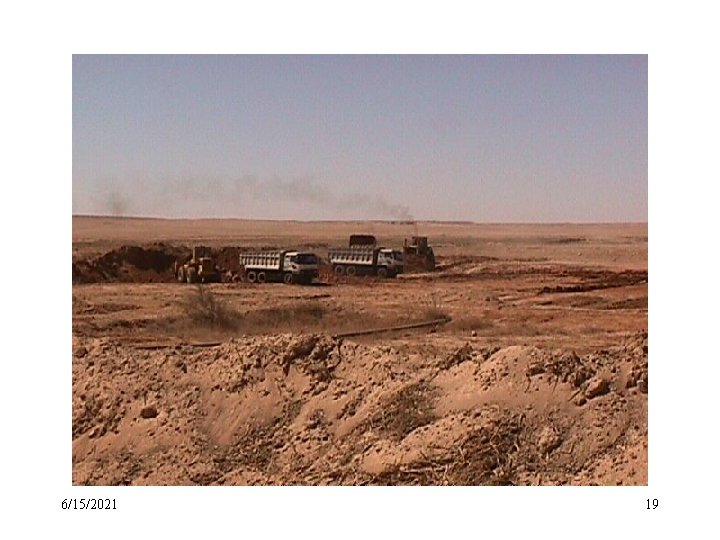
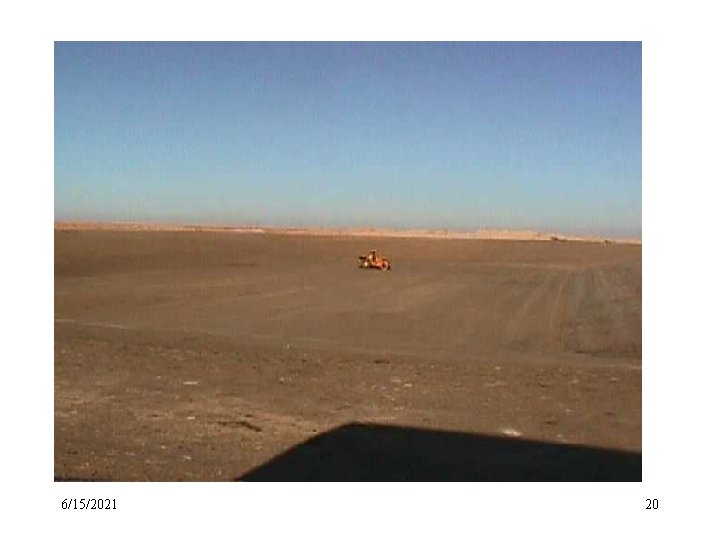
El-Ward: lagoon materials removed to disposal pit NW of plant 6/15/2021 18
6/15/2021 19
6/15/2021 20
6/15/2021 21