
AFLP Amplified Fragment Length Polymorphism AFLP a method


- Slides: 16
AFLP Amplified Fragment Length Polymorphism
AFLP - a method based on PCR developed in 1995 by Vos et al. - Involves the use of RFLP and PCR techniques - Compared with the widely used RFLP, AFLP is faster, less labour intensive and provide more information. - An additional advantage over RAPD is their reproducibility.
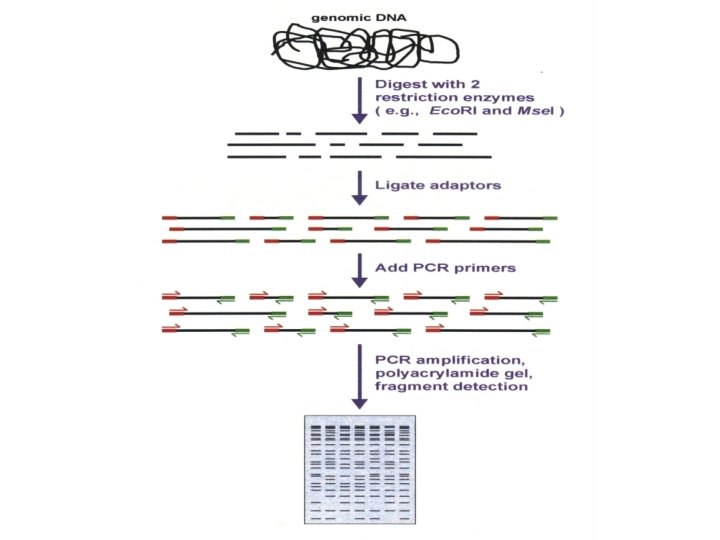
AFLP The AFLP technique is based on the principle of selectively amplifying a subset of restriction fragments from a complex mixture of DNA fragments obtained after digestion of genomic DNA with restriction endonucleases.
AFLP Procedures in AFLP: - Digestion - Adaptor Ligation - Amplification - Electrophoresis
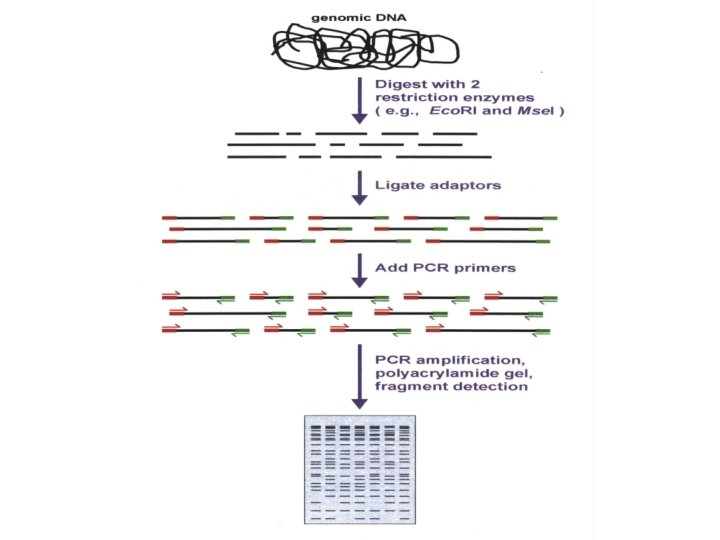
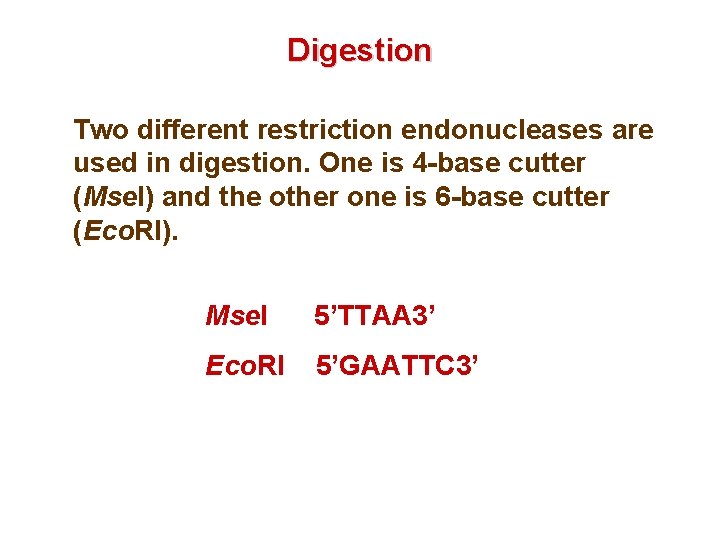
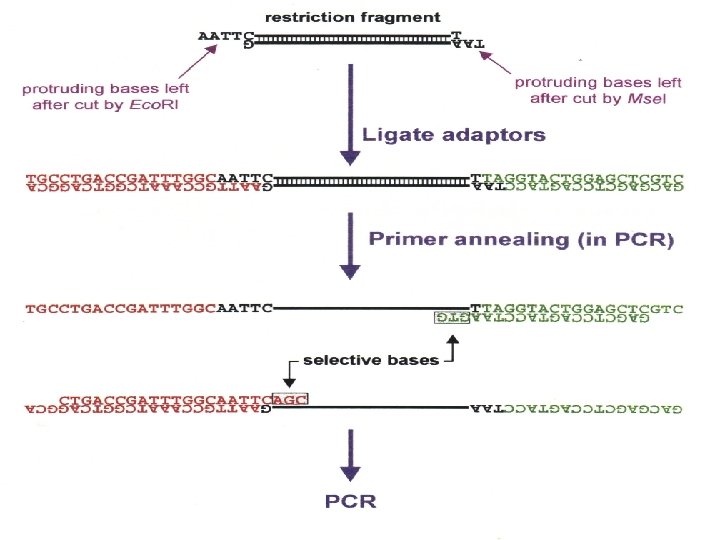
Digestion Two different restriction endonucleases are used in digestion. One is 4 -base cutter (Mse. I) and the other one is 6 -base cutter (Eco. RI). Mse. I 5’TTAA 3’ Eco. RI 5’GAATTC 3’
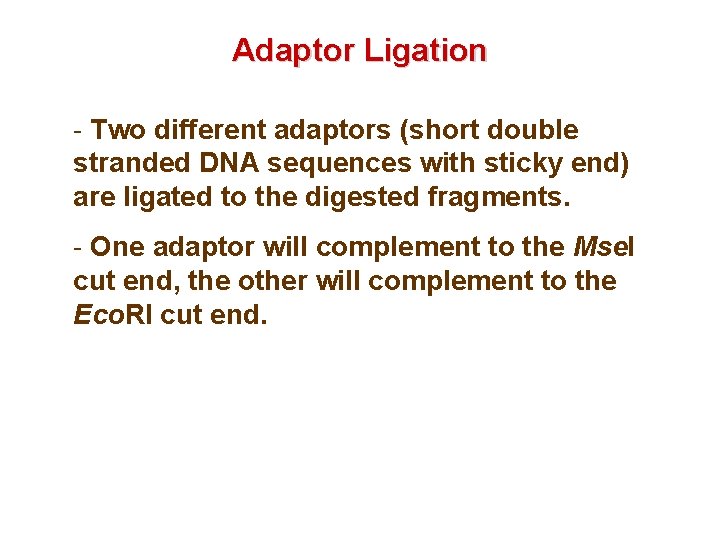
Adaptor Ligation - Two different adaptors (short double stranded DNA sequences with sticky end) are ligated to the digested fragments. - One adaptor will complement to the Msel cut end, the other will complement to the Eco. RI cut end.
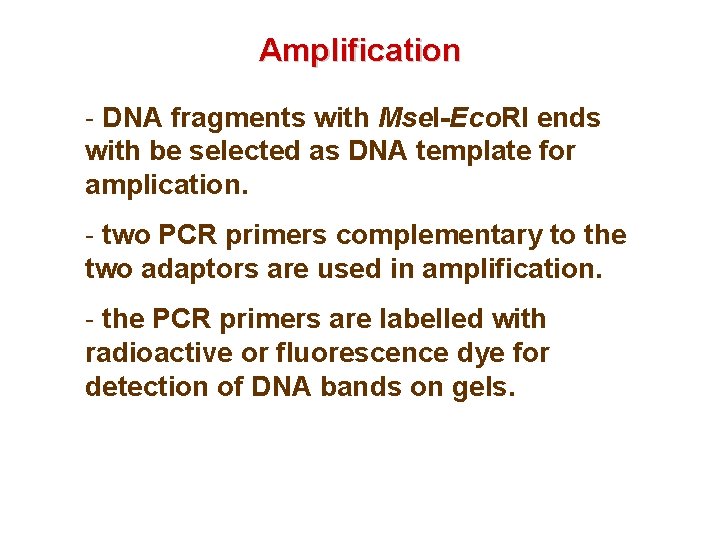
Amplification - DNA fragments with Mse. I-Eco. RI ends with be selected as DNA template for amplication. - two PCR primers complementary to the two adaptors are used in amplification. - the PCR primers are labelled with radioactive or fluorescence dye for detection of DNA bands on gels.
Electrophoresis - polyacrylamide gel is used for separating DNA bands. - Normally, 30 -100 DNA bands can be detected by AFLP on polycrylamide gel.
Selective Bases - The number of DNA bands detected by AFLP is high. It can be reduced by adding selective bases (1 -3 nucleotides) at the 3’end of the PCR primers. - one additional selective base on the primer can reduced the number of DNA bands 16 folds. - three additional selective bases on the primer can reduce the number of DNA bands 4, 000 folds.
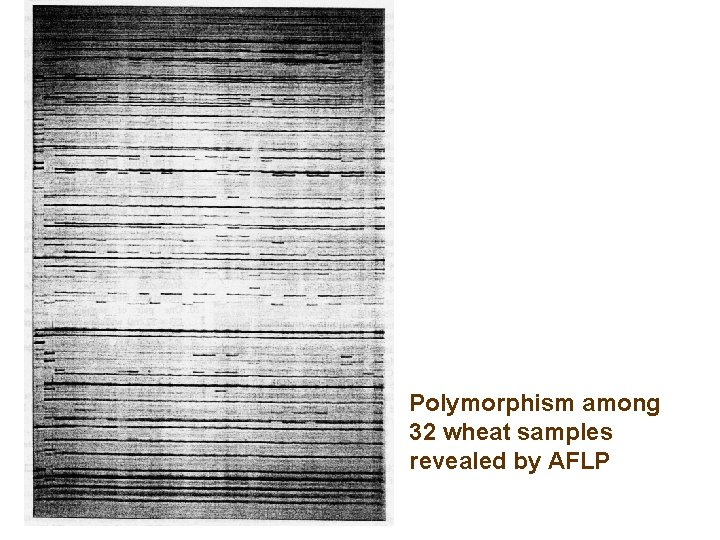
Polymorphism among 32 wheat samples revealed by AFLP
Characteristics of AFLP - dominant marker. - DNA variation is detected by presence/absence of DNA bands due to: a) presence/absence of restriction sites b) additional bases (insertion) between two restriction sites are too large
Advantages - higher reproducibility compared to RAPD. - highly polymorphic.