
Aflatoxins 50 years after still unsolved challenge Slaven

- Slides: 21
Aflatoxins 50 years after: still unsolved challenge Slaven Zjalić, Department of ecology, agronomy and aquaculture, University of Zadar, Croatia
• Aflatoxins are secondary metabolites produced by some moulds belonging to Aspergillus section Flavi secreted on the growing media • Aflatoxins have no odor and no taste • Through whole human history aflatoxins were present in food and feed
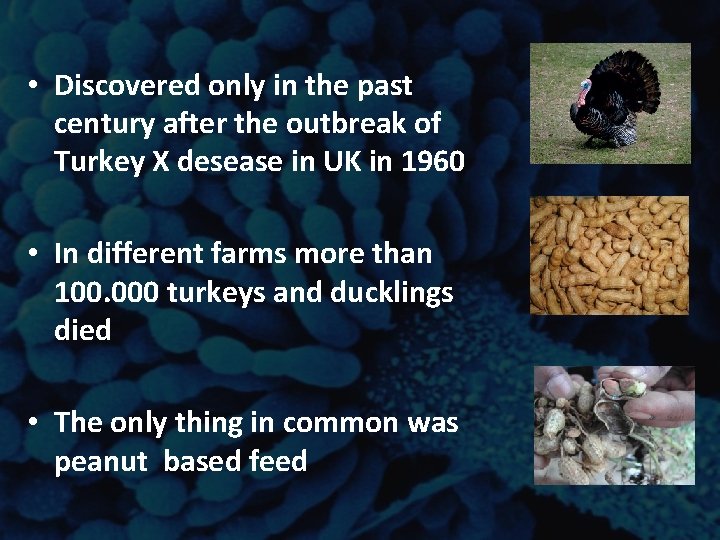
• Discovered only in the past century after the outbreak of Turkey X desease in UK in 1960 • In different farms more than 100. 000 turkeys and ducklings died • The only thing in common was peanut based feed
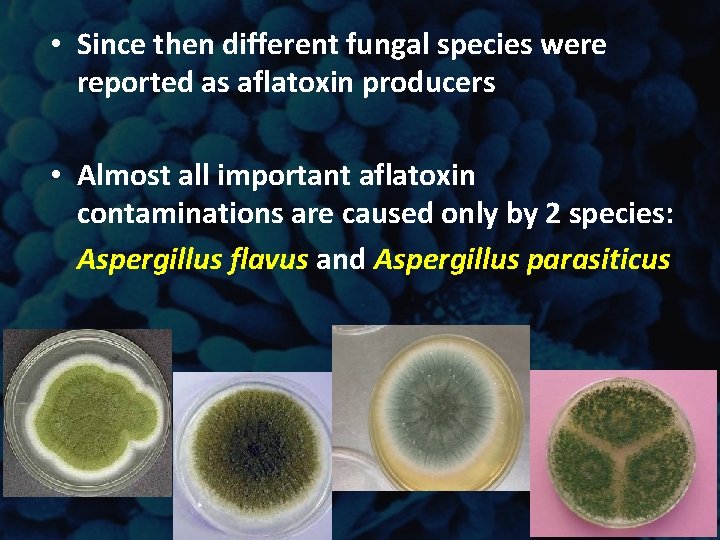
• Since then different fungal species were reported as aflatoxin producers • Almost all important aflatoxin contaminations are caused only by 2 species: Aspergillus flavus and Aspergillus parasiticus
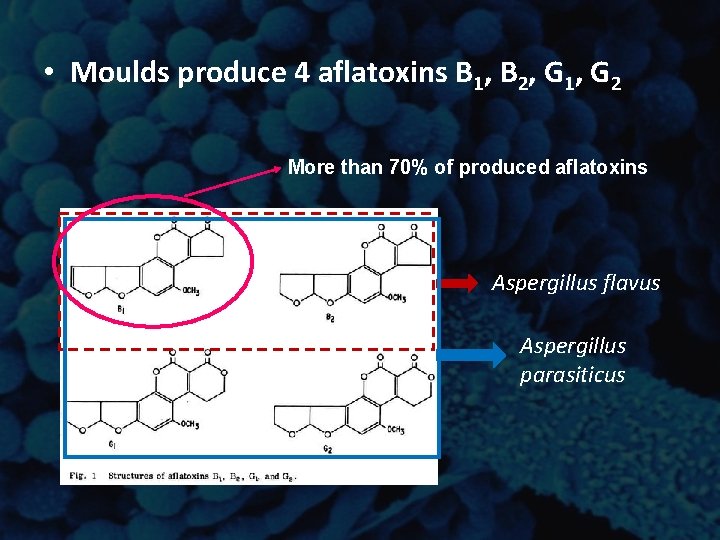
• Moulds produce 4 aflatoxins B 1, B 2, G 1, G 2 More than 70% of produced aflatoxins Aspergillus flavus Aspergillus parasiticus
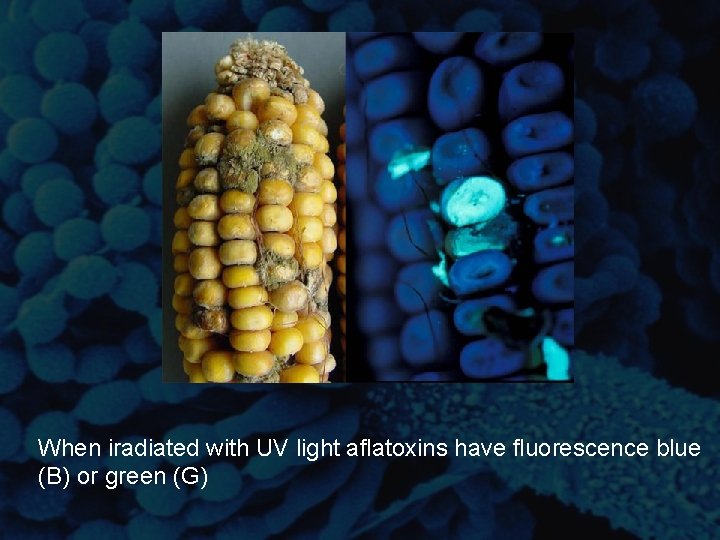
When iradiated with UV light aflatoxins have fluorescence blue (B) or green (G)
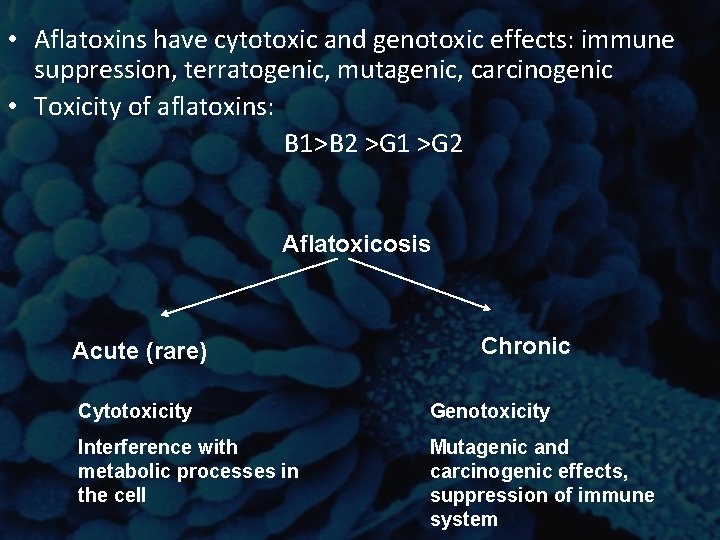
• Aflatoxins have cytotoxic and genotoxic effects: immune suppression, terratogenic, mutagenic, carcinogenic • Toxicity of aflatoxins: B 1>B 2 >G 1 >G 2 Aflatoxicosis Acute (rare) Chronic Cytotoxicity Genotoxicity Interference with metabolic processes in the cell Mutagenic and carcinogenic effects, suppression of immune system
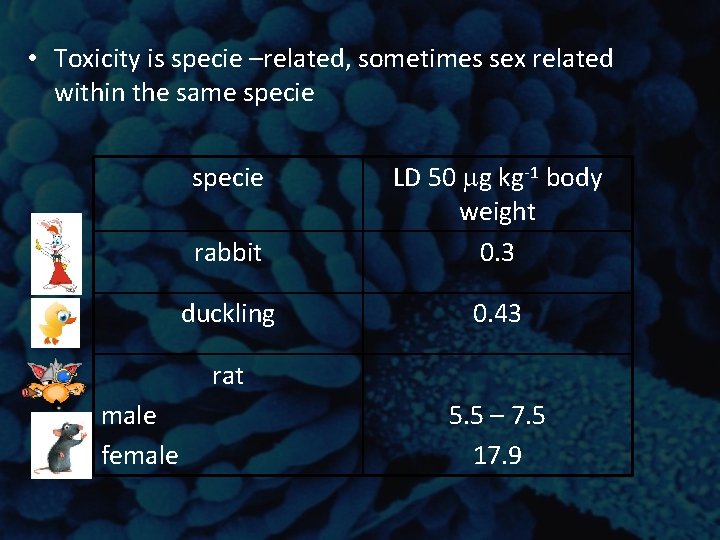
• Toxicity is specie –related, sometimes sex related within the same specie rabbit LD 50 mg kg-1 body weight 0. 3 duckling 0. 43 specie rat male female 5. 5 – 7. 5 17. 9
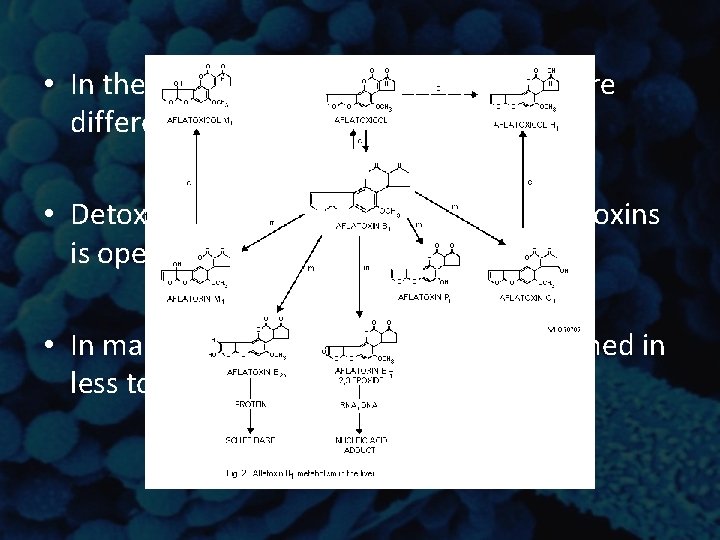
• In the same organism different tissues are differently affected by aflatoxins • Detoxifications of animal cells from aflatoxins is operated by cytochrome P 450 family • In mammalians part of AFB 1 is transformed in less toxic M 1 secreted by milk
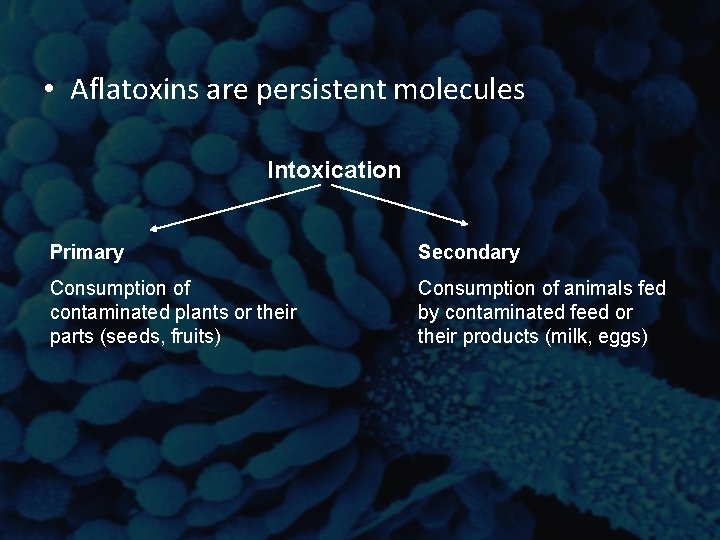
• Aflatoxins are persistent molecules Intoxication Primary Secondary Consumption of contaminated plants or their parts (seeds, fruits) Consumption of animals fed by contaminated feed or their products (milk, eggs)
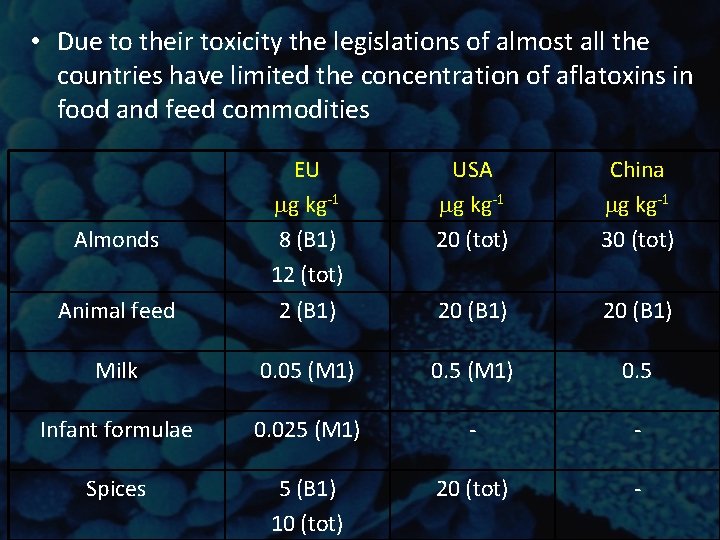
• Due to their toxicity the legislations of almost all the countries have limited the concentration of aflatoxins in food and feed commodities USA mg kg-1 20 (tot) China mg kg-1 30 (tot) Animal feed EU mg kg-1 8 (B 1) 12 (tot) 2 (B 1) 20 (B 1) Milk 0. 05 (M 1) 0. 5 Infant formulae 0. 025 (M 1) - - Spices 5 (B 1) 10 (tot) 20 (tot) - Almonds
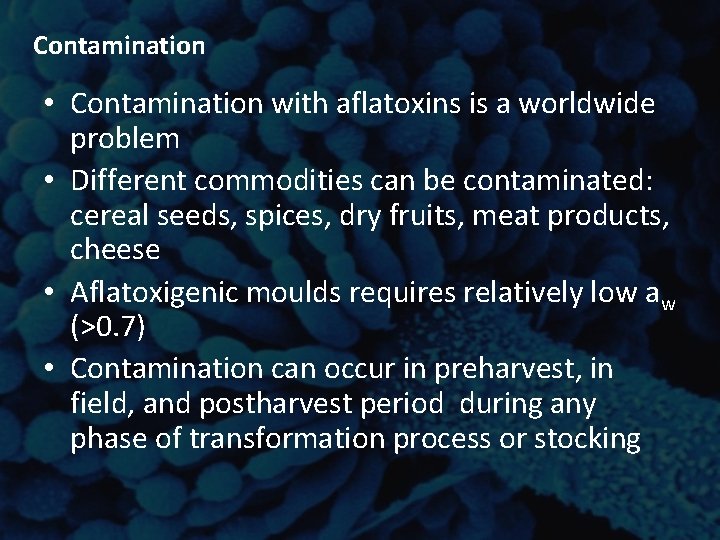
Contamination • Contamination with aflatoxins is a worldwide problem • Different commodities can be contaminated: cereal seeds, spices, dry fruits, meat products, cheese • Aflatoxigenic moulds requires relatively low aw (>0. 7) • Contamination can occur in preharvest, in field, and postharvest period during any phase of transformation process or stocking
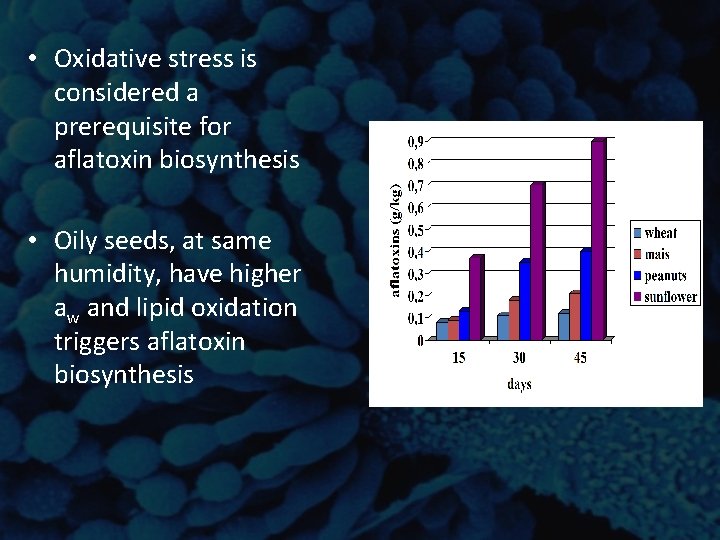
• Oxidative stress is considered a prerequisite for aflatoxin biosynthesis • Oily seeds, at same humidity, have higher aw and lipid oxidation triggers aflatoxin biosynthesis
• For contamination in field high temperatures and high humidity, preceded by drought or insect attack are needed • In Europe contamination with aflatoxins were considered more a problem of import or bad conservation • Due to global climatic changes in some years aflatoxin contamination in field is a serious problem in some European countries
• 2003 and 2012 were “black” years for aflatoxin contamination in Europe • Currently Gafta (Grain and Feed Trade Assosiation) has signalized reported high levels of aflatoxins in maize grains from: Spain, Italy, Serbia, Bulgaria, Romania
• Role of aflatoxins still not clarified • Response to a stress, especially oxidative stress • Major growth of mould doesn’t mean higher production of aflatoxins • Gens are clustered, part of the signaling network that regulates expression of the cluster described
• No method for total prevention of their presence in food and feed has been achieved • Control can be divided in: prevention detoxification adsorption
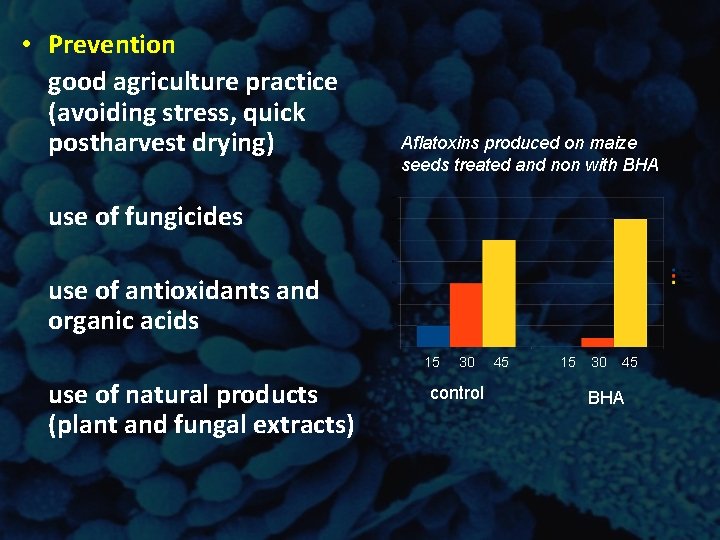
• Prevention good agriculture practice (avoiding stress, quick postharvest drying) Aflatoxins produced on maize seeds treated and non with BHA use of fungicides use of antioxidants and organic acids 15 use of natural products (plant and fungal extracts) 30 control 45 15 30 45 BHA
• Decontamination removal of husks can significantly lowers the quantity of aflatoxins chemical treatments use of microbial enzymes
• Adsorption different hydratated sodium calcium aluminosilicates (HSCAS) used to adsorb aflatoxins in animals
Conclusions • Aflatoxins represent high health hazard for humans and animals • No method for total prevention of their presence in food and feed has been achieved • Nevertheless the presence of aflatoxins in food and feed in EU countries is under control