
Afghanistan An overview Physical Cultural Political Developed by
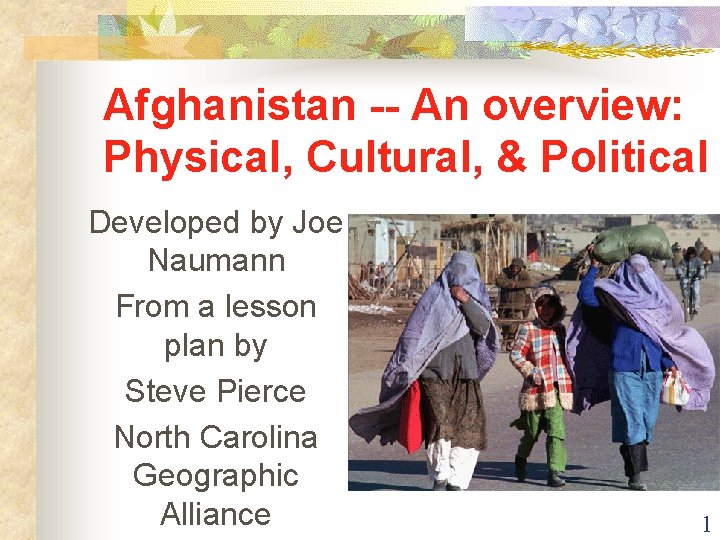
Afghanistan -- An overview: Physical, Cultural, & Political Developed by Joe Naumann From a lesson plan by Steve Pierce North Carolina Geographic Alliance 1
Background n Afghanistan has had a long history of internal and external conflicts, including two wars with the United Kingdom in the 1800 s and an invasion by the Soviet Union in 1979. Since the Soviets left in 1989, Afghanistan has experienced many internal conflicts over control of the country. 2
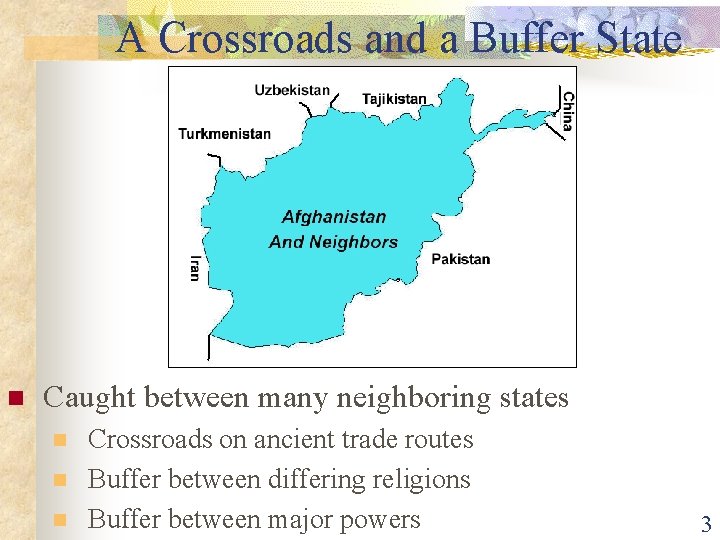
A Crossroads and a Buffer State n Caught between many neighboring states n n n Crossroads on ancient trade routes Buffer between differing religions Buffer between major powers 3
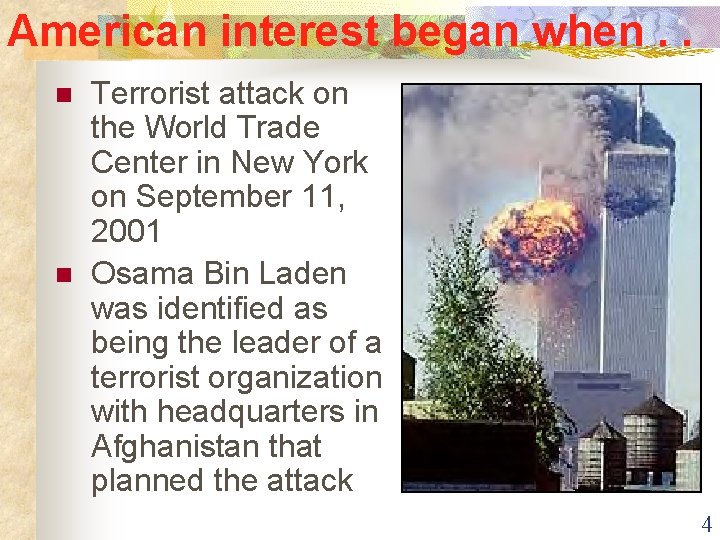
American interest began when. . n n Terrorist attack on the World Trade Center in New York on September 11, 2001 Osama Bin Laden was identified as being the leader of a terrorist organization with headquarters in Afghanistan that planned the attack 4
Background n In 1996 a group called the Taliban seized control of most of the country. The Taliban was accused of supporting the terrorists that attacked the World Trade Center and the Pentagon on September 11, 2001. U. S. and allied military forces began conducting air strikes on Taliban facilities in Afghanistan on October 7, 2001. 5
Political Map 6
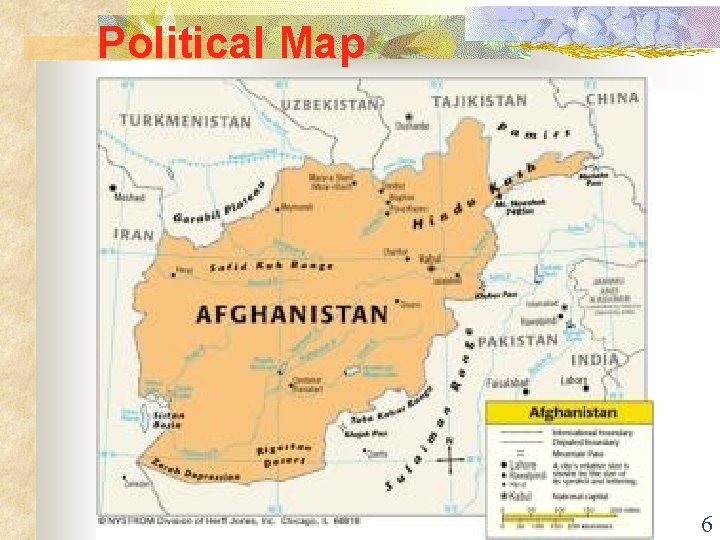
Afghanistan in Spatial Terms n n n Absolute Location: 33ºN, 65ºE Relative Location: Landlocked country in southwest Asia Neighbors: North and west of Pakistan; east of Iran; South of Turkmenistan, Uzbekistan, and Tajikistan n China shares a border with Afghanistan on the east along the Wakhan Corridor The disputed region of Kashmir lies south of the Wakhan Corridor Area: 251, 825 sq. mi. (about size of Texas) 7
Southwest Asia Map 8
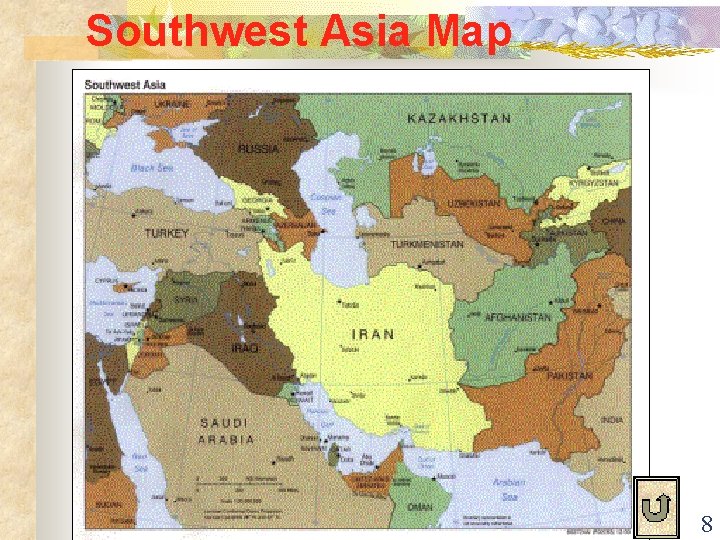
Places & Regions n Afghanistan lies at the crossroads of three major regions. n South Asia - Pakistan and India lie to the east n Southwest Asia/Middle East - Iran, Iraq, and the Persian gulf lie to the west. n Central Asia - five republics of the former Soviet Union lie to the north: Turkmenistan, Uzbekistan, Tajikistan, Kyrgystsan, and Kazakstan. 9
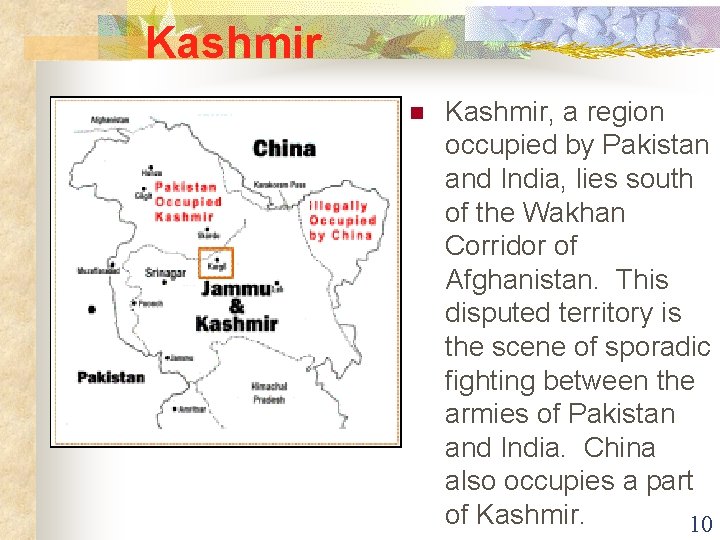
Kashmir n Kashmir, a region occupied by Pakistan and India, lies south of the Wakhan Corridor of Afghanistan. This disputed territory is the scene of sporadic fighting between the armies of Pakistan and India. China also occupies a part of Kashmir. 10
11
12
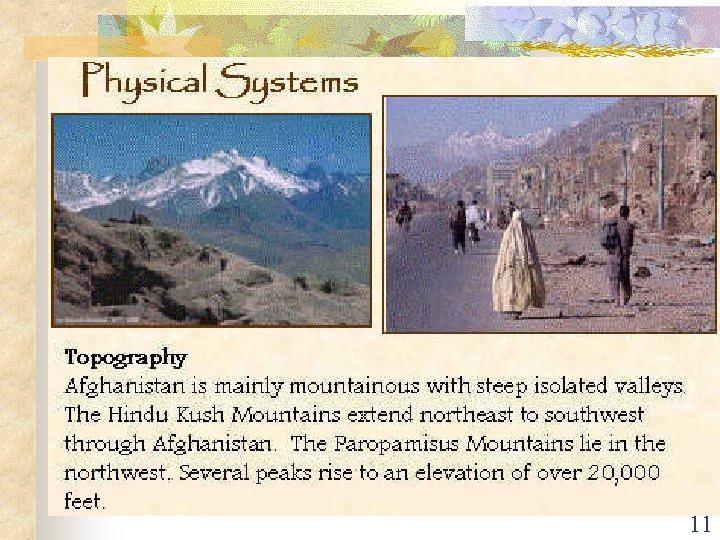
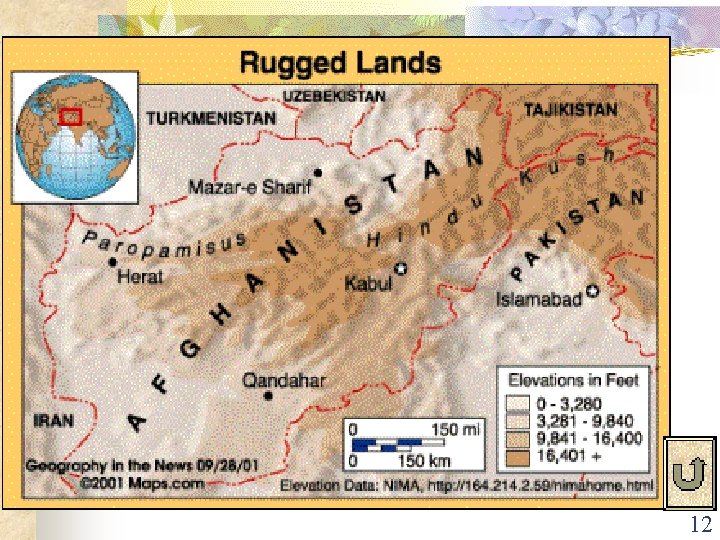
Physical Systems n Afghanistan has a wide variety of natural features including high mountains, large areas of desert and plains, and fertile valleys. The country has three main land regions n n n The Northern Plains is the northernmost region in Afghanistan. The Central Highlands cover about two-thirds of the country. This region includes the Hindu Kush. Most of the people of Afghanistan live in the narrow valleys of the Hindu Kush. The Southwestern Lowlands mainly consist of deserts or semi-deserts. 13
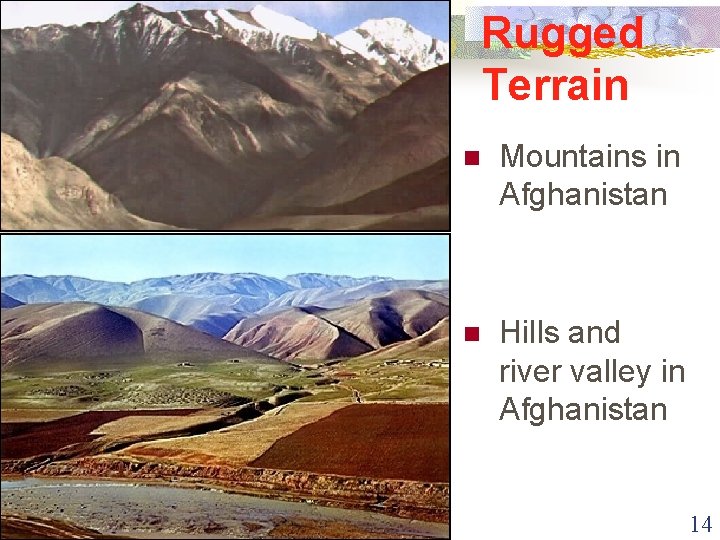
Rugged Terrain n Mountains in Afghanistan n Hills and river valley in Afghanistan 14
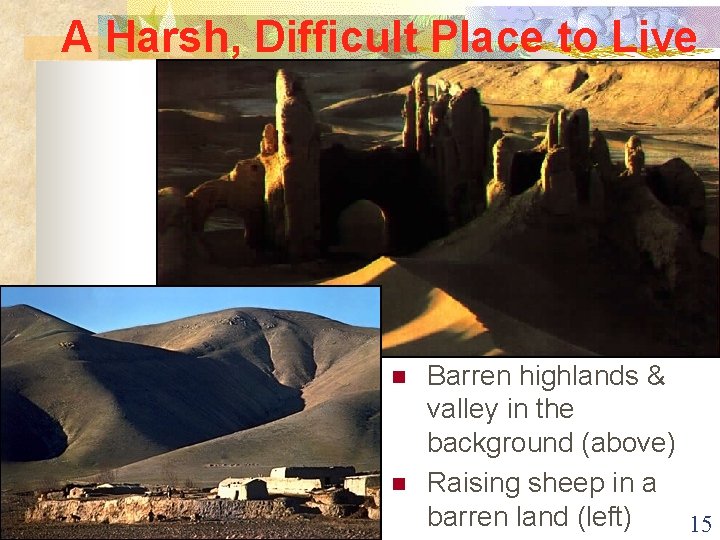
A Harsh, Difficult Place to Live n n Barren highlands & valley in the background (above) Raising sheep in a barren land (left) 15
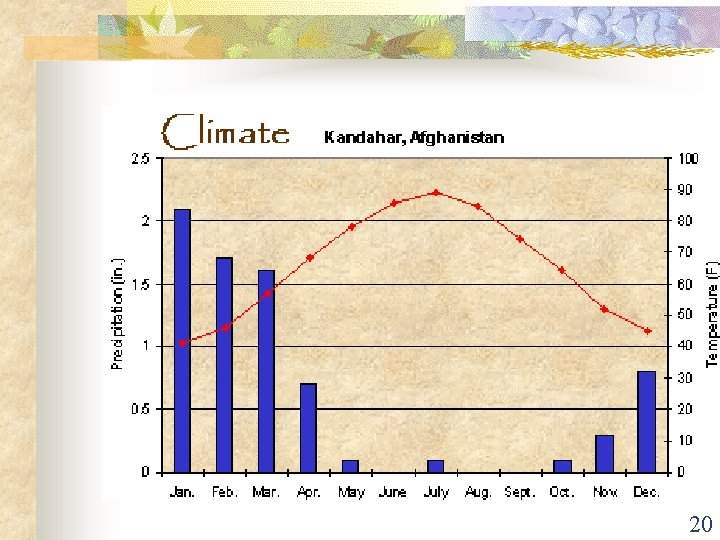
Climate n Afghanistan has a harsh continental climate. Harsh winters are accentuated by high elevation. Summers are warm, except at the highest elevations. Much of the country is arid or semi- arid. Precipitation is light, falling mostly in the spring and winter. Almost no precipitation falls from June to October. 16
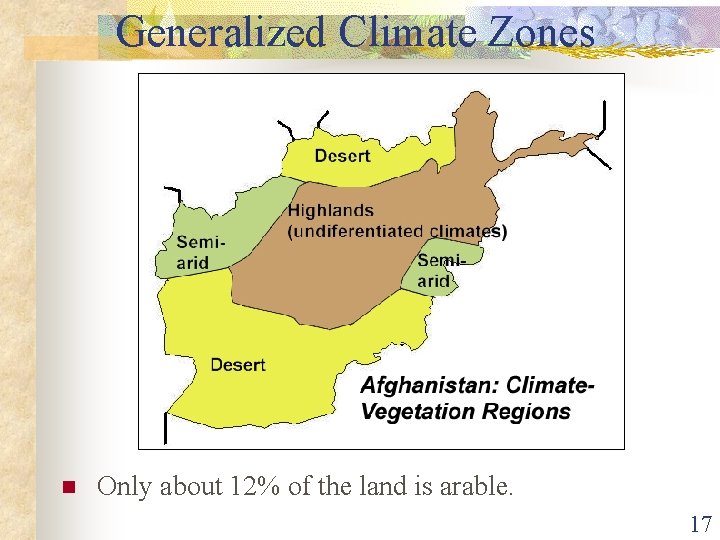
Generalized Climate Zones n Only about 12% of the land is arable. 17
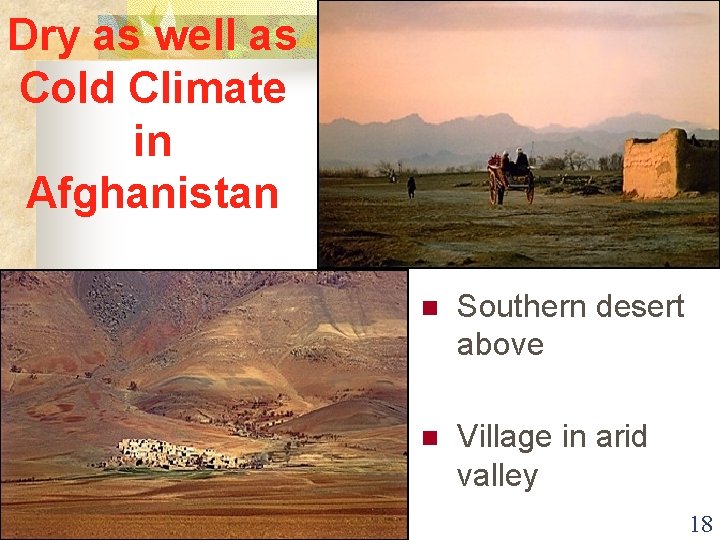
Dry as well as Cold Climate in Afghanistan n Southern desert above n Village in arid valley 18
More Climate n The climate graphs show the pattern of temperature and precipitation. January lows in Kabul can reach in the teens, while July highs can reach the low 90’s. In the south average high temperatures can reach the low hundreds in the summer. Precipitation ranges from about 13 inches per year in Kabul, and about 6 inches in Kandahar in the south 19
20

Climate Graphs 21
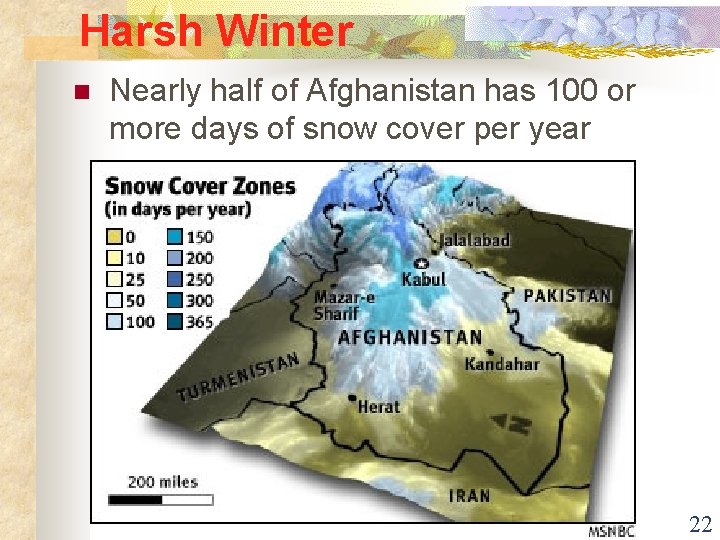
Harsh Winter n Nearly half of Afghanistan has 100 or more days of snow cover per year 22
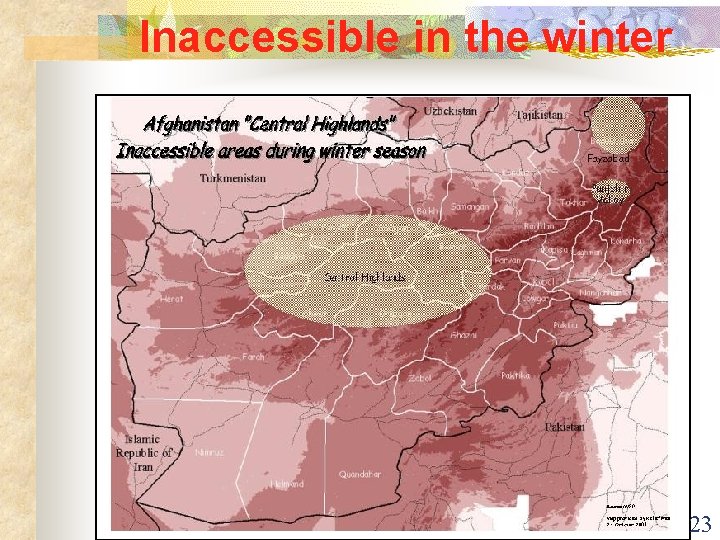
Inaccessible in the winter 23
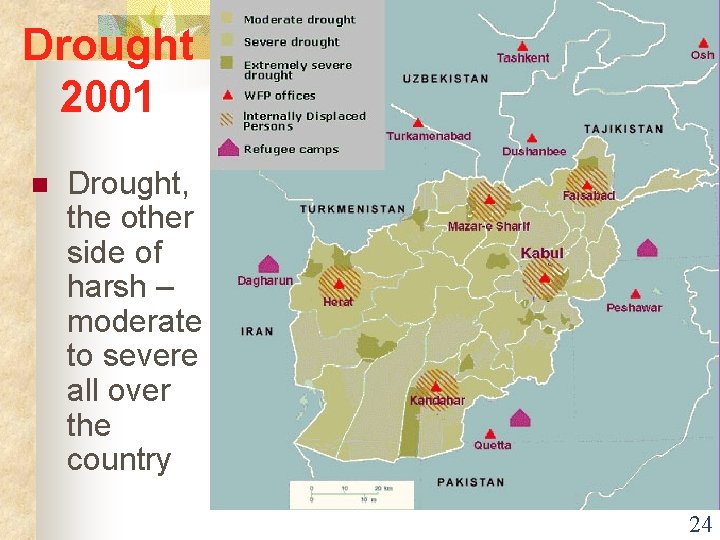
Drought 2001 n Drought, the other side of harsh – moderate to severe all over the country 24
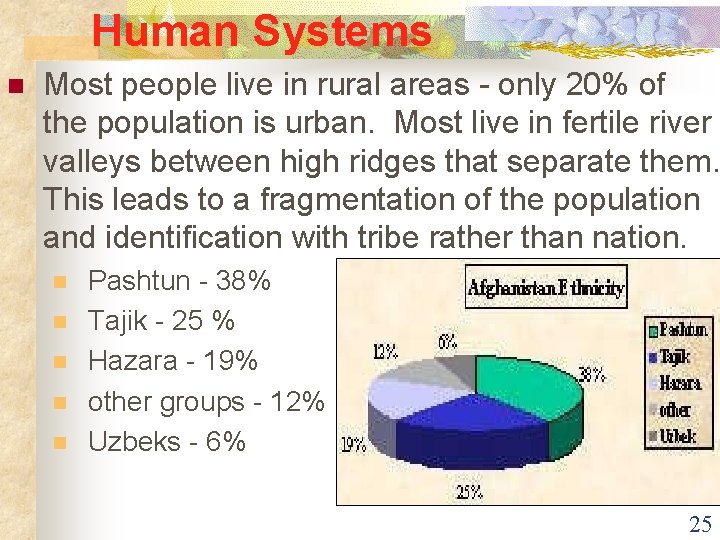
Human Systems n Most people live in rural areas - only 20% of the population is urban. Most live in fertile river valleys between high ridges that separate them. This leads to a fragmentation of the population and identification with tribe rather than nation. n n n Pashtun - 38% Tajik - 25 % Hazara - 19% other groups - 12% Uzbeks - 6% 25

Simplified Ethnic Map 26
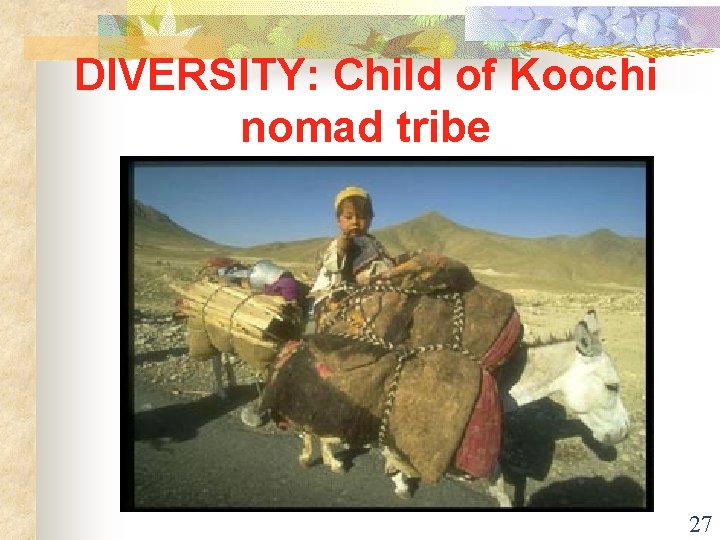
DIVERSITY: Child of Koochi nomad tribe 27
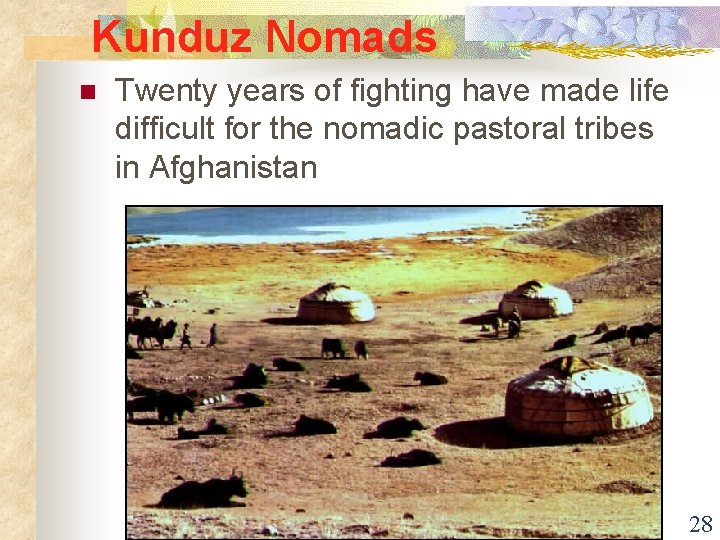
Kunduz Nomads n Twenty years of fighting have made life difficult for the nomadic pastoral tribes in Afghanistan 28
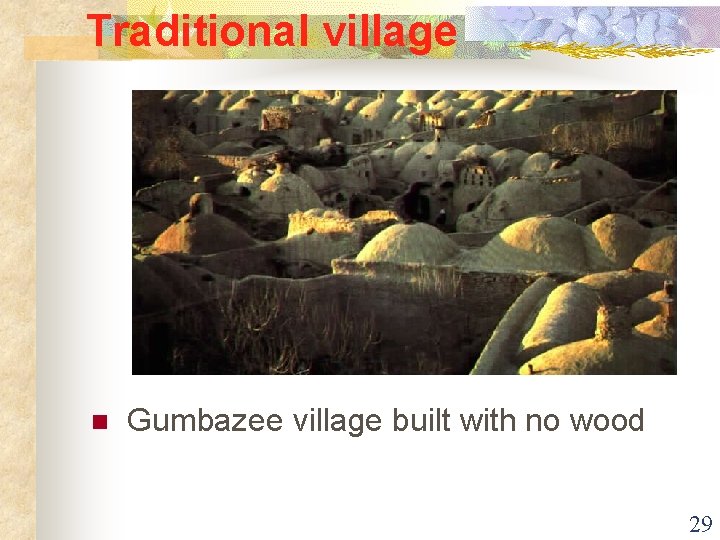
Traditional village n Gumbazee village built with no wood 29
Languages and Religion n n The major languages spoken in the country are: n Dari (Afghan Persian) - 50% n Pashtun - 35% n Turkic languages - 11% Islam is the predominant religion n 84 % are Sunni Muslim n 15 % are Shi’a Muslim 30
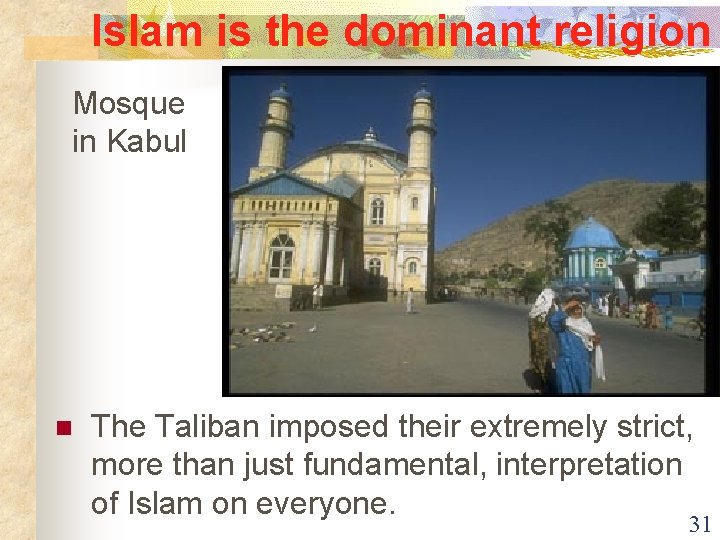
Islam is the dominant religion Mosque in Kabul n The Taliban imposed their extremely strict, more than just fundamental, interpretation of Islam on everyone. 31
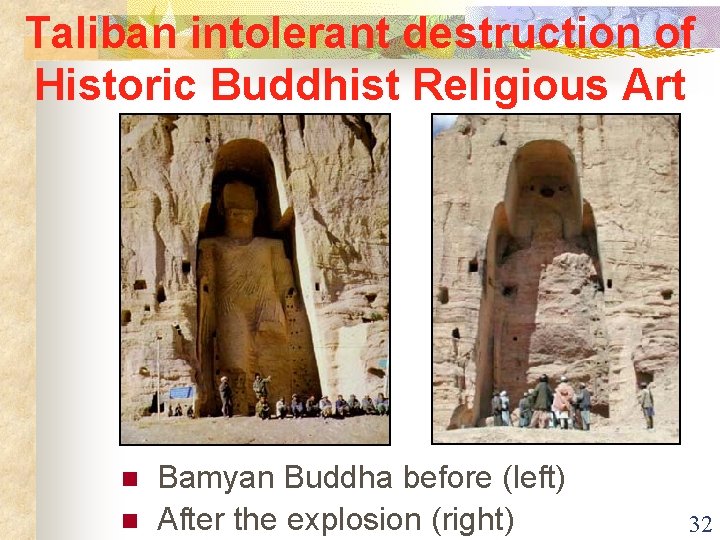
Taliban intolerant destruction of Historic Buddhist Religious Art n n Bamyan Buddha before (left) After the explosion (right) 32
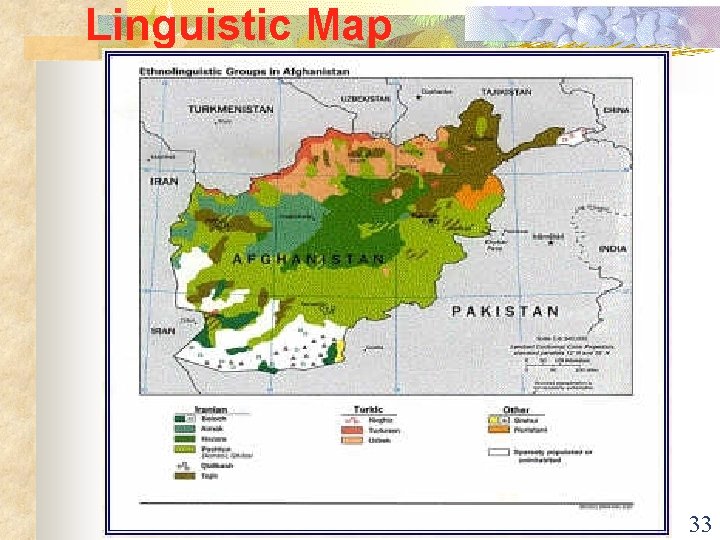
Linguistic Map 33
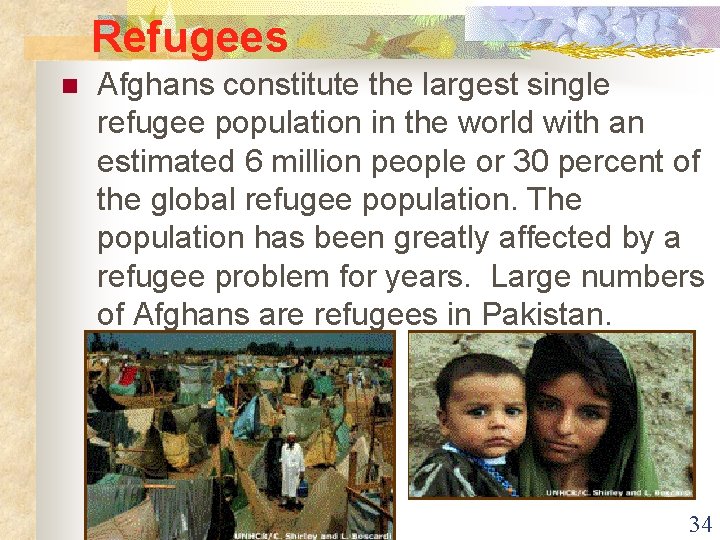
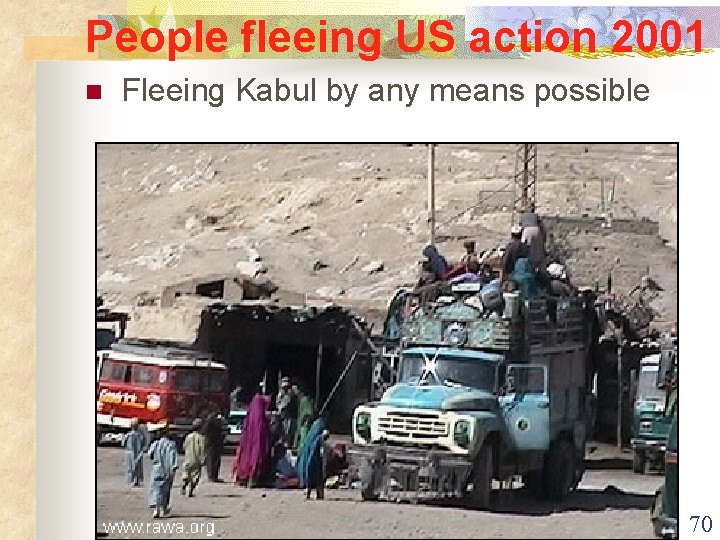
Refugees n Afghans constitute the largest single refugee population in the world with an estimated 6 million people or 30 percent of the global refugee population. The population has been greatly affected by a refugee problem for years. Large numbers of Afghans are refugees in Pakistan. 34
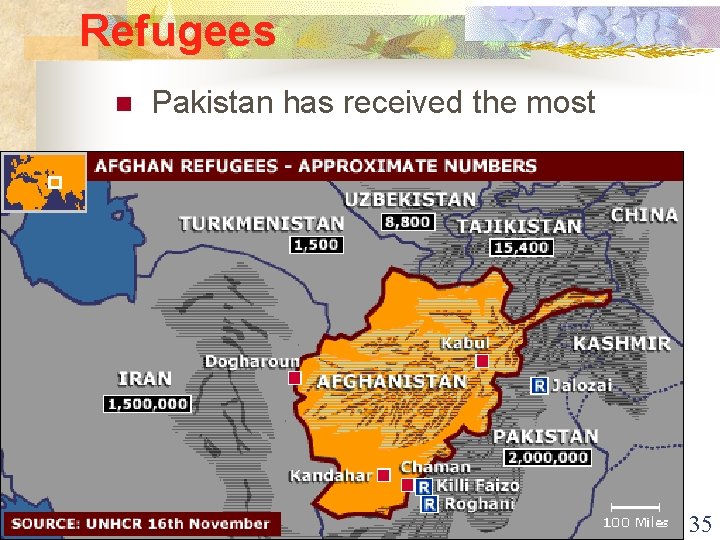
Refugees n Pakistan has received the most 35
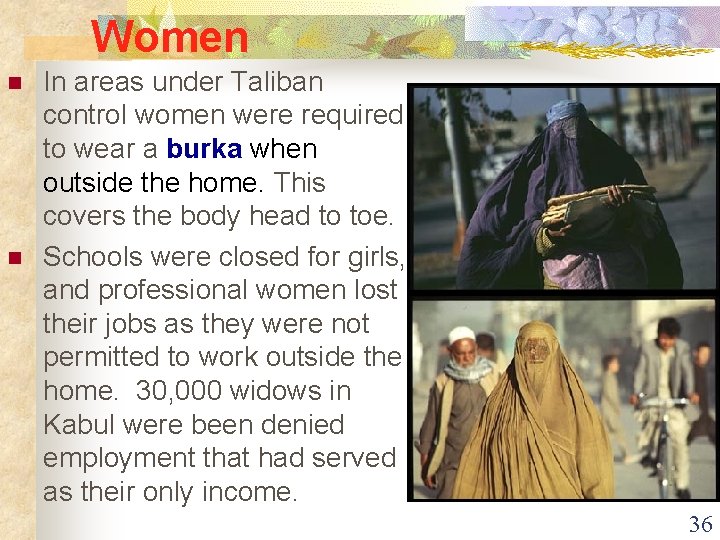
Women n n In areas under Taliban control women were required to wear a burka when outside the home. This covers the body head to toe. Schools were closed for girls, and professional women lost their jobs as they were not permitted to work outside the home. 30, 000 widows in Kabul were been denied employment that had served as their only income. 36
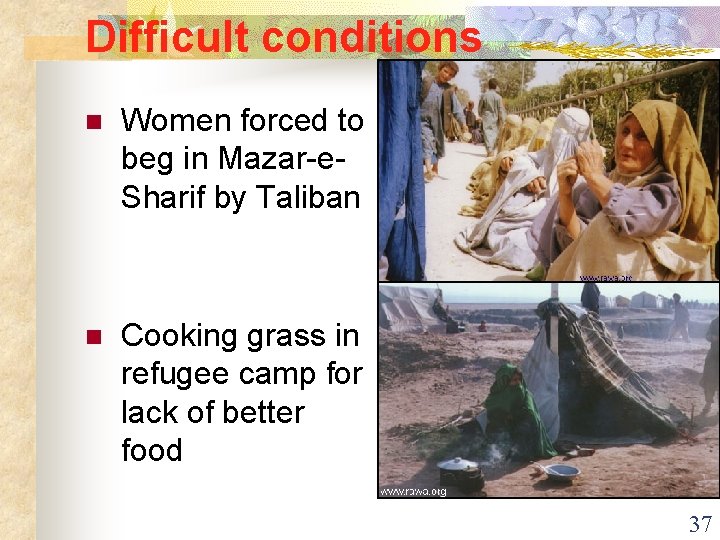
Difficult conditions n Women forced to beg in Mazar-e. Sharif by Taliban n Cooking grass in refugee camp for lack of better food 37
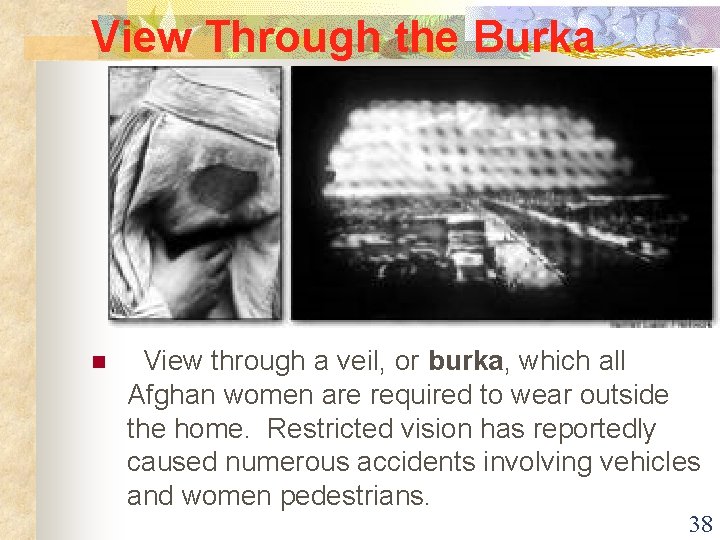
View Through the Burka n View through a veil, or burka, which all Afghan women are required to wear outside the home. Restricted vision has reportedly caused numerous accidents involving vehicles and women pedestrians. 38
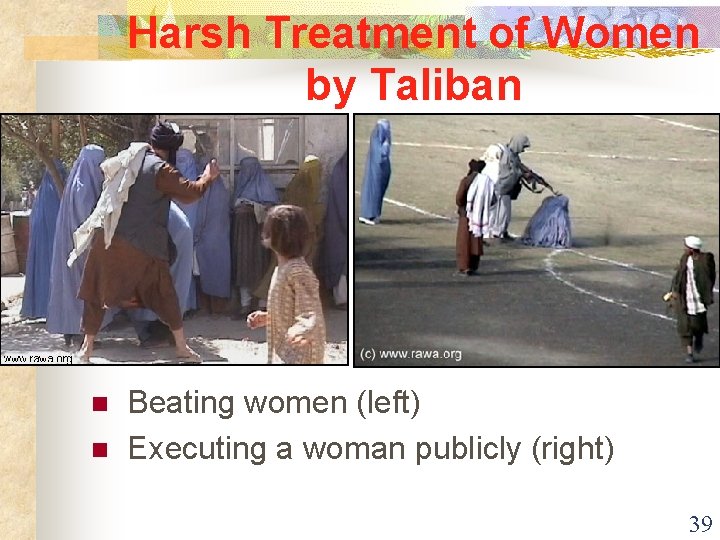
Harsh Treatment of Women by Taliban n n Beating women (left) Executing a woman publicly (right) 39
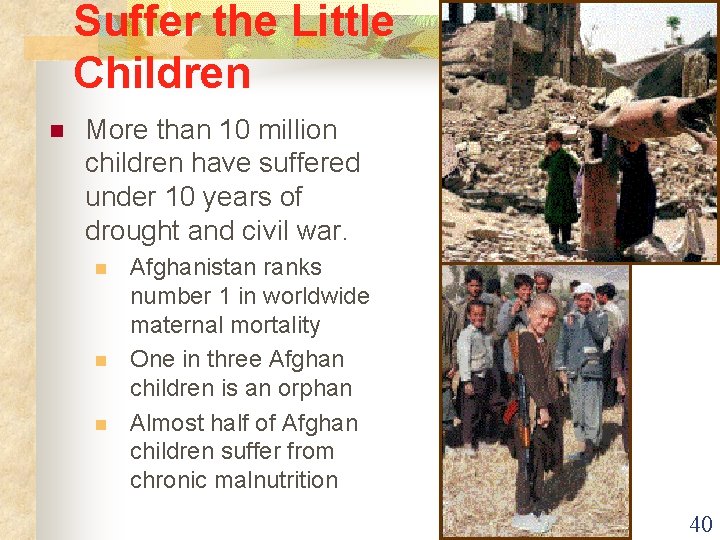
Suffer the Little Children n More than 10 million children have suffered under 10 years of drought and civil war. n n n Afghanistan ranks number 1 in worldwide maternal mortality One in three Afghan children is an orphan Almost half of Afghan children suffer from chronic malnutrition 40
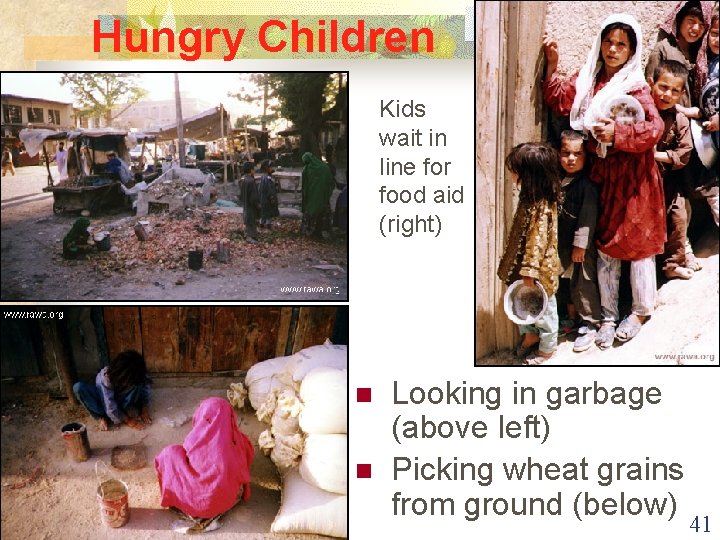
Hungry Children Kids wait in line for food aid (right) n n Looking in garbage (above left) Picking wheat grains from ground (below) 41
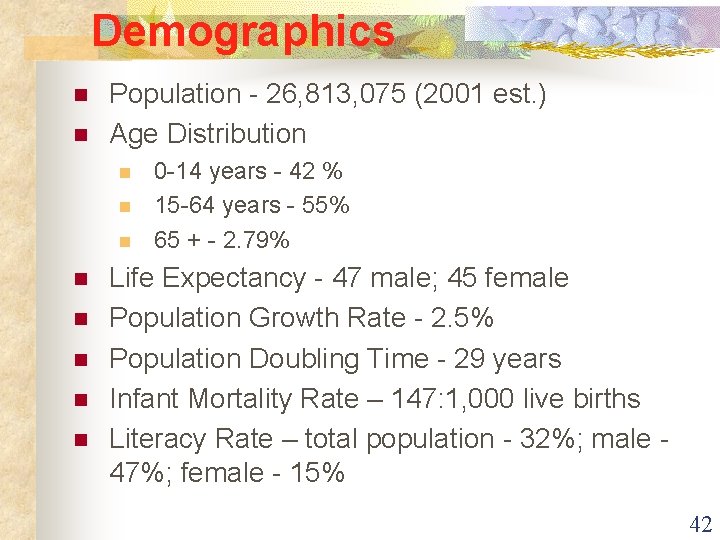
Demographics n n Population - 26, 813, 075 (2001 est. ) Age Distribution n n n n 0 -14 years - 42 % 15 -64 years - 55% 65 + - 2. 79% Life Expectancy - 47 male; 45 female Population Growth Rate - 2. 5% Population Doubling Time - 29 years Infant Mortality Rate – 147: 1, 000 live births Literacy Rate – total population - 32%; male 47%; female - 15% 42
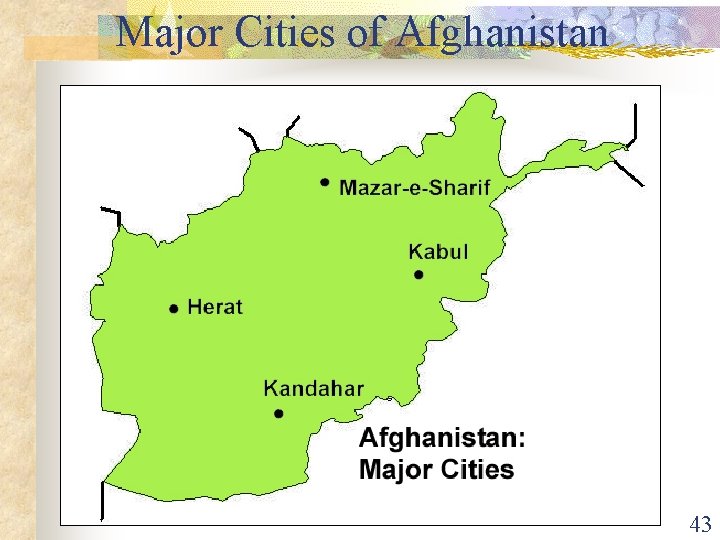
Major Cities of Afghanistan 43
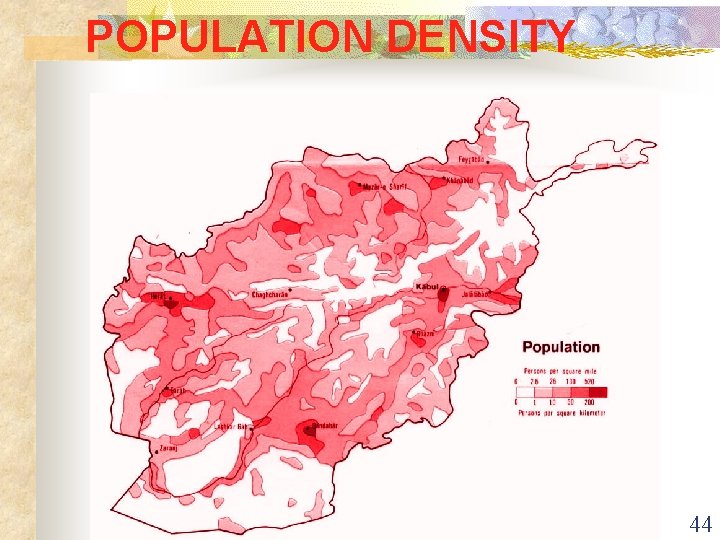
POPULATION DENSITY 44
Human Environment Interaction n n FARMING: Most of the people of Afghanistan are subsistence farmers. Much of the land is too dry or too mountainous for farming. Only 12% of the land is arable. Crops include wheat, nuts and fruits; grown mainly in river valleys. Sheep, goats, chickens, and cattle are livestock raised. MINERALS AND RESOURCES: Afghanistan is rich in minerals, but many are not developed. Natural gas, copper, and gold, are the main resources 45
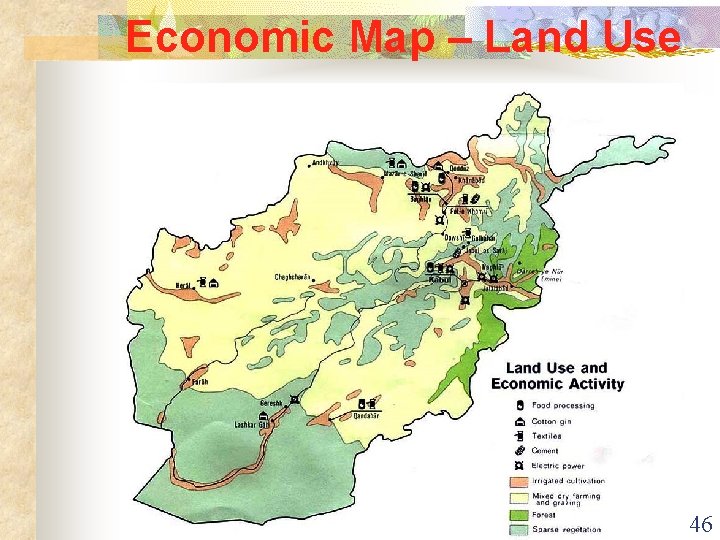
Economic Map – Land Use 46
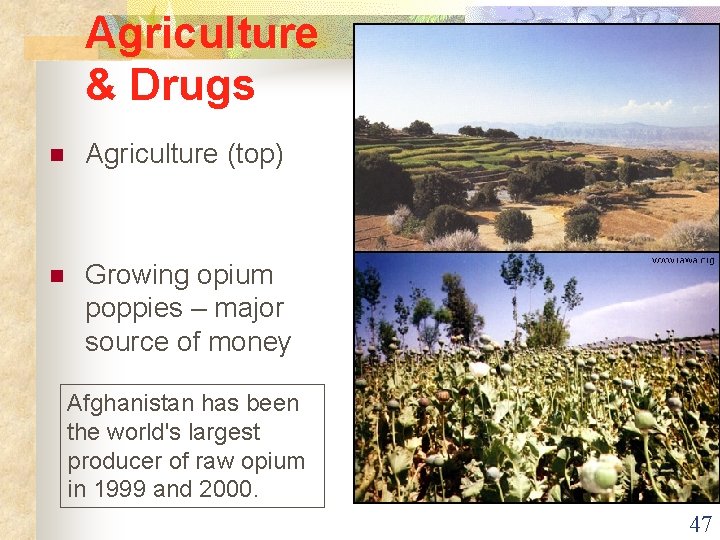
Agriculture & Drugs n Agriculture (top) n Growing opium poppies – major source of money Afghanistan has been the world's largest producer of raw opium in 1999 and 2000. 47
Human Environment Interaction n n INDUSTRY: Industry is not well developed. Textiles, and craft industries such as metalwork, jewelry, leather goods, and rugs are the major industries. ECONOMIC FACTS n Gross National Product - $18. 1 billion per capita $800 n Trade- Imports - $150 million - Exports $80 million 48
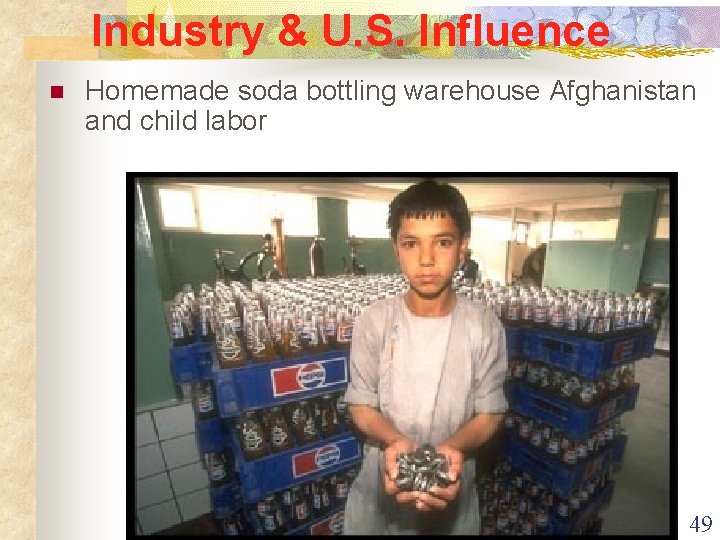
Industry & U. S. Influence n Homemade soda bottling warehouse Afghanistan and child labor 49
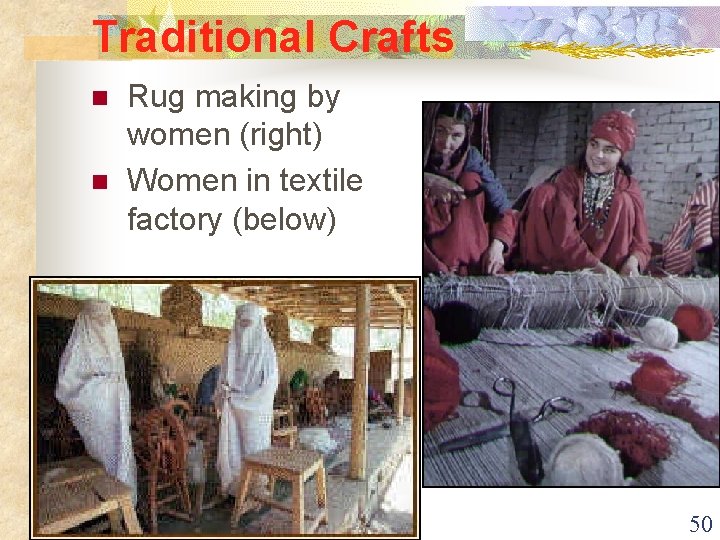
Traditional Crafts n n Rug making by women (right) Women in textile factory (below) 50
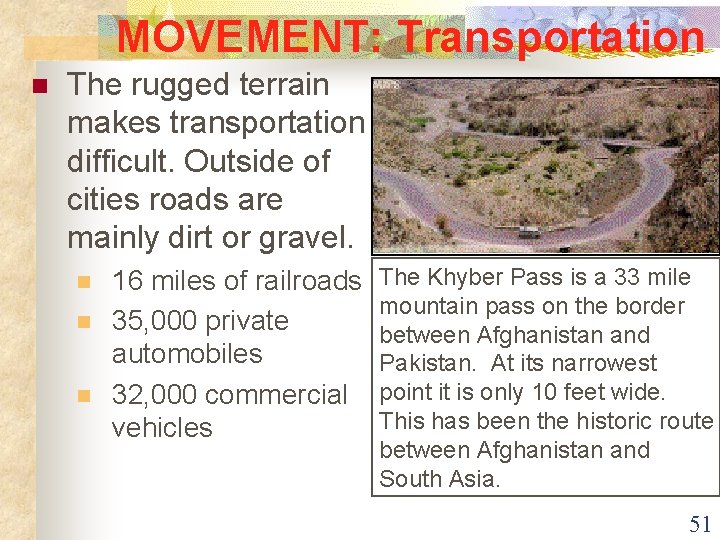
MOVEMENT: Transportation n The rugged terrain makes transportation difficult. Outside of cities roads are mainly dirt or gravel. n n n 16 miles of railroads 35, 000 private automobiles 32, 000 commercial vehicles The Khyber Pass is a 33 mile mountain pass on the border between Afghanistan and Pakistan. At its narrowest point it is only 10 feet wide. This has been the historic route between Afghanistan and South Asia. 51
MOVEMENT: Communication n The mountains have been barriers to both transportation and communication. Government controls television and radio broadcasts. Communication systems are rudimentary n 10 television sets per 1, 000 population n U. S. n 74 radios per 1, 000 population n U. S. n - 776 television sets per 1, 000 pop. - 2, 122 radios per 1, 000 pop. Daily newspaper circulation - 11 per 1, 000 n U. S. - 238 per 1, 000 pop. 52
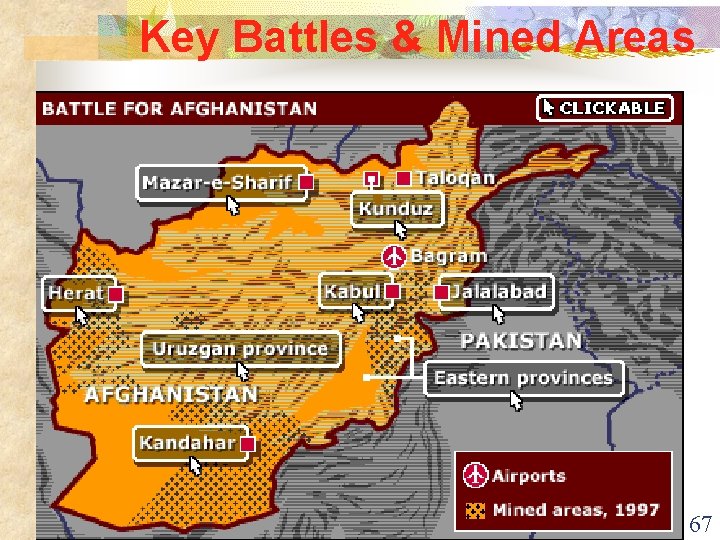
Brief Recent History n n After the Soviet withdrawal, warring factions in Afghanistan fight to control the country – the Taliban gain the advantage but resistance continues to their rule continues. The Northern Alliance (largely non-Pashtun) controls parts of Afghanistan and opposes the Taliban After Sept. 11, 2001, the Northern Alliance and the U. S. military defeat the Taliban in the Antiterrorism War 2002 – Shaky new government established 53
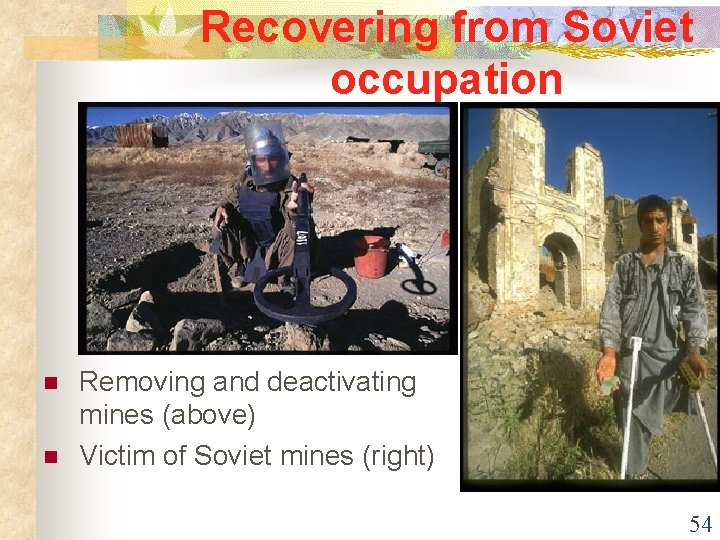
Recovering from Soviet occupation n n Removing and deactivating mines (above) Victim of Soviet mines (right) 54
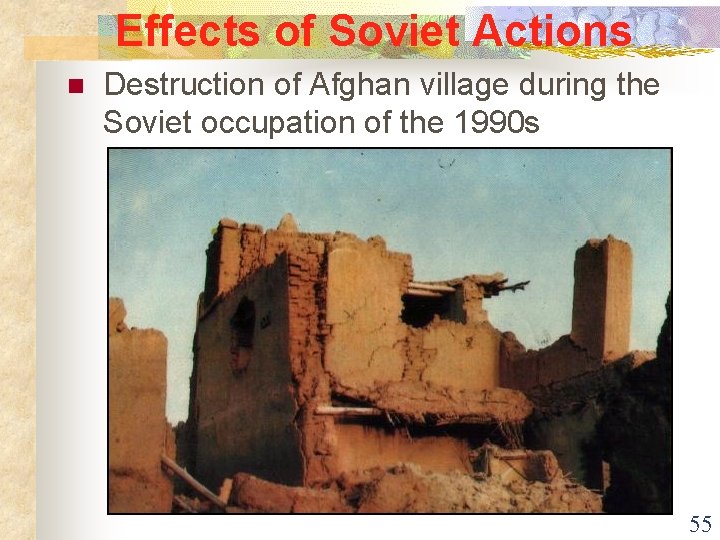
Effects of Soviet Actions n Destruction of Afghan village during the Soviet occupation of the 1990 s 55
Taliban brought order and fundamental Islam at a price! n n The Taliban imposed their harsh brand of Islamic law in the 90 percent of Afghanistan under their control. The Taliban say their version of Islam is a pure one that follows a literal interpretation of the Muslim holy book, The Koran. Under Taliban laws, murderers were publicly executed by the relatives of their victims. Adulterers are stoned to death and the limbs of thieves were amputated. Lesser crimes were punished by public beatings. 56
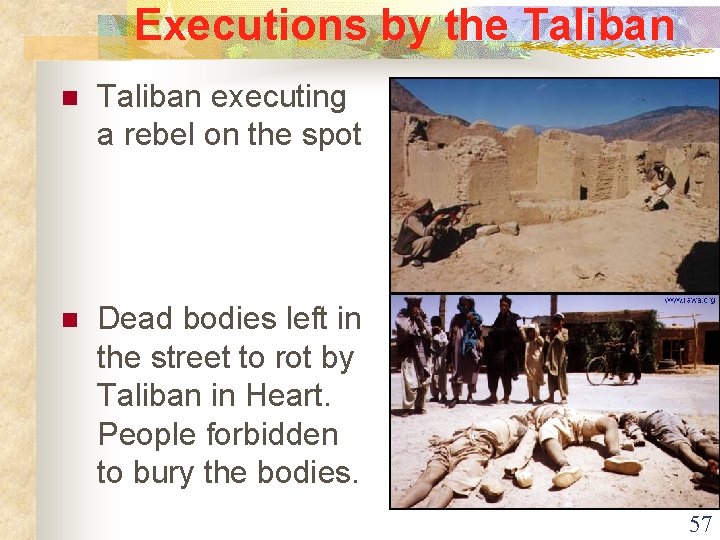
Executions by the Taliban n Taliban executing a rebel on the spot n Dead bodies left in the street to rot by Taliban in Heart. People forbidden to bury the bodies. 57
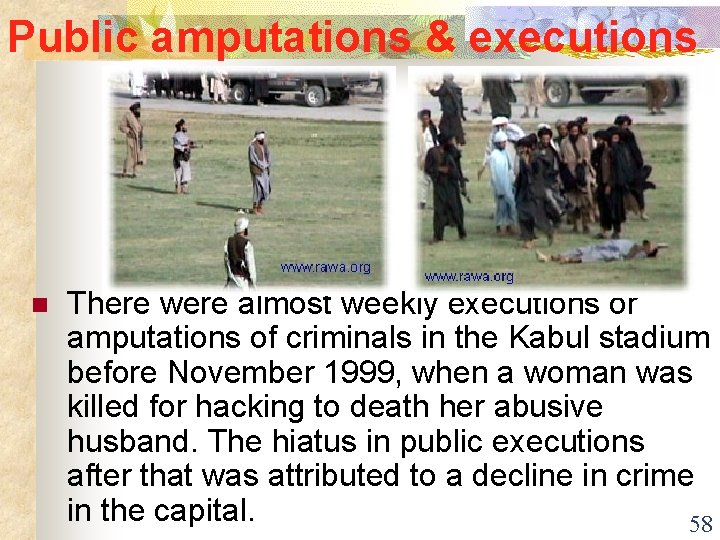
Public amputations & executions n There were almost weekly executions or amputations of criminals in the Kabul stadium before November 1999, when a woman was killed for hacking to death her abusive husband. The hiatus in public executions after that was attributed to a decline in crime in the capital. 58
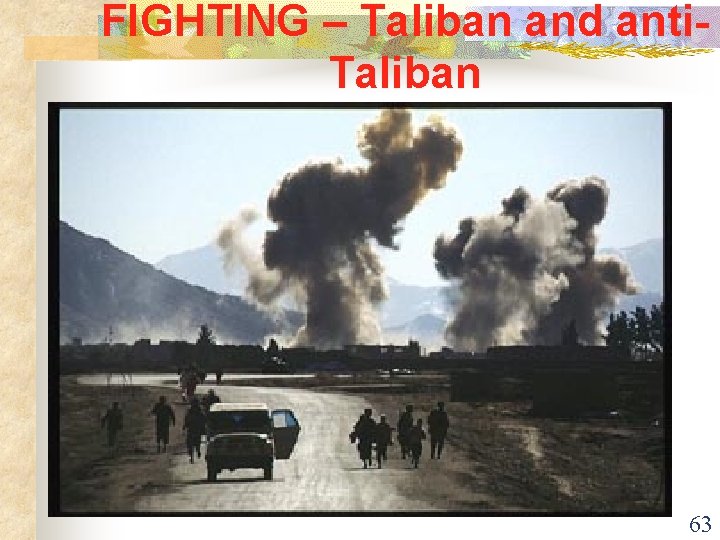
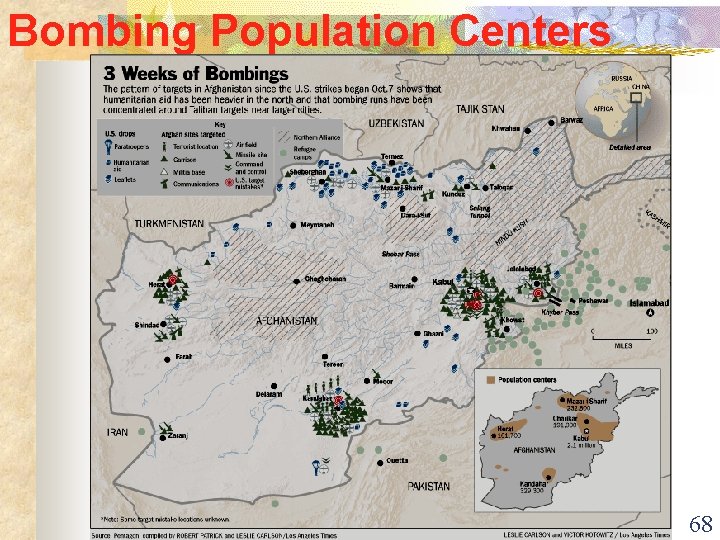
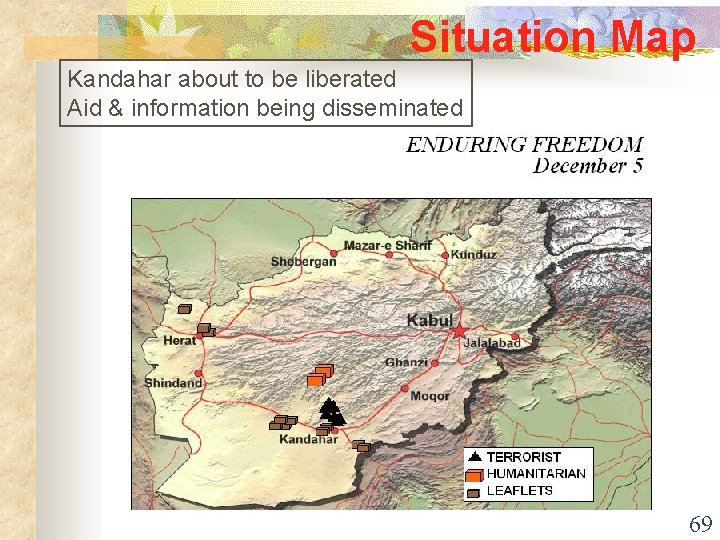
Anti-Taliban war against terrorism n n n Original objective to capture Osama Bin Laden Taliban government seemed to be harboring Osama Bin Laden and his terrorist associates U. S. gave the Taliban opportunities to turn over Bin Laden or cooperate in capturing him When the Taliban did not comply, the U. S. objective expanded to also removing the Taliban from power in Afghanistan. U. S. assisted the Northern Alliance rebels (who sometimes fight among themselves) 59
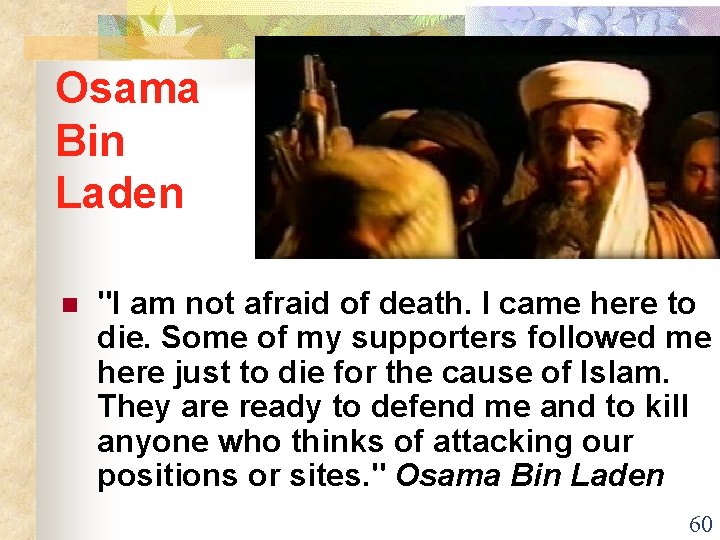
Osama Bin Laden n "I am not afraid of death. I came here to die. Some of my supporters followed me here just to die for the cause of Islam. They are ready to defend me and to kill anyone who thinks of attacking our positions or sites. " Osama Bin Laden 60
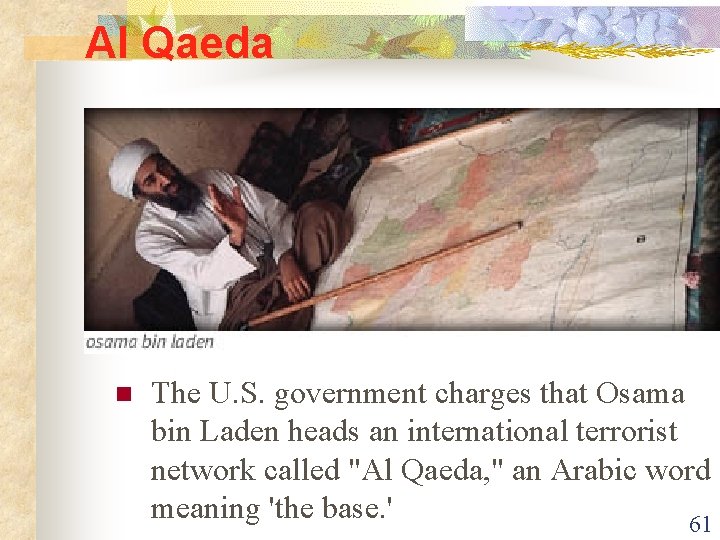
Al Qaeda n The U. S. government charges that Osama bin Laden heads an international terrorist network called "Al Qaeda, " an Arabic word meaning 'the base. ' 61
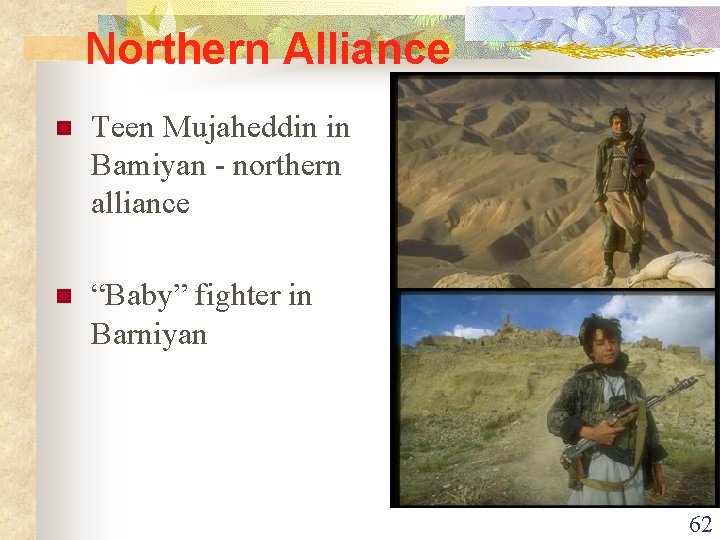
Northern Alliance n Teen Mujaheddin in Bamiyan - northern alliance n “Baby” fighter in Barniyan 62
FIGHTING – Taliban and anti. Taliban 63
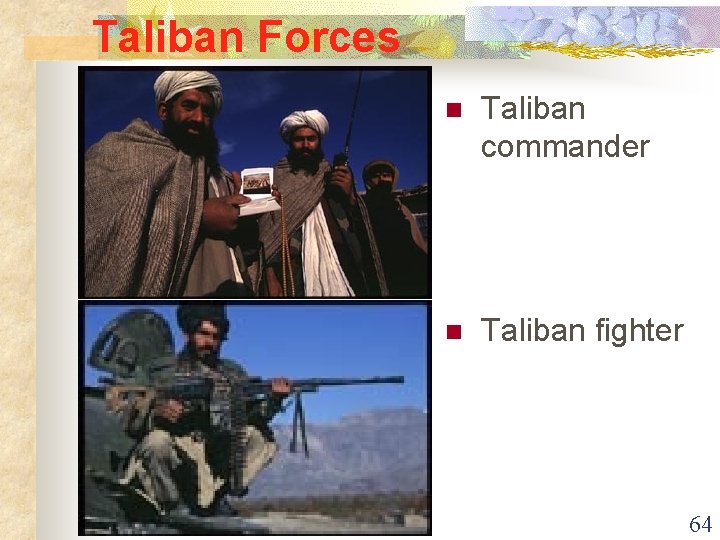
Taliban Forces n Taliban commander n Taliban fighter 64
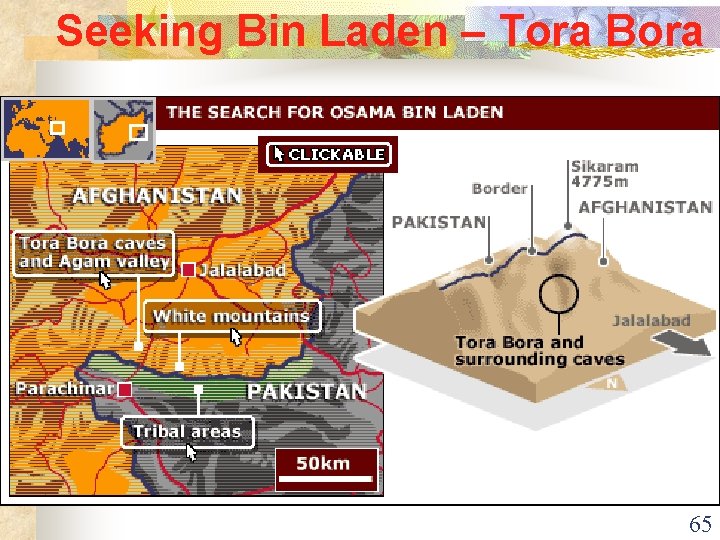
Seeking Bin Laden – Tora Bora 65
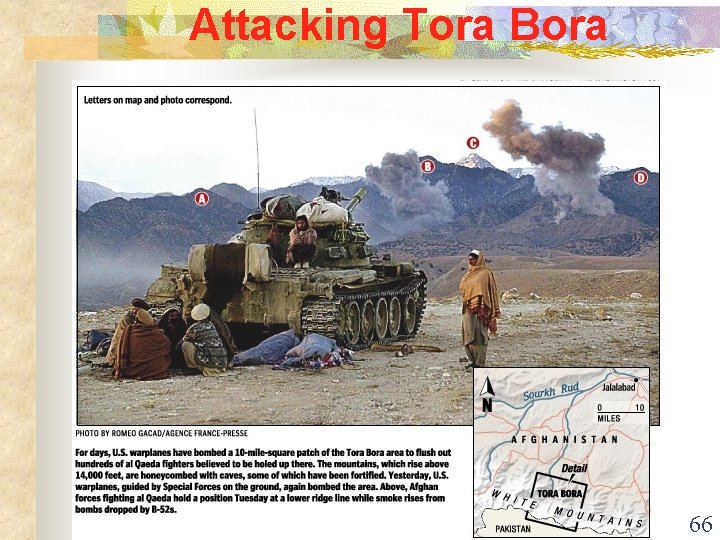
Attacking Tora Bora 66
Key Battles & Mined Areas 67
Bombing Population Centers 68
Situation Map Kandahar about to be liberated Aid & information being disseminated 69
People fleeing US action 2001 n Fleeing Kabul by any means possible 70
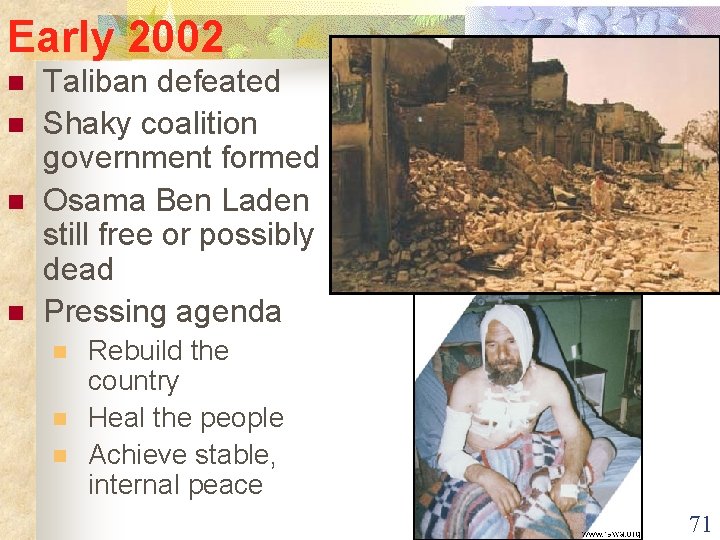
Early 2002 n n Taliban defeated Shaky coalition government formed Osama Ben Laden still free or possibly dead Pressing agenda n n n Rebuild the country Heal the people Achieve stable, internal peace 71
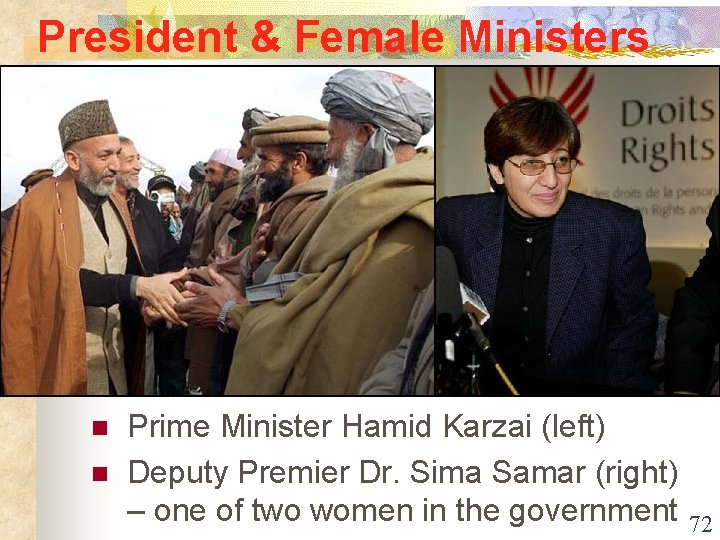
President & Female Ministers n n Prime Minister Hamid Karzai (left) Deputy Premier Dr. Sima Samar (right) – one of two women in the government 72
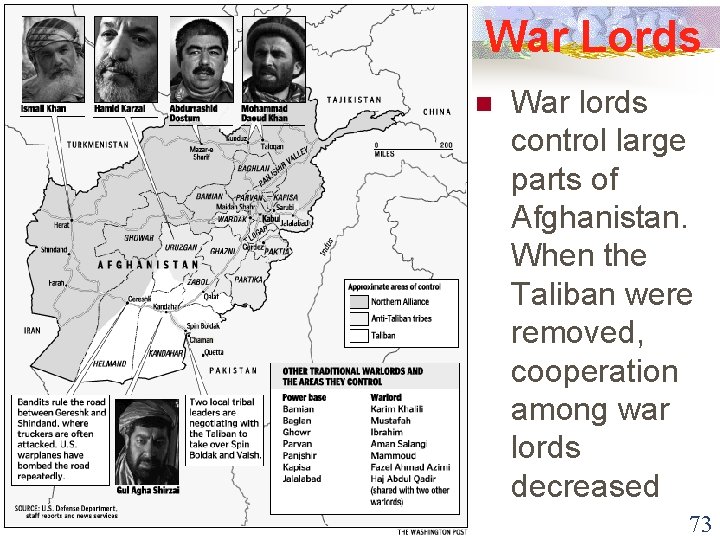
War Lords n War lords control large parts of Afghanistan. When the Taliban were removed, cooperation among war lords decreased 73
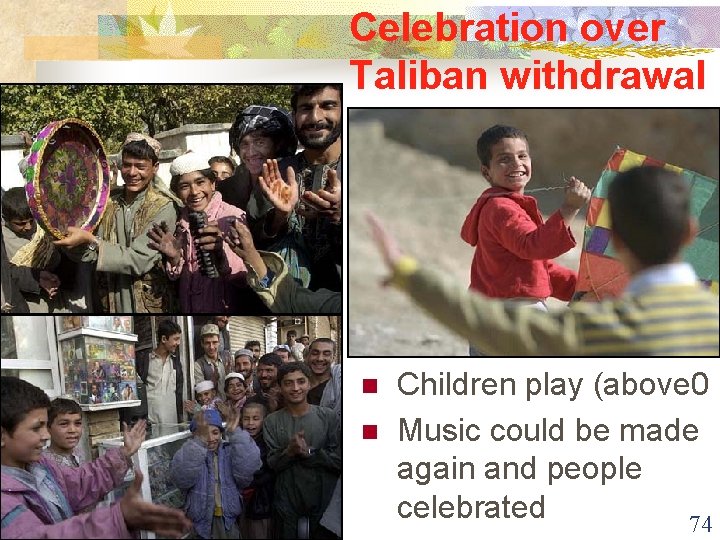
Celebration over Taliban withdrawal n n Children play (above 0 Music could be made again and people celebrated 74
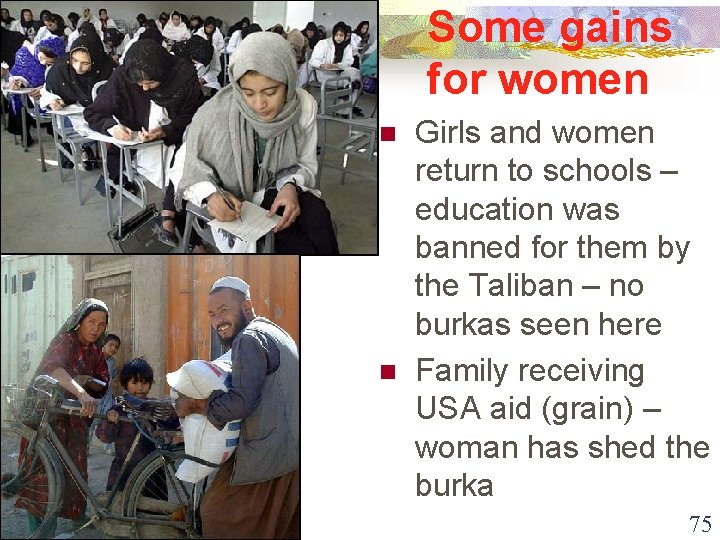
Some gains for women n n Girls and women return to schools – education was banned for them by the Taliban – no burkas seen here Family receiving USA aid (grain) – woman has shed the burka 75
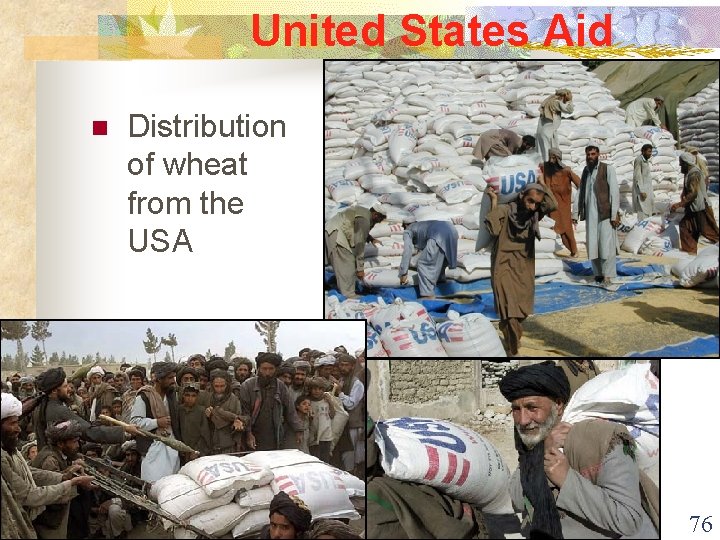
United States Aid n Distribution of wheat from the USA 76
Help from private sources has been great; however, religiousbased aid organizations must not proselytize. 77
- Slides: 77