
Affective Factors Chapter 6 What is the Affective



- Slides: 18
Affective Factors Chapter 6
What is the Affective Domain? Affect – emotions Affective Domain – emotional side of human behavior In psycholinguistics, the affective domain is one of the most important aspects of language development In groups, consider these questions: Why is the affective domain important? How do emotions affect learning?
Bloom’s Conception of the Affective Self-Identity Organized Valuing Respond Receiving
Self-Esteem and Self-Efficacy Self-Esteem – how you evaluate your own competence (positive, negative) “…no successful cognitive or affective activity can be carried out without” good self-esteem Global Self-Esteem – overall idea of yourself Situational Self-Esteem – how you view yourself in a particular situation Task Self-Esteem – how you view yourself when performing specific tasks Self-Efficacy – perception that you can achieve something If a student has a lot of self-efficacy, then they will be willing to complete a task and do it well How does self-esteem affect language learning?
Other Factors… Inhibition – “walls” to protect self-esteem Someone criticizes you, and you think, “Well, they are just stupid, so their opinion doesn’t matter. ” Ego – the amount of positive or negative thoughts you have about yourself Language ego Ego boundaries – thick or thin Risk Taking – how much risk is a student willing to take? Empathy – understanding someone else’s situation How can we break through the walls of inhibition for our students?
Anxiety – nervousness Anxiety Attack Trait Anxiety – linked to your self-esteem State Anxiety – linked to a situation Debilitative – when anxiety hurts you Facilitative – when anxiety helps you Kinds of Anxiety: 1. Communication and thought disruption 2. Fear of peers 3. Test anxiety
Extroversion and Introversion Extroverted Person Receives happiness and stress relief from other people Introversion Introverted Person Receives happiness and stress relief when away from other people Which one are you? What are the advantages/disadvantages for students wanting to learn a different language?
Activity – Role-Play Every student is different and every student has their own affective factors that they bring to language learning. After hearing about the role-play, make some notes on how you can help this person to better learn language: Identify the problem How does that affect language learning? How can you help to fix it?
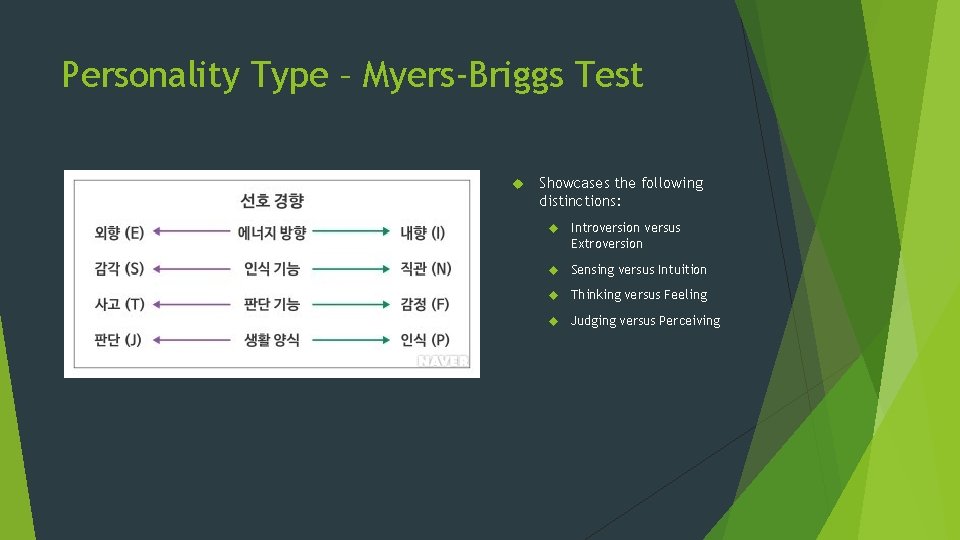
Personality Type – Myers-Briggs Test Showcases the following distinctions: Introversion versus Extroversion Sensing versus Intuition Thinking versus Feeling Judging versus Perceiving
What is your personality type? https: //www. 16 personalities. com/ko Consider, what is your personality? Does your personality change overtime? By yourself, answer this question: What is the best way to teach someone with your personality type?
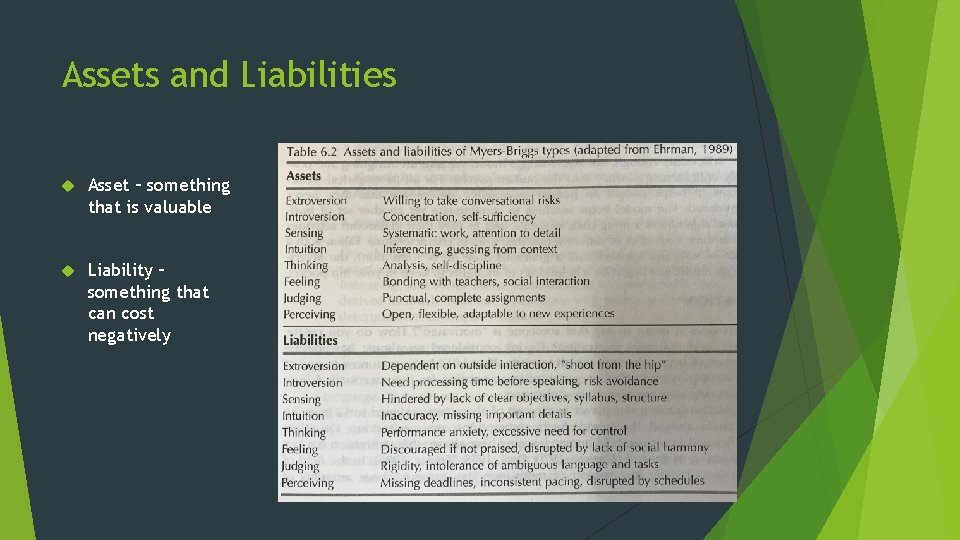
Assets and Liabilities Asset – something that is valuable Liability – something that can cost negatively
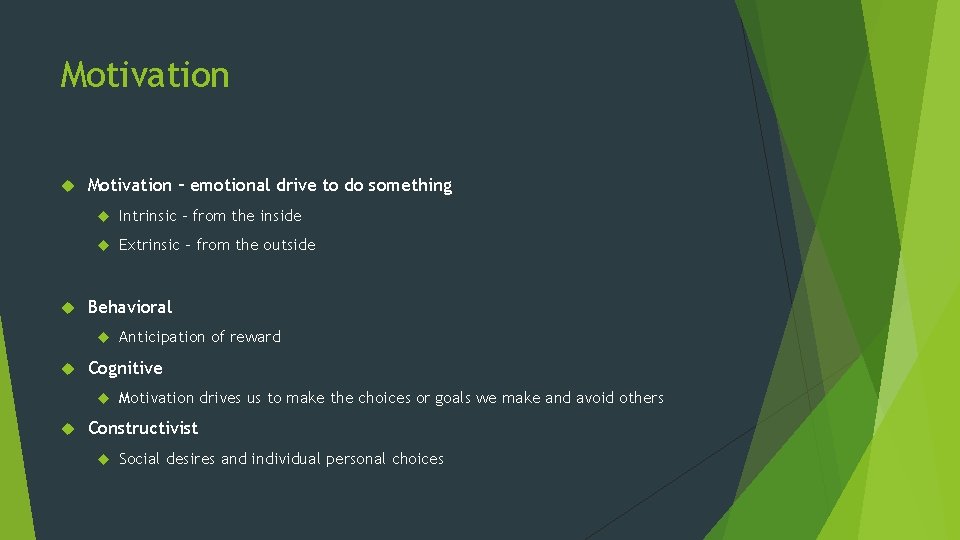
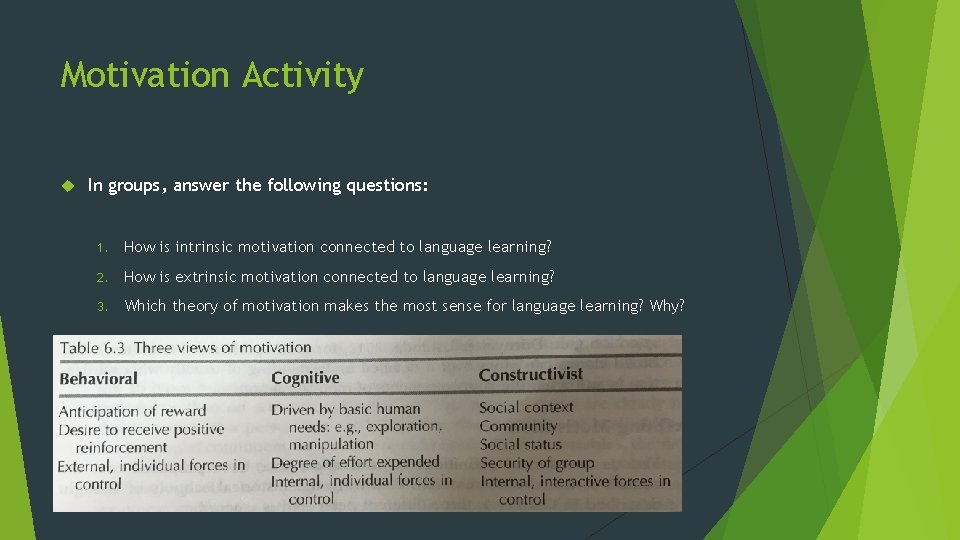
Motivation – emotional drive to do something Intrinsic – from the inside Extrinsic – from the outside Behavioral Cognitive Anticipation of reward Motivation drives us to make the choices or goals we make and avoid others Constructivist Social desires and individual personal choices
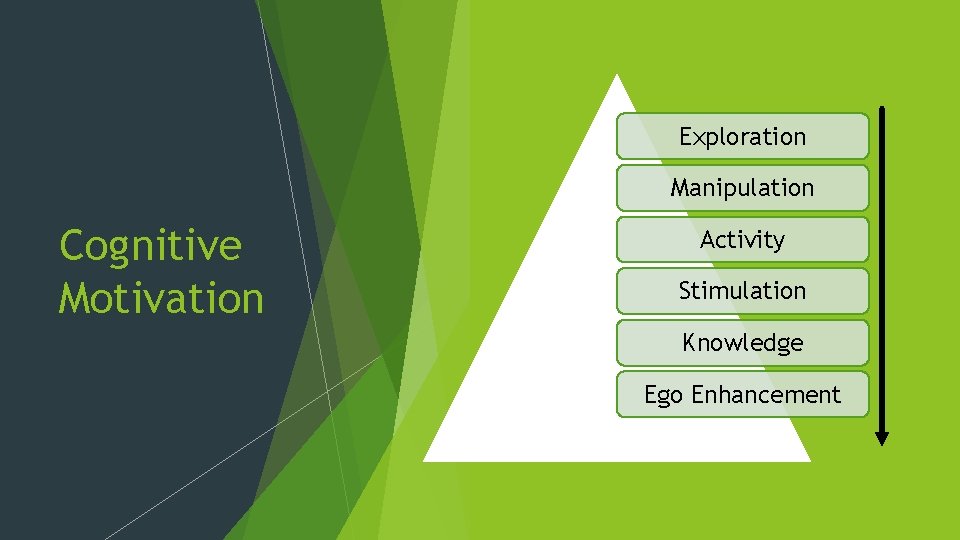
Exploration Manipulation Cognitive Motivation Activity Stimulation Knowledge Ego Enhancement
Motivation Activity In groups, answer the following questions: 1. How is intrinsic motivation connected to language learning? 2. How is extrinsic motivation connected to language learning? 3. Which theory of motivation makes the most sense for language learning? Why?
Two Perspectives of the Affective Domain Student Teache r
Student Is the student interested? Is it relevant to the student? Is it a reasonable challenge for the student? Does it encourage the student? Is the student motivated? Does the activity fit with their personality type?
Teacher Are you enthusiastic about the lesson? Do you feel that you know the students’ personalities? Are you giving them choices that they are happy to make? Are you reinforcing positive ideas and strategies? Does your lesson have purpose? Can you bring out the best of your students?
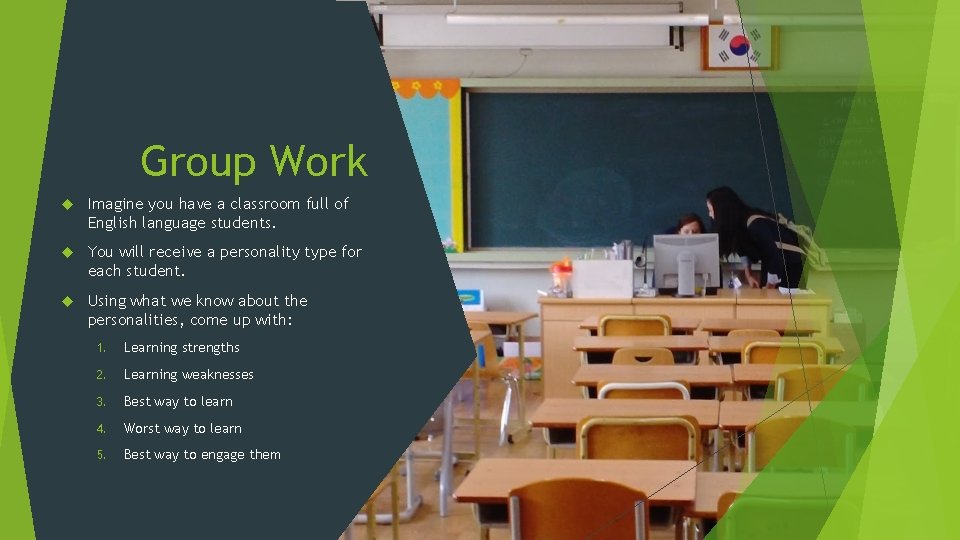
Group Work Imagine you have a classroom full of English language students. You will receive a personality type for each student. Using what we know about the personalities, come up with: 1. Learning strengths 2. Learning weaknesses 3. Best way to learn 4. Worst way to learn 5. Best way to engage them