
Affective Events Theory Chapter 2 Nancy Langton and
![Five Reasons Employees Commit Themselves • They are proud of [the company’s] aspirations, accomplishments,](https://slidetodoc.com/presentation_image_h2/3e768fc927b7e52e1dd9e9f98be237e1/image-27.jpg "Five Reasons Employees Commit Themselves • They are proud of [the company’s] aspirations, accomplishments,")
- Slides: 29
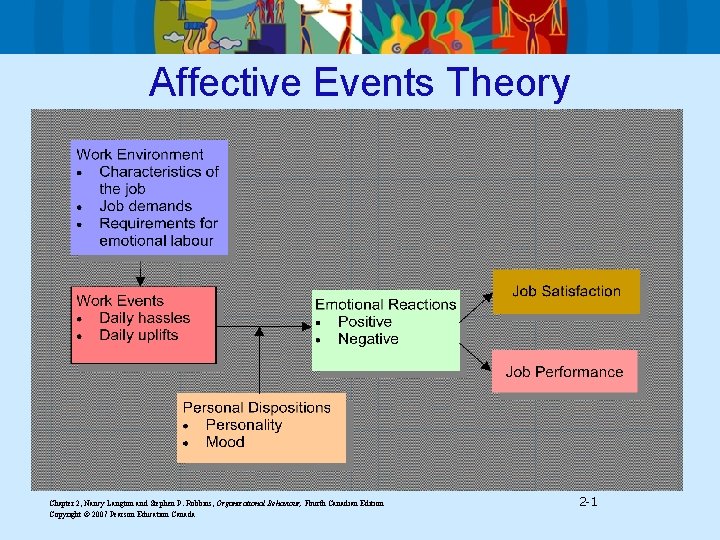
Affective Events Theory Chapter 2, Nancy Langton and Stephen P. Robbins, Organizational Behaviour, Fourth Canadian Edition Copyright © 2007 Pearson Education Canada 2 -1
Affective Events Theory • Employees react emotionally to things that happen to them at work; this emotional reaction influences their job performance and satisfaction. Chapter 2, Nancy Langton and Stephen P. Robbins, Organizational Behaviour, Fourth Canadian Edition Copyright © 2007 Pearson Education Canada 2 -2
Chapter 3 Values, Attitudes, and Diversity in the Workplace Chapter 2, Nancy Langton and Stephen P. Robbins, Organizational Behaviour, Fourth Canadian Edition Copyright © 2007 Pearson Education Canada 2 -3
Values • Values – Concepts or beliefs that guide how we make decisions about and evaluations of behaviours and events. • Two frameworks for understanding values – Milton Rokeach’s value survey – Kent Hodgson’s general moral principles Chapter 2, Nancy Langton and Stephen P. Robbins, Organizational Behaviour, Fourth Canadian Edition Copyright © 2007 Pearson Education Canada 2 -4
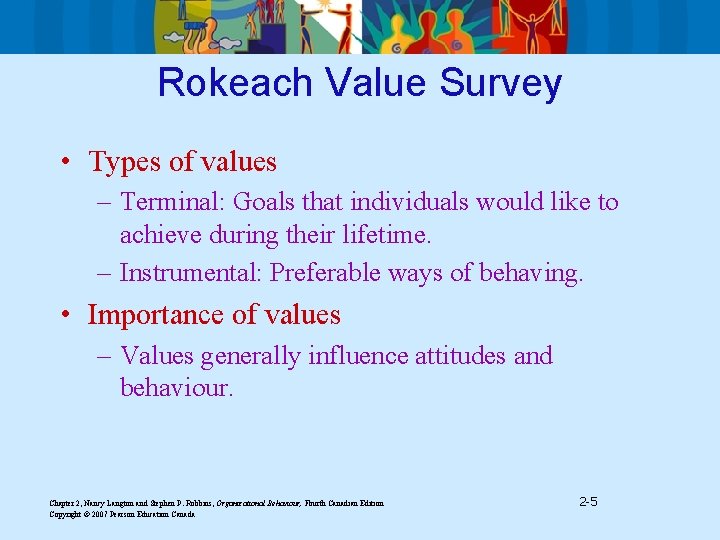
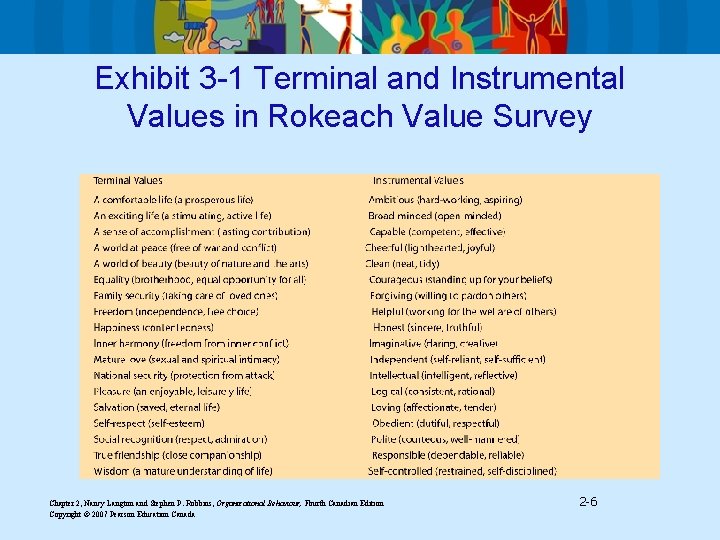
Rokeach Value Survey • Types of values – Terminal: Goals that individuals would like to achieve during their lifetime. – Instrumental: Preferable ways of behaving. • Importance of values – Values generally influence attitudes and behaviour. Chapter 2, Nancy Langton and Stephen P. Robbins, Organizational Behaviour, Fourth Canadian Edition Copyright © 2007 Pearson Education Canada 2 -5
Exhibit 3 -1 Terminal and Instrumental Values in Rokeach Value Survey Chapter 2, Nancy Langton and Stephen P. Robbins, Organizational Behaviour, Fourth Canadian Edition Copyright © 2007 Pearson Education Canada 2 -6
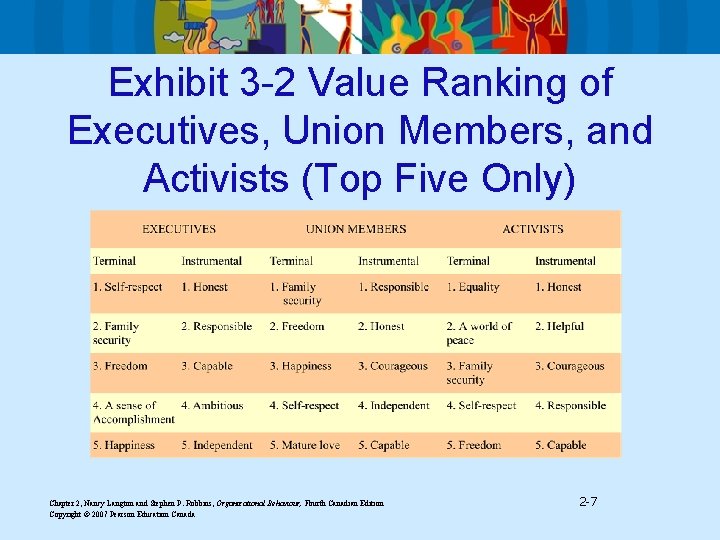
Exhibit 3 -2 Value Ranking of Executives, Union Members, and Activists (Top Five Only) Chapter 2, Nancy Langton and Stephen P. Robbins, Organizational Behaviour, Fourth Canadian Edition Copyright © 2007 Pearson Education Canada 2 -7
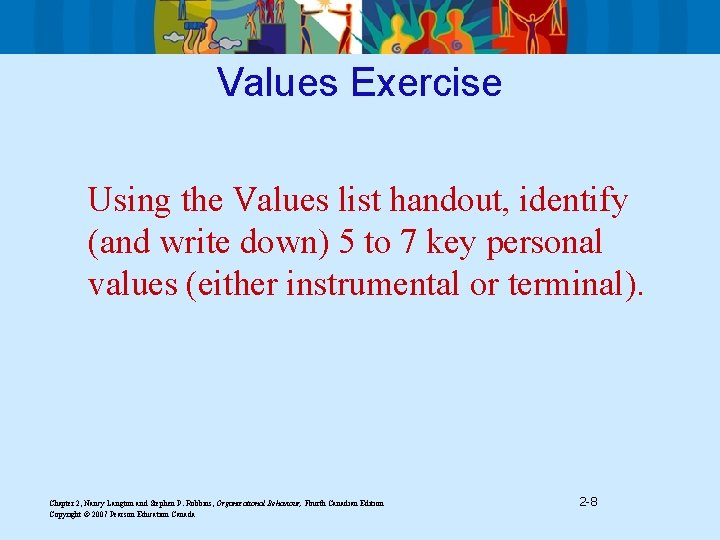
Values Exercise Using the Values list handout, identify (and write down) 5 to 7 key personal values (either instrumental or terminal). Chapter 2, Nancy Langton and Stephen P. Robbins, Organizational Behaviour, Fourth Canadian Edition Copyright © 2007 Pearson Education Canada 2 -8
Values Exercise cont. • Form small groups to discuss the following topics: 1. Identify the extent to which values overlap in your group. 2. Where might some of your values come from? (e. g. , parents, peer group, teachers, church). 3. What kind of workplace would be most suitable for the values that you hold most closely? Chapter 2, Nancy Langton and Stephen P. Robbins, Organizational Behaviour, Fourth Canadian Edition Copyright © 2007 Pearson Education Canada 2 -9
Values and the Levels of OB • We’ve been looking at values from the individual perspective • Group values – individual values get aggregated to some degree – group defines values for itself • Organization values – also can aggregate from individuals – significantly influenced by key leaders – sometimes explicitly stated espoused values not always consistent with values that are actively applied Chapter 2, Nancy Langton and Stephen P. Robbins, Organizational Behaviour, Fourth Canadian Edition Copyright © 2007 Pearson Education Canada 2 -10
Ethical Values • Ethics – The study of moral values or principles that guide our behaviour, and inform us whether actions are right or wrong. • Ethical values are related to moral judgments about right and wrong. Chapter 2, Nancy Langton and Stephen P. Robbins, Organizational Behaviour, Fourth Canadian Edition Copyright © 2007 Pearson Education Canada 2 -11
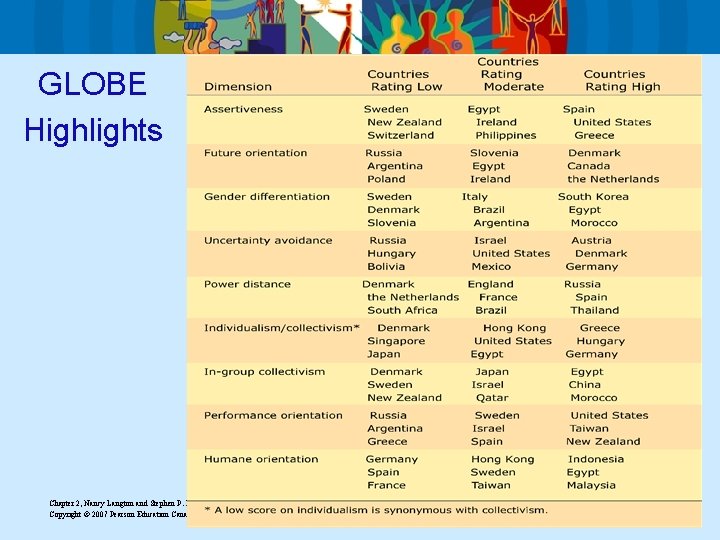
Assessing Cultural Values • GLOBE Dimensions – – – – – Assertiveness Future orientation Gender differentiation Uncertainty avoidance Power distance Individualism versus collectivism In-group collectivism Performance orientation Humane orientation Chapter 2, Nancy Langton and Stephen P. Robbins, Organizational Behaviour, Fourth Canadian Edition Copyright © 2007 Pearson Education Canada 2 -12
GLOBE Highlights Chapter 2, Nancy Langton and Stephen P. Robbins, Organizational Behaviour, Fourth Canadian Edition Copyright © 2007 Pearson Education Canada 2 -13
Values in the Canadian Workplace • Generational Differences • Cultural Differences Chapter 2, Nancy Langton and Stephen P. Robbins, Organizational Behaviour, Fourth Canadian Edition Copyright © 2007 Pearson Education Canada 2 -14
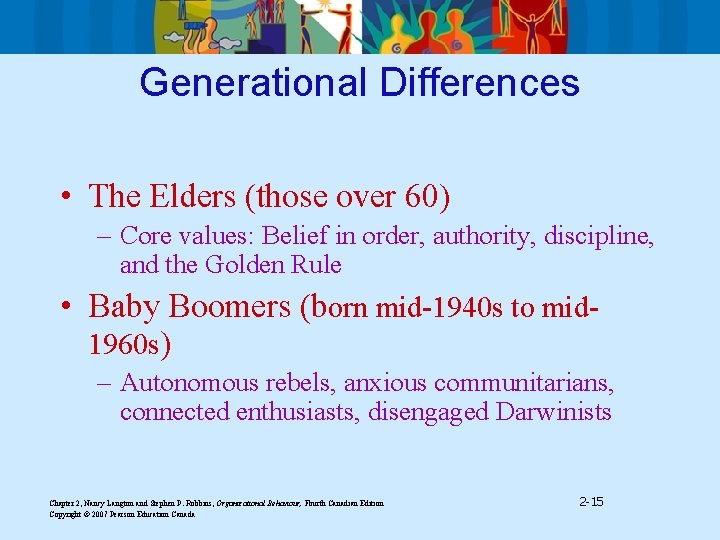
Generational Differences • The Elders (those over 60) – Core values: Belief in order, authority, discipline, and the Golden Rule • Baby Boomers (born mid-1940 s to mid 1960 s) – Autonomous rebels, anxious communitarians, connected enthusiasts, disengaged Darwinists Chapter 2, Nancy Langton and Stephen P. Robbins, Organizational Behaviour, Fourth Canadian Edition Copyright © 2007 Pearson Education Canada 2 -15
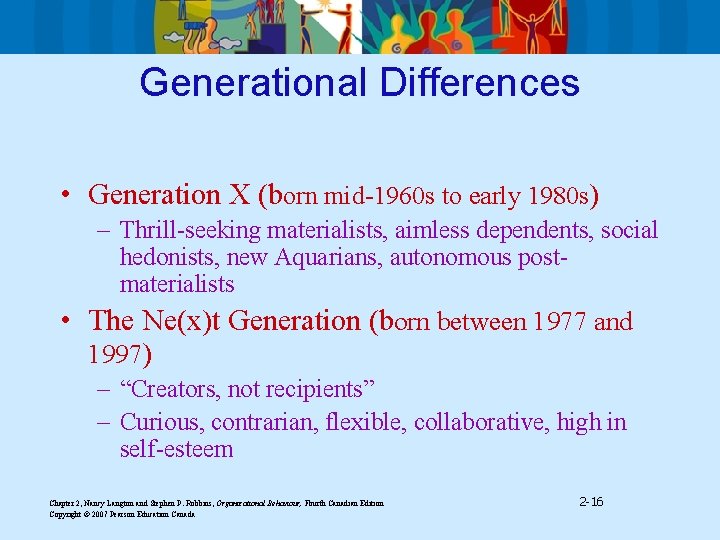
Generational Differences • Generation X (born mid-1960 s to early 1980 s) – Thrill-seeking materialists, aimless dependents, social hedonists, new Aquarians, autonomous postmaterialists • The Ne(x)t Generation (born between 1977 and 1997) – “Creators, not recipients” – Curious, contrarian, flexible, collaborative, high in self-esteem Chapter 2, Nancy Langton and Stephen P. Robbins, Organizational Behaviour, Fourth Canadian Edition Copyright © 2007 Pearson Education Canada 2 -16
Think about it… • 1. “Thirty-five years ago, young employees we hired were ambitious, conscientious, hardworking, and honest. Today’s young workers don’t have the same values. ” Do you agree or disagree with this manager’s comments? Support your position. Chapter 2, Nancy Langton and Stephen P. Robbins, Organizational Behaviour, Fourth Canadian Edition Copyright © 2007 Pearson Education Canada 2 -17
Cultural Differences • 2001 immigrant population – 44 percent of Toronto’s population – 38 percent of Vancouver’s – 18. 6 percent of Montreal’s • 2001 Census findings on language – 17 percent spoke neither English nor French. Of these: • Largest majority spoke Chinese (either Mandarin or Cantonese) • Followed by Italian, German, Punjabi, and Spanish Chapter 2, Nancy Langton and Stephen P. Robbins, Organizational Behaviour, Fourth Canadian Edition Copyright © 2007 Pearson Education Canada 2 -18
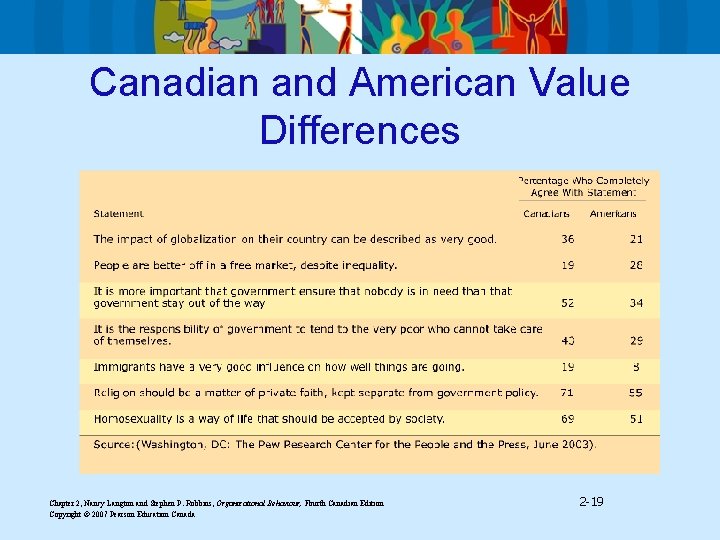
Canadian and American Value Differences Chapter 2, Nancy Langton and Stephen P. Robbins, Organizational Behaviour, Fourth Canadian Edition Copyright © 2007 Pearson Education Canada 2 -19
Francophone and Anglophone Values • Francophone Values • Anglophone Values – More collectivist or group-oriented – Greater need for achievement – Concerned with interpersonal aspects of workplace – Value affiliation Chapter 2, Nancy Langton and Stephen P. Robbins, Organizational Behaviour, Fourth Canadian Edition Copyright © 2007 Pearson Education Canada – Individualist or Icentred – More task-centred – Take more risks – Value autonomy 2 -20
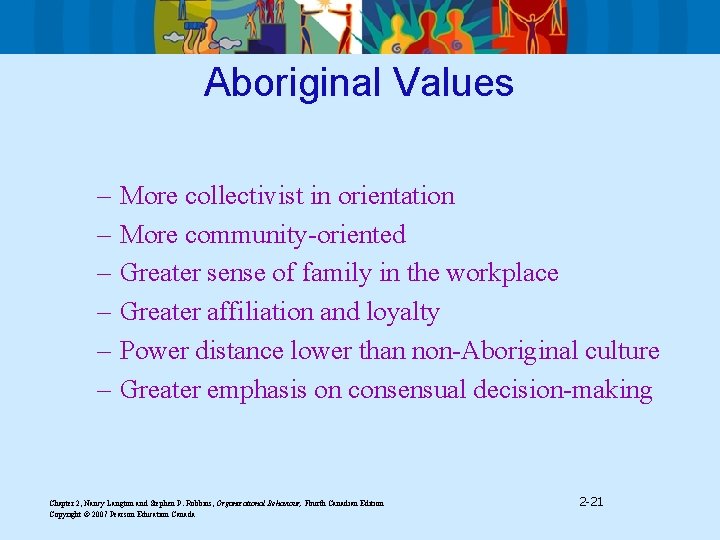
Aboriginal Values – – – More collectivist in orientation More community-oriented Greater sense of family in the workplace Greater affiliation and loyalty Power distance lower than non-Aboriginal culture Greater emphasis on consensual decision-making Chapter 2, Nancy Langton and Stephen P. Robbins, Organizational Behaviour, Fourth Canadian Edition Copyright © 2007 Pearson Education Canada 2 -21
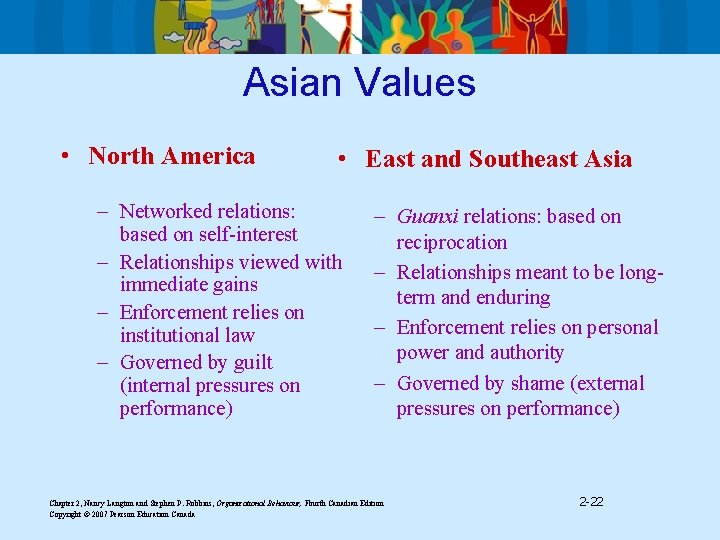
Asian Values • North America • East and Southeast Asia – Networked relations: based on self-interest – Relationships viewed with immediate gains – Enforcement relies on institutional law – Governed by guilt (internal pressures on performance) – Guanxi relations: based on reciprocation – Relationships meant to be longterm and enduring – Enforcement relies on personal power and authority – Governed by shame (external pressures on performance) Chapter 2, Nancy Langton and Stephen P. Robbins, Organizational Behaviour, Fourth Canadian Edition Copyright © 2007 Pearson Education Canada 2 -22
Attitudes • Positive or negative feelings concerning objects, people, or events. • Attitudes are less stable than values. Chapter 2, Nancy Langton and Stephen P. Robbins, Organizational Behaviour, Fourth Canadian Edition Copyright © 2007 Pearson Education Canada 2 -23
Types of Attitudes • Job Satisfaction – An individual’s general attitude toward his or her job. • Organizational Commitment – A state in which an employee identifies with a particular organization and its goals, and wishes to maintain membership in the organization. Chapter 2, Nancy Langton and Stephen P. Robbins, Organizational Behaviour, Fourth Canadian Edition Copyright © 2007 Pearson Education Canada 2 -24
Job Satisfaction and Individual Performance • Satisfaction affects: – – Individual productivity Organizational citizenship behaviour Job satisfaction and customer satisfaction Chapter 2, Nancy Langton and Stephen P. Robbins, Organizational Behaviour, Fourth Canadian Edition Copyright © 2007 Pearson Education Canada 2 -25
Organizational Commitment • Three Types of Commitment – Affective commitment • An individual’s relationship to the organization. – Normative commitment • The obligation an individual feels to staying with an organization. – Continuance commitment • An individual’s calculation that it is in his or her best interest to stay with the organization based on the perceived costs of leaving it. Chapter 2, Nancy Langton and Stephen P. Robbins, Organizational Behaviour, Fourth Canadian Edition Copyright © 2007 Pearson Education Canada 2 -26
Five Reasons Employees Commit Themselves • They are proud of [the company’s] aspirations, accomplishments, and legacy; they share its values. • They know what each person is expected to do, how performance is measured, and why it matters. • They are in control of their own destinies; they savour the high-risk, high-reward work environment. • They are recognized mostly for the quality of their individual performance. • They have fun and enjoy the supportive and highly interactive environment. Chapter 2, Nancy Langton and Stephen P. Robbins, Organizational Behaviour, Fourth Canadian Edition Copyright © 2007 Pearson Education Canada 2 -27
Exhibit 3 -6 Major Workforce Diversity Categories • • • Gender National Origin Age Disability Domestic Partners Non-Christian Chapter 2, Nancy Langton and Stephen P. Robbins, Organizational Behaviour, Fourth Canadian Edition Copyright © 2007 Pearson Education Canada 2 -28
Video Questions • To what extent does national culture affect the way you interact with others? Consider differences in future orientation, language, values, religion, and your personal power distance. • What can organizations and managers do to promote a greater understanding of cultural differences among employees? • Should managers and organizations attempt to change the values of their employees, the business’s values, or the values of the country they are in? Give reasons for your answer. Chapter 2, Nancy Langton and Stephen P. Robbins, Organizational Behaviour, Fourth Canadian Edition Copyright © 2007 Pearson Education Canada 2 -29