
Affective Domain The feelings emotions and general moods
- Slides: 9
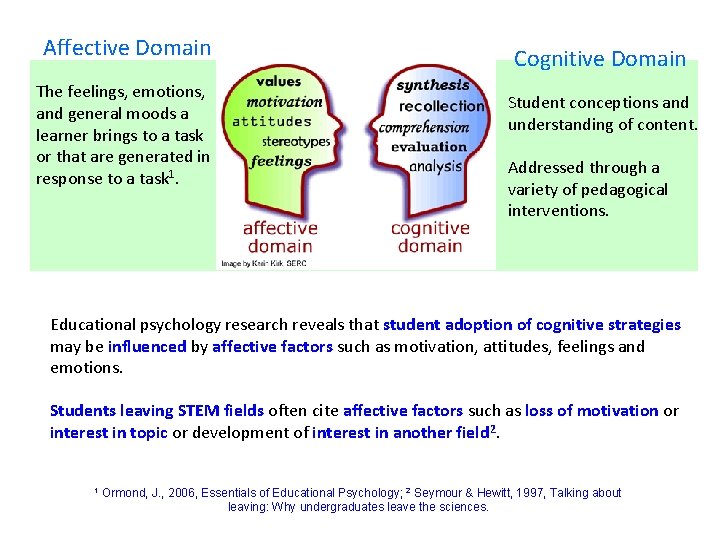
Affective Domain The feelings, emotions, and general moods a learner brings to a task or that are generated in response to a task 1. Cognitive Domain Student conceptions and understanding of content. Addressed through a variety of pedagogical interventions. Educational psychology research reveals that student adoption of cognitive strategies may be influenced by affective factors such as motivation, attitudes, feelings and emotions. Students leaving STEM fields often cite affective factors such as loss of motivation or interest in topic or development of interest in another field 2. 1 Ormond, J. , 2006, Essentials of Educational Psychology; 2 Seymour & Hewitt, 1997, Talking about leaving: Why undergraduates leave the sciences.
Why should a student care about this stuff? Watch the 10 -minute You-Tube video clip at the link below. The author, Daniel Pink, is describing how different aspects of the work environment can enhance motivation. http: //www. youtube. com/watch? v=u 6 XAPnu. Fj. Jc&feature=player_embedded
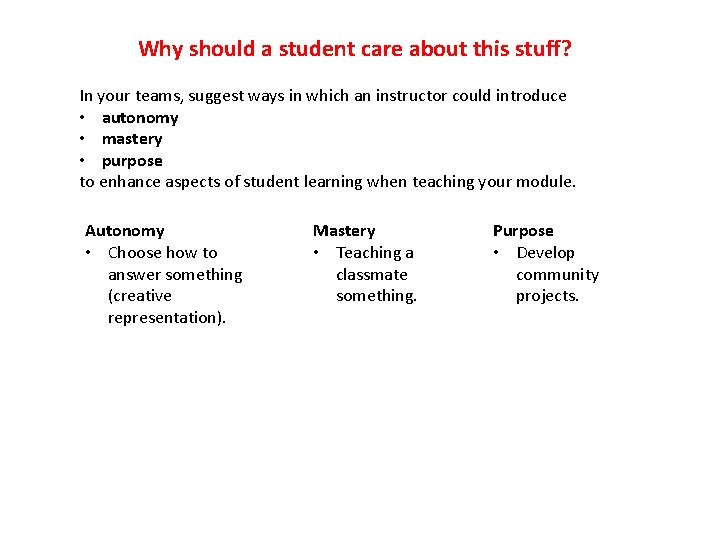
Why should a student care about this stuff? In your teams, suggest ways in which an instructor could introduce • autonomy • mastery • purpose to enhance aspects of student learning when teaching your module. Autonomy • Choose how to answer something (creative representation). Mastery • Teaching a classmate something. Purpose • Develop community projects.
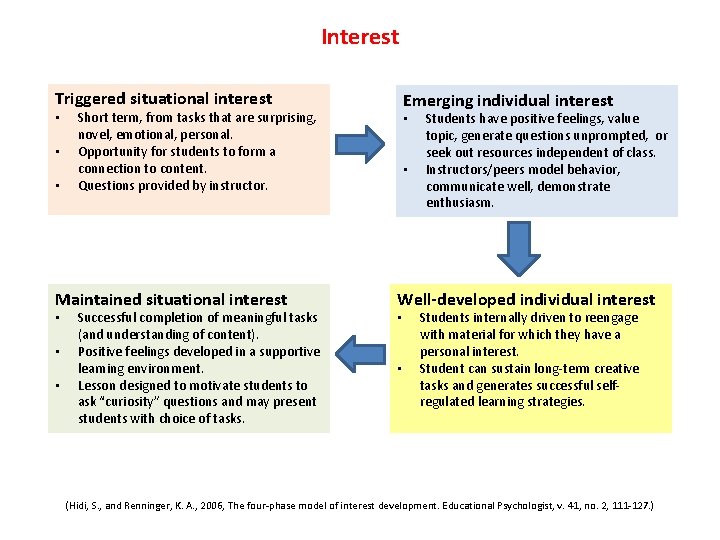
Interest Triggered situational interest • • • Short term, from tasks that are surprising, novel, emotional, personal. Opportunity for students to form a connection to content. Questions provided by instructor. Maintained situational interest • • • Emerging individual interest Successful completion of meaningful tasks (and understanding of content). Positive feelings developed in a supportive learning environment. Lesson designed to motivate students to ask “curiosity” questions and may present students with choice of tasks. • • Students have positive feelings, value topic, generate questions unprompted, or seek out resources independent of class. Instructors/peers model behavior, communicate well, demonstrate enthusiasm. Well-developed individual interest • • Students internally driven to reengage with material for which they have a personal interest. Student can sustain long-term creative tasks and generates successful selfregulated learning strategies. (Hidi, S. , and Renninger, K. A. , 2006, The four-phase model of interest development. Educational Psychologist, v. 41, no. 2, 111 -127. )
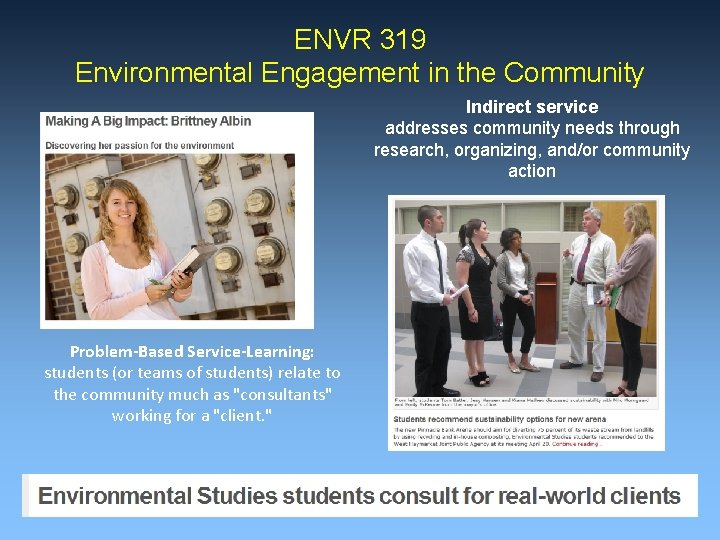
ENVR 319 Environmental Engagement in the Community Indirect service addresses community needs through research, organizing, and/or community action Problem-Based Service-Learning: students (or teams of students) relate to the community much as "consultants" working for a "client. "
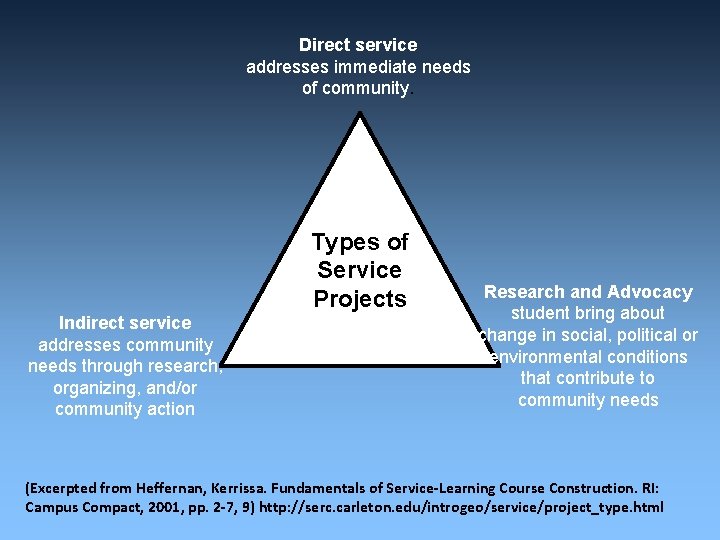
Direct service addresses immediate needs of community. Types of Service Projects Indirect service addresses community needs through research, organizing, and/or community action Research and Advocacy student bring about change in social, political or environmental conditions that contribute to community needs (Excerpted from Heffernan, Kerrissa. Fundamentals of Service-Learning Course Construction. RI: Campus Compact, 2001, pp. 2 -7, 9) http: //serc. carleton. edu/introgeo/service/project_type. html
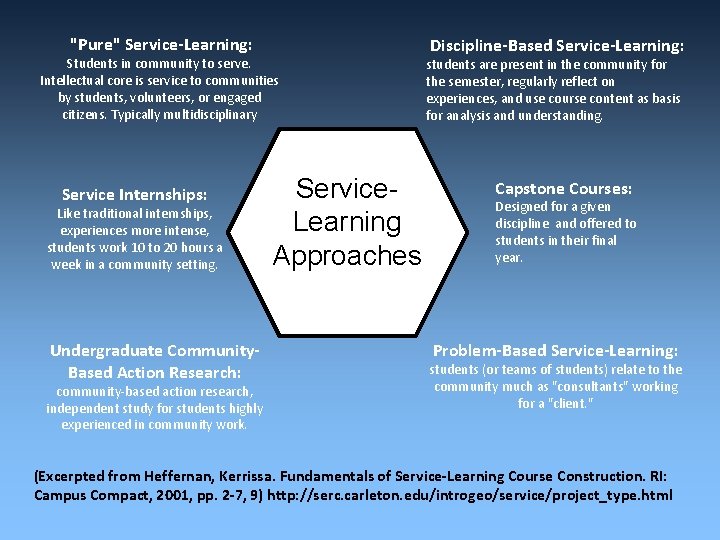
"Pure" Service-Learning: Students in community to serve. Intellectual core is service to communities by students, volunteers, or engaged citizens. Typically multidisciplinary Service Internships: Like traditional internships, experiences more intense, students work 10 to 20 hours a week in a community setting. Undergraduate Community. Based Action Research: community-based action research, independent study for students highly experienced in community work. Service. Learning Approaches Discipline-Based Service-Learning: students are present in the community for the semester, regularly reflect on experiences, and use course content as basis for analysis and understanding. Capstone Courses: Designed for a given discipline and offered to students in their final year. Problem-Based Service-Learning: students (or teams of students) relate to the community much as "consultants" working for a "client. " (Excerpted from Heffernan, Kerrissa. Fundamentals of Service-Learning Course Construction. RI: Campus Compact, 2001, pp. 2 -7, 9) http: //serc. carleton. edu/introgeo/service/project_type. html
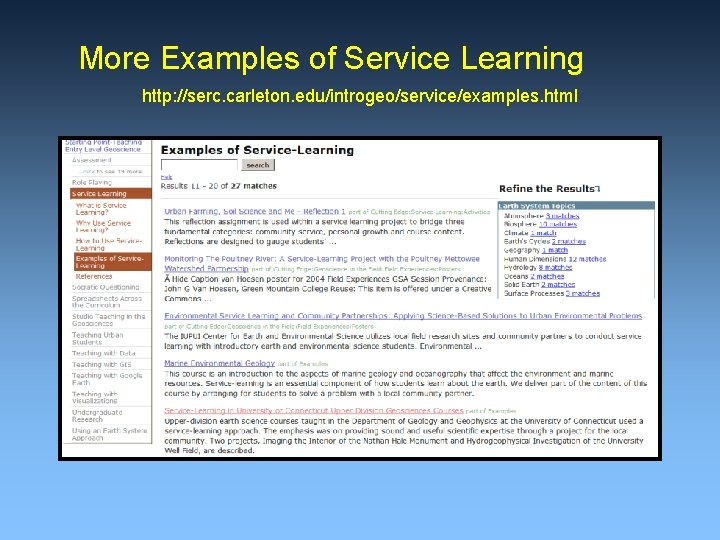
More Examples of Service Learning http: //serc. carleton. edu/introgeo/service/examples. html
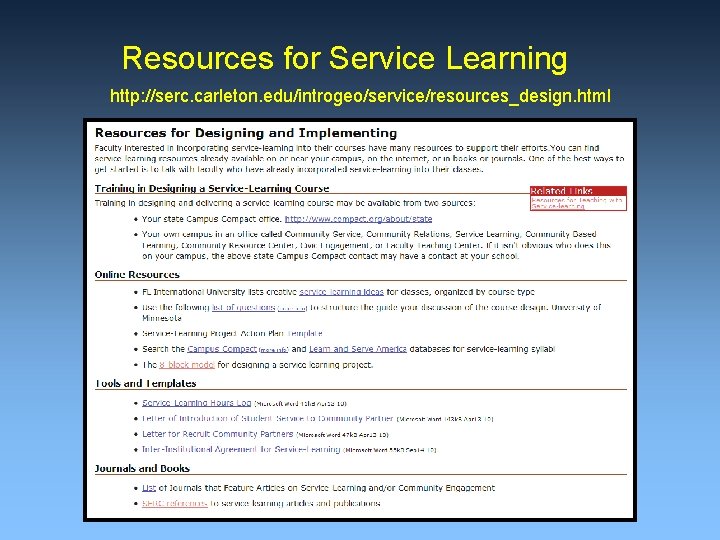
Resources for Service Learning http: //serc. carleton. edu/introgeo/service/resources_design. html