
Affecting the sustainability innovation acceptance through systematic mapping
Affecting the sustainability innovation acceptance through systematic mapping and re-employing of actors The case of a renewable energy project Anastasia Tsvetkova Magnus Gustafsson Krys Markowski 26/12/2021 Copyright PBI Research Institute 2011 1
Industrial ecosystems Source: Korhonen, J. (2004) ‘Industrial ecology in the strategic sustainable development model: strategic applications of industrial ecology’ 26/12/2021 Copyright PBI Research Institute 2011 2
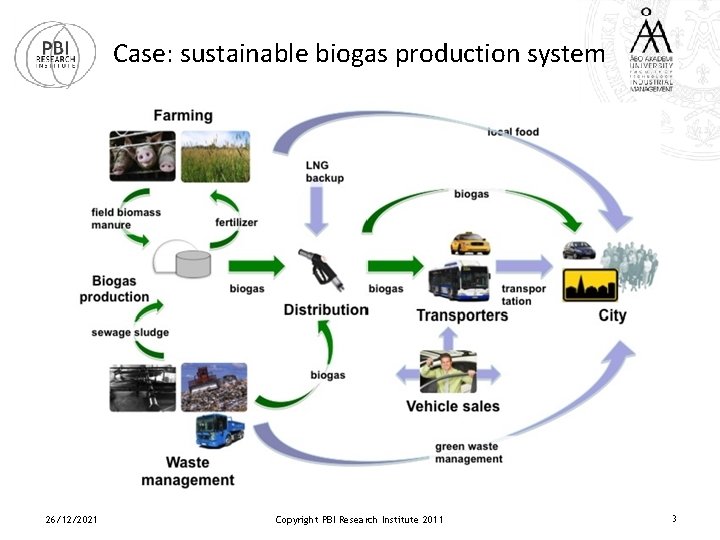
Case: sustainable biogas production system 26/12/2021 Copyright PBI Research Institute 2011 3
Challenges in organising sustainable production v Control of the whole value chain or value network v Cooperation among traditionally unrelated industries v Legal, political, economical challenges related to integration v Locality of actors and their constellations 26/12/2021 Copyright PBI Research Institute 2011 4

Actor-Network Theory v Popularised by Michel Callon’s (1986) and Bruno Latour’s (1987, 2005) writings on sociotechnical systems and their formation v ANT attempts to dissolve the dualism between actors and structure, micro and macro level, global and local, human and non-human Bruno Latour v ANT has been used e. g. for researching the change processes in sustainable consumption, mapping controversies in projects, and exploring the phenomenon of tourism as a network-actor entity Michel Callon 26/12/2021 Copyright PBI Research Institute 2011 5
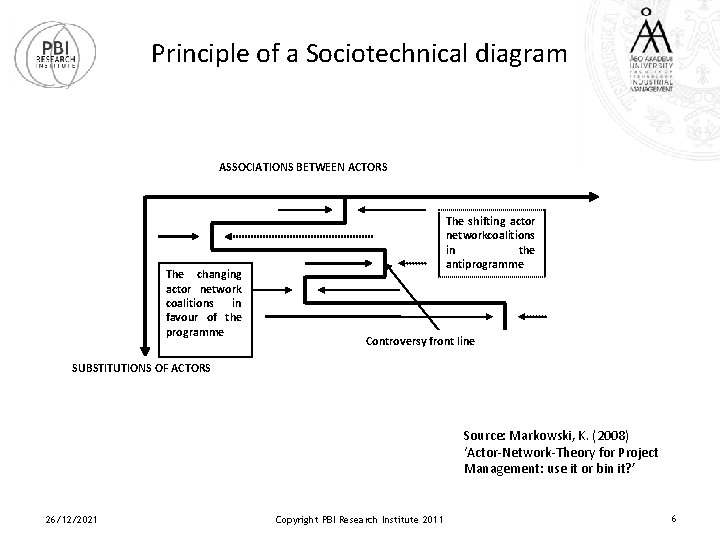
Principle of a Sociotechnical diagram ASSOCIATIONS BETWEEN ACTORS The changing actor network coalitions in favour of the programme The shifting actor networkcoalitions in the antiprogramme Controversy front line SUBSTITUTIONS OF ACTORS Source: Markowski, K. (2008) ‘Actor-Network-Theory for Project Management: use it or bin it? ’ 26/12/2021 Copyright PBI Research Institute 2011 6
ANT-derived method 26/12/2021 Copyright PBI Research Institute 2011 7
DSM mapping 26/12/2021 8
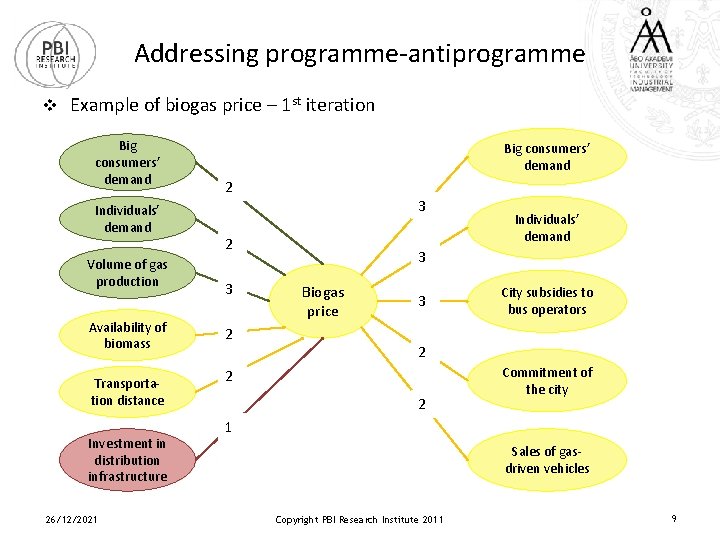
Addressing programme-antiprogramme v Example of biogas price – 1 st iteration Big consumers’ demand Individuals’ demand Volume of gas production Availability of biomass Transportation distance Investment in distribution infrastructure 26/12/2021 Big consumers’ demand 2 3 2 Individuals’ demand 3 Biogas price 3 City subsidies to bus operators 2 2 2 Commitment of the city 1 Sales of gasdriven vehicles Copyright PBI Research Institute 2011 9
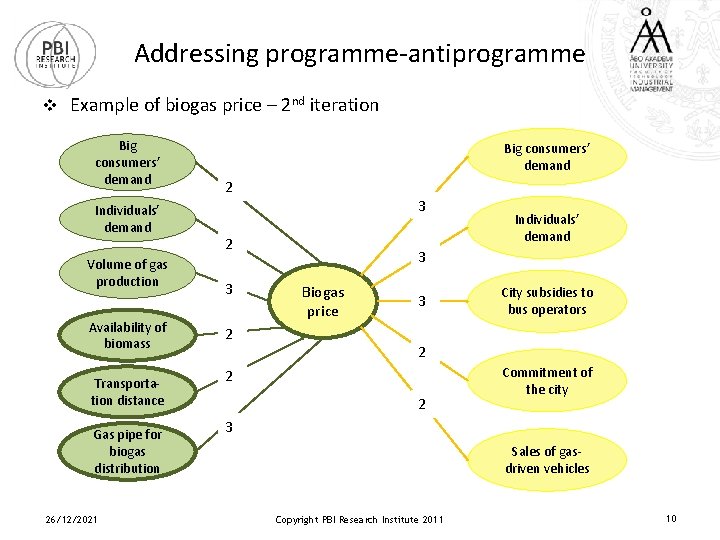
Addressing programme-antiprogramme v Example of biogas price – 2 nd iteration Big consumers’ demand Individuals’ demand Volume of gas production Availability of biomass Transportation distance Gas pipe for biogas distribution 26/12/2021 Big consumers’ demand 2 3 2 Individuals’ demand 3 Biogas price 3 City subsidies to bus operators 2 2 2 Commitment of the city 3 Sales of gasdriven vehicles Copyright PBI Research Institute 2011 10
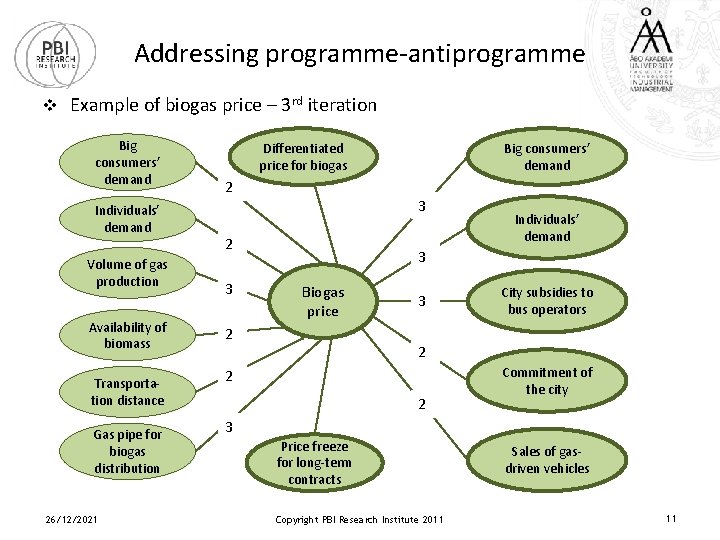
Addressing programme-antiprogramme v Example of biogas price – 3 rd iteration Big consumers’ demand Individuals’ demand Volume of gas production Availability of biomass Transportation distance Gas pipe for biogas distribution 26/12/2021 Differentiated price for biogas 2 3 Big consumers’ demand Individuals’ demand 3 Biogas price 2 3 City subsidies to bus operators 2 2 2 Commitment of the city 3 Price freeze for long-term contracts Copyright PBI Research Institute 2011 Sales of gasdriven vehicles 11
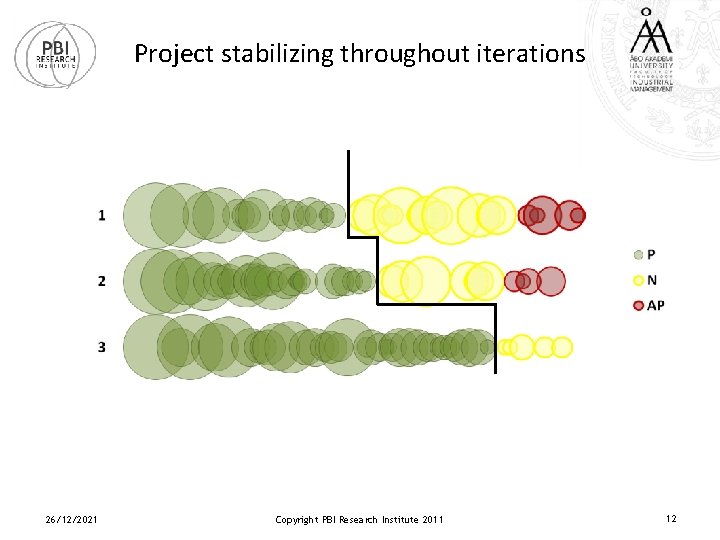
Project stabilizing throughout iterations 26/12/2021 Copyright PBI Research Institute 2011 12
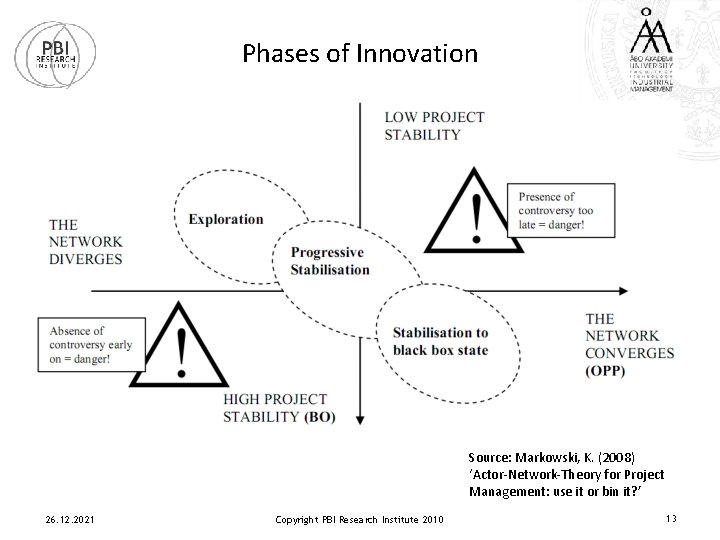
Phases of Innovation Source: Markowski, K. (2008) ‘Actor-Network-Theory for Project Management: use it or bin it? ’ 26. 12. 2021 Copyright PBI Research Institute 2010 13
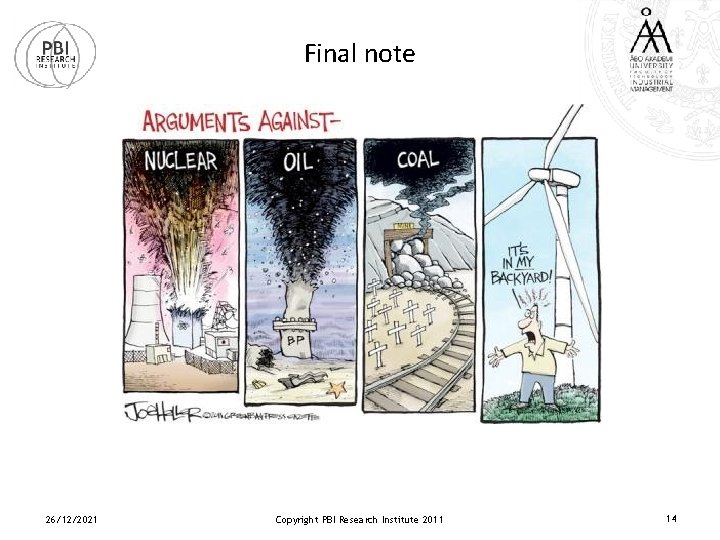
Final note 26/12/2021 Copyright PBI Research Institute 2011 14
- Slides: 14