
Af PP Residential York The role of the



- Slides: 24
Af. PP Residential, York, The role of the Health and Care Professions Council Elaine Buckley, HCPC Chair
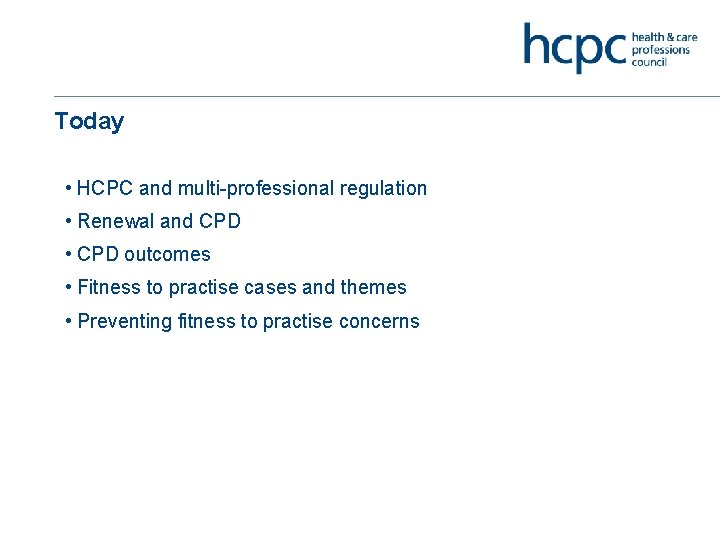
Today • HCPC and multi-professional regulation • Renewal and CPD • CPD outcomes • Fitness to practise cases and themes • Preventing fitness to practise concerns
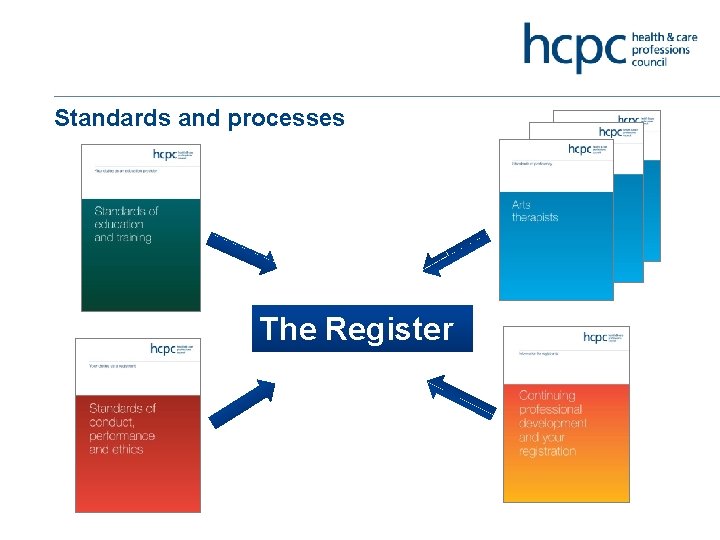
Standards and processes The Register
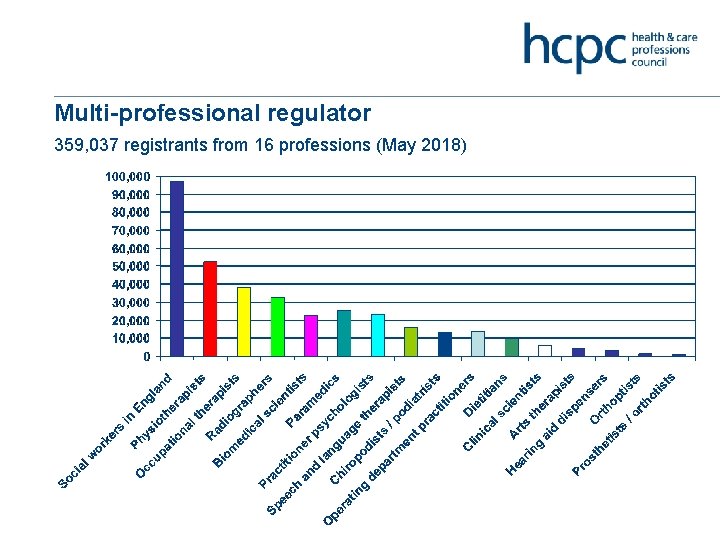
Multi-professional regulator 359, 037 registrants from 16 professions (May 2018)
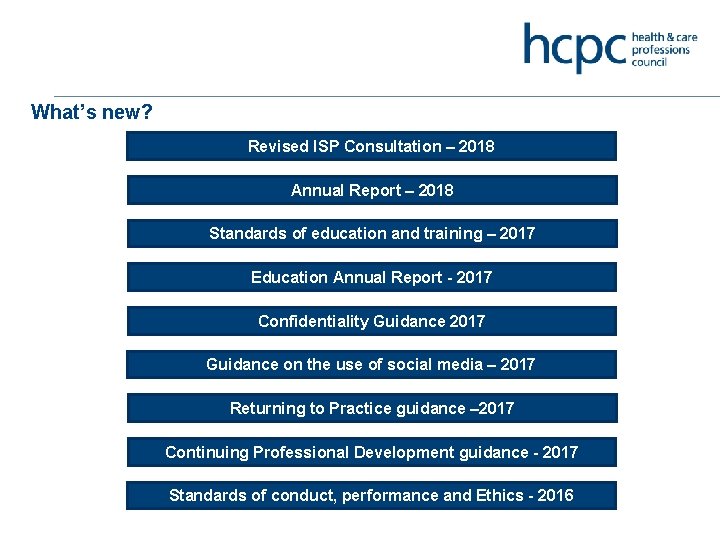
What’s new? Revised ISP Consultation – 2018 Annual Report – 2018 Standards of education and training – 2017 Education Annual Report - 2017 Confidentiality Guidance 2017 Guidance on the use of social media – 2017 Returning to Practice guidance – 2017 Continuing Professional Development guidance - 2017 Standards of conduct, performance and Ethics - 2016
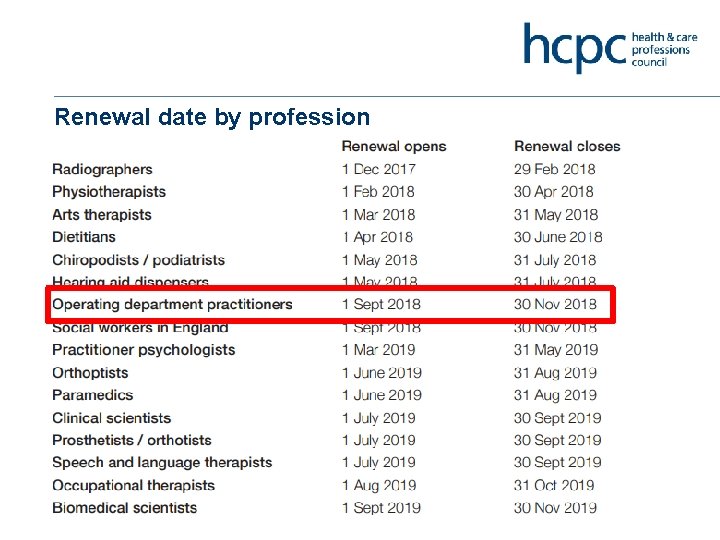
Renewal date by profession
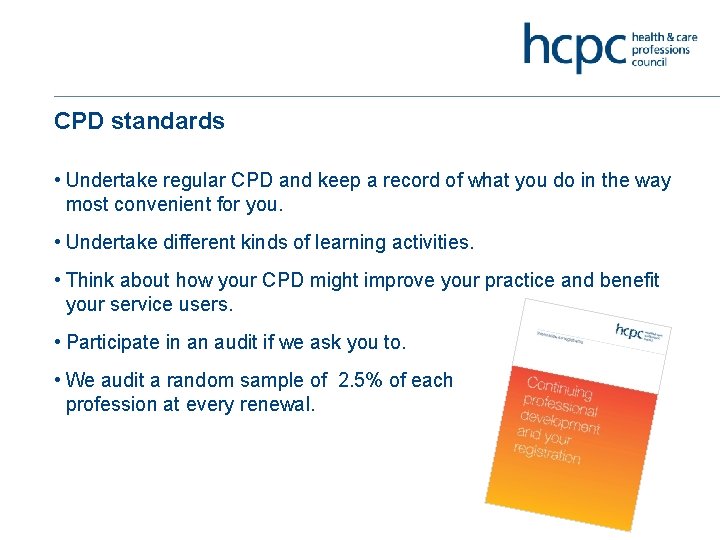
CPD standards • Undertake regular CPD and keep a record of what you do in the way most convenient for you. • Undertake different kinds of learning activities. • Think about how your CPD might improve your practice and benefit your service users. • Participate in an audit if we ask you to. • We audit a random sample of 2. 5% of each profession at every renewal.
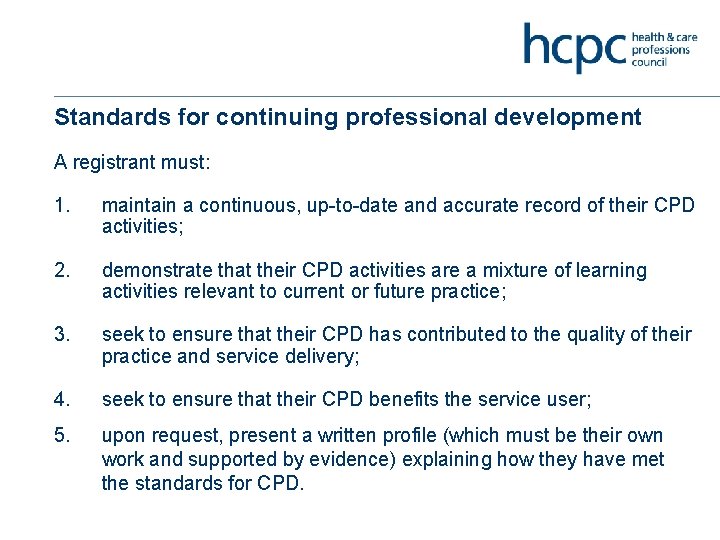
Standards for continuing professional development A registrant must: 1. maintain a continuous, up-to-date and accurate record of their CPD activities; 2. demonstrate that their CPD activities are a mixture of learning activities relevant to current or future practice; 3. seek to ensure that their CPD has contributed to the quality of their practice and service delivery; 4. seek to ensure that their CPD benefits the service user; 5. upon request, present a written profile (which must be their own work and supported by evidence) explaining how they have met the standards for CPD.
Activity – constructing CPD Profiles • Take a moment and reflect on what CPD activities you have undertaken over the past 6 months. • Discuss them with your neighbour and consider the following: • What was the activity? • Type of activity (work-based, professional activity, formal / educational, self-directed or other) • Benefit to you (“quality of practice and service delivery”) • Benefit to service users (consider who they are) • What evidence would you use to support it?
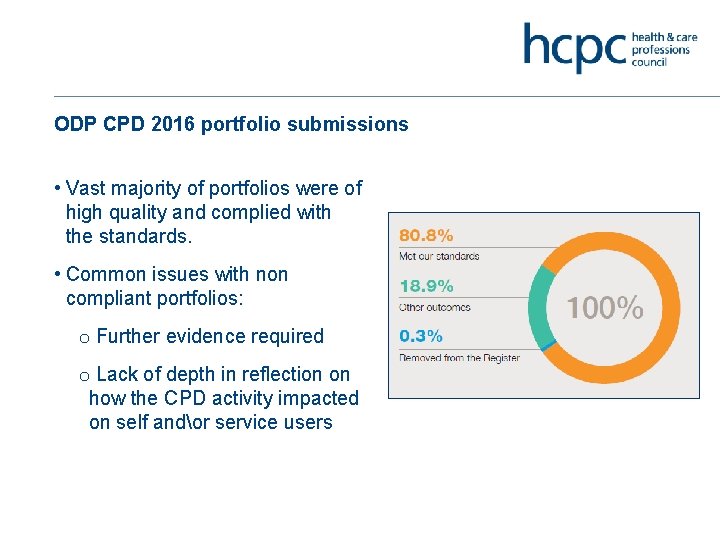
ODP CPD 2016 portfolio submissions • Vast majority of portfolios were of high quality and complied with the standards. • Common issues with non compliant portfolios: o Further evidence required o Lack of depth in reflection on how the CPD activity impacted on self andor service users
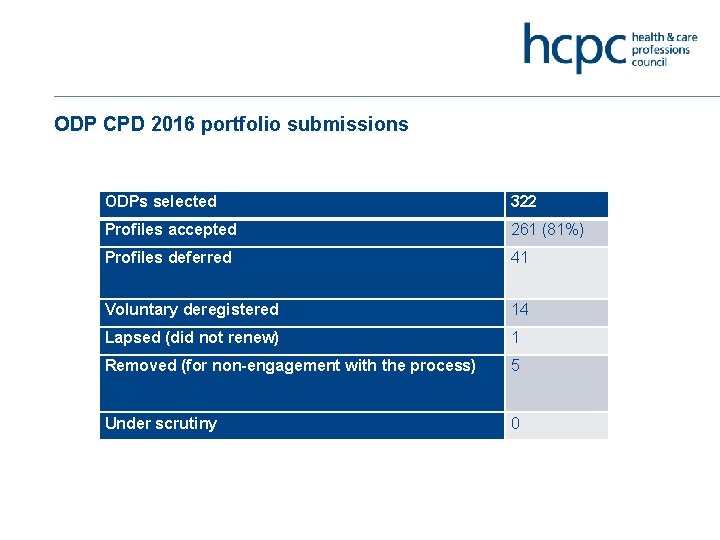
ODP CPD 2016 portfolio submissions ODPs selected 322 Profiles accepted 261 (81%) Profiles deferred 41 Voluntary deregistered 14 Lapsed (did not renew) 1 Removed (for non-engagement with the process) 5 Under scrutiny 0
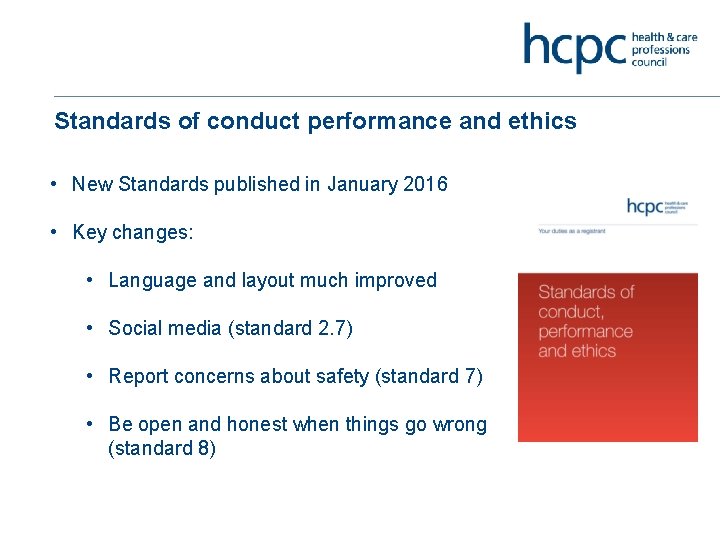
Standards of conduct performance and ethics • New Standards published in January 2016 • Key changes: • Language and layout much improved • Social media (standard 2. 7) • Report concerns about safety (standard 7) • Be open and honest when things go wrong (standard 8)
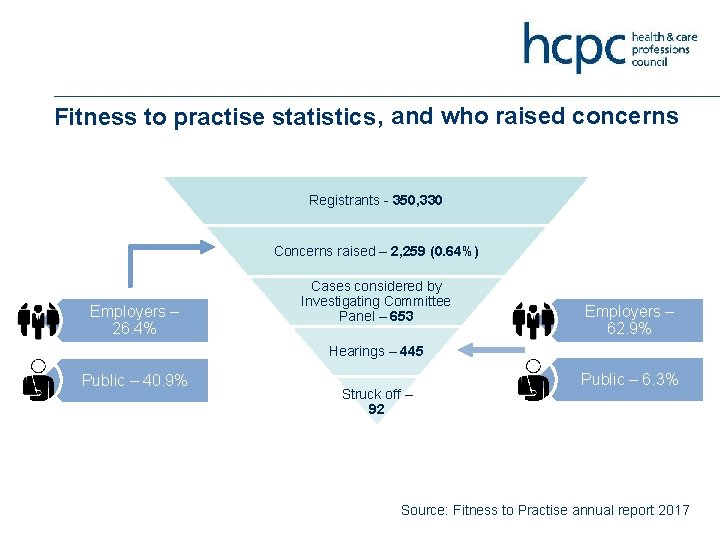
Fitness to practise statistics , and who raised concerns Registrants - 350, 330 Concerns raised – 2, 259 (0. 64%) Employers – 26. 4% Cases considered by Investigating Committee Panel – 653 Employers – 62. 9% Hearings – 445 Public – 40. 9% Struck off – 92 Public – 6. 3% Source: Fitness to Practise annual report 2017
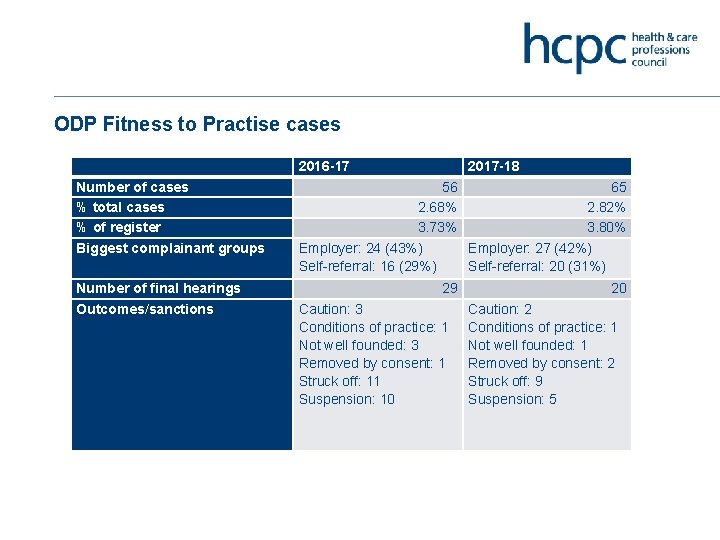
ODP Fitness to Practise cases 2016 -17 Number of cases % total cases % of register Biggest complainant groups Number of final hearings Outcomes/sanctions 2017 -18 56 65 2. 68% 2. 82% 3. 73% 3. 80% Employer: 24 (43%) Employer: 27 (42%) Self-referral: 16 (29%) Self-referral: 20 (31%) 29 Caution: 3 Conditions of practice: 1 Not well founded: 3 Removed by consent: 1 Struck off: 11 Suspension: 10 20 Caution: 2 Conditions of practice: 1 Not well founded: 1 Removed by consent: 2 Struck off: 9 Suspension: 5
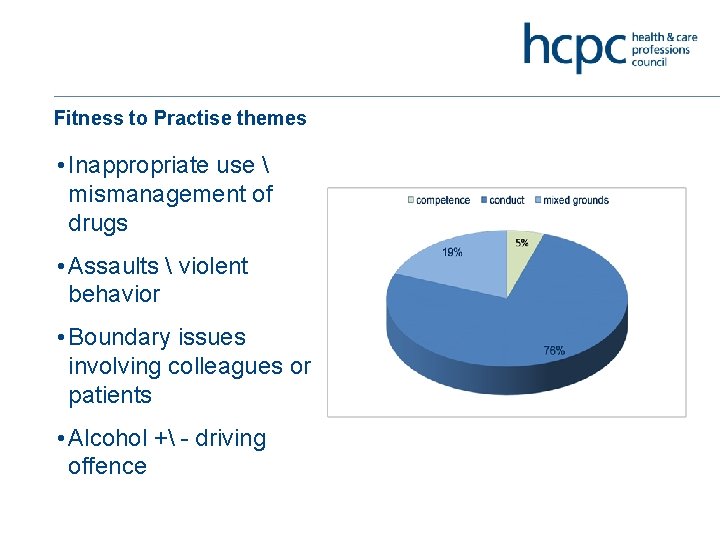
Fitness to Practise themes • Inappropriate use mismanagement of drugs • Assaults violent behavior • Boundary issues involving colleagues or patients • Alcohol + - driving offence
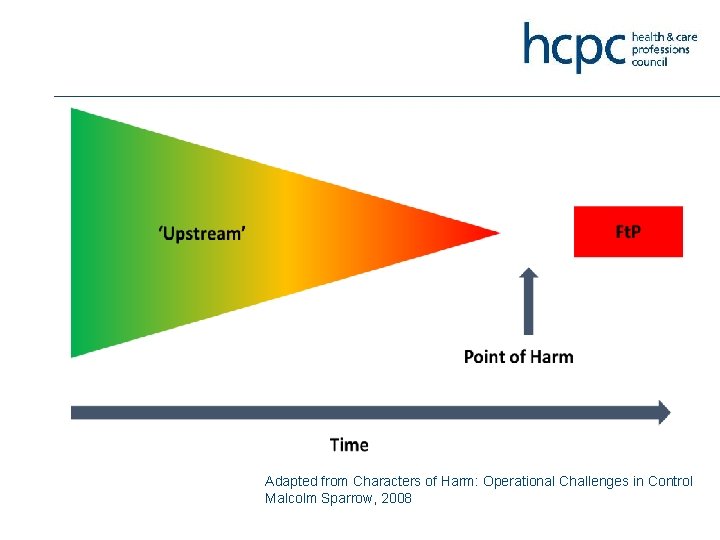
Adapted from Characters of Harm: Operational Challenges in Control Malcolm Sparrow, 2008
The impact of fitness to practise proceedings on complainants, employers, witnesses and registrants Why is prevention important? • Psychological • Financial • Reduction in service capacity • Reputational loss • Adversarial experience
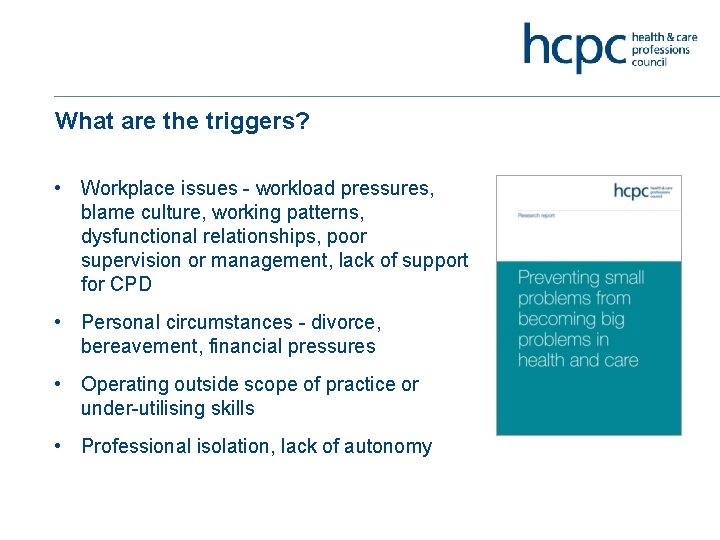
What are the triggers? • Workplace issues - workload pressures, blame culture, working patterns, dysfunctional relationships, poor supervision or management, lack of support for CPD • Personal circumstances - divorce, bereavement, financial pressures • Operating outside scope of practice or under-utilising skills • Professional isolation, lack of autonomy
Understanding the prevalence of fitness to practise concerns • Published on the HCPC website • The reason why we receive so many complaints about paramedics and social workers through literature review, interviews, focus groups and substantial review of cases • Common themes emerging relating to prevention; • Importance of education • Role of employers • Working practices and culture
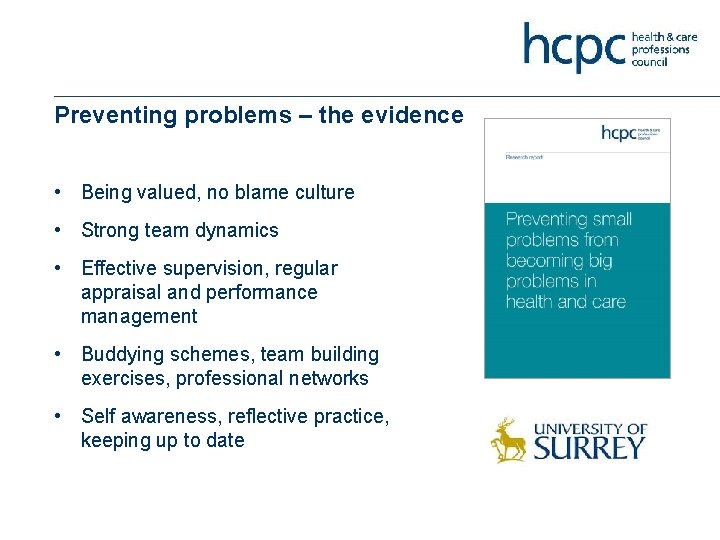
Preventing problems – the evidence • Being valued, no blame culture • Strong team dynamics • Effective supervision, regular appraisal and performance management • Buddying schemes, team building exercises, professional networks • Self awareness, reflective practice, keeping up to date
Discussion: What is happening in your workplace to help colleagues continue to be safe and effective practitioners?
Highlights from previous HCPC events: • • • Supportive working culture • • Recognition of regulatory responsibilities by employers Appropriate caseloads Supervision, mentorship and training Support for CPD from employers Increase employer’s understanding of the benefits/responsibilities of a registered workforce HCPC Standards and working practices embedded in the workplace Explain role of HCPC in promoting professionalism Continue to inform public about when it’s appropriate to refer to the HCPC
HCPC Partner roles We employ registrants as HCPC partners to make decisions and recommendations on behalf of the HCPC, the roles are: • Fitness to Practise Panel Members and Chairs and Legal Assessors • Registration Assessors • Registration Appeals Panel Members • Visitors • CPD Assessors • More information online at www. hcpc-uk/aboutus/partners
Finding out more and getting in touch www. hcpc-uk. org registration@hcpc-uk. org 0845 3004472 (lo-call) Find us on www. facebook. com/hcpcuk Follow us on @The_HCPC Follow us on www. linkedin. com Sign up for our RSS feeds www. hcpc-uk. org