
AF Letter Grades POP Luncheon October 11 2017

A-F Letter Grades POP Luncheon October 11, 2017
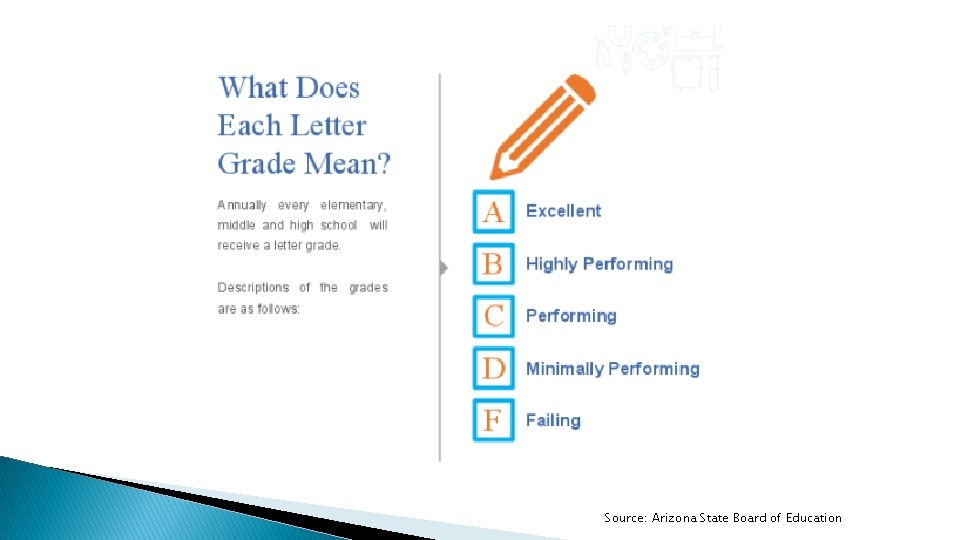
Source: Arizona State Board of Education

Major Differences Between the Old & New Letter Grade Systems Old Letter Grade System � � New Letter Grade System Based on AIMS and grad rate at high school; added points for ELL proficiency (3), lowering FFBs (3), dropout rate in HS (3) � Started with 20% A’s, by 2014 33% received an A � You need three D’s to get an F � 140 points possible plus 6 bonus points � Based on Az. MERIT (80% K-8, 50% 912), ELD improvement (10%) and other indicators (10%-40%; Acceleration K-8, Grad Rate & CCRI Index at HS) 18% of K-8 schools and 16% of 9 -12 schools will get an A F’s can be earned in any year 100 points possible plus 2 bonus points

The Old Letter Grade System Does Not Impact Your Grade in 2017
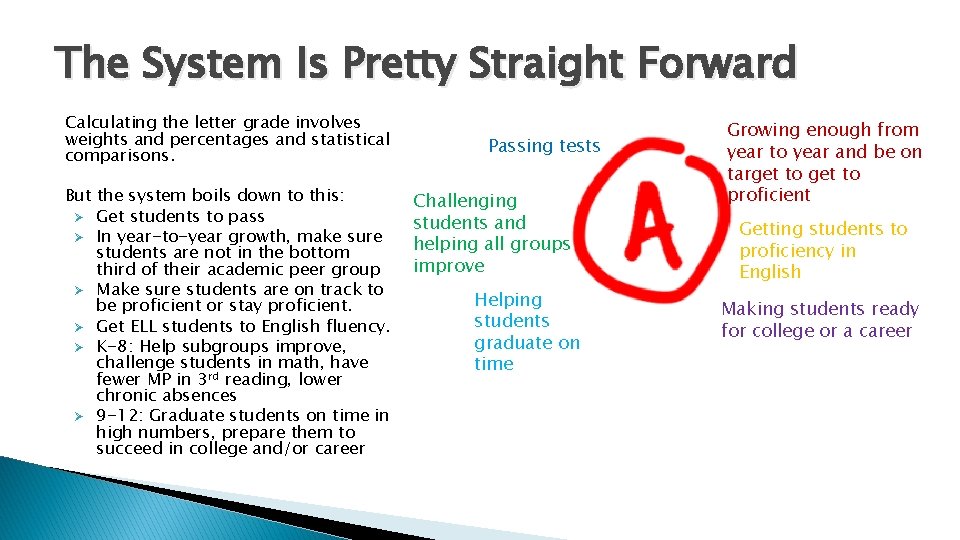
The System Is Pretty Straight Forward Calculating the letter grade involves weights and percentages and statistical comparisons. But the system boils down to this: Ø Get students to pass Ø In year-to-year growth, make sure students are not in the bottom third of their academic peer group Ø Make sure students are on track to be proficient or stay proficient. Ø Get ELL students to English fluency. Ø K-8: Help subgroups improve, challenge students in math, have fewer MP in 3 rd reading, lower chronic absences Ø 9 -12: Graduate students on time in high numbers, prepare them to succeed in college and/or career Passing tests Challenging students and helping all groups improve Helping students graduate on time Growing enough from year to year and be on target to proficient Getting students to proficiency in English Making students ready for college or a career
![Accountability Categories K – 8 Accountability Measures [VALUE] 0% 20% Proficiency 40% Growth [VALUE]](http://slidetodoc.com/presentation_image_h2/7b3cadcd9359bf8e589e2e6b03aacf21/image-6.jpg "Accountability Categories K – 8 Accountability Measures [VALUE] 0% 20% Proficiency 40% Growth [VALUE]")
Accountability Categories K – 8 Accountability Measures [VALUE] 0% 20% Proficiency 40% Growth [VALUE] 60% ELL 80% 9 – 12 Accountability Measures [VALUE] 100% Acceleration K-8 values growth more heavily [VALUE] 0% 20% Proficiency [VALUE][VALUE] 40% 60% Growth ELL 80% CCRI 100% Graduation 9 -12 focuses on readiness for post-HS: proficiency in HS courses, graduation, College and Career Ready actions
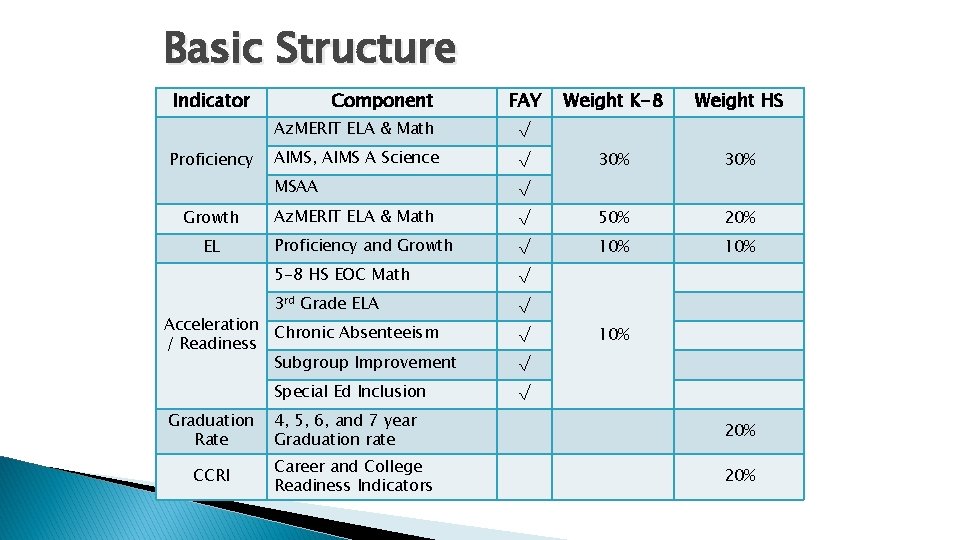
Basic Structure Indicator Proficiency Growth EL Component Weight HS 30% √ AIMS, AIMS A Science √ MSAA √ Az. MERIT ELA & Math √ 50% 20% Proficiency and Growth √ 10% 5 -8 HS EOC Math √ 3 rd Grade ELA √ Special Ed Inclusion CCRI Weight K-8 Az. MERIT ELA & Math Acceleration Chronic Absenteeism / Readiness Subgroup Improvement Graduation Rate FAY √ 10% √ √ 4, 5, 6, and 7 year Graduation rate 20% Career and College Readiness Indicators 20%
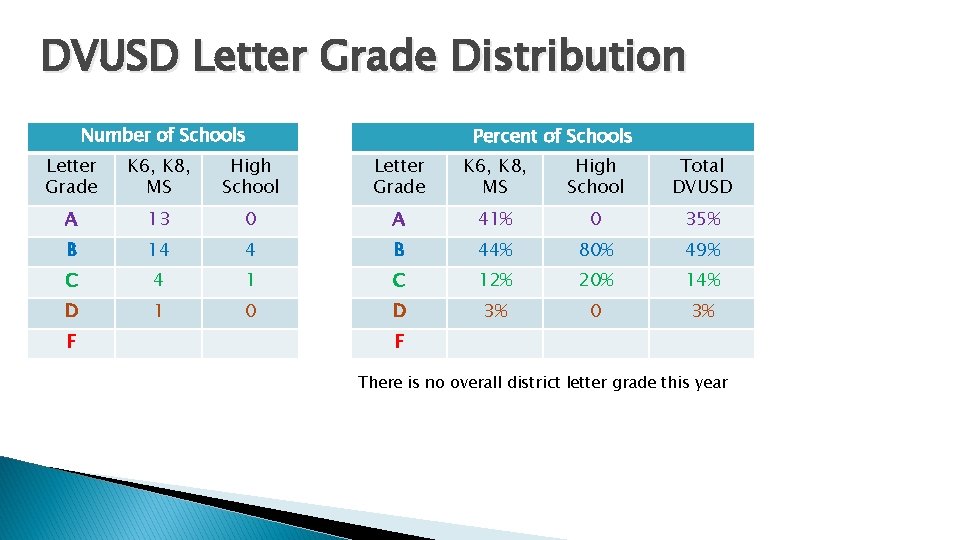
DVUSD Letter Grade Distribution Number of Schools Percent of Schools Letter Grade K 6, K 8, MS High School Total DVUSD A 13 0 A 41% 0 35% B 14 4 B 44% 80% 49% C 4 1 C 12% 20% 14% D 1 0 D 3% 0 3% F F There is no overall district letter grade this year
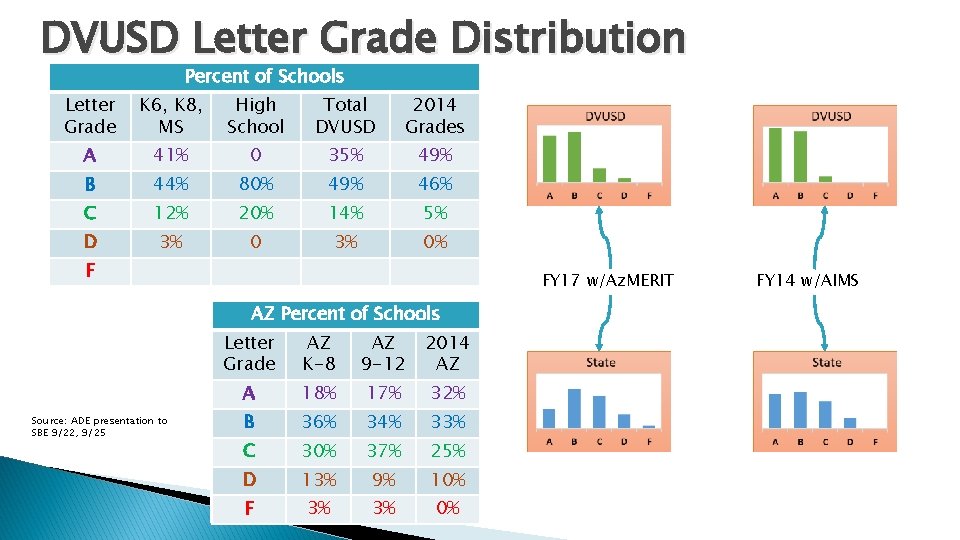
DVUSD Letter Grade Distribution Percent of of Schools Percent Schools Letter K 6, High Total 2014 Letter K 8, High Grade MSMS School DVUSD Grades Grade A A 41% 0 0 35% 49% B B 44% 80% 49% 46% C C 12% 20% 14% 5% D D 3%3% 0 0 3%3% 0% F F FY 17 w/Az. MERIT AZ AZ Percent of Schools Letter Grade A Source: ADE presentation to SBE 9/22, 9/25 B C D F AZ K-8 18% 36% 30% 13% 3% AZ 9 -12 17% 34% 37% 9% 3% 2014 AZ 32% 33% 25% 10% 0% FY 14 w/AIMS
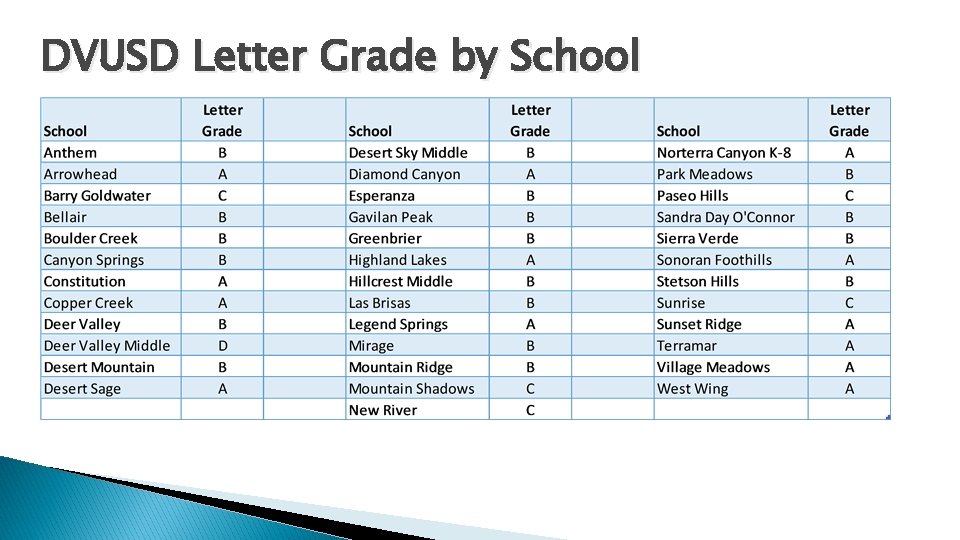
DVUSD Letter Grade by School
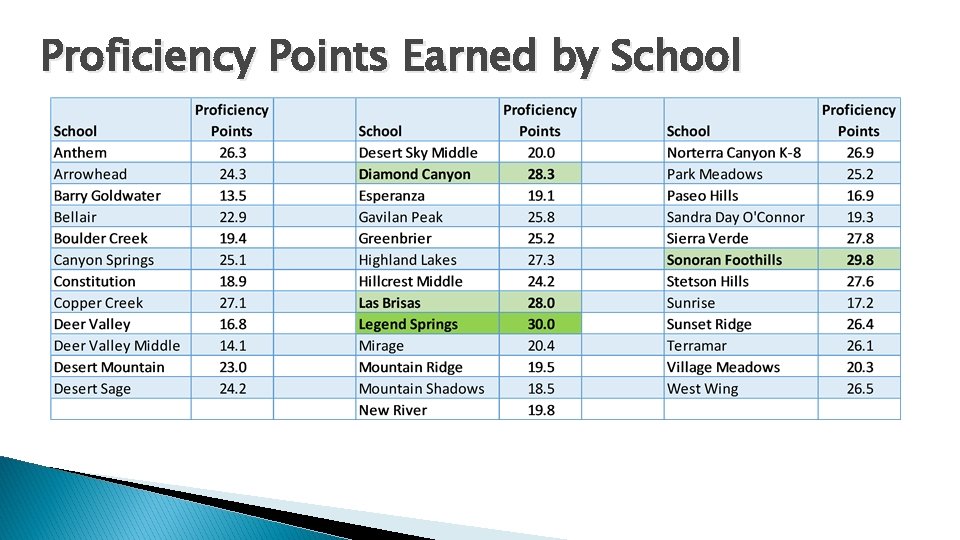
Proficiency Points Earned by School
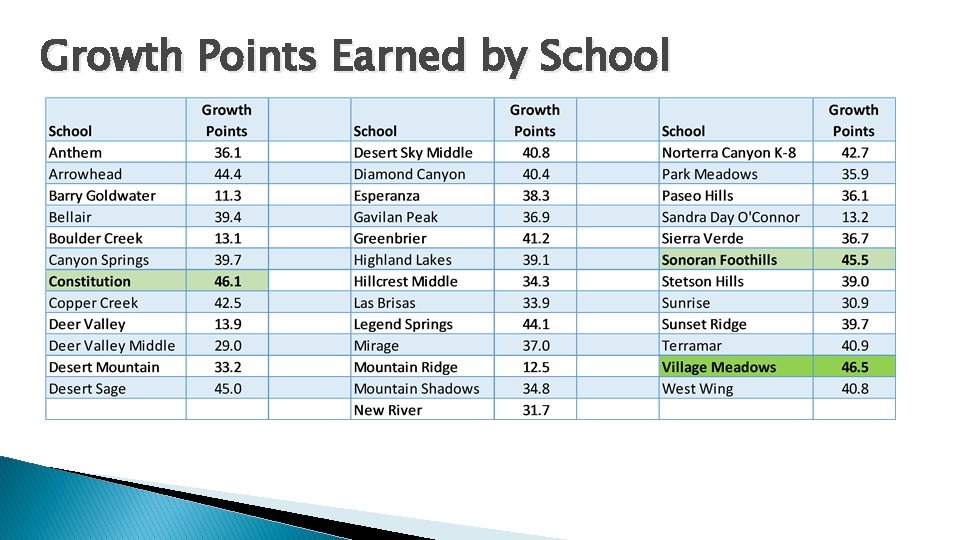
Growth Points Earned by School
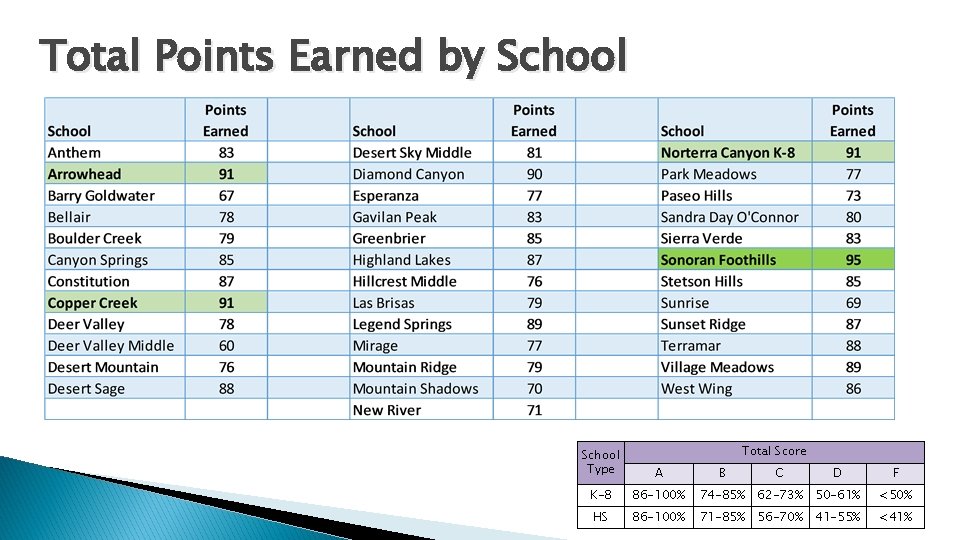
Total Points Earned by School Total Score School Type A B C D F K-8 86 -100% 74 -85% 62 -73% 50 -61% <50% HS 86 -100% 71 -85% 56 -70% 41 -55% <41%
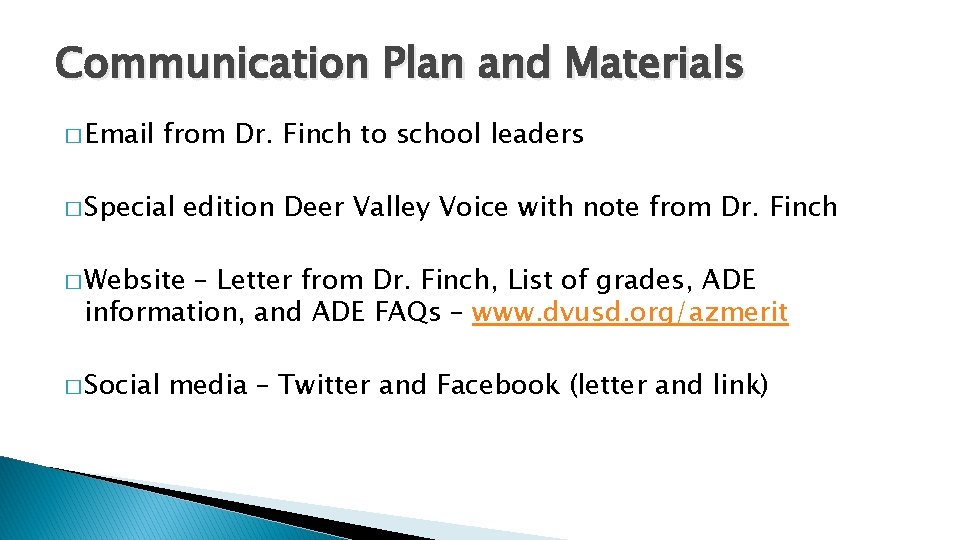
Communication Plan and Materials � Email from Dr. Finch to school leaders � Special edition Deer Valley Voice with note from Dr. Finch � Website – Letter from Dr. Finch, List of grades, ADE information, and ADE FAQs – www. dvusd. org/azmerit � Social media – Twitter and Facebook (letter and link)
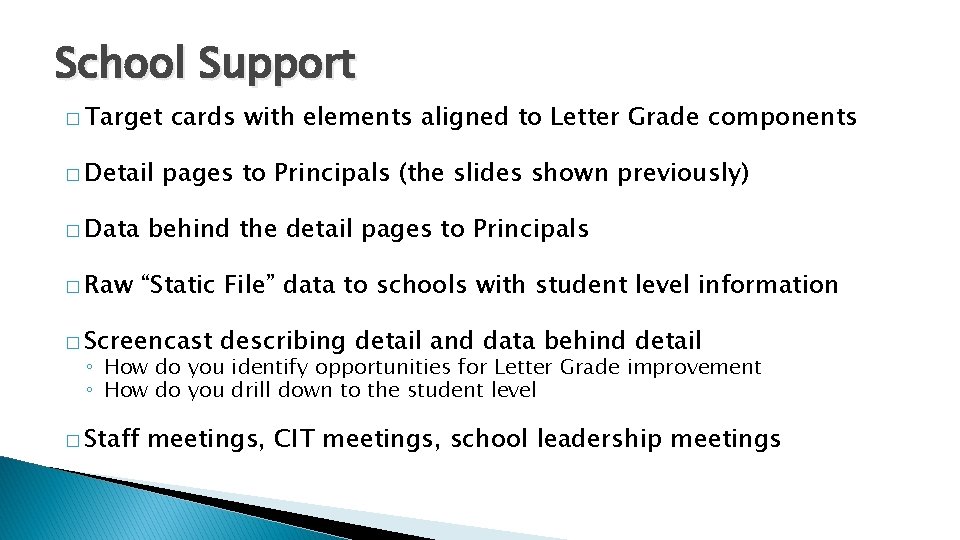
School Support � Target � Detail � Data � Raw cards with elements aligned to Letter Grade components pages to Principals (the slides shown previously) behind the detail pages to Principals “Static File” data to schools with student level information � Screencast describing detail and data behind detail ◦ How do you identify opportunities for Letter Grade improvement ◦ How do you drill down to the student level � Staff meetings, CIT meetings, school leadership meetings

Thank you
- Slides: 16