
AESTHETICISM The Artistic Movement What is Aestheticism late
- Slides: 17
AESTHETICISM The Artistic Movement
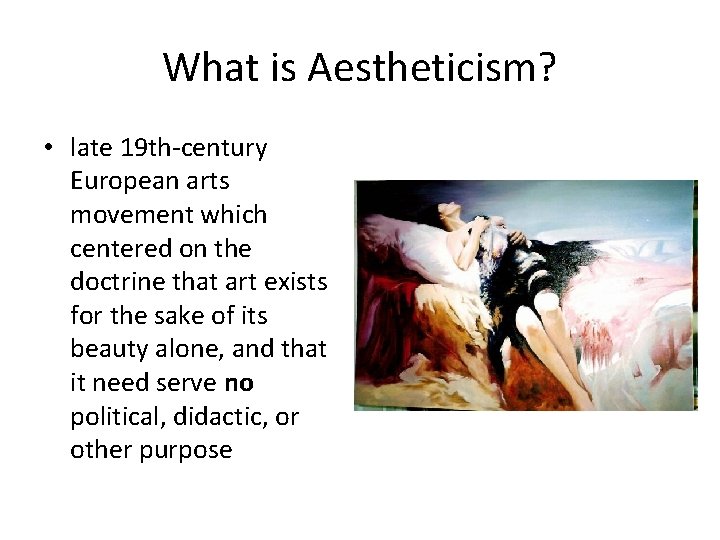
What is Aestheticism? • late 19 th-century European arts movement which centered on the doctrine that art exists for the sake of its beauty alone, and that it need serve no political, didactic, or other purpose
How did Aestheticism begin? • The movement began in Vocabulary reaction to prevailing – Utilitarian: useful and/or practical utilitarian social – Philistinism: from the philosophies and to word philistine what was perceived as • one who is regarded as the ugliness and being ignorant, philistinism of the uncultured, and indifferent or hostile to industrial age artistic and intellectual achievement and values
Homosexuality and Aestheticism
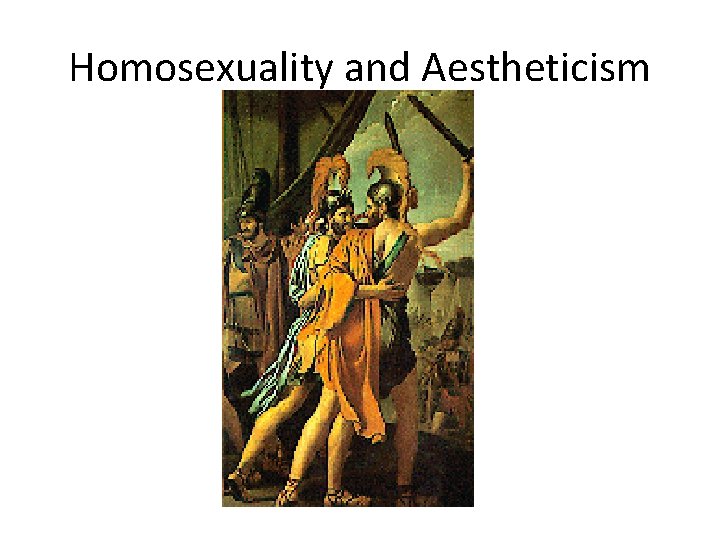
Homosexuality and Aestheticism • Historically, it has been linked to homosexuality, not only because of the implications of its principles, but also because of the personal sexual tastes of some of its key adherents. • The sexual ambiguity of so much aestheticist ideology often appears to be a cagey avowal of elitist homoerotics, which, like aestheticism, proclaimed that was "unnatural" was more beautiful and therefore preferable to that which was found in mundane nature.
What do Aesthetes believe? • The Aesthetes developed • The main characteristics the cult of beauty, which of the movement were: they considered the basic suggestion rather than factor in art. statement, sensuality, massive use of symbols, • Life should copy Art, they and synaesthetic effects asserted. —that is, correspondence • They considered nature as between words, colors crude and lacking in and music. It was the design when compared to music that set the mood. art.
Victorianism
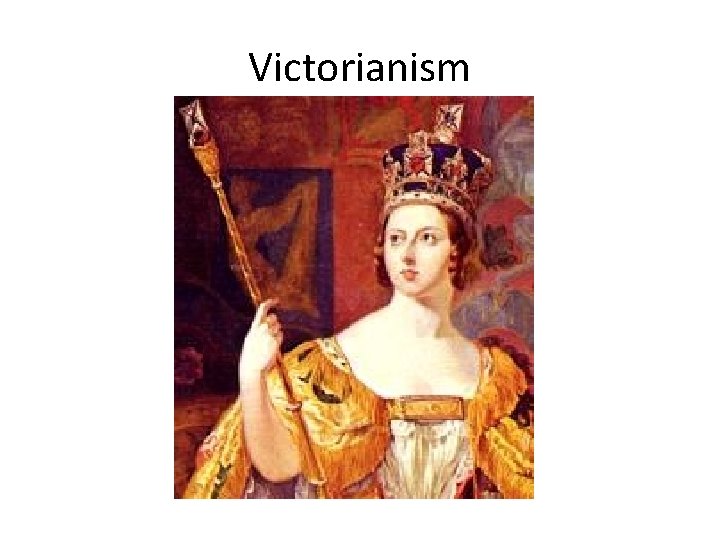
How is Aestheticism different from the prevailing values of the time? • Victorian morality is a distillation of the moral views of people living at the time of Queen Victoria (reigned 1837 - 1901) in particular, and to the moral climate of Great Britain throughout the 19 th century in general. • It is not tied to this historical period and can describe any set of values that espouses sexual restraint, low tolerance of crime, and a strong social ethic. • Due to the prominence of the British Empire, many of these values were spread across the world. • The morality and values of the Victorians can be classed under – Religion – Morality – Elitism – Industrialism – Improvement
How is Aestheticism different from the prevailing values of the time? • Historians now regard the • The apparent contradiction Victorian era as a time of many between the widespread contradictions. cultivation of an outward appearance of dignity and – A plethora of social restraint and the prevalence of movements concerned social phenomena that with morals co-existed included prostitution and child with a class system that labor were two sides of the permitted harsh living same coin. conditions for many. • Various social reform movements and high principles arose from attempts to improve the harsh conditions.
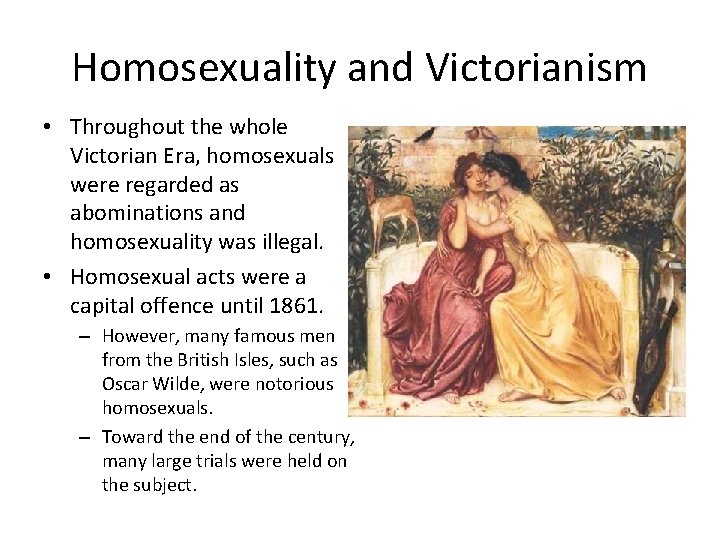
Homosexuality and Victorianism • Throughout the whole Victorian Era, homosexuals were regarded as abominations and homosexuality was illegal. • Homosexual acts were a capital offence until 1861. – However, many famous men from the British Isles, such as Oscar Wilde, were notorious homosexuals. – Toward the end of the century, many large trials were held on the subject.
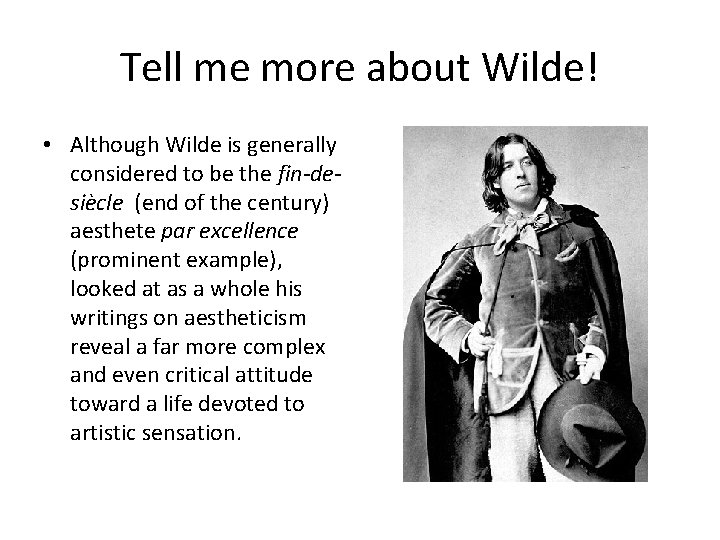
Tell me more about Wilde! • Although Wilde is generally considered to be the fin-desiècle (end of the century) aesthete par excellence (prominent example), looked at as a whole his writings on aestheticism reveal a far more complex and even critical attitude toward a life devoted to artistic sensation.
Wait…Let’s backtrack for a moment! • Oscar Wilde's rich and dramatic portrayals of the human condition came during the height of the prosperity that swept through London in the Victorian Era of the late 19 th century. • At a time when all citizens of Britain were finally able to embrace literature the wealthy and educated could only once afford, Wilde wrote many short stories, plays and poems that continue to inspire millions around the world.
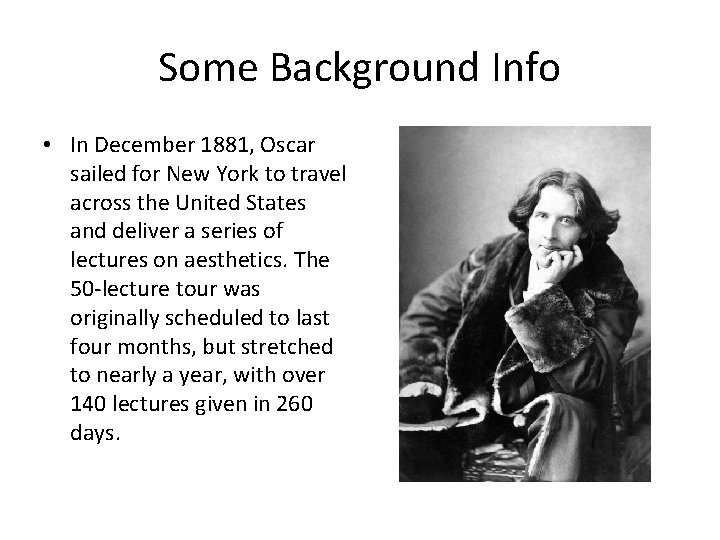
Some Background Info • In December 1881, Oscar sailed for New York to travel across the United States and deliver a series of lectures on aesthetics. The 50 -lecture tour was originally scheduled to last four months, but stretched to nearly a year, with over 140 lectures given in 260 days.
He got married? • On May 29, 1884, Oscar • With a family to support, married Constance Lloyd. Oscar accepted a job Constance was four years revitalizing the Woman's younger than Oscar and the World magazine, where he daughter of a prominent worked from 1887 -1889. barrister. • The next six years were to • She was well-read, spoke become the most creative several European languages period of his life. and had an outspoken, independent mind. Oscar and Constance had two sons in quick succession, Cyril in 1885 and Vyvyan in 1886.
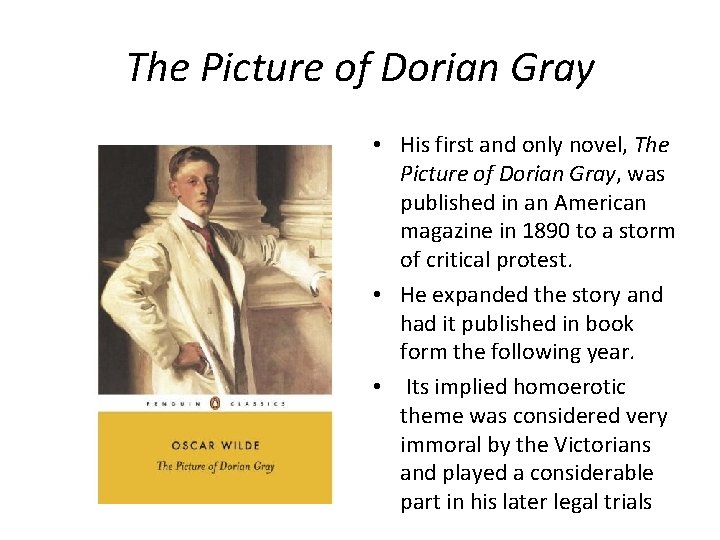
The Picture of Dorian Gray • His first and only novel, The Picture of Dorian Gray, was published in an American magazine in 1890 to a storm of critical protest. • He expanded the story and had it published in book form the following year. • Its implied homoerotic theme was considered very immoral by the Victorians and played a considerable part in his later legal trials
On the “Down-Low” • In the summer of 1891, Oscar met Lord Alfred 'Bosie' Douglas, the third son of the Marquis of Queensberry. • Bosie was well acquainted with Oscar's novel “Dorian Gray” and was an undergraduate at Oxford. • They soon became lovers and were inseparable until Wilde's arrest four years later. • In April 1895, Oscar sued Bosie's father for libel as the Marquis had accused him of homosexuality. • Oscar withdrew his case but was himself arrested and convicted of gross indecency and sentenced to two years hard labor. • Constance took the children to Switzerland reverted to an old family name, “Holland. ”
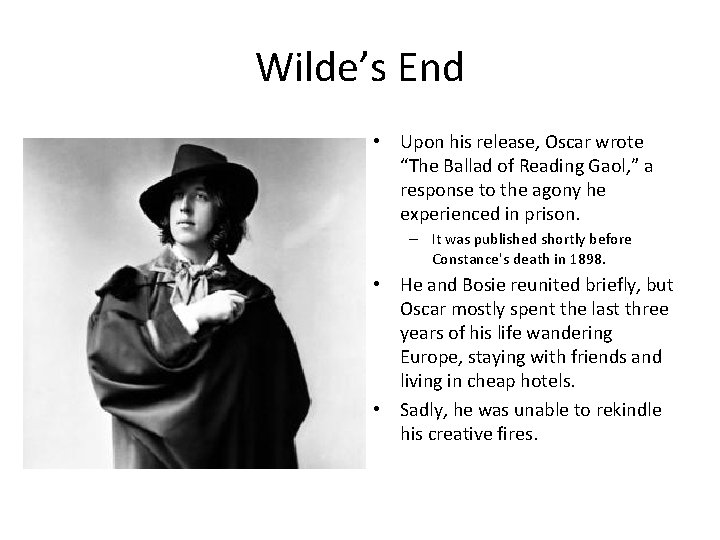
Wilde’s End • Upon his release, Oscar wrote “The Ballad of Reading Gaol, ” a response to the agony he experienced in prison. – It was published shortly before Constance's death in 1898. • He and Bosie reunited briefly, but Oscar mostly spent the last three years of his life wandering Europe, staying with friends and living in cheap hotels. • Sadly, he was unable to rekindle his creative fires.