
Aesthetic Scanning An educational criticism format for decoding
- Slides: 11
Aesthetic Scanning An educational criticism format for decoding art
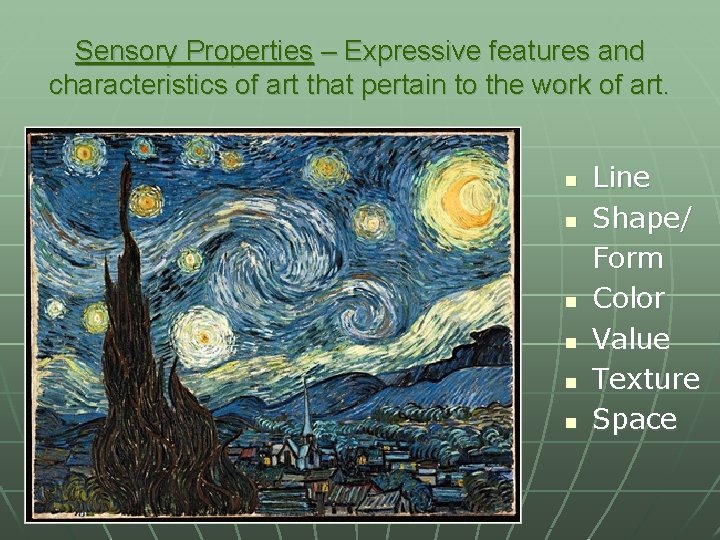
Sensory Properties – Expressive features and characteristics of art that pertain to the work of art. n n n Line Shape/ Form Color Value Texture Space
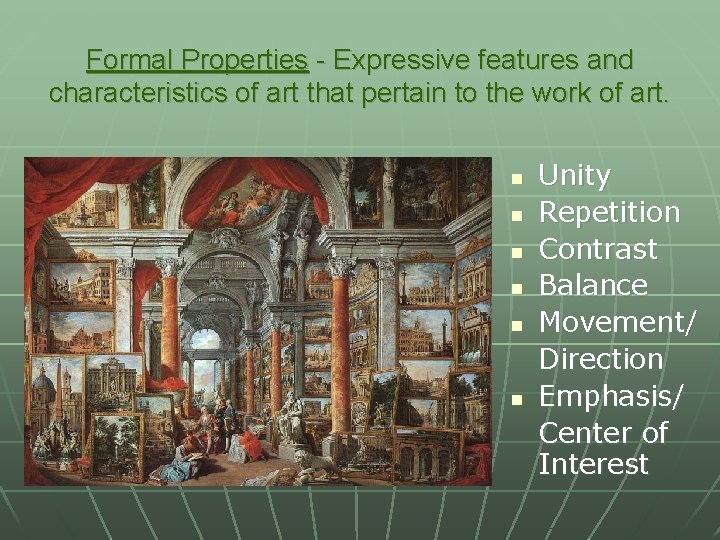
Formal Properties - Expressive features and characteristics of art that pertain to the work of art. n n n Unity Repetition Contrast Balance Movement/ Direction Emphasis/ Center of Interest
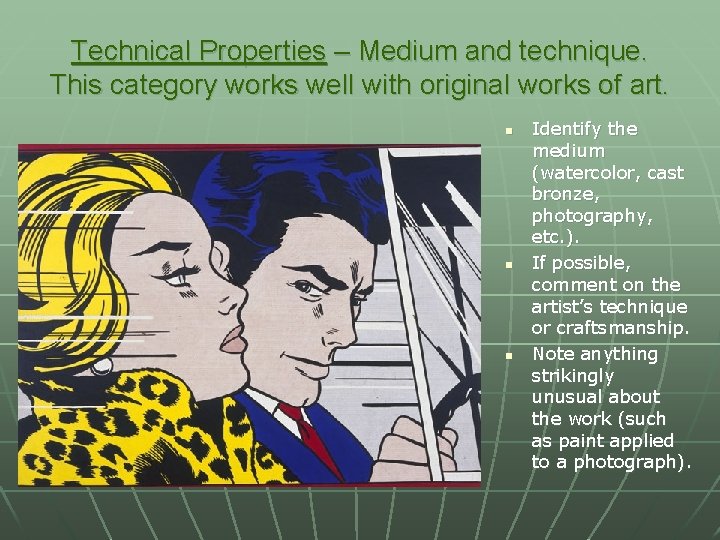
Technical Properties – Medium and technique. This category works well with original works of art. n n n Identify the medium (watercolor, cast bronze, photography, etc. ). If possible, comment on the artist’s technique or craftsmanship. Note anything strikingly unusual about the work (such as paint applied to a photograph).
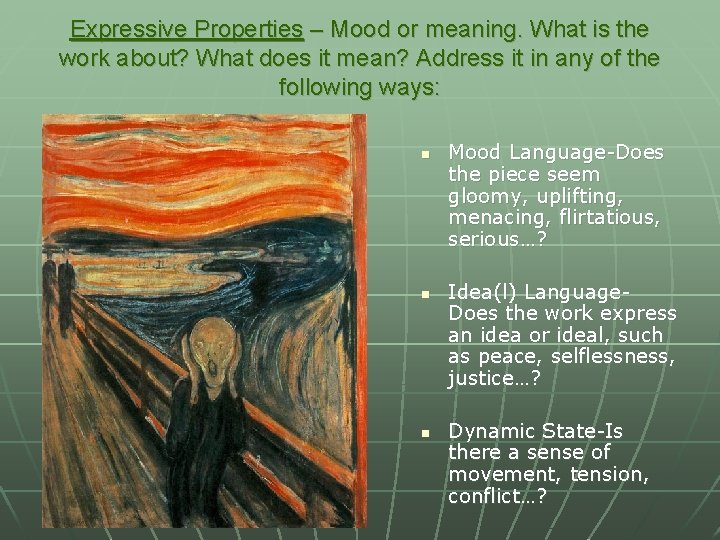
Expressive Properties – Mood or meaning. What is the work about? What does it mean? Address it in any of the following ways: n n n Mood Language-Does the piece seem gloomy, uplifting, menacing, flirtatious, serious…? Idea(l) Language. Does the work express an idea or ideal, such as peace, selflessness, justice…? Dynamic State-Is there a sense of movement, tension, conflict…?
Questioning Strategies for Aesthetic Scanning n Recognizing that students do not scan spontaneously, researchers developed questioning strategies that range from simple to complex. • Leading • Subjective • Parallel • Constructive • Productive
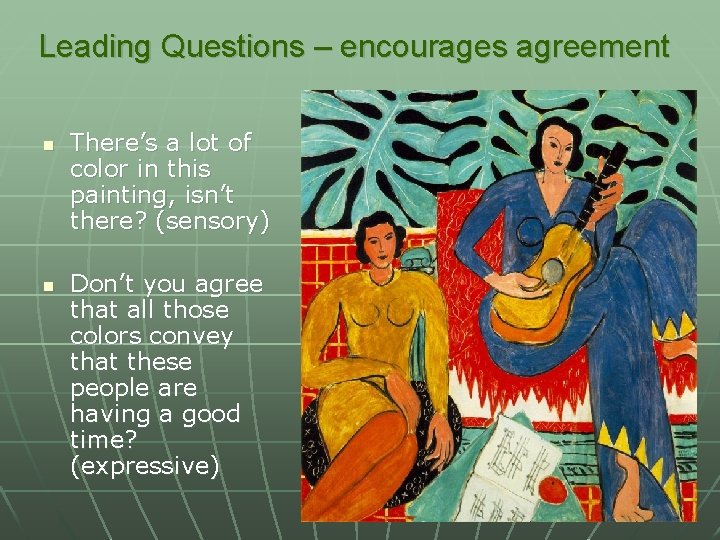
Leading Questions – encourages agreement n n There’s a lot of color in this painting, isn’t there? (sensory) Don’t you agree that all those colors convey that these people are having a good time? (expressive)
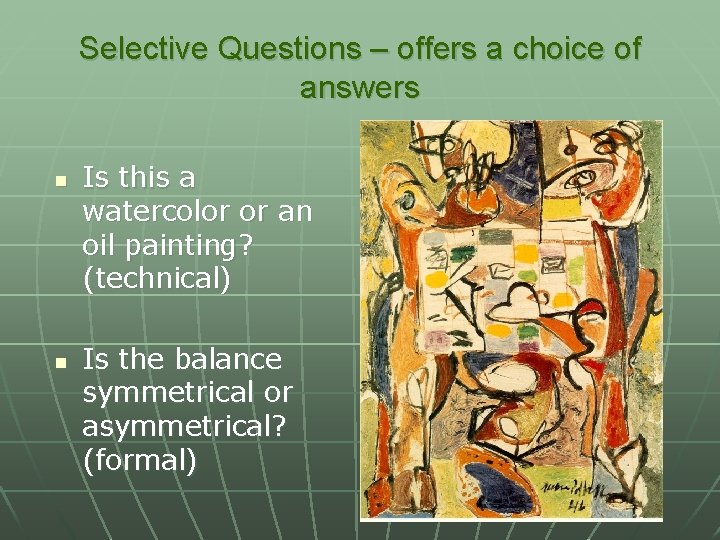
Selective Questions – offers a choice of answers n n Is this a watercolor or an oil painting? (technical) Is the balance symmetrical or asymmetrical? (formal)
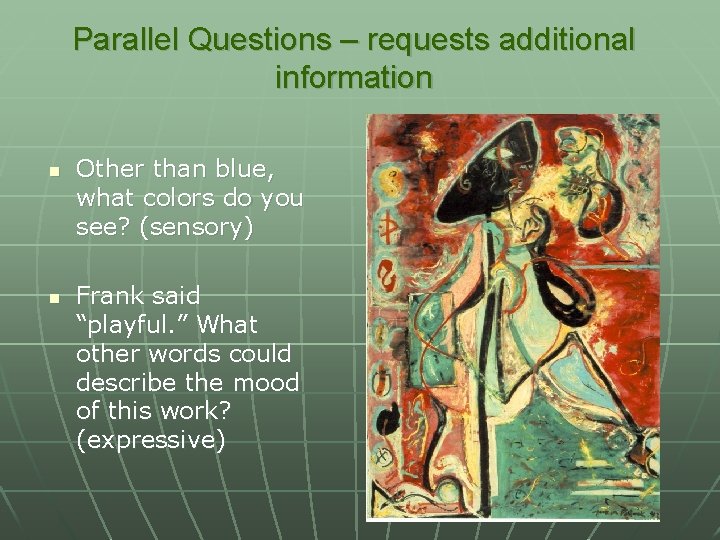
Parallel Questions – requests additional information n n Other than blue, what colors do you see? (sensory) Frank said “playful. ” What other words could describe the mood of this work? (expressive)
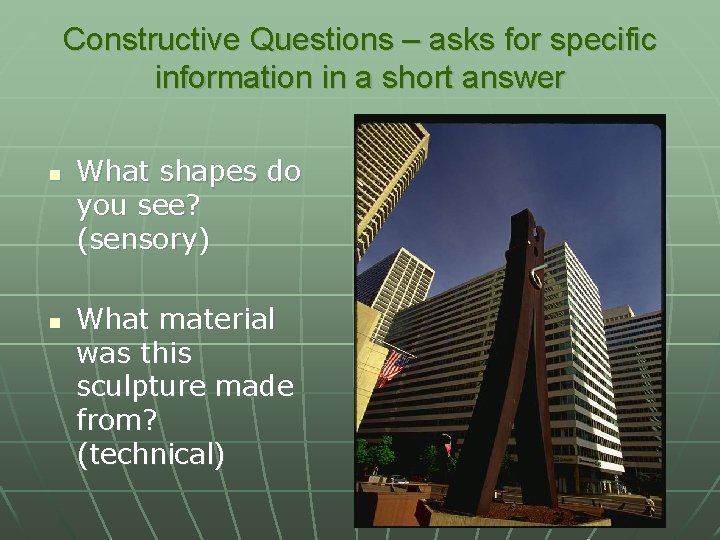
Constructive Questions – asks for specific information in a short answer n n What shapes do you see? (sensory) What material was this sculpture made from? (technical)
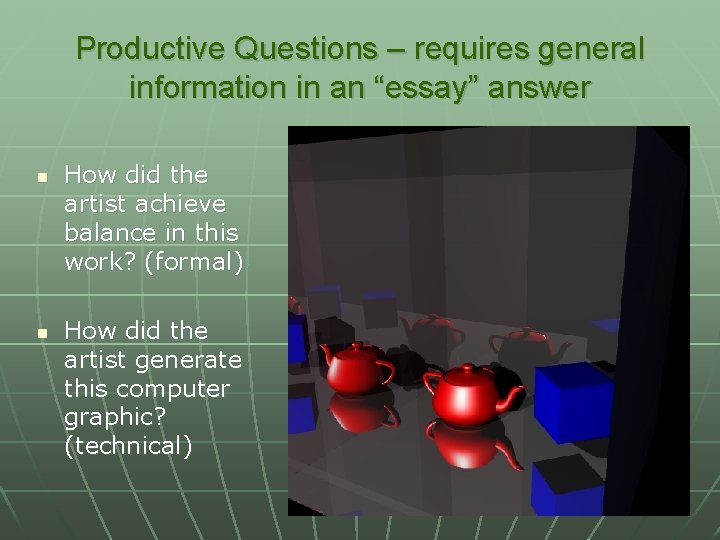
Productive Questions – requires general information in an “essay” answer n n How did the artist achieve balance in this work? (formal) How did the artist generate this computer graphic? (technical)