
Aerospace Systems Engineering Chapter 1 Overview of the
- Slides: 28
Aerospace Systems Engineering Chapter 1 - Overview of the Engineering of Systems By Dr. Sartuk KARASOY Middle East Technical University skarasoy@metu. edu. tr The viewgraphs are mainly courtesy of Dr. Dennis Buede. Chapter 1 - Overview of the Engineering of Systems 1
Engineering of Systems • Broad perspective, not deep • What must be done, how well it must be done, how it should be tested before what it is • Clear focus on system's objectives • Design: start with supersystem, migrate towards subsystems and components • Integration: start with pieces and build to system in its real environment Chapter 1 - Overview of the Engineering of Systems 2
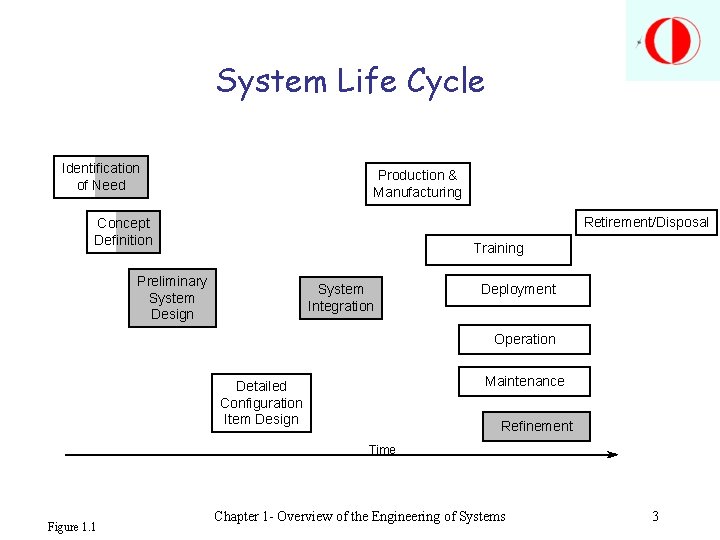
System Life Cycle Identification of Need Production & Manufacturing Retirement/Disposal Concept Definition Training Preliminary System Design System Integration Deployment Operation Maintenance Detailed Configuration Item Design Refinement Time Figure 1. 1 Chapter 1 - Overview of the Engineering of Systems 3
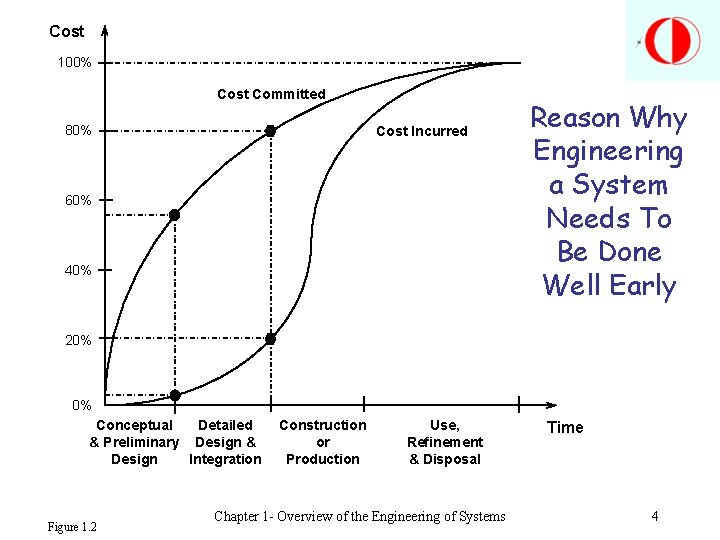
Cost 100% Cost Committed 80% Cost Incurred 60% 40% Reason Why Engineering a System Needs To Be Done Well Early 20% 0% Conceptual Detailed & Preliminary Design & Design Integration Figure 1. 2 Construction or Production Use, Refinement & Disposal Chapter 1 - Overview of the Engineering of Systems Time 4
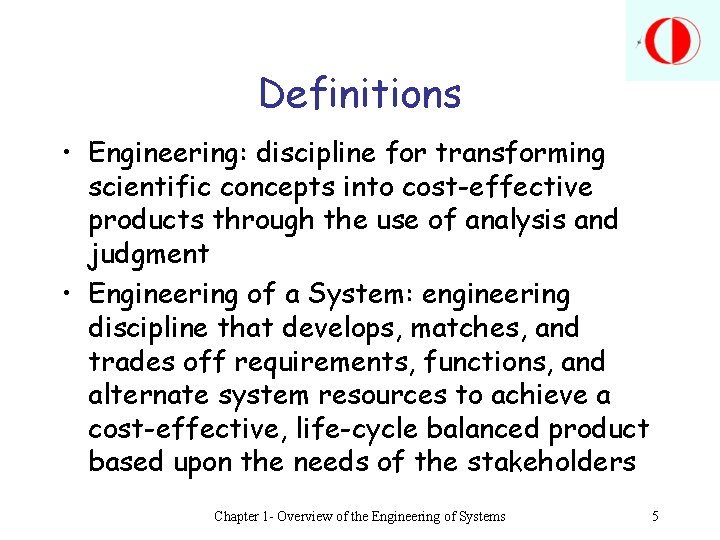
Definitions • Engineering: discipline for transforming scientific concepts into cost-effective products through the use of analysis and judgment • Engineering of a System: engineering discipline that develops, matches, and trades off requirements, functions, and alternate system resources to achieve a cost-effective, life-cycle balanced product based upon the needs of the stakeholders Chapter 1 - Overview of the Engineering of Systems 5
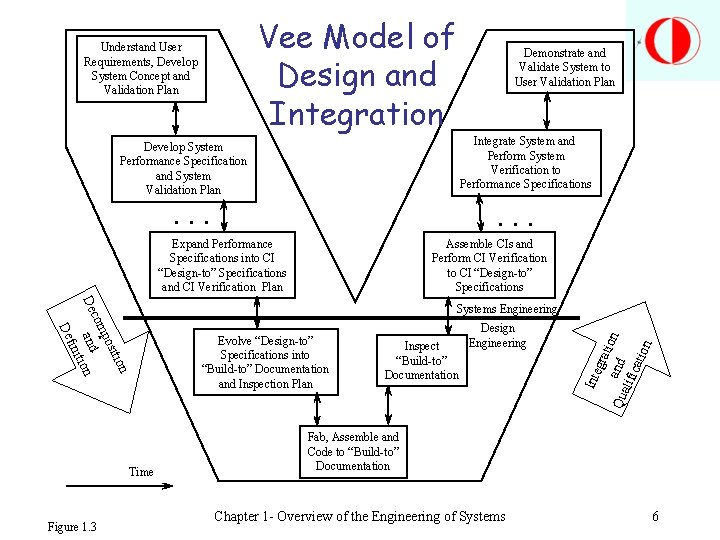
Vee Model of Design and Integration Understand User Requirements, Develop System Concept and Validation Plan Demonstrate and Validate System to User Validation Plan Integrate System and Perform System Verification to Performance Specifications Develop System Performance Specification and System Validation Plan . . . Expand Performance Specifications into CI “Design-to” Specifications and CI Verification Plan Figure 1. 3 Evolve “Design-to” Specifications into “Build-to” Documentation and Inspection Plan Inspect “Build-to” Documentation Design Engineering gra tio Qu and n alif icat ion Systems Engineering Inte n itio pos com De and ion it fin De Time Assemble CIs and Perform CI Verification to CI “Design-to” Specifications Fab, Assemble and Code to “Build-to” Documentation Chapter 1 - Overview of the Engineering of Systems 6
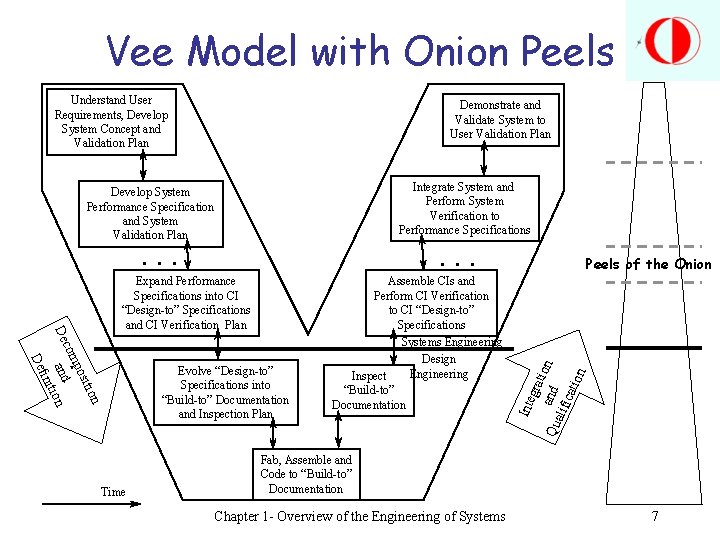
Vee Model with Onion Peels Understand User Requirements, Develop System Concept and Validation Plan Demonstrate and Validate System to User Validation Plan Integrate System and Perform System Verification to Performance Specifications Develop System Performance Specification and System Validation Plan . . . Time gra tio Qu and n alif icat ion Evolve “Design-to” Specifications into “Build-to” Documentation and Inspection Plan Assemble CIs and Perform CI Verification to CI “Design-to” Specifications Systems Engineering Design Engineering Inspect “Build-to” Documentation Inte n itio pos com De and ion it fin De Expand Performance Specifications into CI “Design-to” Specifications and CI Verification Plan Peels of the Onion Fab, Assemble and Code to “Build-to” Documentation Chapter 1 - Overview of the Engineering of Systems 7
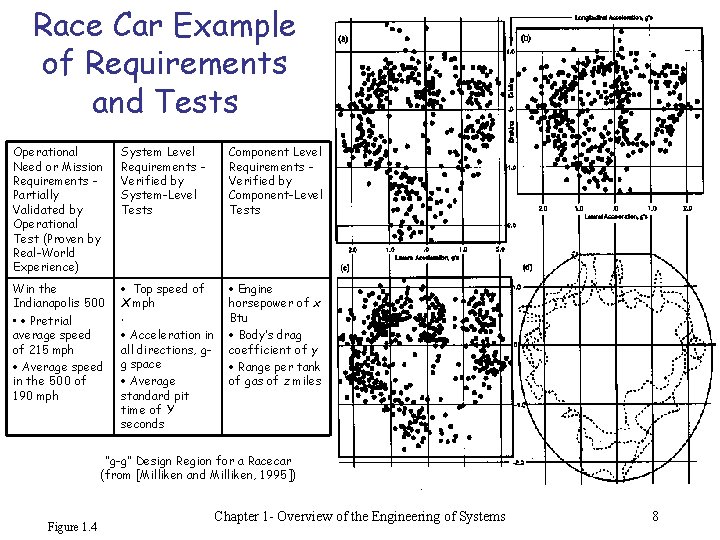
Race Car Example of Requirements and Tests Operational Need or Mission Requirements Partially Validated by Operational Test (Proven by Real-World Experience) System Level Requirements Verified by System-Level Tests Component Level Requirements Verified by Component-Level Tests Win the Indianapolis 500 • · Pretrial average speed of 215 mph · Average speed in the 500 of 190 mph · Top speed of X mph · · Acceleration in all directions, gg space · Average standard pit time of Y seconds · Engine horsepower of x Btu · Body’s drag coefficient of y · Range per tank of gas of z miles “g-g” Design Region for a Racecar (from [Milliken and Milliken, 1995]) Figure 1. 4 Chapter 1 - Overview of the Engineering of Systems 8
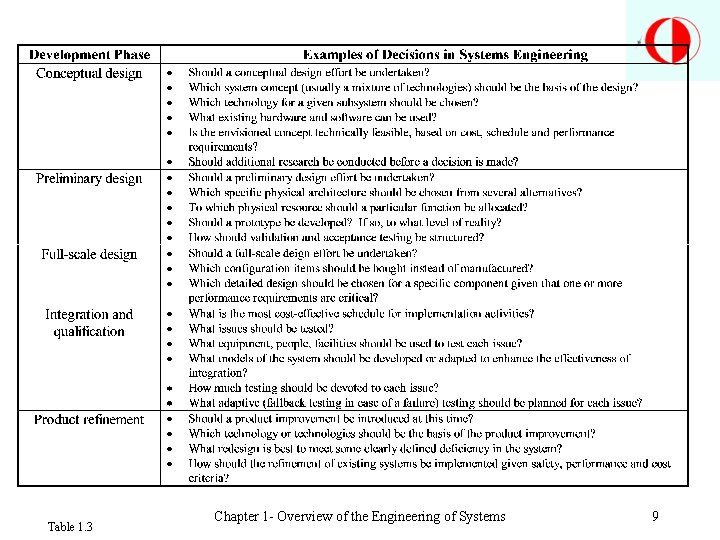
Table 1. 3 Chapter 1 - Overview of the Engineering of Systems 9
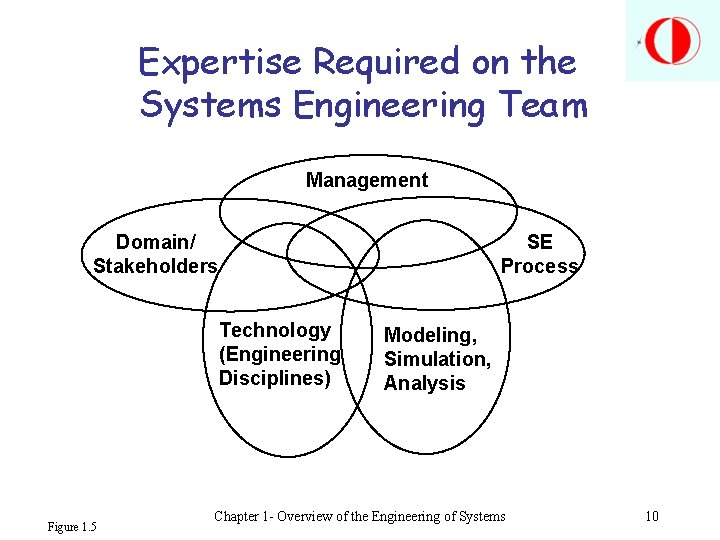
Expertise Required on the Systems Engineering Team Management Domain/ Stakeholders SE Process Technology (Engineering Disciplines) Figure 1. 5 Modeling, Simulation, Analysis Chapter 1 - Overview of the Engineering of Systems 10
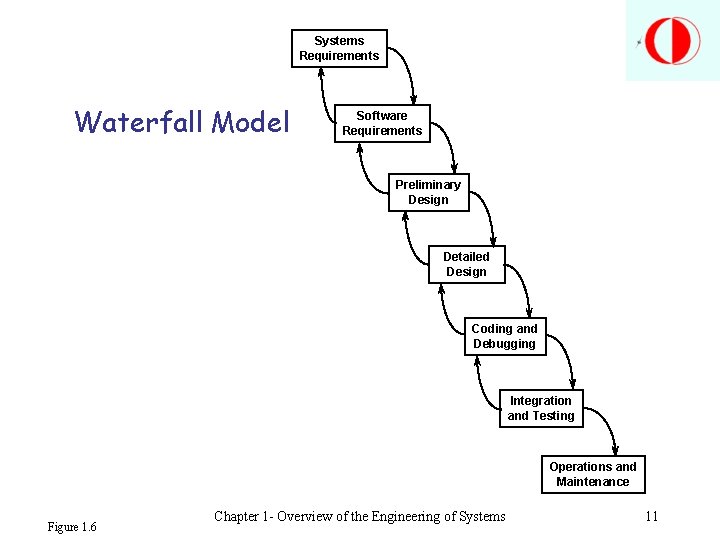
Systems Requirements Waterfall Model Software Requirements Preliminary Design Detailed Design Coding and Debugging Integration and Testing Operations and Maintenance Figure 1. 6 Chapter 1 - Overview of the Engineering of Systems 11
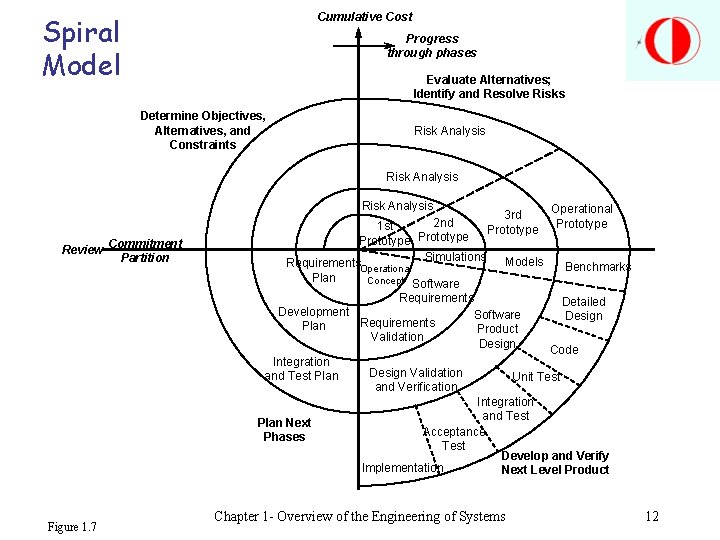
Cumulative Cost Spiral Model Progress through phases Evaluate Alternatives; Identify and Resolve Risks Determine Objectives, Alternatives, and Constraints Risk Analysis Review Commitment Partition Figure 1. 7 Operational 3 rd 2 nd 1 st Prototype Models Requirements. Operational Simulations Benchmarks Plan Concept Software Requirements Detailed Development Software Design Requirements Plan Product Validation Design Code Integration Design Validation and Test Plan Unit Test and Verification Integration and Test Plan Next Acceptance Phases Test Develop and Verify Implementation Next Level Product Chapter 1 - Overview of the Engineering of Systems 12
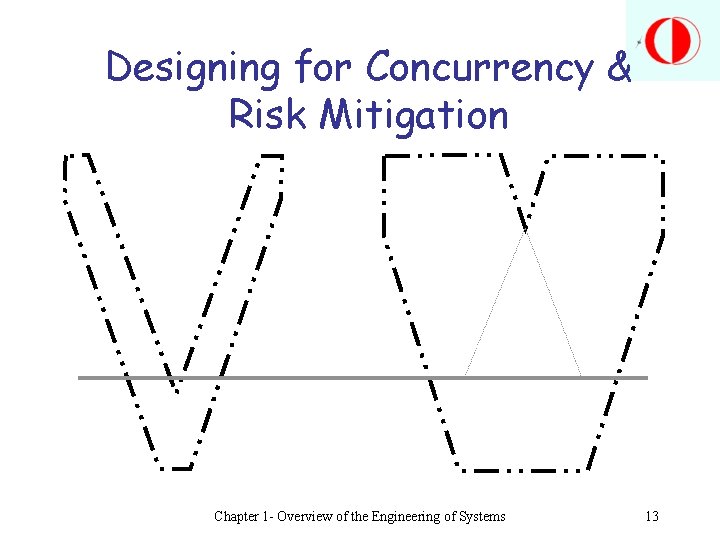
Designing for Concurrency & Risk Mitigation Chapter 1 - Overview of the Engineering of Systems 13
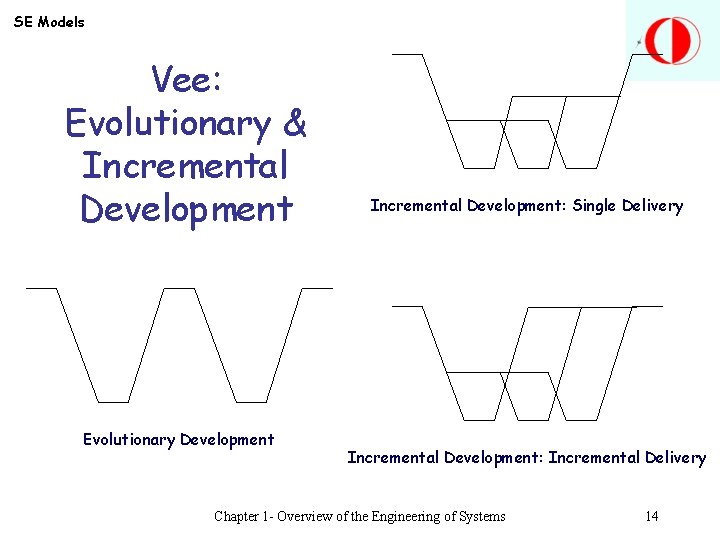
SE Models Vee: Evolutionary & Incremental Development Evolutionary Development Incremental Development: Single Delivery Incremental Development: Incremental Delivery Chapter 1 - Overview of the Engineering of Systems 14
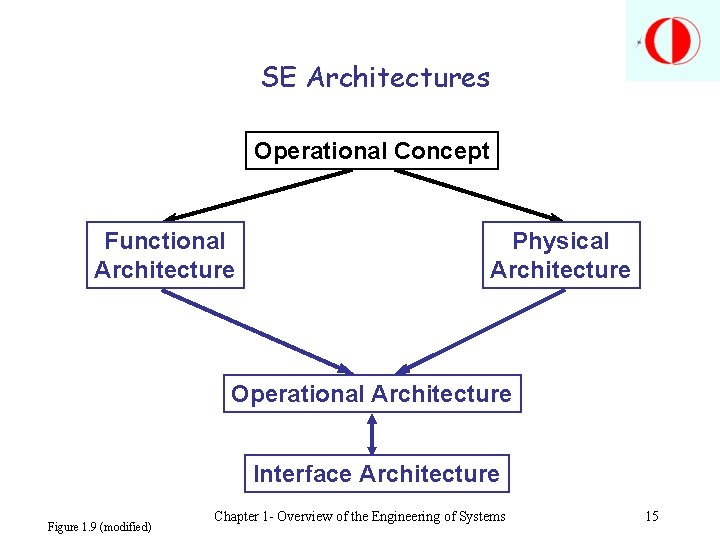
SE Architectures Operational Concept Functional Architecture Physical Architecture Operational Architecture Interface Architecture Figure 1. 9 (modified) Chapter 1 - Overview of the Engineering of Systems 15
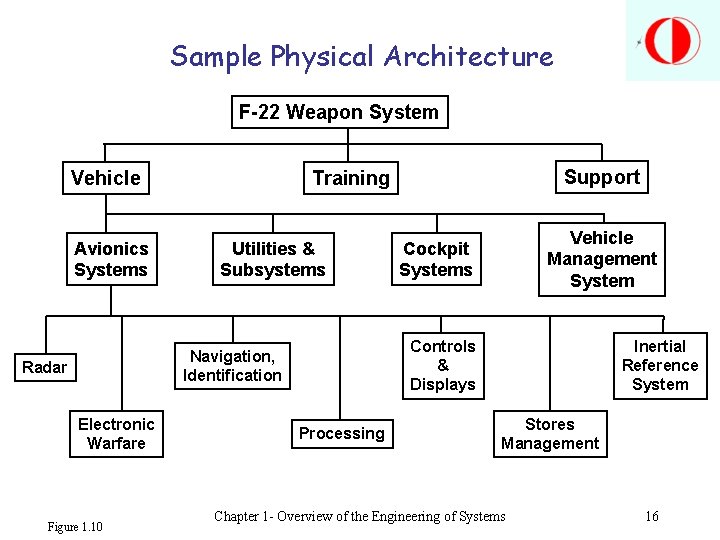
Sample Physical Architecture F-22 Weapon System Vehicle Avionics Systems Utilities & Subsystems Electronic Warfare Figure 1. 10 Vehicle Management System Cockpit Systems Controls & Displays Navigation, Identification Radar Support Training Processing Inertial Reference System Stores Management Chapter 1 - Overview of the Engineering of Systems 16
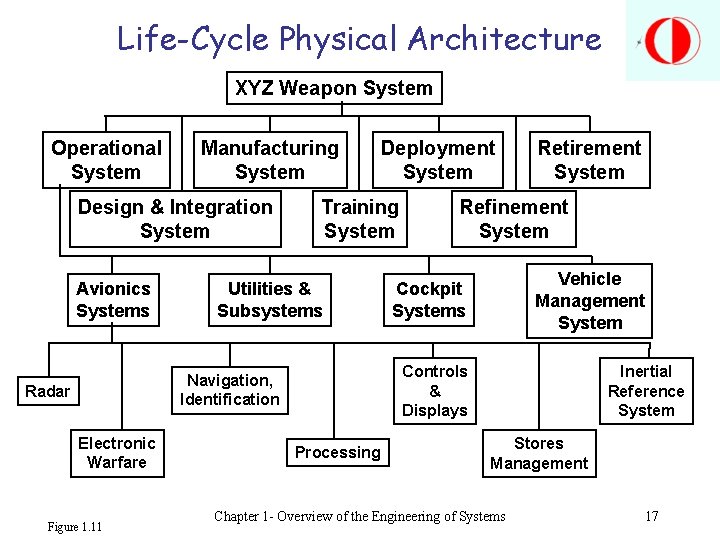
Life-Cycle Physical Architecture XYZ Weapon System Operational System Manufacturing System Design & Integration System Avionics Systems Training System Utilities & Subsystems Electronic Warfare Figure 1. 11 Retirement System Refinement System Vehicle Management System Cockpit Systems Controls & Displays Navigation, Identification Radar Deployment System Processing Inertial Reference System Stores Management Chapter 1 - Overview of the Engineering of Systems 17
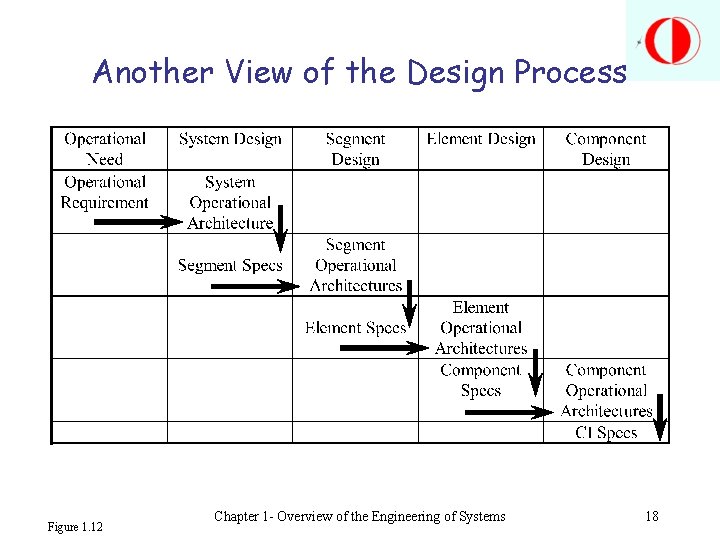
Another View of the Design Process Figure 1. 12 Chapter 1 - Overview of the Engineering of Systems 18
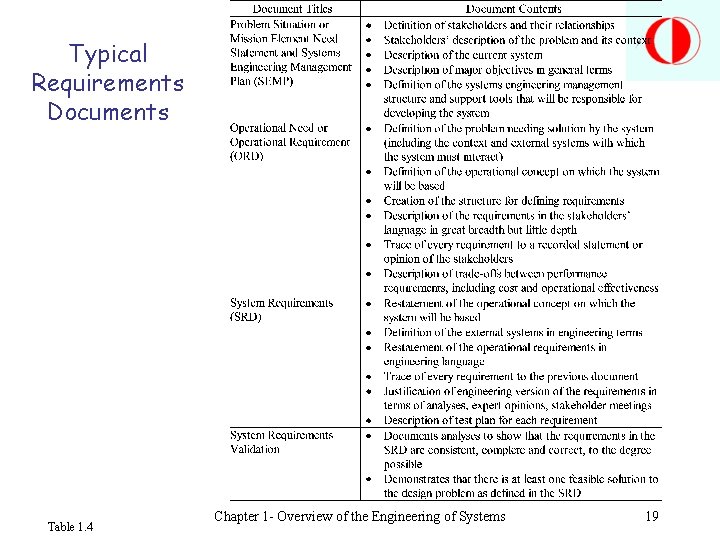
Typical Requirements Documents Table 1. 4 Chapter 1 - Overview of the Engineering of Systems 19
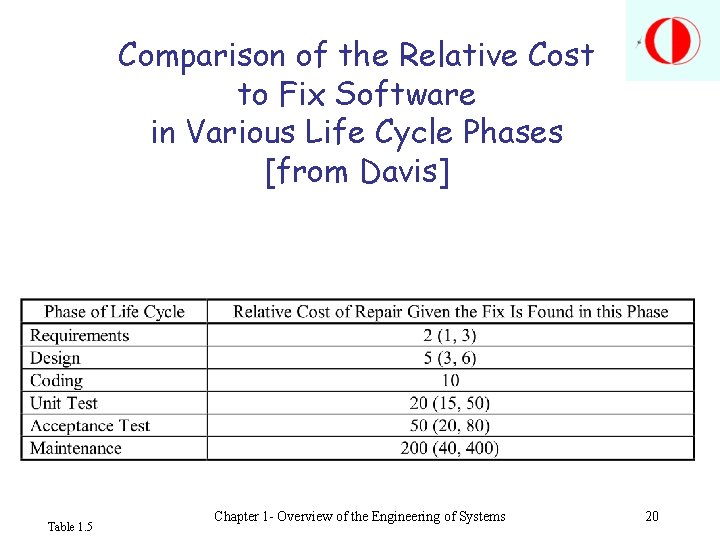
Comparison of the Relative Cost to Fix Software in Various Life Cycle Phases [from Davis] Table 1. 5 Chapter 1 - Overview of the Engineering of Systems 20
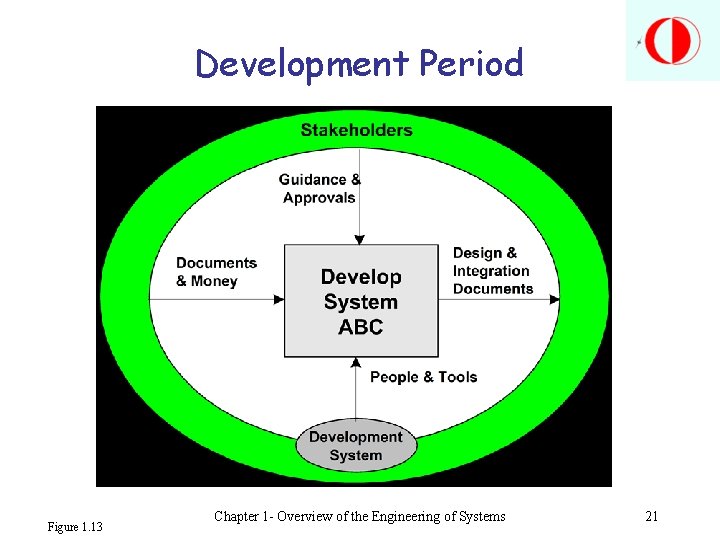
Development Period Figure 1. 13 Chapter 1 - Overview of the Engineering of Systems 21
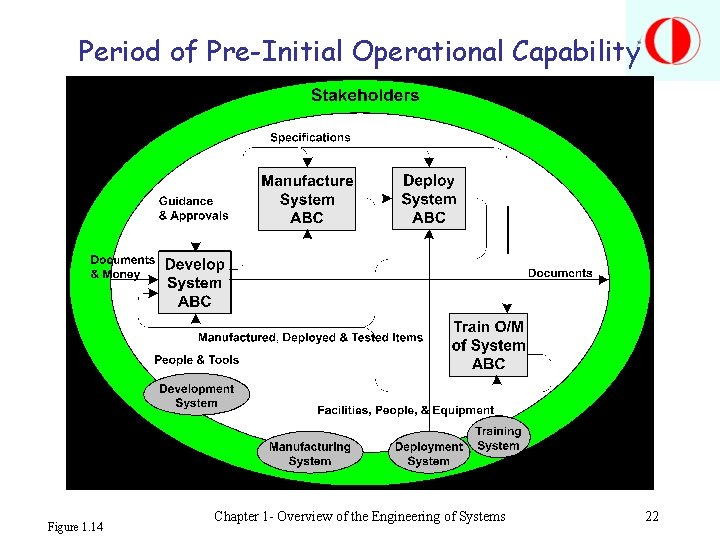
Period of Pre-Initial Operational Capability Figure 1. 14 Chapter 1 - Overview of the Engineering of Systems 22
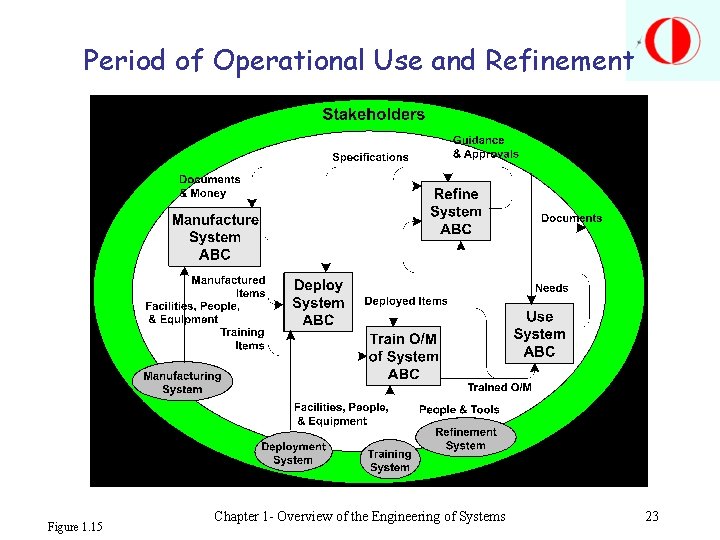
Period of Operational Use and Refinement Figure 1. 15 Chapter 1 - Overview of the Engineering of Systems 23
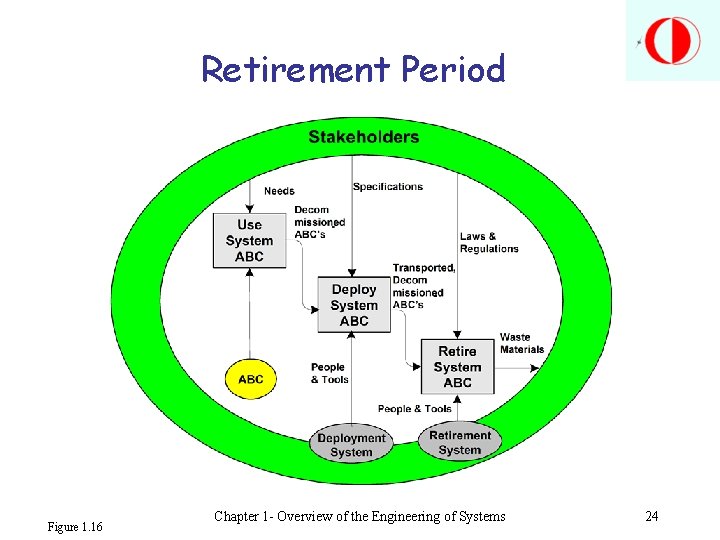
Retirement Period Figure 1. 16 Chapter 1 - Overview of the Engineering of Systems 24
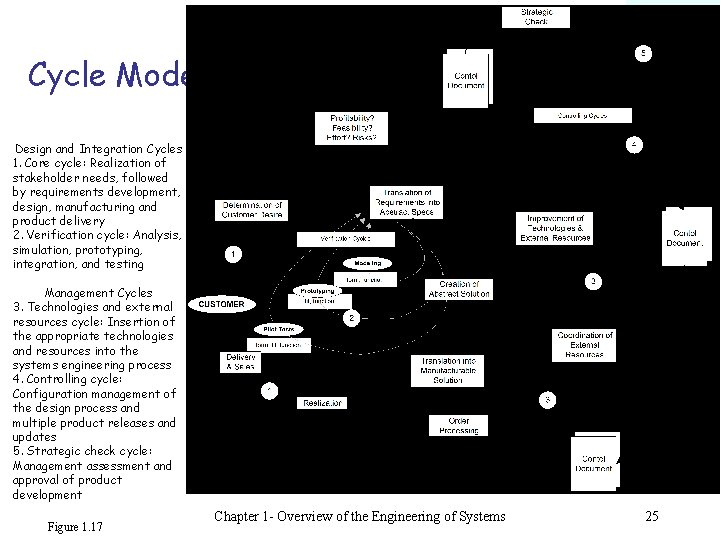
Cycle Model Design and Integration Cycles 1. Core cycle: Realization of stakeholder needs, followed by requirements development, design, manufacturing and product delivery 2. Verification cycle: Analysis, simulation, prototyping, integration, and testing Management Cycles 3. Technologies and external resources cycle: Insertion of the appropriate technologies and resources into the systems engineering process 4. Controlling cycle: Configuration management of the design process and multiple product releases and updates 5. Strategic check cycle: Management assessment and approval of product development Figure 1. 17 Chapter 1 - Overview of the Engineering of Systems 25
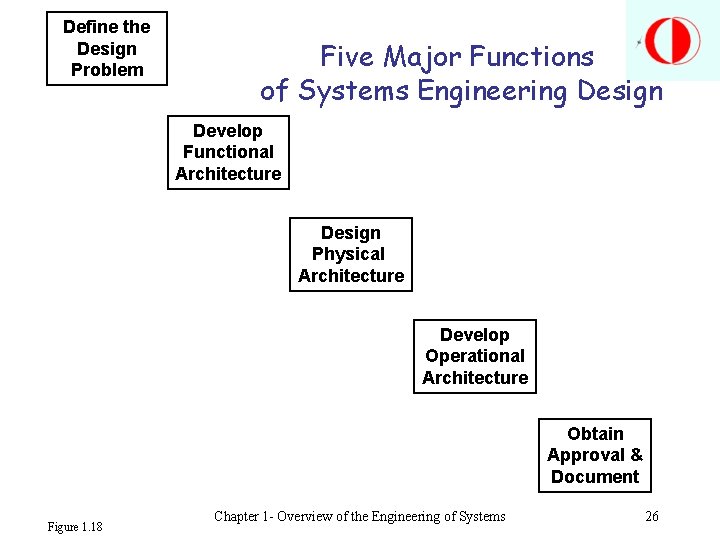
Define the Design Problem Five Major Functions of Systems Engineering Design Develop Functional Architecture Design Physical Architecture Develop Operational Architecture Obtain Approval & Document Figure 1. 18 Chapter 1 - Overview of the Engineering of Systems 26
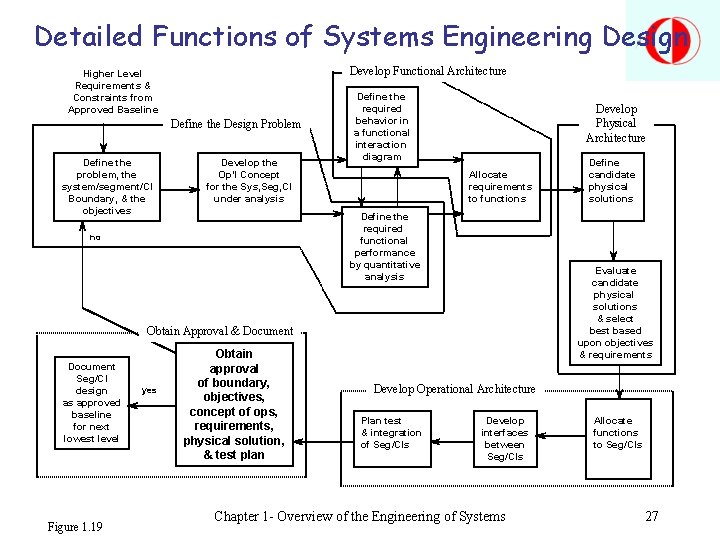
Detailed Functions of Systems Engineering Design Develop Functional Architecture Higher Level Requirements & Constraints from Approved Baseline Define the Design Problem Define the problem, the system/segment/CI Boundary, & the objectives Develop the Op’l Concept for the Sys, Seg, CI under analysis Define the required behavior in a functional interaction diagram Develop Physical Architecture Allocate requirements to functions Define the required functional performance by quantitative analysis no Evaluate candidate physical solutions & select best based upon objectives & requirements Obtain Approval & Document Seg/CI design as approved baseline for next lowest level Figure 1. 19 yes Obtain approval of boundary, objectives, concept of ops, requirements, physical solution, & test plan Define candidate physical solutions Develop Operational Architecture Plan test & integration of Seg/CIs Develop interfaces between Seg/CIs Chapter 1 - Overview of the Engineering of Systems Allocate functions to Seg/CIs 27
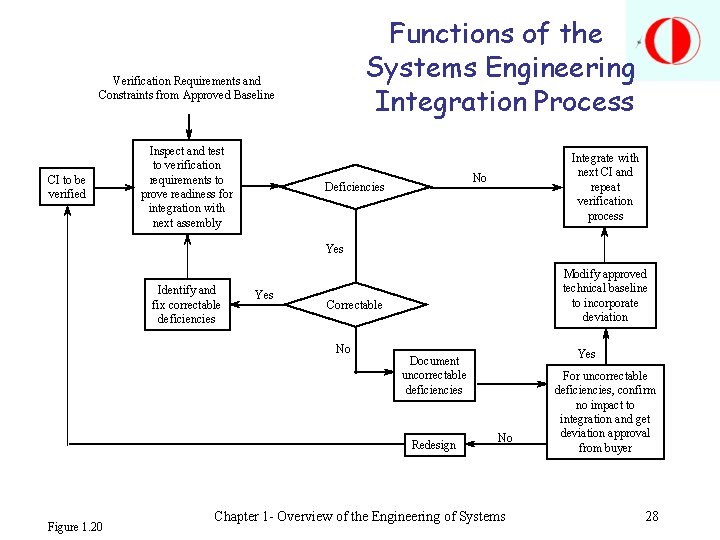
Functions of the Systems Engineering Integration Process Verification Requirements and Constraints from Approved Baseline CI to be verified Inspect and test to verification requirements to prove readiness for integration with next assembly Integrate with next CI and repeat verification process No Deficiencies Yes Identify and fix correctable deficiencies Yes Modify approved technical baseline to incorporate deviation Correctable No Redesign Figure 1. 20 Yes Document uncorrectable deficiencies No Chapter 1 - Overview of the Engineering of Systems For uncorrectable deficiencies, confirm no impact to integration and get deviation approval from buyer 28