
Aerodrome Obstruction Identification Surfaces Teran Wong Cohort 15
Aerodrome Obstruction Identification Surfaces Teran Wong Cohort 15 MS GIS University of Redlands

Client • ESRI • Aeronautical Solution • Contact Person • Shane Barrett (Aeronautical Solution Product Manager) Introduction Design and Implementation Challenge and Conclusion Future Development
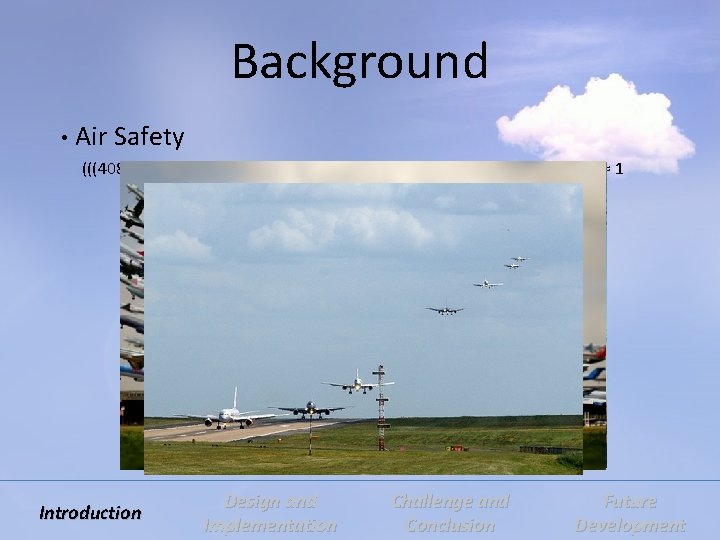
Background • Air Safety (((40882 flight operations / 31 days) / 24 hours) / 60 minutes) = 0. 9158 ≈ 1 Introduction Design and Implementation Challenge and Conclusion Future Development
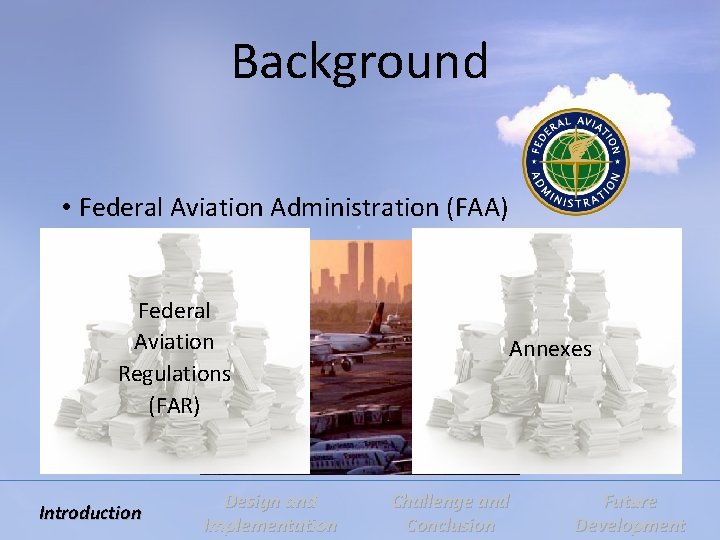
Background • Federal Aviation Administration (FAA) • International Civil Aviation Organization (ICAO) Federal Aviation Regulations (FAR) Introduction Design and Implementation Annexes Challenge and Conclusion Future Development

Background FAA: FAR part 77, subpart C ICAO: Annex. Identification 15 Chapter 10, e. TOD Obstruction Surfaces Introduction Design and Implementation Challenge and Conclusion (OIS) Future Development

Current Challenge • Update OIS features are very time consuming and labor intensive • OIS Charts maintenance Introduction Design and Implementation Challenge and Conclusion Future Development

Solution • Develop a geoprocessing (gp) tool to generate the OIS features automatically • Store the OIS features in Geodatabase Introduction Design and Implementation Challenge and Conclusion Future Development
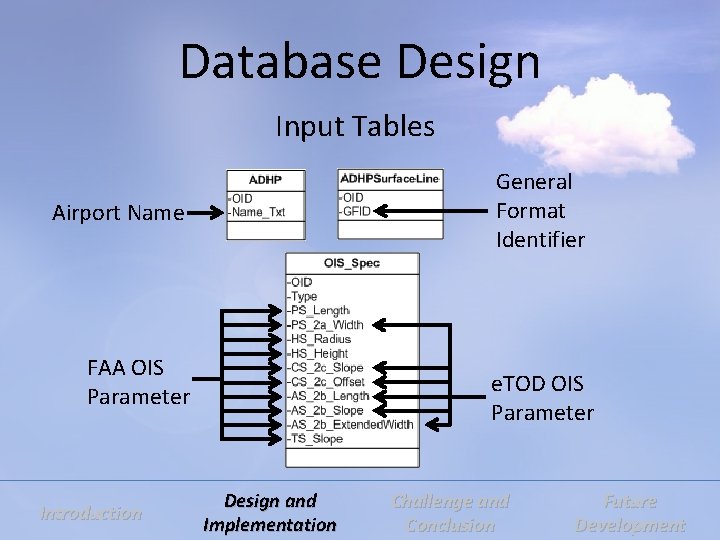
Database Design Input Tables General Format Identifier Airport Name FAA OIS Parameter Introduction e. TOD OIS Parameter Design and Implementation Challenge and Conclusion Future Development

Database Design Output Tables FAA OIS Type: Primary, Horizontal, Conical, Approach, or Transitional e. TOD OIS Type: 2 a, 2 b, or 2 c Introduction Design and Implementation Challenge and Conclusion Future Development

Database Design Populate Z Value Original ADHPSurface. Line New ADHPSurface. Line with elevation Introduction Design and Implementation Challenge and Conclusion Future Development

GP Tool Form Design Introduction Design and Implementation Challenge and Conclusion Future Development
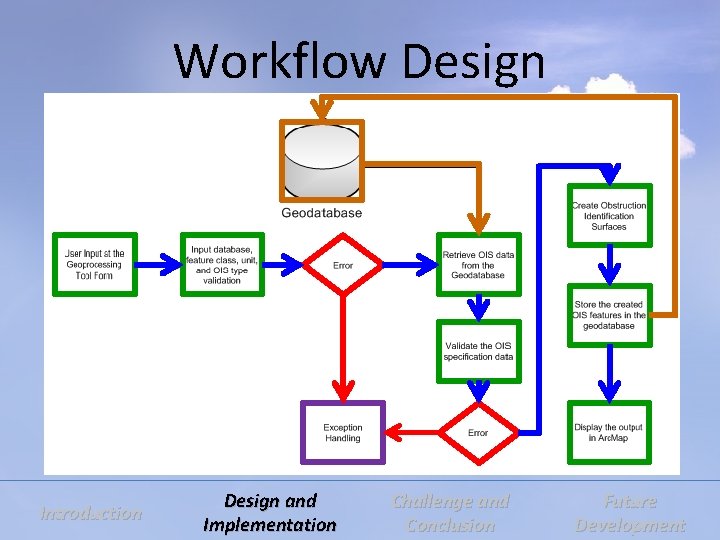
Workflow Design Introduction Design and Implementation Challenge and Conclusion Future Development
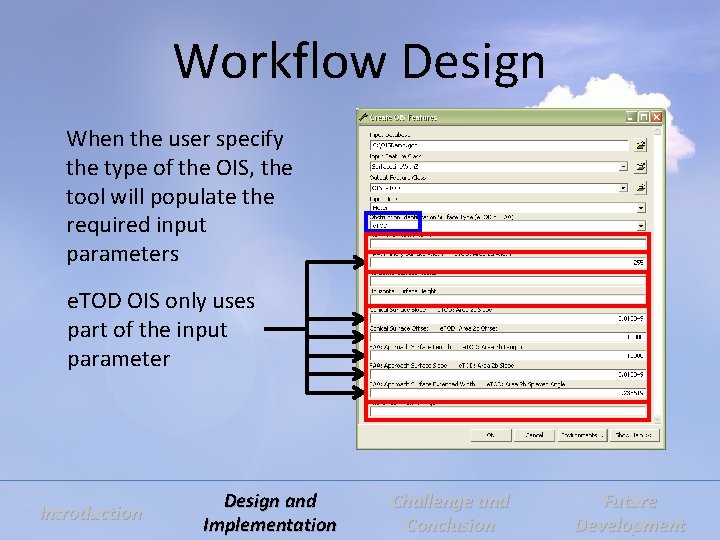
Workflow Design When the user specify the type of the OIS, the tool will populate the required input parameters e. TOD OIS only uses part of the input parameter Introduction Design and Implementation Challenge and Conclusion Future Development
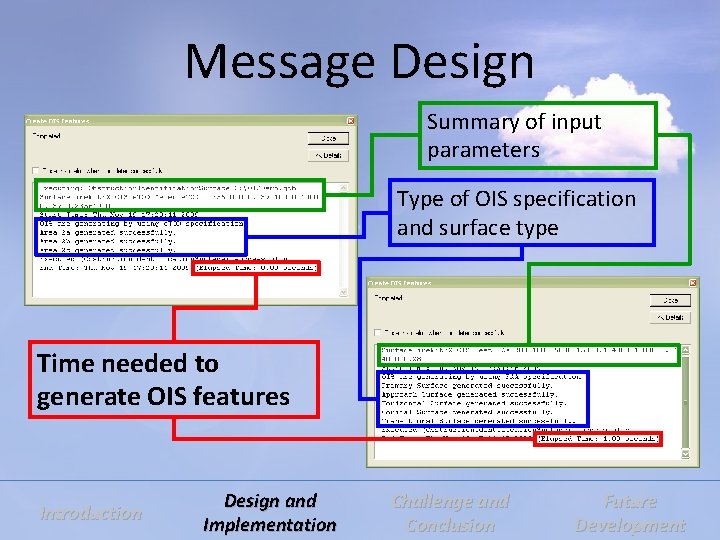
Message Design Summary of input parameters Type of OIS specification and surface type Time needed to generate OIS features Introduction Design and Implementation Challenge and Conclusion Future Development

OIS Features Attribute Tables Introduction Design and Implementation Challenge and Conclusion Future Development

e. TOD OIS Features in Arc. Map Area 2 a Area 2 b Area 2 c Introduction Design and Implementation Challenge and Conclusion Future Development
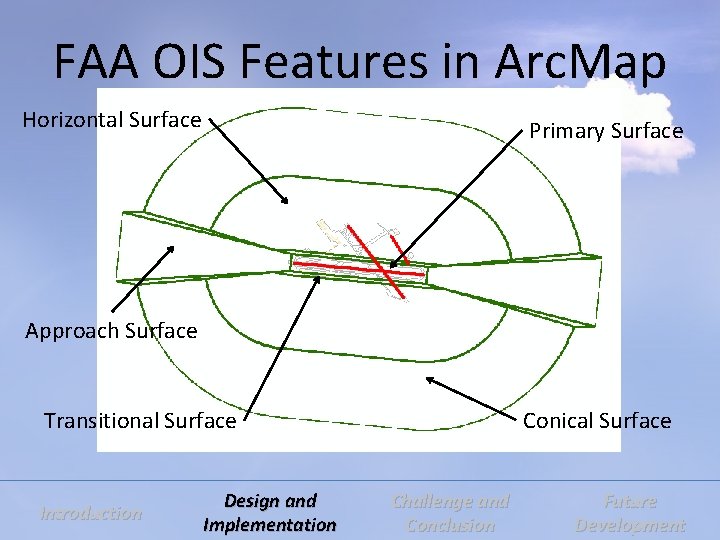
FAA OIS Features in Arc. Map Horizontal Surface Primary Surface Approach Surface Conical Surface Transitional Surface Introduction Design and Implementation Challenge and Conclusion Future Development

OIS Features in Arc. Scene FAA OIS Area 2 a Primary Surface Approach Surface e. TOD OIS Conical Surface e. TOD OIS Area 2 b Horizontal Surface Introduction Design and Implementation Area 2 c Transitional Surface Challenge and Conclusion Future Development

Summary of OIS features 1: 150, 000 FAA OIS 1: 50, 000 More Surfaces Introduction Design and Implementation e. TOD OIS 1: 150, 000 Larger Area Challenge and Conclusion Future Development
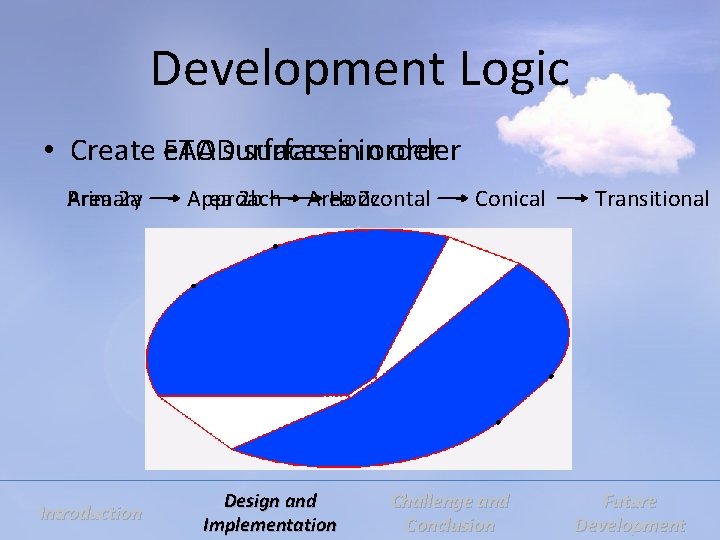
Development Logic • Create e. TOD FAA surfacesininorder Primary Area 2 a Introduction Approach Area 2 b Area Horizontal 2 c Design and Implementation Conical Challenge and Conclusion Transitional Future Development
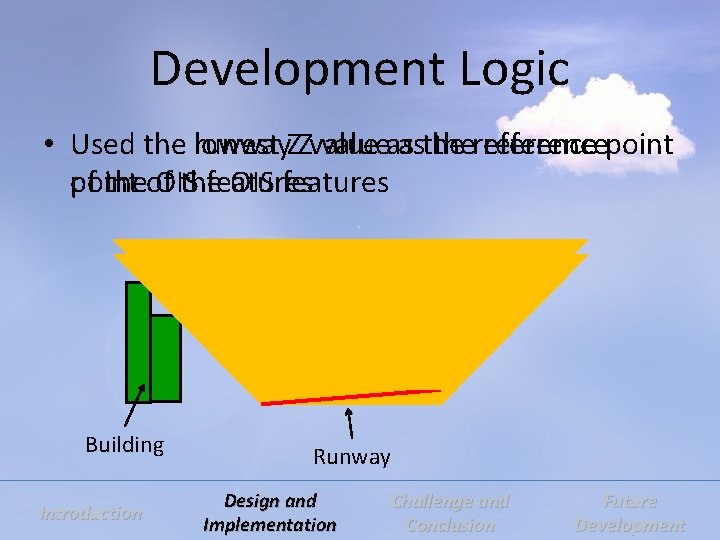
Development Logic • Used the runway valueas asthe thereferencepoint lowest ZZvalue point the OIS features of theof OIS features Building Introduction Runway Design and Implementation Challenge and Conclusion Future Development

Development Logic • Vertical transitional surfaces issue Transitional Surface Introduction Design and Implementation Challenge and Conclusion Future Development
Challenge • New version of Arc. GIS made the development unstable. • A lot of research in three dimensional environmental functionalities • Lack of reference in OIS model
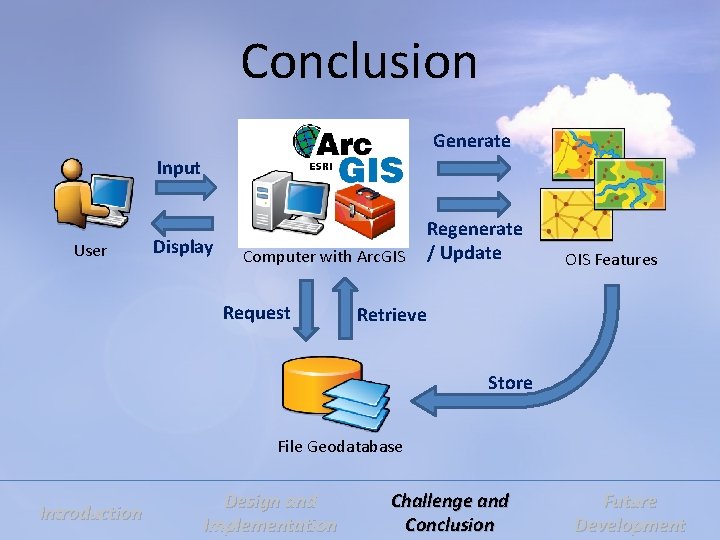
Conclusion Generate Input User Display Computer with Arc. GIS Request Regenerate / Update OIS Features Retrieve Store File Geodatabase Introduction Design and Implementation Challenge and Conclusion Future Development

Future Development • • Projection Unit testing with NUnit Different runway type in FAA Different specification – ICAO Annex 14 Introduction Design and Implementation Challenge and Conclusion Future Development

Future Development • Multiple runways • One open-ended runway • Ready for further 3 D analysis Introduction Design and Implementation Challenge and Conclusion Future Development
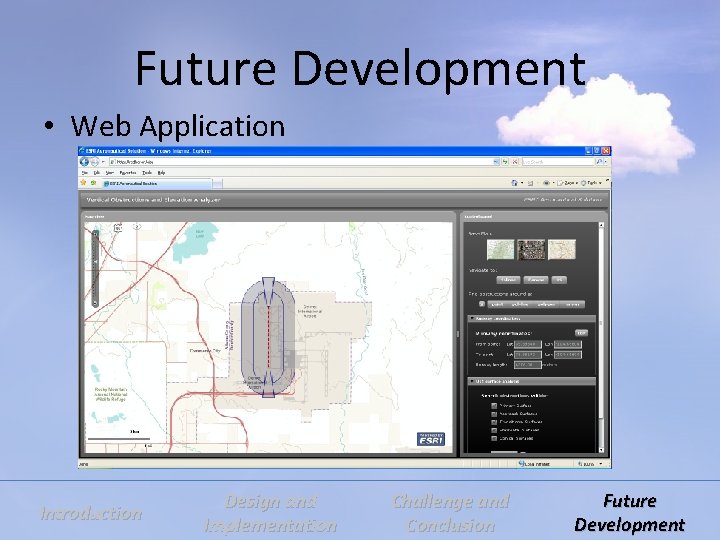
Future Development • Web Application Introduction Design and Implementation Challenge and Conclusion Future Development

Thank you

Question Teran Wong MS GIS University of Redlands teran_wong@spatial. redlands. edu
- Slides: 29