
Aerobic vs Anaerobic Respiration Aerobic Energy Conversion Energy
Aerobic vs. Anaerobic Respiration

Aerobic Energy Conversion • Energy production that uses oxygen • Ex. Cellular respiration • Makes 38 ATP per glucose!!! Stage 1: Oxygen not needed Stage 2: Oxygen needed Stage 3: Oxygen needed Therefore…Overall Cellular respiration is an aerobic process
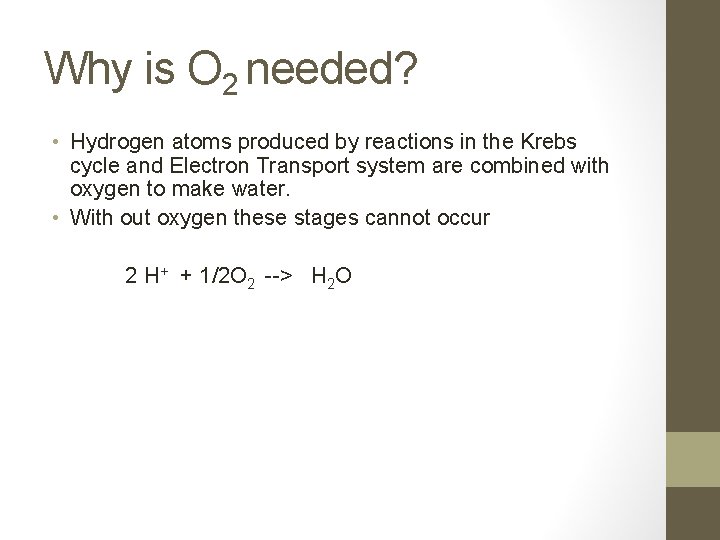
Why is O 2 needed? • Hydrogen atoms produced by reactions in the Krebs cycle and Electron Transport system are combined with oxygen to make water. • With out oxygen these stages cannot occur 2 H+ + 1/2 O 2 --> H 2 O
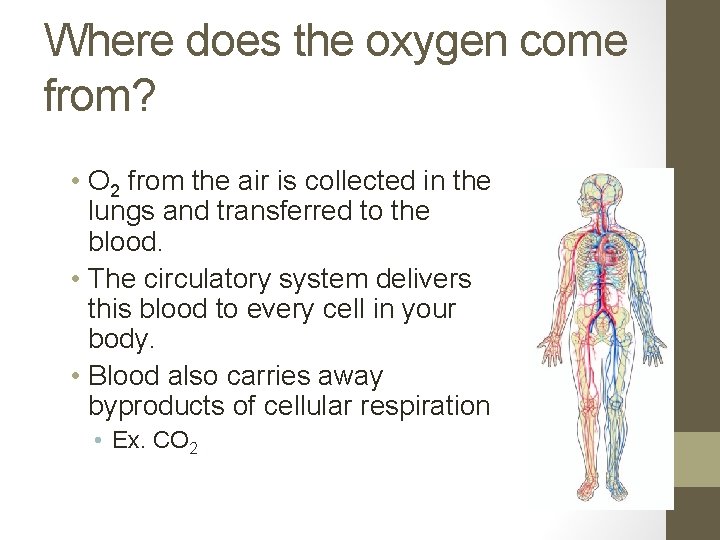
Where does the oxygen come from? • O 2 from the air is collected in the lungs and transferred to the blood. • The circulatory system delivers this blood to every cell in your body. • Blood also carries away byproducts of cellular respiration • Ex. CO 2
What happens when the oxygen is used up? • Oxygen supplies can be used up quickly through… • Bursts of intense energy usage. • Ex. Sprinting • Extended exercise with little rest • How did Protocol 1 from Lab 5 -2 show this? • Limited blood flow • How did Protocol 4 from Lab 5 -2 show this? • Do muscles stop working when the oxygen is used up?
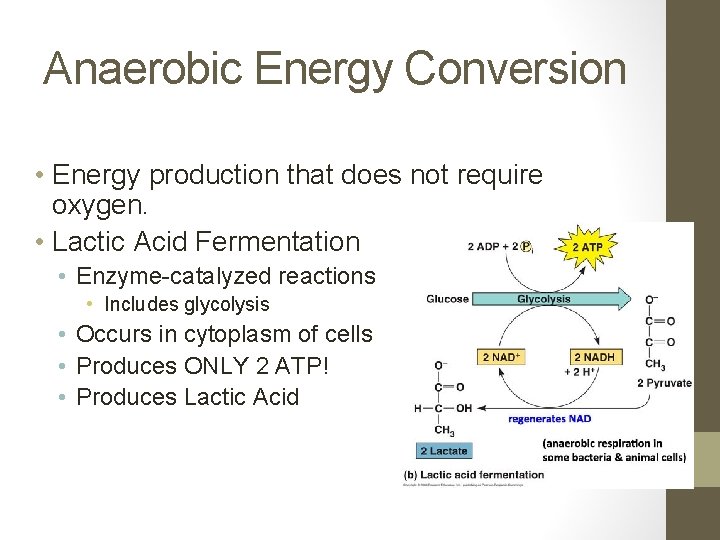
Anaerobic Energy Conversion • Energy production that does not require oxygen. • Lactic Acid Fermentation • Enzyme-catalyzed reactions • Includes glycolysis • Occurs in cytoplasm of cells • Produces ONLY 2 ATP! • Produces Lactic Acid
Muscle Fatigue • Build up of lactic acid in muscles results in the feeling of fatigue. • Blood flow removes lactic acid from muscle cells (goes to the liver). • Efficient circulatory systems remove lactic acid faster • This is one reason for conditioning before competitions. (Getting “warmed up”)
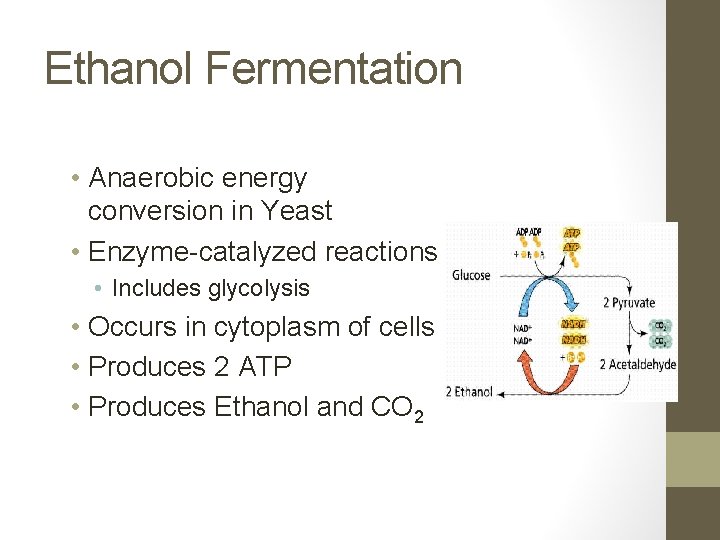
Ethanol Fermentation • Anaerobic energy conversion in Yeast • Enzyme-catalyzed reactions • Includes glycolysis • Occurs in cytoplasm of cells • Produces 2 ATP • Produces Ethanol and CO 2
- Slides: 8