
AEROBIC RESPIRATION Glycolysis First set of reactions involved
AEROBIC RESPIRATION Glycolysis
First set of reactions involved in extracting energy from glucose Occurs in the cytoplasm Nearly all organisms from all branches of life undergo glycolysis in a nearly identical manner Does not require oxygen GLYCOLYSIS
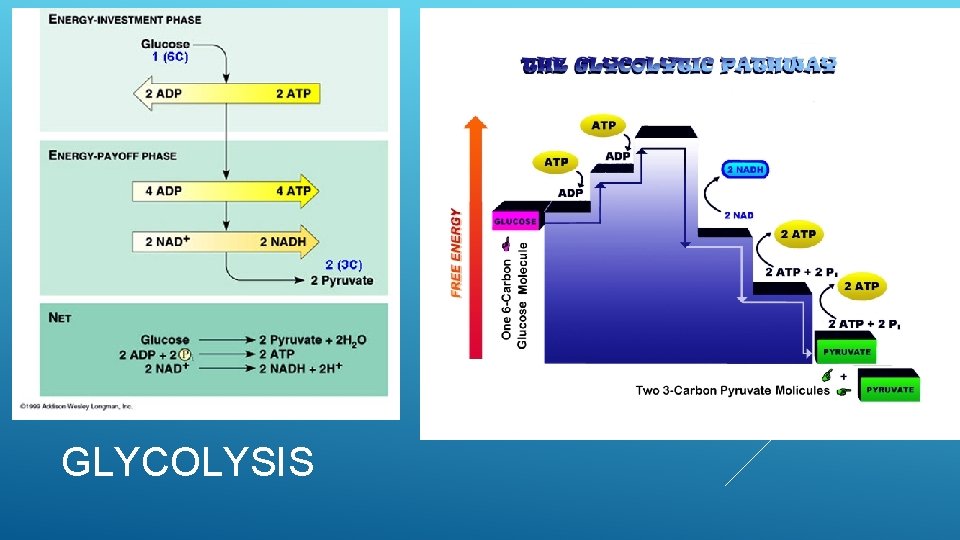
GLYCOLYSIS
Net rxn: Glucose + 2 ADP + 2 Pi + 2 NAD+ 2 Pyruvate + 2 ATP + 2 NADH NAD+/NADH : nicotinamide adenine dinucleotide Energy carrier: carries 2 high energy electrons to the ETC The 2 pyruvate still carriers 75% of the energy in the glucose GLYCOLYSIS OVERVIEW
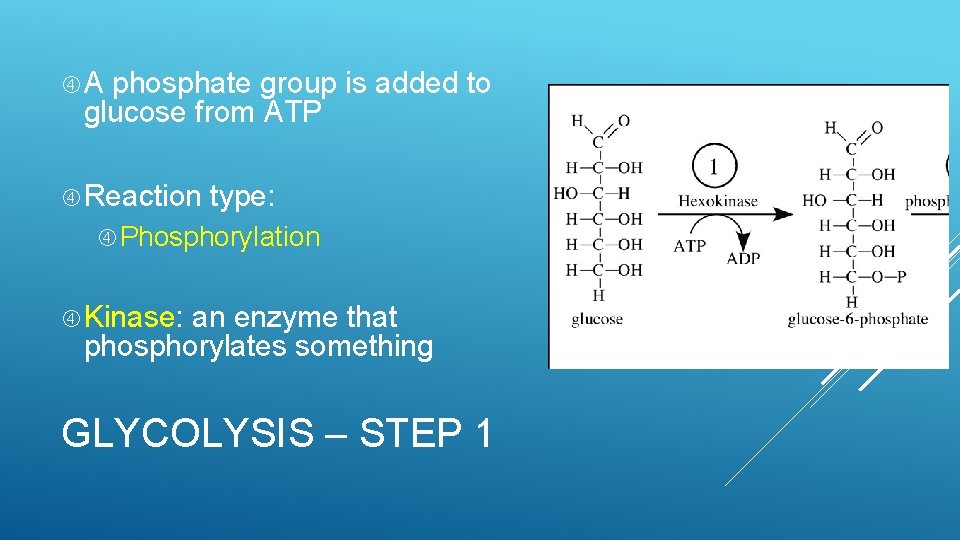
A phosphate group is added to glucose from ATP Reaction type: Phosphorylation Kinase: an enzyme that phosphorylates something GLYCOLYSIS – STEP 1
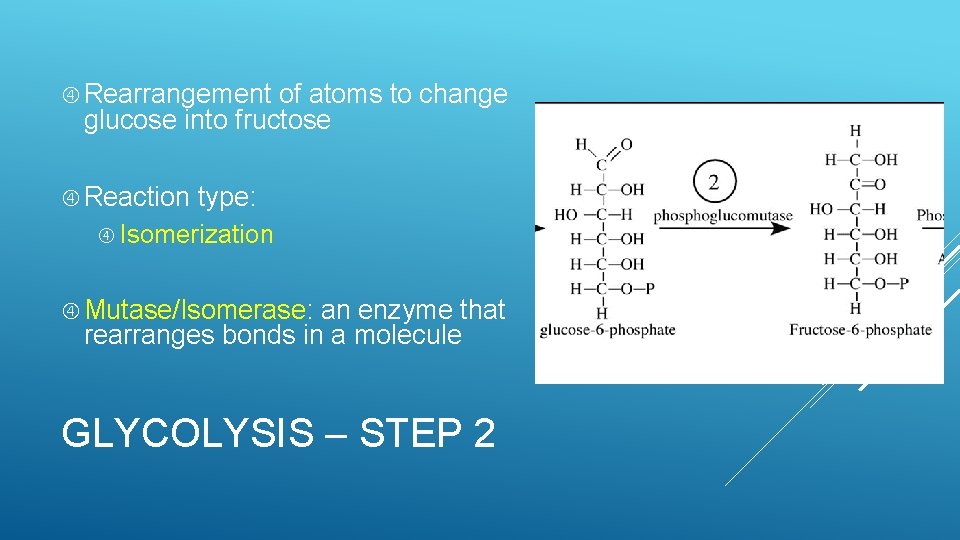
Rearrangement of atoms to change glucose into fructose Reaction type: Isomerization Mutase/Isomerase: an enzyme that rearranges bonds in a molecule GLYCOLYSIS – STEP 2
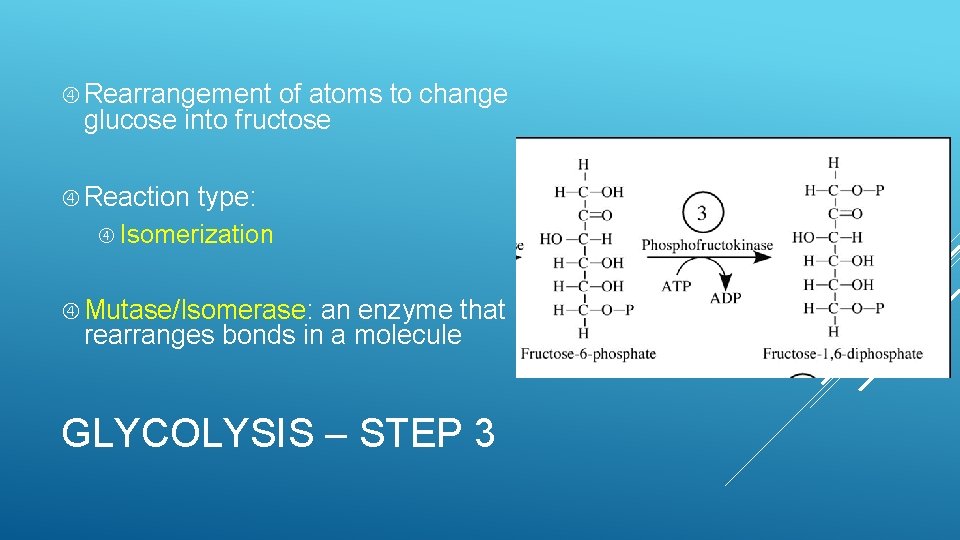
Rearrangement of atoms to change glucose into fructose Reaction type: Isomerization Mutase/Isomerase: an enzyme that rearranges bonds in a molecule GLYCOLYSIS – STEP 3
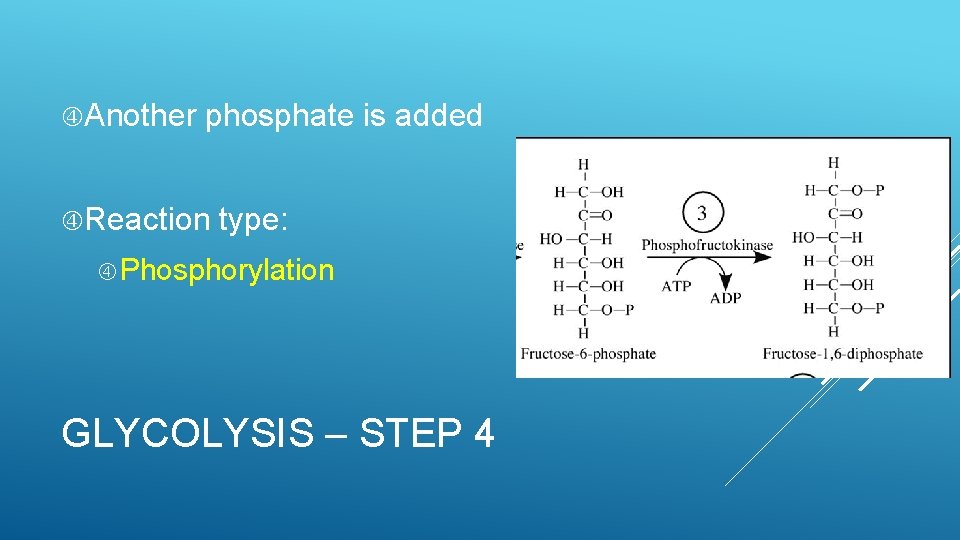
Another phosphate is added Reaction type: Phosphorylation GLYCOLYSIS – STEP 4
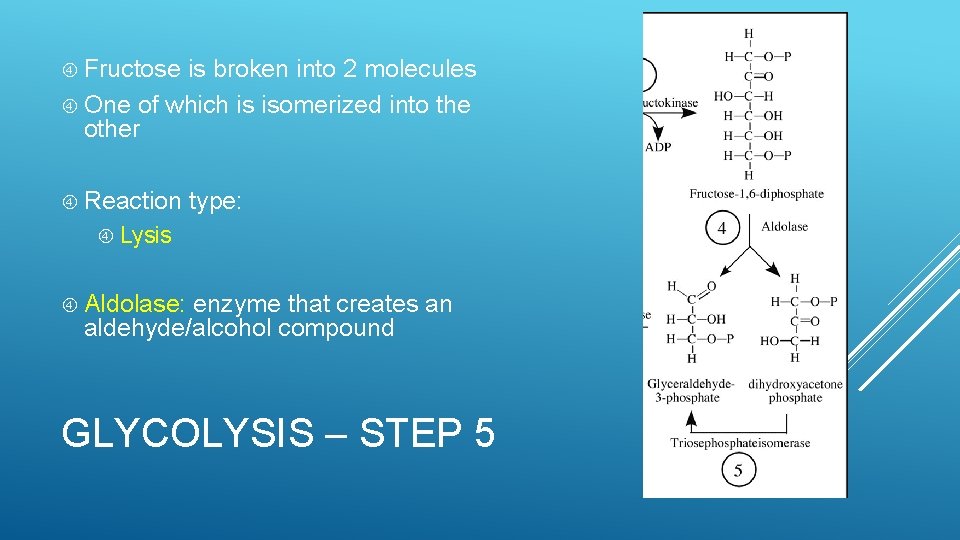
Fructose is broken into 2 molecules One of which is isomerized into the other Reaction type: Lysis Aldolase: enzyme that creates an aldehyde/alcohol compound GLYCOLYSIS – STEP 5
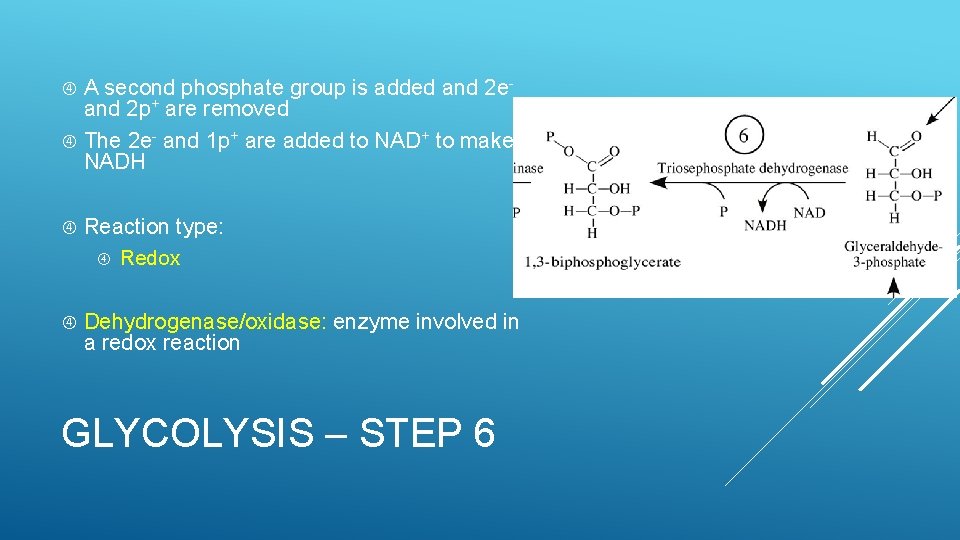
A second phosphate group is added and 2 eand 2 p+ are removed The 2 e- and 1 p+ are added to NAD+ to make NADH Reaction type: Redox Dehydrogenase/oxidase: enzyme involved in a redox reaction GLYCOLYSIS – STEP 6
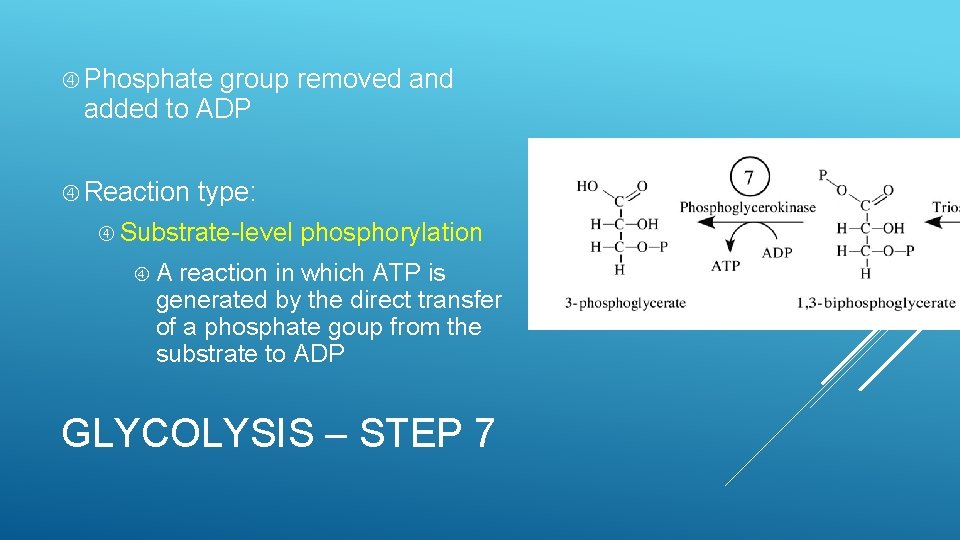
Phosphate group removed and added to ADP Reaction type: Substrate-level phosphorylation A reaction in which ATP is generated by the direct transfer of a phosphate goup from the substrate to ADP GLYCOLYSIS – STEP 7
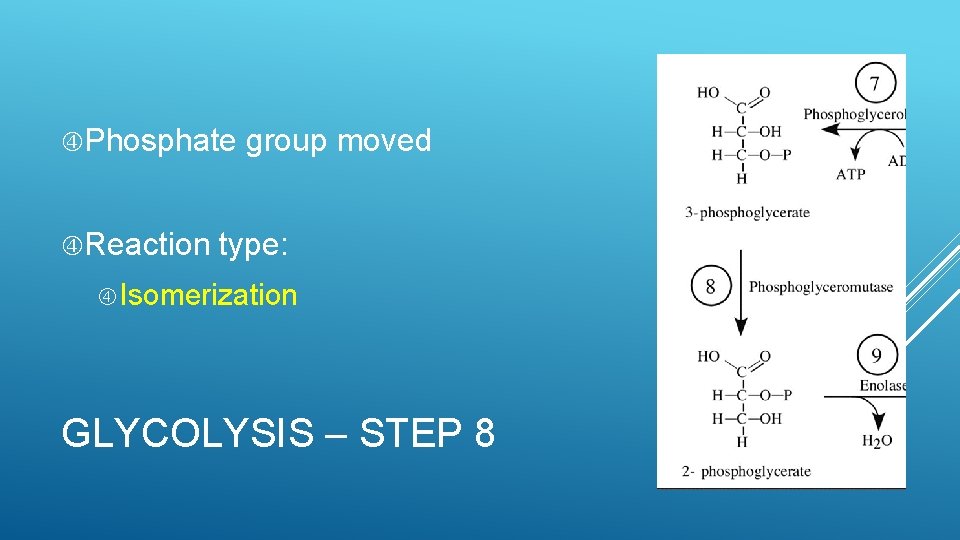
Phosphate Reaction group moved type: Isomerization GLYCOLYSIS – STEP 8
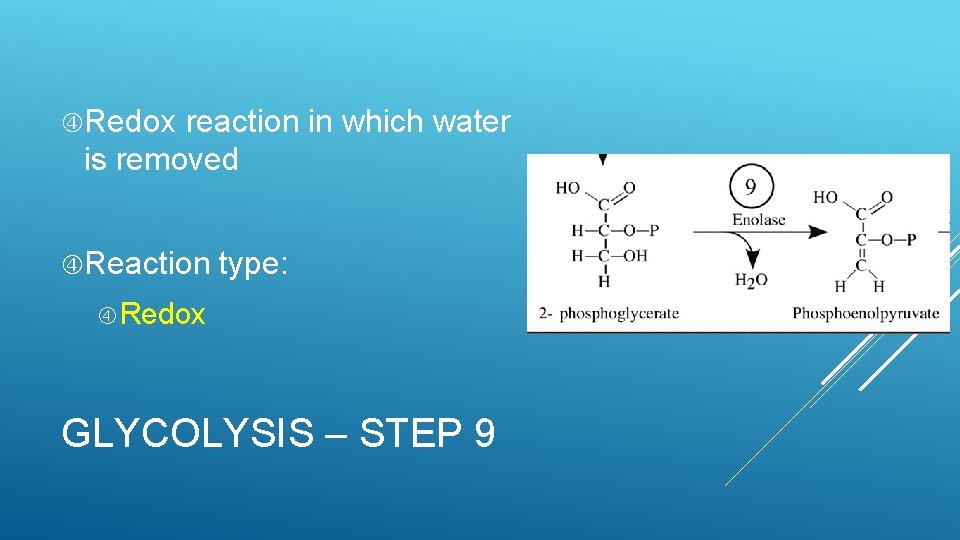
Redox reaction in which water is removed Reaction type: Redox GLYCOLYSIS – STEP 9
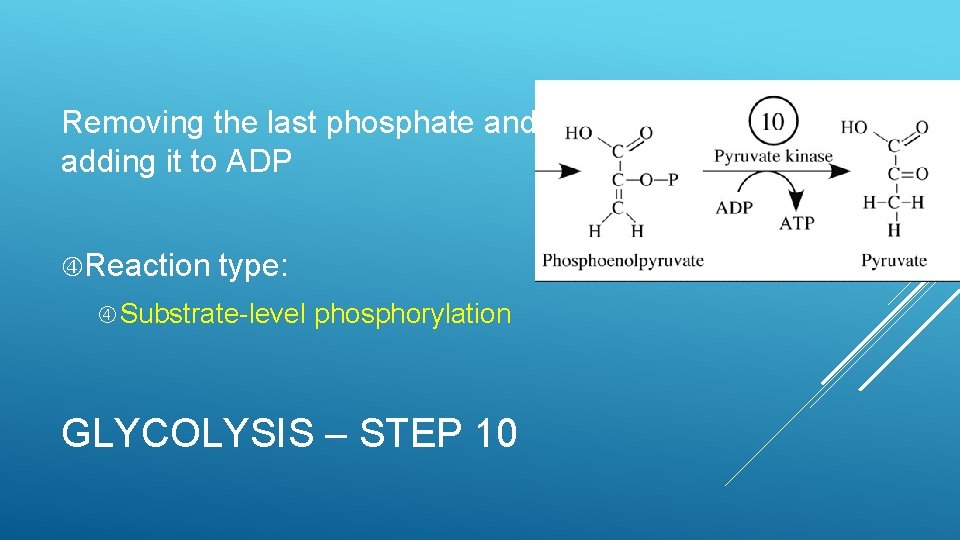
Removing the last phosphate and adding it to ADP Reaction type: Substrate-level phosphorylation GLYCOLYSIS – STEP 10
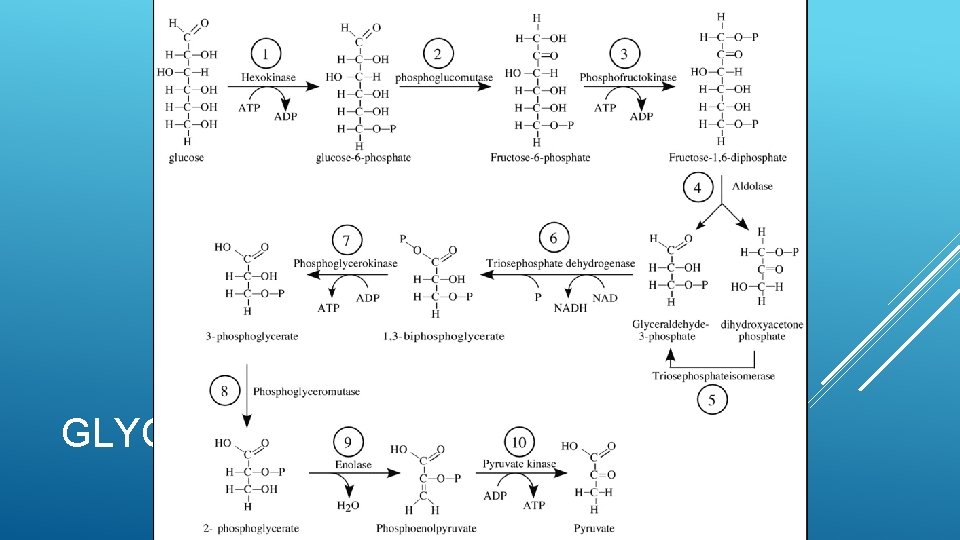
GLYCOLYSIS

- Slides: 16