
Aerial photography and satellite imagery as data input
- Slides: 26
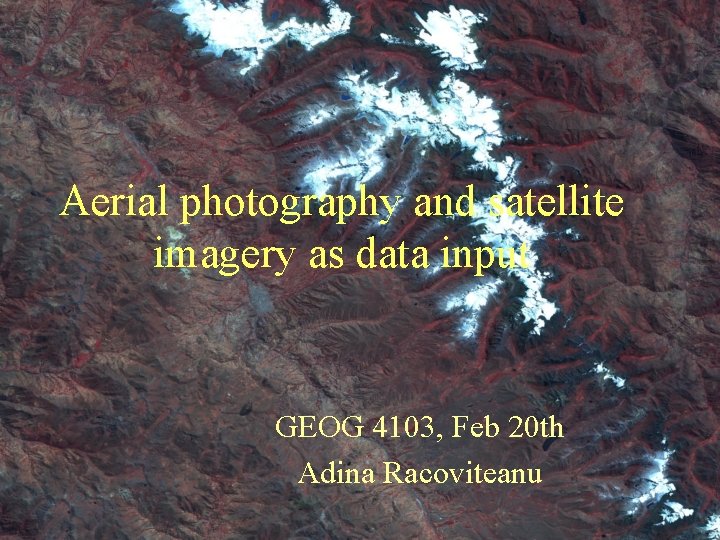
Aerial photography and satellite imagery as data input GEOG 4103, Feb 20 th Adina Racoviteanu
Aerial photographs • "bird's-eye" view of the earth • Photogrammetry = "the art or science of making measurements from aerial imagery"
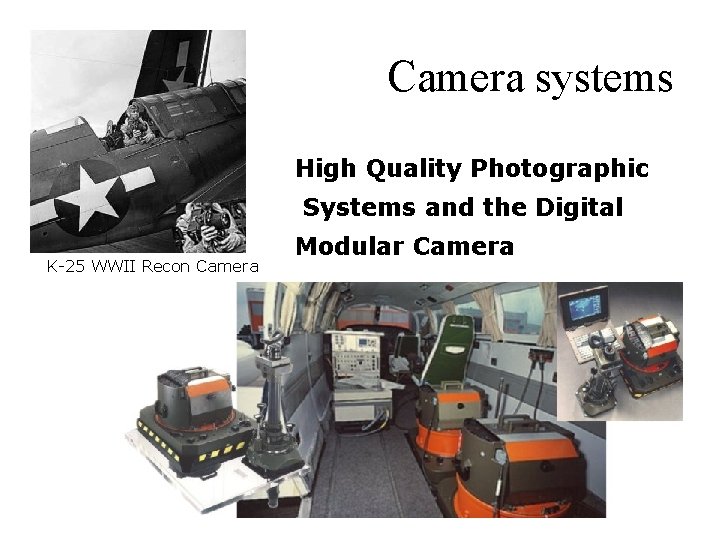
Camera systems High Quality Photographic Systems and the Digital K-25 WWII Recon Camera Modular Camera
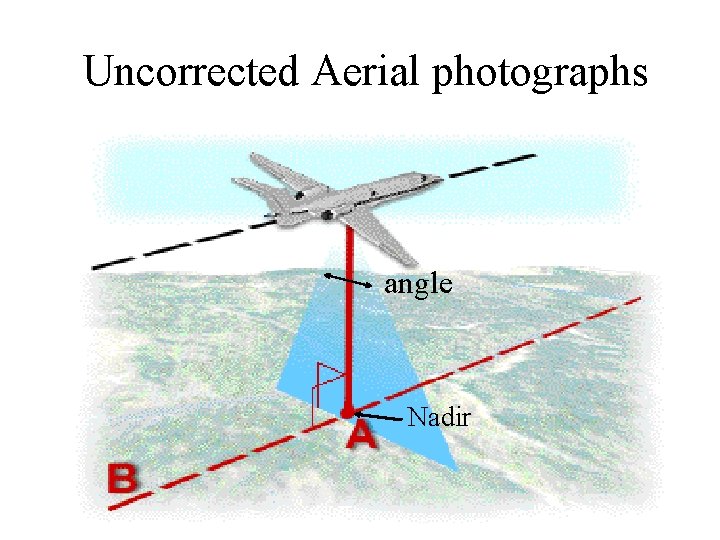
Uncorrected Aerial photographs Uncorrected aerial photos have distortions • radial distortion (due to lens curvature) • geometric distortions (dueangle to inconsistencies in the attitude of the airplane) • topographic distortions (due to relief) Nadir
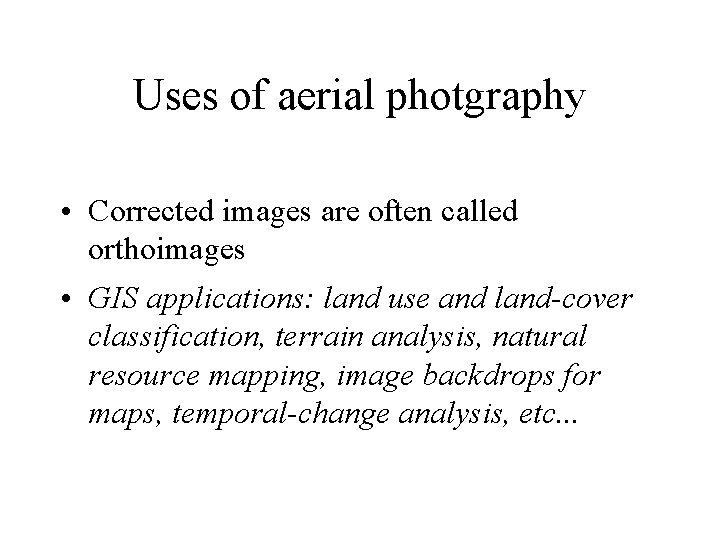
Uses of aerial photgraphy • Corrected images are often called orthoimages • GIS applications: land use and land-cover classification, terrain analysis, natural resource mapping, image backdrops for maps, temporal-change analysis, etc. . .
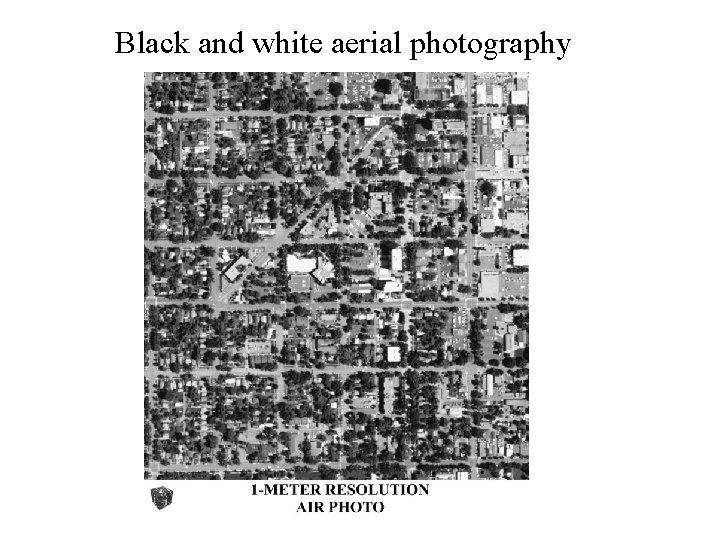
Black and white aerial photography
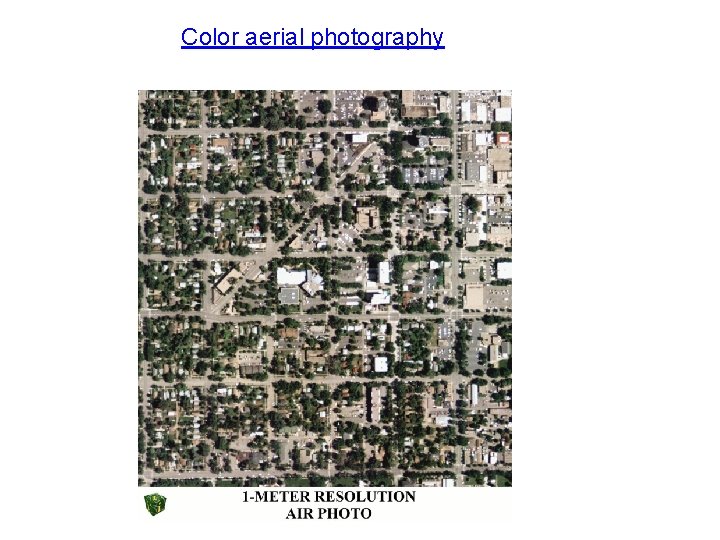
Color aerial photography
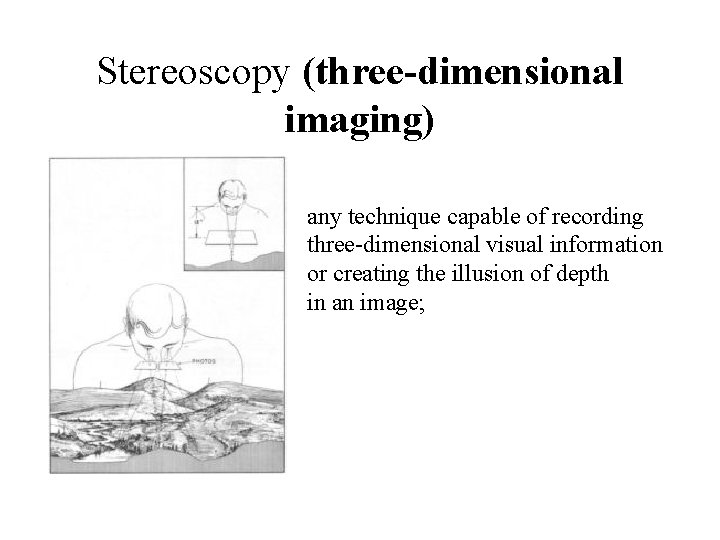
Stereoscopy (three-dimensional imaging) any technique capable of recording three-dimensional visual information or creating the illusion of depth in an image;
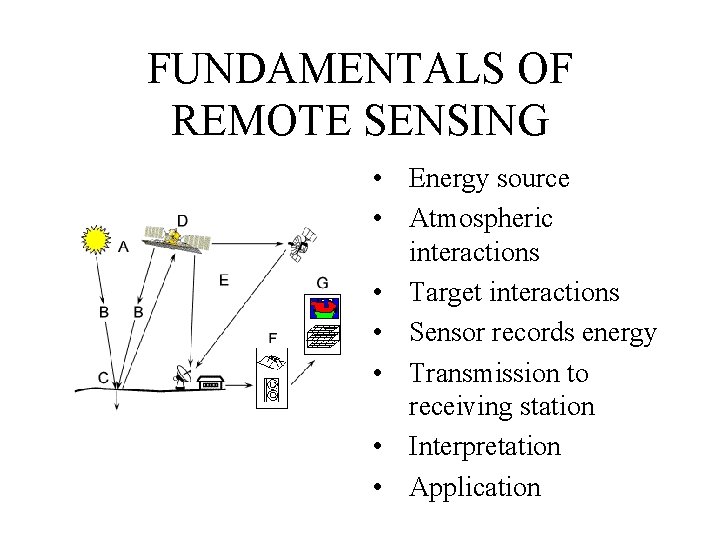
FUNDAMENTALS OF REMOTE SENSING • Energy source • Atmospheric interactions • Target interactions • Sensor records energy • Transmission to receiving station • Interpretation • Application
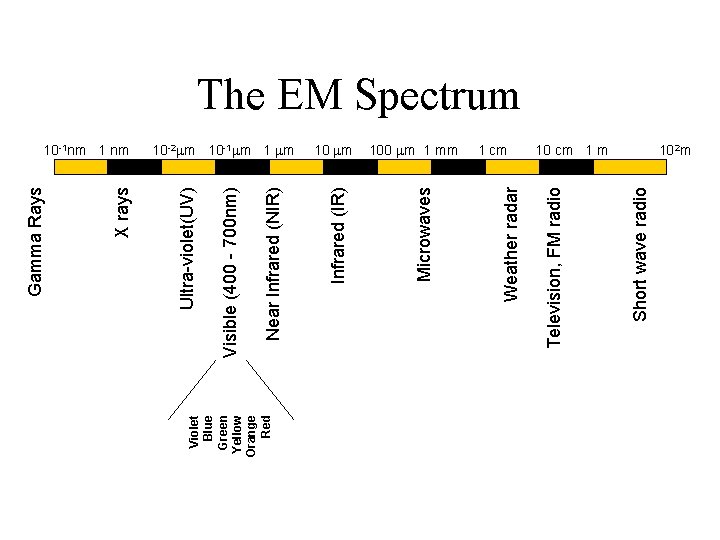
Short wave radio 1 cm Television, FM radio 100 mm 1 mm Weather radar 10 mm Microwaves 10 -2 mm 10 -1 mm 1 mm Infrared (IR) Near Infrared (NIR) Visible (400 - 700 nm) Ultra-violet(UV) 10 -1 nm 1 nm Violet Blue Green Yellow Orange Red X rays Gamma Rays The EM Spectrum 10 cm 1 m 102 m
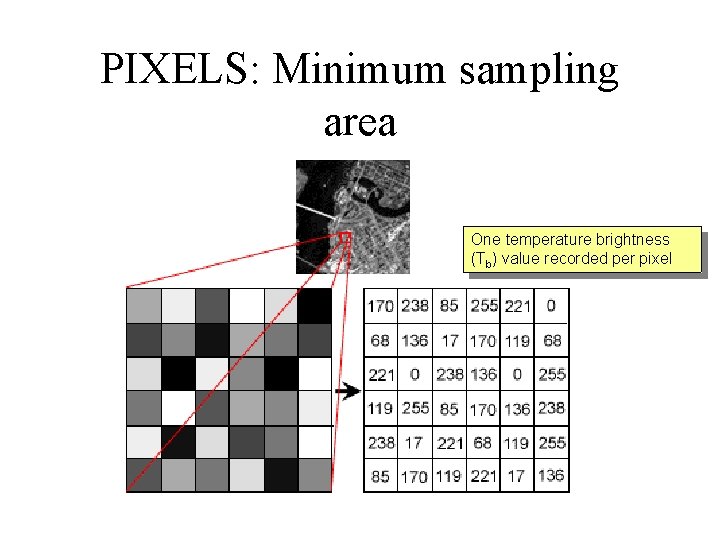
PIXELS: Minimum sampling area One temperature brightness (Tb) value recorded per pixel
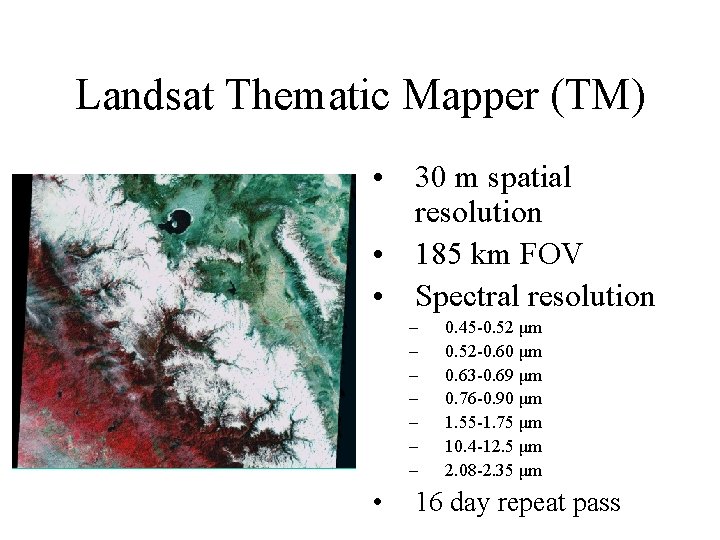
Landsat Thematic Mapper (TM) • 30 m spatial resolution • 185 km FOV • Spectral resolution – – – – • 0. 45 -0. 52 μm 0. 52 -0. 60 μm 0. 63 -0. 69 μm 0. 76 -0. 90 μm 1. 55 -1. 75 μm 10. 4 -12. 5 μm 2. 08 -2. 35 μm 16 day repeat pass
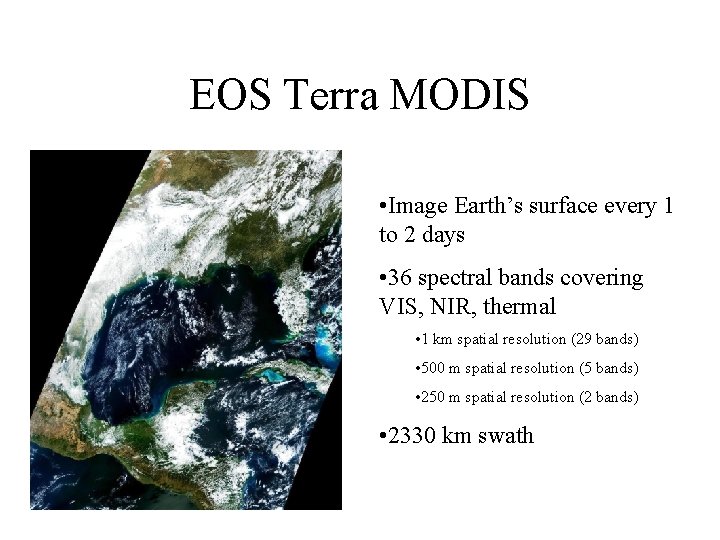
EOS Terra MODIS • Image Earth’s surface every 1 to 2 days • 36 spectral bands covering VIS, NIR, thermal • 1 km spatial resolution (29 bands) • 500 m spatial resolution (5 bands) • 250 m spatial resolution (2 bands) • 2330 km swath
Digital processing 2 steps needed: 1) Georeferencing: assign real world coordinates 2) Orthorectification: remove all the distortions
Georeferencing • Assigning real world coordinates • Relating information (e. g. , documents, datasets, maps, images) to geographic locations • will correct displacements Discrete georeferencing: through place names (i. e. , toponyms) and place codes (e. g. , postal codes) Geospatial referencing (e. g. , longitude and latitude coordinates).
Discrete georeferencing or Geocoding • The process of assigning a geographic location (e. g. latitude and longitude) to a geographic feature on the basis of its address. • E. g. address matching • mapquest. com
Geocoding method • Based on a parcel centroid file that includes: · Street Name · Address · Nine-Digit ZIP Code • Main source for geocoding base map data is TIGER (http: //www. census. gov/geog/www/tiger/)
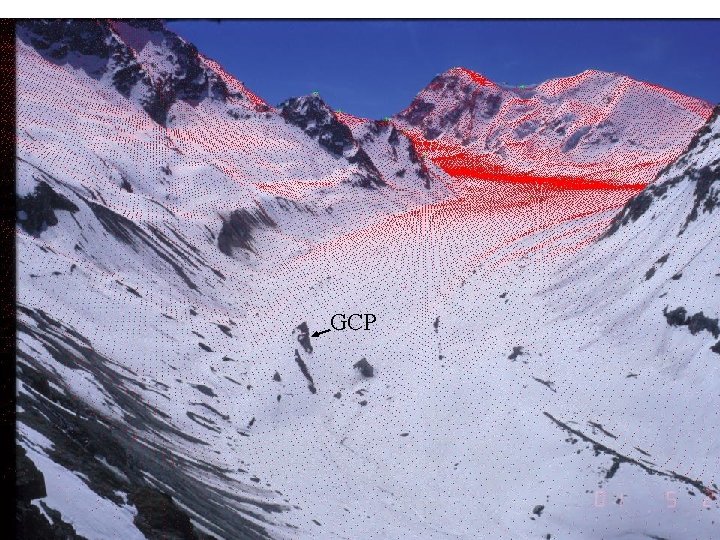
Ground Control Points (GCPs) • To georeference an image we need GCPs which are visible in the photographs, • e. g road intersections, stone wall boundaries, building corners, and solitary trees. • These points will be used to “tell” the GIS software: · where your image is in the world · how to correctly orient the photograph · correct for errors in photo-geometry.
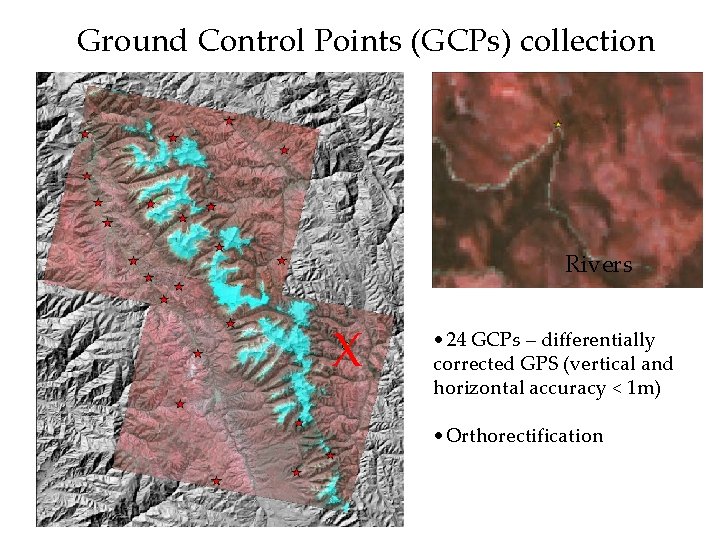
Ground Control Points (GCPs) collection Road curves Rivers Squares X • 24 GCPs – differentially corrected GPS (vertical and horizontal accuracy < 1 m) • Orthorectification
How many GCPs? • Depends on the amount of distortion in your photograph and your desired level of accuracy • mathematical formula applied to each pixel in the photo – first order (3 points min) does not distort, only shifts – second order (6 points min) – third order (9 points min) - distortions
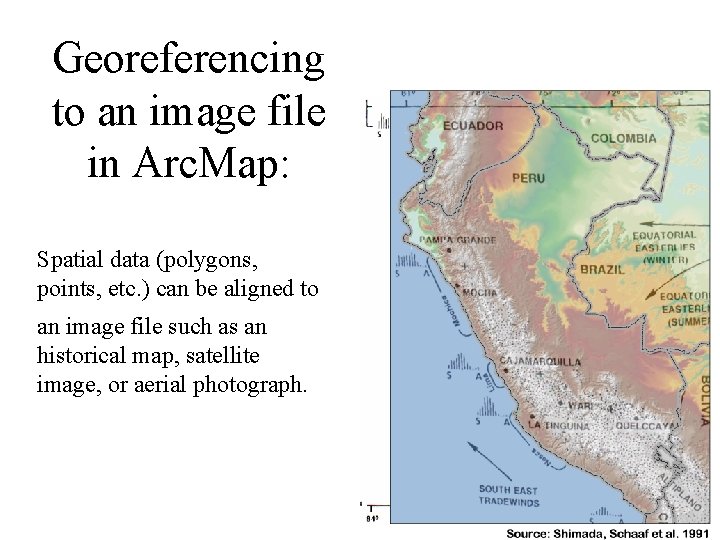
Georeferencing to an image file in Arc. Map: Spatial data (polygons, points, etc. ) can be aligned to an image file such as an historical map, satellite image, or aerial photograph.
Georeferencing terrestrial photography GCP
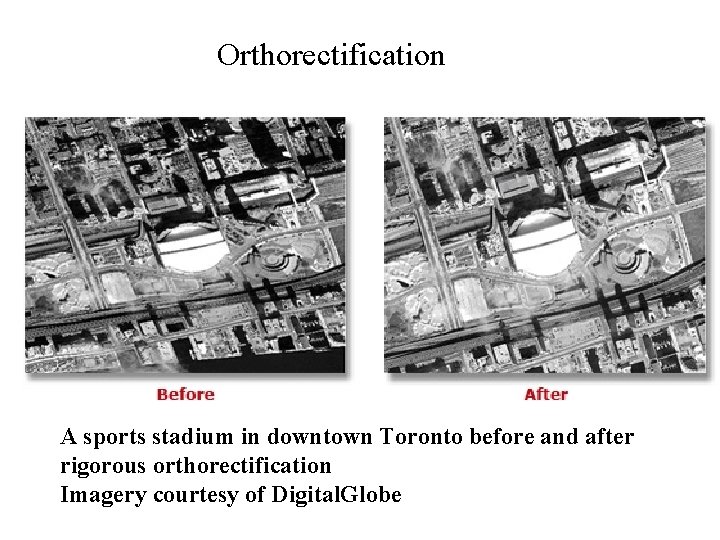
Orthorectification • mathematical process of removing the distortion caused by relief and the camera within a photograph so that the scale is uniform throughout the output image.
Distortion vs. displacement • Distortion - Shift in the location of an object that changes the perspective characteristics of the photo. • Displacement - shift in the location of an object in a photo caused by change in elevation. )
Orthorectification A sports stadium in downtown Toronto before and after rigorous orthorectification Imagery courtesy of Digital. Globe