
Aerial Assessment Applying the ANSI A 300 Inspection









- Slides: 45
Aerial Assessment: Applying the ANSI A 300 Inspection Standard Ohio Chapter ISA Conference Historic Tree Care, 2016
Aerial Inspection: A Billable Service • When the climber is trained and confident • Follow the steps set in ANSI A 300 Part 8 for a systematic and comprehensive inspection. • Discover and describe growth patterns, health, structure, and locations for habitat and support and lightning systems. • Deliver the data in an easily analyzed package. Get the check! Historic Tree Care, 2016
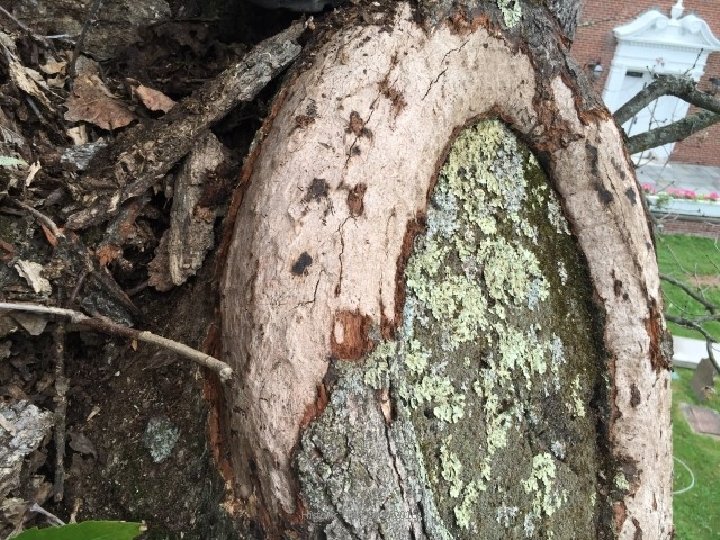
Tree Inspection: ANSI A 300 Tree Care Standard Part 8 1. Consider potential tree benefits, applicable tree care techniques, and the owner’s intended use of the site. Help the owner clarify their landscape goals. (Do NOT assume they know exactly what they want!) 2. Study aerial maps, the ecosystem, the microclimates, the past, current and potential management of the site, soil volume, fill, air and water movement, and the plants. Agree with the owner on the objective aka your assignment aka the expected outcome. 3. Communicate specifications (a detailed, measurable plan or proposal for meeting the objective). Specify the method, area, and depth of inspection. Specify tools and practices that avoid damage to living tissue, bark or soil. Keep tools sharp and clean. • • • “ 83. 3. 4 Inspection should include…: Conditions in the crown that may reflect root conditions; Stem tissue connecting the crown and the roots; Girdling…, and the tree’s response; Tree association with beneficial and harmful insects; Tree association with pathogenic and beneficial microorganisms (e. g. mycorrhizae); Wounds, and the tree’s response to wounds; Mechanical damage…, and response; Indications of…disease and response, ” Removing foreign material to allow inspection. Bark tracing of wounds to remove only dead, loose, foreign and damaged tissue. Evaluate decay, callus and woundwood growth, and response growth in trunk and crown. ” Historic Tree Care, 2016
Historic Tree Care, 2016
Historic Tree Care, 2016
Historic Tree Care, 2016
Managing Change in the Basking Ridge Oak: Inspection, Diagnosis, Prognosis A report on managing structural and biological changes in a white oak, Quercus alba. Historic Tree Care, 2016
Historic Tree Care, 2016
Historic Tree Care, 2016
Historic Tree Care, 2016
Historic Tree Care, 2016
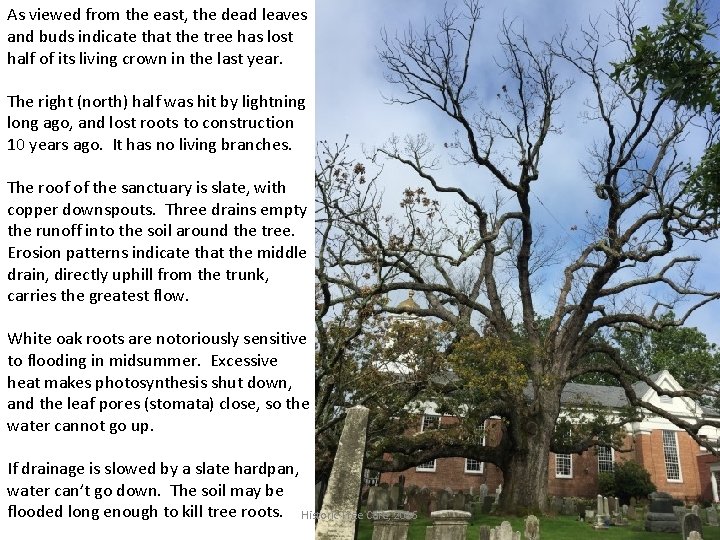
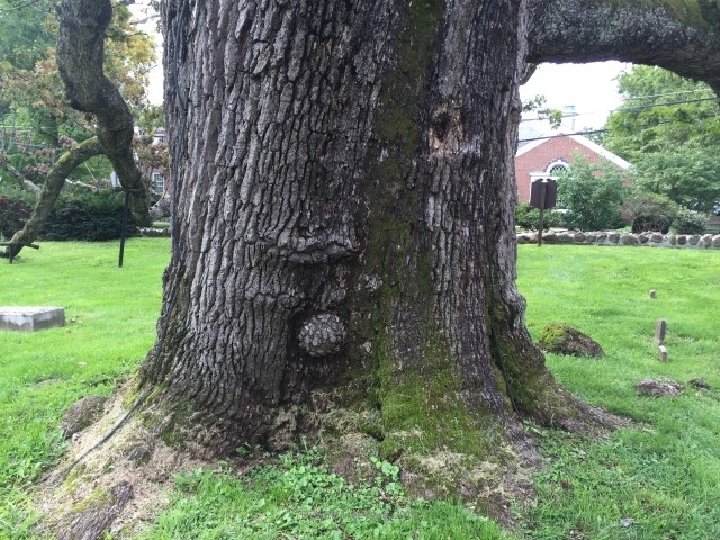
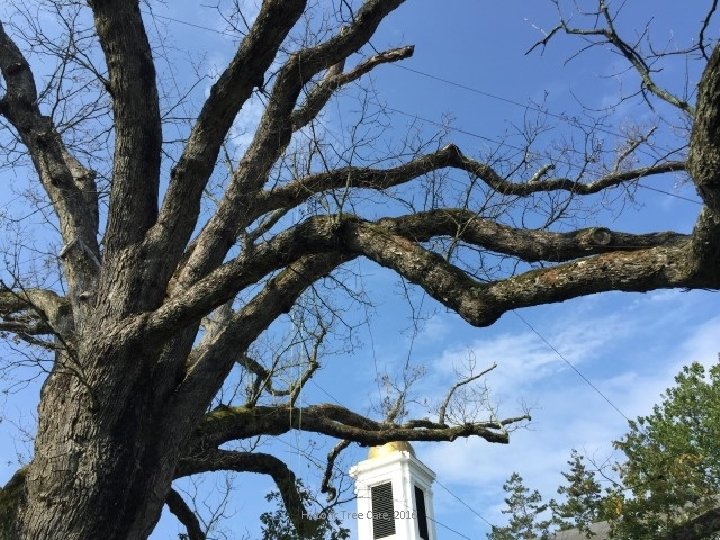
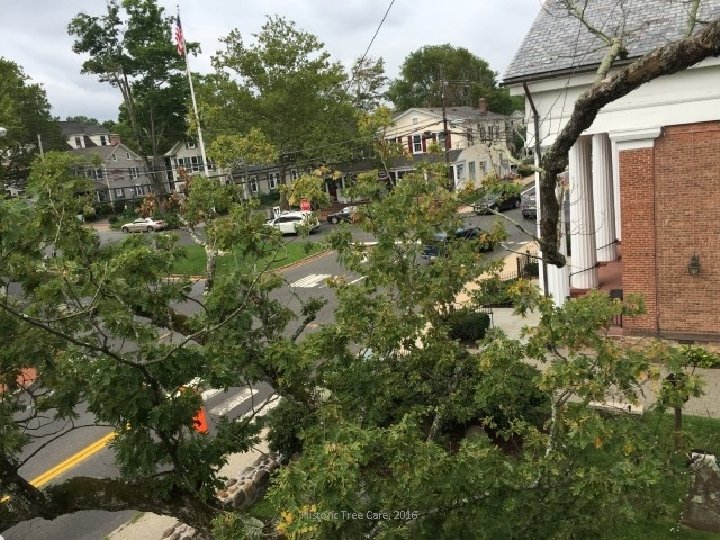
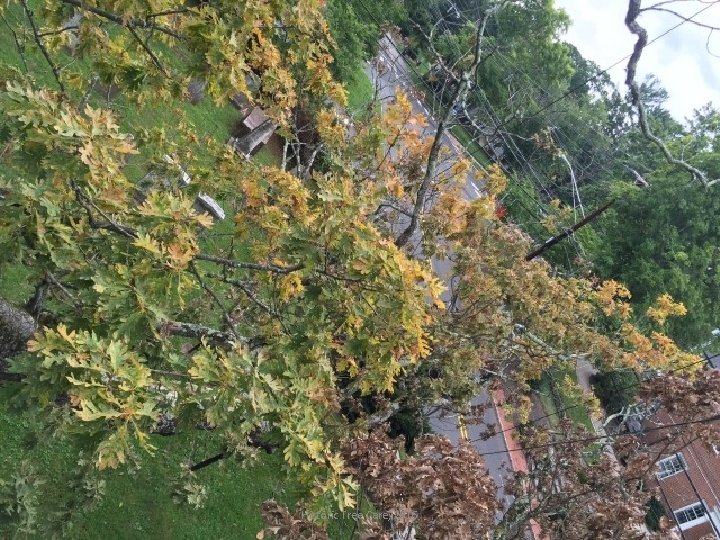
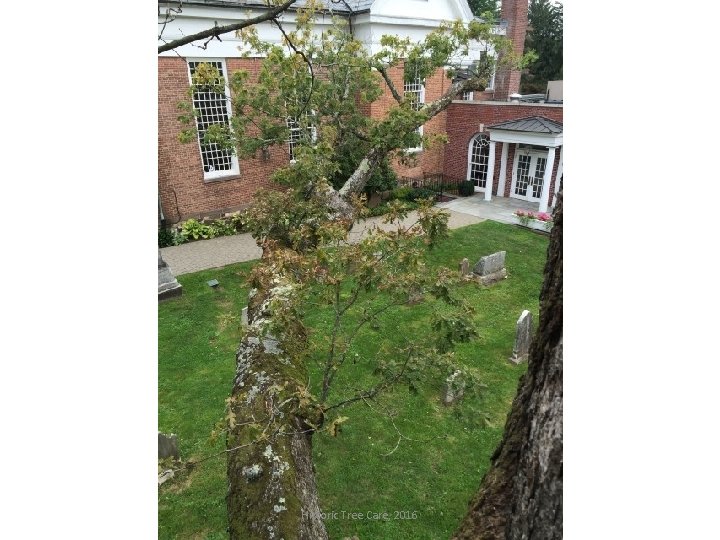
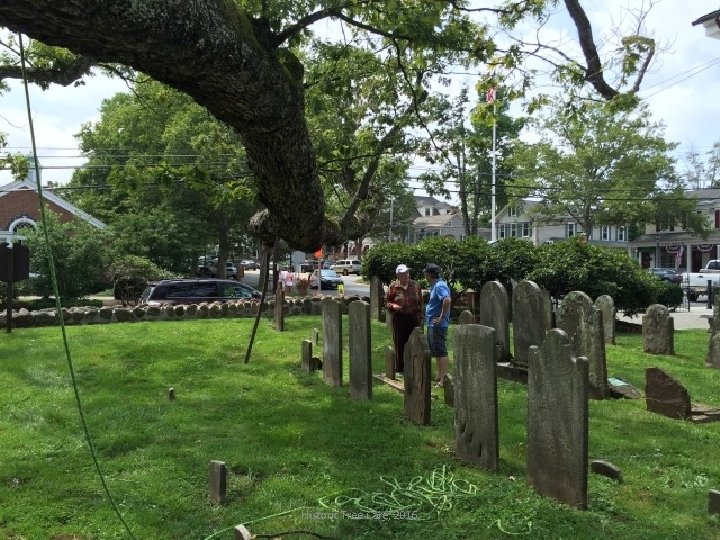
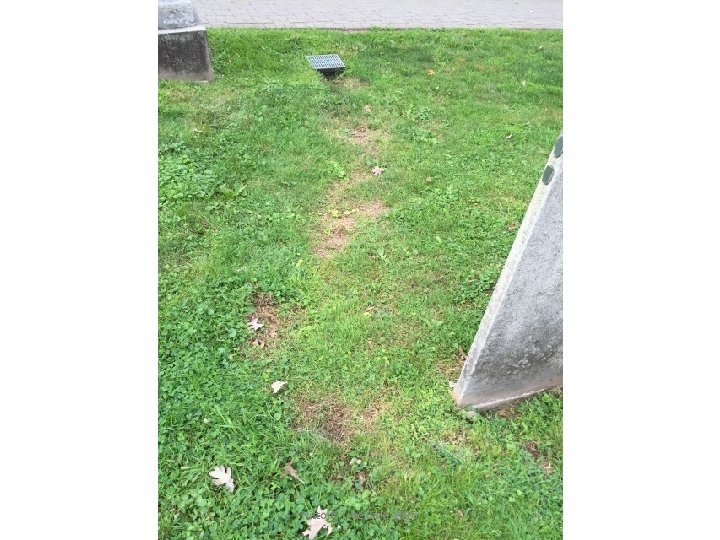
As viewed from the east, the dead leaves and buds indicate that the tree has lost half of its living crown in the last year. The right (north) half was hit by lightning long ago, and lost roots to construction 10 years ago. It has no living branches. The roof of the sanctuary is slate, with copper downspouts. Three drains empty the runoff into the soil around the tree. Erosion patterns indicate that the middle drain, directly uphill from the trunk, carries the greatest flow. White oak roots are notoriously sensitive to flooding in midsummer. Excessive heat makes photosynthesis shut down, and the leaf pores (stomata) close, so the water cannot go up. If drainage is slowed by a slate hardpan, water can’t go down. The soil may be flooded long enough to kill tree roots. Historic Tree Care, 2016
Historic Tree Care, 2016
Historic Tree Care, 2016
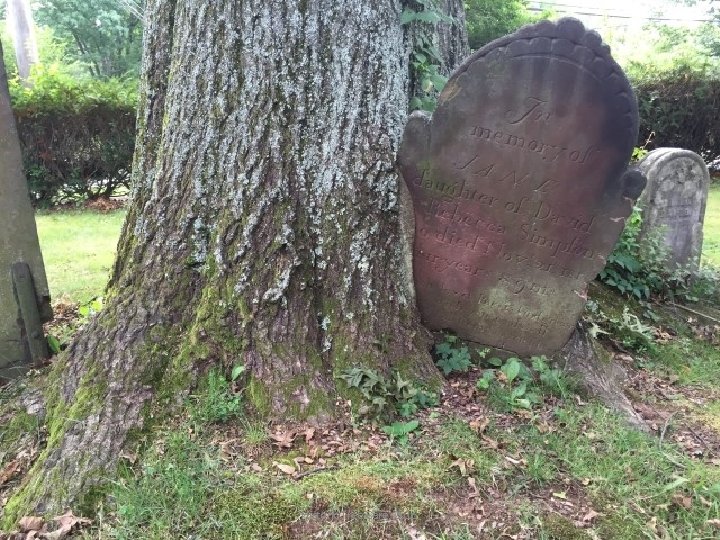
EXECUTIVE SUMMARY This tree has declined to the point where the best hope is for the lower trunk to make sprouts next year. Two fungi, Armillaria and Hypoxylon, are scavenging what remains of its living tissue , and its outer wood. It should be cut back to remove hazardous end portions, and reinspected annually to determine the extent of pruning needed. The trunk can stand indefinitely, especially if testing determines that it was filled with concrete. One option is to plant a diverse assortment of vines up the trunk, above the root zone. Vines would tend to stabilize it, provide aesthetic and wildlife values—a vertical pollinator habitat!—and retain a memorial, as the trunk changes from supporting a living tree crown to supporting other life. Practices to slow deterioration and encourage sprouting include soil replacement at the base of the trunk. This could be timed along with installing vines or other chosen plants. Other practices include drenching the bark with minerals , aerating and inoculating the soil, and scoring the bark above buds. Any growth that is stimulated would slow decay, preserve some of the memory, and add to the habitat. This rapid decline is a challenge to manage, so I hope this report is useful. We remain available if we can help to navigate moving forward. Historic Tree Care, 2016
Historic Tree Care, 2016
Historic Tree Care, 2016
Historic Tree Care, 2016
Historic Tree Care, 2016
Historic Tree Care, 2016
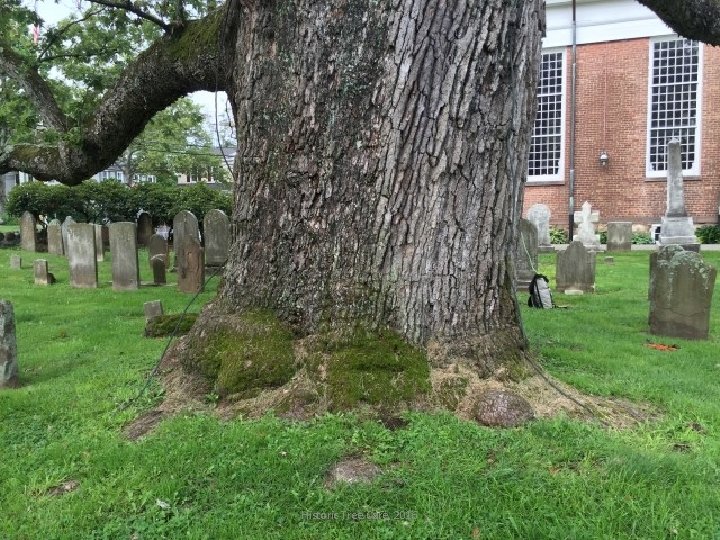
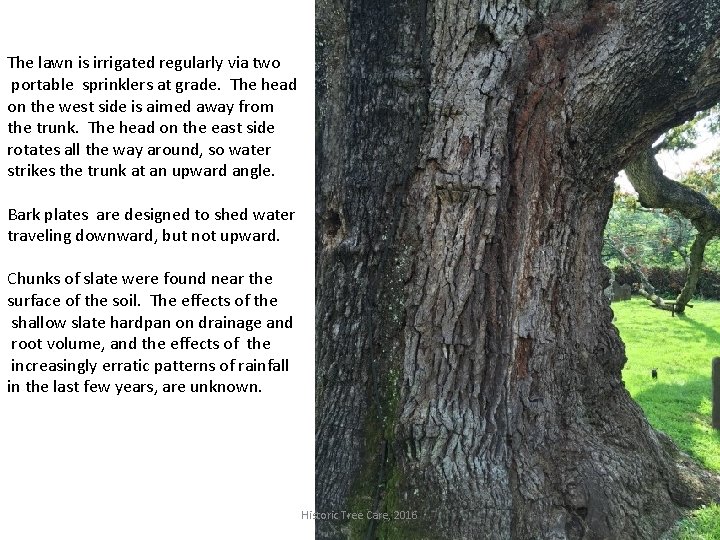
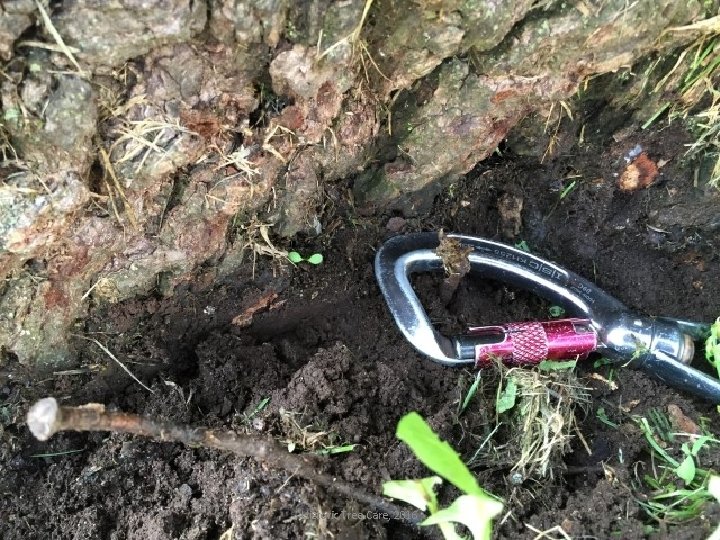
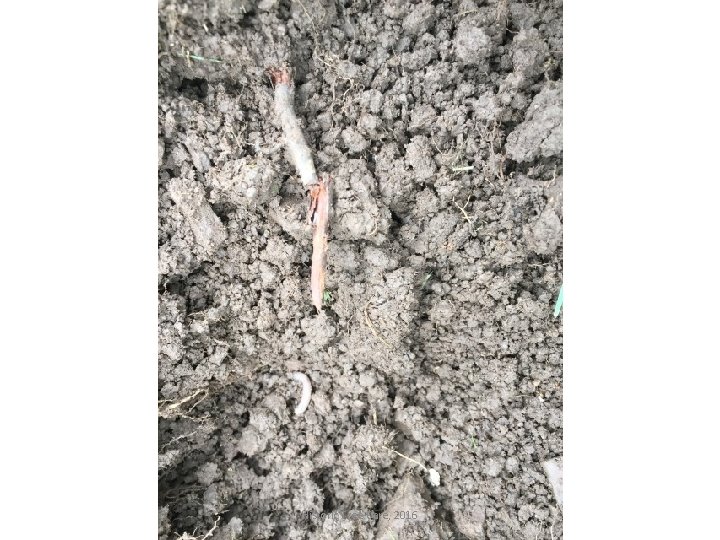
The lawn is irrigated regularly via two portable sprinklers at grade. The head on the west side is aimed away from the trunk. The head on the east side rotates all the way around, so water strikes the trunk at an upward angle. Bark plates are designed to shed water traveling downward, but not upward. Chunks of slate were found near the surface of the soil. The effects of the shallow slate hardpan on drainage and root volume, and the effects of the increasingly erratic patterns of rainfall in the last few years, are unknown. Historic Tree Care, 2016
Historic Tree Care, 2016
Historic Tree Care, 2016
Historic Tree Care, 2016
Historic Tree Care, 2016
Historic Tree Care, 2016
Historic Tree Care, 2016
Historic Tree Care, 2016
Historic Tree Care, 2016
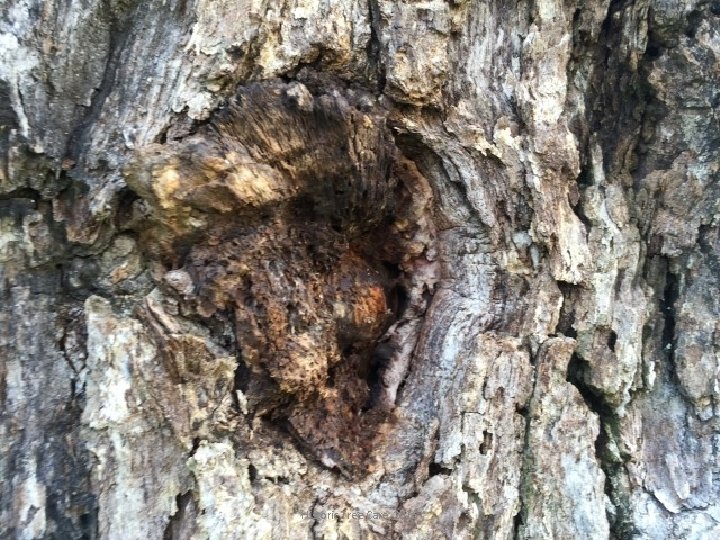
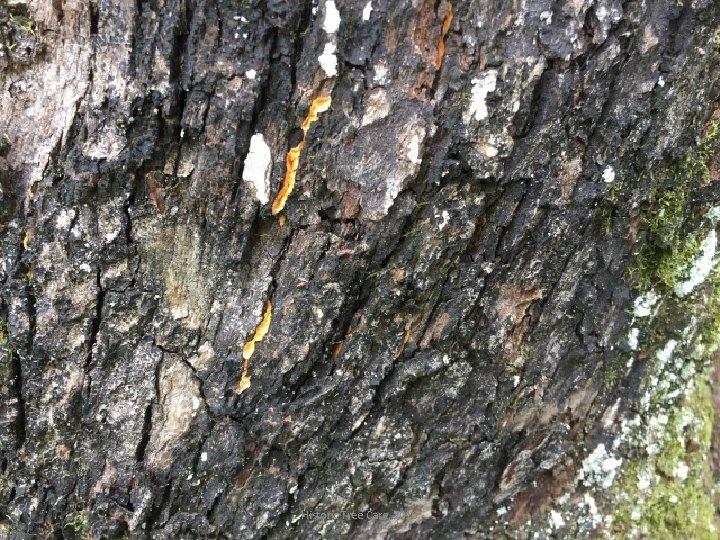
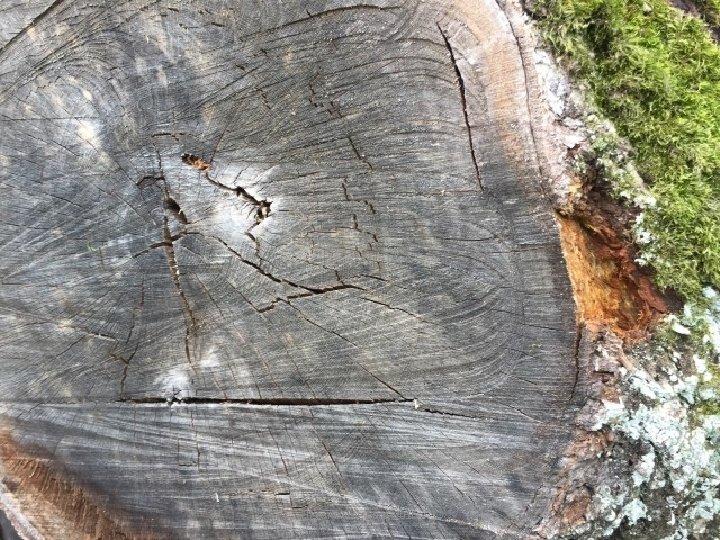
Adjacent to a silver patch of hypoxylon, a white fan-shaped mycelium spreads in the inner bark and cambium. It smelled like fresh mushrooms, characteristic of Armillaria fungus. US Forest Service pathologist: “…those do look like Armillaria mycelial fans with some prominent aggregated hyphae and some thinner strands. …I think that to presume it to be Armillaria is defensible. . . I think that going on these macro characters is OK in this case. “Presence of robust fans indicates current or recent pathogenic activity. . . diseased trees have sometimes been saved by removing soil from around the root buttresses and root collar. “ (Sinclair) It is unusual to find these signs 15’ above the ground, in a living tree. Removing the soil would be a reasonable treatment to try if extending the vitality of trunk tissue is an Historic Tree Care, 2016 objective.
Historic Tree Care, 2016
Historic Tree Care, 2016
Historic Tree Care, 2016
Historic Tree Care, 2016
Historic Tree Care, 2016
Historic Tree Care, 2016
Historic Tree Care, 2016
Historic Tree Care, 2016
Historic Tree Care, 2016
Historic Tree Care, 2016
Historic Tree Care, 2016
Historic Tree Care, 2016
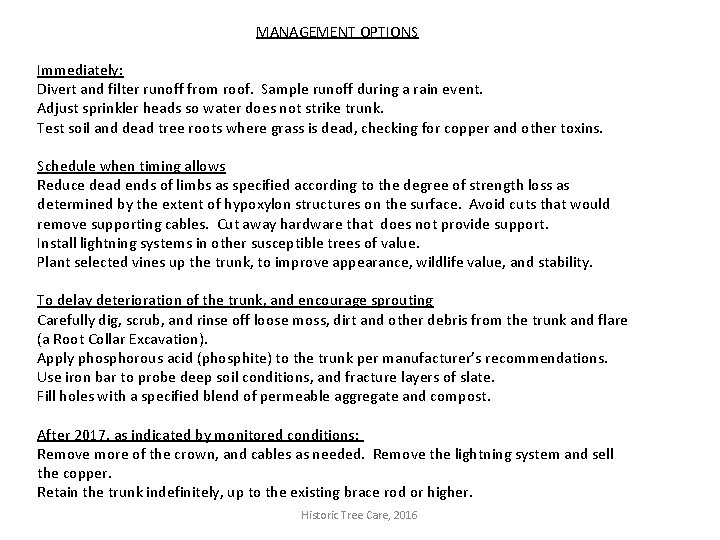
MANAGEMENT OPTIONS Immediately: Divert and filter runoff from roof. Sample runoff during a rain event. Adjust sprinkler heads so water does not strike trunk. Test soil and dead tree roots where grass is dead, checking for copper and other toxins. Schedule when timing allows Reduce dead ends of limbs as specified according to the degree of strength loss as determined by the extent of hypoxylon structures on the surface. Avoid cuts that would remove supporting cables. Cut away hardware that does not provide support. Install lightning systems in other susceptible trees of value. Plant selected vines up the trunk, to improve appearance, wildlife value, and stability. To delay deterioration of the trunk, and encourage sprouting Carefully dig, scrub, and rinse off loose moss, dirt and other debris from the trunk and flare (a Root Collar Excavation). Apply phosphorous acid (phosphite) to the trunk per manufacturer’s recommendations. Use iron bar to probe deep soil conditions, and fracture layers of slate. Fill holes with a specified blend of permeable aggregate and compost. After 2017, as indicated by monitored conditions: Remove more of the crown, and cables as needed. Remove the lightning system and sell the copper. Retain the trunk indefinitely, up to the existing brace rod or higher. Historic Tree Care, 2016
Historic Tree Care, 2016
A victim of climate change, in the end. But I am sorry too--I sent in pictures and descriptions of vines that could have looked quite formal enough for the site imo as a pollinator's monolith, but failed to sell the plan --despite the extra $$$$ to remove the trunk (with its concrete). It would be great for some letters to get to the local paper orr. . . Wild. Metro could start a petition! Historic Tree Care, 2016