
AEMT USE OF EPINEPHRINE 1 10 000 IN
- Slides: 30
AEMT USE OF EPINEPHRINE 1: 10, 000 IN CARDIAC ARREST Vermont Statewide EMS Protocol Education
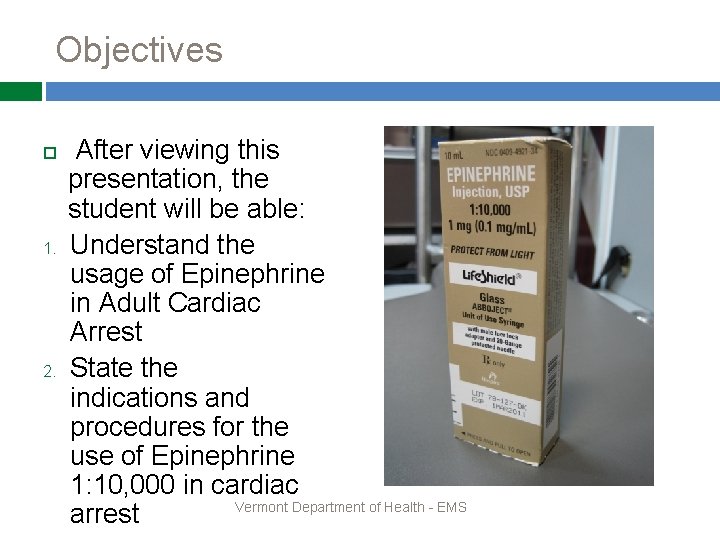
Objectives 1. 2. After viewing this presentation, the student will be able: Understand the usage of Epinephrine in Adult Cardiac Arrest State the indications and procedures for the use of Epinephrine 1: 10, 000 in cardiac Vermont Department of Health - EMS arrest
Cardiology Review Vermont Department of Health - EMS
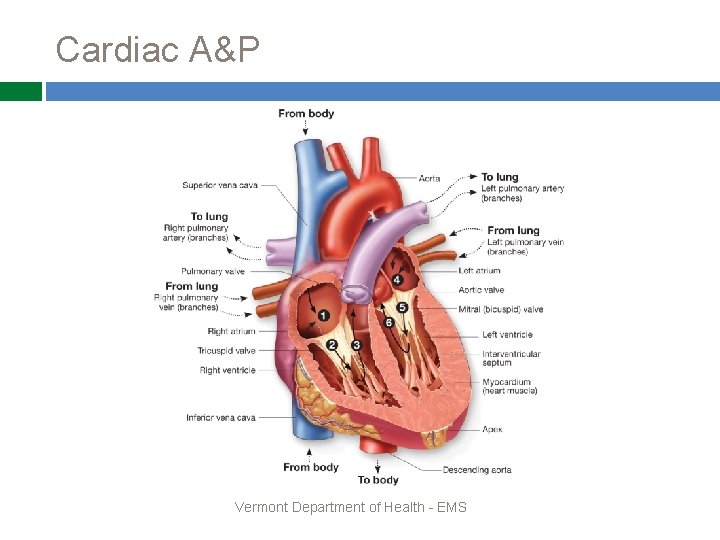
Cardiac A&P Vermont Department of Health - EMS
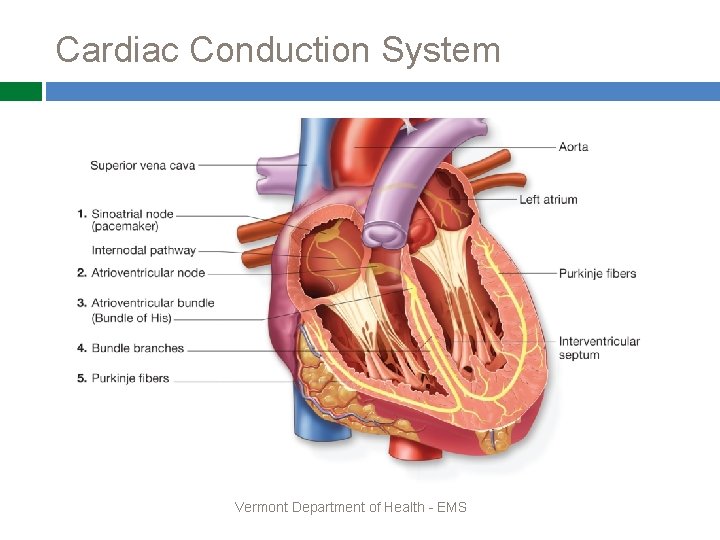
Cardiac Conduction System Vermont Department of Health - EMS
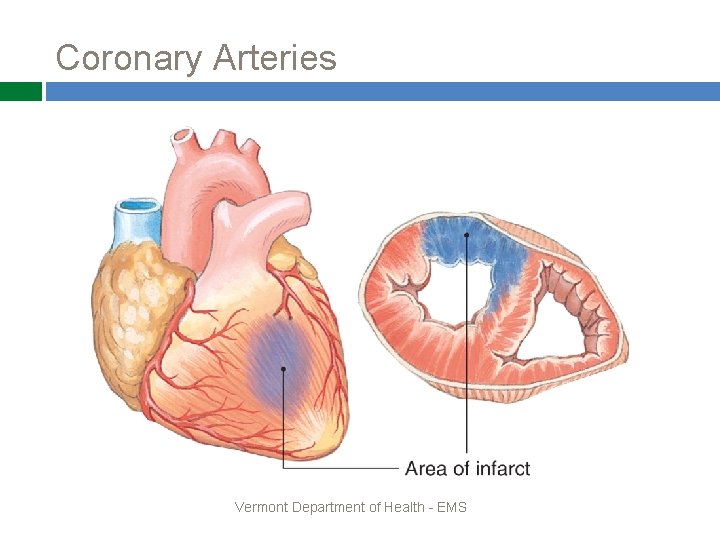
Coronary Arteries Vermont Department of Health - EMS
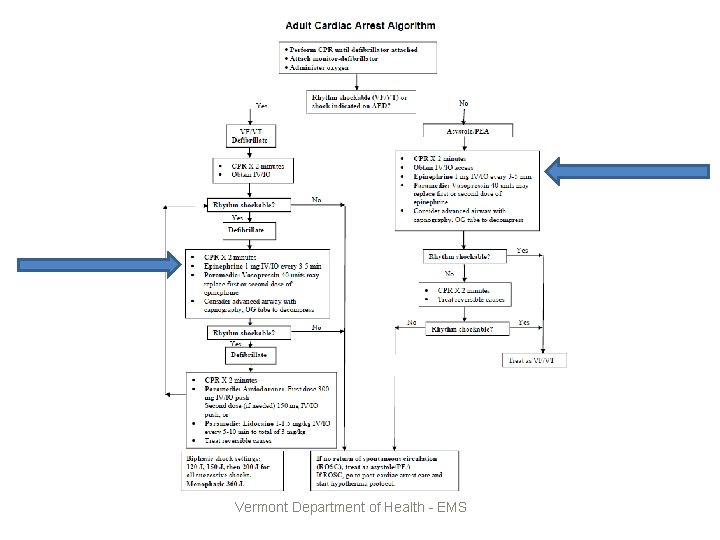
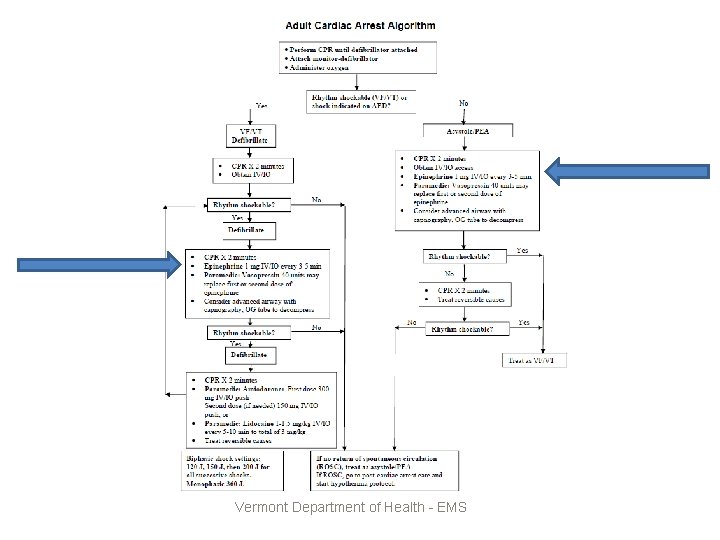
Cardiac Arrest & AED Protocol Vermont Department of Health - EMS
Vermont Department of Health - EMS
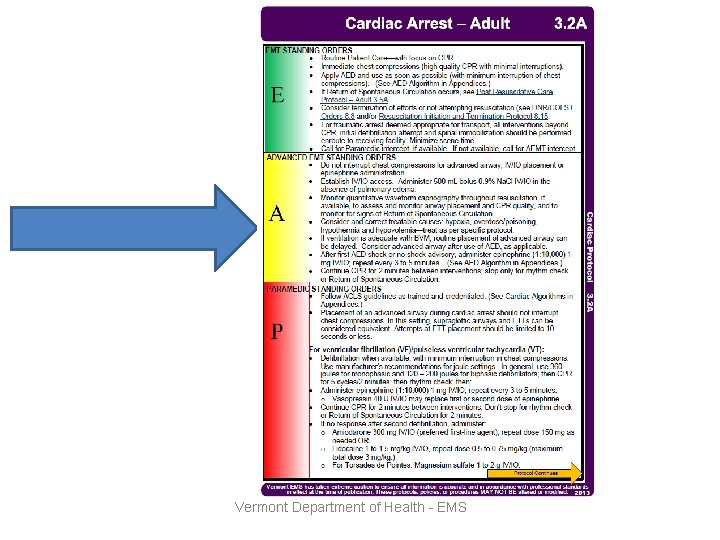
Vermont Department of Health - EMS
Epinephrine A pharmacology review Vermont Department of Health - EMS
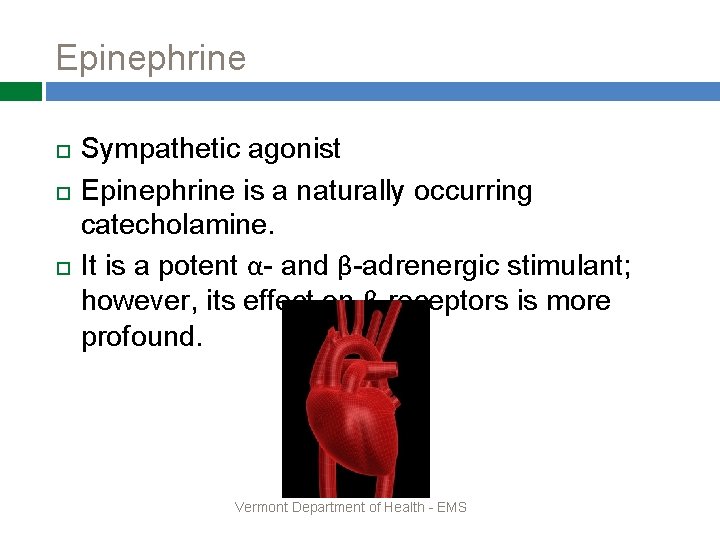
Epinephrine Sympathetic agonist Epinephrine is a naturally occurring catecholamine. It is a potent α- and β-adrenergic stimulant; however, its effect on β-receptors is more profound. Vermont Department of Health - EMS
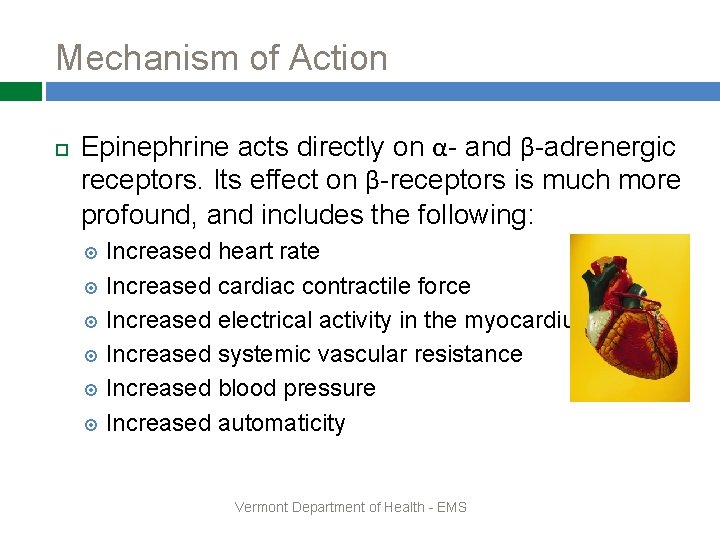
Mechanism of Action Epinephrine acts directly on α- and β-adrenergic receptors. Its effect on β-receptors is much more profound, and includes the following: Increased heart rate Increased cardiac contractile force Increased electrical activity in the myocardium Increased systemic vascular resistance Increased blood pressure Increased automaticity Vermont Department of Health - EMS
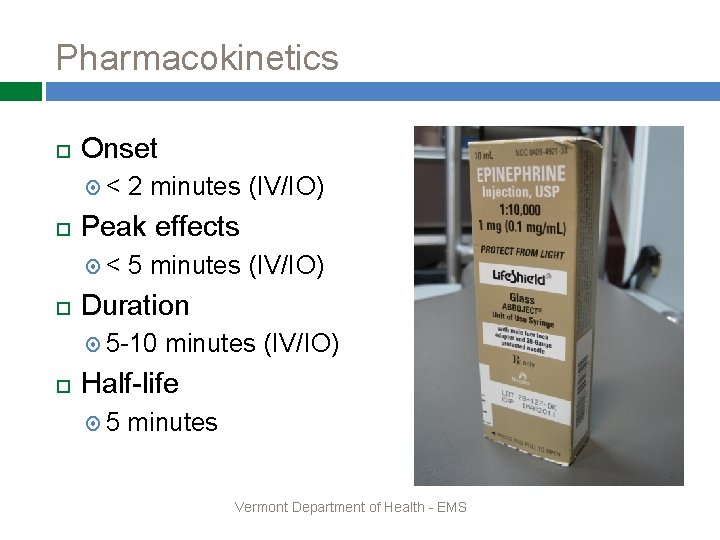
Pharmacokinetics Onset < Peak effects < 2 minutes (IV/IO) 5 minutes (IV/IO) Duration 5 -10 minutes (IV/IO) Half-life 5 minutes Vermont Department of Health - EMS
AEMT Indications ADULT Cardiac arrest Asystole Ventricular fibrillation Pulseless ventricular tachycardia PEA (pulseless electrical activity) Severe anaphylaxis Severe reactive airway disease Vermont Department of Health - EMS
Contraindications Epinephrine 1: 10, 000 is contraindicated in patients who do not require extensive cardiopulmonary resuscitative efforts. With anaphylactic allergic reactions and asthma, the 1: 1000 dilution should be used and administered IM. Vermont Department of Health - EMS
Precautions Should be protected from light Can be deactivated by alkaline solutions such as sodium bicarbonate The IV line must be adequately flushed between administrations of epinephrine and sodium bicarbonate. The effects of epinephrine can be intensified in patients who are taking antidepressants. Vermont Department of Health - EMS
Side Effects Palpitations Anxiety Tremulousness Headache Dizziness Nausea Vomiting Increased myocardial oxygen demand Vermont Department of Health - EMS
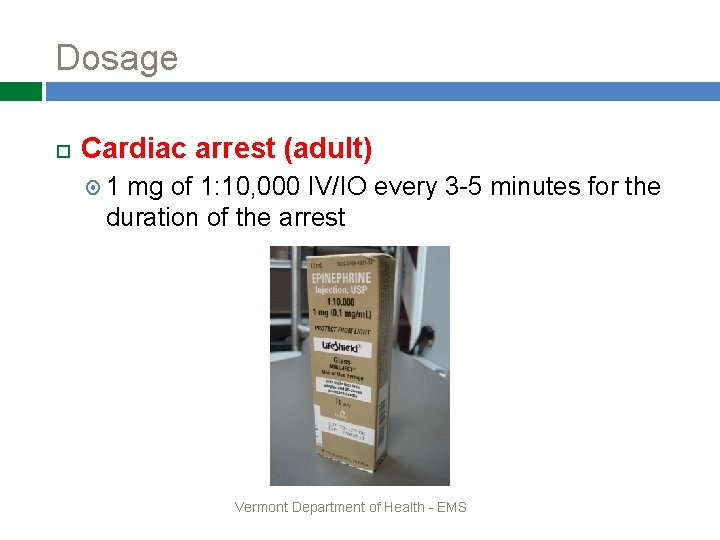
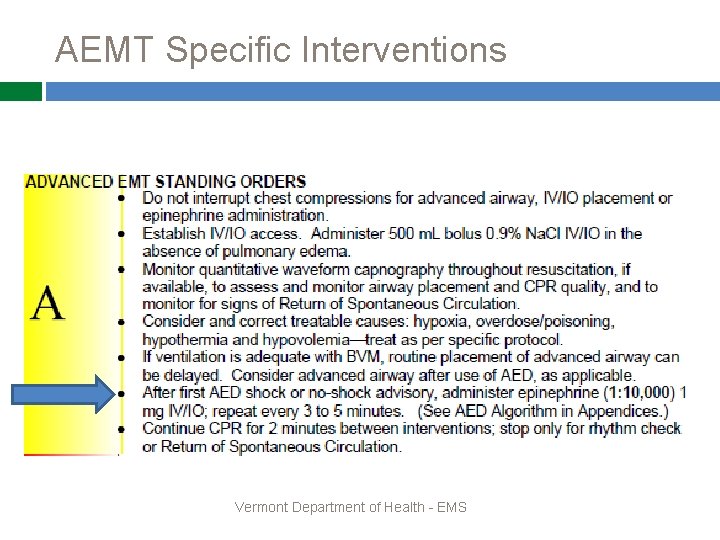
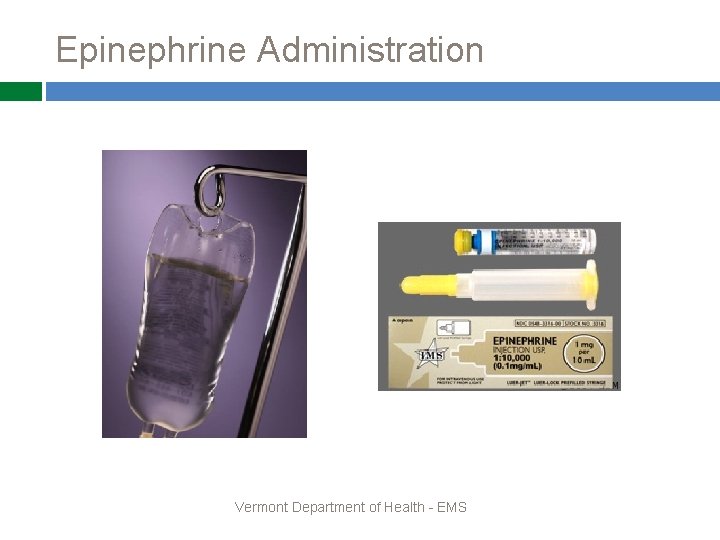
Dosage Cardiac arrest (adult) 1 mg of 1: 10, 000 IV/IO every 3 -5 minutes for the duration of the arrest Vermont Department of Health - EMS
Cardiac Arrest and Epinephrine Administration Vermont Department of Health - EMS
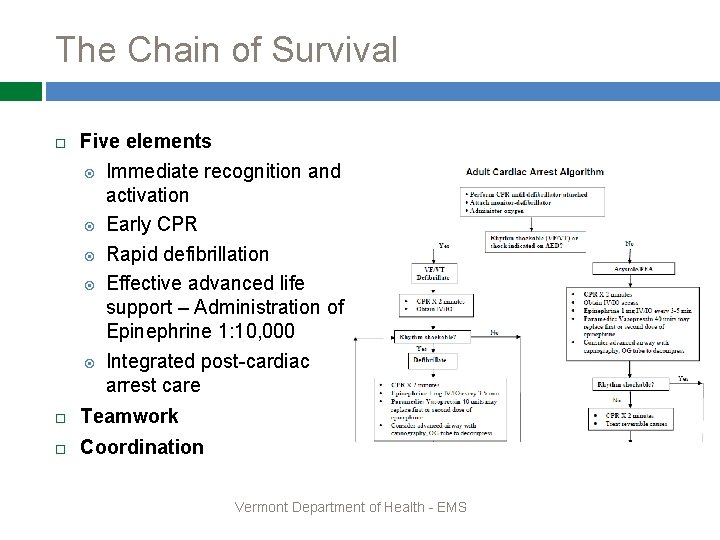
The Chain of Survival Five elements Immediate recognition and activation Early CPR Rapid defibrillation Effective advanced life support – Administration of Epinephrine 1: 10, 000 Integrated post-cardiac arrest care Teamwork Coordination Vermont Department of Health - EMS
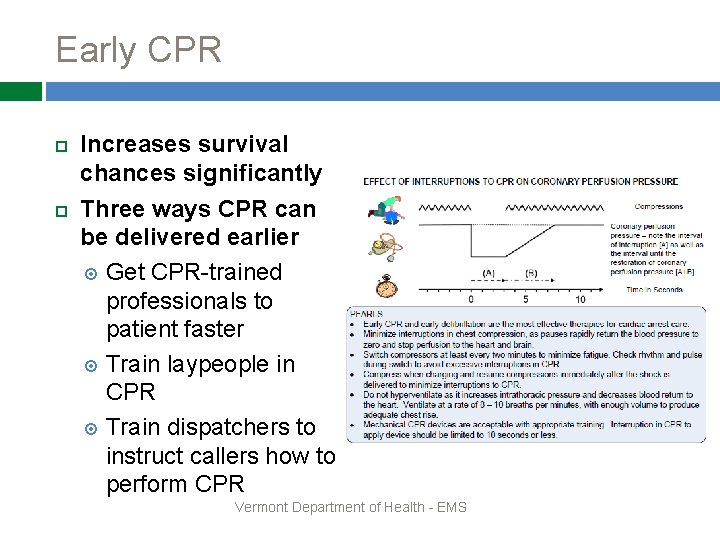
Early CPR Increases survival chances significantly Three ways CPR can be delivered earlier Get CPR-trained professionals to patient faster Train laypeople in CPR Train dispatchers to instruct callers how to perform CPR Vermont Department of Health - EMS
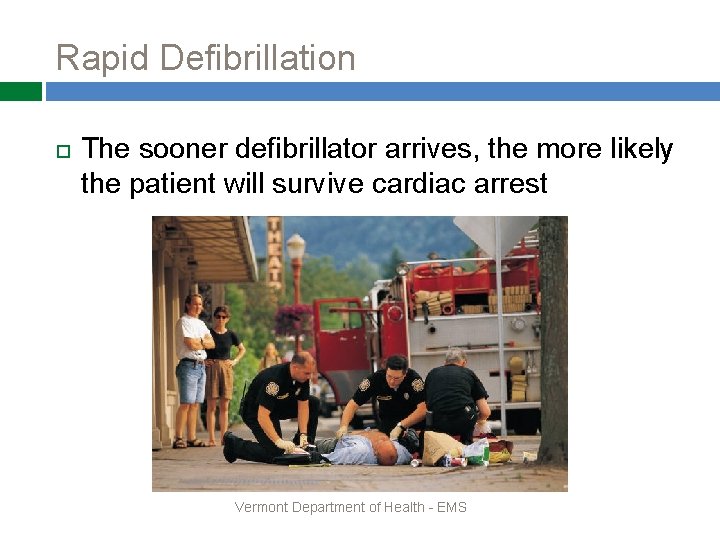
Rapid Defibrillation The sooner defibrillator arrives, the more likely the patient will survive cardiac arrest Vermont Department of Health - EMS
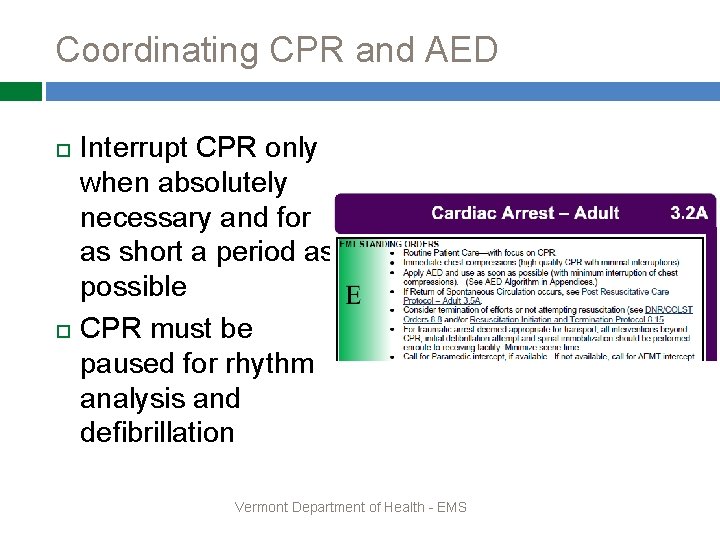
Coordinating CPR and AED Interrupt CPR only when absolutely necessary and for as short a period as possible CPR must be paused for rhythm analysis and defibrillation Vermont Department of Health - EMS
AEMT Specific Interventions Vermont Department of Health - EMS
Epinephrine Administration Vermont Department of Health - EMS
Vermont Department of Health - EMS
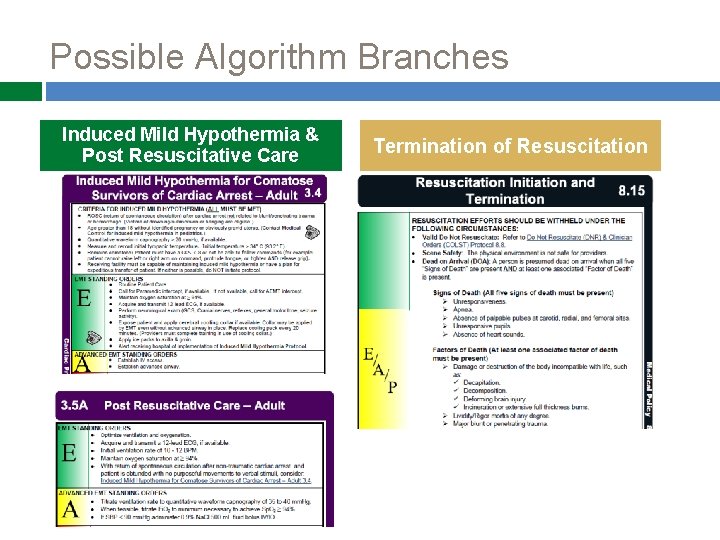
Possible Algorithm Branches Induced Mild Hypothermia & Post Resuscitative Care Termination of Resuscitation
Transport Concerns
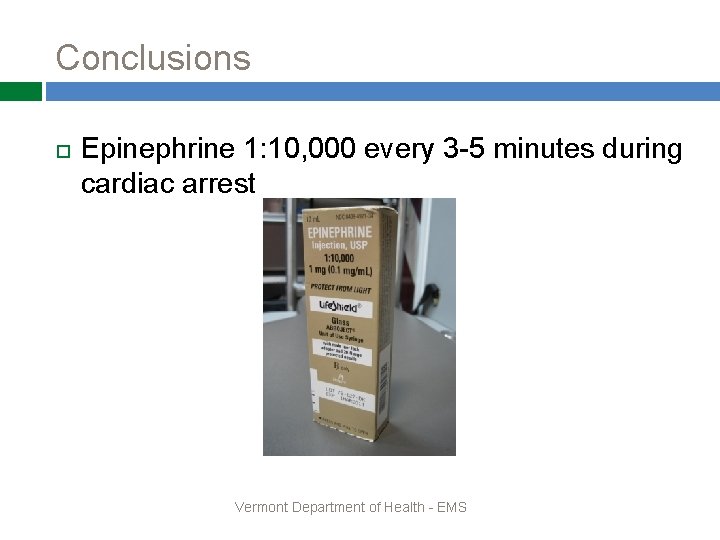
Conclusions Epinephrine 1: 10, 000 every 3 -5 minutes during cardiac arrest Vermont Department of Health - EMS
Acknowledgements: Images on slides 4, 5, and 6 are used, with permission, from the Transition Series published by Brady/Pearson. Vermont Department of Health - EMS