
AEB CarCar and Pedestrian Achievable Speed Reductions for

AEB Car-Car and Pedestrian: Achievable Speed Reductions for Legislation 2020+ Dr. Patrick Seiniger, Federal Highway Research Institute (BASt) www. bmvi. de
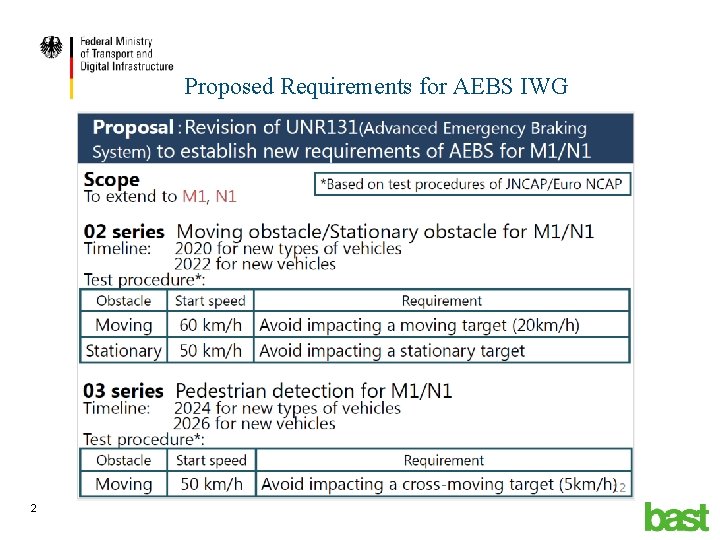
Proposed Requirements for AEBS IWG 2
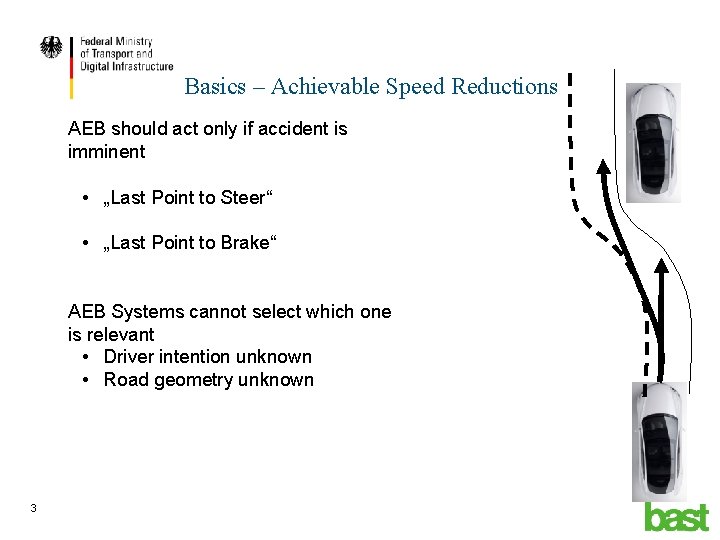
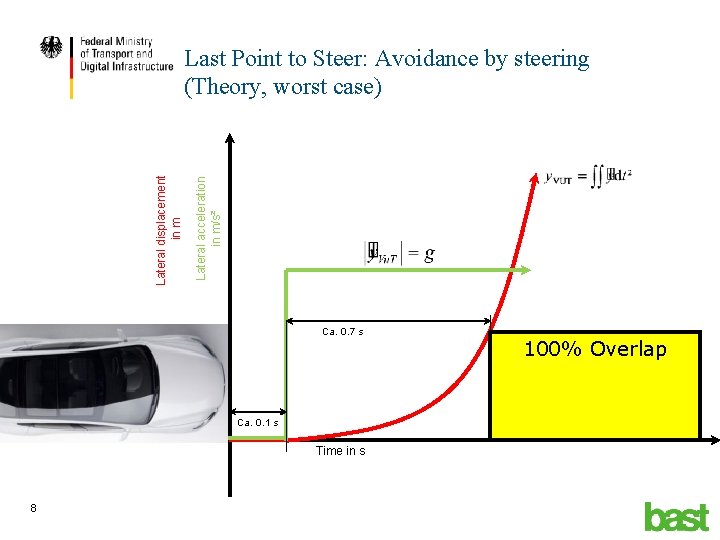
Basics – Achievable Speed Reductions AEB should act only if accident is imminent • „Last Point to Steer“ • „Last Point to Brake“ AEB Systems cannot select which one is relevant • Driver intention unknown • Road geometry unknown 3
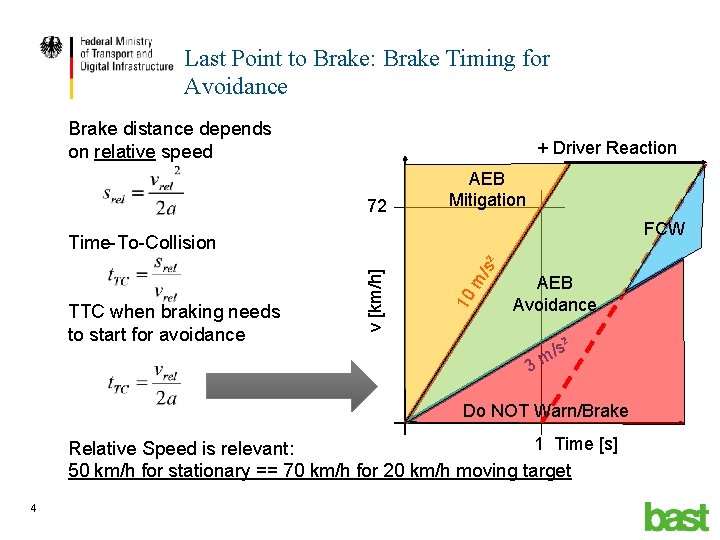
Last Point to Brake: Brake Timing for Avoidance Brake distance depends on relative speed + Driver Reaction 72 AEB Mitigation FCW m/ s² 10 TTC when braking needs to start for avoidance v [km/h] Time-To-Collision AEB Avoidance 3 s² / m Do NOT Warn/Brake 1 Time [s] Relative Speed is relevant: 50 km/h for stationary == 70 km/h for 20 km/h moving target 4
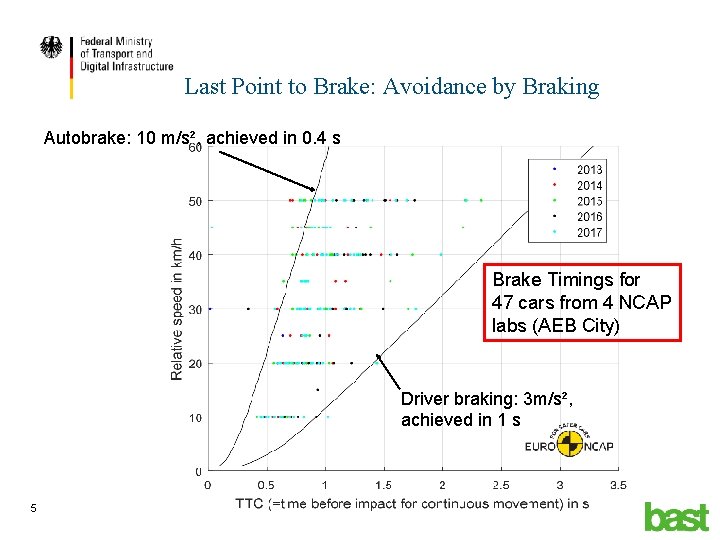
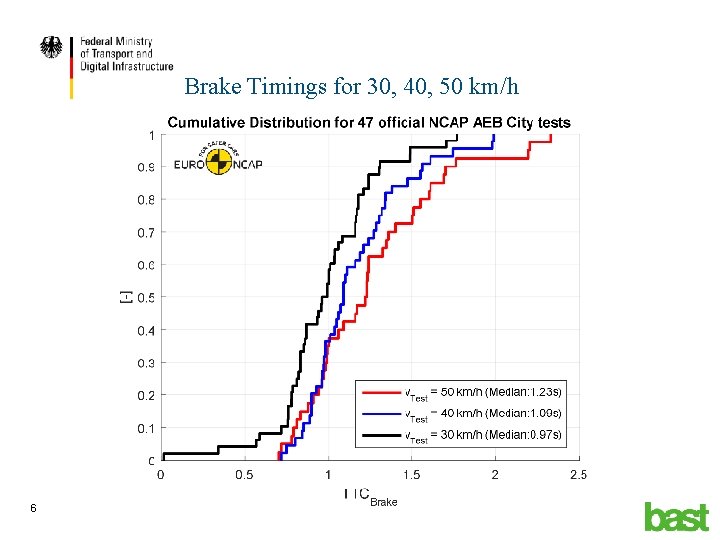
Last Point to Brake: Avoidance by Braking Autobrake: 10 m/s², achieved in 0. 4 s Brake Timings for 47 cars from 4 NCAP labs (AEB City) Driver braking: 3 m/s², achieved in 1 s 5
Brake Timings for 30, 40, 50 km/h 6
A Bit More Theory: Shark‘s Fin-Curves Speed reduction for a given braking time: 7
Lateral acceleration in m/s² Lateral displacement in m Last Point to Steer: Avoidance by steering (Theory, worst case) Ca. 0. 7 s Ca. 0. 1 s Time in s 8 100% Overlap
IPG Car. Maker Generic Audi TT Direct SWA input Variations: Last Point to Steer - Simulations t = 0, 8 s Necessary Steering Input Possible for Human Drivers? 9
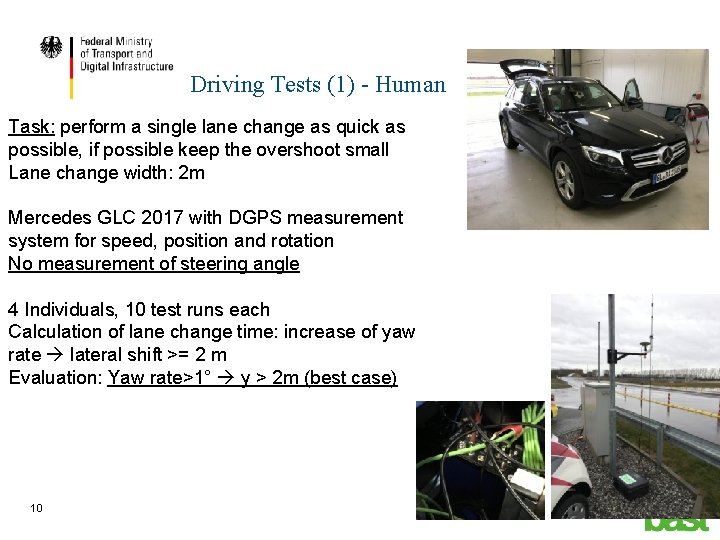
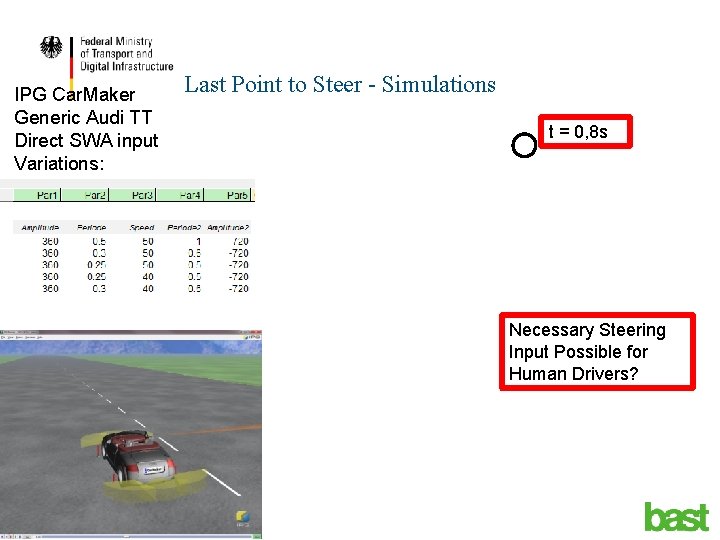
Driving Tests (1) - Human Task: perform a single lane change as quick as possible, if possible keep the overshoot small Lane change width: 2 m Mercedes GLC 2017 with DGPS measurement system for speed, position and rotation No measurement of steering angle 4 Individuals, 10 test runs each Calculation of lane change time: increase of yaw rate lateral shift >= 2 m Evaluation: Yaw rate>1° y > 2 m (best case) 10
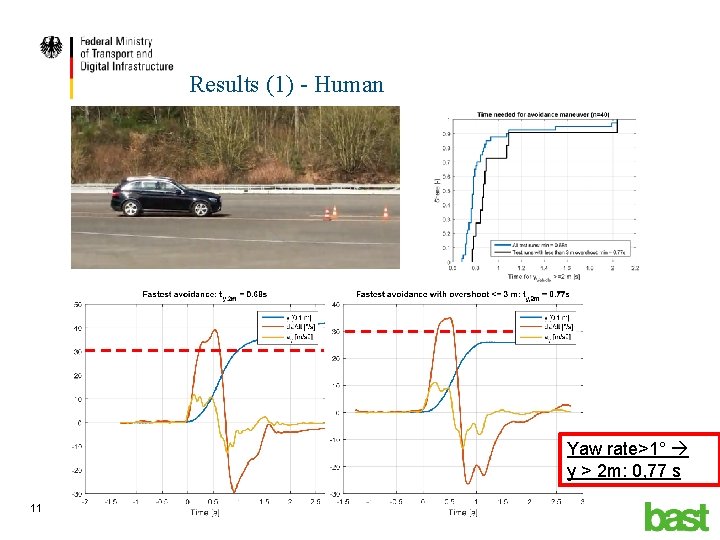
Results (1) - Human Yaw rate>1° y > 2 m: 0, 77 s 11
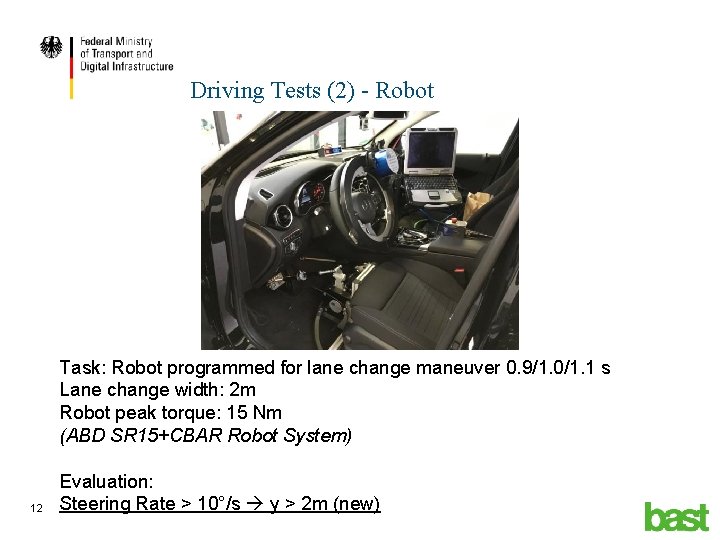
Driving Tests (2) - Robot Task: Robot programmed for lane change maneuver 0. 9/1. 0/1. 1 s Lane change width: 2 m Robot peak torque: 15 Nm (ABD SR 15+CBAR Robot System) 12 Evaluation: Steering Rate > 10°/s y > 2 m (new)
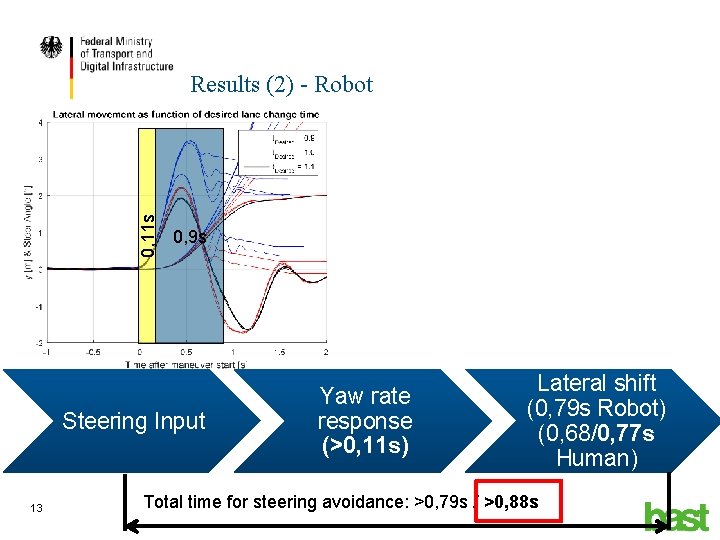
0, 11 s Results (2) - Robot 0, 9 s Steering Input 13 Yaw rate response (>0, 11 s) Lateral shift (0, 79 s Robot) (0, 68/0, 77 s Human) Total time for steering avoidance: >0, 79 s / >0, 88 s
Discussion on Last Point to Steer Subject Performance • 4 drivers, all with Test Track License „ATP B“, 4 x 10 runs • Values correspond to best try! • Majority of drivers on the road likely performs worse Vehicle Characteristics • Mercedes GLC, total 1000 km (=new dampers/springs, new but appropriate tires) • BASt can perform tests with other, proposed cars as well, if desired Other data • ADAC data similar, yet higher values Transferability • Measured values are considered transferable 14
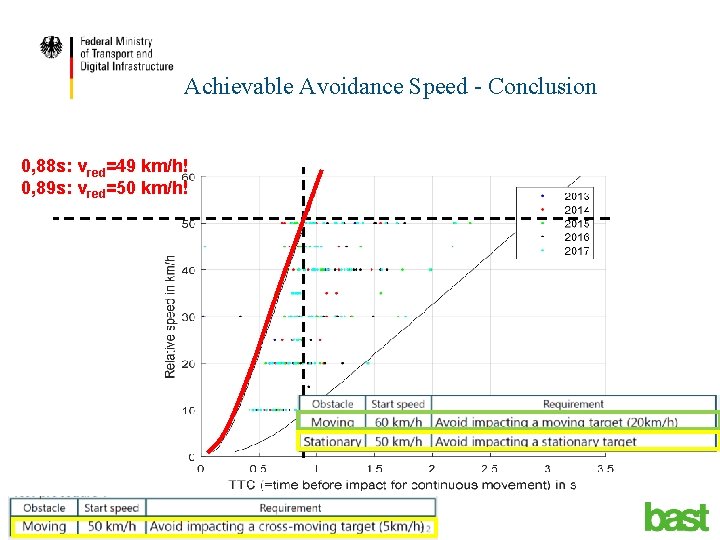
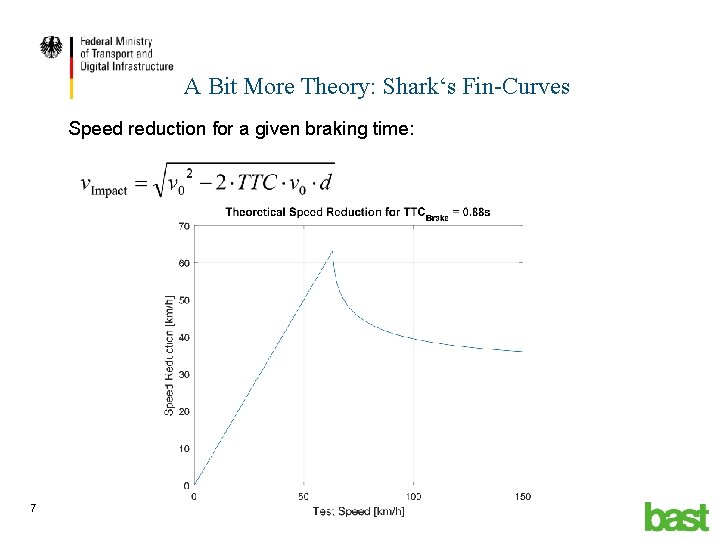
Achievable Avoidance Speed - Conclusion 0, 88 s: vred=49 km/h! 0, 89 s: vred=50 km/h! 15
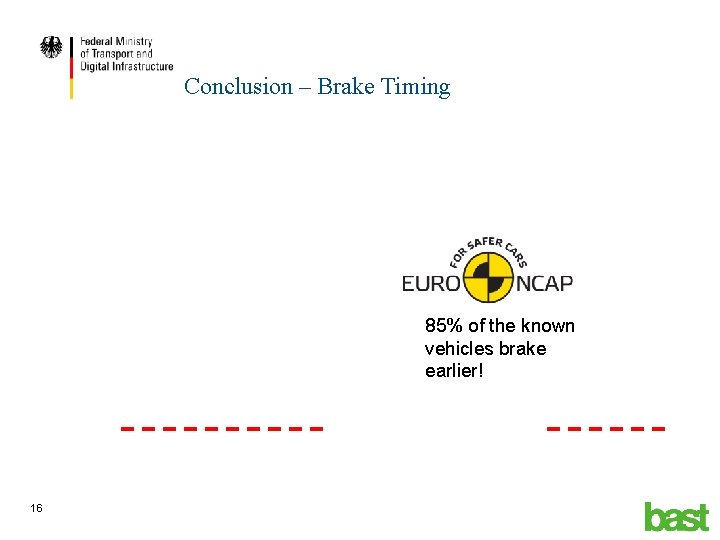
Conclusion – Brake Timing 85% of the known vehicles brake earlier! 16
Summary Avoidance by steering possible up to 0. 88 s before the impact (driving tests) Braking at 0. 88 s results in avoidance up to 49 km/h (relative speed), 50 km/h would be achieved with 0. 89 s A relative speed reduction of 50 km/h is achievable Higher speed reductions possible with earlier brake intervention ALL tested vehicles start to brake much earlier than 0. 8 s! The Japanese proposal could even be adjusted to 50 km/h (relative) for moving cases as well • Currently: moving target 40 km/h reduction, stationary target + pedestrian 50 km/h reduction 17
- Slides: 17