
Advocacy for Jobless Workers Recession and Recovery Developments
Advocacy for Jobless Workers Recession and Recovery: Developments in Unemployment Insurance United Way of Michigan/ UAW Community Services Conference UAW Black Lake Conference Center • May 2015
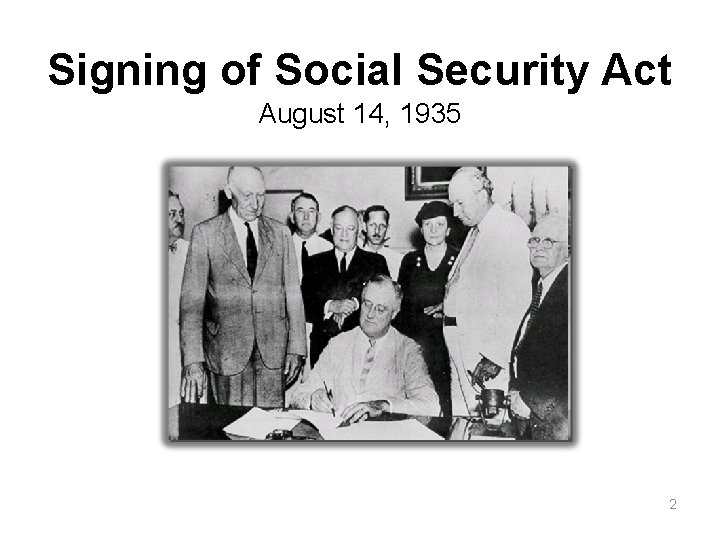
Signing of Social Security Act August 14, 1935 2
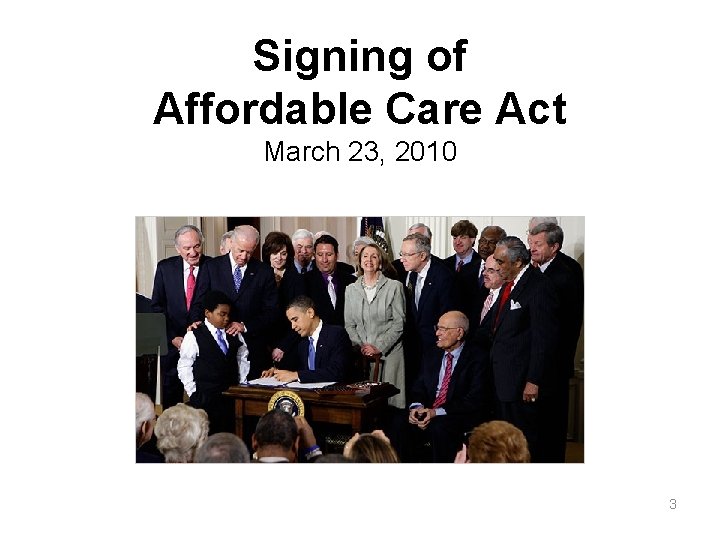
Signing of Affordable Care Act March 23, 2010 3
Overview of Presentation • Lingering Labor Market Concerns • Unemployment Insurance Update – Weak State Programs and No Extensions – Downward Pressure on Programs – Not Prepared for Next Recession • UI Law 101—Helping Your Members – Common Issues and Answers • The Politics of UI – How to Talk About UI
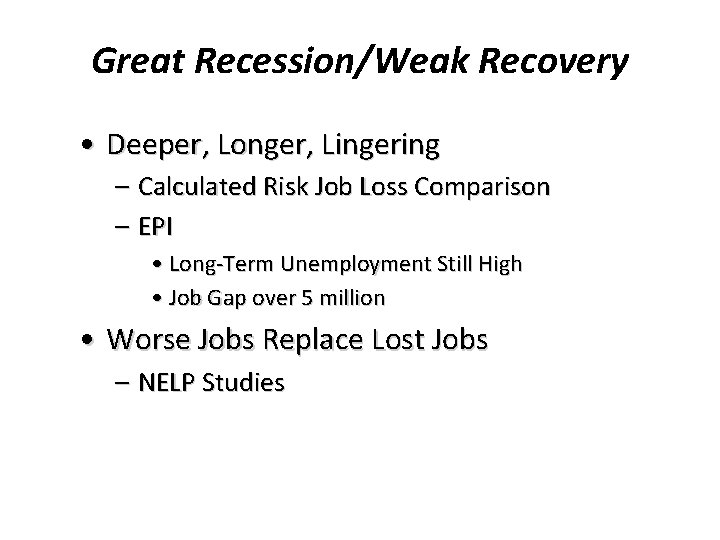
Great Recession/Weak Recovery • Deeper, Longer, Lingering – Calculated Risk Job Loss Comparison – EPI • Long-Term Unemployment Still High • Job Gap over 5 million • Worse Jobs Replace Lost Jobs – NELP Studies
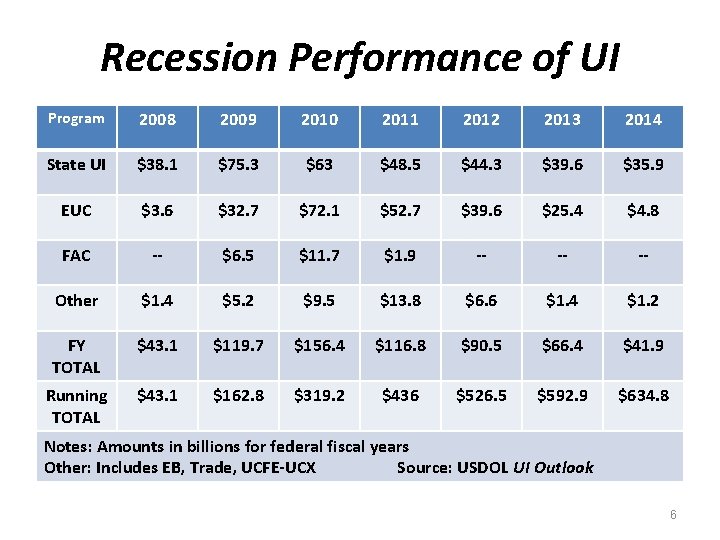
Recession Performance of UI Program 2008 2009 2010 2011 2012 2013 2014 State UI $38. 1 $75. 3 $63 $48. 5 $44. 3 $39. 6 $35. 9 EUC $3. 6 $32. 7 $72. 1 $52. 7 $39. 6 $25. 4 $4. 8 FAC -- $6. 5 $11. 7 $1. 9 -- -- -- Other $1. 4 $5. 2 $9. 5 $13. 8 $6. 6 $1. 4 $1. 2 FY TOTAL $43. 1 $119. 7 $156. 4 $116. 8 $90. 5 $66. 4 $41. 9 Running TOTAL $43. 1 $162. 8 $319. 2 $436 $526. 5 $592. 9 $634. 8 Notes: Amounts in billions for federal fiscal years Other: Includes EB, Trade, UCFE-UCX Source: USDOL UI Outlook 6
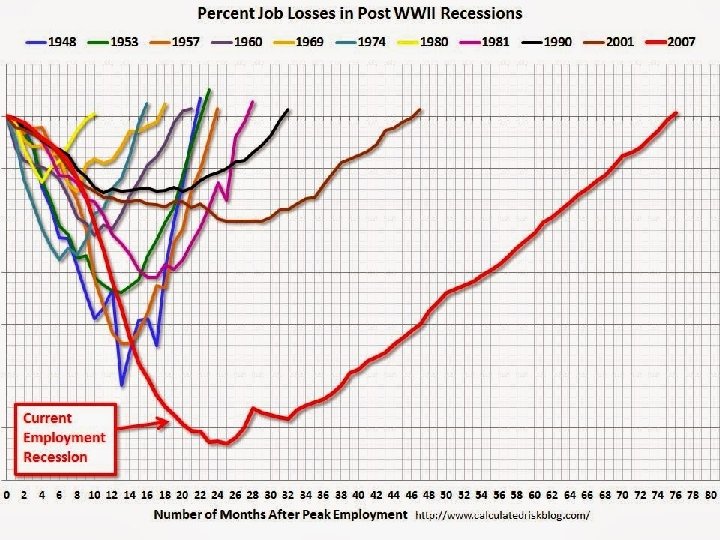
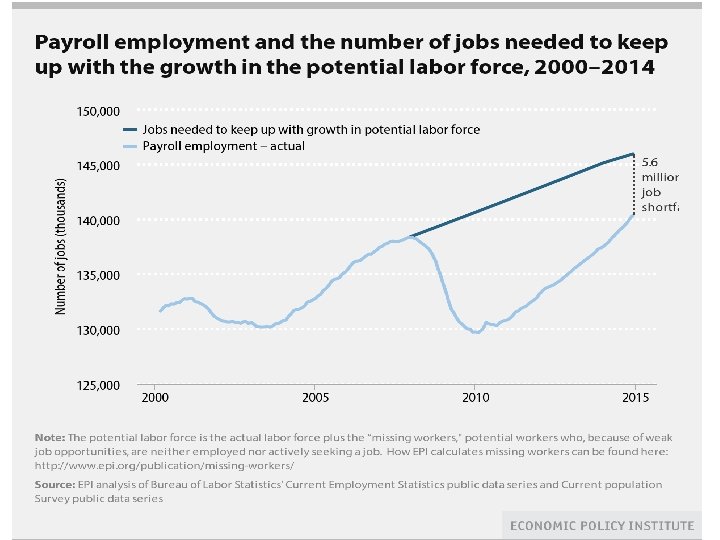
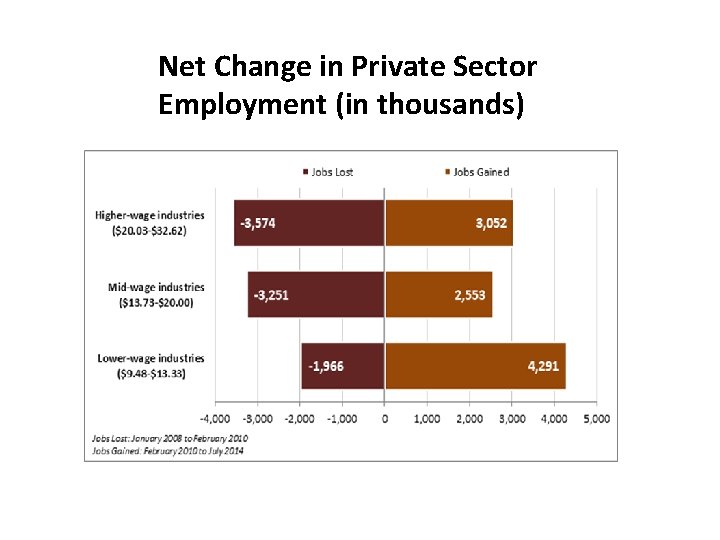
Net Change in Private Sector Employment (in thousands)
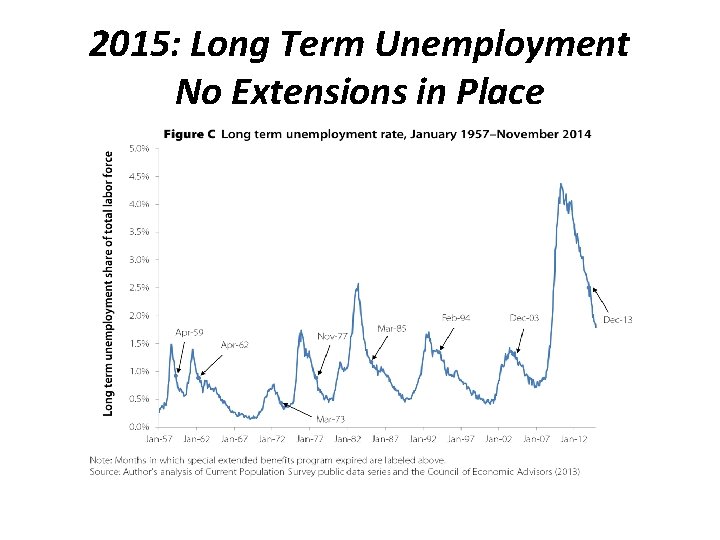
2015: Long Term Unemployment No Extensions in Place
Overview of Presentation • Lingering Labor Market Concerns • Unemployment Insurance Update – Weak State Programs and No Extensions – Downward Pressure on Programs – Not Prepared for Next Recession • UI Law 101—Helping Your Members – Common Issues and Answers • The Politics of UI – How to Talk About UI
Reasons for Focusing on Unemployment Insurance • UI benefits represent first line of defense against wage loss, homelessness and poverty • Unemployment claim paying average benefit levels ($300) for 26 weeks is worth $7800 • UI benefits stimulate business: $1. 00 in UI benefits = $1. 60 to $2. 10 in added GDP • Maintains jobless workers’ connection to labor force and supports their job search • Reduces downward pressure on wages
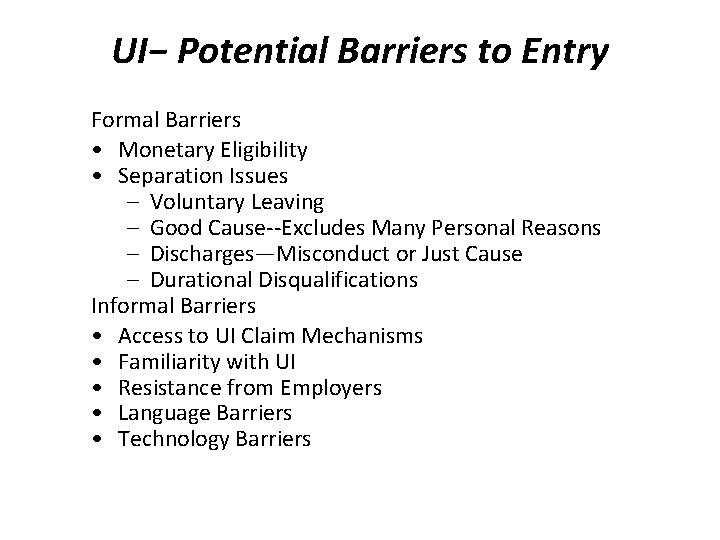
UI− Potential Barriers to Entry Formal Barriers • Monetary Eligibility • Separation Issues – Voluntary Leaving – Good Cause--Excludes Many Personal Reasons – Discharges—Misconduct or Just Cause – Durational Disqualifications Informal Barriers • Access to UI Claim Mechanisms • Familiarity with UI • Resistance from Employers • Language Barriers • Technology Barriers
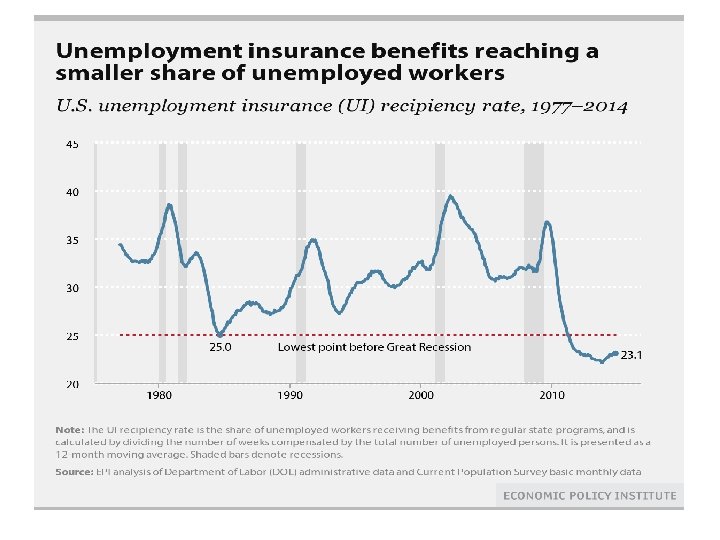
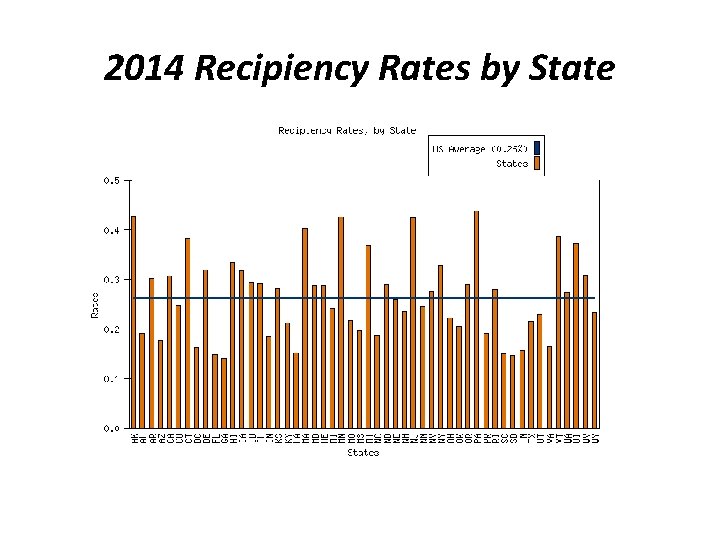
2014 Recipiency Rates by State
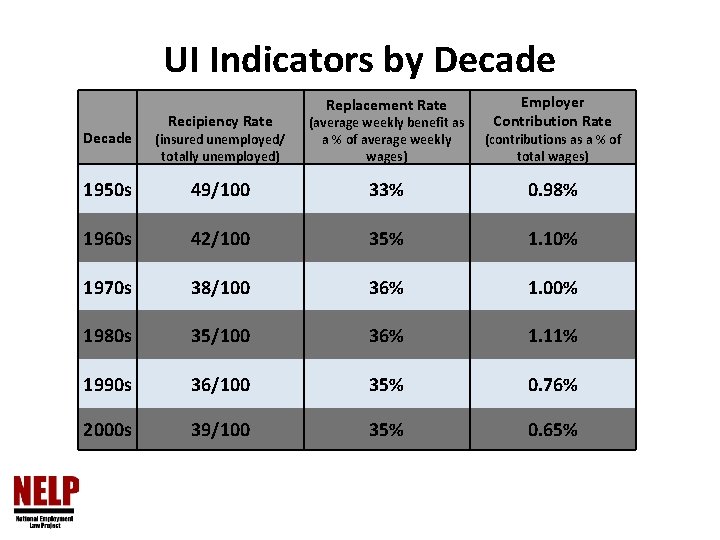
UI Indicators by Decade Replacement Rate Employer Contribution Rate Decade Recipiency Rate (insured unemployed/ totally unemployed) (average weekly benefit as a % of average weekly wages) (contributions as a % of total wages) 1950 s 49/100 33% 0. 98% 1960 s 42/100 35% 1. 10% 1970 s 38/100 36% 1. 00% 1980 s 35/100 36% 1. 11% 1990 s 36/100 35% 0. 76% 2000 s 39/100 35% 0. 65%
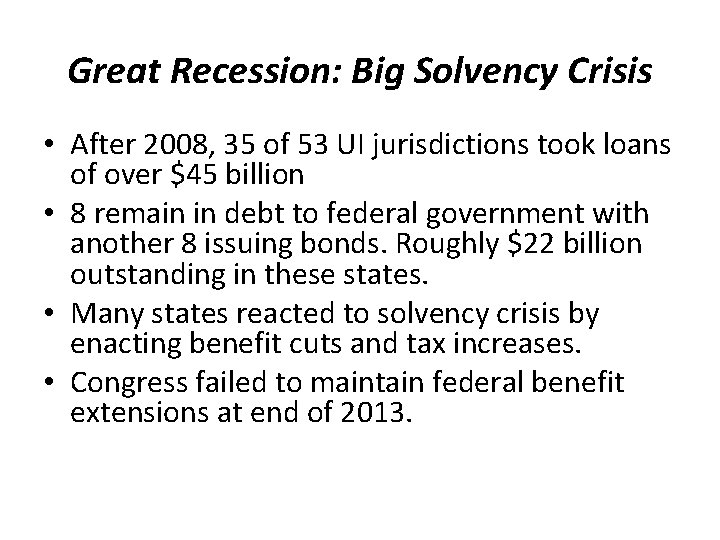
Great Recession: Big Solvency Crisis • After 2008, 35 of 53 UI jurisdictions took loans of over $45 billion • 8 remain in debt to federal government with another 8 issuing bonds. Roughly $22 billion outstanding in these states. • Many states reacted to solvency crisis by enacting benefit cuts and tax increases. • Congress failed to maintain federal benefit extensions at end of 2013.
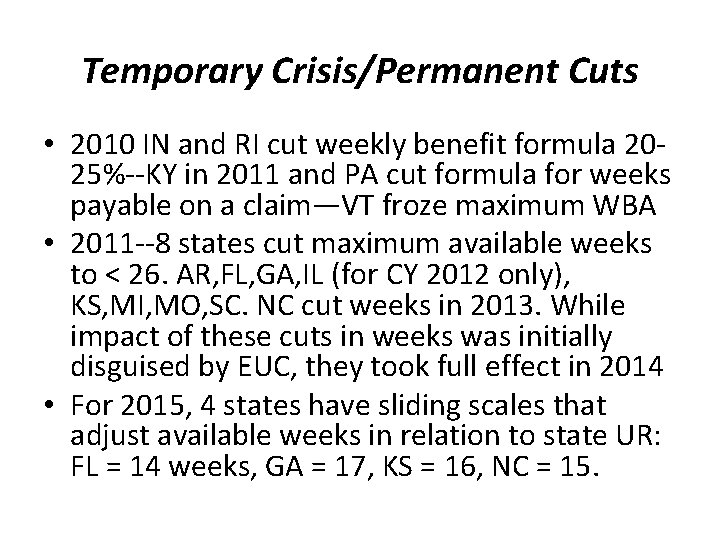
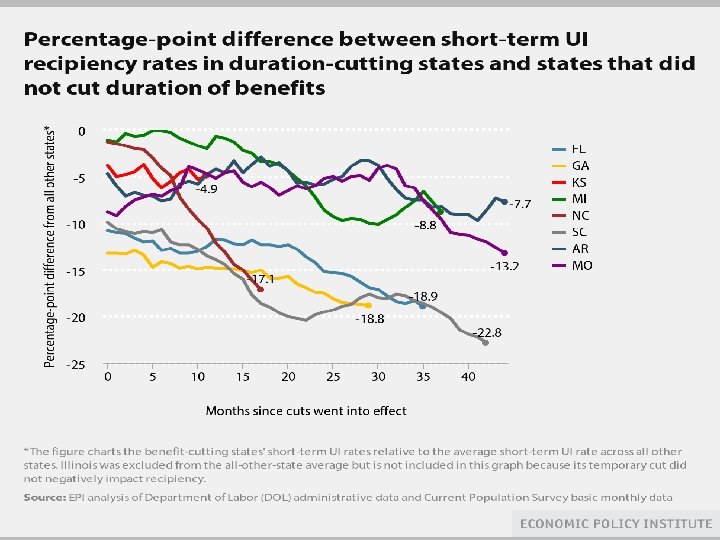
Temporary Crisis/Permanent Cuts • 2010 IN and RI cut weekly benefit formula 2025%--KY in 2011 and PA cut formula for weeks payable on a claim—VT froze maximum WBA • 2011 --8 states cut maximum available weeks to < 26. AR, FL, GA, IL (for CY 2012 only), KS, MI, MO, SC. NC cut weeks in 2013. While impact of these cuts in weeks was initially disguised by EUC, they took full effect in 2014 • For 2015, 4 states have sliding scales that adjust available weeks in relation to state UR: FL = 14 weeks, GA = 17, KS = 16, NC = 15.
Overview of Presentation • Lingering Labor Market Concerns • Unemployment Insurance Update – Weak State Programs and No Extensions – Downward Pressure on Programs – Not Prepared for Next Recession • UI Law 101—Helping Your Members – Common Issues and Answers • The Politics of UI – How to Talk About UI
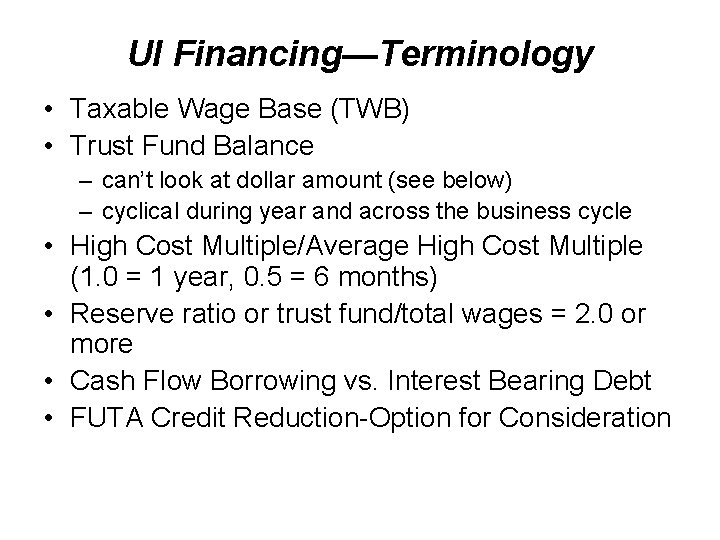
UI Financing—Terminology • Taxable Wage Base (TWB) • Trust Fund Balance – can’t look at dollar amount (see below) – cyclical during year and across the business cycle • High Cost Multiple/Average High Cost Multiple (1. 0 = 1 year, 0. 5 = 6 months) • Reserve ratio or trust fund/total wages = 2. 0 or more • Cash Flow Borrowing vs. Interest Bearing Debt • FUTA Credit Reduction-Option for Consideration
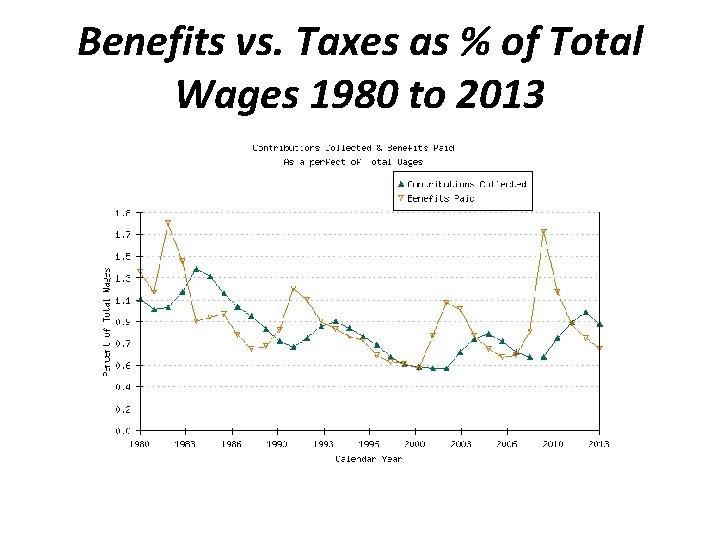
Benefits vs. Taxes as % of Total Wages 1980 to 2013
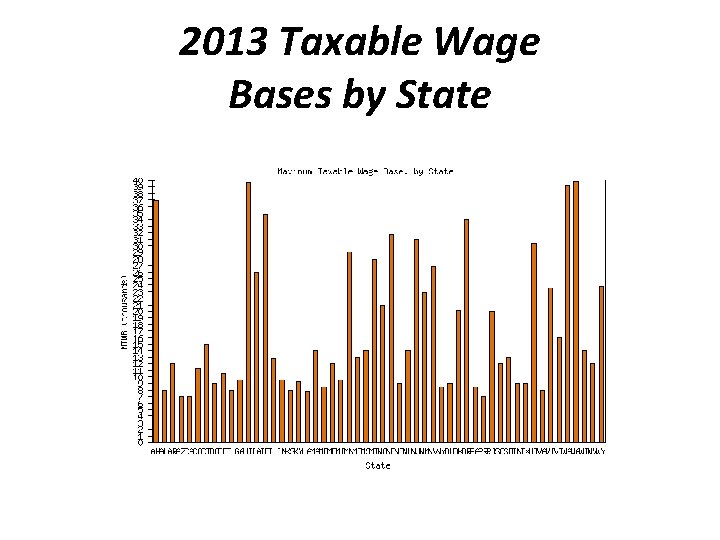
2013 Taxable Wage Bases by State
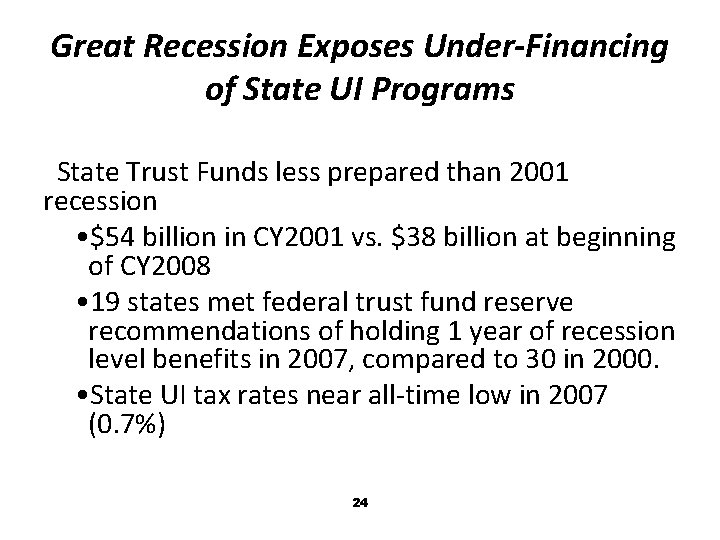
Great Recession Exposes Under-Financing of State UI Programs State Trust Funds less prepared than 2001 recession • $54 billion in CY 2001 vs. $38 billion at beginning of CY 2008 • 19 states met federal trust fund reserve recommendations of holding 1 year of recession level benefits in 2007, compared to 30 in 2000. • State UI tax rates near all-time low in 2007 (0. 7%) 24
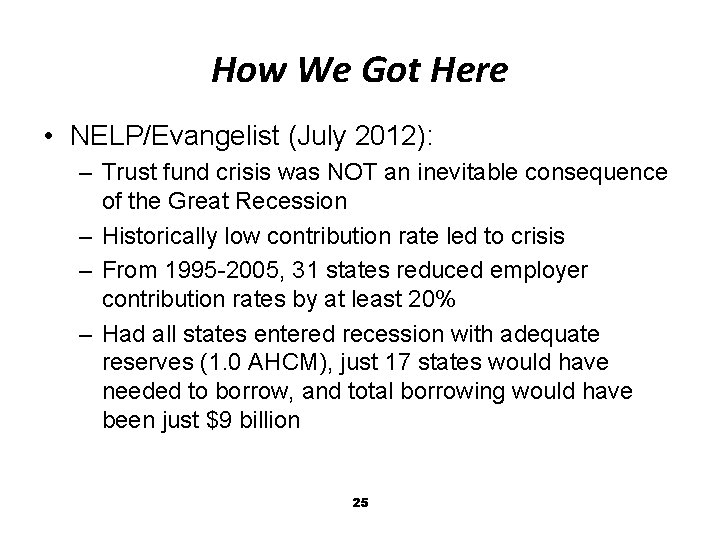
How We Got Here • NELP/Evangelist (July 2012): – Trust fund crisis was NOT an inevitable consequence of the Great Recession – Historically low contribution rate led to crisis – From 1995 -2005, 31 states reduced employer contribution rates by at least 20% – Had all states entered recession with adequate reserves (1. 0 AHCM), just 17 states would have needed to borrow, and total borrowing would have been just $9 billion 25
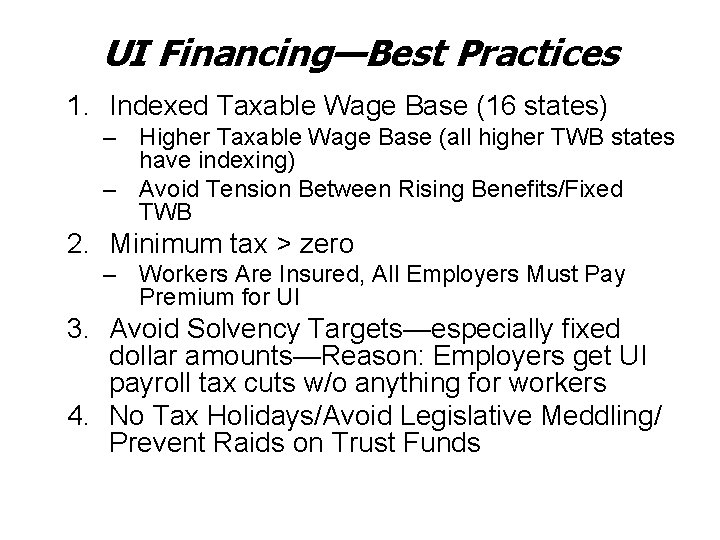
UI Financing—Best Practices 1. Indexed Taxable Wage Base (16 states) – Higher Taxable Wage Base (all higher TWB states have indexing) – Avoid Tension Between Rising Benefits/Fixed TWB 2. Minimum tax > zero – Workers Are Insured, All Employers Must Pay Premium for UI 3. Avoid Solvency Targets—especially fixed dollar amounts—Reason: Employers get UI payroll tax cuts w/o anything for workers 4. No Tax Holidays/Avoid Legislative Meddling/ Prevent Raids on Trust Funds
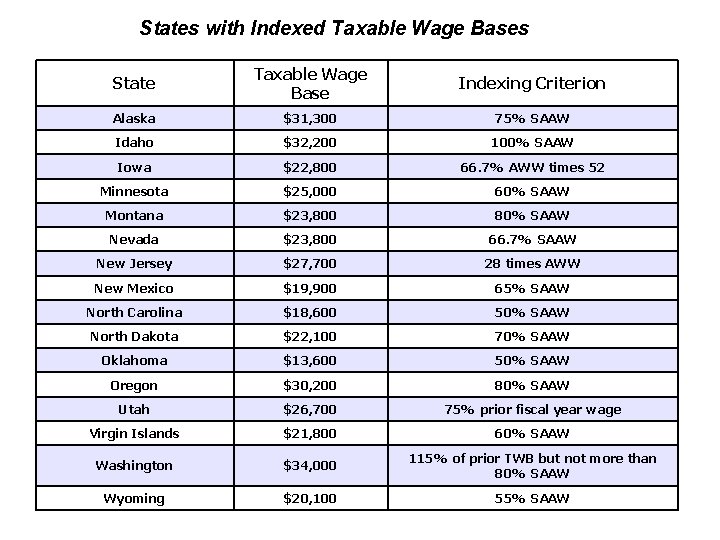
States with Indexed Taxable Wage Bases State Taxable Wage Base Indexing Criterion Alaska $31, 300 75% SAAW Idaho $32, 200 100% SAAW Iowa $22, 800 66. 7% AWW times 52 Minnesota $25, 000 60% SAAW Montana $23, 800 80% SAAW Nevada $23, 800 66. 7% SAAW New Jersey $27, 700 28 times AWW New Mexico $19, 900 65% SAAW North Carolina $18, 600 50% SAAW North Dakota $22, 100 70% SAAW Oklahoma $13, 600 50% SAAW Oregon $30, 200 80% SAAW Utah $26, 700 75% prior fiscal year wage Virgin Islands $21, 800 60% SAAW Washington $34, 000 115% of prior TWB but not more than 80% SAAW Wyoming $20, 100 55% SAAW
Overview of Presentation • Lingering Labor Market Concerns • Unemployment Insurance Update – Weak State Programs and No Extensions – Downward Pressure on Programs – Not Prepared for Next Recession • UI Law 101—Helping Your Members – Common Issues and Answers • The Politics of UI – How to Talk About UI
UI Administrative Steps • Claim by jobless worker filing online or by phone or in person—read and follow directions – Week unclaimed is a week not paid • If layoff and monetarily eligible, claim is paid • Agency conducts fact finding on any separation or eligibility issues and a decision—usually called determination—is mailed to claimant and employer • TIMELY APPEAL ALL UNFAVORABLE DECISIONS • Decisions not appealed within time limits are FINAL • Following appeals, a hearing is held which is key evidentiary stage for the claim.
Common Pointers 1. Generally encourage workers to claim UI if there is any reasonable chance as to eligibility for UI 2. Determine dates of any agency decisions and make sure worker has filed or files appeal immediately 3. Even if appeal is filed, continue weekly certifications for benefits—weeks not claimed will not be paid even if success on appeal 4. If no timely appeal, determine whether good cause exists or if eligibility issue is involved. If disqualification is final, explain penalty. 5. Obtain copies of documents prior to giving detailed advice whenever possible 6. If you are not a lawyer, advise claimant of that 30
UI Hearing Guidelines • Hearing is key stage—always bring essential witnesses and prepare—review agency file • Burden of proof generally on the party most in position of knowing the facts – Claimant has burden to show eligibility – Employer (or agency) as burden to prove disqualification – Claimant has burden to show good cause for quit • Present Facts, Not Conclusions – Example: “My boss stared at me and asked me out for dates, ” NOT “My boss harassed me. ” • Speak clearly and slowly • Bring copies of any exhibits or send them in advance in telephone hearing
UI Hearing Guidelines-2 • Administrative hearing--Record is made and in most cases that remains sole source of facts in the case. • Cross-examination and subpoena power—use carefully – Beware subpoena to current employees as witnesses – Beware asking questions on cross exam unless you are sure about the answer – Have claimant answer questions briefly on cross exam • Second-level administrative appellate body and judicial review in court to correct errors of law— Again timely appeals are essential • Consider calling state legislator for help when appropriate
Overview of Presentation • Lingering Labor Market Concerns • Unemployment Insurance Update – Weak State Programs and No Extensions – Downward Pressure on Programs – Not Prepared for Next Recession • UI Law 101—Helping Your Members – Common Issues and Answers • The Politics of UI – How to Talk About UI
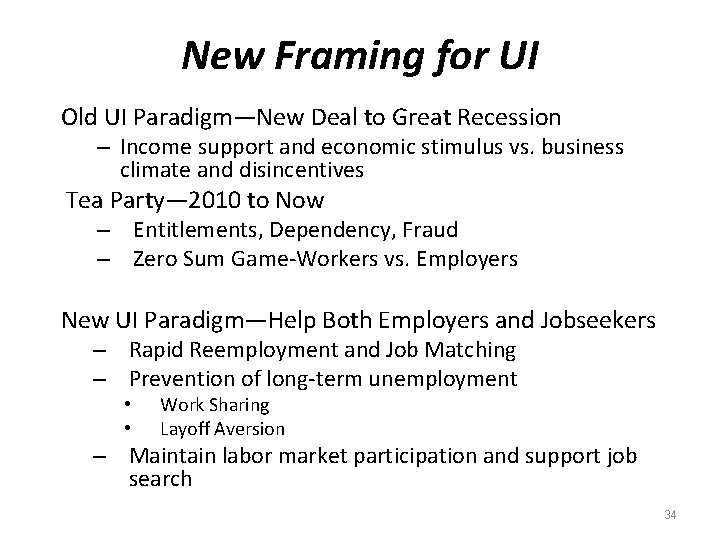
New Framing for UI Old UI Paradigm—New Deal to Great Recession – Income support and economic stimulus vs. business climate and disincentives Tea Party— 2010 to Now – Entitlements, Dependency, Fraud – Zero Sum Game-Workers vs. Employers New UI Paradigm—Help Both Employers and Jobseekers – Rapid Reemployment and Job Matching – Prevention of long-term unemployment • • Work Sharing Layoff Aversion – Maintain labor market participation and support job search 34
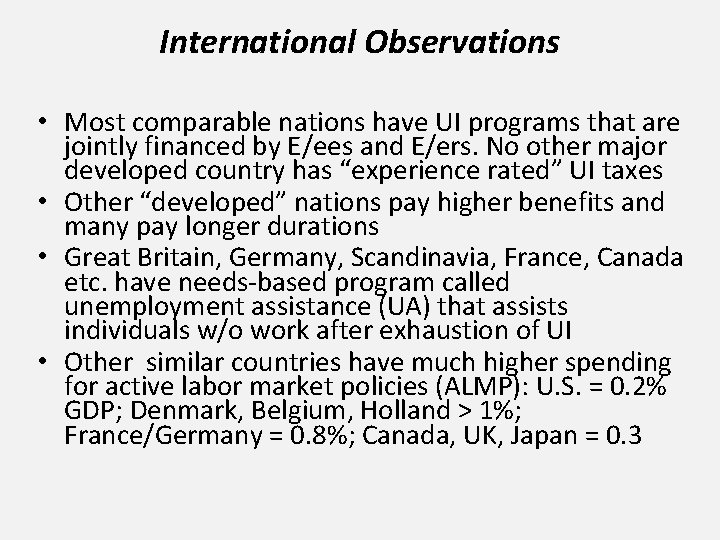
International Observations • Most comparable nations have UI programs that are jointly financed by E/ees and E/ers. No other major developed country has “experience rated” UI taxes • Other “developed” nations pay higher benefits and many pay longer durations • Great Britain, Germany, Scandinavia, France, Canada etc. have needs-based program called unemployment assistance (UA) that assists individuals w/o work after exhaustion of UI • Other similar countries have much higher spending for active labor market policies (ALMP): U. S. = 0. 2% GDP; Denmark, Belgium, Holland > 1%; France/Germany = 0. 8%; Canada, UK, Japan = 0. 3
Broader Policy Solutions Discharge only for good cause Unemployment Assistance Public Service Jobs Develop UC program of coverage for independent contractors, freelancers, others • TDI/Parental Leave • • 36
For more information National Employment Law Project www. nelp. org Rick Mc. Hugh, Senior Staff Attorney National Employment Law Project Email: rmchugh@nelp. org Phone: 734. 546. 0901 37
- Slides: 37