
Adverts Key terms Brand Identity How a brand
Adverts
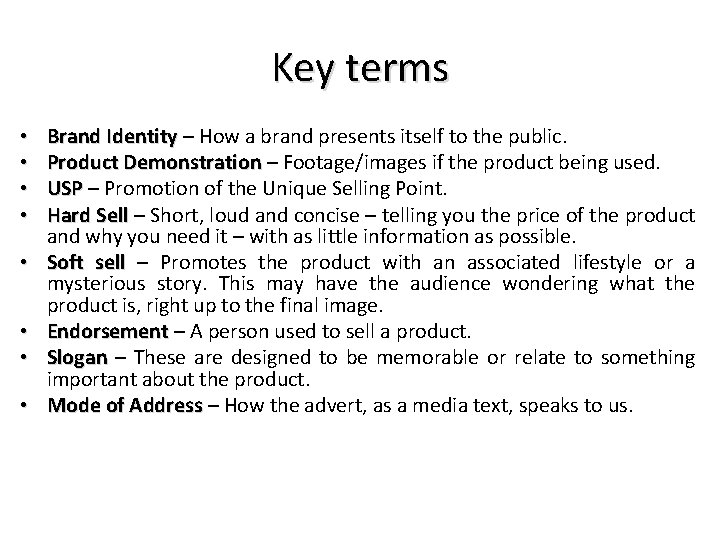
Key terms • • Brand Identity – How a brand presents itself to the public. Product Demonstration – Footage/images if the product being used. USP – Promotion of the Unique Selling Point. Hard Sell – Short, loud and concise – telling you the price of the product and why you need it – with as little information as possible. Soft sell – Promotes the product with an associated lifestyle or a mysterious story. This may have the audience wondering what the product is, right up to the final image. Endorsement – A person used to sell a product. Slogan – These are designed to be memorable or relate to something important about the product. Mode of Address – How the advert, as a media text, speaks to us.

Using Advertisement language The advert uses an endorsement from an American football player holding a Coke Zero bottle to set up the brand identity as manly. This shows Coke Zero is trying to advertise to male buyers who might be into sport. The Gatorade advert is a hard sell as it features a Gatorade bottle winning a race, suggesting Gatorade is the best drink and if you drink it you will also win in life. The slogan and image help to develop the brand identity as being sport-related, so the audience understand this is a sport drink
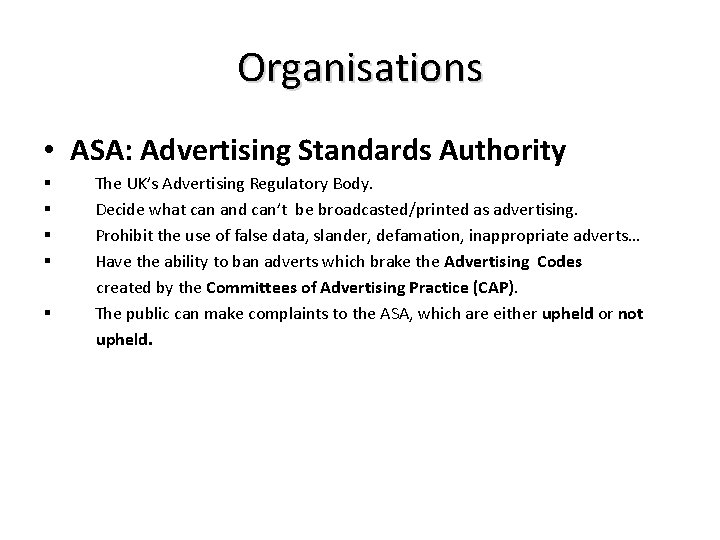
Organisations • ASA: Advertising Standards Authority § § § The UK’s Advertising Regulatory Body. Decide what can and can’t be broadcasted/printed as advertising. Prohibit the use of false data, slander, defamation, inappropriate adverts… Have the ability to ban adverts which brake the Advertising Codes created by the Committees of Advertising Practice (CAP). The public can make complaints to the ASA, which are either upheld or not upheld.
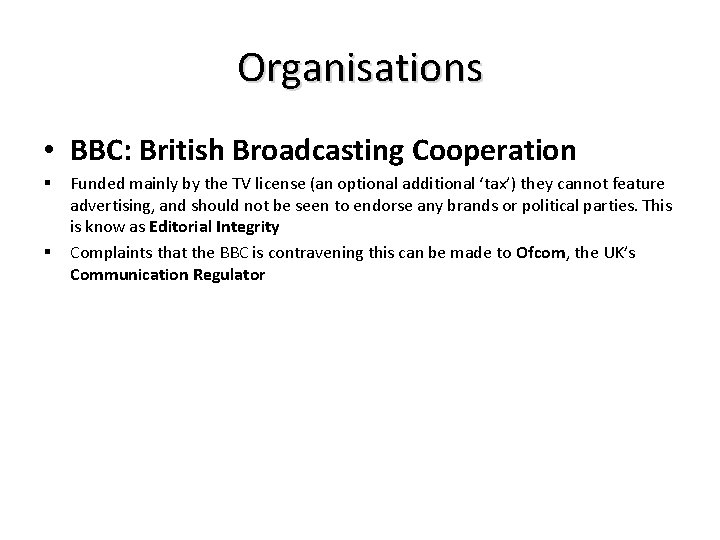
Organisations • BBC: British Broadcasting Cooperation § § Funded mainly by the TV license (an optional additional ‘tax’) they cannot feature advertising, and should not be seen to endorse any brands or political parties. This is know as Editorial Integrity Complaints that the BBC is contravening this can be made to Ofcom, the UK’s Communication Regulator
Product Placement • When a company sponsors a television show or event to use their products as part of the storyline, or being used by the characters/in the set. • Very popular in the US, but less so in the UK, where a logo must be shown beforehand.
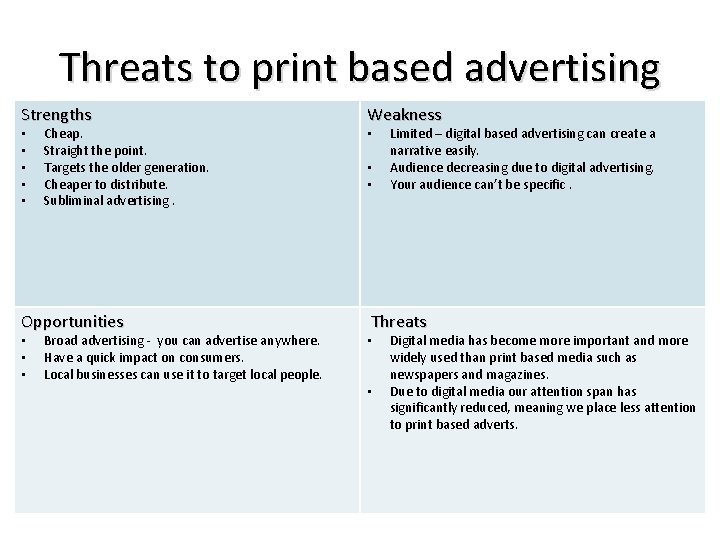
Threats to print based advertising Strengths • • • Cheap. Straight the point. Targets the older generation. Cheaper to distribute. Subliminal advertising. Opportunities • • • Weakness SWOT Analysis • Limited – digital based advertising can create a Broad advertising - you can advertise anywhere. Have a quick impact on consumers. Local businesses can use it to target local people. • • narrative easily. Audience decreasing due to digital advertising. Your audience can’t be specific. Threats • • Digital media has become more important and more widely used than print based media such as newspapers and magazines. Due to digital media our attention span has significantly reduced, meaning we place less attention to print based adverts.
- Slides: 7