
Advertising Slide 2 Advertising Slide 3 Why Do
- Slides: 36
Advertising Slide 2
Advertising Slide 3 Why Do We Do Advertising • Personal Selling is preferred, because it is so effective - but, it is expensive sometimes to contact EVERYBODY this way • Advertising is not as direct as Personal Selling, but you can reach a lot of people
Advertising Slide 4 Advertising Objectives are a Strategy Decision • Every ad should have clearly defined objectives • these objectives guide the people who create the ads
Advertising Product Advertising Nonpersonal selling of a particular good or service. - TV ads - billboards - junk mail Slide 5
Advertising Institutional Advertising Also called Advocacy advertising Slide 6
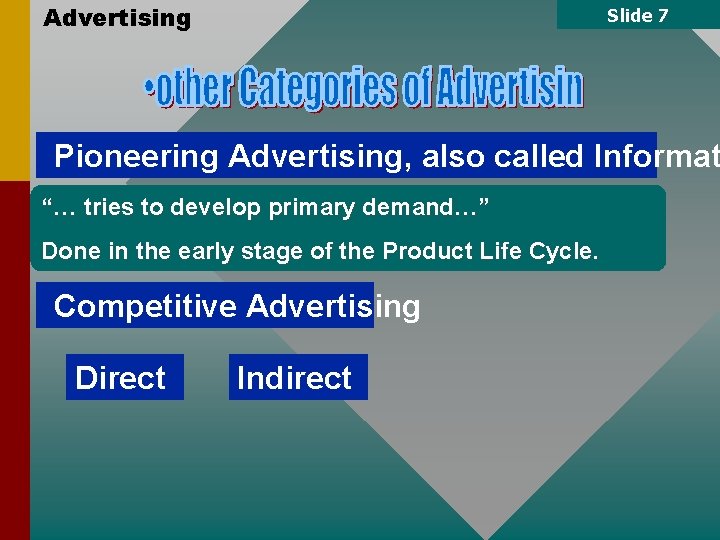
Advertising Slide 7 Pioneering Advertising, also called Informat “… tries to develop primary demand…” Done in the early stage of the Product Life Cycle. Competitive Advertising Direct Indirect
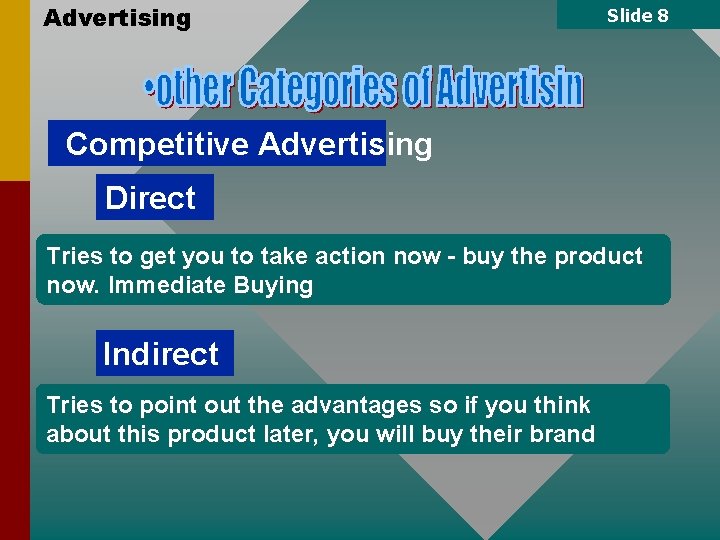
Advertising Slide 8 Competitive Advertising Direct Tries to get you to take action now - buy the product now. Immediate Buying Indirect Tries to point out the advantages so if you think about this product later, you will buy their brand
Advertising Slide 9 Comparative Advertising that makes direct comparisons with competitive brands. Companies used to hesitate to do this, but now they do it freely. Sometimes it can backfire and cause the viewer to NOT want to buy the product - if the comparison is too harsh eg. Political advertising that is too nasty
Advertising Slide 10 Comparative Advertising Some countries do not allow Comparative Advertising. Other countries allow it, , , but, , you have to prove any statements you make
Advertising Slide 11 Reminder Advertising Done in the Maturity and Decline stage of the Product Life Cycle. You already know about the product - they want you to keep using it, even if new competitors come along. These ads are usually “soft-sell” and try to be entertaining.
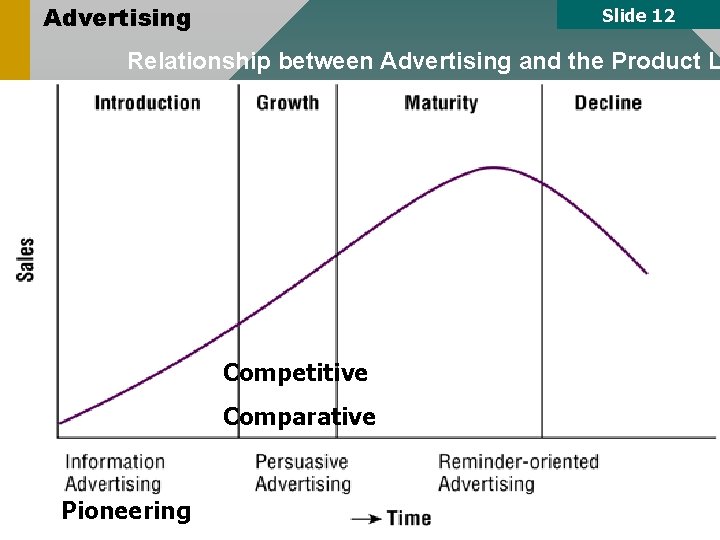
Advertising Slide 12 Relationship between Advertising and the Product L Cycle Competitive Comparative Pioneering Prepared for Marketing 106 Copyright, Professor W. T. G. Richardson, Seneca College
Advertising Slide 13 Institutional Advertising Promoting a concept, idea, or philosophy, or the goodwill of an industry, company, or organization. This is closely related to the PR program of the company Also called Advocacy advertising
Advertising Slide 14 Institutional Advertising Used often by Japanese conglomerates that have many types of products eg. Hitachi SONY Mitsubishi Panasonic (Matsushita Electronics)
Advertising Slide 15 Retail Advertising Retail advertising is the advertising done by stores that sell “stuff” directly to the consumers. Co-operative Advertising The sharing of advertising costs between the middlemen and retailer and the manufacturer. This means they will co-operate to display sales promotion material and share the costs of commercials and billboards etc.
Advertising Slide 16
Advertising Slide 17
Advertising Before we talk about choosing the best way to advertise, we first have to discuss our Position Slide 18
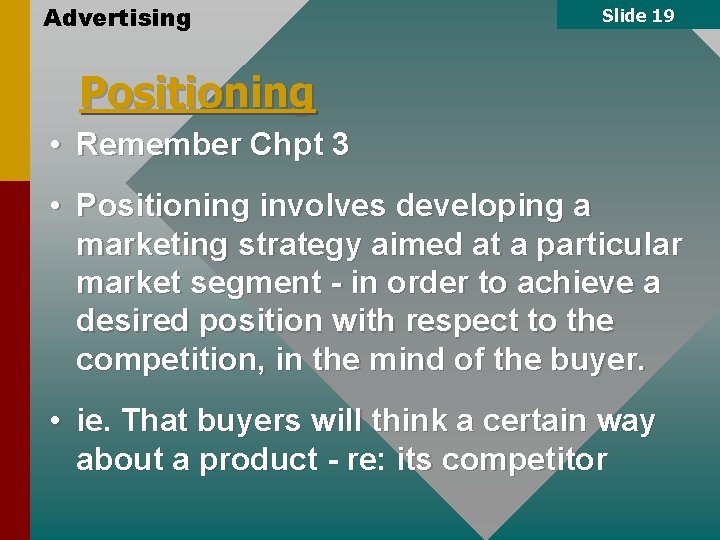
Advertising Slide 19 Positioning • Remember Chpt 3 • Positioning involves developing a marketing strategy aimed at a particular market segment - in order to achieve a desired position with respect to the competition, in the mind of the buyer. • ie. That buyers will think a certain way about a product - re: its competitor
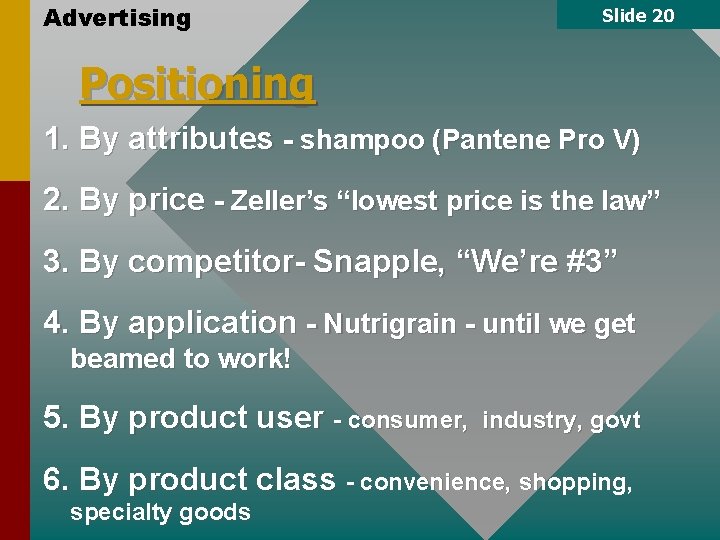
Advertising Slide 20 Positioning 1. By attributes - shampoo (Pantene Pro V) 2. By price - Zeller’s “lowest price is the law” 3. By competitor- Snapple, “We’re #3” 4. By application - Nutrigrain - until we get beamed to work! 5. By product user - consumer, industry, govt 6. By product class - convenience, shopping, specialty goods
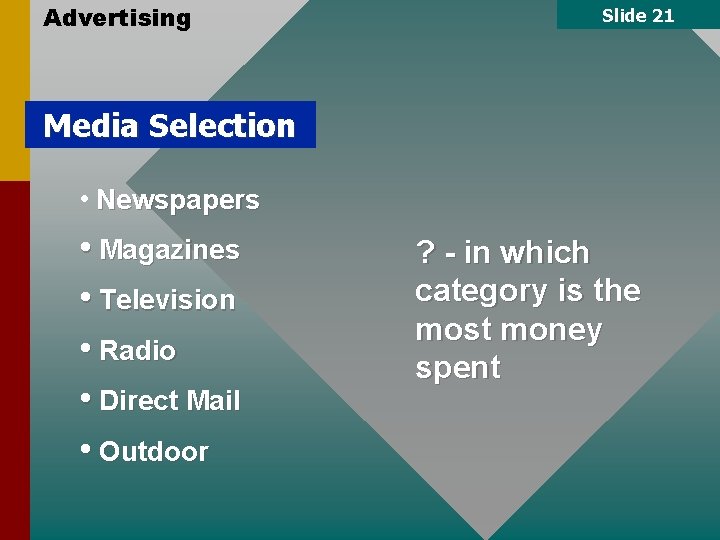
Advertising Slide 21 Media Selection • Newspapers • Magazines • Television • Radio • Direct Mail • Outdoor ? - in which category is the most money spent
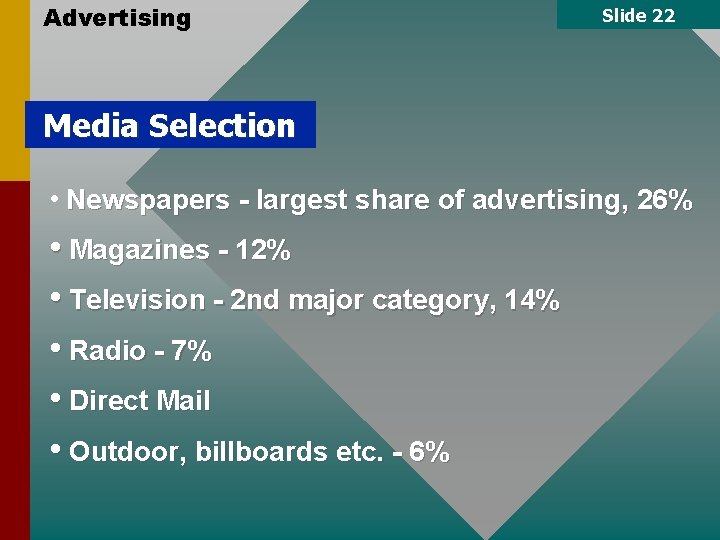
Advertising Slide 22 Media Selection • Newspapers - largest share of advertising, 26% • Magazines - 12% • Television - 2 nd major category, 14% • Radio - 7% • Direct Mail • Outdoor, billboards etc. - 6%
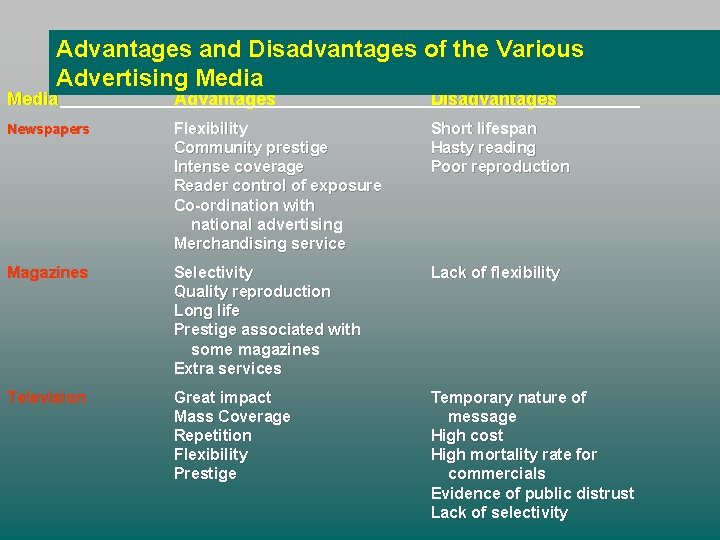
Advantages and Disadvantages of the Various Advertising Media Advantages Disadvantages Newspapers Flexibility Community prestige Intense coverage Reader control of exposure Co-ordination with national advertising Merchandising service Short lifespan Hasty reading Poor reproduction Magazines Selectivity Quality reproduction Long life Prestige associated with some magazines Extra services Lack of flexibility Television Great impact Mass Coverage Repetition Flexibility Prestige Temporary nature of message High cost High mortality rate for commercials Evidence of public distrust Lack of selectivity
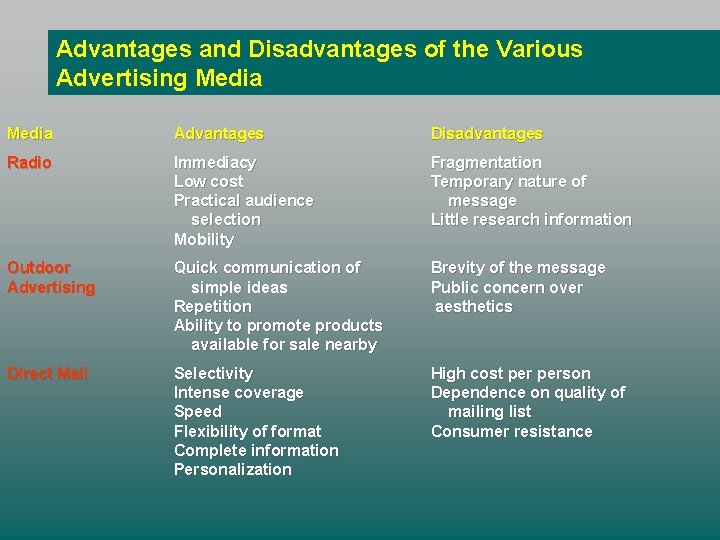
Advantages and Disadvantages of the Various Advertising Media Advantages Disadvantages Radio Immediacy Low cost Practical audience selection Mobility Fragmentation Temporary nature of message Little research information Outdoor Advertising Quick communication of simple ideas Repetition Ability to promote products available for sale nearby Brevity of the message Public concern over aesthetics Direct Mail Selectivity Intense coverage Speed Flexibility of format Complete information Personalization High cost person Dependence on quality of mailing list Consumer resistance
Advertising Slide 25
Advertising Slide 26 e
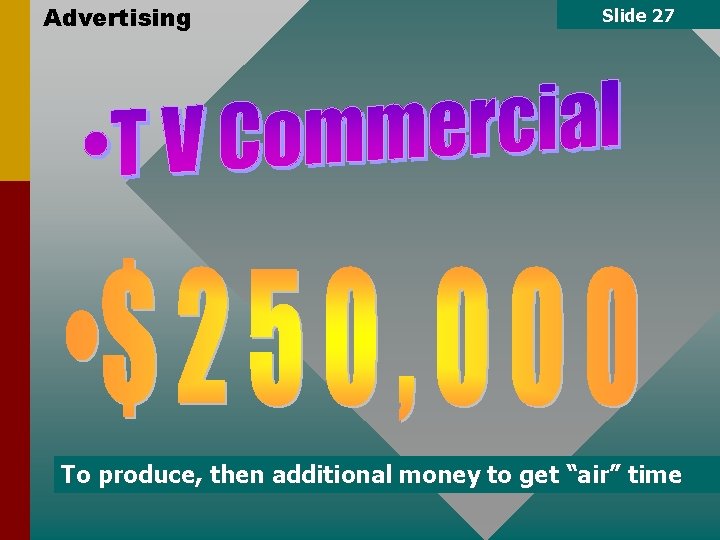
Advertising Slide 27 To produce, then additional money to get “air” time
Advertising Planning The Best Message What should an ad accomplish 1. Gain attention and interest 2. Inform and persuade 3. Lead to the person buying Slide 28
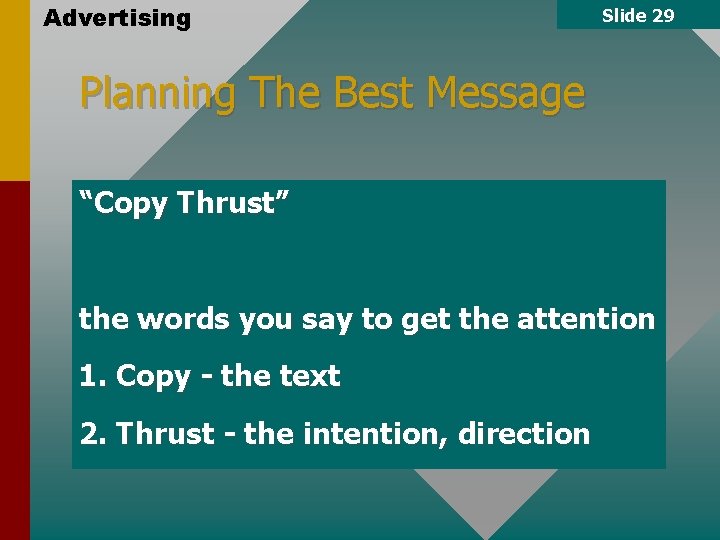
Advertising Slide 29 Planning The Best Message “Copy Thrust” the words you say to get the attention 1. Copy - the text 2. Thrust - the intention, direction
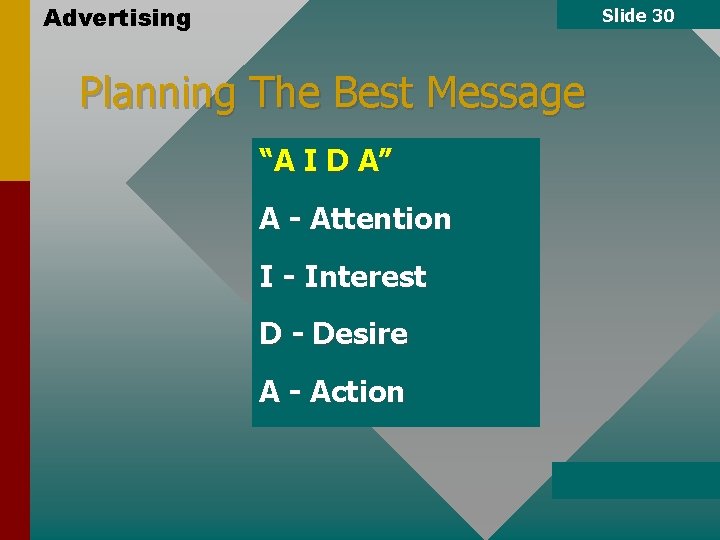
Advertising Slide 30 Planning The Best Message “A I D A” A - Attention I - Interest D - Desire A - Action
Advertising Direct Response Ads • Call 1 -800 -…………. • See our web site at WWW. STUFF. COM Slide 31
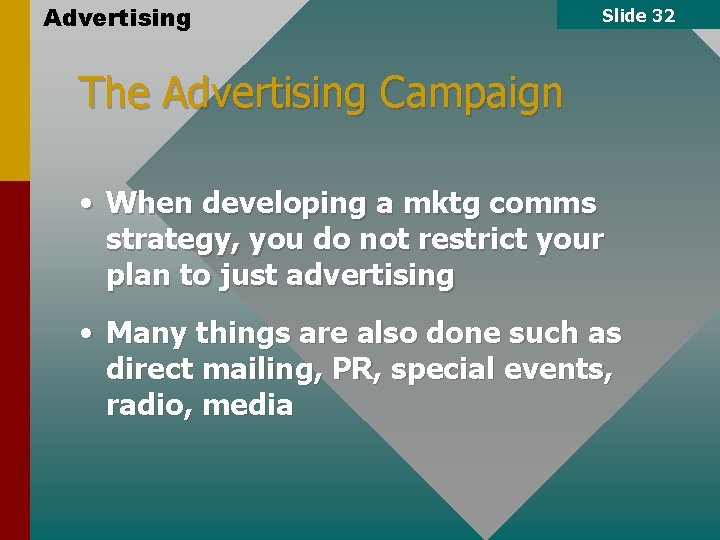
Advertising Slide 32 The Advertising Campaign • When developing a mktg comms strategy, you do not restrict your plan to just advertising • Many things are also done such as direct mailing, PR, special events, radio, media
Advertising Slide 33 Assessing the Effectiveness of an Advertisem • Pretesting The assessment of an advertisement’s effectiveness before it is actually used. • Post-testing The assessment of advertising copy after is has been used.
Advertising Slide 34 Advertising Agency A marketing specialist firm that assists the advertiser in planning and preparing its advertisements. They have specialists who know all about the effect of different advertising methods and can help a company with their strategy.
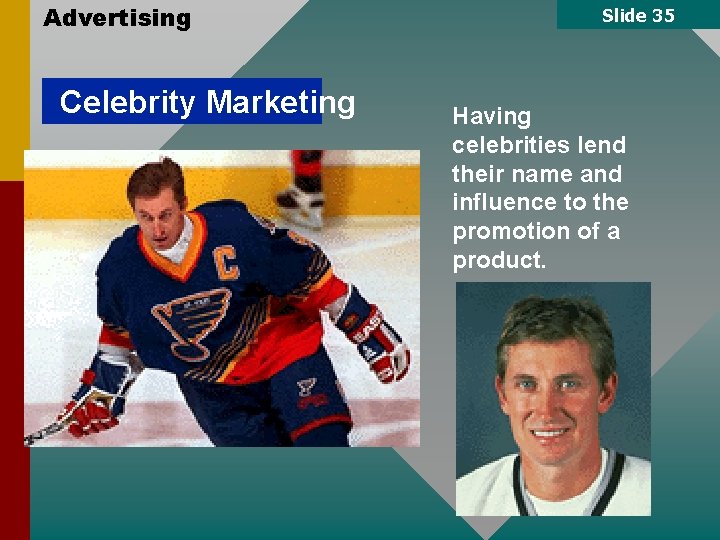
Advertising Celebrity Marketing Slide 35 Having celebrities lend their name and influence to the promotion of a product.
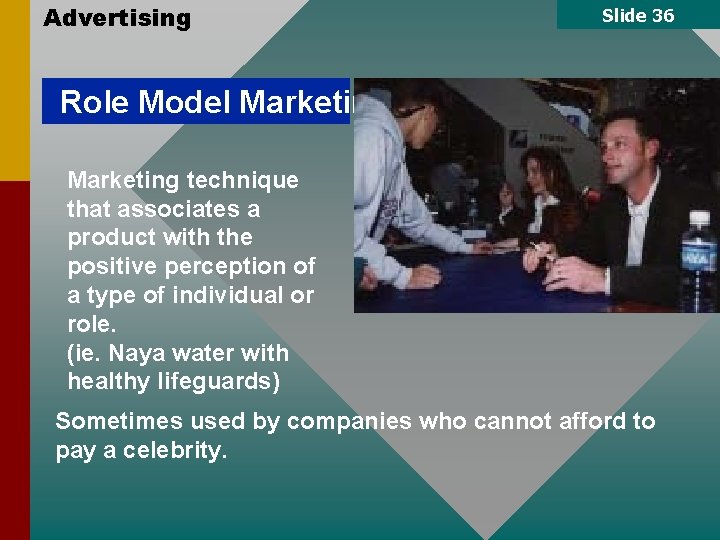
Advertising Slide 36 Role Model Marketing technique that associates a product with the positive perception of a type of individual or role. (ie. Naya water with healthy lifeguards) Sometimes used by companies who cannot afford to pay a celebrity.