
ADVERTISING MAdvertising is a message designed to promote


- Slides: 16
ADVERTISING MAdvertising is a message designed to promote a product / service / idea. MThese messages are shown to the public via the media by means of newspapers, magazines, radio, television, billboards, flyers, etc.
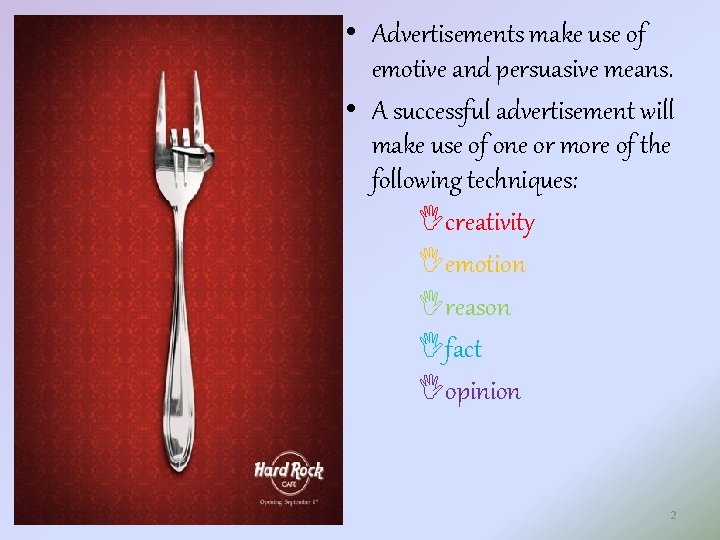
• Advertisements make use of emotive and persuasive means. • A successful advertisement will make use of one or more of the following techniques: creativity emotion reason fact opinion 2
Target Market • This is the group of people that an advertisement is trying to reach. • It may be divided into age, gender, social status and activities. Advertisers use the fact that buyers classify themselves in order to create adverts to appeal to those classified groups. – E. g. : teens, computer geeks, stay-at-home mothers, jetsetters, corporates, etc. 3
AIDA Principle Attention – grab the attention of the consumer Interest – arouse and maintain the consumer’s interest Desire – create a desire to own the advertised product Action – manipulate the consumer into taking action 4
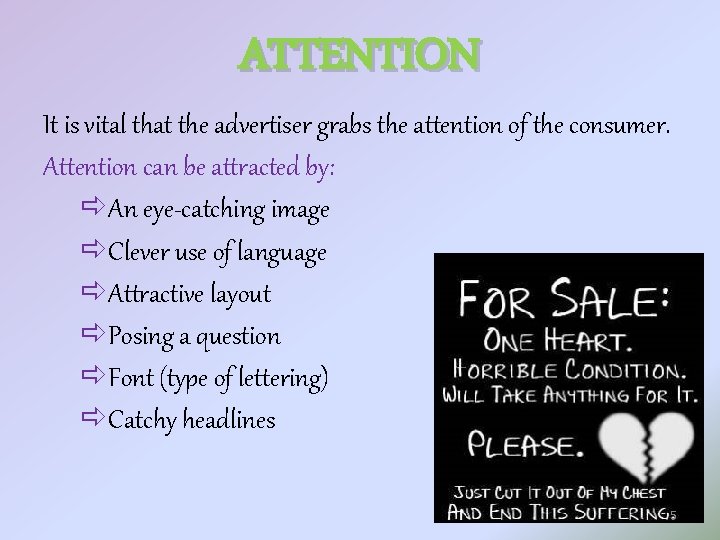
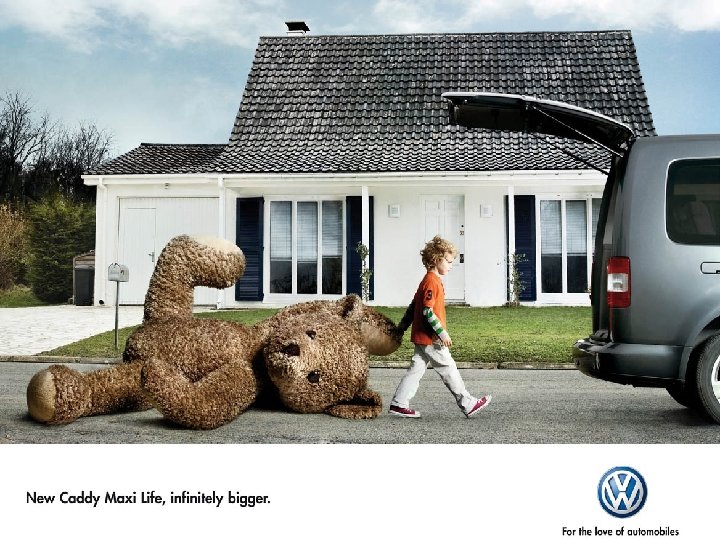
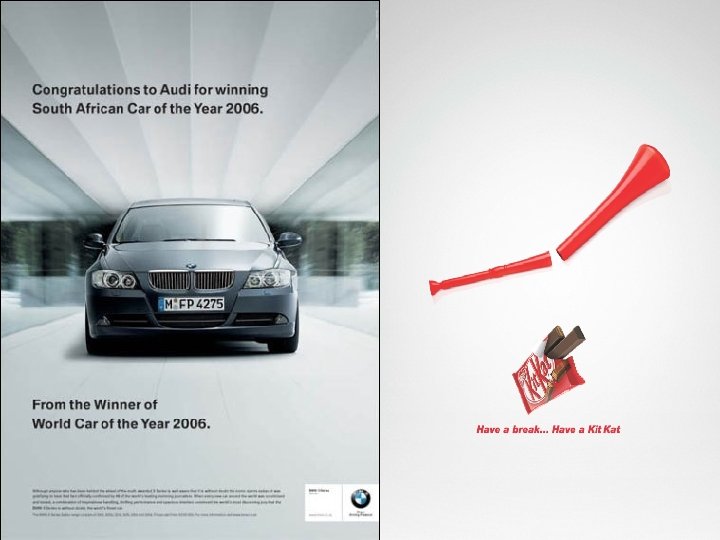
ATTENTION It is vital that the advertiser grabs the attention of the consumer. Attention can be attracted by: An eye-catching image Clever use of language Attractive layout Posing a question Font (type of lettering) Catchy headlines 5
INTEREST Once the consumer’s attention has been attracted, the advert must sustain his/her interest. Then the consumer must feel compelled to read on. There are two ways of doing this: N Visual Techniques N Linguistic Techniques 6
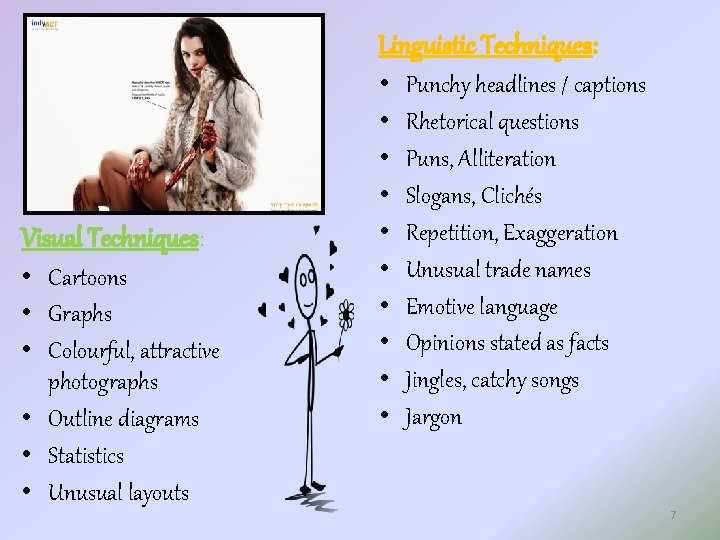
Linguistic Techniques: Visual Techniques: • Cartoons • Graphs • Colourful, attractive photographs • Outline diagrams • Statistics • Unusual layouts • • • Punchy headlines / captions Rhetorical questions Puns, Alliteration Slogans, Clichés Repetition, Exaggeration Unusual trade names Emotive language Opinions stated as facts Jingles, catchy songs Jargon 7
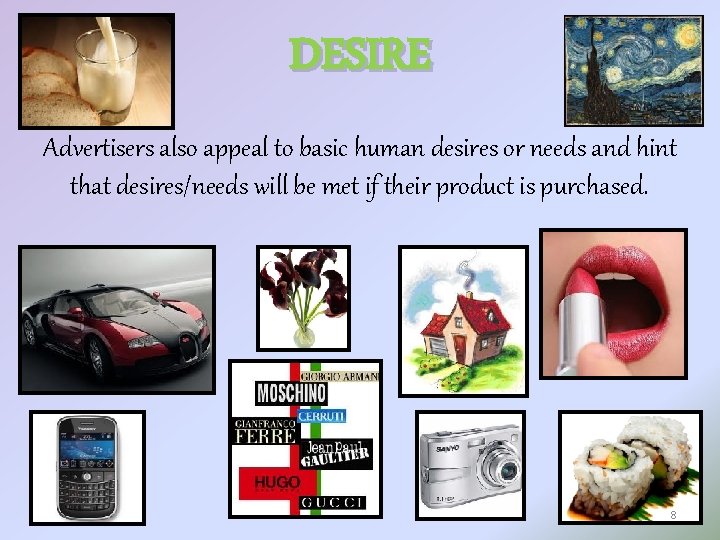
DESIRE Advertisers also appeal to basic human desires or needs and hint that desires/needs will be met if their product is purchased. 8
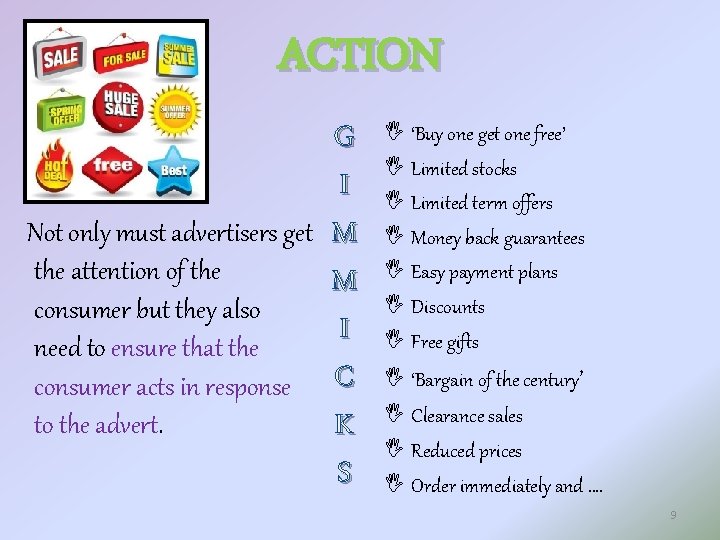
ACTION Not only must advertisers get the attention of the consumer but they also need to ensure that the consumer acts in response to the advert. G I M M I C K S ‘Buy one get one free’ Limited stocks Limited term offers Money back guarantees Easy payment plans Discounts Free gifts ‘Bargain of the century’ Clearance sales Reduced prices Order immediately and …. 9
Language used in adverts Informal Language: ü Everyday speech ü Vocab less sophisticated ü Simple sentences ü Informal grammar ü Colloquialisms & slang Emotive Language: üAppeals to emotions rather than to intellect üIt is persuasive Informative Language: ü Informs viewer of the product / service ü Language that aids the selling of the product ü Jargon Bias = to be in favour or against something without prior knowledge Advertisers make use of fact & opinion, propaganda, sensationalism and bias. 10
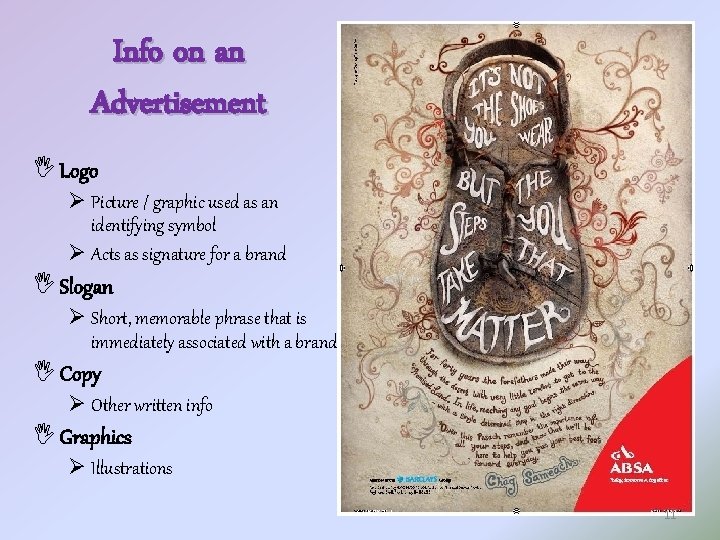
Info on an Advertisement Logo Ø Picture / graphic used as an identifying symbol Ø Acts as signature for a brand Slogan Ø Short, memorable phrase that is immediately associated with a brand Copy Ø Other written info Graphics Ø Illustrations 11
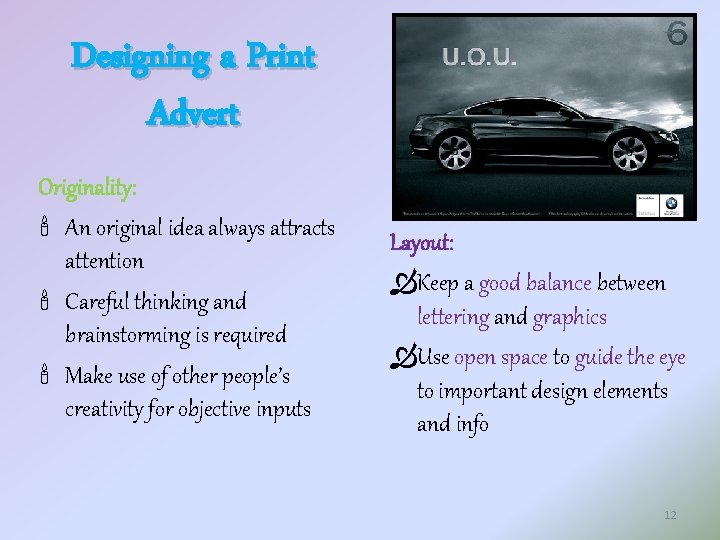
Designing a Print Advert Originality: An original idea always attracts attention Careful thinking and brainstorming is required Make use of other people’s creativity for objective inputs Layout: ÒKeep a good balance between lettering and graphics ÒUse open space to guide the eye to important design elements and info 12
13
14
15
16