
Advertising and the Consumer Culture ANALYZING A DVERTISEMENTS






- Slides: 39
Advertising and the Consumer Culture ANALYZING A DVERTISEMENTS ERIK C HEVRIER SEPTEMB E R 20 T H , 2018
Encoding vs Decoding To decode, we must make inferences about the encoding process: ◦ Most of the time, we do not know: ◦ ◦ The intensions of the encoders The reason behind using certain ‘codes’ over others The market/demographic research used to make the ‘codes’ The thought process of those who produced the ‘codes’ ◦ To understand the encoding/decoding process, we should take into account: ◦ Intended and unintended effects ◦ Positive and negative effects
Advertising Codes, Contexts and Conventions Factors that are important for ad construction, operation and analysis: ◦ Context ◦ National, cultural, surrounding media ◦ Diverse and in constant state of change ◦ Medium ◦ Communication channel ◦ Different codes and conventions ◦ Institutional limitations and possibilities Modern advertising usually consists of integrated, multimedia campaigns Identify different contexts and media channels and discuss how this may effect encoding and decoding, codes and conventions of advertisements.
Analyzing Advertisements Static Advertisements ◦ Print & digital ◦ Are easier to analyze than motion pictures ◦ Digital static ads rely on web-browser technology ◦ Toyota ‘Elevate’ ad Video Advertisements ◦ 2014 Toyota Corolla Commercial: 'Style Never Goes Out of Style’ ◦ Television, internet, film, product placement ◦ More costly ◦ More complex ◦ ◦ ◦ 24 frames per second (24 static images) Sound Story ◦ Breaks television ‘flow’ to stand out ◦ 2014 Toyota Corolla Commercial: 'Style Never Goes Out of Style’ Digital Advertising ◦ Interactive ◦ Static ads and videos are part of integrative campaigns ◦ Video game ads ◦ Branded reward tokens
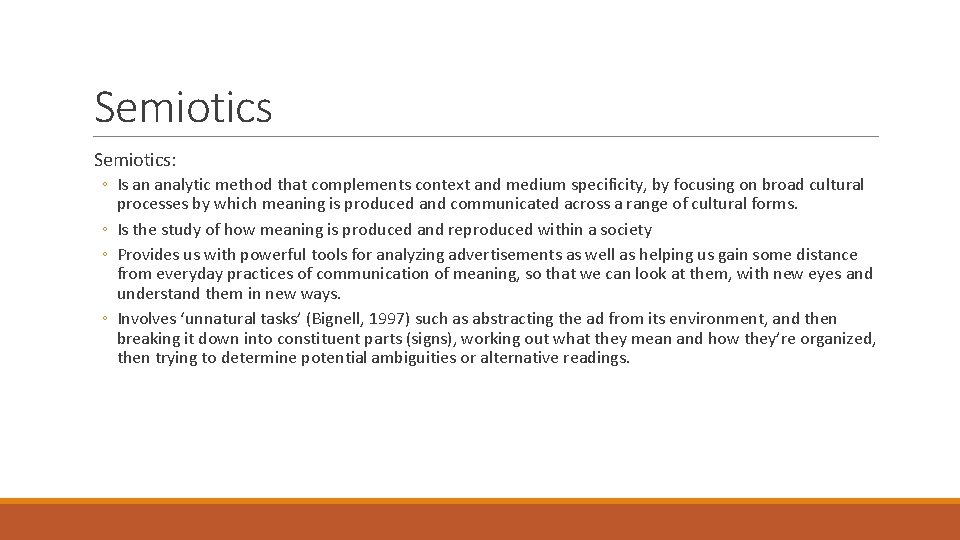
Semiotics: ◦ Is an analytic method that complements context and medium specificity, by focusing on broad cultural processes by which meaning is produced and communicated across a range of cultural forms. ◦ Is the study of how meaning is produced and reproduced within a society ◦ Provides us with powerful tools for analyzing advertisements as well as helping us gain some distance from everyday practices of communication of meaning, so that we can look at them, with new eyes and understand them in new ways. ◦ Involves ‘unnatural tasks’ (Bignell, 1997) such as abstracting the ad from its environment, and then breaking it down into constituent parts (signs), working out what they mean and how they’re organized, then trying to determine potential ambiguities or alternative readings.
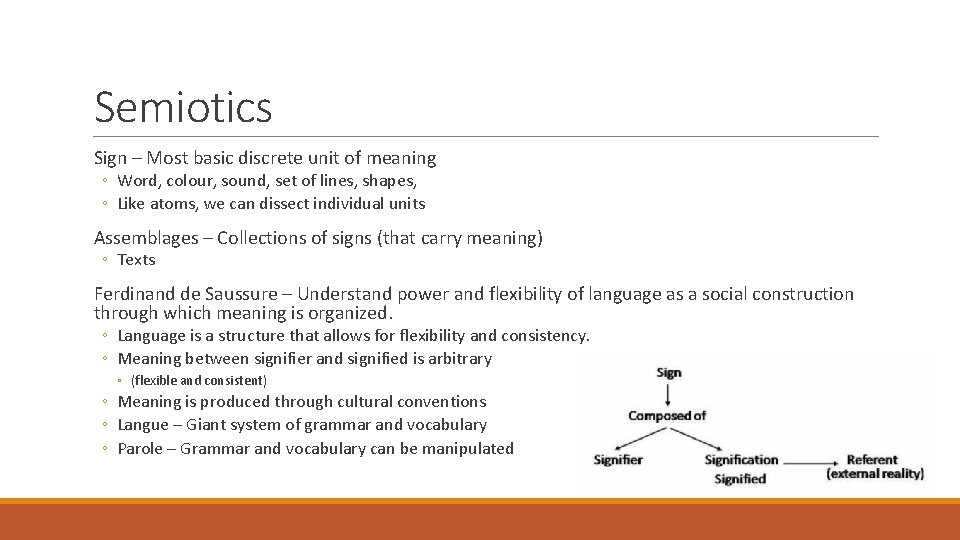
Semiotics Sign – Most basic discrete unit of meaning ◦ Word, colour, sound, set of lines, shapes, ◦ Like atoms, we can dissect individual units Assemblages – Collections of signs (that carry meaning) ◦ Texts Ferdinand de Saussure – Understand power and flexibility of language as a social construction through which meaning is organized. ◦ Language is a structure that allows for flexibility and consistency. ◦ Meaning between signifier and signified is arbitrary ◦ (flexible and consistent) ◦ Meaning is produced through cultural conventions ◦ Langue – Giant system of grammar and vocabulary ◦ Parole – Grammar and vocabulary can be manipulated
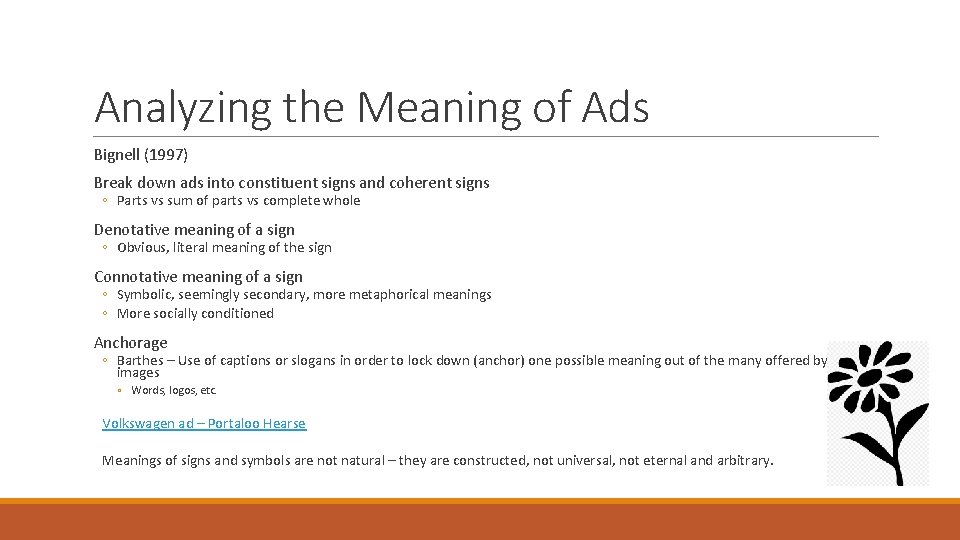
Analyzing the Meaning of Ads Bignell (1997) Break down ads into constituent signs and coherent signs ◦ Parts vs sum of parts vs complete whole Denotative meaning of a sign ◦ Obvious, literal meaning of the sign Connotative meaning of a sign ◦ Symbolic, seemingly secondary, more metaphorical meanings ◦ More socially conditioned Anchorage ◦ Barthes – Use of captions or slogans in order to lock down (anchor) one possible meaning out of the many offered by the images ◦ Words, logos, etc. Volkswagen ad – Portaloo Hearse Meanings of signs and symbols are not natural – they are constructed, not universal, not eternal and arbitrary.
Mythology and Ideology Mythology is concerned with the idea that signs are never natural or neutral, but rather always attain their connotations in relation to particular histories and culture. ◦ Anchorage is part of mythology ◦ Barthes – Interested in the ways in which meanings reflect the social and cultural arrangements of power, and communicate unspoken understandings about how the social world works. ◦ How is meaning embodied in a sign? Ideology ◦ Is a set of beliefs, values, ideas and feelings that shape how we understand, approach, and engage with the world around us. ◦ It is always at work, it informs every action and idea in a society ◦ Advertising implies a particular vision of the world. ◦ Unpacking problems or obstacles ◦ Reinforcing representations of social relations (gender, class, etc. ) ◦ Understanding priming, schemas, and controlled vs automatic processing is important
Unpacking Freedom, Gender and Ideology Kia Sportage
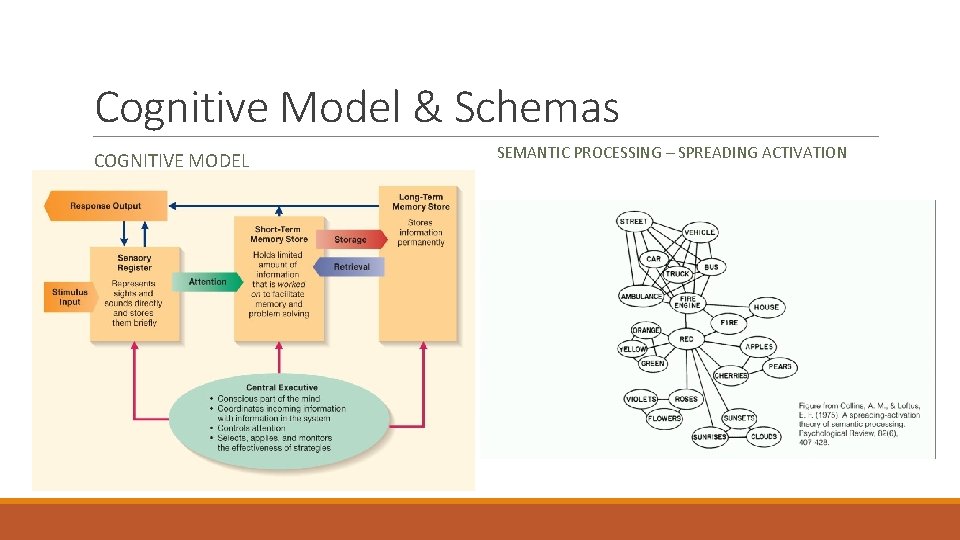
Cognitive Model & Schemas COGNITIVE MODEL SEMANTIC PROCESSING – SPREADING ACTIVATION
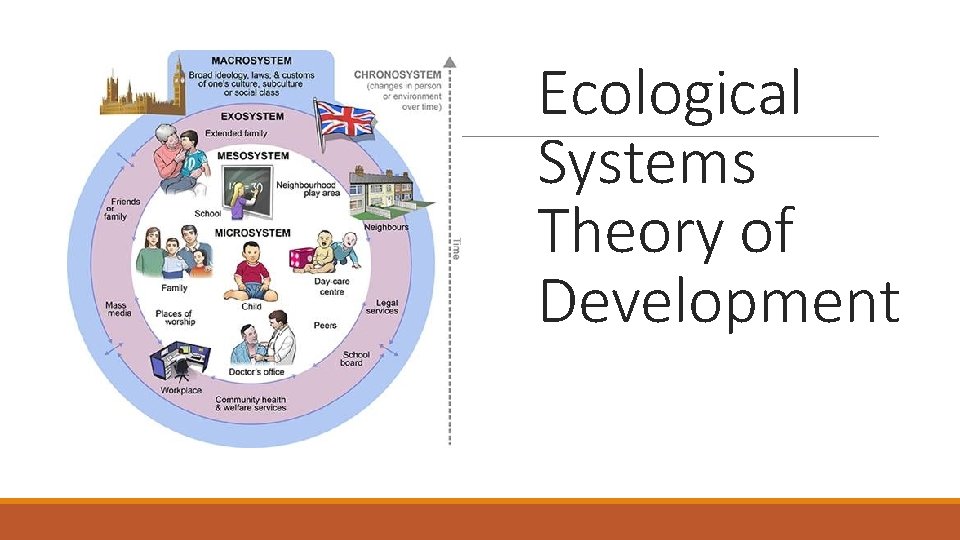
Ecological Systems Theory of Development
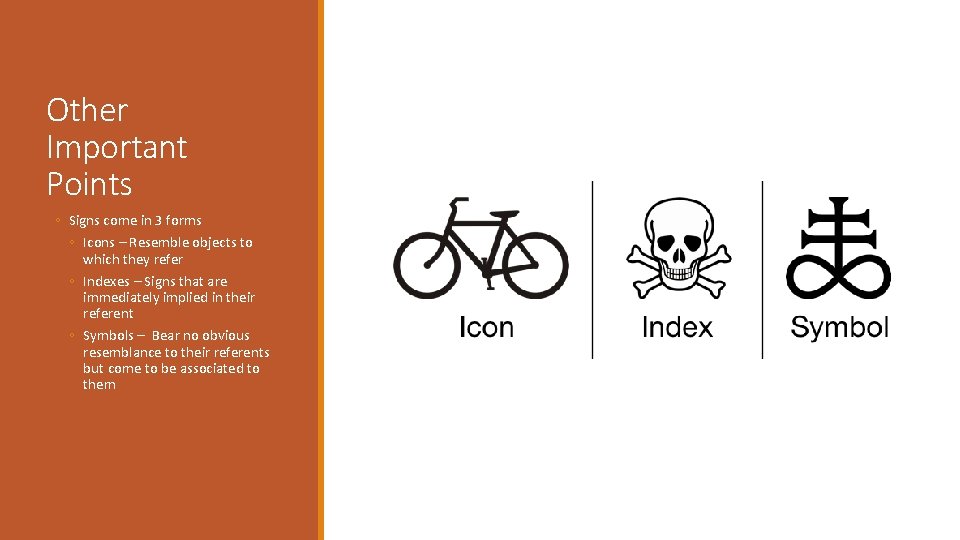
Other Important Points ◦ Signs come in 3 forms ◦ Icons – Resemble objects to which they refer ◦ Indexes – Signs that are immediately implied in their referent ◦ Symbols – Bear no obvious resemblance to their referents but come to be associated to them
Deciphering Advertisements Context for the ad ◦ Product category? ◦ Which medium does it appear? ◦ Who is the intended audience? (Jib Fowles, (1996) Deciphering Advertisements) Looking at the ad ◦ ◦ What are the aesthetic properties of the ad? Photograph or drawing (retouching? ) What is in the foreground? What is the commodity? ◦ Subtract the commodity and look at the ad’s symbolic appeal ◦ List various elements pictured in the symbolic appeal ◦ What are the meanings of these symbols in relation to the intended audience? ◦ What are the inferred states of mind of humans in the ads? Implications for the ad ◦ What is the ad implying about relationships between people? ◦ Where is the space in which the ad is situated? ◦ What is the timeframe in which the ad is situated? ◦ What is this ad saying about identity and gender relations? ◦ Consider the ad as a narrative, can we tell the story? ◦ What does the ad convey about social status? ◦ What is missing? ◦ Does the symbolic appeal idealize anything? ◦ What kind of cultural beliefs are displayed in the ad? someone looking at the ad, what state of mind would they be ◦ How does the ad attempt to commodify human experience? ◦ Imagine in? What does the ad supplement to their state? ◦ Is there intertextual referents from something earlier? ◦ What is in frame, what is framed out?
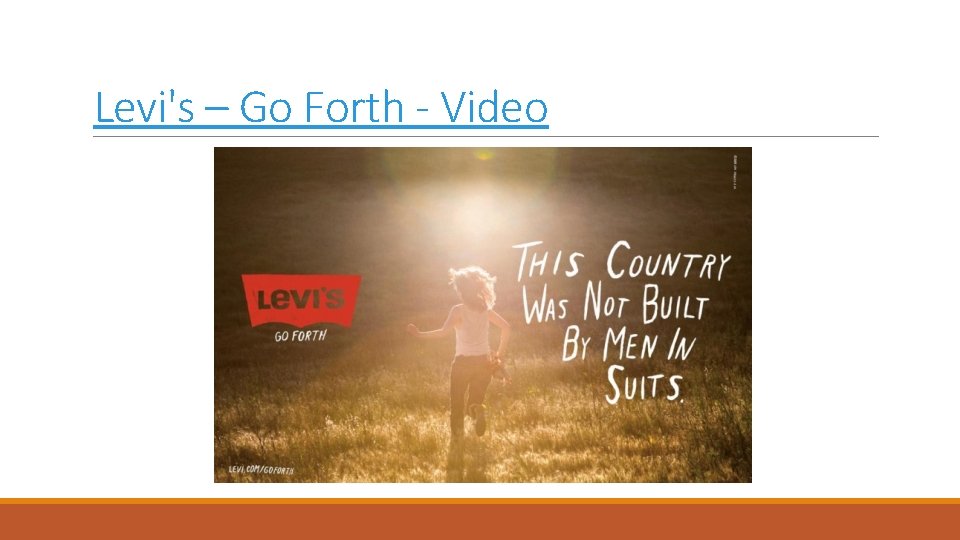
Levi's – Go Forth - Video
Media Fantasy Becomes Reality Jean Baudrillard ◦ The media – especially when the content is fictional and fantastic – are more real than the world they proport to represent. ◦ The symbolic structure of the media is so powerful that the meaning is dissolved as mere content is relegated to the demands of form. ◦ Verisimilitude - They appear to be real. Mark Poster ◦ Mediation is becoming so intense and worked over that ‘reality’ is consistently in question Nesbitt-Larking ◦ Forms that blend reality: ◦ ◦ ◦ Infotainment Docudrama ‘Faction’ – blending fact from fiction Reality television News/entertainment spoof
The Power of Words The power of words in regards to memory
The Power of Suggestion An Inquiry Into How People Are Affected by Profuse Amounts of Publicity: A Multidisciplinary Approach Advertising as a suggestion – Page 26 Suggestions can bypass critical thought because there is no direct request to refuse
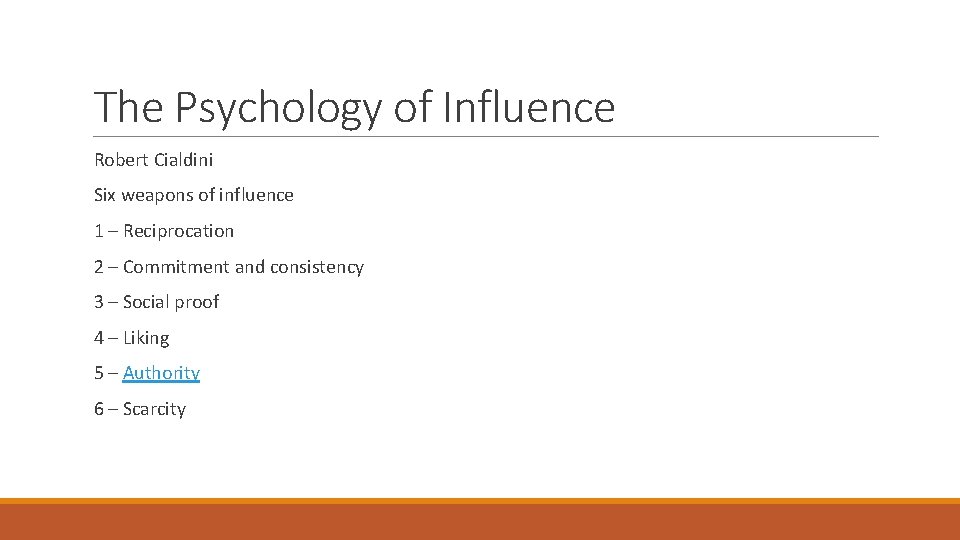
The Psychology of Influence Robert Cialdini Six weapons of influence 1 – Reciprocation 2 – Commitment and consistency 3 – Social proof 4 – Liking 5 – Authority 6 – Scarcity
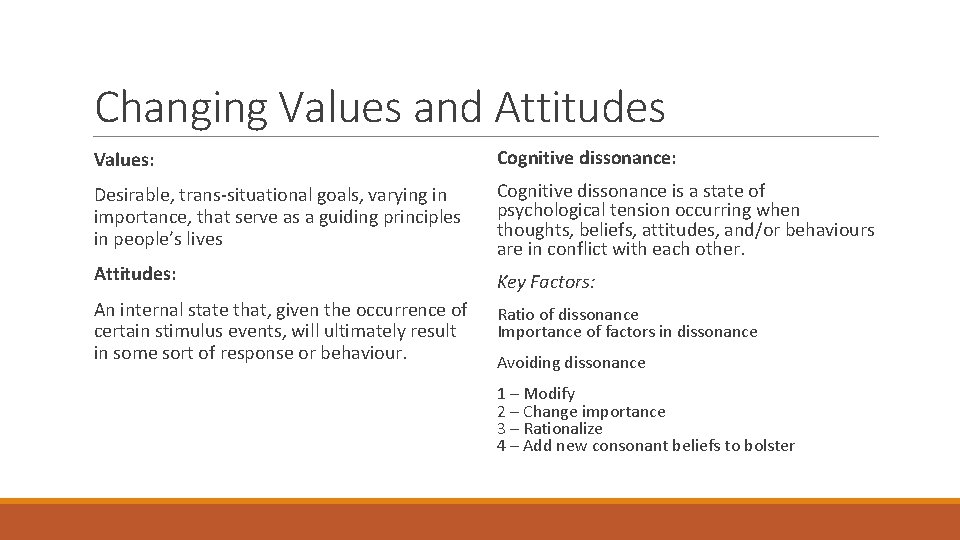
Changing Values and Attitudes Values: Cognitive dissonance: Desirable, trans-situational goals, varying in importance, that serve as a guiding principles in people’s lives Cognitive dissonance is a state of psychological tension occurring when thoughts, beliefs, attitudes, and/or behaviours are in conflict with each other. Attitudes: Key Factors: An internal state that, given the occurrence of certain stimulus events, will ultimately result in some sort of response or behaviour. Ratio of dissonance Importance of factors in dissonance Avoiding dissonance 1 – Modify 2 – Change importance 3 – Rationalize 4 – Add new consonant beliefs to bolster
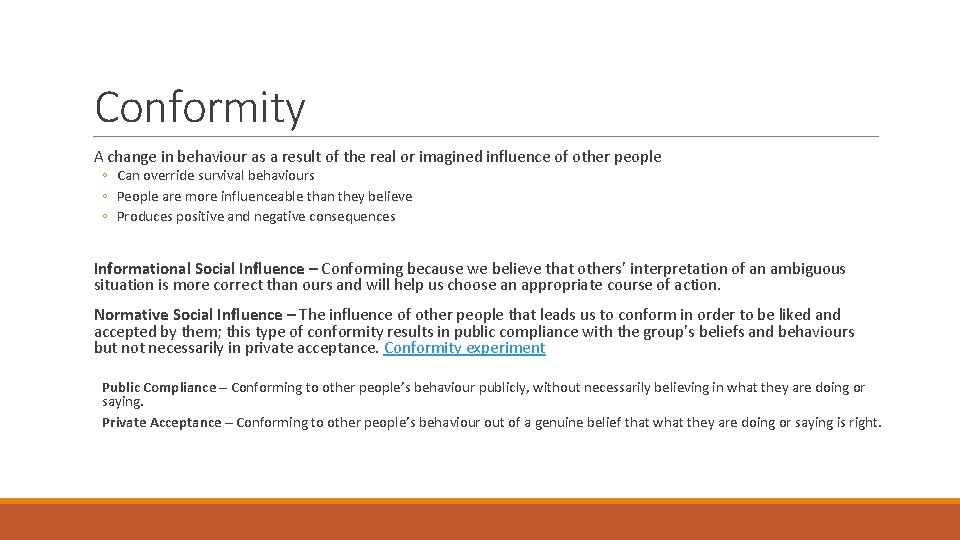
Conformity A change in behaviour as a result of the real or imagined influence of other people ◦ Can override survival behaviours ◦ People are more influenceable than they believe ◦ Produces positive and negative consequences Informational Social Influence – Conforming because we believe that others’ interpretation of an ambiguous situation is more correct than ours and will help us choose an appropriate course of action. Normative Social Influence – The influence of other people that leads us to conform in order to be liked and accepted by them; this type of conformity results in public compliance with the group’s beliefs and behaviours but not necessarily in private acceptance. Conformity experiment Public Compliance – Conforming to other people’s behaviour publicly, without necessarily believing in what they are doing or saying. Private Acceptance – Conforming to other people’s behaviour out of a genuine belief that what they are doing or saying is right.
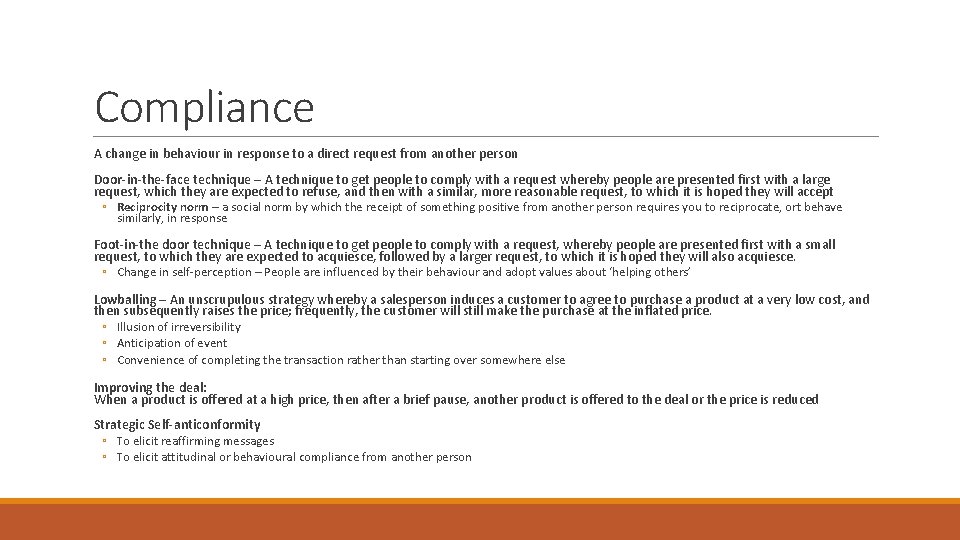
Compliance A change in behaviour in response to a direct request from another person Door-in-the-face technique – A technique to get people to comply with a request whereby people are presented first with a large request, which they are expected to refuse, and then with a similar, more reasonable request, to which it is hoped they will accept ◦ Reciprocity norm – a social norm by which the receipt of something positive from another person requires you to reciprocate, ort behave similarly, in response Foot-in-the door technique – A technique to get people to comply with a request, whereby people are presented first with a small request, to which they are expected to acquiesce, followed by a larger request, to which it is hoped they will also acquiesce. ◦ Change in self-perception – People are influenced by their behaviour and adopt values about ‘helping others’ Lowballing – An unscrupulous strategy whereby a salesperson induces a customer to agree to purchase a product at a very low cost, and then subsequently raises the price; frequently, the customer will still make the purchase at the inflated price. ◦ Illusion of irreversibility ◦ Anticipation of event ◦ Convenience of completing the transaction rather than starting over somewhere else Improving the deal: When a product is offered at a high price, then after a brief pause, another product is offered to the deal or the price is reduced Strategic Self-anticonformity ◦ To elicit reaffirming messages ◦ To elicit attitudinal or behavioural compliance from another person
Other Persuasion Techniques Priming Persuasion ◦ Central Routes ◦ Peripheral Routes Cognitive Dissonance Internal and External Justification (justification spiral) Conditioning
Activity After three examples, you must write down the first word that comes to your head after I give you a CATEGORY prompt. The goal of the activity is to write down a word in that CATEGORY the fastest! Ready, I’m going to catch you off guard. You will be given three examples to make sure you understand the activity. Don’t let me catch you napping! You’ll need to act FAST!
CATEGORY = THINGS YOU DISLIKE
CATEGORY = THINGS YOU DISLIKE LITTER
CATEGORY = THINGS YOU DISLIKE LITTER CHEATERS
CATEGORY = THINGS YOU DISLIKE LITTER CHEATERS LIARS
CATEGORY = FOOD ITEMS
CATEGORY = FOOD ITEMS KETCHUP
CATEGORY = TYPES OF SCANS
CATEGORY = TYPES OF SCANS PET SCAN – Positron emission tomography
CATEGORY = TYPE OF ANIMAL
Automatic Thinking – Low Effort Thinking Automatic thinking – Is thought that is generally unconscious, unintentional, involuntary, and effortless. Schemas – Mental structures people use to organize their knowledge about the social world themselves and that influence the information people notice, think about, and remember. ◦ We tend to fill in the blanks with SCHEMA-CONSISTENT INFORMATION. How People are Affected By Profuse Amounts of Publicity? – Advertising and Priming Activity – Automatic Thinking!
SAY THIS WORD OUTLOUD 10 TIMES ROAST
SAY THIS WORD OUTLOUD 10 TIMES
Answer the following question? What do you put in a toaster?
Information Processing Model
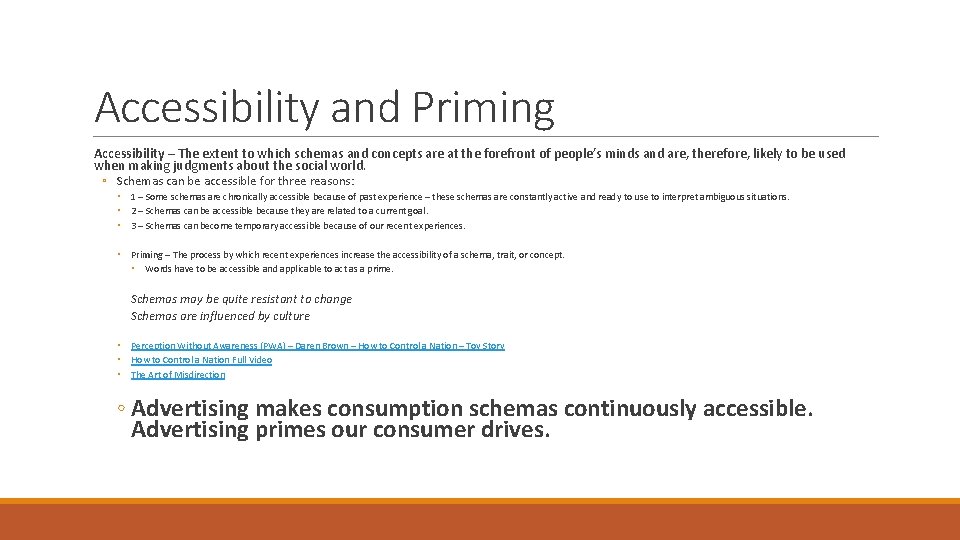
Accessibility and Priming Accessibility – The extent to which schemas and concepts are at the forefront of people’s minds and are, therefore, likely to be used when making judgments about the social world. ◦ Schemas can be accessible for three reasons: ◦ ◦ ◦ 1 – Some schemas are chronically accessible because of past experience – these schemas are constantly active and ready to use to interpret ambiguous situations. 2 – Schemas can be accessible because they are related to a current goal. 3 – Schemas can become temporary accessible because of our recent experiences. ◦ Priming – The process by which recent experiences increase the accessibility of a schema, trait, or concept. ◦ Words have to be accessible and applicable to act as a prime. Schemas may be quite resistant to change Schemas are influenced by culture ◦ ◦ ◦ Perception Without Awareness (PWA) – Daren Brown – How to Control a Nation – Toy Story How to Control a Nation Full Video The Art of Misdirection ◦ Advertising makes consumption schemas continuously accessible. Advertising primes our consumer drives.
Have a Great Night Questions or concerns? Readings for next week: Chapter 2 – The History of Advertising: Contexts, Transformations and Continuity, Holm, N. (2017) Advertising and Consumer Society: A Critical Introduction, Palgrave Macmillan, pp. 14 – 32. Chapter 4 – Advertising, Capitalism, and Ideology. Holm, N. (2017) Advertising and Consumer Society: A Critical Introduction, Palgrave Macmillan, pp. 63 – 92.