
ADVERTISING AND PROMOTION STUDENTS LEARN AB OUT HOW
ADVERTISING AND PROMOTION • • STUDENTS LEARN AB OUT: HOW DO YOU KNOW WHO TO BELIEVE? PROMOTIONAL TECHNIQUES EG DIRECT MARKETING, LIMITED OFFER MEMBERSHIPS ACCURACY OF INFORMATION ETHICS OF ADVERTISING • • STUDENTS LEARN TO: WHO IS THE ADVERTISEMENT TARGETING? WHAT DOES THE ADVERTISEMENT OFFER? WHAT ARE THE BENEFITS OF THE SERVICE? ARE THE CLAIMS BELIEVABLE?

ADVERTISING AND PROMOTION • Advertising is a powerful tool that can be very persuasive • Advertising for fitness can be found: • Magazines • Newspapers • TV/commercials • Radio • Internet • Can often sound too good to be true – used to entice you to buy their product
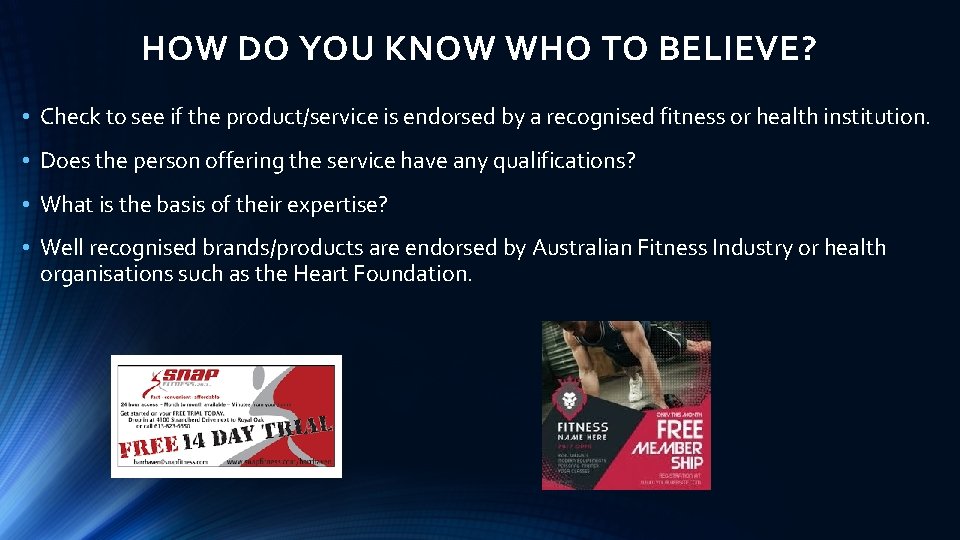
HOW DO YOU KNOW WHO TO BELIEVE? • Check to see if the product/service is endorsed by a recognised fitness or health institution. • Does the person offering the service have any qualifications? • What is the basis of their expertise? • Well recognised brands/products are endorsed by Australian Fitness Industry or health organisations such as the Heart Foundation.
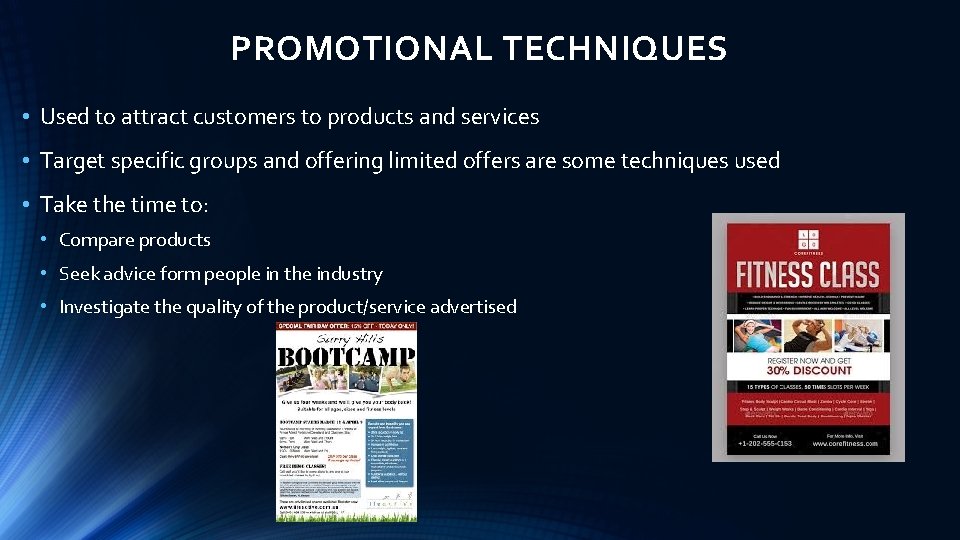
PROMOTIONAL TECHNIQUES • Used to attract customers to products and services • Target specific groups and offering limited offers are some techniques used • Take the time to: • Compare products • Seek advice form people in the industry • Investigate the quality of the product/service advertised
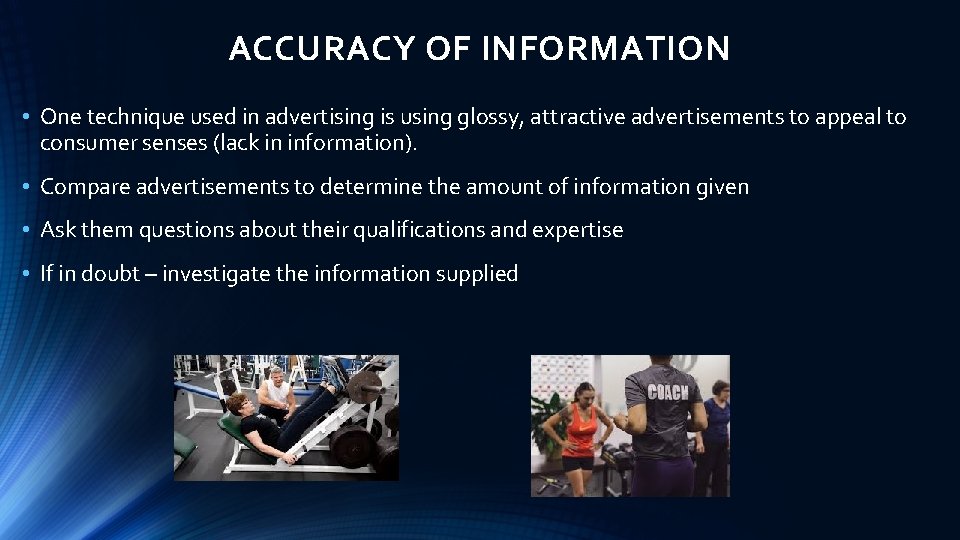
ACCURACY OF INFORMATION • One technique used in advertising is using glossy, attractive advertisements to appeal to consumer senses (lack in information). • Compare advertisements to determine the amount of information given • Ask them questions about their qualifications and expertise • If in doubt – investigate the information supplied
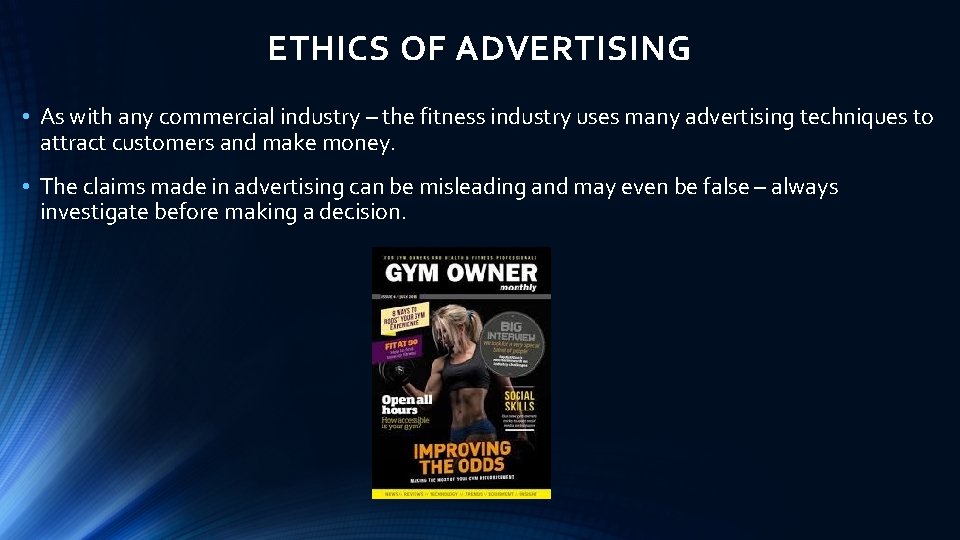
ETHICS OF ADVERTISING • As with any commercial industry – the fitness industry uses many advertising techniques to attract customers and make money. • The claims made in advertising can be misleading and may even be false – always investigate before making a decision.
- Slides: 6