
Adversity The Brain Behavior and Learning Dr Lori
Adversity! The Brain, Behavior, and Learning Dr. Lori Desautels Butler University/ College of Education ldesaute@butler. edu Revelations in Education Desautels_phd Connection + Purpose = Well-Being 1

Applied Educational Neuroscience/ Brain and Adversity • Framework and not a program • This framework encompasses attachment, relationships, and the natural ways the brain feels, behaves and learns. 2
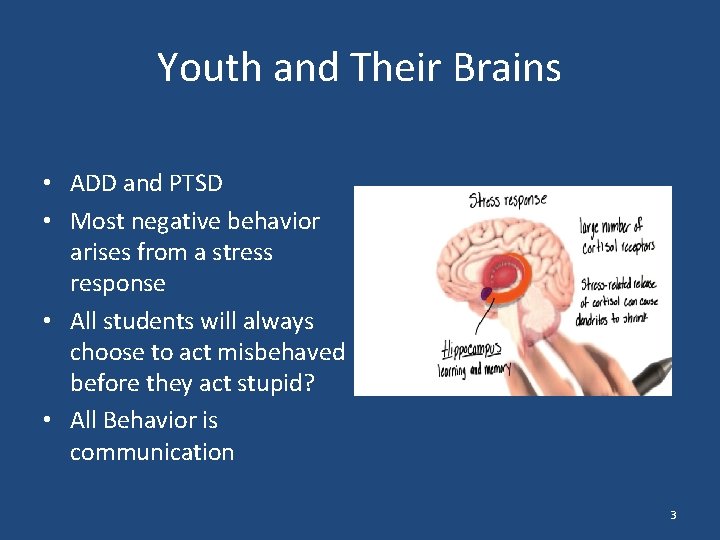
Youth and Their Brains • ADD and PTSD • Most negative behavior arises from a stress response • All students will always choose to act misbehaved before they act stupid? • All Behavior is communication 3

Stress Response Prefrontal Cortex Amygdala Hippocampus Neuroplasticity Heightened baseline of arousal • Stress decreases volume in the hippocampus and corpus collosum • Overproduction of neural connections associated with fear and anxiety. • • • 4

Stress Response • Lowers serotonin • Few and shorter dendrites • Irregular levels of neurotransmitters • Affects how we think and our capacity to think • Affects imagination and cognitive flexibility • Without imagination there is no re-visioning of the future 5
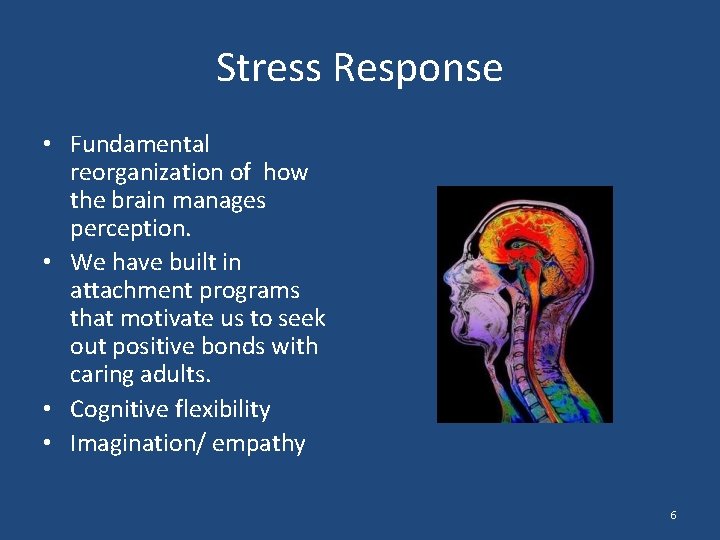
Stress Response • Fundamental reorganization of how the brain manages perception. • We have built in attachment programs that motivate us to seek out positive bonds with caring adults. • Cognitive flexibility • Imagination/ empathy 6
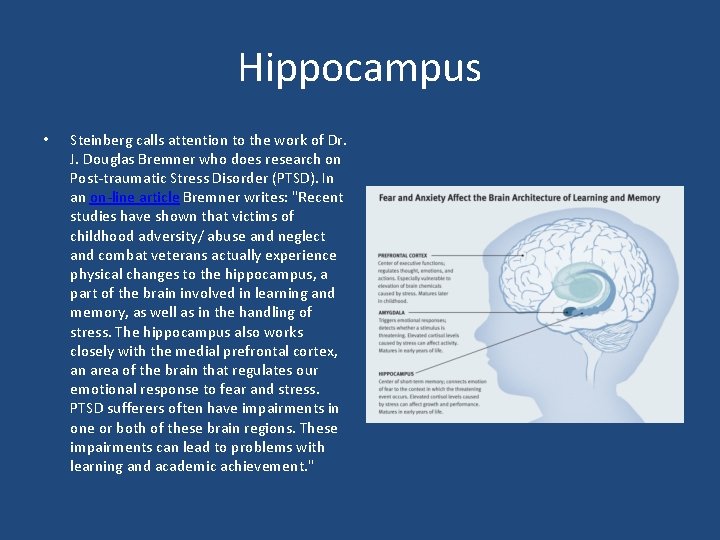
Hippocampus • Steinberg calls attention to the work of Dr. J. Douglas Bremner who does research on Post-traumatic Stress Disorder (PTSD). In an on-line article Bremner writes: "Recent studies have shown that victims of childhood adversity/ abuse and neglect and combat veterans actually experience physical changes to the hippocampus, a part of the brain involved in learning and memory, as well as in the handling of stress. The hippocampus also works closely with the medial prefrontal cortex, an area of the brain that regulates our emotional response to fear and stress. PTSD sufferers often have impairments in one or both of these brain regions. These impairments can lead to problems with learning and academic achievement. "
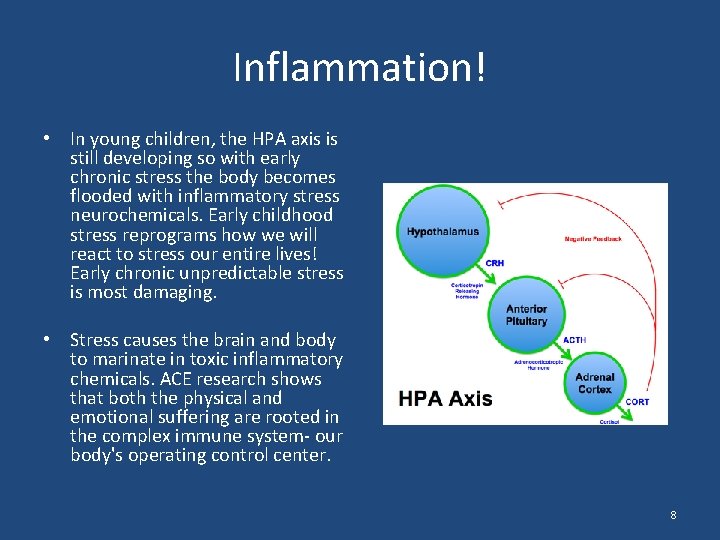
Inflammation! • In young children, the HPA axis is still developing so with early chronic stress the body becomes flooded with inflammatory stress neurochemicals. Early childhood stress reprograms how we will react to stress our entire lives! Early chronic unpredictable stress is most damaging. • Stress causes the brain and body to marinate in toxic inflammatory chemicals. ACE research shows that both the physical and emotional suffering are rooted in the complex immune system- our body's operating control center. 8
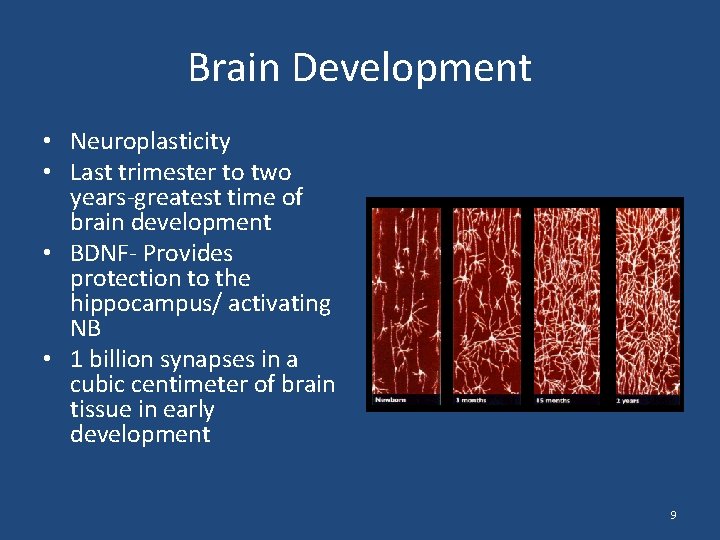
Brain Development • Neuroplasticity • Last trimester to two years-greatest time of brain development • BDNF- Provides protection to the hippocampus/ activating NB • 1 billion synapses in a cubic centimeter of brain tissue in early development 9
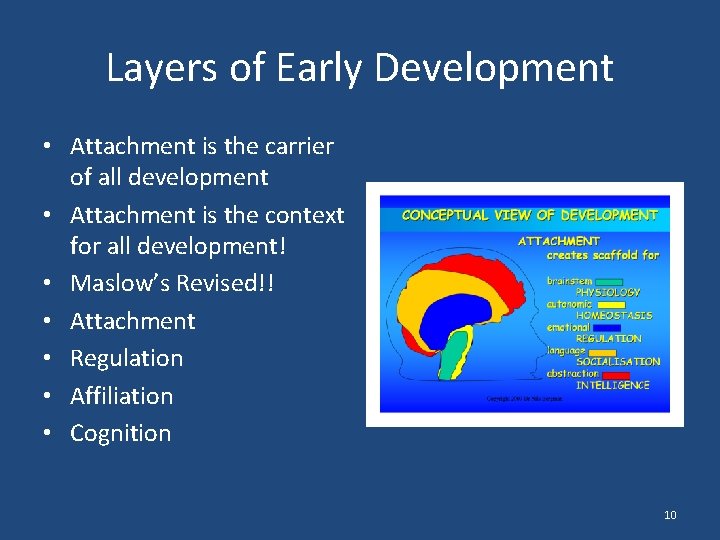
Layers of Early Development • Attachment is the carrier of all development • Attachment is the context for all development! • Maslow’s Revised!! • Attachment • Regulation • Affiliation • Cognition 10
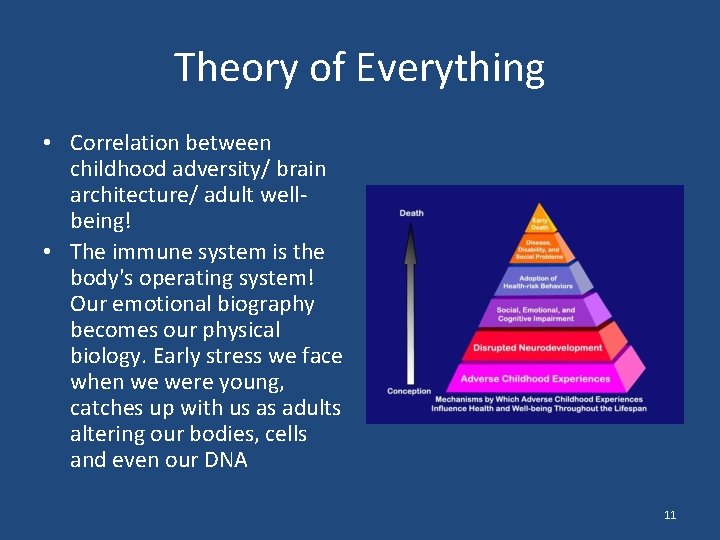
Theory of Everything • Correlation between childhood adversity/ brain architecture/ adult wellbeing! • The immune system is the body's operating system! Our emotional biography becomes our physical biology. Early stress we face when we were young, catches up with us as adults altering our bodies, cells and even our DNA 11
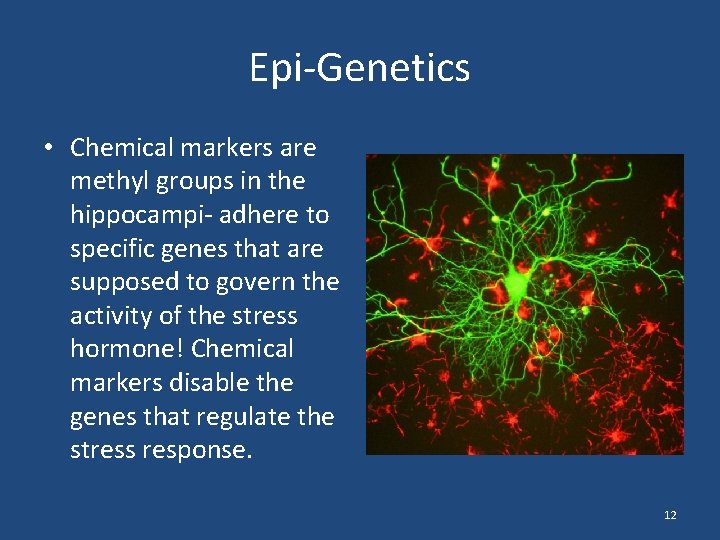
Epi-Genetics • Chemical markers are methyl groups in the hippocampi- adhere to specific genes that are supposed to govern the activity of the stress hormone! Chemical markers disable the genes that regulate the stress response. 12
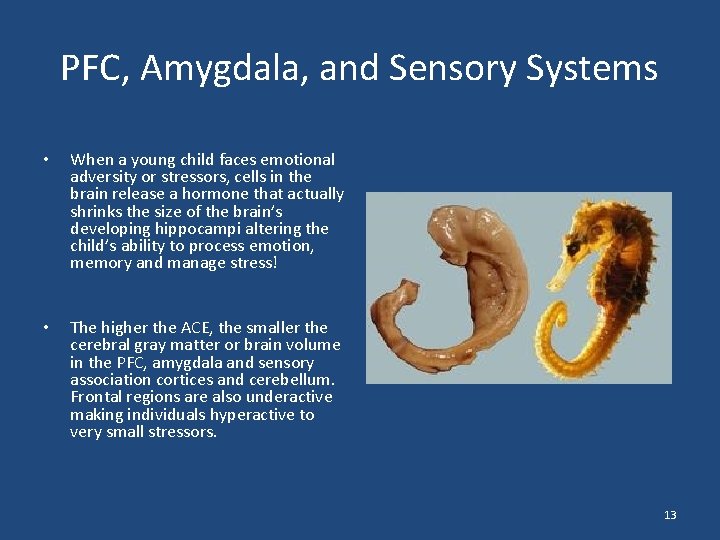
PFC, Amygdala, and Sensory Systems • When a young child faces emotional adversity or stressors, cells in the brain release a hormone that actually shrinks the size of the brain’s developing hippocampi altering the child’s ability to process emotion, memory and manage stress! • The higher the ACE, the smaller the cerebral gray matter or brain volume in the PFC, amygdala and sensory association cortices and cerebellum. Frontal regions are also underactive making individuals hyperactive to very small stressors. 13
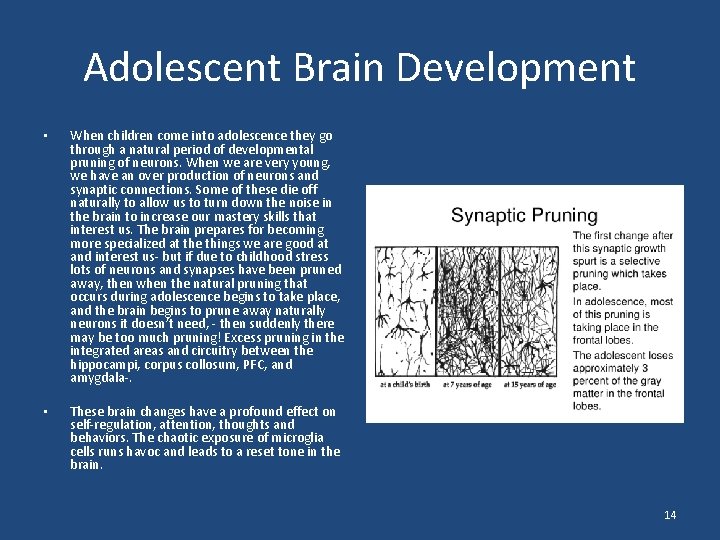
Adolescent Brain Development • When children come into adolescence they go through a natural period of developmental pruning of neurons. When we are very young, we have an over production of neurons and synaptic connections. Some of these die off naturally to allow us to turn down the noise in the brain to increase our mastery skills that interest us. The brain prepares for becoming more specialized at the things we are good at and interest us- but if due to childhood stress lots of neurons and synapses have been pruned away, then when the natural pruning that occurs during adolescence begins to take place, and the brain begins to prune away naturally neurons it doesn’t need, - then suddenly there may be too much pruning! Excess pruning in the integrated areas and circuitry between the hippocampi, corpus collosum, PFC, and amygdala-. • These brain changes have a profound effect on self-regulation, attention, thoughts and behaviors. The chaotic exposure of microglia cells runs havoc and leads to a reset tone in the brain. 14

Adolescent Brain • https: //www. pbs. org/wgbh/p ages/frontline/shows/teenbrai n/work/adolescent. html Emotional Spark Social Engagement Novelty seeking Creative Explorations Grows from the inside out and from back to front! • Generation X • Formation of Identity! • Connection + Purpose = Well. Being! • • • 15
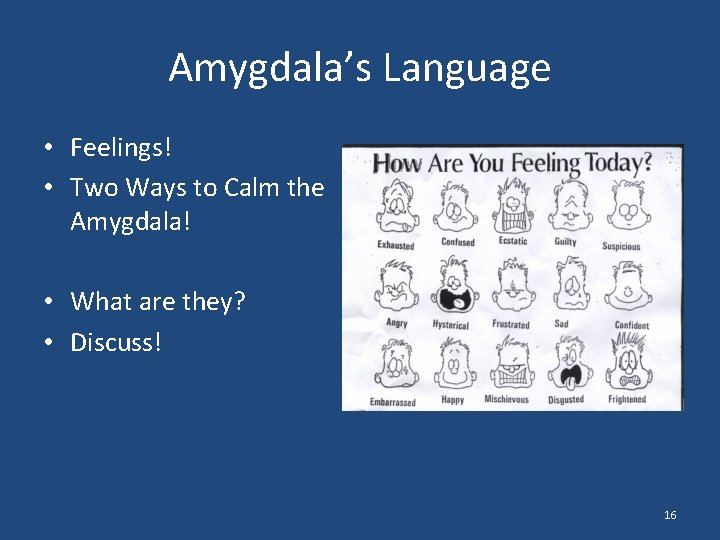
Amygdala’s Language • Feelings! • Two Ways to Calm the Amygdala! • What are they? • Discuss! 16
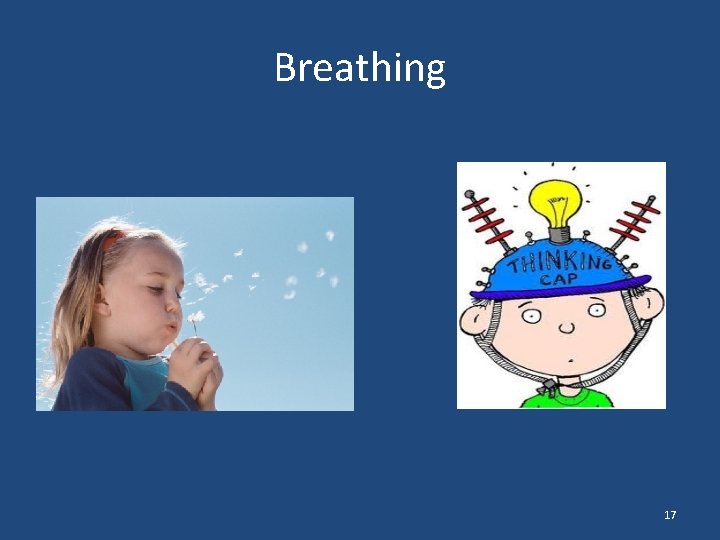
Breathing 17
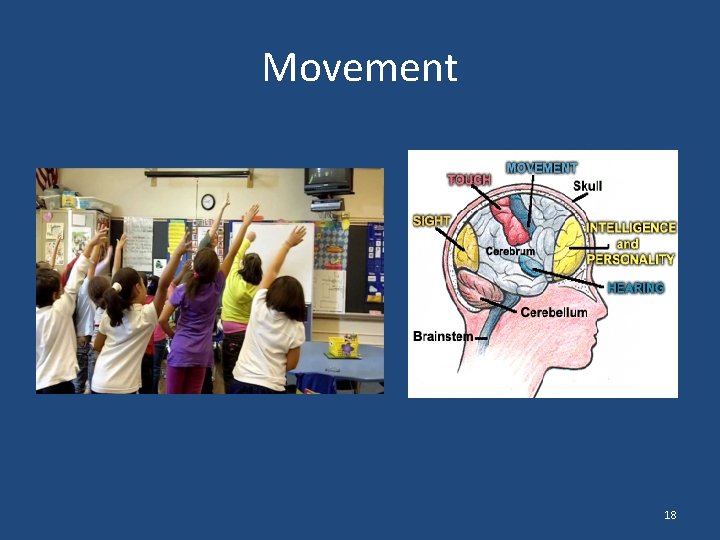
Movement 18
Strategies! • Movement , Space and Breath! Focused Attention Practices • Drawing and Coloring • Validation • Power of Questions • Amygdala First Aid Kit! • Choices • Service to Another/ Bell Work • Connection Journals 19
Strategies v Teach students about their brain’s neuroplasticity v Routines and rituals- change them up/ Bell Work v Notice Everything v Create class guidelines ( agreements) together and change them often! v Stories, Images • Everyone will get what they need! • Co-Teach and Co-Design Lessons • Validation and the power of Questions • What homework did you do for your students this week? • Focused Attention Practices 20
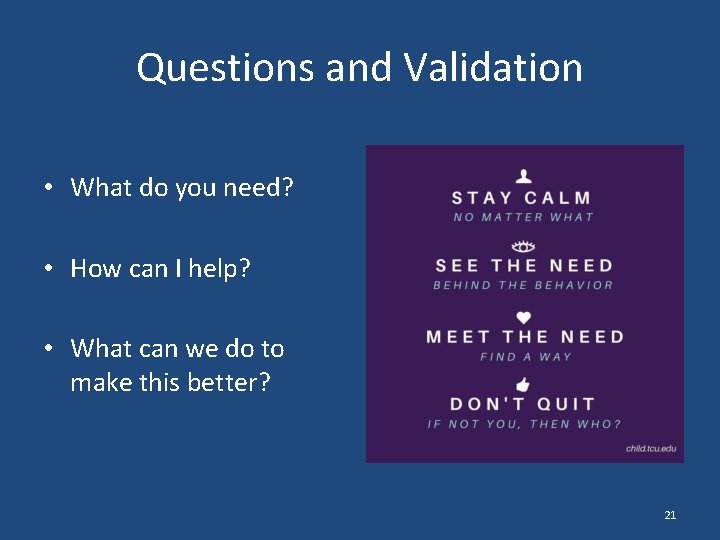
Questions and Validation • What do you need? • How can I help? • What can we do to make this better? 21
Validation • • • • That must have made you feel really angry. What a frustrating situation to be in! It must make you feel angry to have someone do that. Wow, how hard that must be. - That’s stinks!That’s messed up! How frustrating! Yeah, I can see how that might make you feel really sad. Boy, you must be angry. What a horrible feeling. What a tough spot. I hear you. I hear that. 90 SECOND RULE! 22
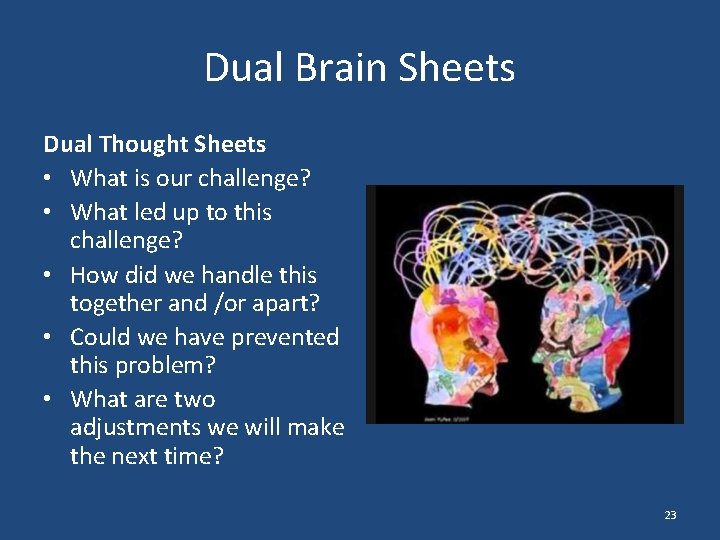
Dual Brain Sheets Dual Thought Sheets • What is our challenge? • What led up to this challenge? • How did we handle this together and /or apart? • Could we have prevented this problem? • What are two adjustments we will make the next time? 23
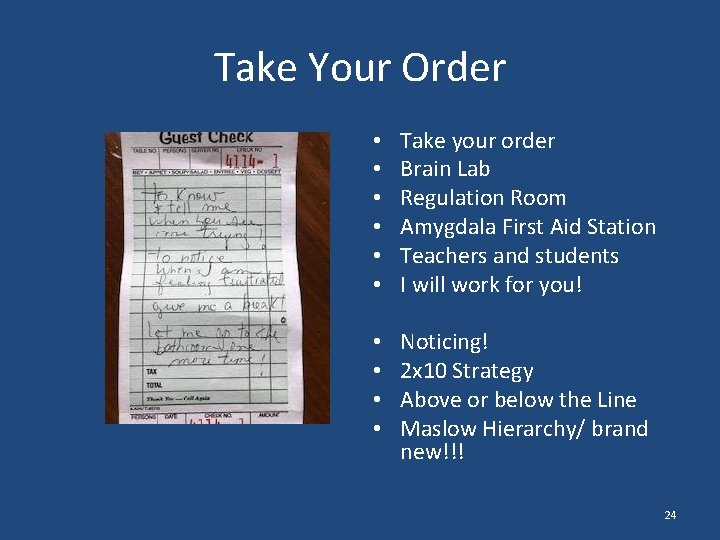
Take Your Order • • • Take your order Brain Lab Regulation Room Amygdala First Aid Station Teachers and students I will work for you! • • Noticing! 2 x 10 Strategy Above or below the Line Maslow Hierarchy/ brand new!!! 24
Connect With Me! • To understand our neurobiology is to know the secret of life! • https: //www. facebook. com /lori. l. desautels • Desautels_phd • ldesaute@butler. edu • www. revelationsineducatio n. com • Desautels_phd - twitter handle Who are YOU? " said the Caterpillar. This was not an encouraging opening for a conversation. Alice replied, rather shyly, "I-I hardly know, sir, just at present - at least I know who I WAS when I got up this morning, but I think I must have been changed several times since then. " - Alice's Adventures in Wonderland, Lewis Carroll 25
Thank you!!! 26
- Slides: 26