
Adverse Childhood Experiences ACEs What they are why
- Slides: 35
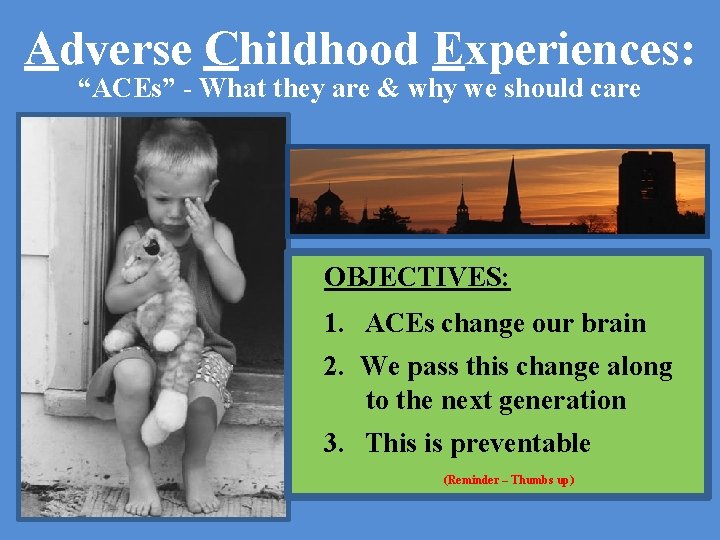
Adverse Childhood Experiences: “ACEs” - What they are & why we should care OBJECTIVES: 1. ACEs change our brain 2. We pass this change along to the next generation 3. This is preventable (Reminder – Thumbs up)
Timeline of Events Technology & Science Health & Development 1995 – 1997 ACE Study
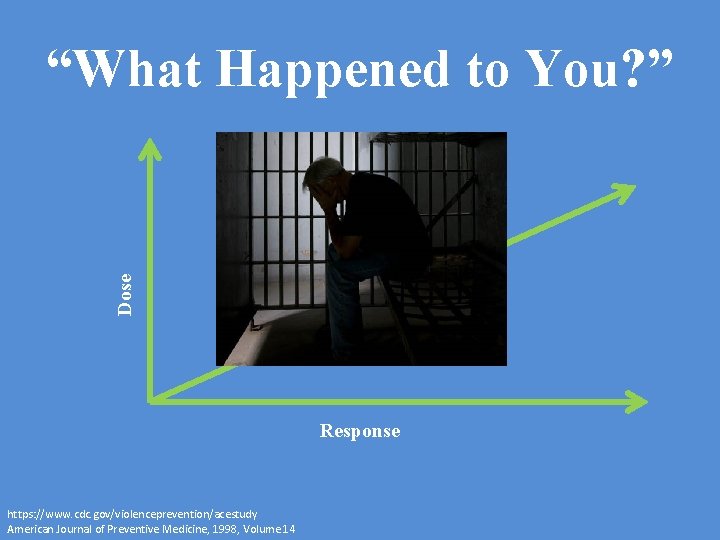
Dose “What Happened to You? ” Response https: //www. cdc. gov/violenceprevention/acestudy American Journal of Preventive Medicine, 1998, Volume 14
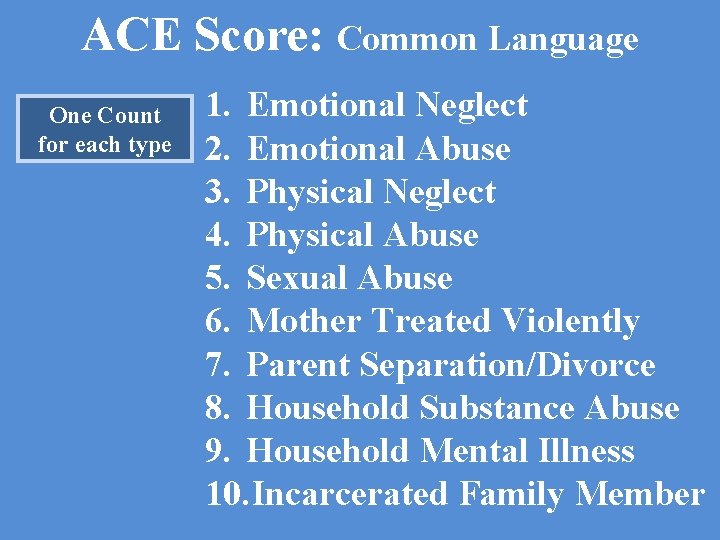
ACE Score: Common Language One Count for each type 1. Emotional Neglect 2. Emotional Abuse 3. Physical Neglect 4. Physical Abuse 5. Sexual Abuse 6. Mother Treated Violently 7. Parent Separation/Divorce 8. Household Substance Abuse 9. Household Mental Illness 10. Incarcerated Family Member
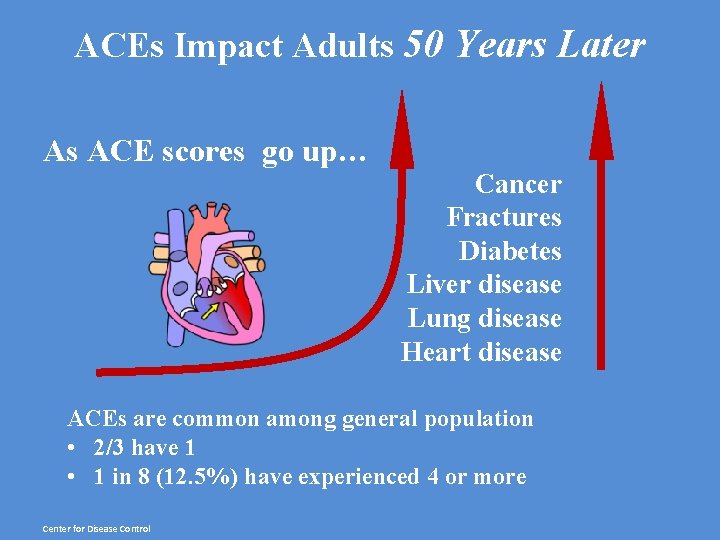
ACEs Impact Adults 50 Years Later As ACE scores go up… Cancer Fractures Diabetes Liver disease Lung disease Heart disease ACEs are common among general population • 2/3 have 1 • 1 in 8 (12. 5%) have experienced 4 or more Center for Disease Control
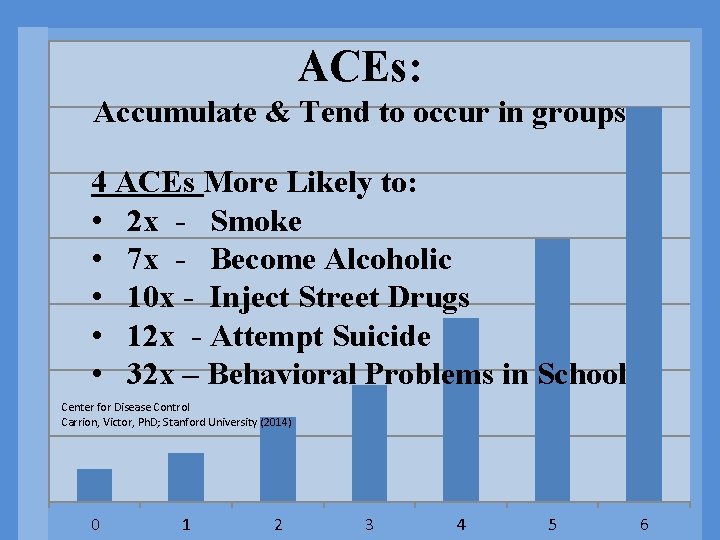
7 ACEs: 6 Accumulate & Tend to occur in groups 5 4 ACEs More Likely to: • 2 x - Smoke • 7 x - Become Alcoholic • 10 x - Inject Street Drugs • 12 x - Attempt Suicide • 32 x – Behavioral Problems in School 4 3 2 1 0 Center for Disease Control Carrion, Victor, Ph. D; Stanford University (2014) 0 1 2 3 4 5 6
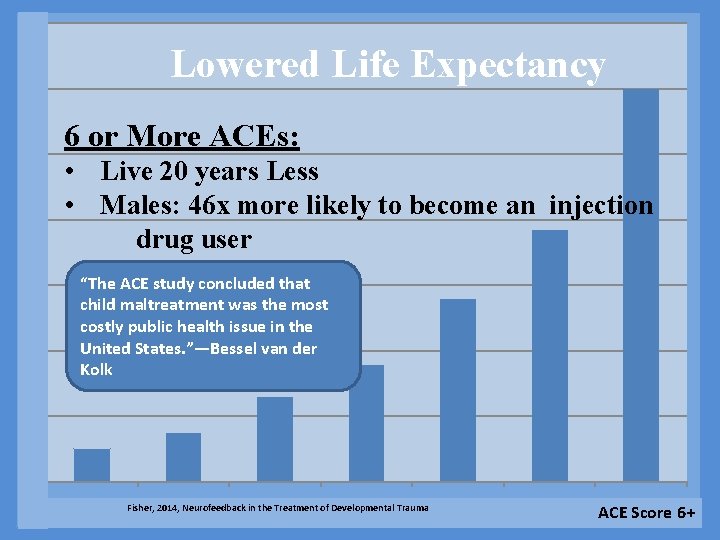
7 Lowered Life Expectancy 6 5 4 3 2 6 or More ACEs: • Live 20 years Less • Males: 46 x more likely to become an injection drug user “The ACE study concluded that child maltreatment was the most costly public health issue in the United States. ”—Bessel van der Kolk 1 0 0 1 2 3 Fisher, 2014, Neurofeedback in the Treatment of Developmental Trauma 4 5 6 ACE Score 6+
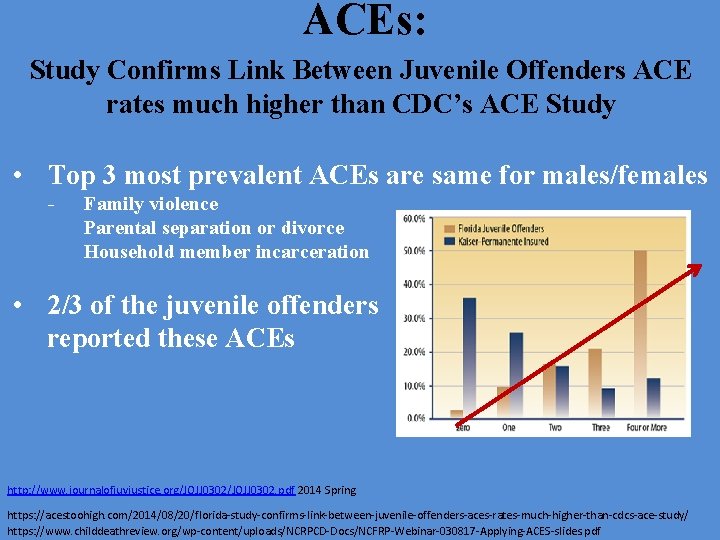
ACEs: Study Confirms Link Between Juvenile Offenders ACE rates much higher than CDC’s ACE Study • Top 3 most prevalent ACEs are same for males/females - Family violence Parental separation or divorce Household member incarceration • 2/3 of the juvenile offenders reported these ACEs http: //www. journalofjuvjustice. org/JOJJ 0302. pdf 2014 Spring https: //acestoohigh. com/2014/08/20/florida-study-confirms-link-between-juvenile-offenders-aces-rates-much-higher-than-cdcs-ace-study/ https: //www. childdeathreview. org/wp-content/uploads/NCRPCD-Docs/NCFRP-Webinar-030817 -Applying-ACES-slides. pdf
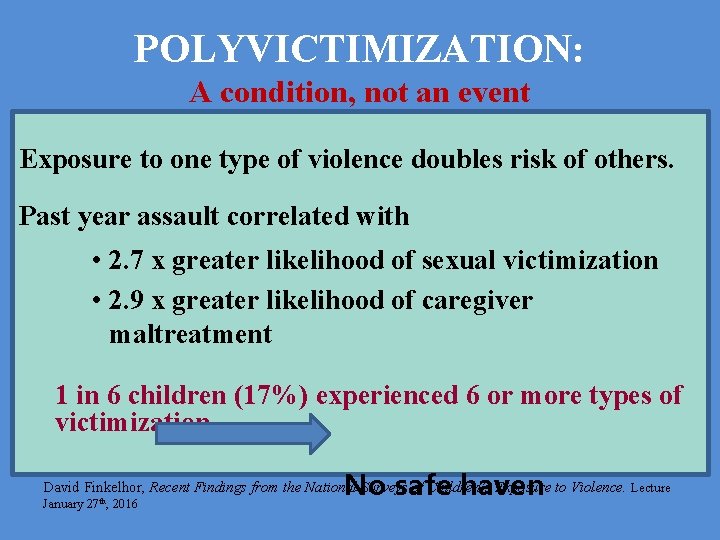
POLYVICTIMIZATION: A condition, not an event Exposure to one type of violence doubles risk of others. Past year assault correlated with • 2. 7 x greater likelihood of sexual victimization • 2. 9 x greater likelihood of caregiver maltreatment 1 in 6 children (17%) experienced 6 or more types of victimization No safe haven David Finkelhor, Recent Findings from the National Surveys of Children’s Exposure to Violence. Lecture January 27 th, 2016
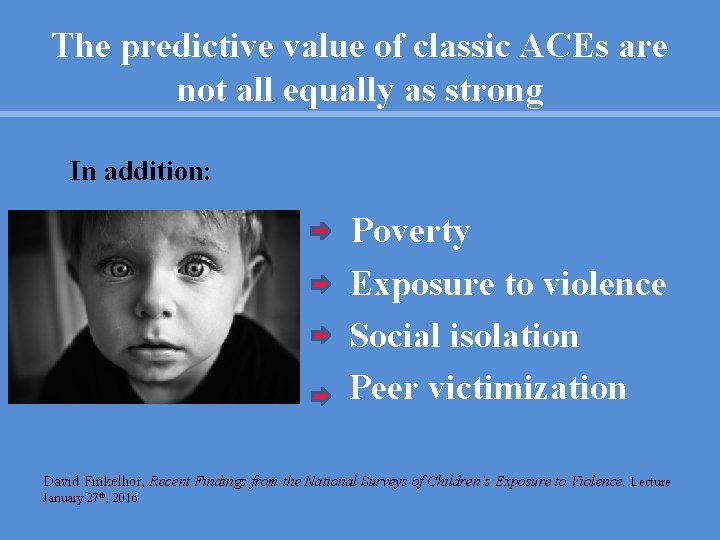
The predictive value of classic ACEs are not all equally as strong In addition: Poverty Exposure to violence Social isolation Peer victimization David Finkelhor, Recent Findings from the National Surveys of Children’s Exposure to Violence. Lecture January 27 th, 2016
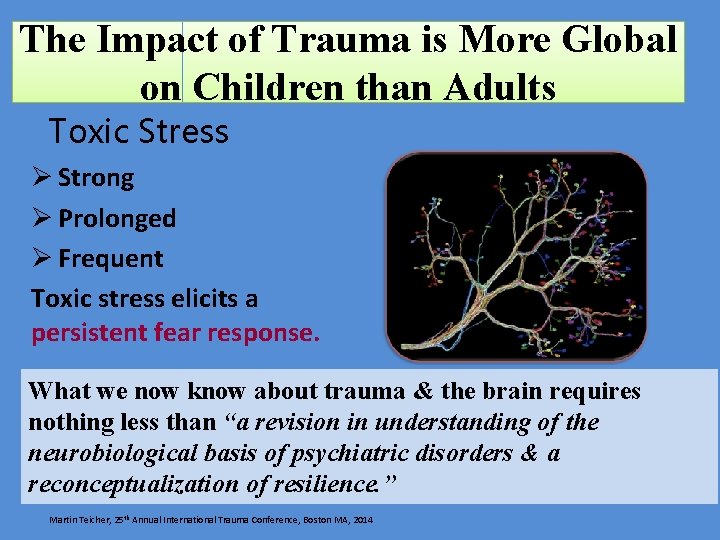
The Impact of Trauma is More Global on Children than Adults Toxic Stress Ø Strong Ø Prolonged Ø Frequent Toxic stress elicits a persistent fear response. What we now know about trauma & the brain requires nothing less than “a revision in understanding of the neurobiological basis of psychiatric disorders & a reconceptualization of resilience. ” Martin Teicher, 25 th Annual International Trauma Conference, Boston MA, 2014
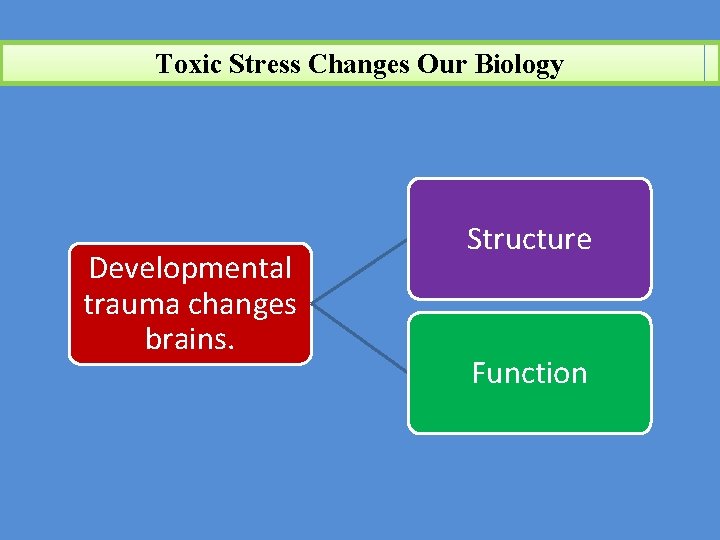
Toxic Stress Changes Our Biology Developmental trauma changes brains. Structure Function
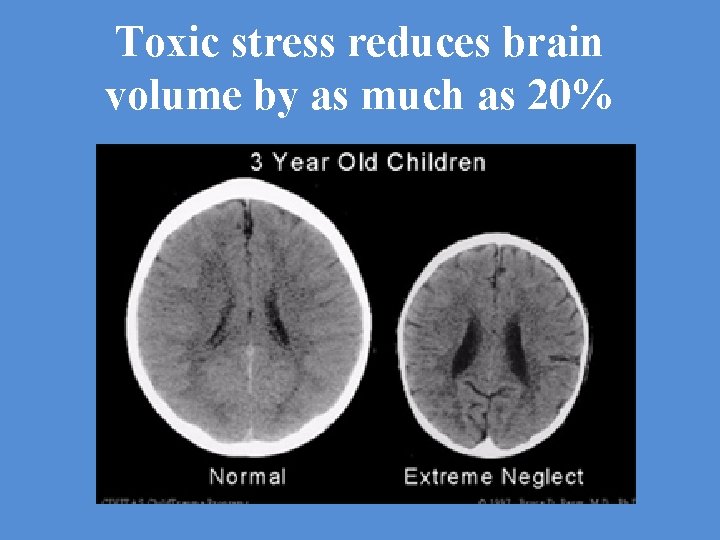
Toxic stress reduces brain volume by as much as 20%
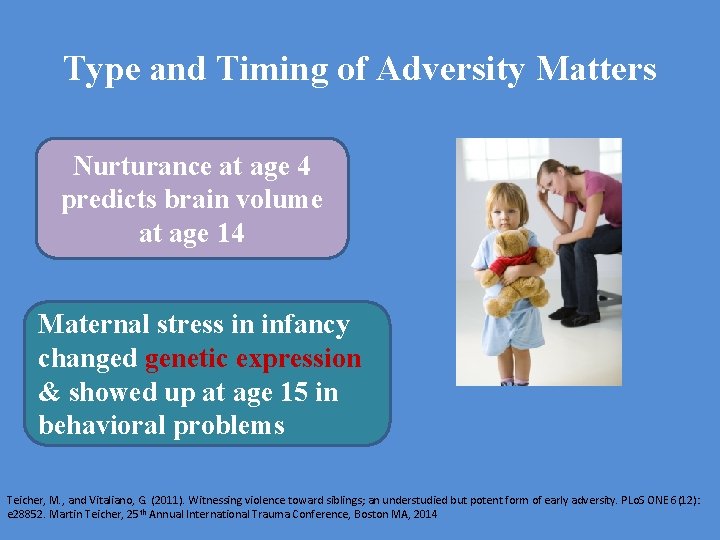
Type and Timing of Adversity Matters Nurturance at age 4 predicts brain volume at age 14 Maternal stress in infancy changed genetic expression & showed up at age 15 in behavioral problems Teicher, M. , and Vitaliano, G. (2011). Witnessing violence toward siblings; an understudied but potent form of early adversity. PLo. S ONE 6(12): e 28852. Martin Teicher, 25 th Annual International Trauma Conference, Boston MA, 2014
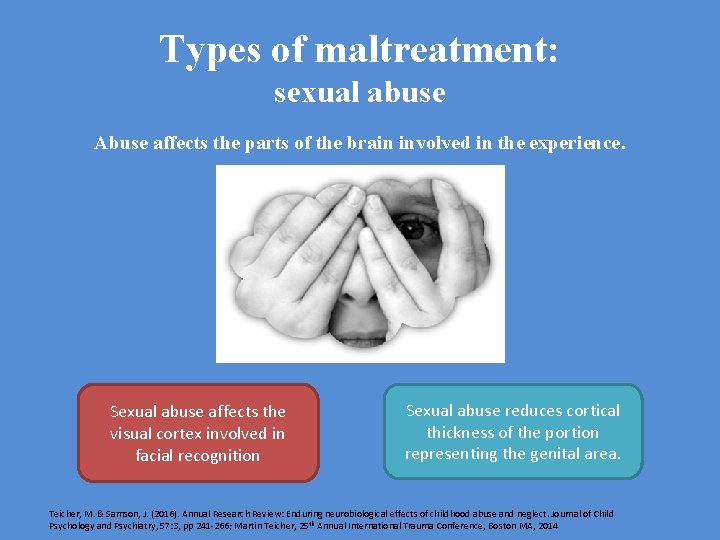
Types of maltreatment: sexual abuse Abuse affects the parts of the brain involved in the experience. Sexual abuse affects the visual cortex involved in facial recognition Sexual abuse reduces cortical thickness of the portion representing the genital area. Teicher, M. & Samson, J. (2016). Annual Research Review: Enduring neurobiological effects of childhood abuse and neglect. Journal of Child Psychology and Psychiatry, 57: 3, pp 241 -266; Martin Teicher, 25 th Annual International Trauma Conference, Boston MA, 2014
Types of Maltreatment: Physical Abuse Correlates with later drug and alcohol abuse Impacts volume of the cerebral cortex Teicher, M. & Samson, J. (2016). Annual Research Review: Enduring neurobiological effects of childhood abuse and neglect. Journal of Child Psychology and Psychiatry, 57: 3, pp 241 -266; Martin Teicher, 25 th Annual International Trauma Conference, Boston MA, 2014
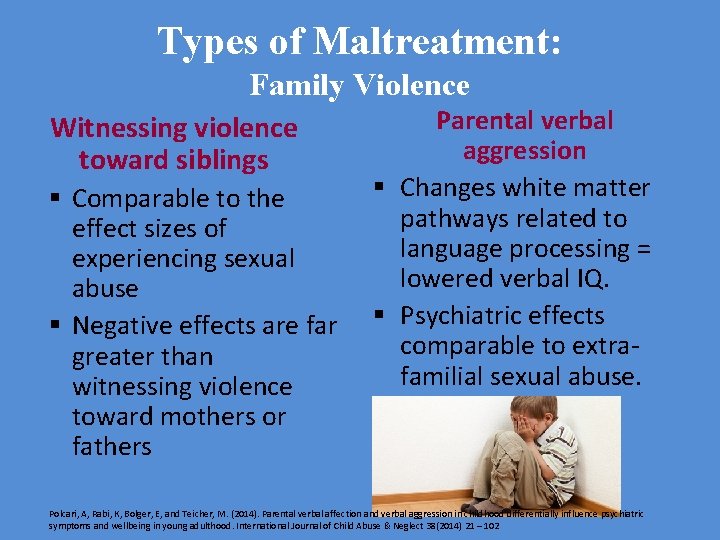
Types of Maltreatment: Family Violence Witnessing violence toward siblings § Comparable to the effect sizes of experiencing sexual abuse § Negative effects are far greater than witnessing violence toward mothers or fathers Parental verbal aggression § Changes white matter pathways related to language processing = lowered verbal IQ. § Psychiatric effects comparable to extrafamilial sexual abuse. Polcari, A, Rabi, K, Bolger, E, and Teicher, M. (2014). Parental verbal affection and verbal aggression in childhood differentially influence psychiatric symptoms and wellbeing in young adulthood. International Journal of Child Abuse & Neglect 38(2014) 21 – 102
Wired for Fear and Anger “Following abuse and neglect, the world is experienced with a different nervous system. ”—Bessel van der Kolk You can’t talk to an amygdala Martin Teicher, 25 th Annual International Trauma Conference, Boston MA, 2014
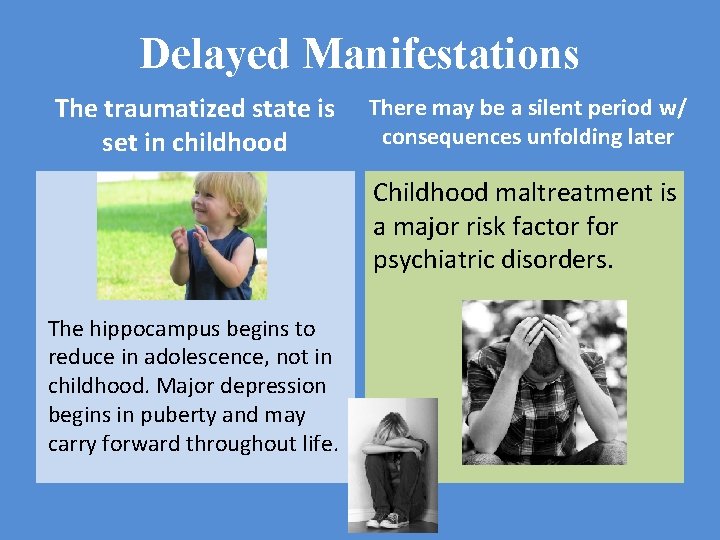
Delayed Manifestations The traumatized state is set in childhood There may be a silent period w/ consequences unfolding later Childhood maltreatment is a major risk factor for psychiatric disorders. The hippocampus begins to reduce in adolescence, not in childhood. Major depression begins in puberty and may carry forward throughout life.
Intergenerational Transmission of Trauma Beyond modeling. Changes occur at the cellular level.
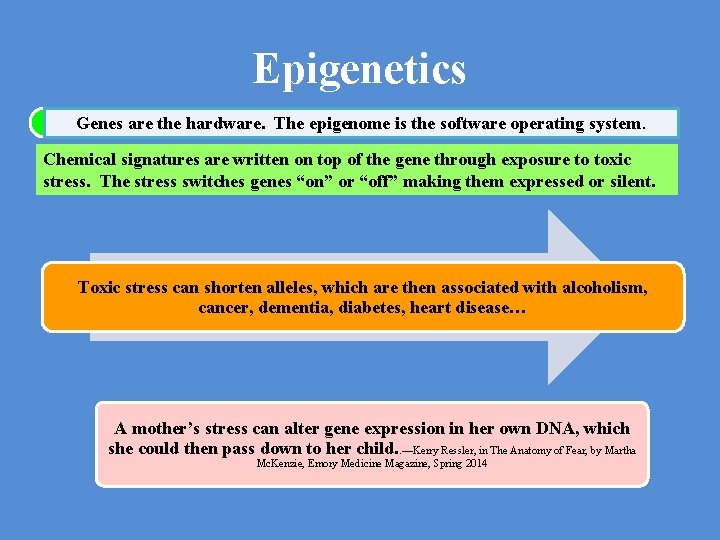
Epigenetics Genes are the hardware. The epigenome is the software operating system. Chemical signatures are written on top of the gene through exposure to toxic stress. The stress switches genes “on” or “off” making them expressed or silent. Toxic stress can shorten alleles, which are then associated with alcoholism, cancer, dementia, diabetes, heart disease… A mother’s stress can alter gene expression in her own DNA, which she could then pass down to her child. . —Kerry Ressler, in The Anatomy of Fear, by Martha Mc. Kenzie, Emory Medicine Magazine, Spring 2014
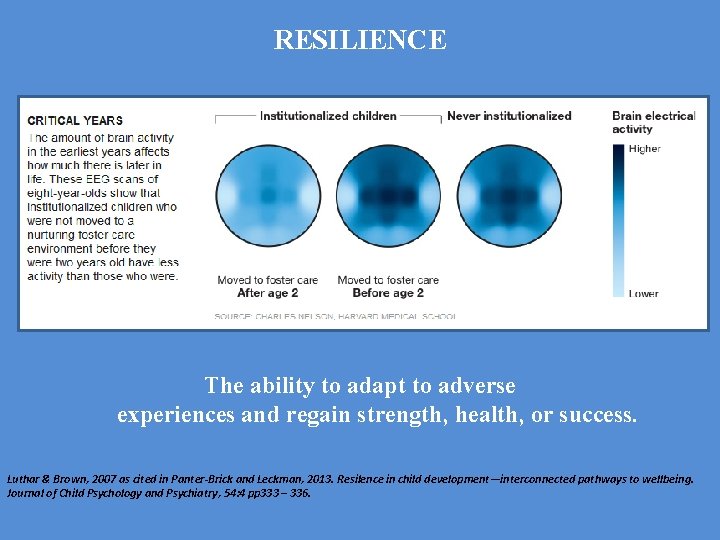
RESILIENCE The ability to adapt to adverse experiences and regain strength, health, or success. Luthar & Brown, 2007 as cited in Panter-Brick and Leckman, 2013. Resilence in child development—interconnected pathways to wellbeing. Journal of Child Psychology and Psychiatry, 54: 4 pp 333 – 336.
Resilience and recovery are NOT the same as “without injury. ” • Developmental damage shows up in brain scans, even when individuals are not symptomatic. • Neural plasticity does make recovery and adaptation possible.
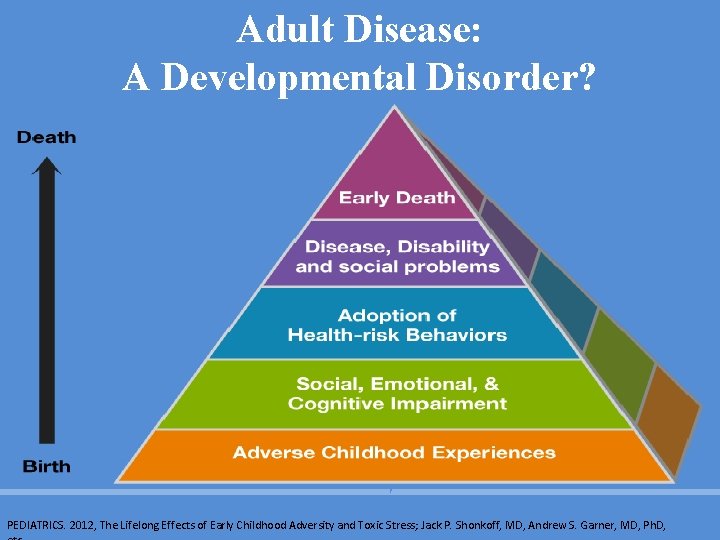
Adult Disease: A Developmental Disorder? PEDIATRICS. 2012, The Lifelong Effects of Early Childhood Adversity and Toxic Stress; Jack P. Shonkoff, MD, Andrew S. Garner, MD, Ph. D,
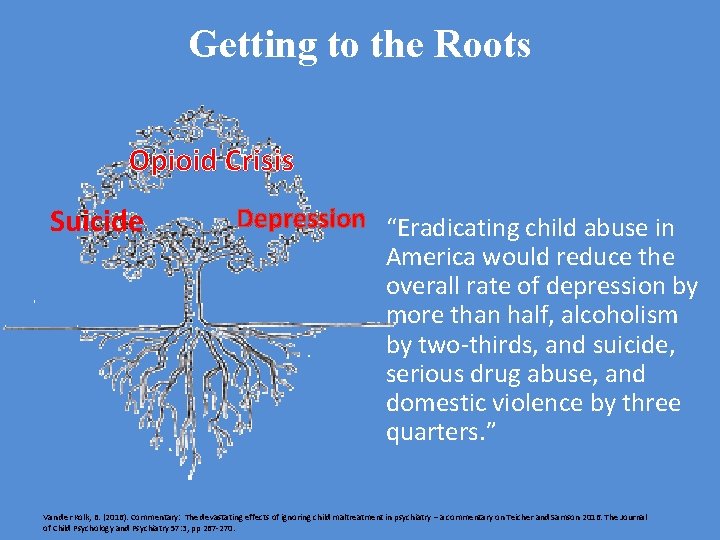
Getting to the Roots Opioid Crisis Suicide Depression “Eradicating child abuse in America would reduce the overall rate of depression by more than half, alcoholism by two-thirds, and suicide, serious drug abuse, and domestic violence by three quarters. ” Van der Kolk, B. (2016). Commentary: The devastating effects of ignoring child maltreatment in psychiatry – a commentary on Teicher and Samson 2016. The Journal of Child Psychology and Psychiatry 57: 3, pp 267 -270.
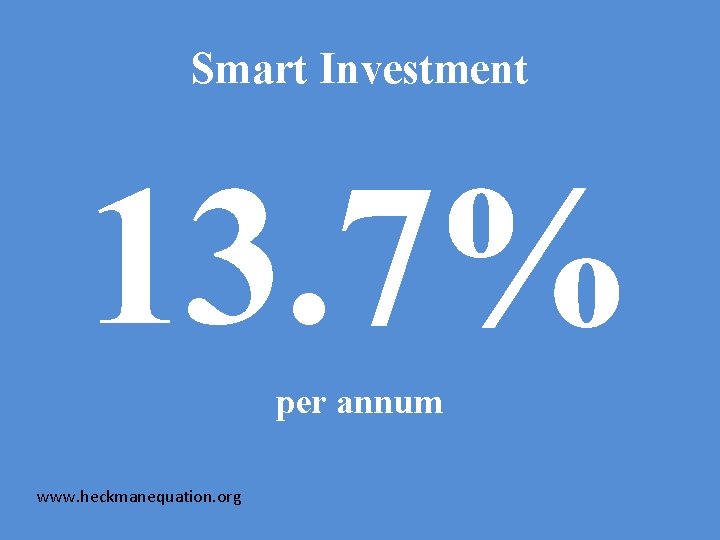
Smart Investment 13. 7% per annum www. heckmanequation. org
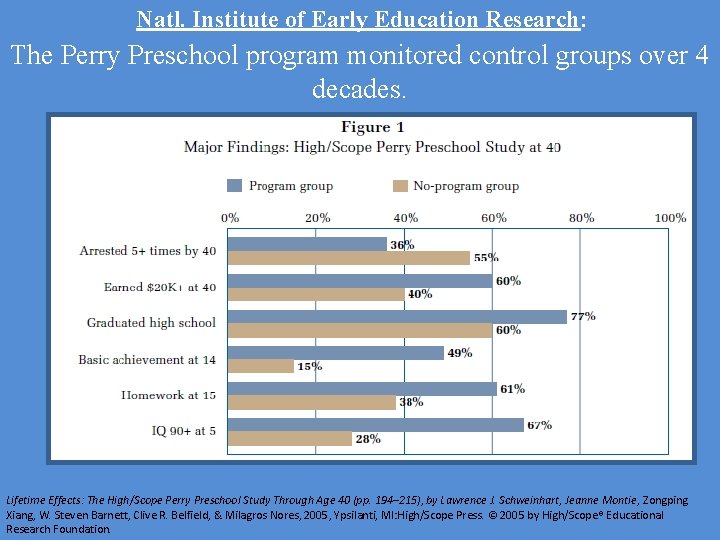
Natl. Institute of Early Education Research: The Perry Preschool program monitored control groups over 4 decades. Lifetime Effects: The High/Scope Perry Preschool Study Through Age 40 (pp. 194– 215), by Lawrence J. Schweinhart, Jeanne Montie, Zongping Xiang, W. Steven Barnett, Clive R. Belfield, & Milagros Nores, 2005, Ypsilanti, MI: High/Scope Press. © 2005 by High/Scope® Educational Research Foundation.
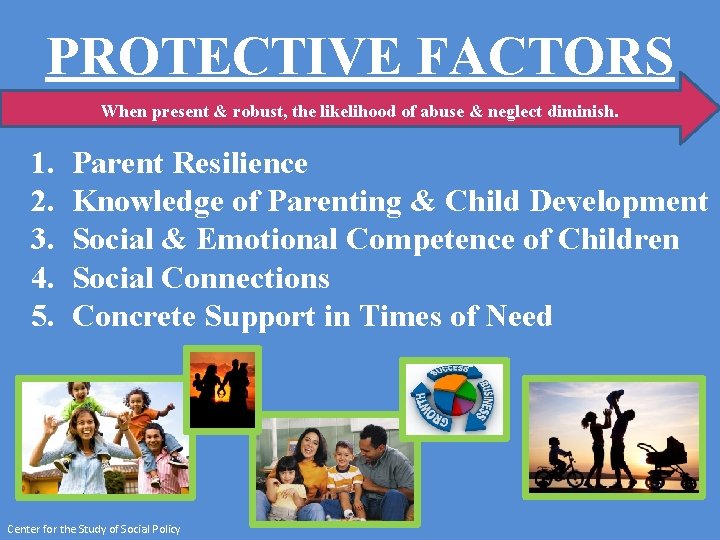
PROTECTIVE FACTORS When present & robust, the likelihood of abuse & neglect diminish. 1. 2. 3. 4. 5. Parent Resilience Knowledge of Parenting & Child Development Social & Emotional Competence of Children Social Connections Concrete Support in Times of Need Center for the Study of Social Policy
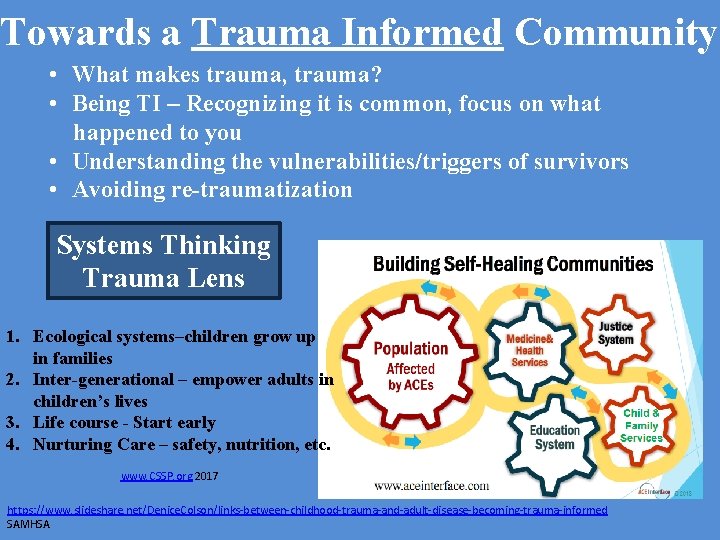
Towards a Trauma Informed Community • What makes trauma, trauma? • Being TI – Recognizing it is common, focus on what happened to you • Understanding the vulnerabilities/triggers of survivors • Avoiding re-traumatization Systems Thinking Trauma Lens 1. Ecological systems–children grow up in families 2. Inter-generational – empower adults in children’s lives 3. Life course - Start early 4. Nurturing Care – safety, nutrition, etc. www. CSSP. org 2017 https: //www. slideshare. net/Denice. Colson/links-between-childhood-trauma-and-adult-disease-becoming-trauma-informed SAMHSA
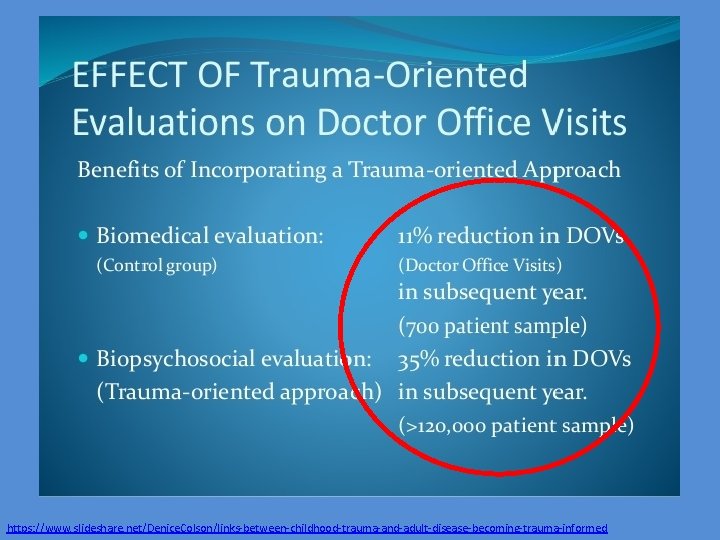
https: //www. slideshare. net/Denice. Colson/links-between-childhood-trauma-and-adult-disease-becoming-trauma-informed
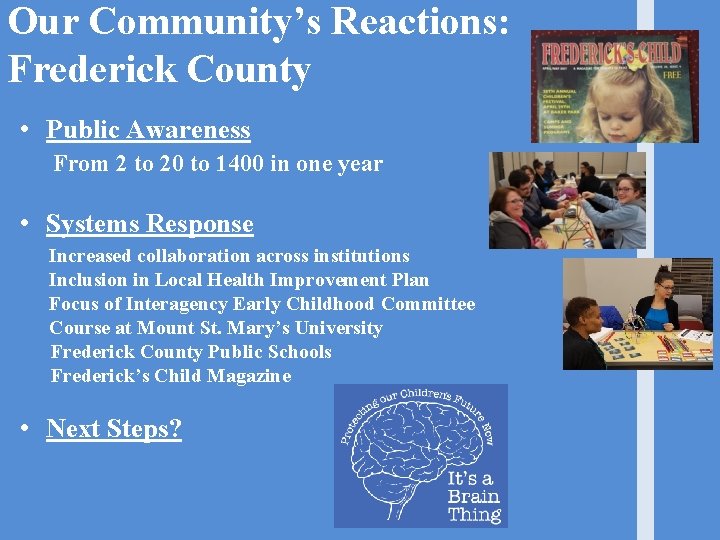
Our Community’s Reactions: Frederick County • Public Awareness From 2 to 20 to 1400 in one year • Systems Response Increased collaboration across institutions Inclusion in Local Health Improvement Plan Focus of Interagency Early Childhood Committee Course at Mount St. Mary’s University Frederick County Public Schools Frederick’s Child Magazine • Next Steps?
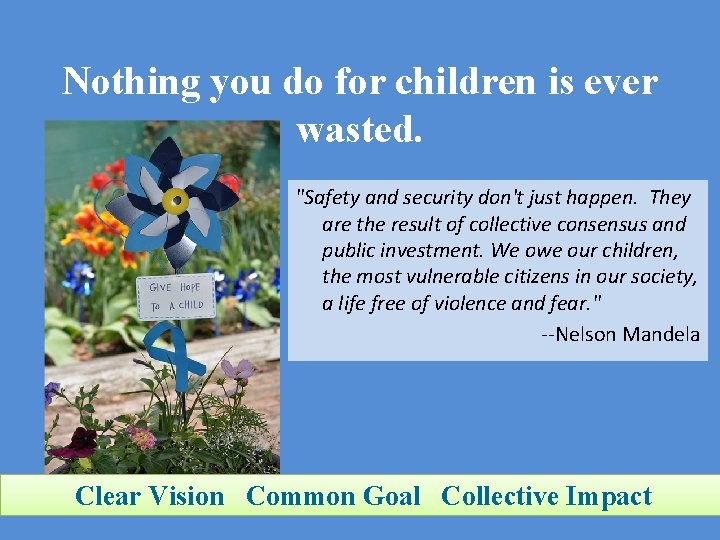
Nothing you do for children is ever wasted. "Safety and security don't just happen. They are the result of collective consensus and public investment. We owe our children, the most vulnerable citizens in our society, a life free of violence and fear. " --Nelson Mandela Clear Vision Common Goal Collective Impact
Resources: Research Lifetime Effects: The High/Scope Perry Preschool Study Through Age 40 (pp. 194– 215), by Lawrence J. Schweinhart, Jeanne Montie, Zongping Xiang, W. Steven Barnett, Clive R. Belfield, & Milagros Nores, 2005, Ypsilanti, MI: High/Scope Press. © 2005 by High/Scope® Educational Research Foundation. Luthar & Brown, 2007 as cited in Panter-Brick and Leckman, 2013. Resilence in child development—interconnected pathways to wellbeing. Journal of Child Psychology and Psychiatry, 54: 4 pp 333 – 336. PEDIATRICS. 2012, The Lifelong Effects of Early Childhood Adversity and Toxic Stress; Jack P. Shonkoff, MD, Andrew S. Garner, MD, Ph. D, etc. David Finkelhor, Recent Findings from the National Surveys of Children’s Exposure to Violence. Lecture January 27 th, 2016 Teicher, M. , and Vitaliano, G. (2011). Witnessing violence toward siblings; an understudied but potent form of early adversity. PLo. S ONE 6(12): e 28852. Martin Teicher, 25 th Annual International Trauma Conference, Boston MA, 2014 National Scientific Council on the Developing Child (2010). Early Experiences Can Alter Gene Expression and Affect Long-Term Development: Working Paper No. 10. http: //www. developingchild. net Children’s Exposure to Violence, Crime, and Abuse: An update. OJJDP Juvenile Justice Bulletin, September 2015. Retrieved fromhttps: //www. ojjdp. gov/pubs/248547. pdf Creating Trauma Informed Provider Organizations, Georgetown University Center for Child and Human Development, retrieved from http: //gucchdtacenter. georgetown. edu/data/issues/2015/0215_article. html EMDR: an evidence based treatment for trauma victims, Victims and Offenders, 4: 391– 397, 2009, Copyright © Taylor & Francis Group, LLC ISSN: 1556 -4886 print/1556 -4991 online, DOI: 10. 1080/15564880903227495 (pdf ) Gapen, M. . , van der Kolk, B. , Hamlin, E. , Hirschberg, L. , Suvak, M. , and Spinazzola, J. 2016. A Pilot Study of Neurofeedback for Chronic PTSD. Applied Psychophysiology and Biofeedback, 40(4). retrieved from http: //www. traumacenter. org/products/pdf_files/Pilot_Study_Neurofeedback_Chronic_PTSD_G 0002. pdf van der Kolk et al. , 2014. Yoga as an adjunctive treatment for posttraumatic stress disorder. Journal of Clinical Psychiatry, 75(0). Retrieved from http: //www. traumacenter. org/products/pdf_files/Yoga_Adjunctive_Treatment_PTSD_V 0001. pdf Felitti, et al. (1998). Relationship of Childhood Abuse and Household Dysfunction to Many of the Leading Causes of Death in Adults. American Journal of Preventive Medicine.
Resources: URLs • TED TALK: https: //www. ted. com/talks/nadine_burke_harris_how_childhood_trauma_affects_health_a cross_a_lifetime • Centers for Disease Control: https: //www. cdc. gov/violenceprevention/acestudy/ • Take the survey: http: //www. npr. org/sections/health-shots/2015/03/02/387007941/takethe-ace-quiz-and-learn-what-it-does-and-doesnt-mean • ACEs networks: http: //www. acesconnection. com/ • National Child Traumatic Stress Network: http: //www. nctsn. org/ • American Academy of Pediatrics: https: //www. aap. org/en-us/advocacy-and-policy/aaphealth-initiatives/resilience/Pages/ACEs-and-Toxic-Stress. aspx • CANarratives. org
Presented By: Lynn Davis Director, Child Advocacy Center Frederick County Government Citizens Services ldavis 2@frederickcounty. MD. gov Anne Soule Director, Family Support Services Mental Health Association of Frederick County asoule@fcmha. org ACEs: Raising Awareness