
ADVERSE CHILDHOOD EXPERIENCES ACE Adverse Childhood Experiences ACE
- Slides: 15
ADVERSE CHILDHOOD EXPERIENCES (ACE)
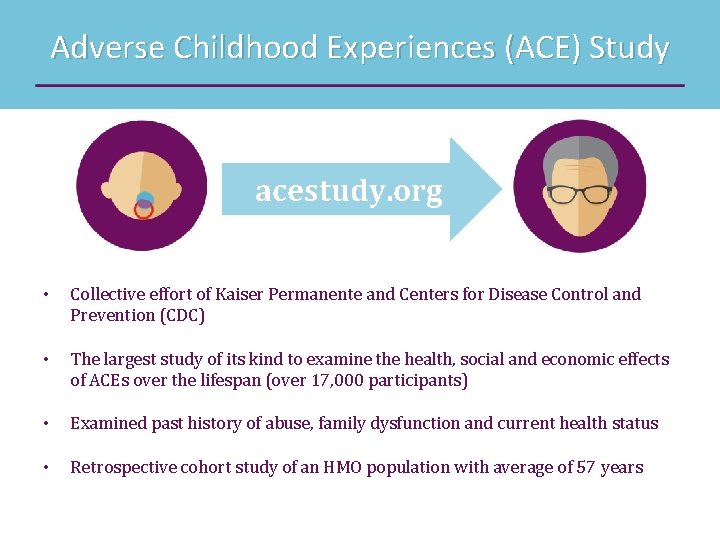
Adverse Childhood Experiences (ACE) Study acestudy. org • Collective effort of Kaiser Permanente and Centers for Disease Control and Prevention (CDC) • The largest study of its kind to examine the health, social and economic effects of ACEs over the lifespan (over 17, 000 participants) • Examined past history of abuse, family dysfunction and current health status • Retrospective cohort study of an HMO population with average of 57 years
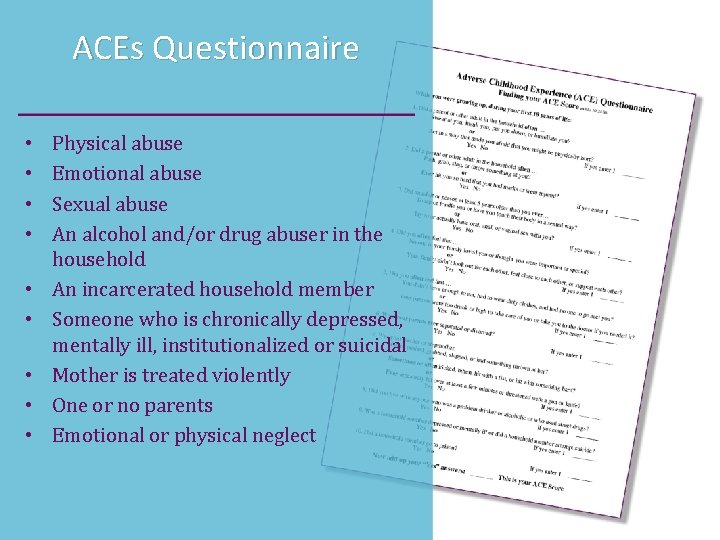
ACEs Questionnaire • • • Physical abuse Emotional abuse Sexual abuse An alcohol and/or drug abuser in the household An incarcerated household member Someone who is chronically depressed, mentally ill, institutionalized or suicidal Mother is treated violently One or no parents Emotional or physical neglect
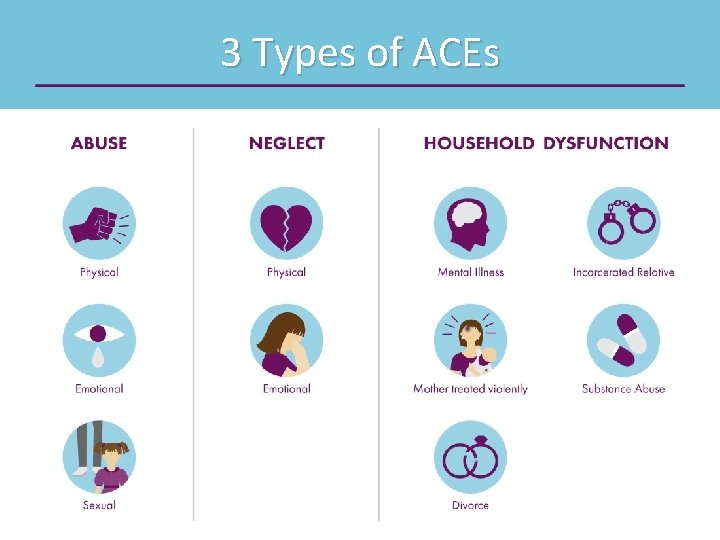
3 Types of ACEs
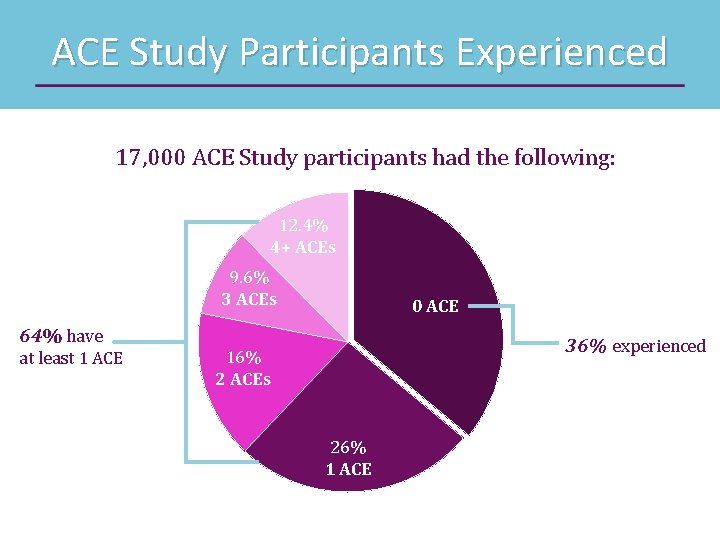
ACE Study Participants Experienced 17, 000 ACE Study participants had the following: 12. 4% 4+ ACEs 9. 6% 3 ACEs 64% have at least 1 ACE 0 ACE 36% experienced 16% 2 ACEs 26% 1 ACE
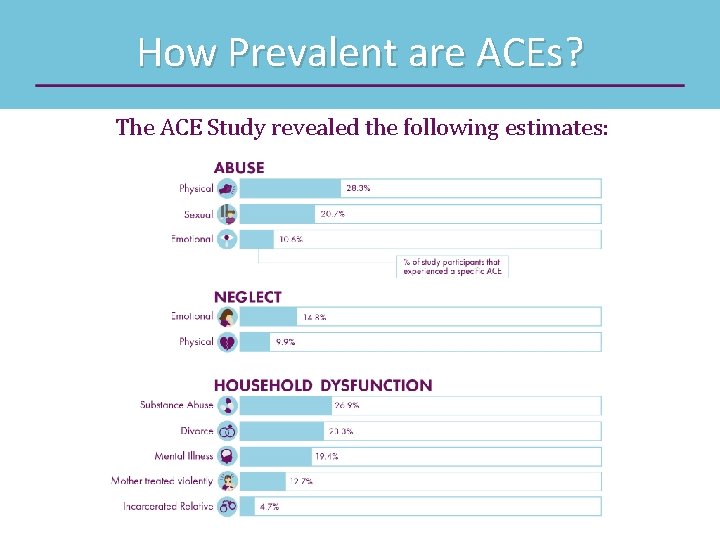
How Prevalent are ACEs? The ACE Study revealed the following estimates:
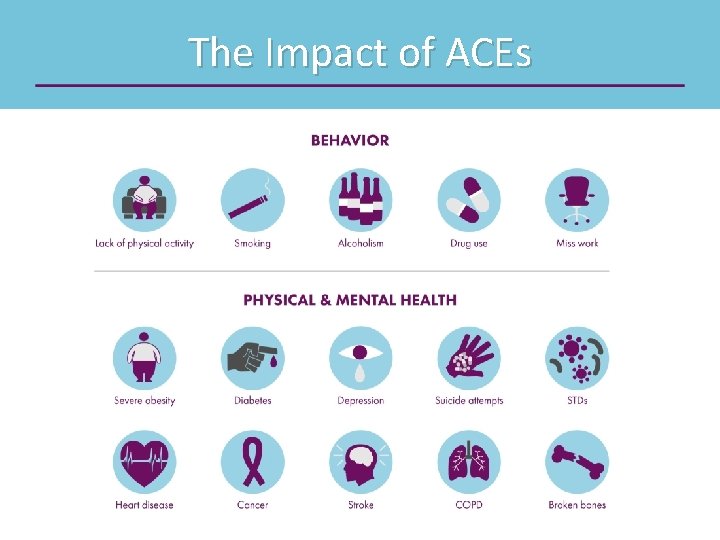
The Impact of ACEs
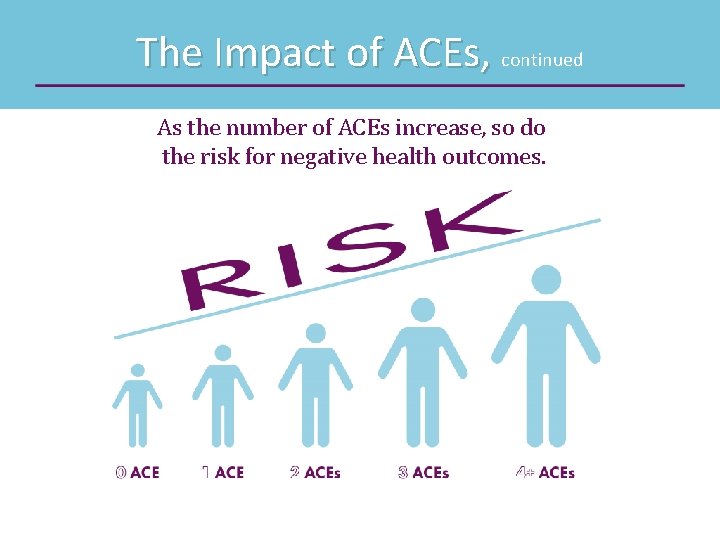
The Impact of ACEs, continued As the number of ACEs increase, so do the risk for negative health outcomes.
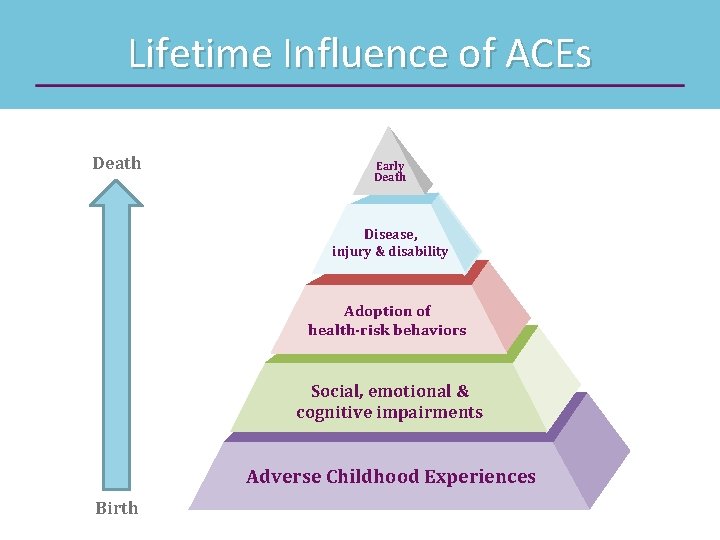
Lifetime Influence of ACEs Death Early Death Disease, injury & disability Adoption of health-risk behaviors Social, emotional & cognitive impairments Adverse Childhood Experiences Birth
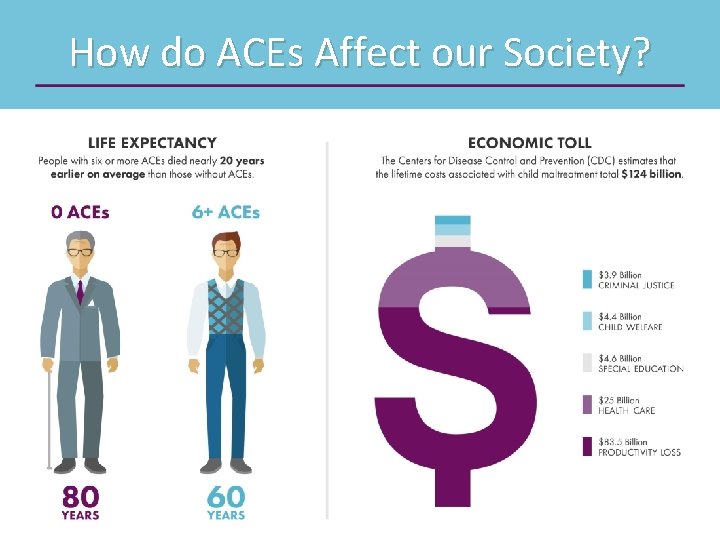
How do ACEs Affect our Society?
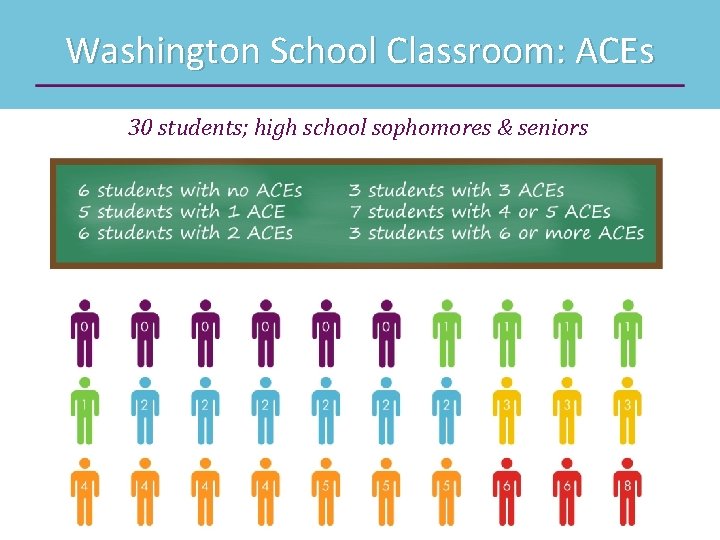
Washington School Classroom: ACEs 30 students; high school sophomores & seniors
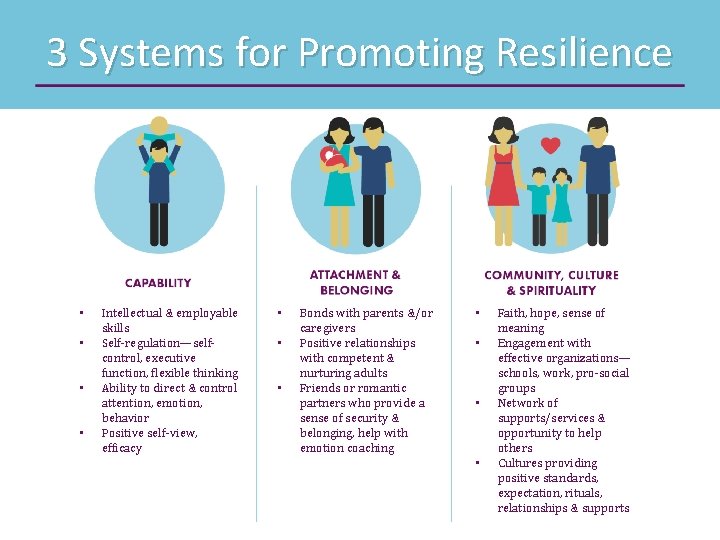
3 Systems for Promoting Resilience • • Intellectual & employable skills Self-regulation—selfcontrol, executive function, flexible thinking Ability to direct & control attention, emotion, behavior Positive self-view, efficacy • • • Bonds with parents &/or caregivers Positive relationships with competent & nurturing adults Friends or romantic partners who provide a sense of security & belonging, help with emotion coaching • • Faith, hope, sense of meaning Engagement with effective organizations— schools, work, pro-social groups Network of supports/services & opportunity to help others Cultures providing positive standards, expectation, rituals, relationships & supports
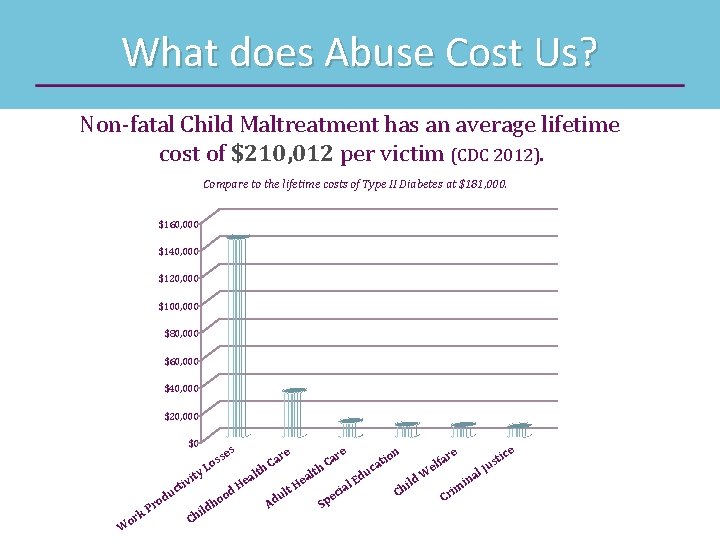
What does Abuse Cost Us? Non-fatal Child Maltreatment has an average lifetime cost of $210, 012 per victim (CDC 2012). Compare to the lifetime costs of Type II Diabetes at $181, 000. $160, 000 $140, 000 $120, 000 $100, 000 $80, 000 $60, 000 $40, 000 $20, 000 $0 s se s o y. L vit i t c W k or Pr u od d i Ch ld o ho a He a h. C lt lt t l du A re re a He ec Sp ia n uc d l. E io at Ch ild W e ar f l e al im Cr in J tic us e
Resources to Learn More… • cdc. gov/violenceprevention/ acestudy • cdc. gov/violenceprevention/ childmaltreatment • preventchildabuse. org • kansaspowerofthepositive. org
THANK YOU!