
Adverbs of Frequency What are adverbs An adverb
Adverbs of Frequency
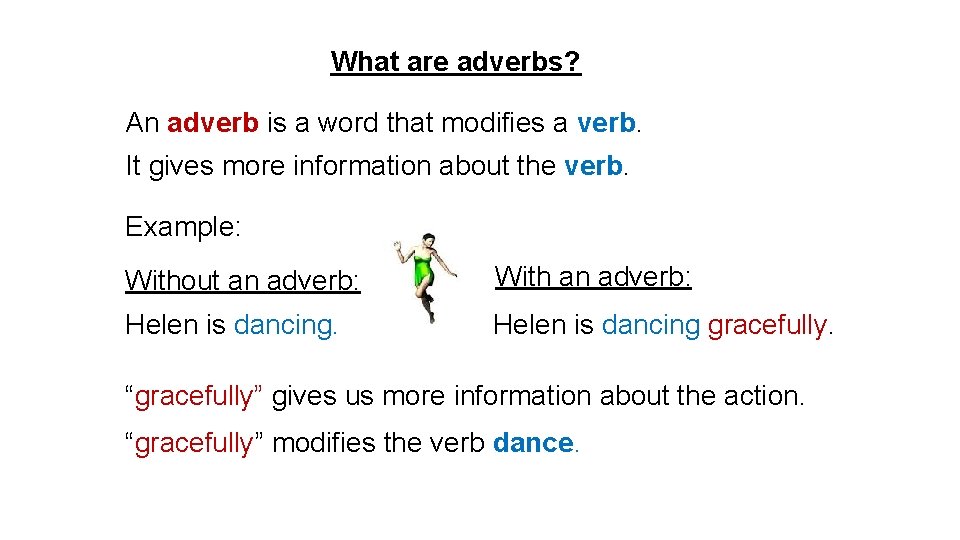
What are adverbs? An adverb is a word that modifies a verb. It gives more information about the verb. Example: Without an adverb: With an adverb: Helen is dancing gracefully. “gracefully” gives us more information about the action. “gracefully” modifies the verb dance.
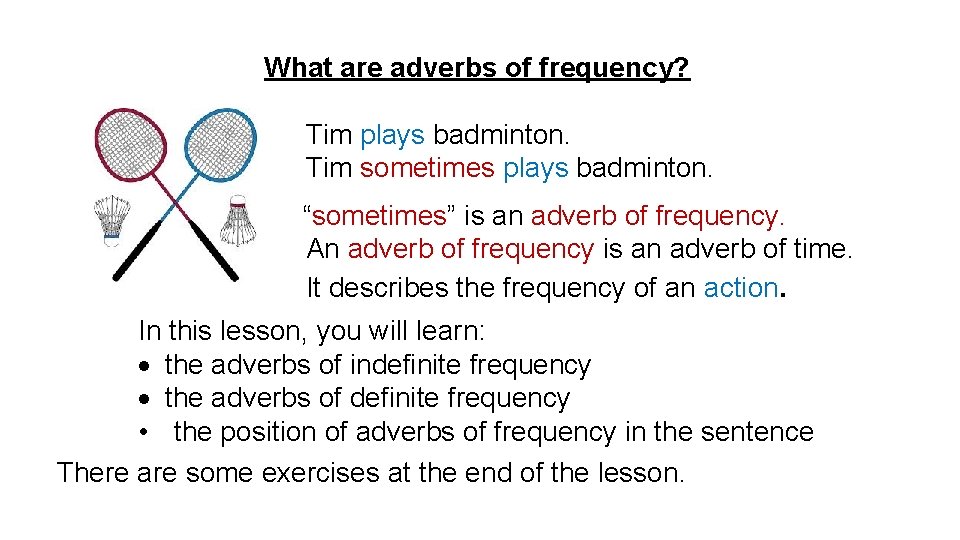
What are adverbs of frequency? Tim plays badminton. Tim sometimes plays badminton. “sometimes” is an adverb of frequency. An adverb of frequency is an adverb of time. It describes the frequency of an action. In this lesson, you will learn: the adverbs of indefinite frequency the adverbs of definite frequency • the position of adverbs of frequency in the sentence There are some exercises at the end of the lesson.

1 Adverbs of Indefinite frequency Adverb of indefinite frequency give a general indication of the frequency. Level of frequency Maximum (100%) Adverb always Example I always play badminton. 90% frequently I frequently play badminton. 80% usually I usually play badminton. 70% often I often play badminton. 50% sometimes I sometimes play badminton. 40% occasionally I occasionally play badminton. 20% 10% badminton. Minimum seldom rarely, hardly ever never I seldom play badminton. I hardly ever play I never play badminton.

Position of adverbs of indefinite frequency Always 100% Frequently usually often sometimes 50% occasionally seldom rarely, hardly ever never 0 All of the adverbs of indefinite frequency can go before the main verb. I always play volleyball. Tom seldom cooks food. I have never met my father. If the main verb is the “verb to be”, the adverb of indefinite frequency is after the “verb to be. ” This coffee shop is often busy. “Occasionally”, “sometimes”, “often”, “frequently”, and “usually” can also go at the beginning or end of a sentence. Lisa cooks food occasionally. “Rarely” can go at the end of a sentence (often with “very”): We go on vacation very rarely.

Adverbs of definite frequency - 1 Adverbs of definite frequency describe the exact frequency of an action. Example: I play volleyball three times a week. I study French five times a week. Number + “times” + “a” + period of time If the number of times is one, then we say “once” (not “one time”) Example: “I mop the floor once a week. ” If a number of times is two, then we say “twice” (not two times) Example: I go to Singapore twice a year.

Adverbs of definite frequency - 2 More Examples: John goes to market everyday. Cecil cleans her room every weekend. “every” + period of time (the period of time is in the singular form) Dave watches tennis match on Sundays. Greg studies Music on Tuesdays. “on” + day of the week (The day of the week is in the plural form) Periods of time Day Week Month Year morning evening night fortnight

Adverbs of definite frequency - 3 More Examples: hourly John calls his girlfriend daily weekly monthly My school pays me monthly. yearly Position: These adverbs go at the end of the sentence. After the verb and after the object if there is an object.
Asking a question about frequency “how often” + question form of the verb How often do you play volleyball? How often does Helen clean her room? When you lived in Thailand, how often did it rain? How often will you visit me?
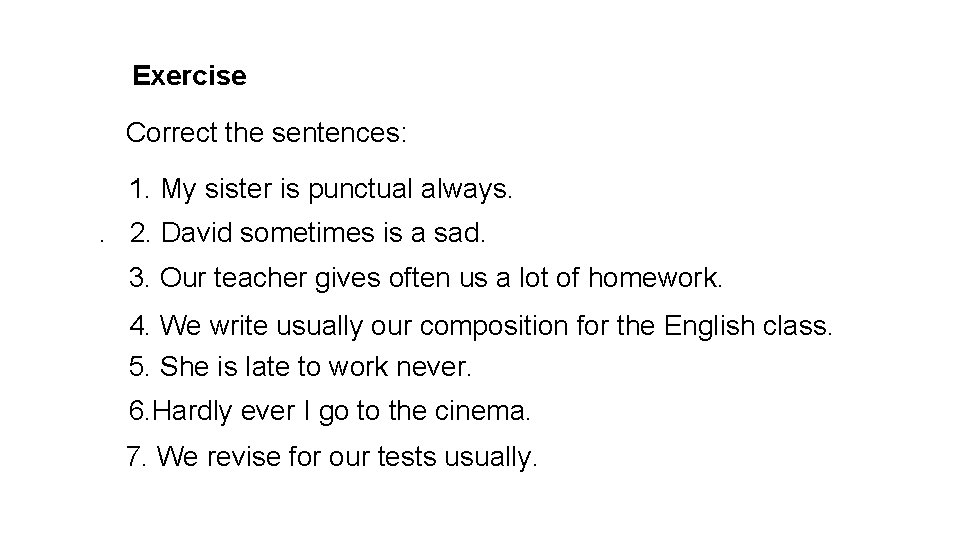
Exercise Correct the sentences: 1. My sister is punctual always. . 2. David sometimes is a sad. 3. Our teacher gives often us a lot of homework. 4. We write usually our composition for the English class. 5. She is late to work never. 6. Hardly ever I go to the cinema. 7. We revise for our tests usually.
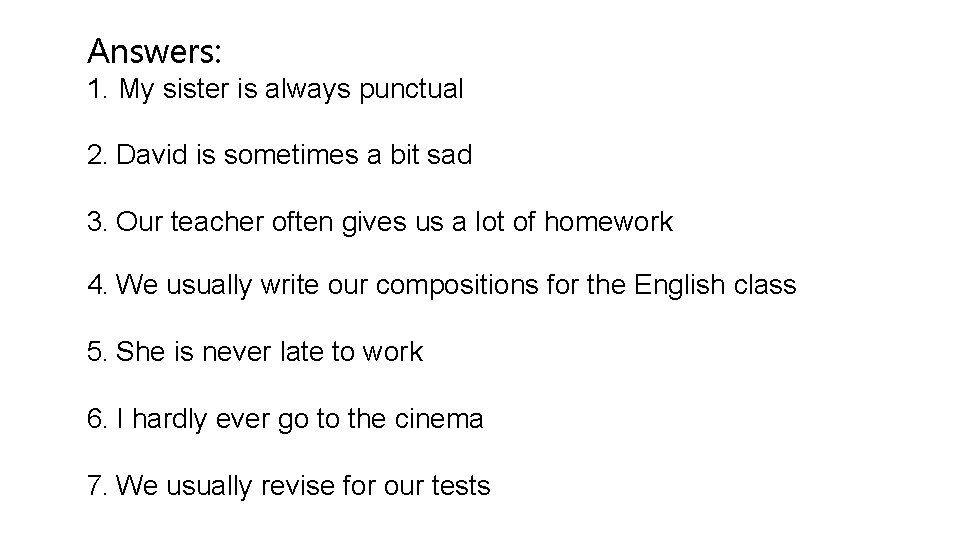
Answers: 1. My sister is always punctual 2. David is sometimes a bit sad 3. Our teacher often gives us a lot of homework 4. We usually write our compositions for the English class 5. She is never late to work 6. I hardly ever go to the cinema 7. We usually revise for our tests

http//www. englishtutorhub. com
- Slides: 12