
Adverbs Describe the verb add to the verb
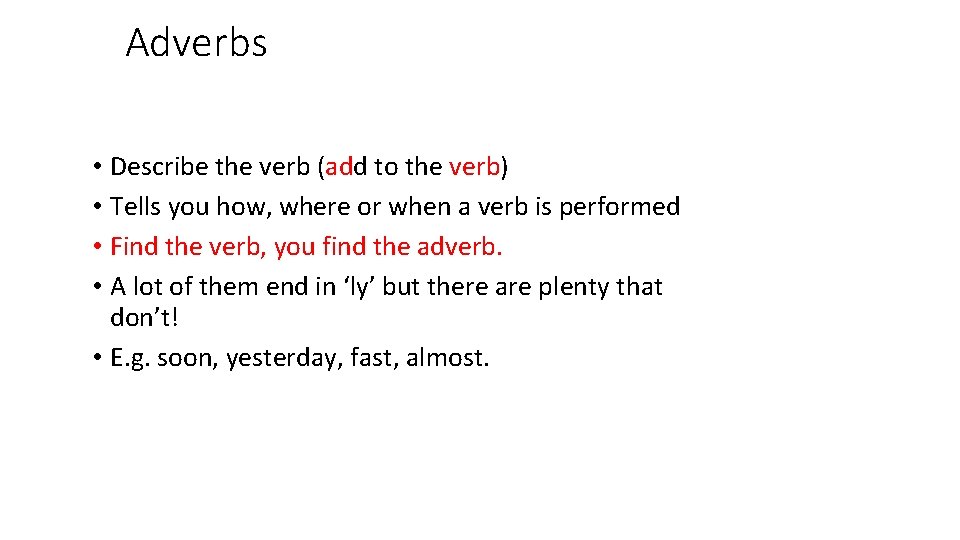
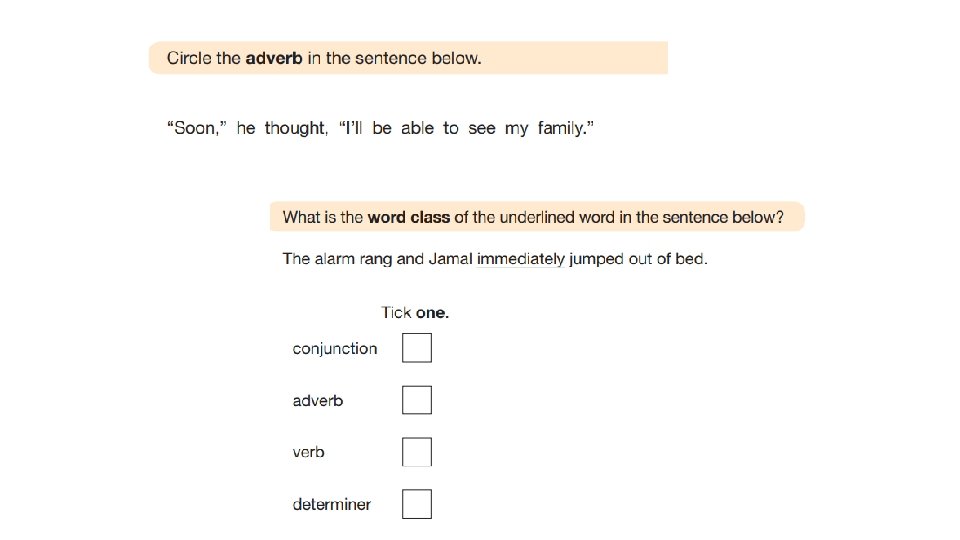
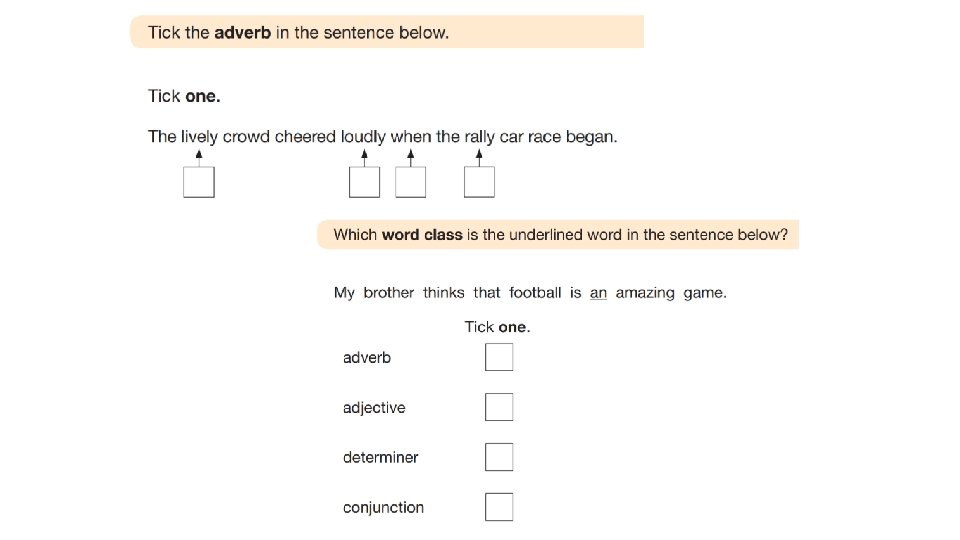
Adverbs • Describe the verb (add to the verb) • Tells you how, where or when a verb is performed • Find the verb, you find the adverb. • A lot of them end in ‘ly’ but there are plenty that don’t! • E. g. soon, yesterday, fast, almost.


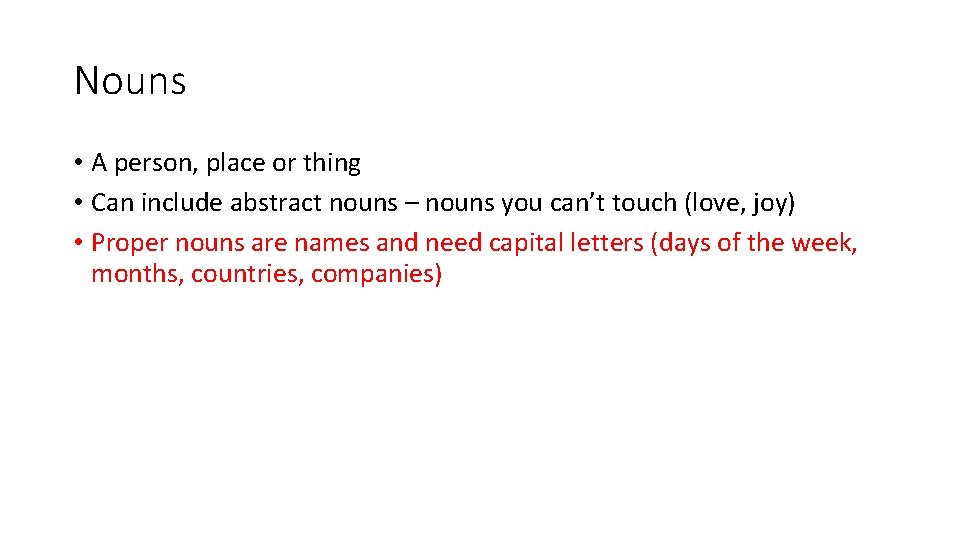
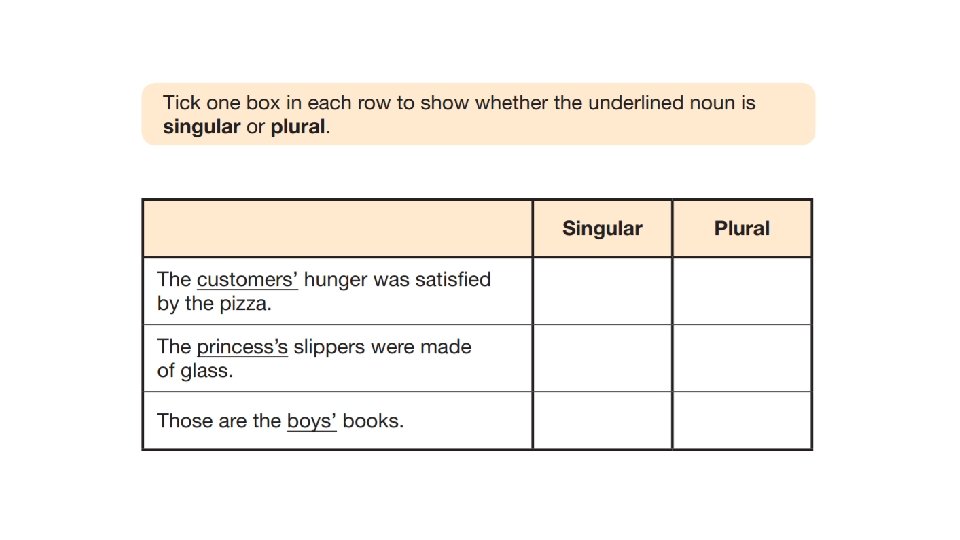
Nouns • A person, place or thing • Can include abstract nouns – nouns you can’t touch (love, joy) • Proper nouns are names and need capital letters (days of the week, months, countries, companies)
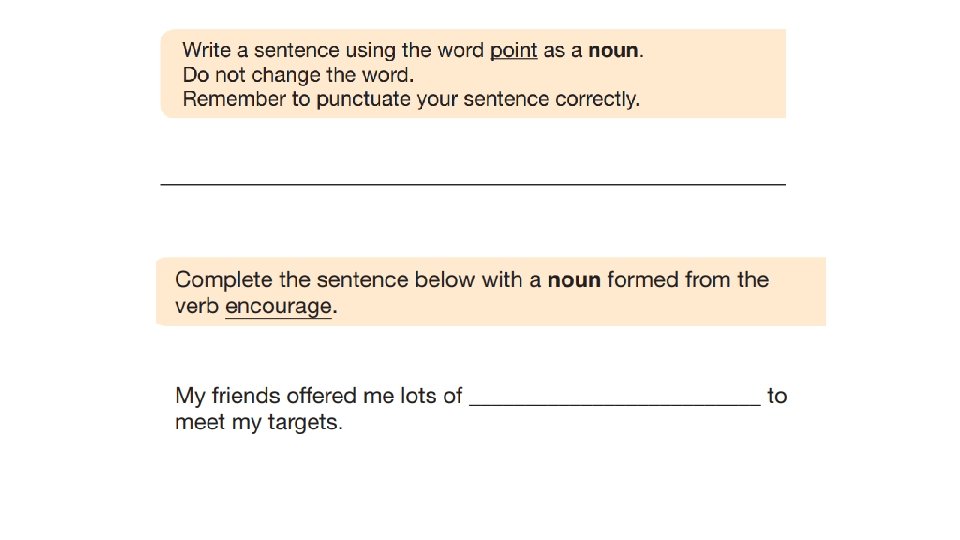
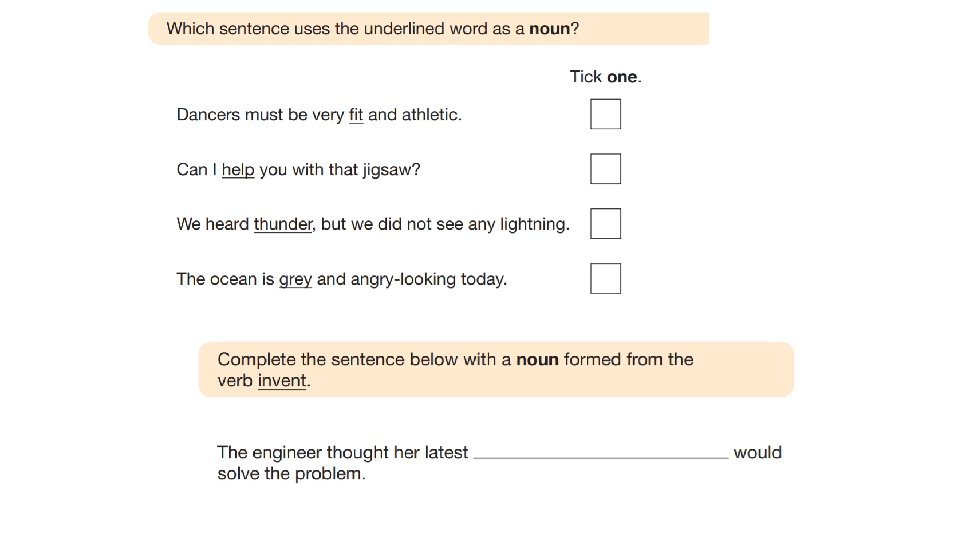
Adjectives • Adjectives describe a noun • Find the noun, find the adjectives! • They can go before or after a noun • E. g. The red pen or the pen is red.
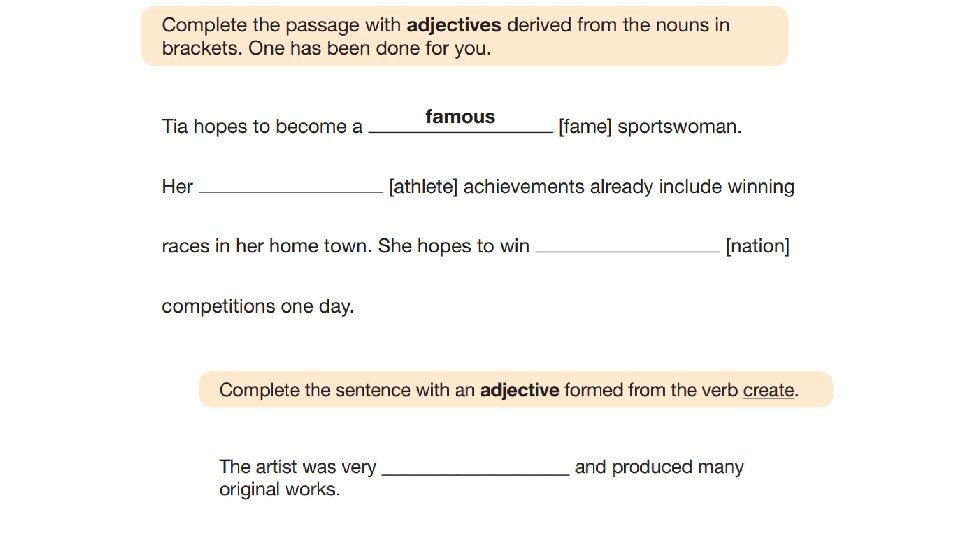
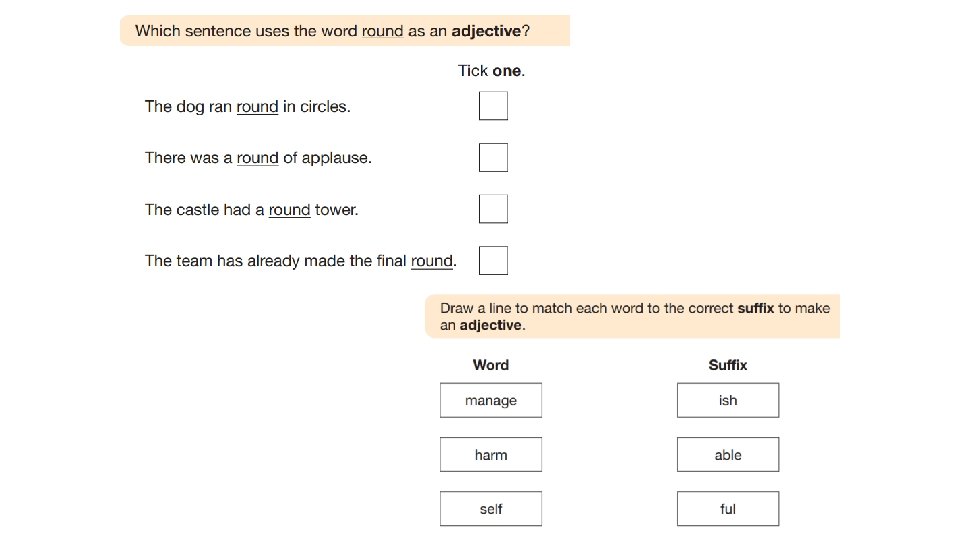
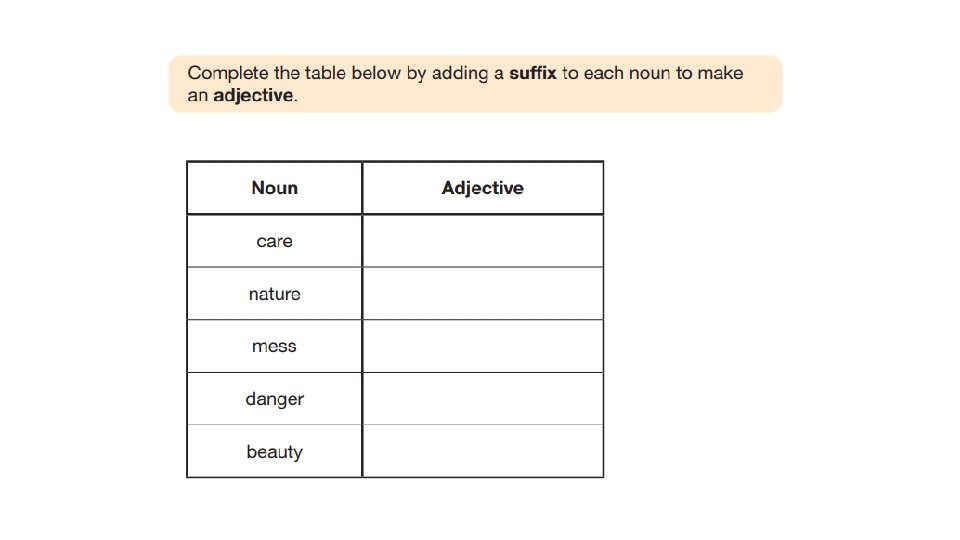
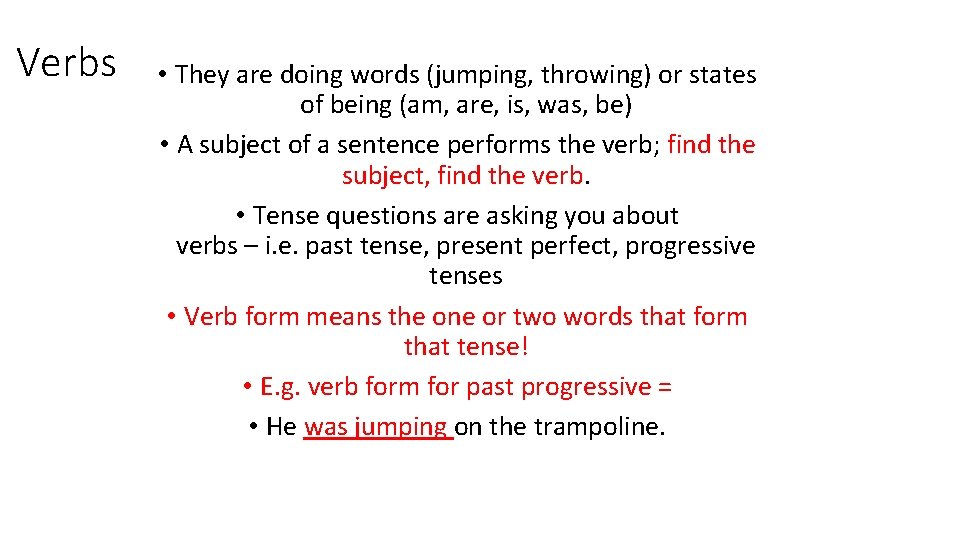
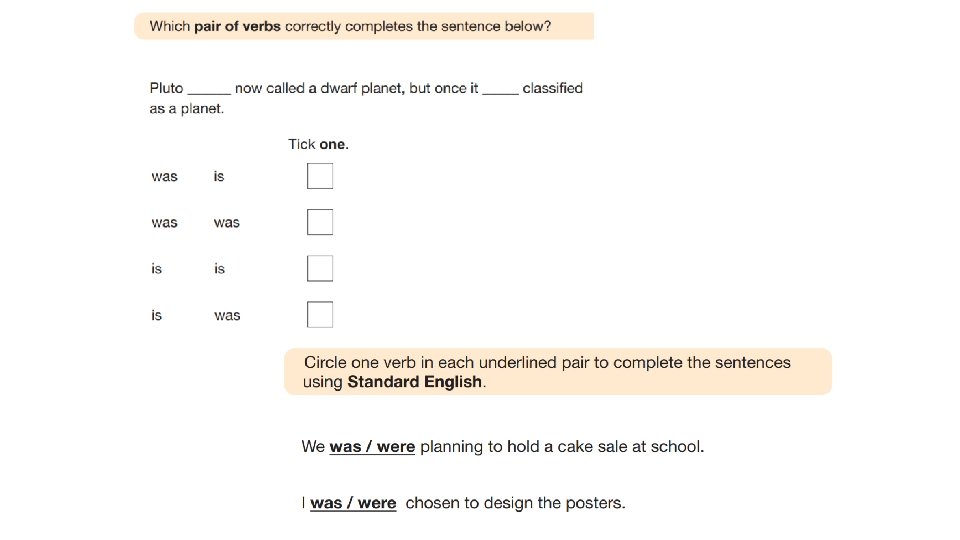
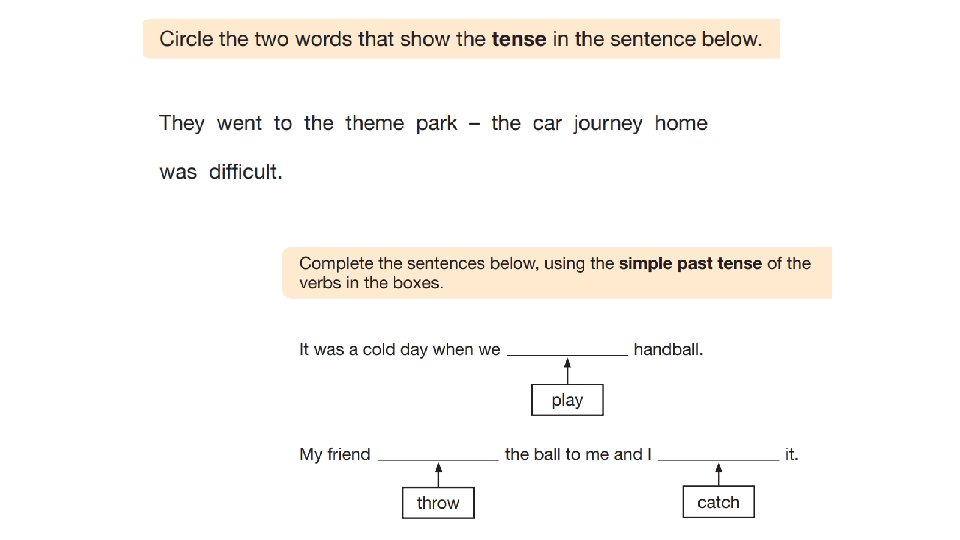
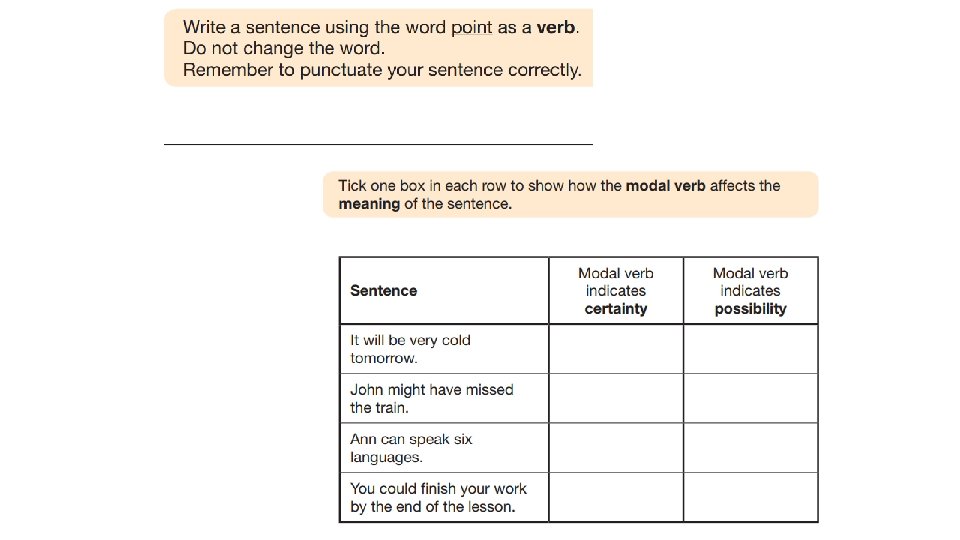
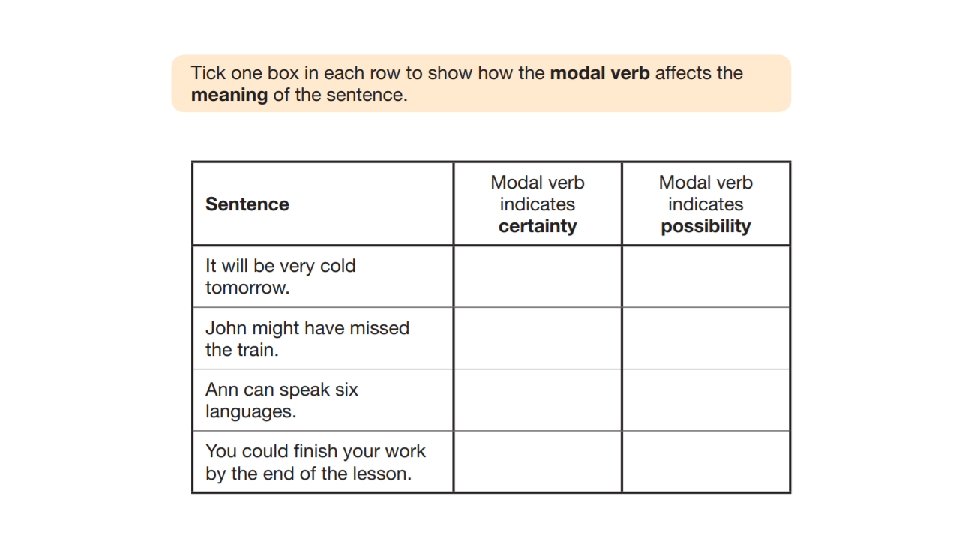
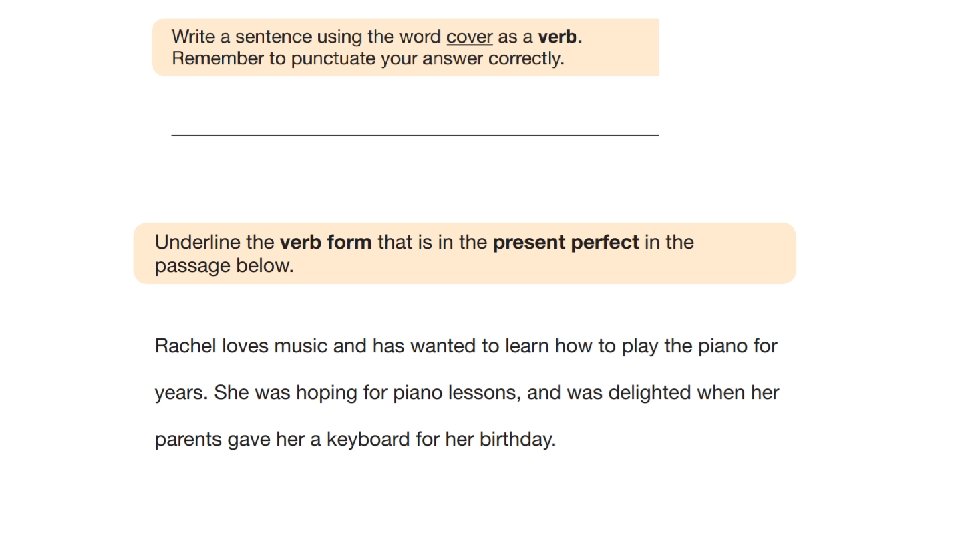
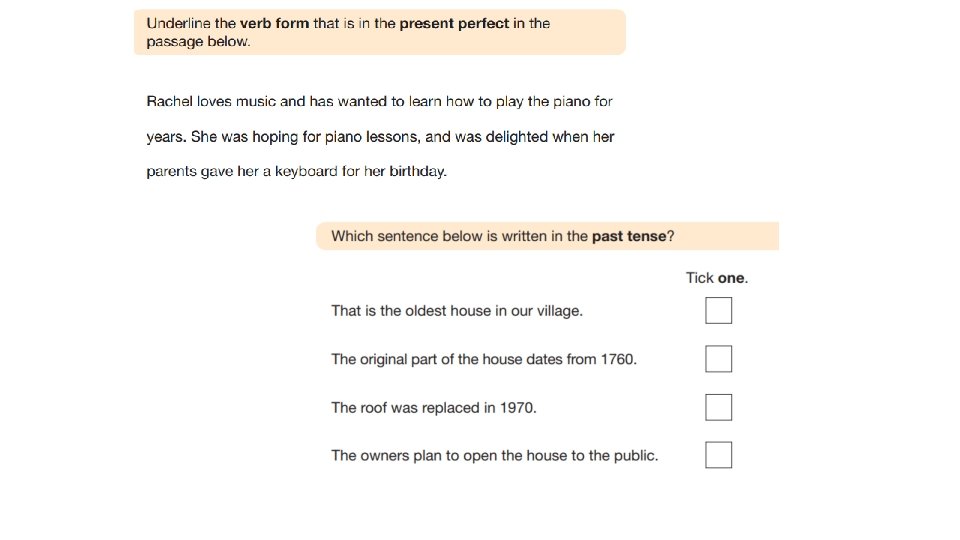
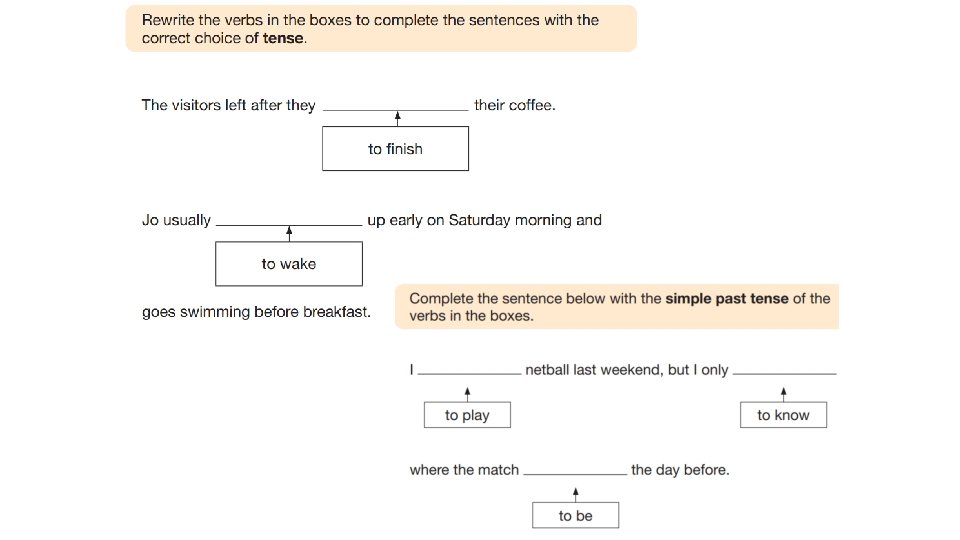
Verbs • They are doing words (jumping, throwing) or states of being (am, are, is, was, be) • A subject of a sentence performs the verb; find the subject, find the verb. • Tense questions are asking you about verbs – i. e. past tense, present perfect, progressive tenses • Verb form means the one or two words that form that tense! • E. g. verb form for past progressive = • He was jumping on the trampoline.
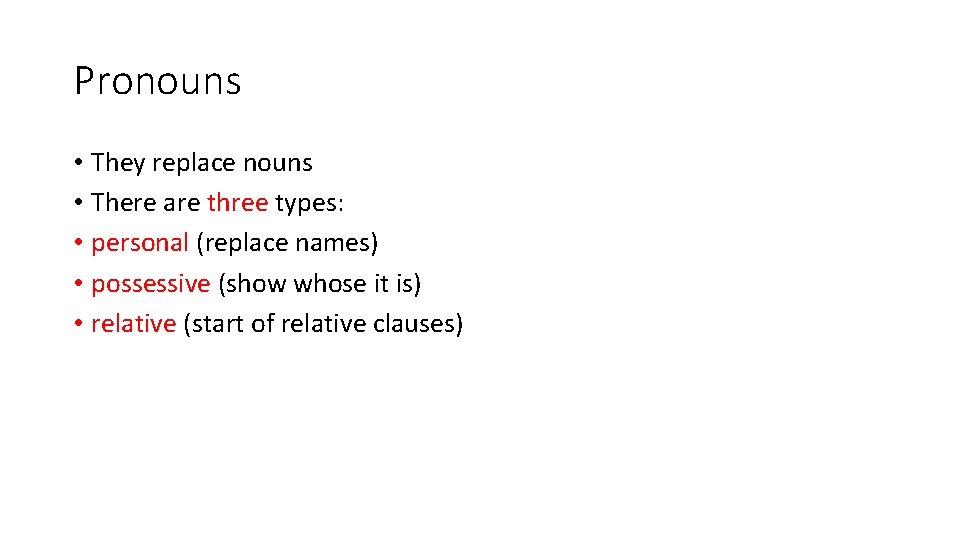
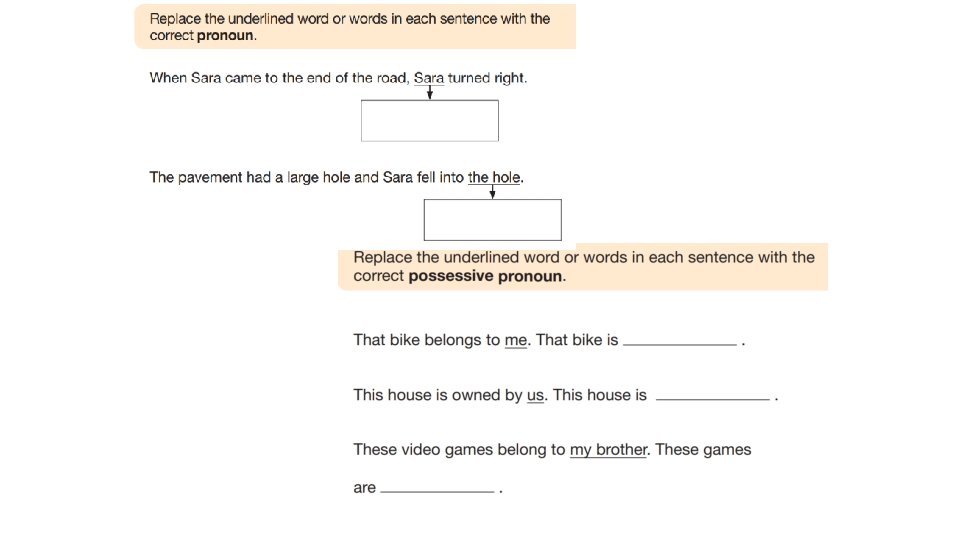
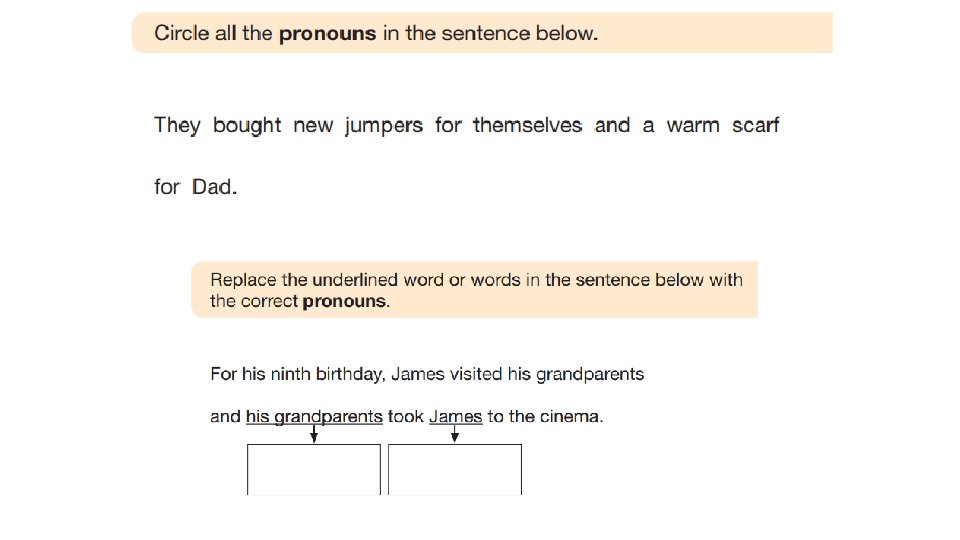
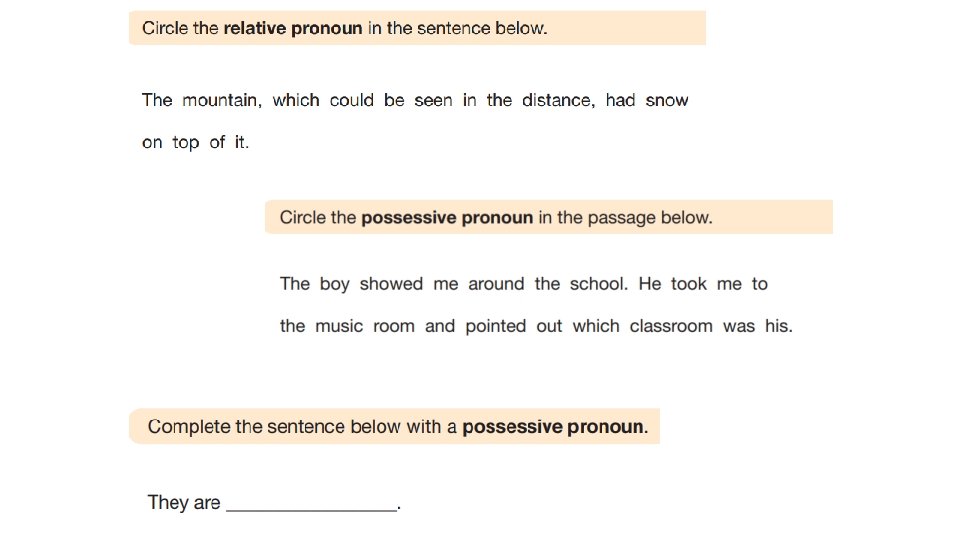
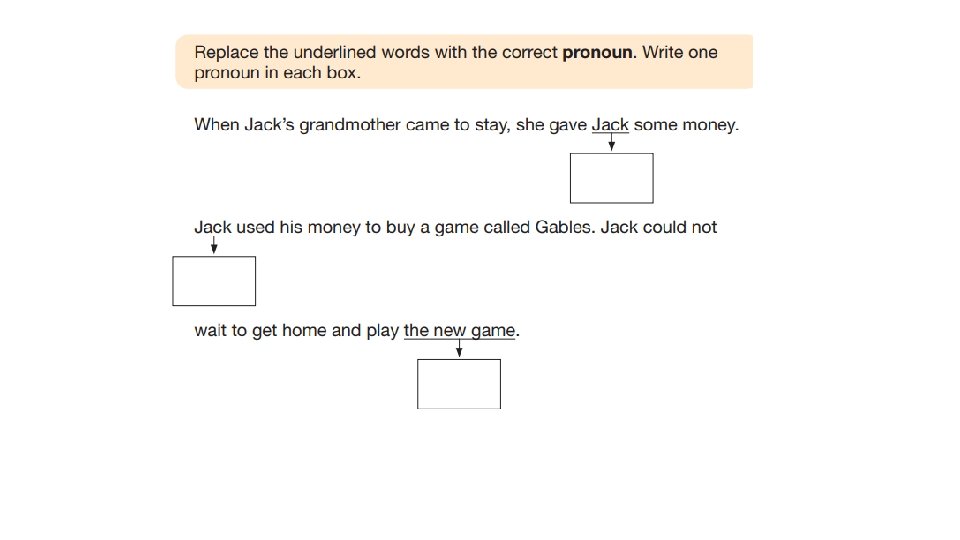
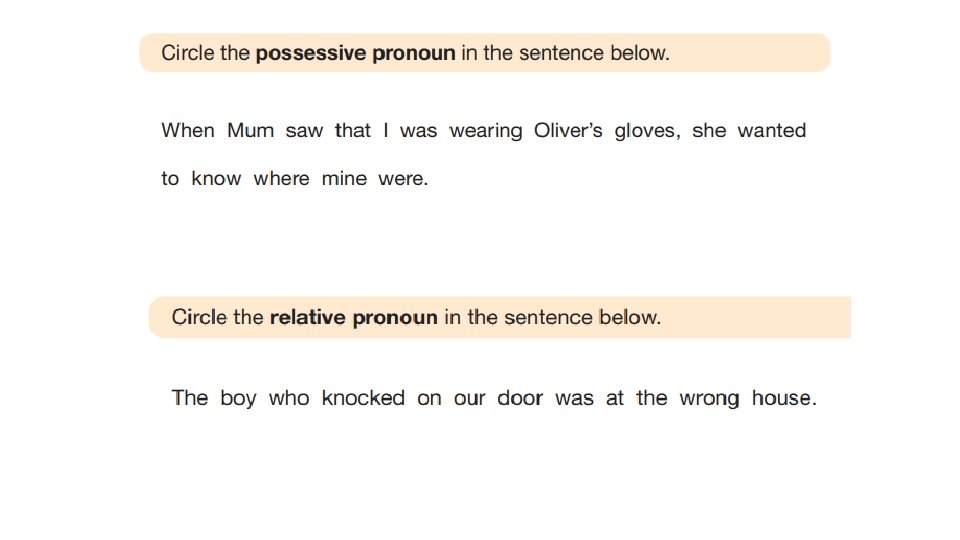
Pronouns • They replace nouns • There are three types: • personal (replace names) • possessive (show whose it is) • relative (start of relative clauses)
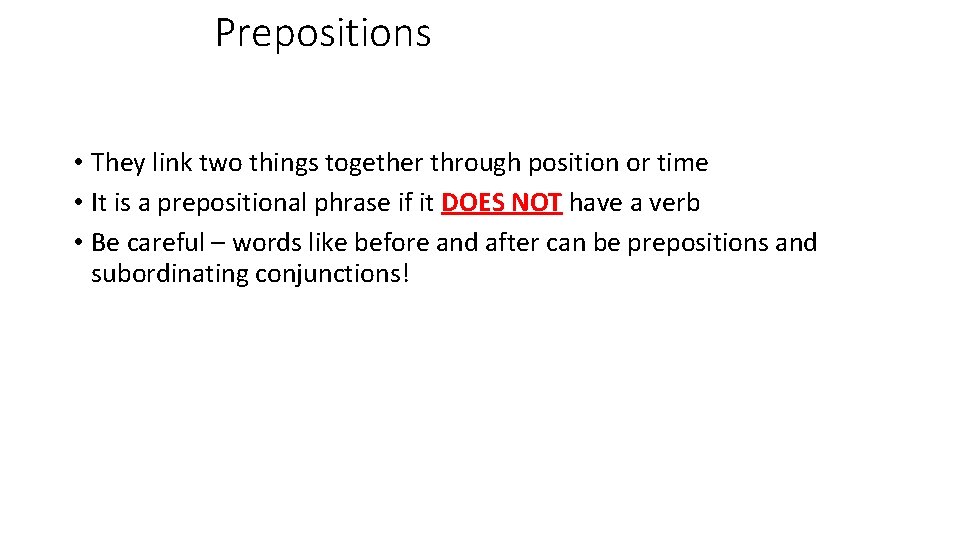
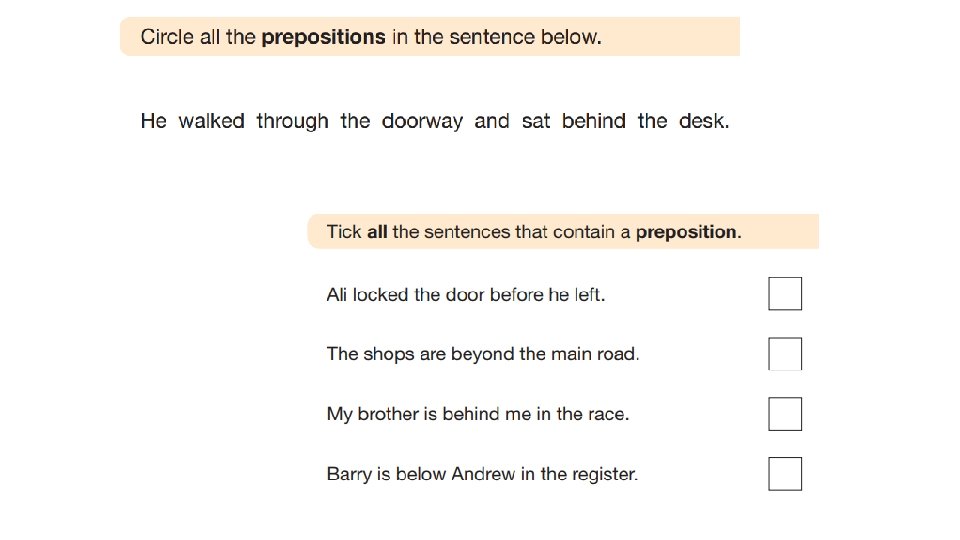
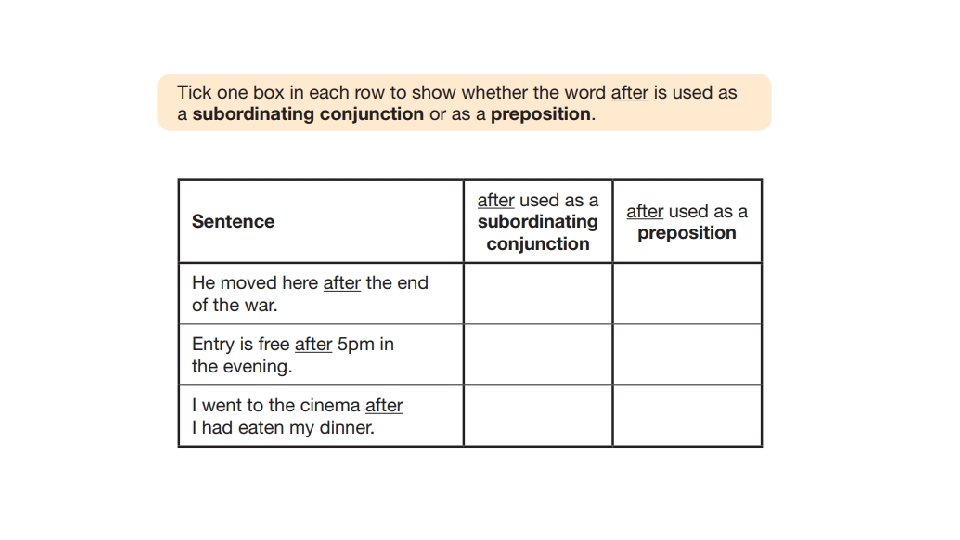
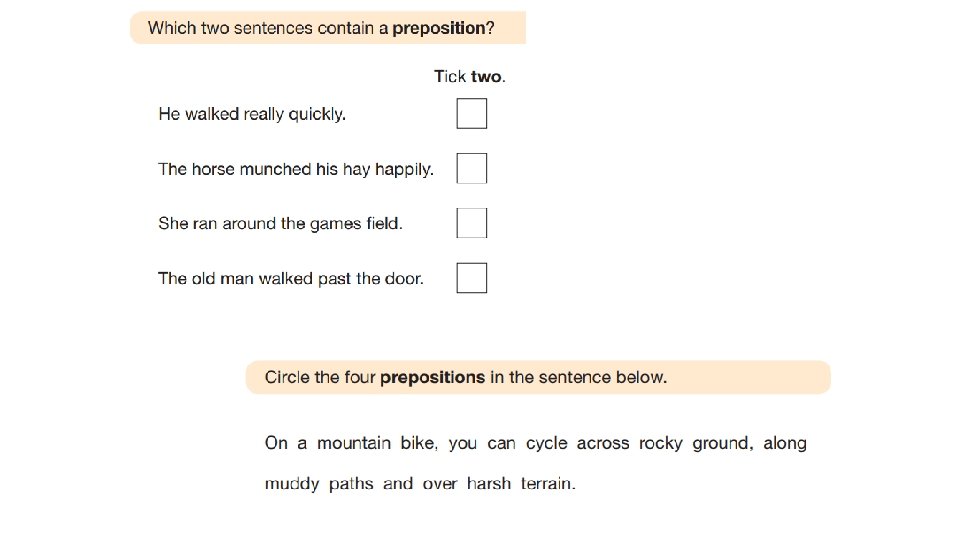
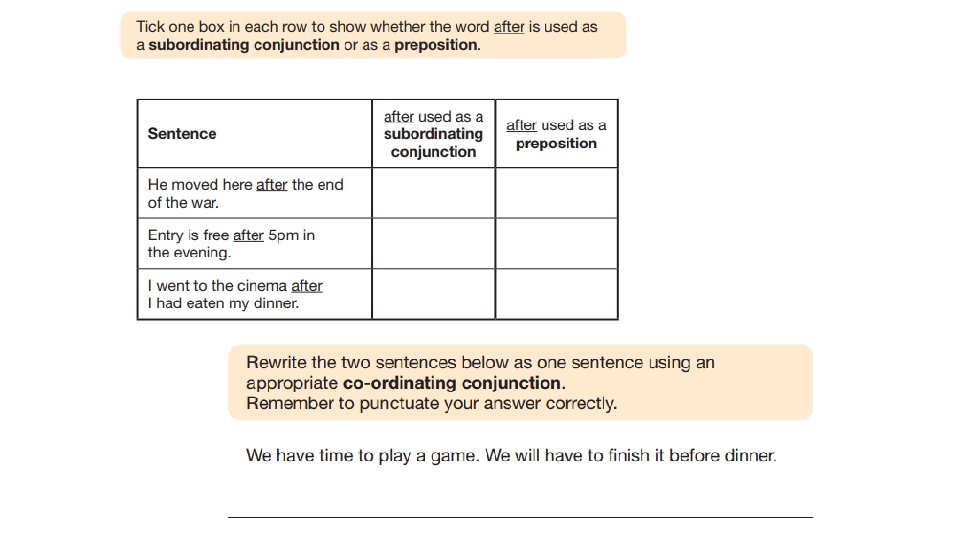
Prepositions • They link two things together through position or time • It is a prepositional phrase if it DOES NOT have a verb • Be careful – words like before and after can be prepositions and subordinating conjunctions!
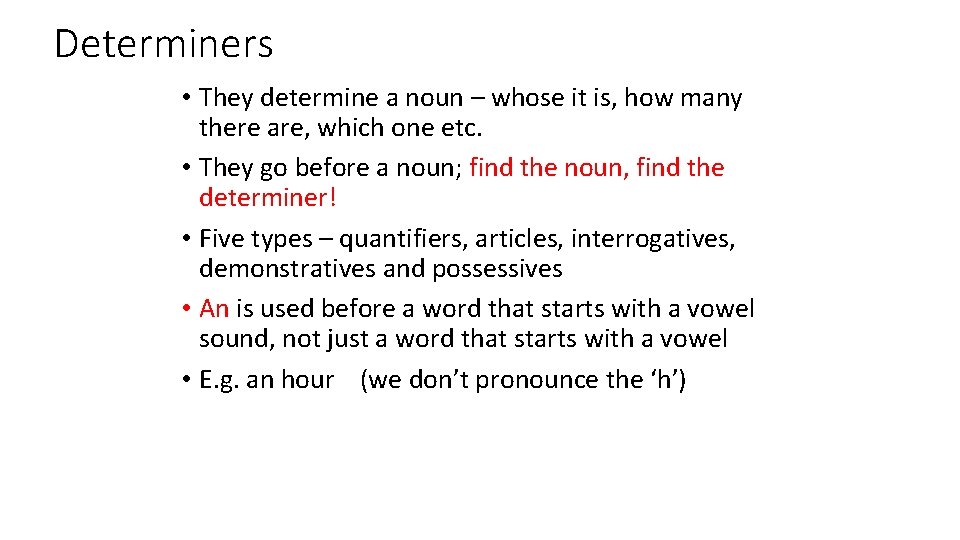
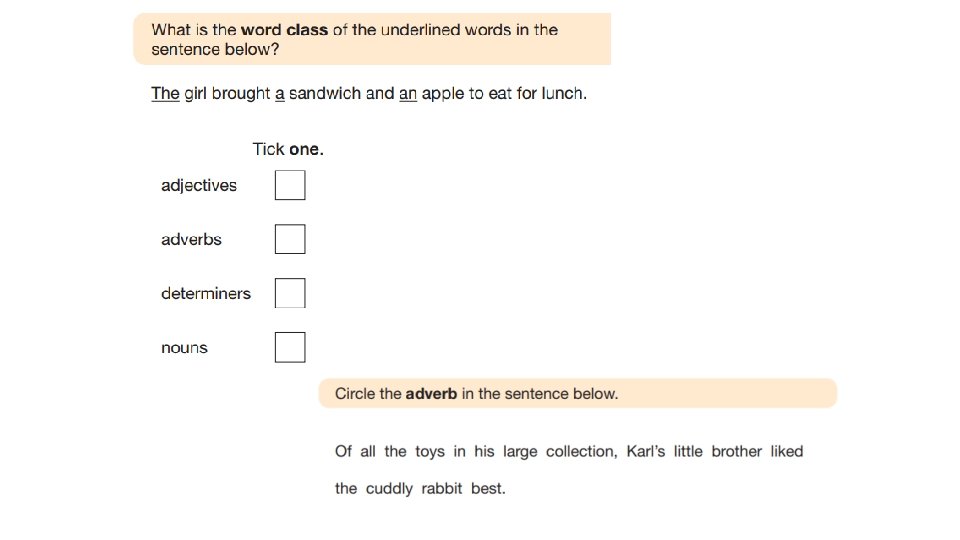
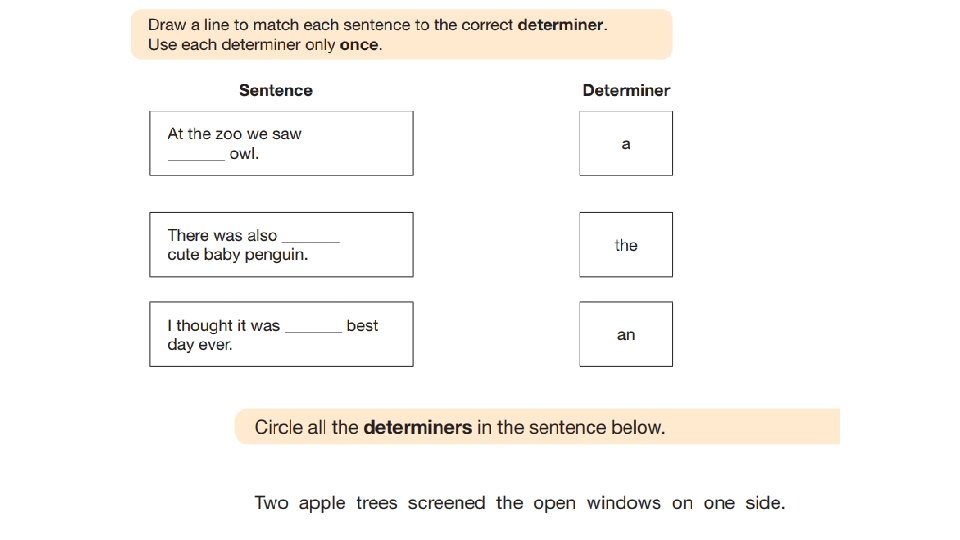
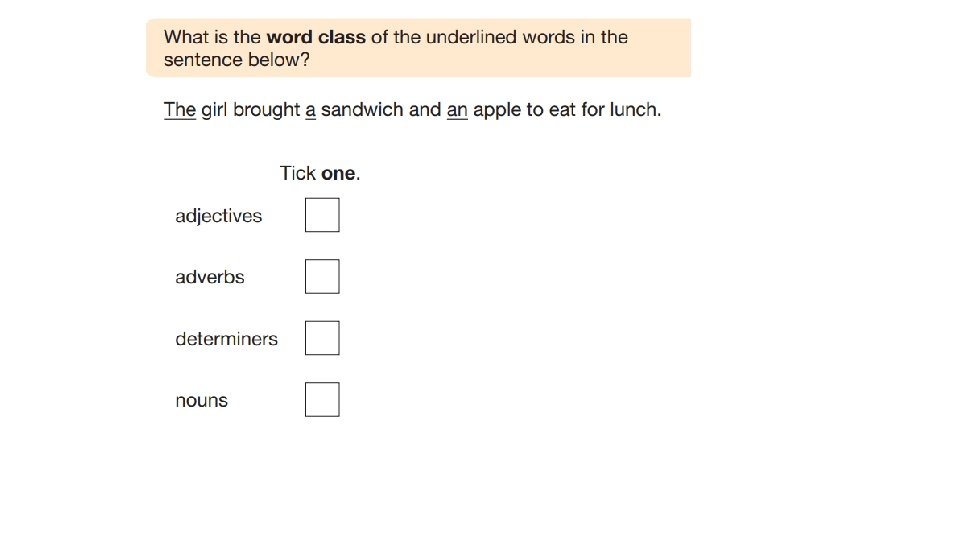
Determiners • They determine a noun – whose it is, how many there are, which one etc. • They go before a noun; find the noun, find the determiner! • Five types – quantifiers, articles, interrogatives, demonstratives and possessives • An is used before a word that starts with a vowel sound, not just a word that starts with a vowel • E. g. an hour (we don’t pronounce the ‘h’)
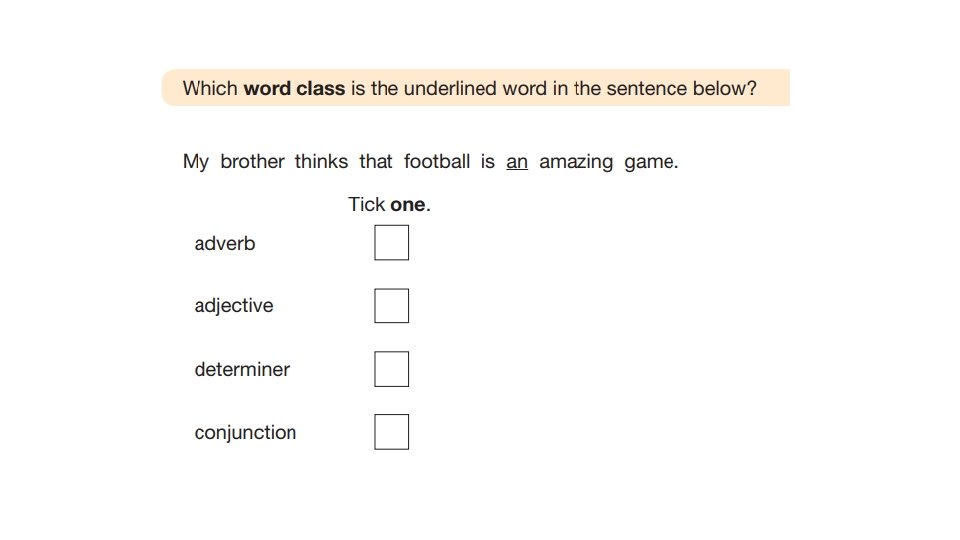
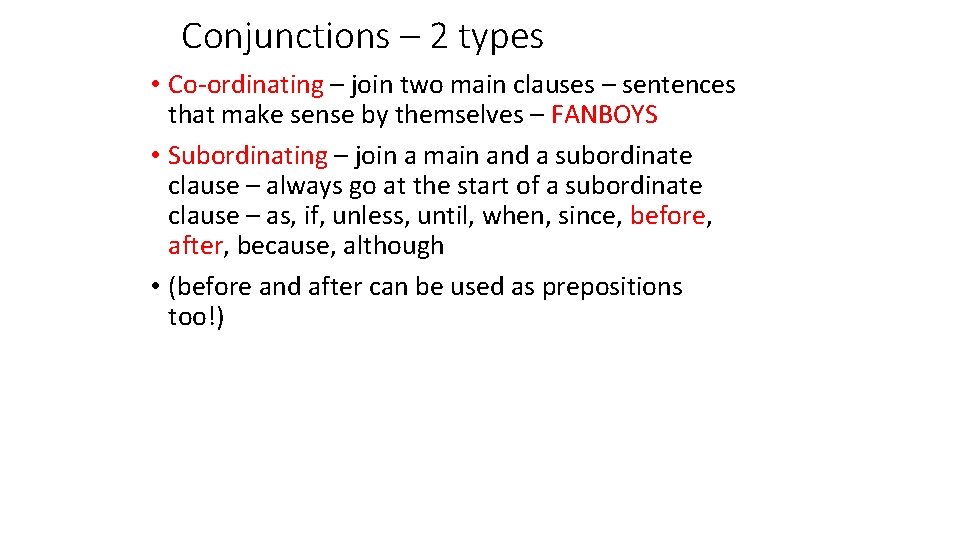
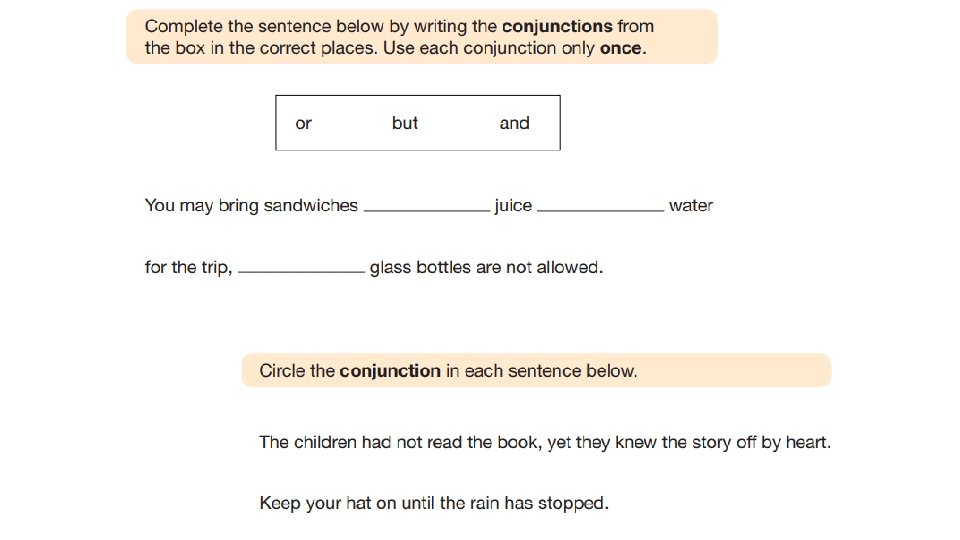
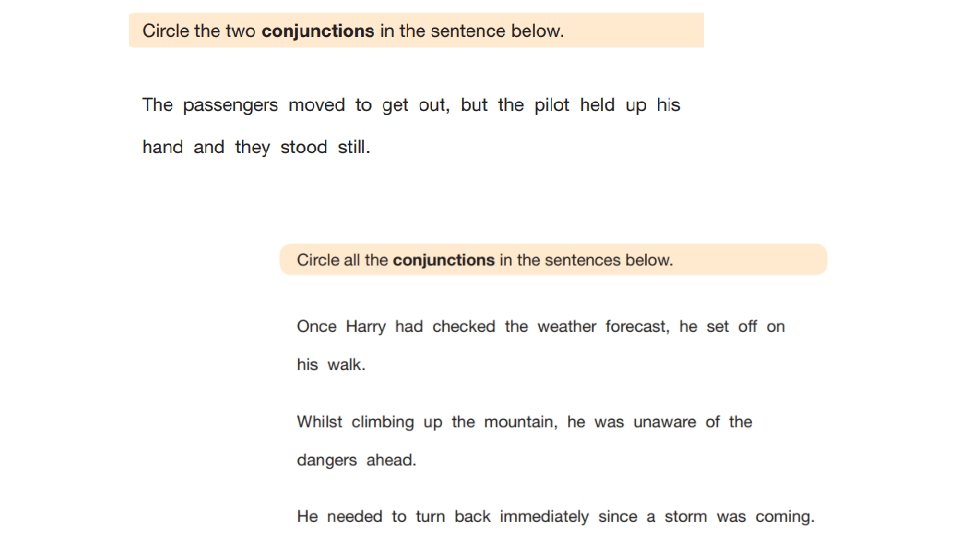
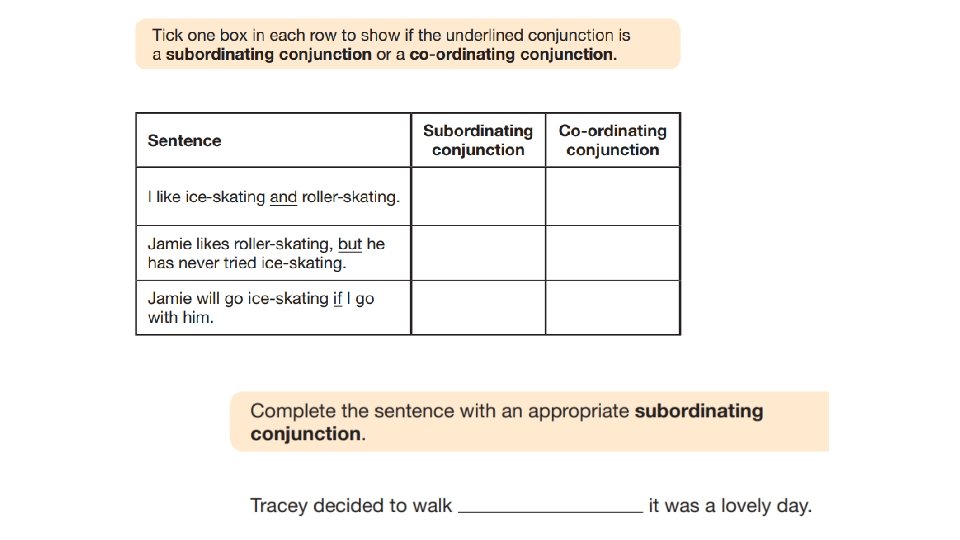
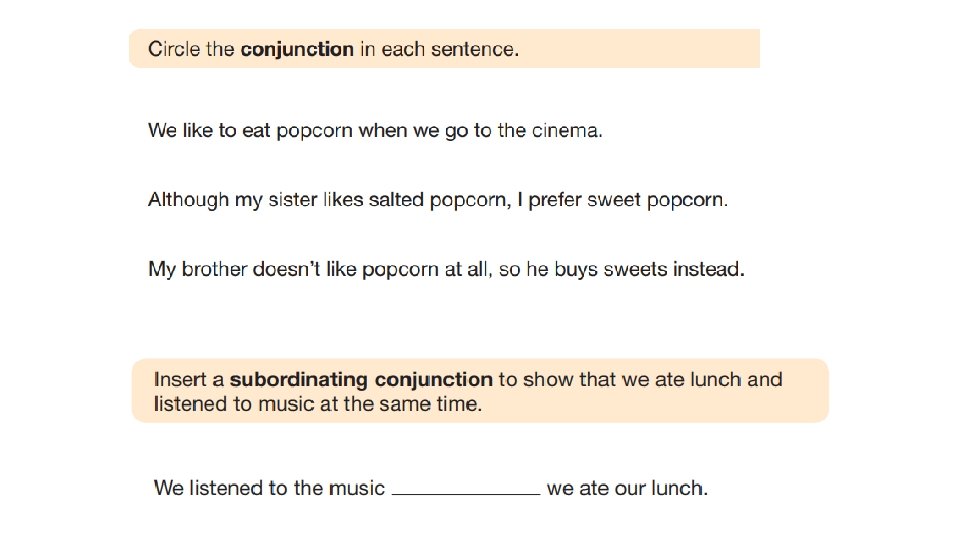
Conjunctions – 2 types • Co-ordinating – join two main clauses – sentences that make sense by themselves – FANBOYS • Subordinating – join a main and a subordinate clause – always go at the start of a subordinate clause – as, if, unless, until, when, since, before, after, because, although • (before and after can be used as prepositions too!)
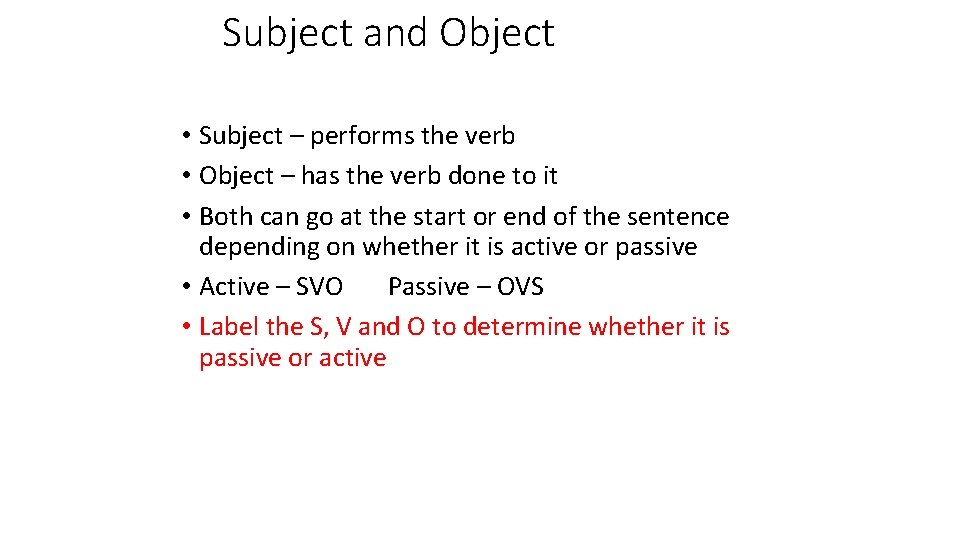
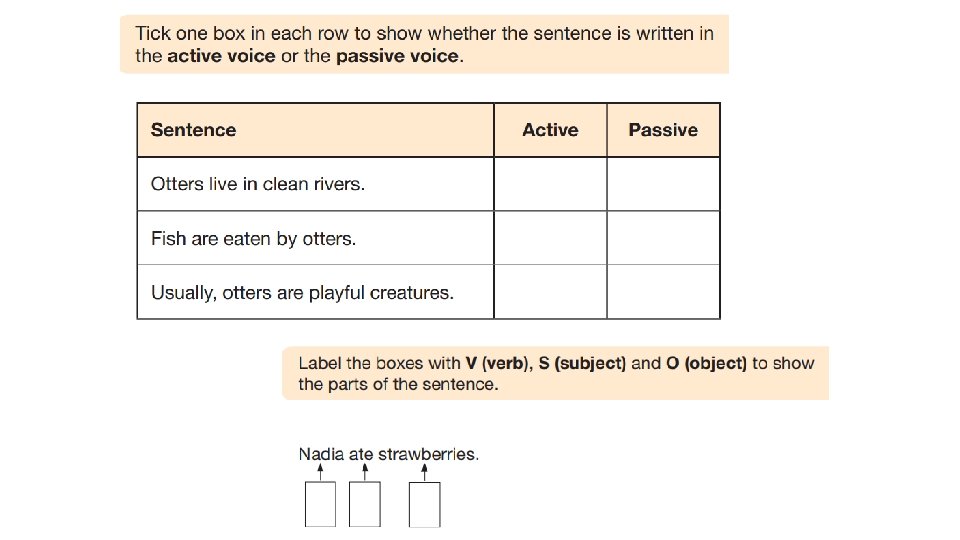
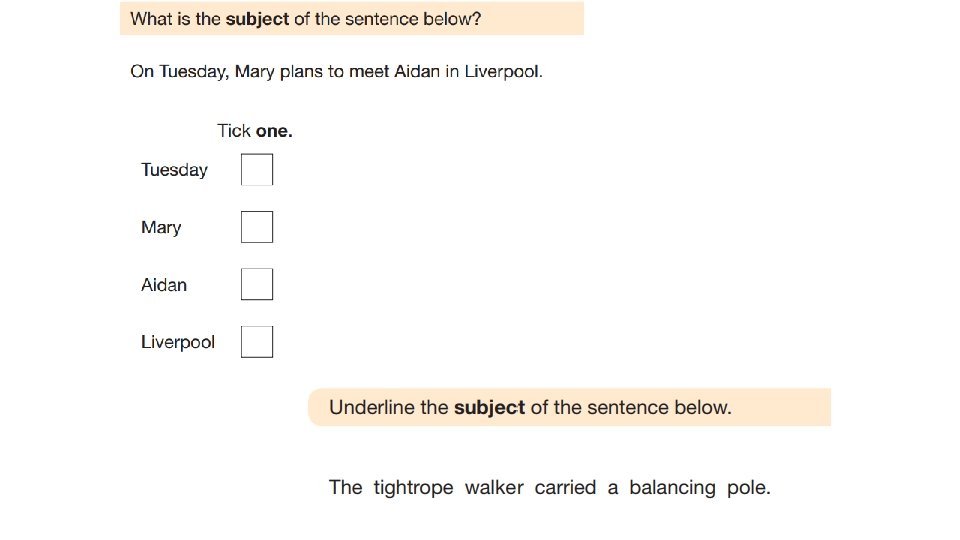
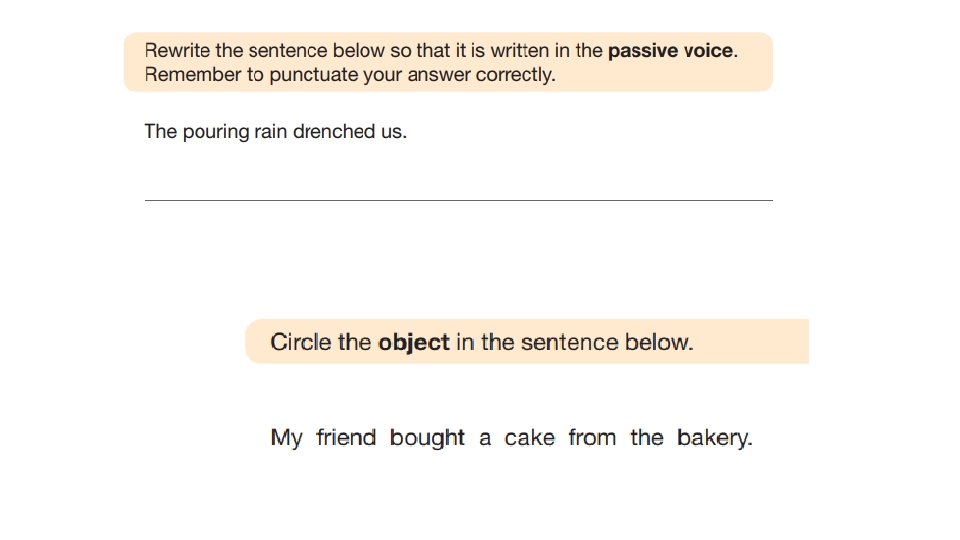
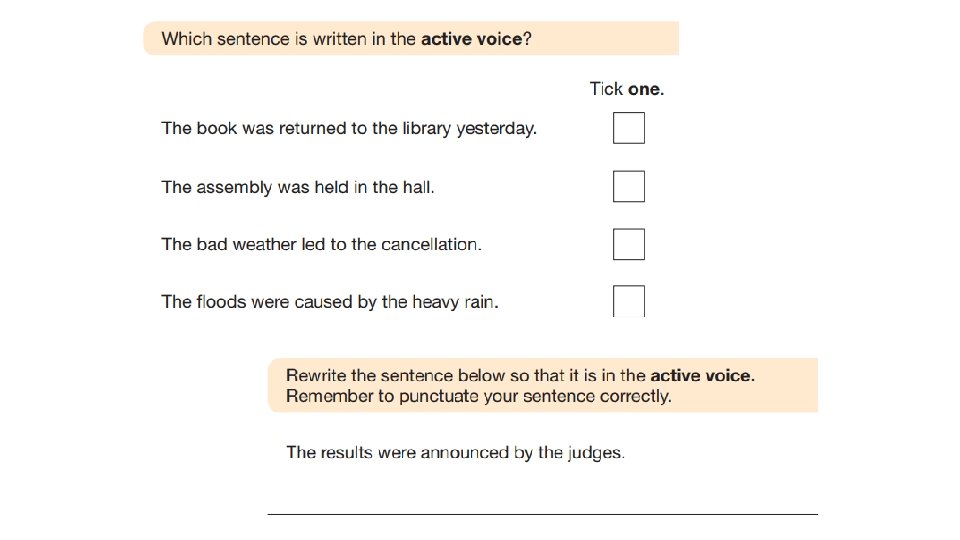
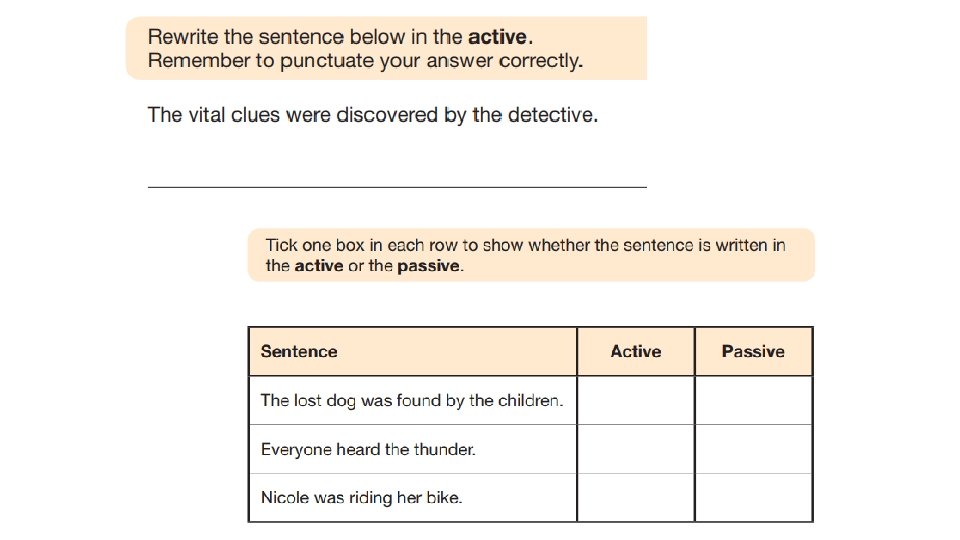
Subject and Object • Subject – performs the verb • Object – has the verb done to it • Both can go at the start or end of the sentence depending on whether it is active or passive • Active – SVO Passive – OVS • Label the S, V and O to determine whether it is passive or active
- Slides: 48