
Adverbs can be confused with adjectives which also

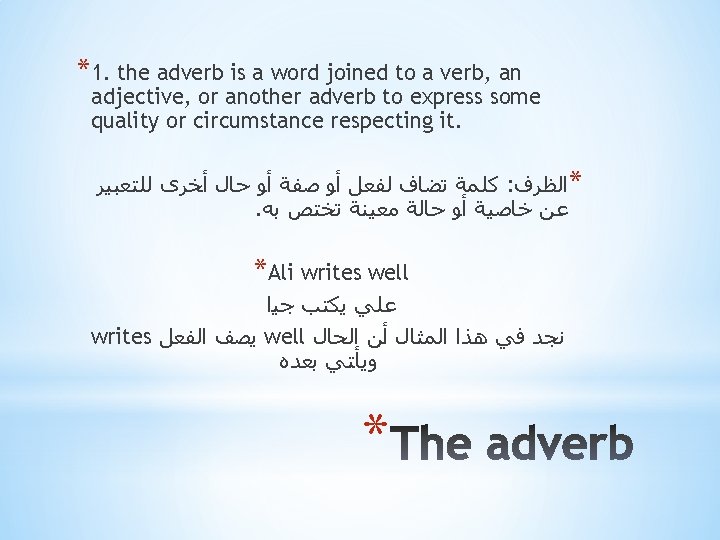
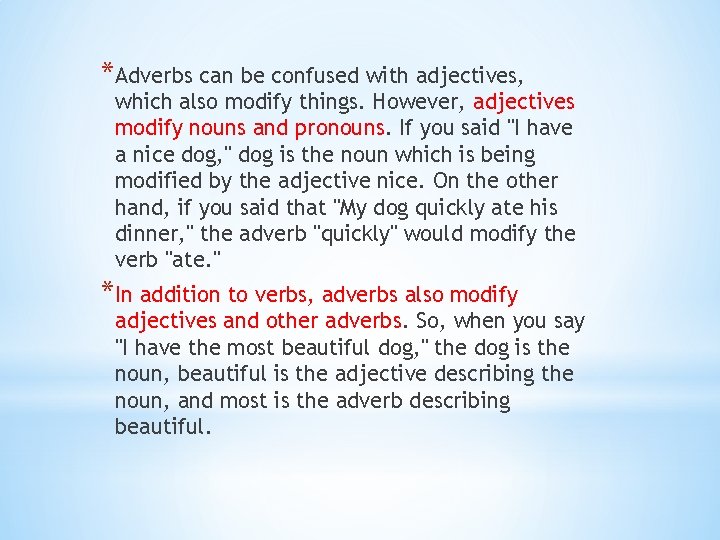
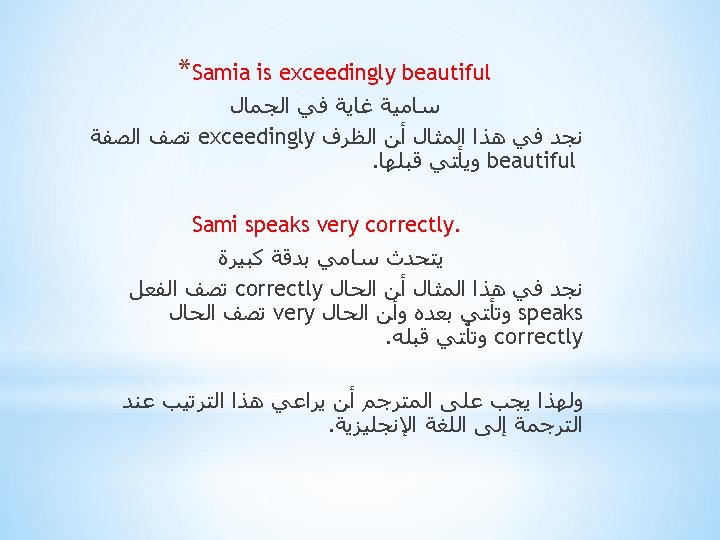
*Adverbs can be confused with adjectives, which also modify things. However, adjectives modify nouns and pronouns. If you said "I have a nice dog, " dog is the noun which is being modified by the adjective nice. On the other hand, if you said that "My dog quickly ate his dinner, " the adverb "quickly" would modify the verb "ate. " *In addition to verbs, adverbs also modify adjectives and other adverbs. So, when you say "I have the most beautiful dog, " the dog is the noun, beautiful is the adjective describing the noun, and most is the adverb describing beautiful.
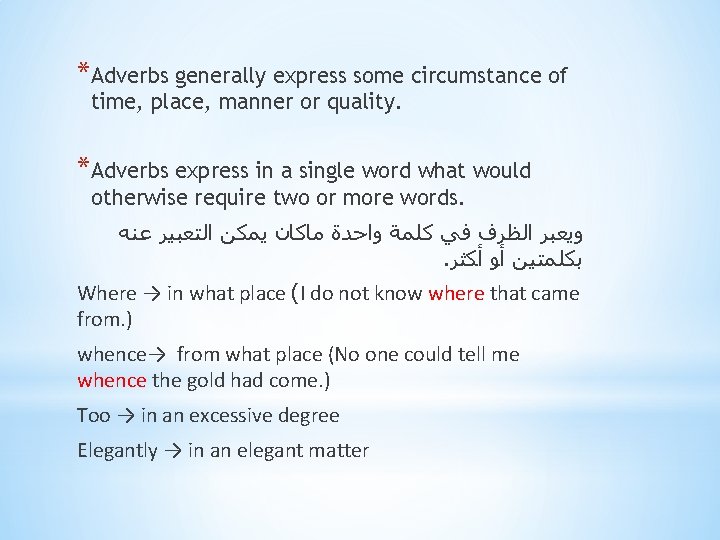
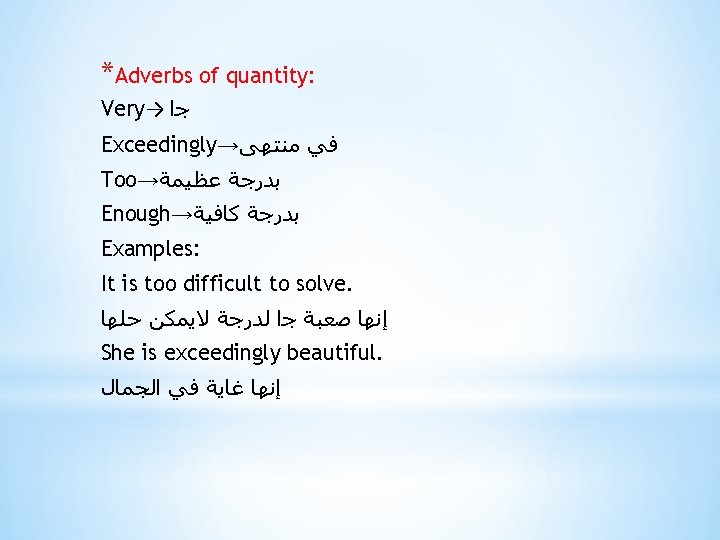
*Adverbs generally express some circumstance of time, place, manner or quality. *Adverbs express in a single word what would otherwise require two or more words. ﻭﻳﻌﺒﺮ ﺍﻟﻈﺮﻑ ﻓﻲ ﻛﻠﻤﺔ ﻭﺍﺣﺪﺓ ﻣﺎﻛﺎﻥ ﻳﻤﻜﻦ ﺍﻟﺘﻌﺒﻴﺮ ﻋﻨﻪ . ﺑﻜﻠﻤﺘﻴﻦ ﺃﻮ ﺃﻜﺜﺮ Where → in what place (I do not know where that came from. ) whence→ from what place (No one could tell me whence the gold had come. ) Too → in an excessive degree Elegantly → in an elegant matter
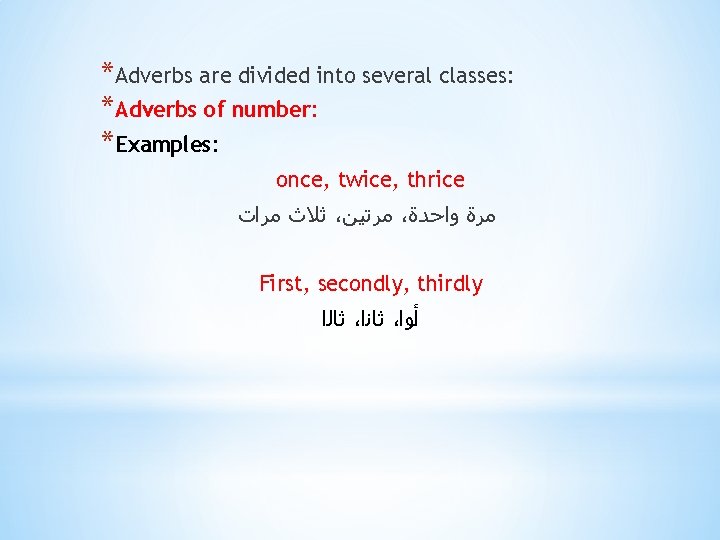
*Adverbs are divided into several classes: *Adverbs of number: *Examples: once, twice, thrice ﺛﻼﺙ ﻣﺮﺍﺕ ، ﻣﺮﺗﻴﻦ ، ﻣﺮﺓ ﻭﺍﺣﺪﺓ First, secondly, thirdly ﺛﺎﻟﺍ ، ﺛﺎﻧﺍ ، ﺃﻮﺍ
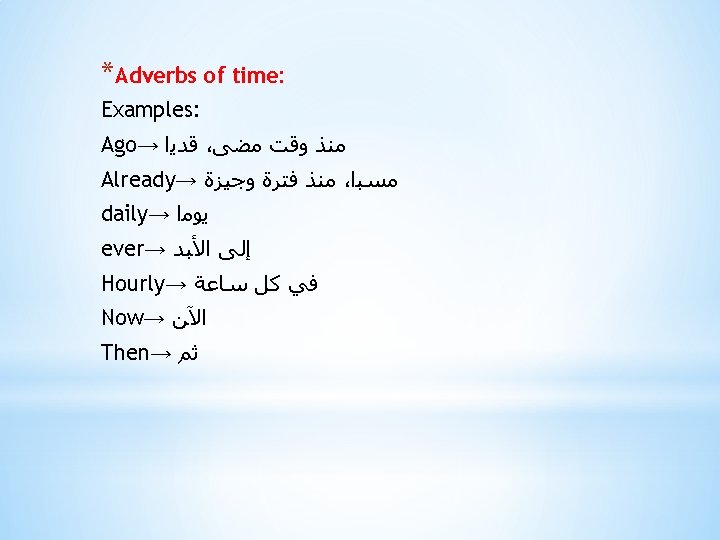
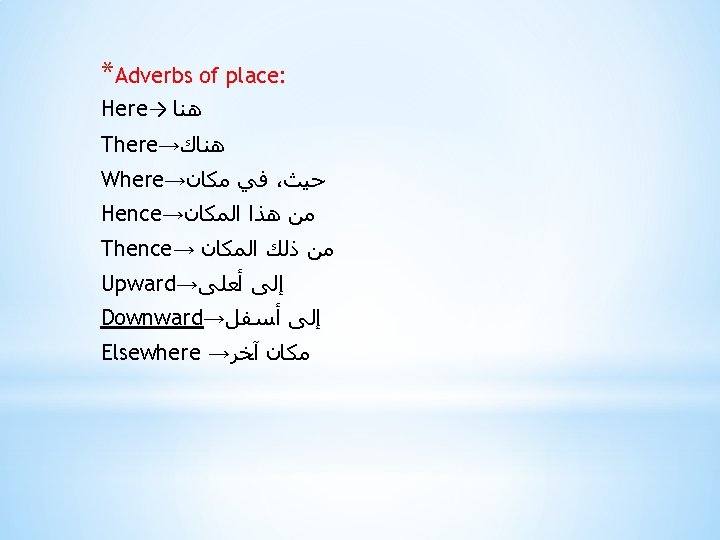
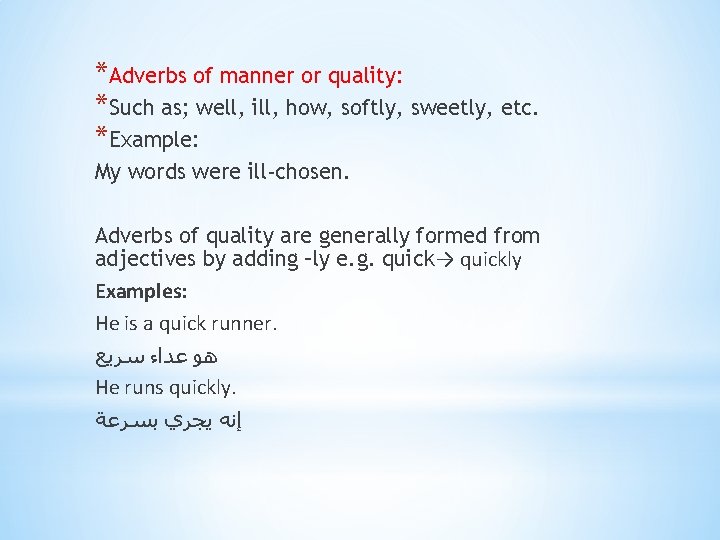
*Adverbs of manner or quality: *Such as; well, ill, how, softly, sweetly, etc. *Example: My words were ill-chosen. Adverbs of quality are generally formed from adjectives by adding –ly e. g. quick→ quickly Examples: He is a quick runner. ﻫﻮ ﻋﺪﺍﺀ ﺳﺮﻳﻊ He runs quickly. ﺇﻧﻪ ﻳﺠﺮﻱ ﺑﺴﺮﻋﺔ
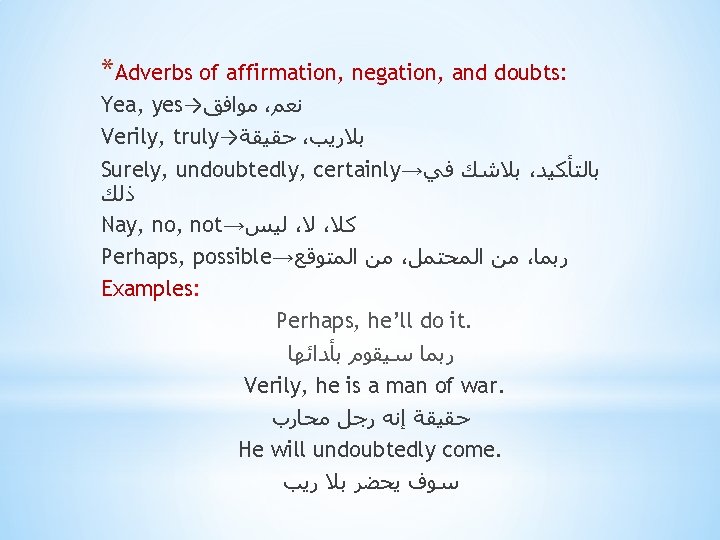
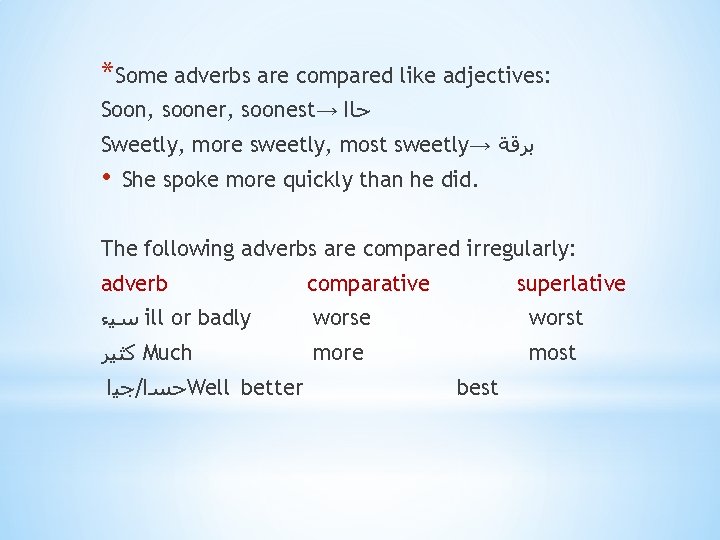
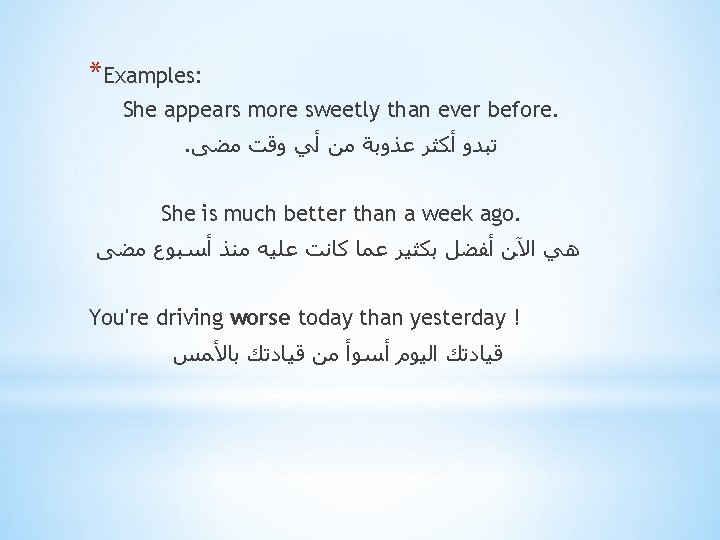
*Some adverbs are compared like adjectives: Soon, sooner, soonest→ ﺣﺎﺍ Sweetly, more sweetly, most sweetly→ ﺑﺮﻗﺔ • She spoke more quickly than he did. The following adverbs are compared irregularly: adverb comparative ﺳﻴﺀ ill or badly worse worst ﻛﺜﻴﺮ Much more most ﺟﻴﺍ / ﺣﺴﺍ Well better superlative best
*Some adverbs are formed by prefixing a to a noun or an adjective. Afar ﺑﻌﻴﺍ Ashore ﺑﺎﺗﺠﺎﻩ ﺍﻟﺸﺎﻃﺊ Two or more words together are sometimes used as adverbs. Such a union of words is called an adverbial phrase: Now and then ﻣﻦ ﺣﻴﻦ ﻵﺨﺮ At best ﻓﻲ ﺃﺤﺴﻦ ﺍﻷﺤﻮﺍﻝ ، ﻓﻲ ﺃﺤﺴﻦ ﻇﺮﻭﻓﻪ (If he drops the course now, at best he’ll get incomplete, and he could fail. )
Translate the following: * He swims well. *He ran quickly. *She spoke softly. *The child ran happily towards his mother. *I have nowhere to go. *She ran towards me. *He worked abroad.
*This magazine is published monthly. *I am still hungry. *The water was extremely cold. *You are walking too slowly. *This coffee is too hot. * We seldom cross the river after sunset.
- Slides: 16