
Adverbs and Adverbials Narrative Poetry Just then the
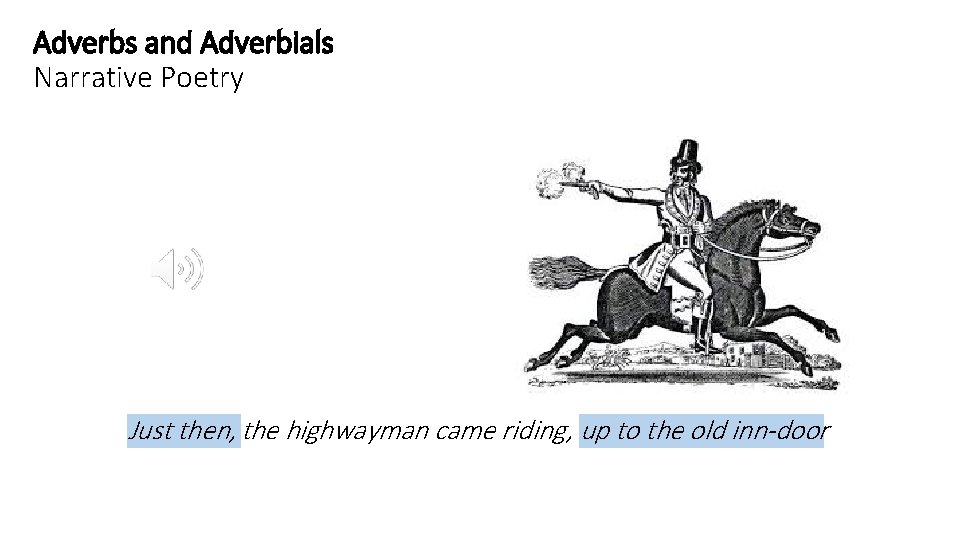
Adverbs and Adverbials Narrative Poetry Just then, the highwayman came riding, up to the old inn-door
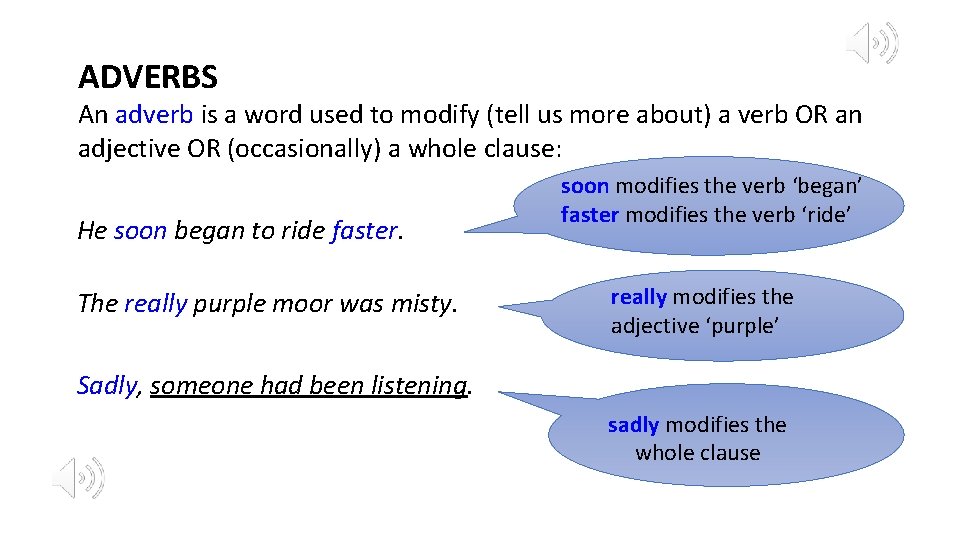
ADVERBS An adverb is a word used to modify (tell us more about) a verb OR an adjective OR (occasionally) a whole clause: He soon began to ride faster. The really purple moor was misty. soon modifies the verb ‘began’ faster modifies the verb ‘ride’ really modifies the adjective ‘purple’ Sadly, someone had been listening. sadly modifies the whole clause
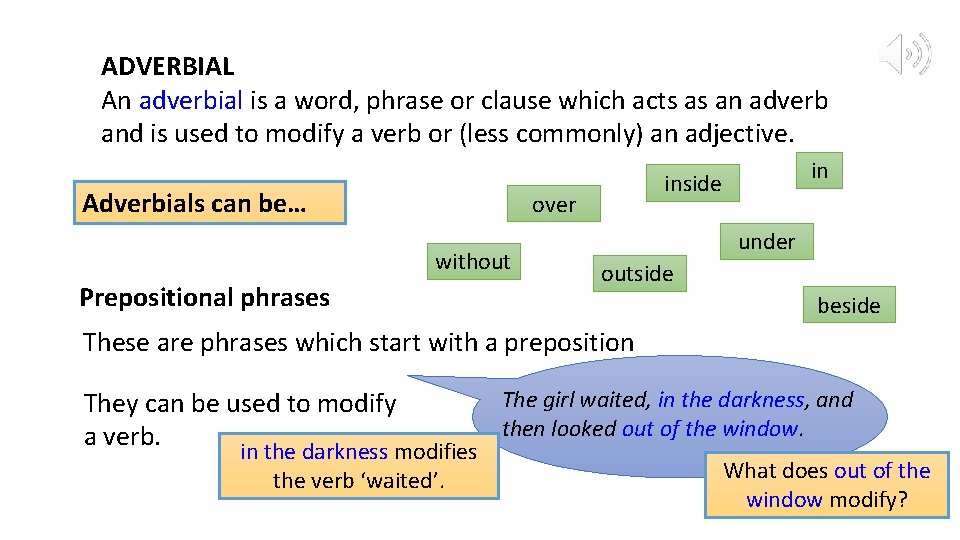
ADVERBIAL An adverbial is a word, phrase or clause which acts as an adverb and is used to modify a verb or (less commonly) an adjective. Adverbials can be… over without Prepositional phrases in inside under outside beside These are phrases which start with a preposition They can be used to modify a verb. in the darkness modifies the verb ‘waited’. The girl waited, in the darkness, and then looked out of the window. What does out of the window modify?
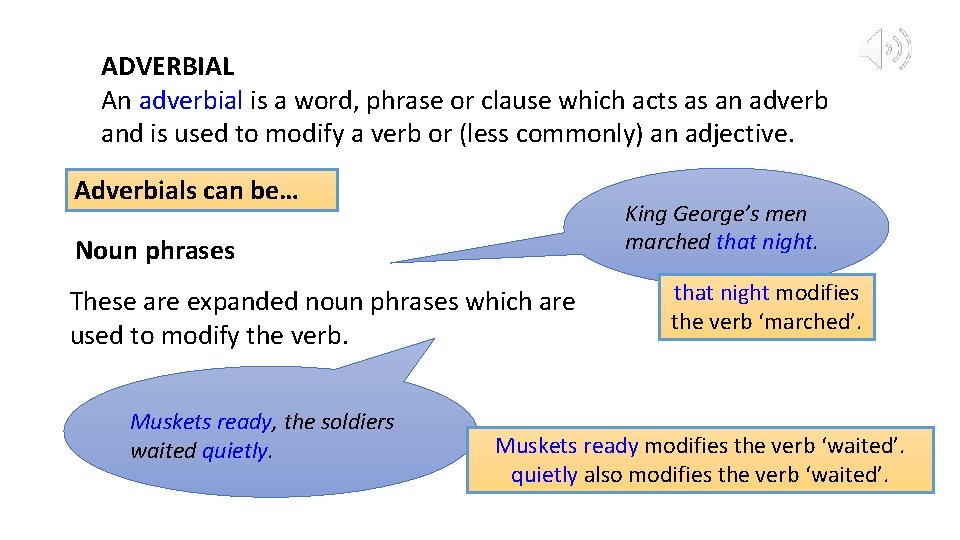
ADVERBIAL An adverbial is a word, phrase or clause which acts as an adverb and is used to modify a verb or (less commonly) an adjective. Adverbials can be… King George’s men marched that night. Noun phrases These are expanded noun phrases which are used to modify the verb. Muskets ready, the soldiers waited quietly. that night modifies the verb ‘marched’. Muskets ready modifies the verb ‘waited’. quietly also modifies the verb ‘waited’.
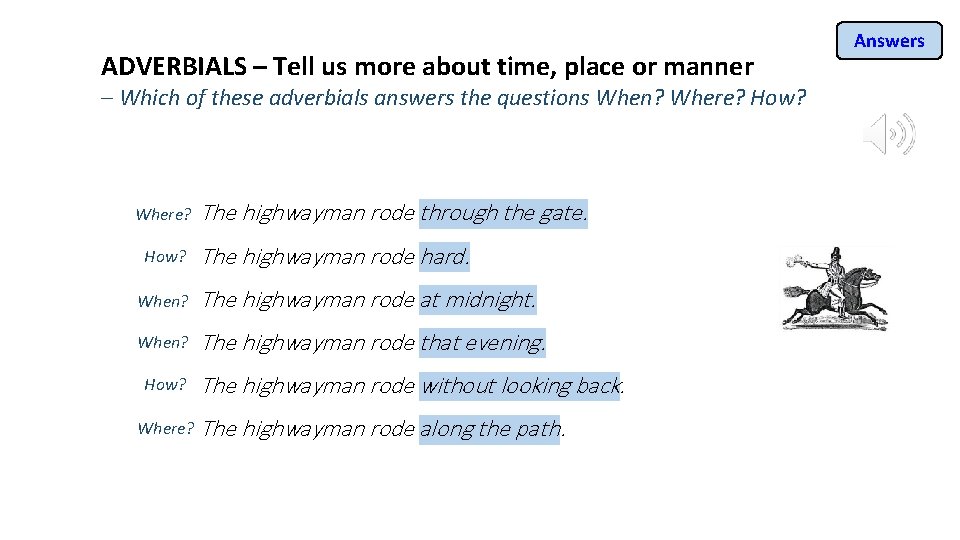
ADVERBIALS – Tell us more about time, place or manner – Which of these adverbials answers the questions When? Where? How? The highwayman rode through the gate. The highwayman rode hard. When? The highwayman rode at midnight. When? The highwayman rode that evening. How? Where? The highwayman rode without looking back. The highwayman rode along the path. Answers
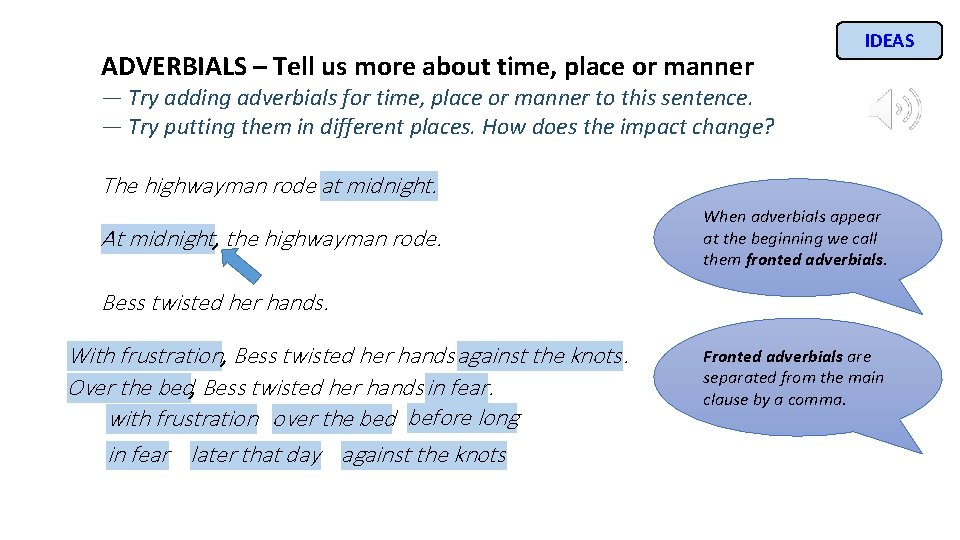
ADVERBIALS – Tell us more about time, place or manner IDEAS — Try adding adverbials for time, place or manner to this sentence. — Try putting them in different places. How does the impact change? The highwayman rode at midnight. At midnight, the highwayman rode. When adverbials appear at the beginning we call them fronted adverbials. Bess twisted her hands. With frustration, Bess twisted her hands against the knots. Over the bed, Bess twisted her hands in fear. with frustration over the bed before long in fear later that day against the knots Fronted adverbials are separated from the main clause by a comma.

Explore more Hamilton Trust Learning Materials at https: //wrht. org. uk/hamilton/.
- Slides: 7