
Adverbs Adverbs An adverb can modify 3 different
Adverbs
Adverbs • An adverb can modify 3 different parts of speech – a verb, an adjective, or another adverb • Adverbs answer the questions Where? When? In What Way? To What Extent? about the verb, adjective, or adverb. • Most adverbs have an –ly ending.

Adverbs That Modify Verbs Where? drove down stay nearby When? report later come tomorrow In What Way? cautiously approached walk quietly To What Extent? hardly counted scarcely escaped

Adverbs That Modify Adjectives • When an adverb modifies an adjective, it usually answers the question: To What Extent? Very old violins are valuable.

Adverbs That Modify Other Adverbs • When an adverb modifies another adverb, it usually answers the question: To What Extent? Some violins are played extremely rarely.
Adverbs That Do Not End With -ly afterward almost very quite often there hard sometimes soon everywhere long later here fast straight Similarly, not all –ly words are adverbs. Lovely, friendly, lively, kindly, lonely, homely, and elderly are used as adjectives.
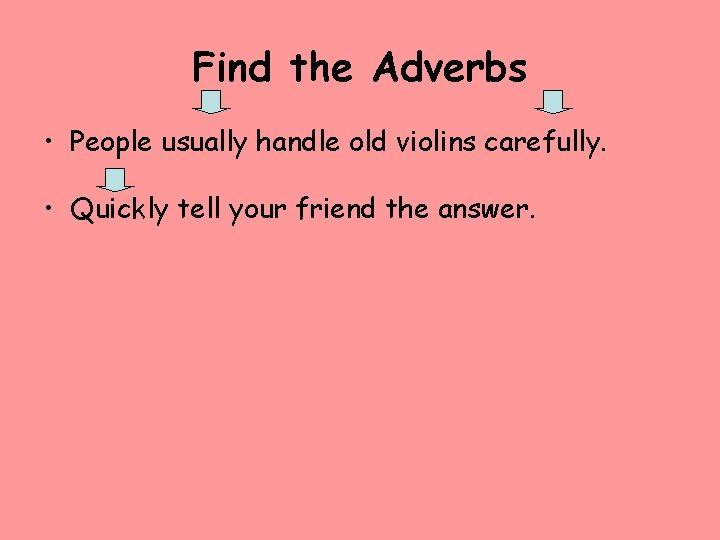
Find the Adverbs • People usually handle old violins carefully. • Quickly tell your friend the answer.
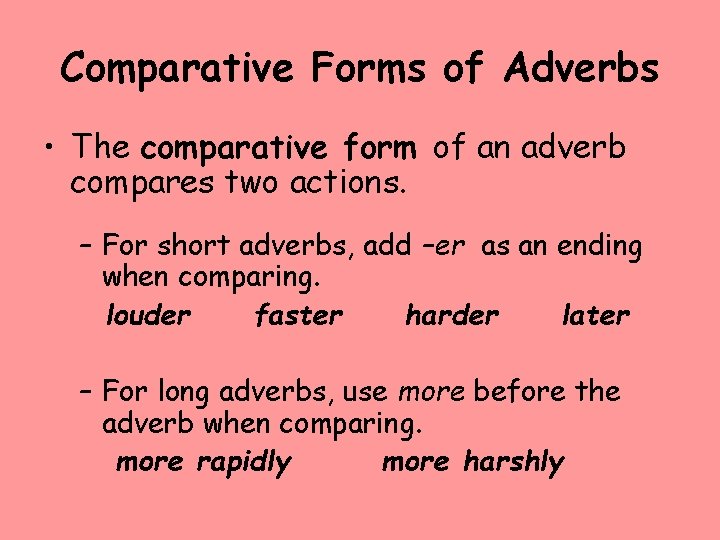
Comparative Forms of Adverbs • The comparative form of an adverb compares two actions. – For short adverbs, add –er as an ending when comparing. louder faster harder later – For long adverbs, use more before the adverb when comparing. more rapidly more harshly
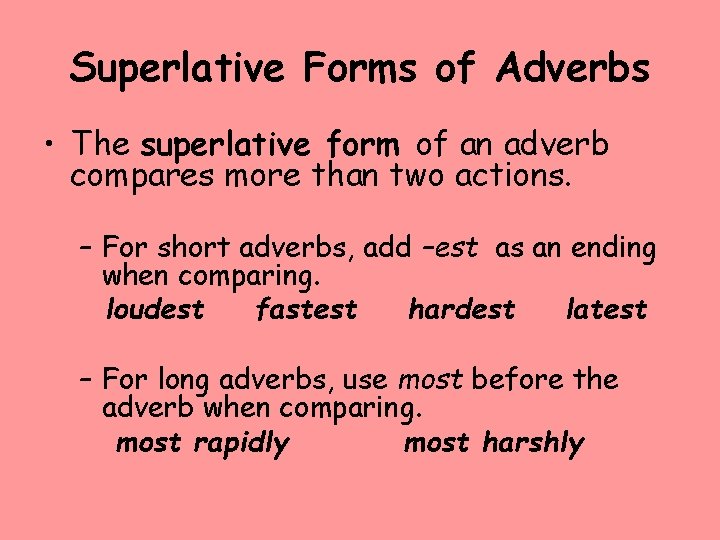
Superlative Forms of Adverbs • The superlative form of an adverb compares more than two actions. – For short adverbs, add –est as an ending when comparing. loudest fastest hardest latest – For long adverbs, use most before the adverb when comparing. most rapidly most harshly
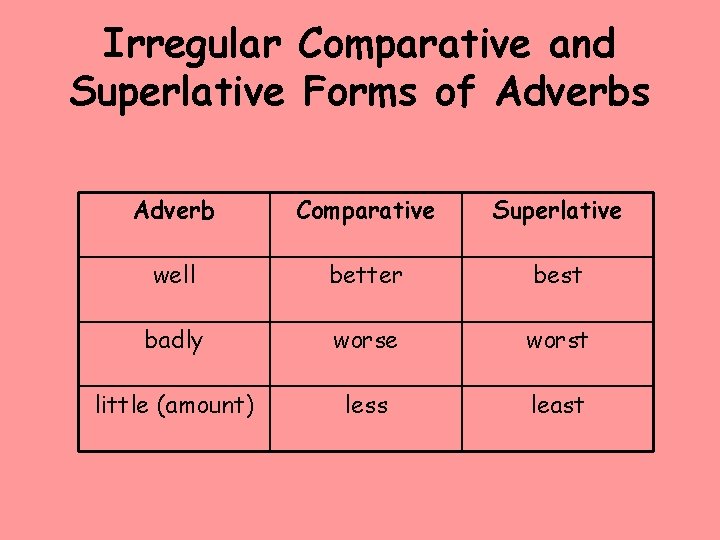
Irregular Comparative and Superlative Forms of Adverbs Adverb Comparative Superlative well better best badly worse worst little (amount) less least
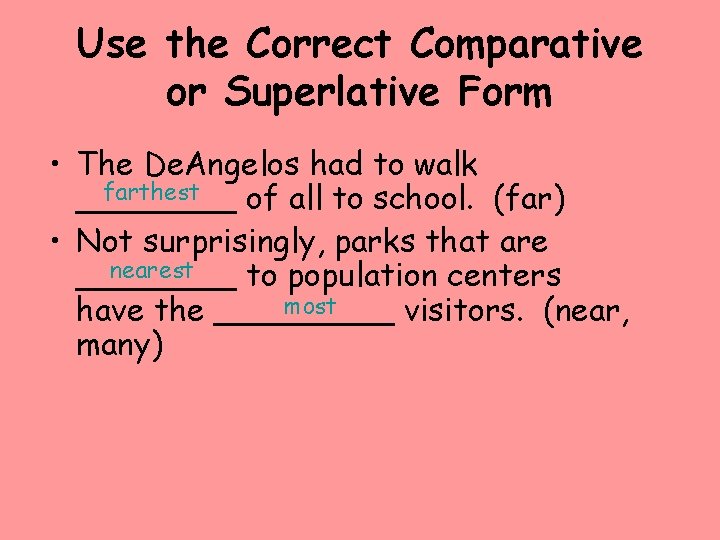
Use the Correct Comparative or Superlative Form • The De. Angelos had to walk farthest ____ of all to school. (far) • Not surprisingly, parks that are nearest ____ to population centers most have the _____ visitors. (near, many)
Distinguishing Adjectives from Adverbs • Adjectives and adverbs are often confused, especially when they appear after verbs. – The musicians are professional. • The predicate adjective professional follows a linking verb and describes (modifies) musicians. – The musicians behaved professionally. • The adverb professionally follows and describes (modifies) the action verb behaved.
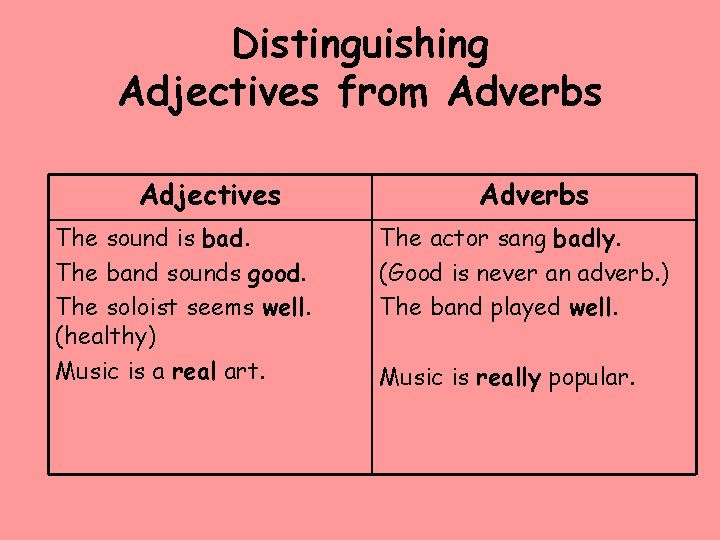
Distinguishing Adjectives from Adverbs Adjectives The sound is bad. The band sounds good. The soloist seems well. (healthy) Music is a real art. Adverbs The actor sang badly. (Good is never an adverb. ) The band played well. Music is really popular.
Which is correct, Adjective or Adverb? • I am (real, really) glad we left the park before thunderstorm. • He was (good, well) enough to go back to school when his fever was gone. • I (sure, surely) appreciate all the assistance that was given. • She proved that she could play (good, well) enough to be first chair flute.
- Slides: 14