
ADVERB CLAUSES Answer questions like When Where Why
ADVERB CLAUSES Answer questions like: When? Where? Why? Under what circumstances?

Dependent signals to introduce adverb clauses. • • • because if though - although even though so that as as if until unless while
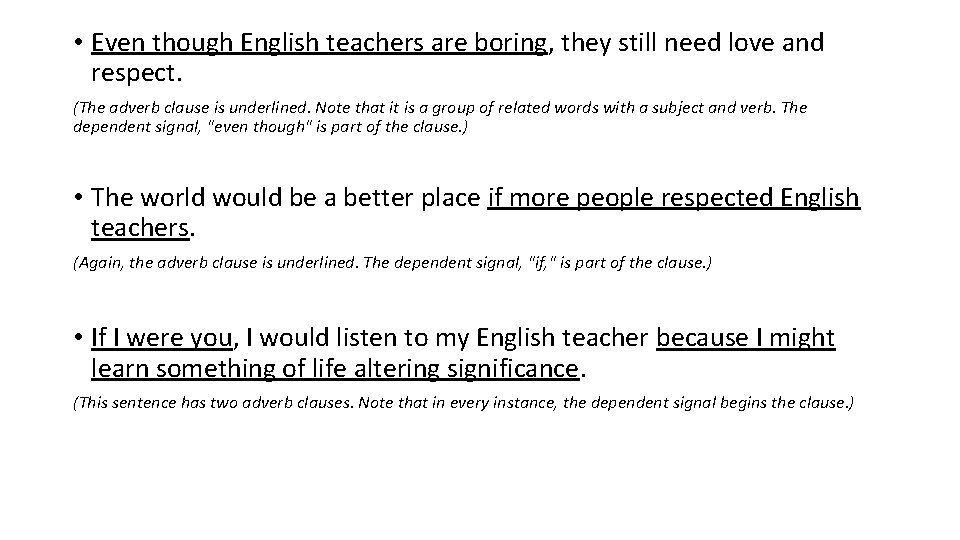
• Even though English teachers are boring, they still need love and respect. (The adverb clause is underlined. Note that it is a group of related words with a subject and verb. The dependent signal, "even though" is part of the clause. ) • The world would be a better place if more people respected English teachers. (Again, the adverb clause is underlined. The dependent signal, "if, " is part of the clause. ) • If I were you, I would listen to my English teacher because I might learn something of life altering significance. (This sentence has two adverb clauses. Note that in every instance, the dependent signal begins the clause. )
ADJECTIVES CLAUSES Adjective Clauses modify (or describe) nouns and pronouns.
Dependent signals to introduce adjective clauses. • Whom • Whose • Which • That

• I love sentences which extol the virtues of English teachers. (The adjective clause is underlined. It modifies the object "sentences. ") • Students whom I admire want to become English teachers. (Again, the adjective clause is underlined and modifies the subject "students. ") • Students who are intelligent understand adjectives. (The adjective clause is underlined. It is an "adjective" clause because it describes the noun "students. ")
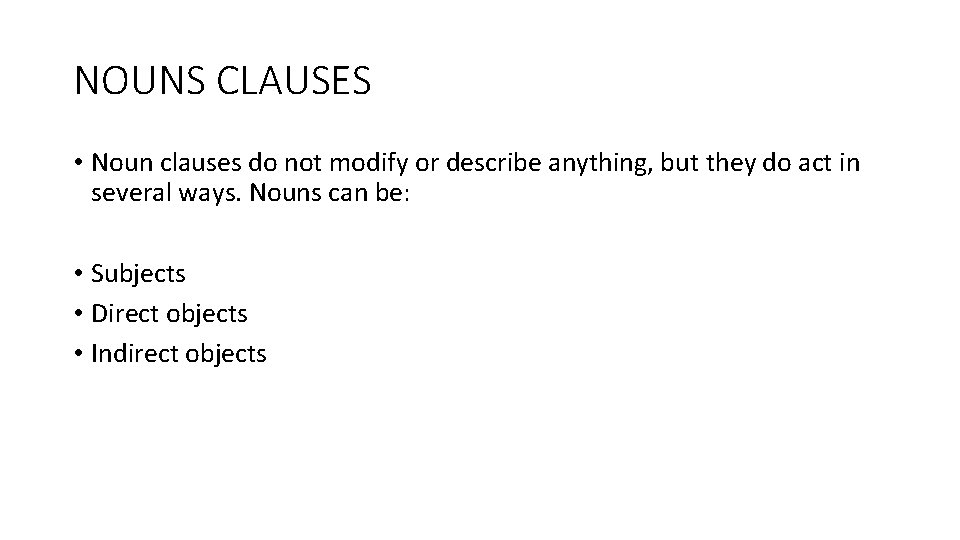
NOUNS CLAUSES • Noun clauses do not modify or describe anything, but they do act in several ways. Nouns can be: • Subjects • Direct objects • Indirect objects
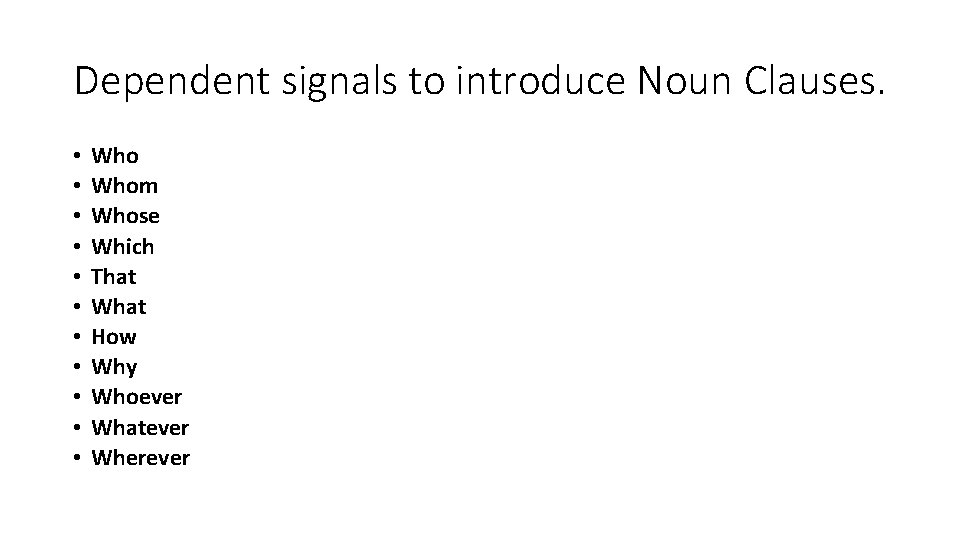
Dependent signals to introduce Noun Clauses. • • • Whom Whose Which That What How Why Whoever Whatever Wherever
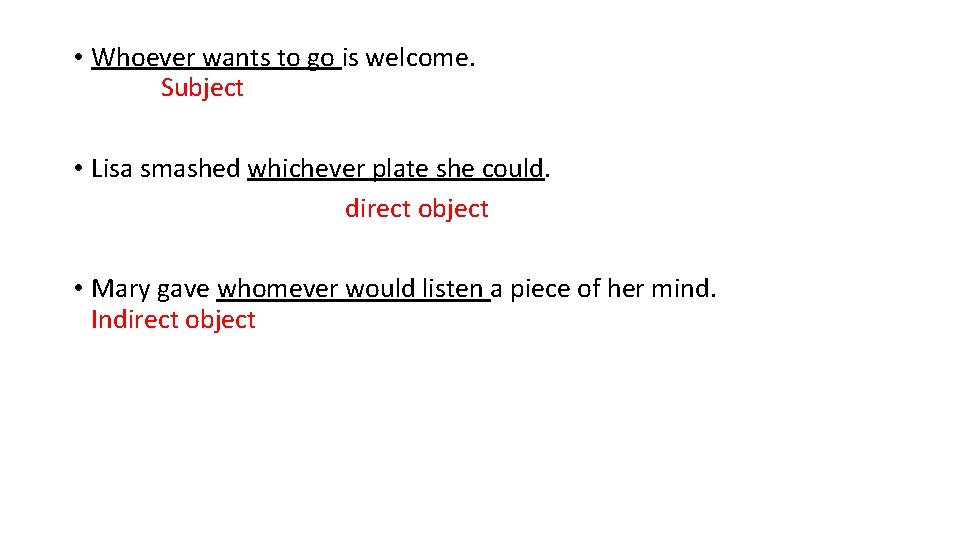
• Whoever wants to go is welcome. Subject • Lisa smashed whichever plate she could. direct object • Mary gave whomever would listen a piece of her mind. Indirect object
- Slides: 9