
AdvectionDispersion Equation ADE Assumptions 1 Equivalent porous medium
- Slides: 24
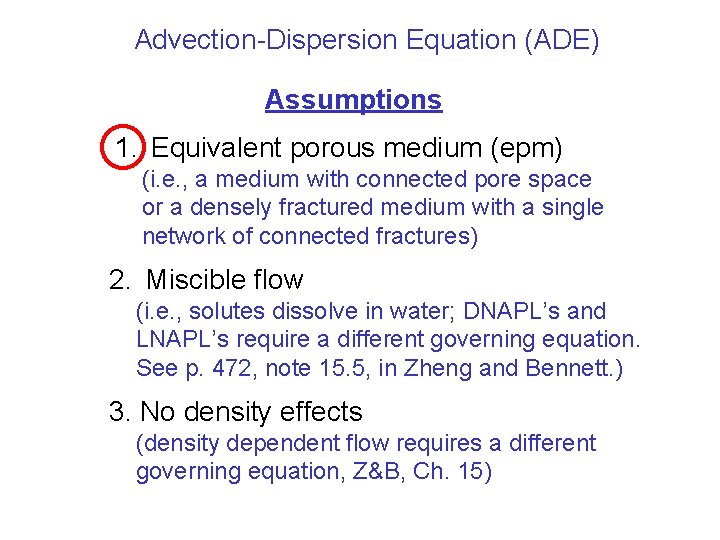
Advection-Dispersion Equation (ADE) Assumptions 1. Equivalent porous medium (epm) (i. e. , a medium with connected pore space or a densely fractured medium with a single network of connected fractures) 2. Miscible flow (i. e. , solutes dissolve in water; DNAPL’s and LNAPL’s require a different governing equation. See p. 472, note 15. 5, in Zheng and Bennett. ) 3. No density effects (density dependent flow requires a different governing equation, Z&B, Ch. 15)
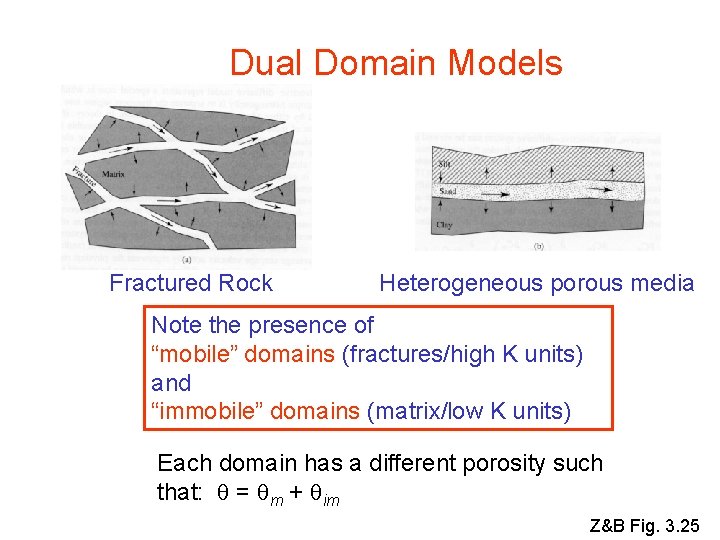
Dual Domain Models Fractured Rock Heterogeneous porous media Note the presence of “mobile” domains (fractures/high K units) and “immobile” domains (matrix/low K units) Each domain has a different porosity such that: = m + im Z&B Fig. 3. 25
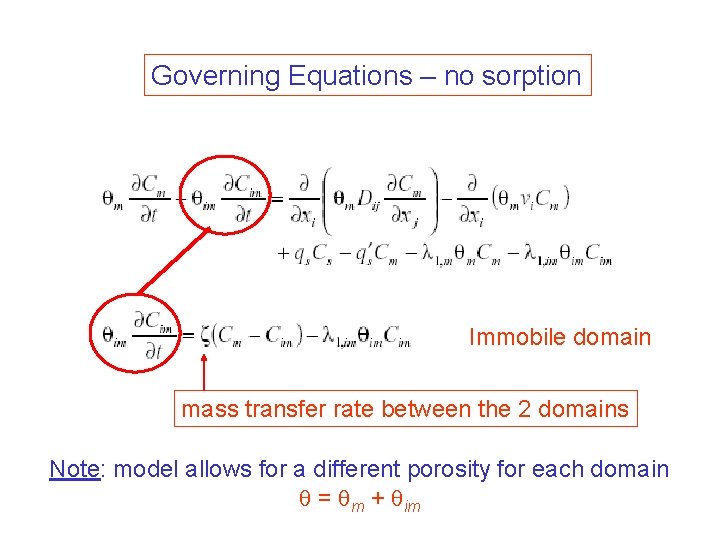
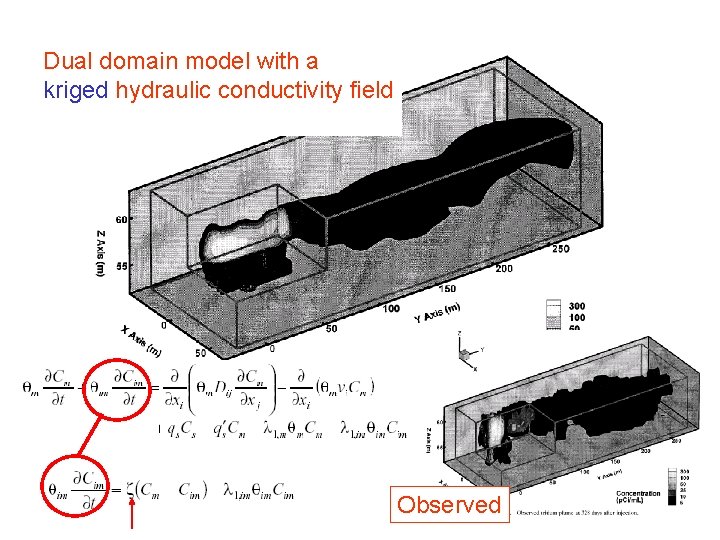
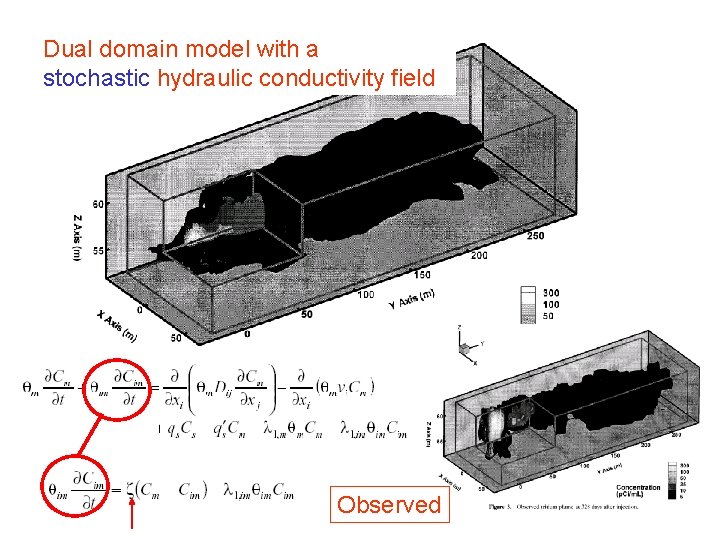
Governing Equations – no sorption Immobile domain mass transfer rate between the 2 domains Note: model allows for a different porosity for each domain = m + im
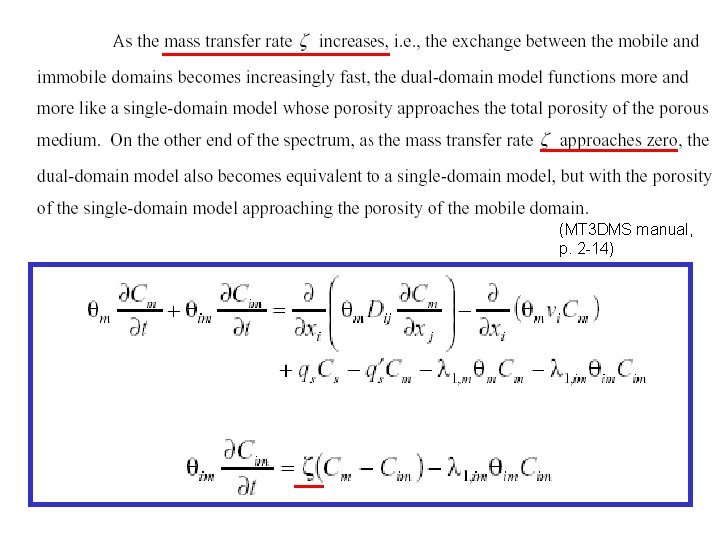
(MT 3 DMS manual, p. 2 -14)
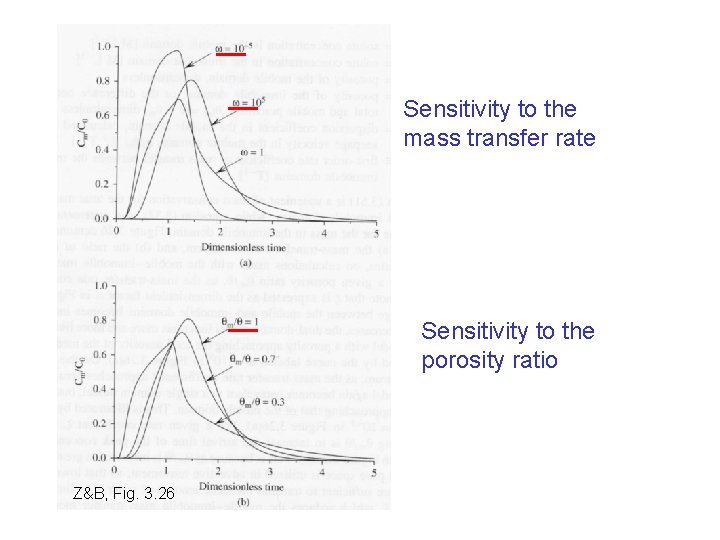
Sensitivity to the mass transfer rate Sensitivity to the porosity ratio Z&B, Fig. 3. 26
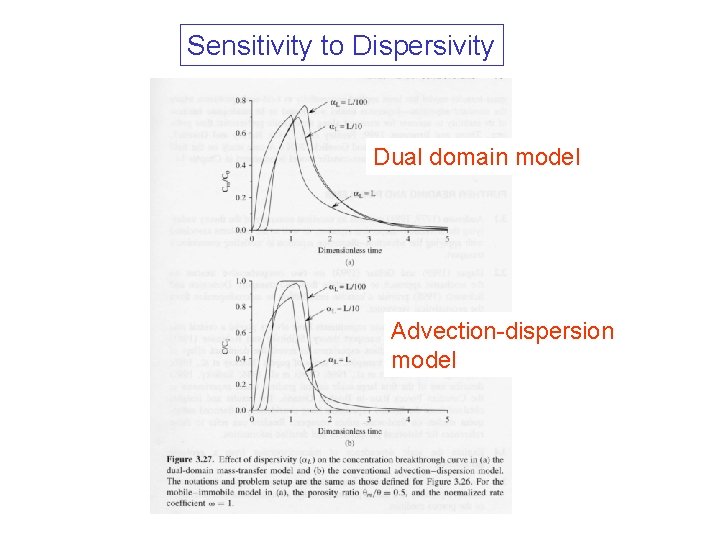
Sensitivity to Dispersivity Dual domain model Advection-dispersion model
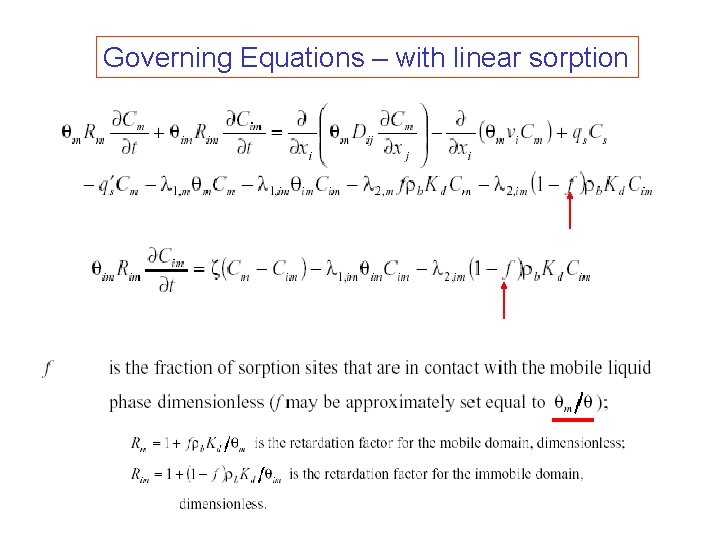
Governing Equations – with linear sorption
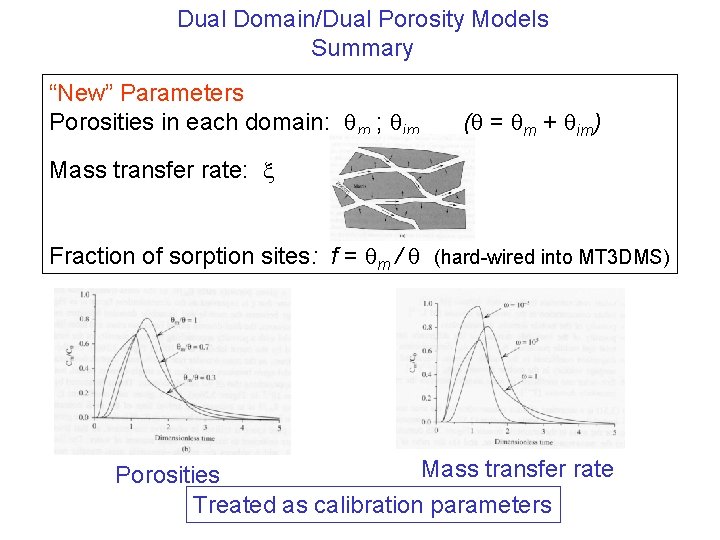
Dual Domain/Dual Porosity Models Summary “New” Parameters Porosities in each domain: m ; im ( = m + im) Mass transfer rate: Fraction of sorption sites: f = m / (hard-wired into MT 3 DMS) Mass transfer rate Porosities Treated as calibration parameters
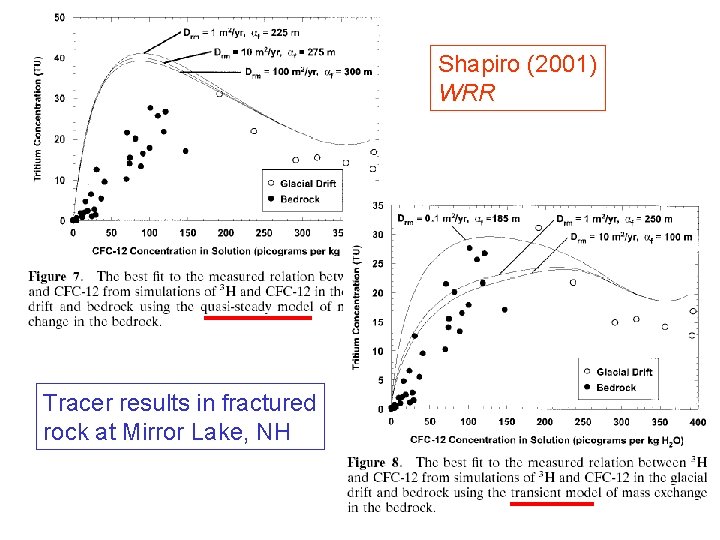
Shapiro (2001) WRR Tracer results in fractured rock at Mirror Lake, NH
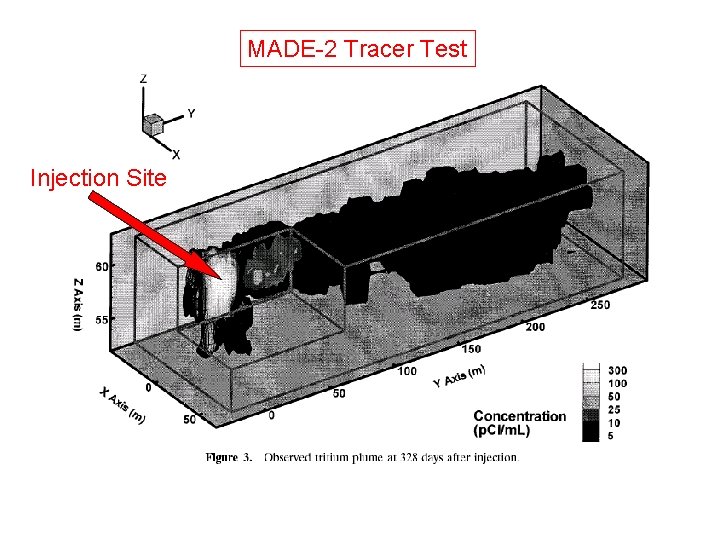
MADE-2 Tracer Test Injection Site
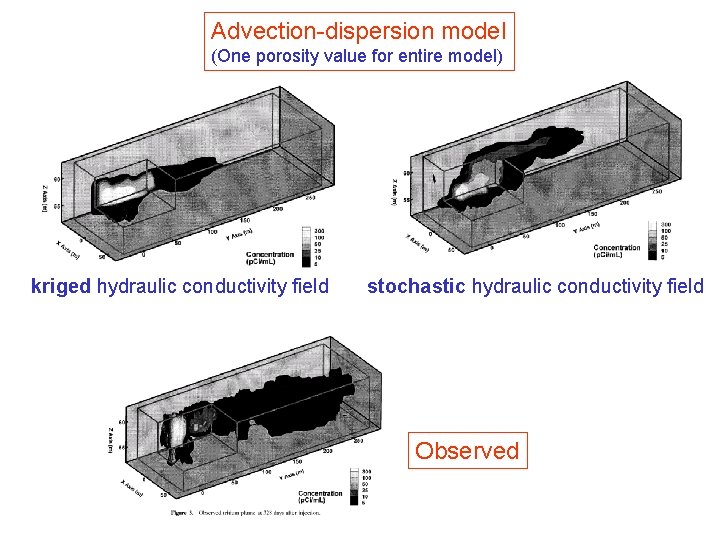
Advection-dispersion model (One porosity value for entire model) kriged hydraulic conductivity field stochastic hydraulic conductivity field Observed
Dual domain model with a kriged hydraulic conductivity field Observed
Dual domain model with a stochastic hydraulic conductivity field Observed
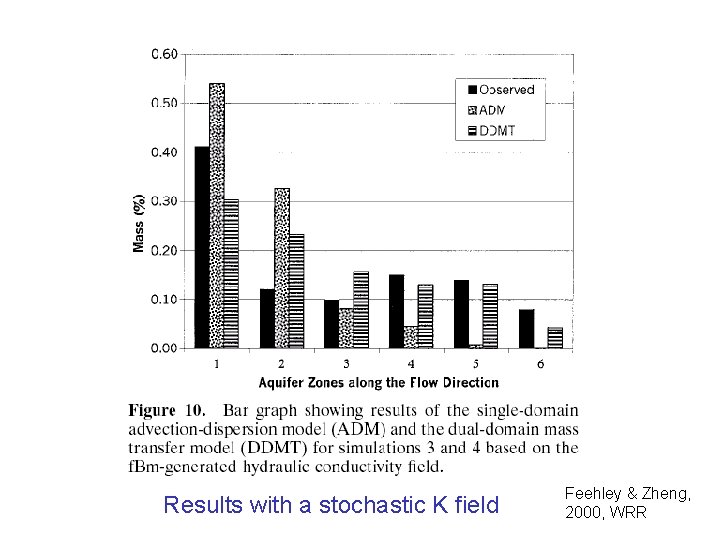
Results with a stochastic K field Feehley & Zheng, 2000, WRR
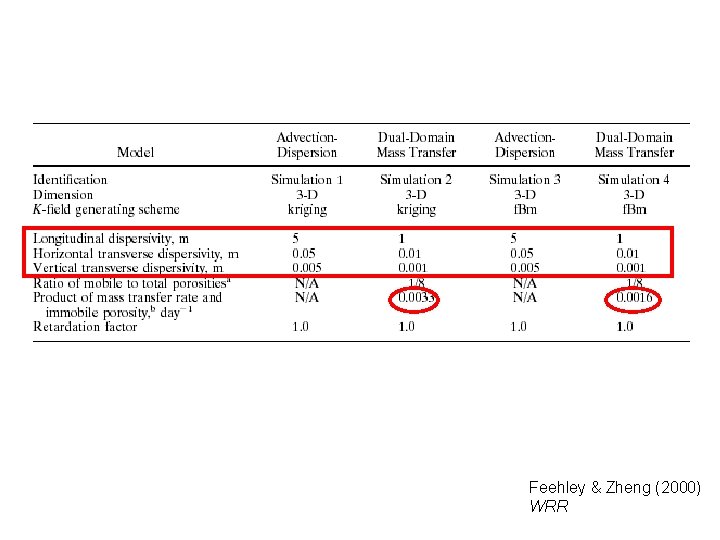
Feehley & Zheng (2000) WRR
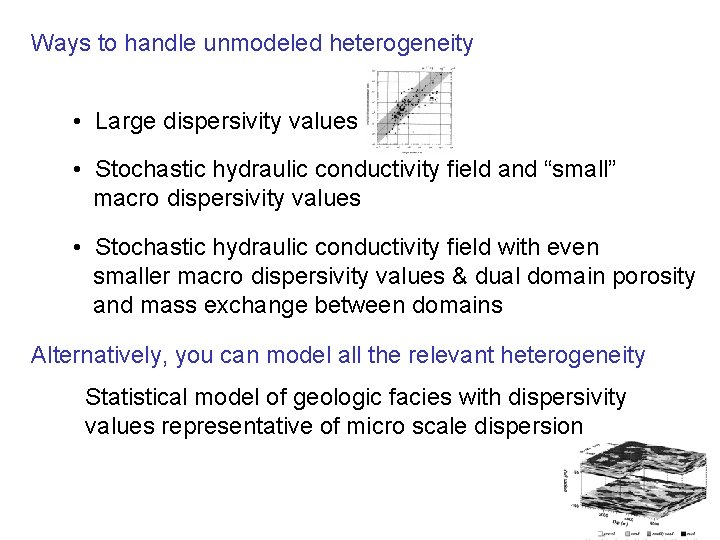
Ways to handle unmodeled heterogeneity • Large dispersivity values • Stochastic hydraulic conductivity field and “small” macro dispersivity values • Stochastic hydraulic conductivity field with even smaller macro dispersivity values & dual domain porosity and mass exchange between domains Alternatively, you can model all the relevant heterogeneity Statistical model of geologic facies with dispersivity values representative of micro scale dispersion
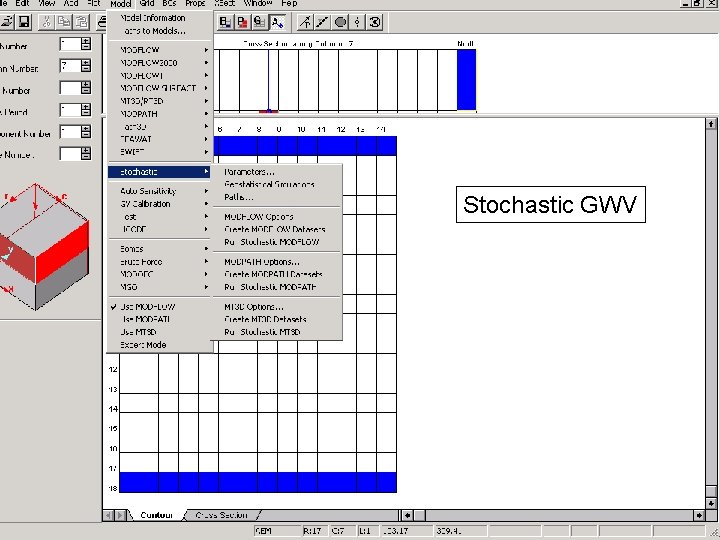
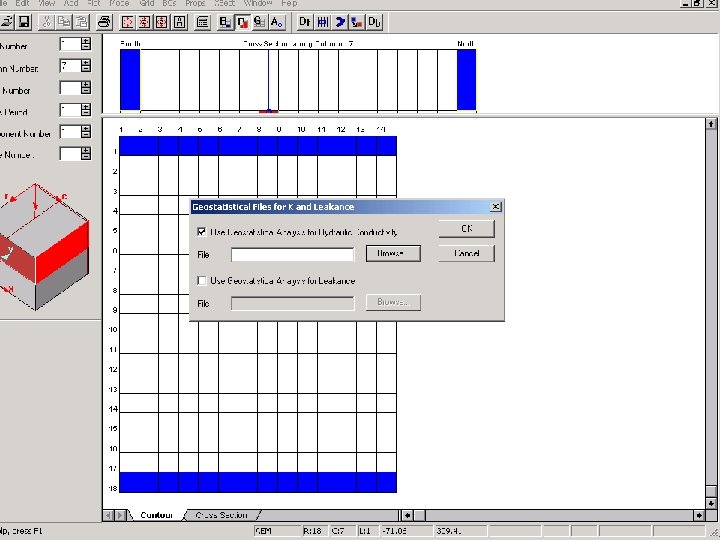
Stochastic GWV
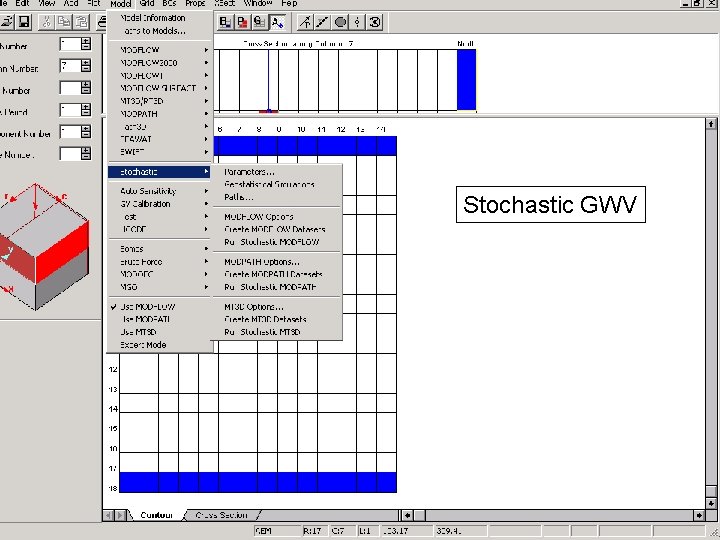
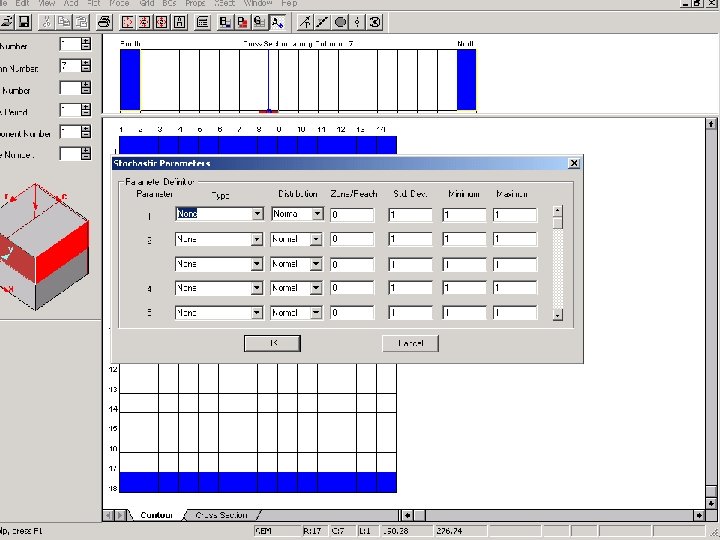
Stochastic GWV