
Advancing the Transportation Security Tracking and Reporting System
- Slides: 17
Advancing the Transportation. Security, Tracking, and Reporting System (T-STAR) International Conference on Nuclear Security: Sustaining and Strengthening Efforts (ICONS 2020) 10 -14 FEB 2020 Michael Schultze Oak Ridge National Laboratory
Acknowledgements James Younkin, Michael Schultze, Shane Frank, Brad Stinson, Bogdan Vacaliuc, Lloyd Clonts, Ronald Salesky, Alexandra Hackett, Nick Burchfield, Janet Jentilet Oak Ridge National Laboratory Thad Thompson, Caleb Askew CADRE Kristina Hatcher/Temeka Taplin Office of Radiological Security U. S. Department of Energy, USA James Shuler Packaging Certification Program US Department of Energy, USA 2
Agenda • • Concept General Capabilities TSTAR Gen 3 Design Goals Gen 3 Elements – MAVNet Multi-Channel Communications (MCM) – Authenticated Container Tracking Seal (ACTS) • Expansion capabilities • Data Authentication • Conclusion 3
Concept and Design Goals • Easy to use and flexible tracking and security system to stakeholders to provide visibility and intrusion detection on shipments. • Optimize power consumption – Extended battery life during tracking – Vehicle power and charging • Leverage existing technologies – Unmanned Aerial Vehicle UAV communications – ACTS low power and design concepts • Use Commercial Off-The-Shelf Sensors (COTS) – Wireless Sensor Network (WSN) – Wired Sensors • AWS Cloud Based Service or Stand-alone Server Host • Data signing for data authentication 4
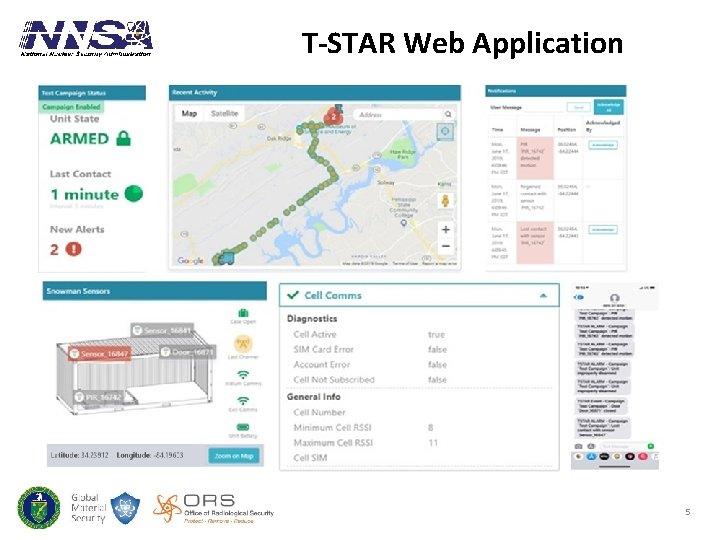
T-STAR Web Application 5
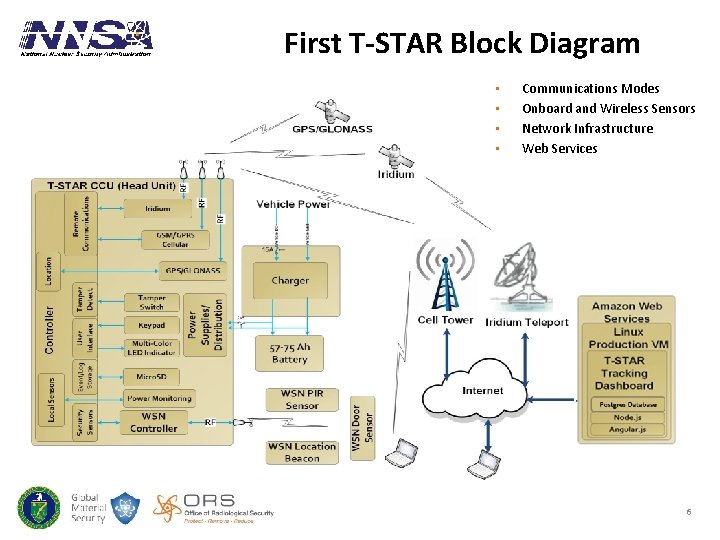
First T-STAR Block Diagram • • Communications Modes Onboard and Wireless Sensors Network Infrastructure Web Services 6
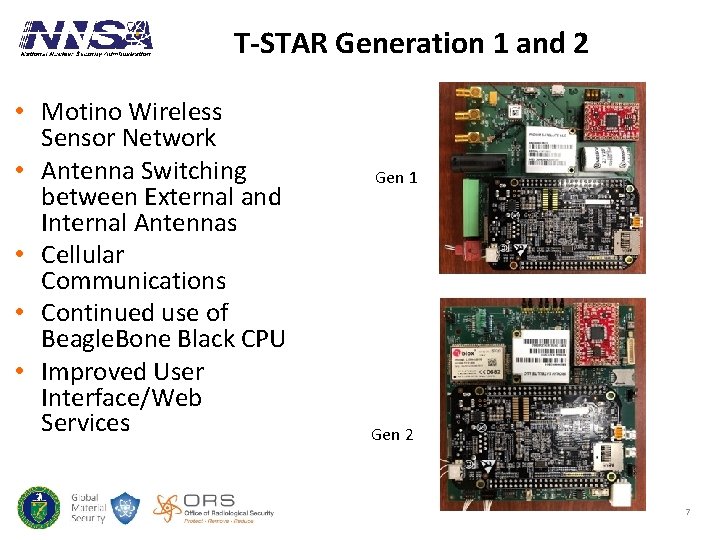
T-STAR Generation 1 and 2 • Motino Wireless Sensor Network • Antenna Switching between External and Internal Antennas • Cellular Communications • Continued use of Beagle. Bone Black CPU • Improved User Interface/Web Services Gen 1 Gen 2 7
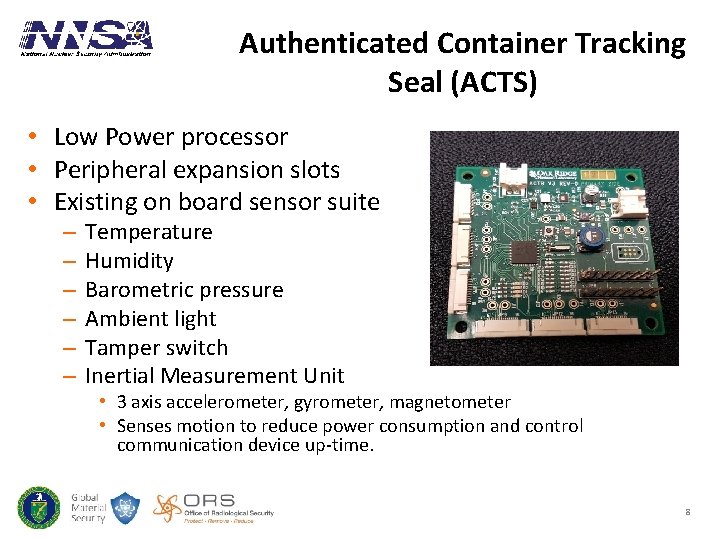
Authenticated Container Tracking Seal (ACTS) • Low Power processor • Peripheral expansion slots • Existing on board sensor suite – – – Temperature Humidity Barometric pressure Ambient light Tamper switch Inertial Measurement Unit • 3 axis accelerometer, gyrometer, magnetometer • Senses motion to reduce power consumption and control communication device up-time. 8
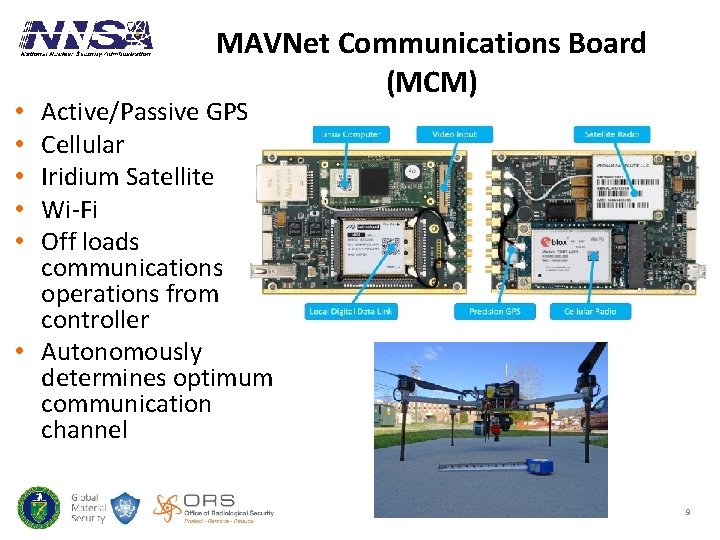
MAVNet Communications Board (MCM) Active/Passive GPS Cellular Iridium Satellite Wi-Fi Off loads communications operations from controller • Autonomously determines optimum communication channel • • • 9
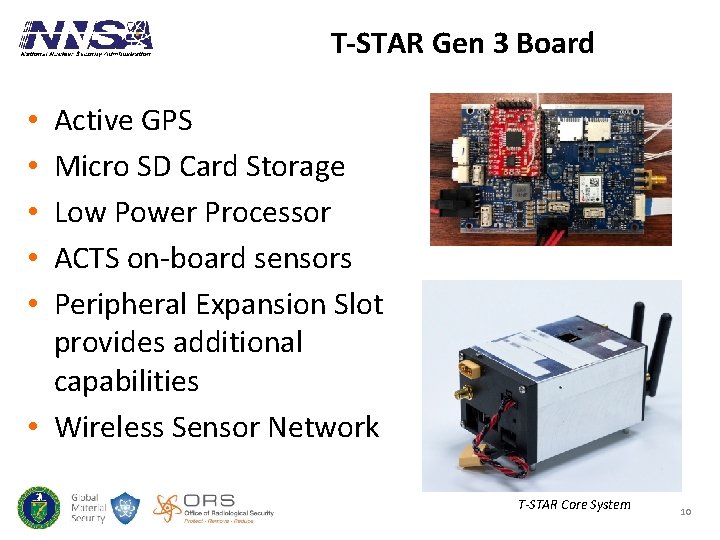
T-STAR Gen 3 Board Active GPS Micro SD Card Storage Low Power Processor ACTS on-board sensors Peripheral Expansion Slot provides additional capabilities • Wireless Sensor Network • • • T-STAR Core System 10
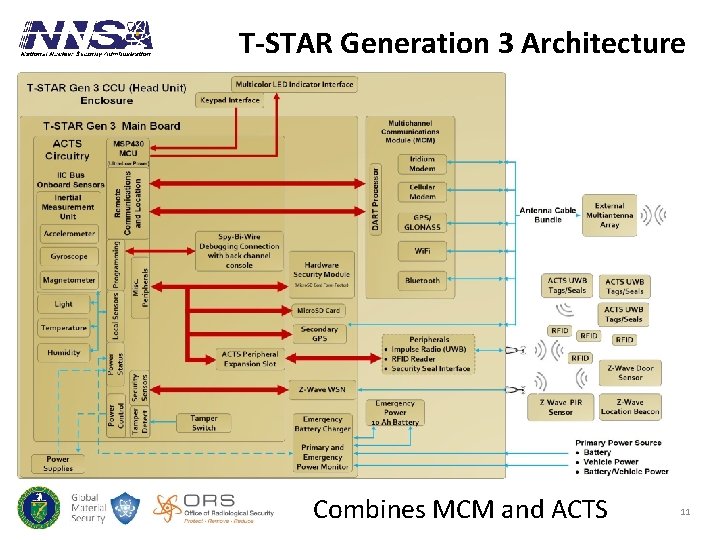
T-STAR Generation 3 Architecture Combines MCM and ACTS 11
Wireless Sensor Network (WSN) • Home security market driving availability of a vast ensemble of easily attainable sensors – Wireless and Inexpensive – Low power requirements • Industrial Safety and Security Systems available – Often wired and Wi. Fi – Higher power requirements • Custom Sensor Integration 12
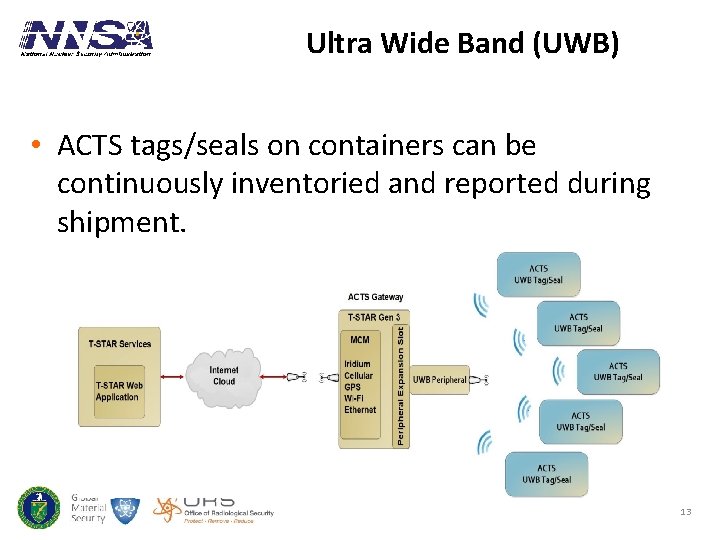
Ultra Wide Band (UWB) • ACTS tags/seals on containers can be continuously inventoried and reported during shipment. 13
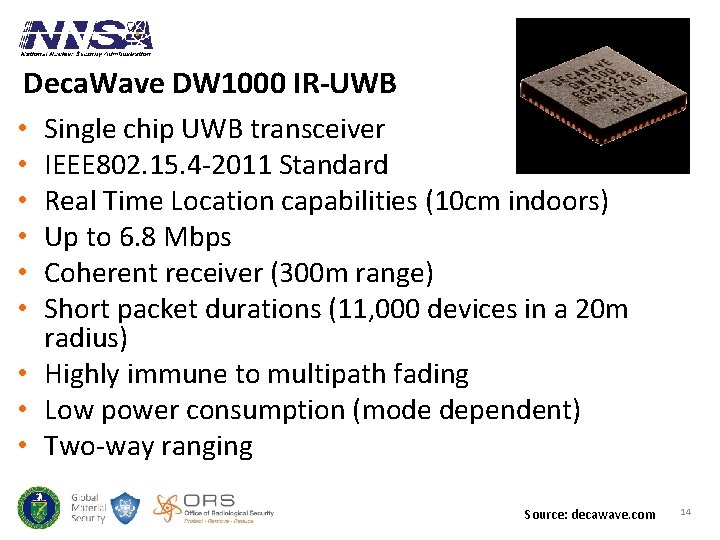
Deca. Wave DW 1000 IR-UWB • Single chip UWB transceiver • IEEE 802. 15. 4 -2011 Standard • Real Time Location capabilities (10 cm indoors) • Up to 6. 8 Mbps • Coherent receiver (300 m range) • Short packet durations (11, 000 devices in a 20 m radius) • Highly immune to multipath fading • Low power consumption (mode dependent) • Two-way ranging Source: decawave. com 14
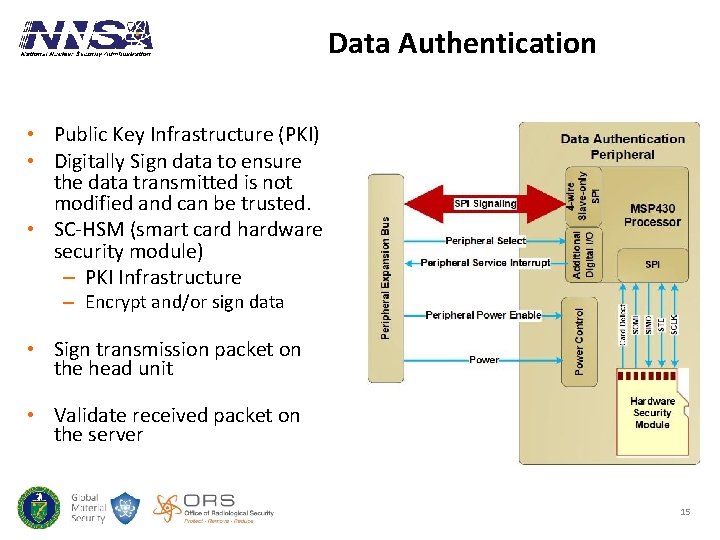
Data Authentication • Public Key Infrastructure (PKI) • Digitally Sign data to ensure the data transmitted is not modified and can be trusted. • SC-HSM (smart card hardware security module) – PKI Infrastructure – Encrypt and/or sign data • Sign transmission packet on the head unit • Validate received packet on the server 15
Summary • T-STAR Gen 3 leverages hardware and firmware from ACTS and MAVNet to reduce power consumption (extend longevity when operating on battery power) and improve and extend communications capability and reliability. • MAVNet’s robustness is requisite for controlling unmanned aerial vehicles anywhere in the world from anywhere in the world. • T-STAR Gen 3 replaces previous custom wireless security sensor network with COTS security sensors and protocols. • The expansion slot and additional communications channels of the MCM allow interfacing of any number and types of instrumentation and sensors to collect more pertinent data for providing better situational awareness for the entire journey of sensitive cargo. 16
Summary (cont. ) • TSTAR is a unique platform that can be tailored to a variety of package tracking applications • Can support a variety of communications, location services, and containment monitoring needs • An ACTS data security peripheral would allow data acquired by ACTS sensors to be digitally signed • The IR-UWB peripheral enables two-way ranging for locating ACTS tags in 2 D or 3 D space to facilitate an inventory or to detect the repositioning or movement of ACTS tagged items. 17